

An IBS diet for constipation guide focuses on the food and routine changes that can ease IBS-C without making bloating worse. Busy adults with IBS-C often face a hard tradeoff between eating more fiber and avoiding more gas or cramping. IBS-C means IBS with constipation, where stools are infrequent or hard to pass and symptoms often include bloating and straining. The goal is a practical starting plan built around soluble fiber, fluids, and food choices that can be tested one step at a time.
The sections below cover the first moves to try, a step-by-step fiber routine with psyllium, oats, and ground flaxseed, and a short low-FODMAP trial when the basics are not enough. They also cover kiwifruit, prunes, hydration, meal timing, and symptom tracking so the changes stay measurable. A simple fiber log and a low-FODMAP reintroduction plan can help separate useful changes from foods that only look suspicious. That structure keeps the focus on relief without over-restricting meals.
Adults with IBS-C, plus registered dietitians, primary care clinicians, and families trying to support them, will find the most value here when they need clear next steps rather than broad rules. A teacher who adds oatmeal at breakfast, drinks more through the day, and builds psyllium slowly may notice fewer hard stools within two weeks. My Good Gut keeps the plan practical and evidence-informed so the next steps are easier to follow and adjust.
IBS Diet for Constipation Key Takeaways
- Start with soluble fiber, not a broad elimination diet.
- Psyllium, oats, ground flaxseed, kiwifruit, and prunes can support constipation.
- Increase fiber slowly and drink fluids through the day.
- Keep meal timing regular, especially breakfast and morning fluids.
- Try a short low-FODMAP trial only after basic changes fall short.
- Track stool frequency, stool form, bloating, and straining daily.
- Seek an RD or clinician for severe, persistent, or worsening symptoms.
What Should You Prioritize First For IBS-C?
The best first moves for IBS-C are the simplest ones. With Irritable Bowel Syndrome with Constipation, small changes often help more than a major overhaul because the goal is better stool frequency without adding more bloating or pain. That is why soluble fiber, hydration for constipation, and steady meal timing usually matter more than cutting a long list of foods right away.
A practical starting order looks like this:
- Increase fiber gradually with psyllium, oats, or ground flaxseed. These are foods to include for IBS-C because soluble fiber can soften stool and support regularity.
- Pair each fiber step with fluids. Hydration for constipation matters because fiber works best when you drink through the day, not only when you feel backed up.
- Keep meals on a regular schedule. A simple morning routine helps too, such as waking at about the same time, eating breakfast within an hour, and having a warm drink like water, tea, or modest black coffee.
- Use behavioral eating changes early. Small routines are often easier to keep than a strict overhaul, and they can make your IBS diet for constipation feel more realistic on busy workdays.
A short trial of a low fermentable oligosaccharides, disaccharides, monosaccharides, and polyols (FODMAP) diet belongs later if the basics are not enough. That step can help you spot personal triggers, but it works best as a brief, targeted test rather than a permanent restriction. The understanding the IBS diet plan can help you compare options without guessing at every meal.
There is no one-size-fits-all fix for Irritable Bowel Syndrome with Constipation, so the smartest plan is the one with the least burden and the highest chance of sticking. Start with the lowest-effort changes first, then adjust one step at a time based on your symptoms and comfort. If symptoms are persistent, severe, or worsening, a qualified healthcare professional should review them.
How Do You Build An IBS-C Fiber Routine?
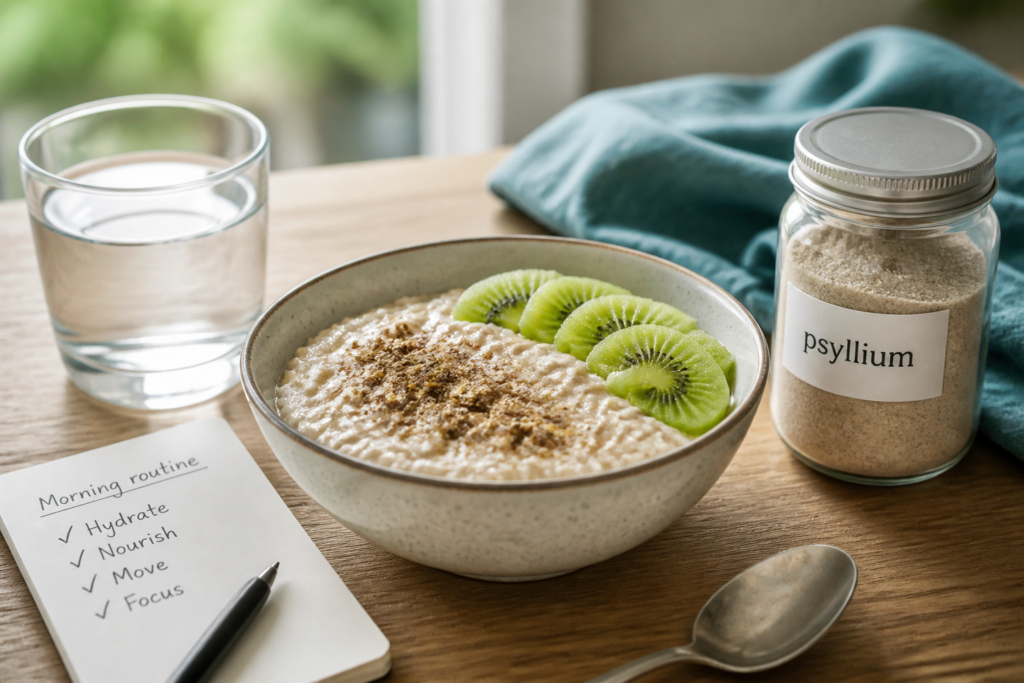
A steady IBS-C fiber routine starts with soluble fiber because it absorbs water and forms a soft gel that can soften stool with less strain. For irritable bowel syndrome with constipation, that usually means leaning on psyllium, oats, and ground flaxseed instead of bran-heavy foods that can feel rough on a sensitive gut. Oats for constipation can be a gentle place to start, especially when you increase fiber gradually. Start with a small amount of soluble fiber such as psyllium, oats, or ground flaxseed, then track how each step affects your symptoms. Add only one change at a time and watch your symptoms for 1 to 2 weeks before making the next adjustment (source).
A repeatable food-first rhythm helps on busy days:
- Breakfast: oatmeal or another simple oat-based meal
- Midday: a fiber-rich lunch or snack in a modest portion
- Evening: ground flaxseed mixed into yogurt, cereal, or a smoothie
That pattern gives you fiber without the belly strain that can come from a bean-heavy meal all at once.
Psyllium deserves special care because it is a low-fermentable, highly effective soluble fiber supplement. Take it with plenty of water, since fiber without enough liquid can leave stools bulkier without making them easier to pass. If it fits your schedule, some clinicians suggest taking psyllium in the evening so the routine is easier to keep.
Track one change for 1 to 2 weeks before adding another. Note stool frequency, stool softness, gas, and abdominal fullness. Results vary by person, and this content is for educational purposes only and is not a substitute for personalized medical advice. If constipation stays severe, worsens, or does not improve, review the plan with a qualified healthcare professional or registered dietitian.
How Do You Use A Low-FODMAP Trial Safely?
A short-term low-FODMAP diet trial works best when you treat it as a test, not a new normal. The pattern is simple: reduce certain FODMAPs for a limited time, then bring foods back one group at a time to see whether bloating, gas, pain, or bowel changes improve. That approach fits a low-FODMAP diet for IBS without turning every meal into a guessing game.
FODMAPs can draw water into the gut and ferment quickly, which is why the trial focuses on symptom changes. For many people with IBS, that extra water and gas can trigger symptoms. The goal is targeted relief, not cutting out all carbohydrates or every fiber-rich food.
If you have IBS-C, the safety point is to keep soluble fiber in the picture. Psyllium, oats, and ground flaxseed can support regularity, so your foods to avoid for constipation should not become so broad that they make constipation worse. Over-restriction can backfire, especially if fluid intake drops too.
A careful elimination phase stays time-limited and portion-aware:
- Use normal portions: Start with ordinary serving sizes instead of assuming every carb is off-limits.
- Limit high-FODMAP foods to limit: Reduce them for a few weeks, but do not chase zero intake.
- Track your responses: Keep a symptom diary IBS log that records what you ate, how much you ate, and how your body reacted.
- Protect soluble fiber: Keep tolerated sources in your meals unless a clinician gives you different guidance.
Reintroduction is where the trial becomes useful. Use a short low-FODMAP elimination phase, then bring foods back one group at a time in planned challenges so you can see which foods trigger symptoms. The goal is not zero intake, but a structured trial that helps identify personal triggers while preserving tolerated foods (source). That stepwise pattern helps you connect symptoms to one carbohydrate group instead of blaming the whole low-FODMAP diet.
If bloating is severe, constipation keeps hanging on, or the pattern is hard to read, a Registered Dietitian or healthcare professional can help you sort it out while protecting fiber intake. This content is for educational purposes only and is not a substitute for personalized medical advice. Digestive symptoms can have many causes, so you should consult a qualified healthcare professional for persistent, severe, or worsening symptoms. Results vary by person, and any dietary or supplement advice should be individualized.
Which Foods And Supplements Help Most?
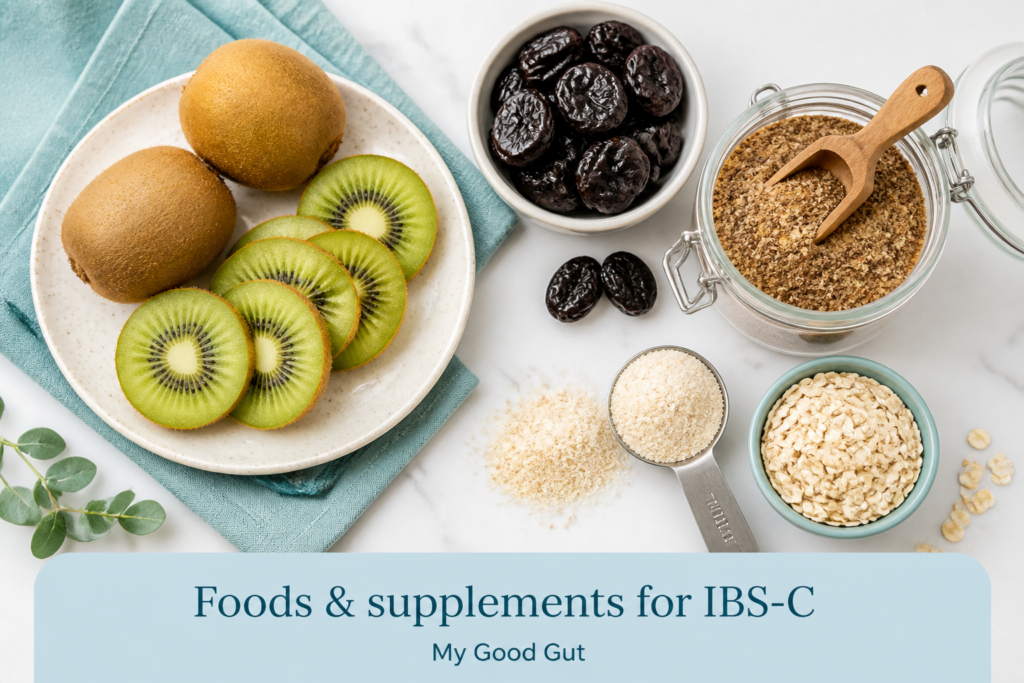
The best foods to include for IBS-C usually start with soluble fiber, not big jumps in bran or other rough fiber. Psyllium, oats, ground flaxseed, kiwifruit, and prunes are often easier to tolerate and more likely to soften stool without pushing bloating too high.
| Option | Typical use | What it may help | Tolerability notes |
|---|---|---|---|
| Psyllium | Small daily dose, then raise slowly over several days to a week | Stool frequency and stool form | Can cause gas or fullness if you increase too fast |
| Kiwifruit | 2 to 3 fruits daily | Bowel movement frequency and stool consistency | May be easier to tolerate than some other laxative-style foods |
| Prunes or prune juice | Small serving to start | Constipation from fiber plus sorbitol | May cause cramping, loose stool, or extra gas in sensitive people |
| Ground flaxseed | About 1 1/2 to 2 tablespoons mixed into food | Softer stools and easier movement | Needs slow introduction and enough fluid |
| Oats or oatmeal | Daily base food | Gentle support for regularity | Best when paired with one add-on, not several at once |
Psyllium is often the first supplement worth trying because it adds bulk and holds water. Start with a small daily dose, take it at the same time each day, and drink enough fluid with it. That steady routine makes it easier to track changes in stool frequency and consistency while keeping gas or fullness lower.
Kiwifruit is a supported food-based option for constipation, and recent constipation guidelines recommend 2 to 3 kiwifruits per day for symptom improvement (source, source). Ground flaxseed can also add fiber, but the serving size should be adjusted to tolerance and total fiber intake (source, source).
Prunes for constipation work because they bring both fiber and sorbitol, which can draw water into the bowel. Start with a small serving of prunes or prune juice, then watch for cramping, loose stool, or extra gas. Ground flaxseed is another easy add-on, and about 4 grams of fiber can come from roughly 1 1/2 to 2 tablespoons mixed into oatmeal, yogurt, or a smoothie.
Oats for constipation work well as a calm daily base, especially oatmeal or overnight oats. If bloating is a concern, pair that base with one tolerated add-on, such as psyllium, kiwi, or ground flaxseed, instead of stacking several high-fiber foods at once.
If food changes still do not help enough, a registered dietitian can guide you through a low-FODMAP approach in a structured way without over-restricting meals or buying specialty products you do not need. That can be especially useful when you want a clear plan and fewer trial-and-error dead ends.
People who need a different symptom plan can compare this approach with the IBS diet for diarrhea guide for the other end of the IBS spectrum.
Crafting an IBS-C Meal Guide
Designing a meal plan that addresses the specific challenges of IBS-C can be a game-changer for those seeking relief. In this section, we’ll explore the core principles behind an effective IBS-C diet and provide practical tips for creating your own daily meal guide.
To make it even easier for you to get started on an IBS-C friendly diet, here are a few sample meal plans that you can try out. These plans are designed to include a variety of gut-friendly foods while also prioritizing fiber and hydration.
Each meal plan is for one day and can be customized to suit your preferences and dietary needs.
IBS-C Meal Plan 1:
| Meal | Foods |
|---|---|
| Breakfast | Overnight oats with chia seeds and berries |
| Snack | Apple slices with almond butter |
| Lunch | Quinoa salad with roasted vegetables and tofu |
| Snack | Carrot sticks with hummus |
| Dinner | Grilled salmon with steamed broccoli and brown rice |
| Dessert | Low FODMAP banana muffin |
IBS-C Meal Plan 2:
| Meal | Foods |
|---|---|
| Breakfast | Spinach and feta omelet with gluten-free toast |
| Snack | Greek yogurt with a sprinkle of ground flaxseeds |
| Lunch | Mediterranean-style chickpea salad |
| Snack | Rice cakes with avocado and sea salt |
| Dinner | Baked chicken with roasted asparagus and quinoa |
| Dessert | Fresh pineapple chunks |
IBS-C Meal Plan 3:
| Meal | Foods |
|---|---|
| Breakfast | Buckwheat pancakes with blueberry compote |
| Snack | Trail mix with pumpkin seeds and dried cranberries |
| Lunch | Lentil soup with a side of mixed greens |
| Snack | Cucumber slices with tzatziki dip |
| Dinner | Zucchini noodles with grilled chicken and pesto |
| Dessert | Dark chocolate square |
Remember, these meal plans are just a starting point, and you can mix and match ingredients to suit your taste and needs. The key is to focus on whole, unprocessed foods, stay hydrated, and listen to your body’s cues.
By integrating these meal plans into your routine, you’ll be well on your way to managing your IBS-C symptoms more effectively.
How Do You Track Progress And Know When To Get Help?
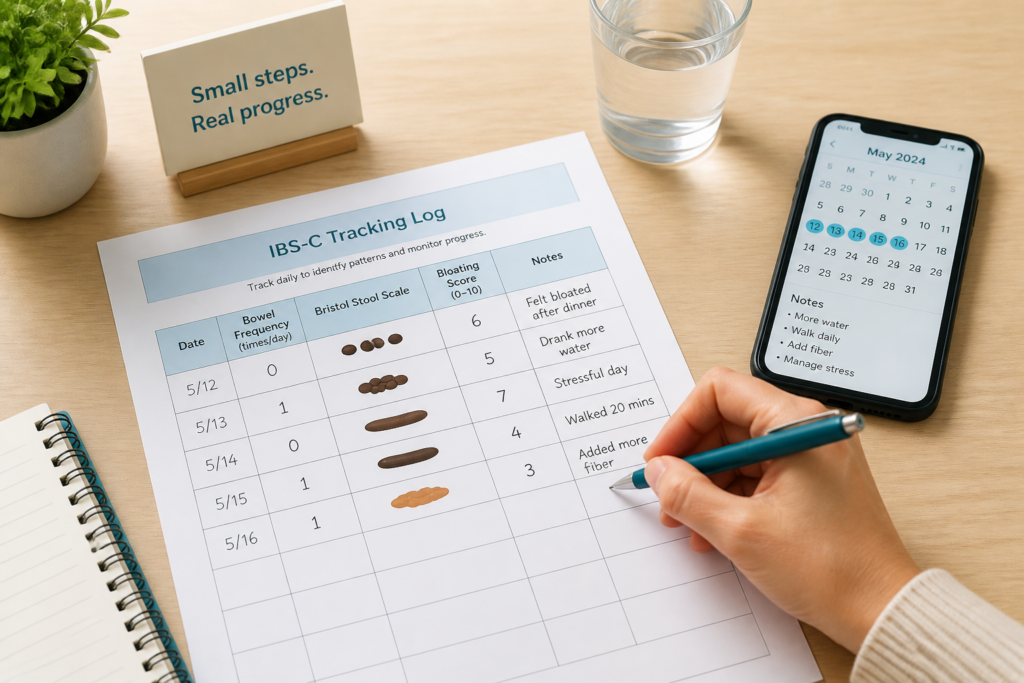
Clear tracking turns guesswork into patterns. A good IBS-C log uses the same numbers each day so you can spot change instead of relying on memory. Track bowel frequency, stool form on the Bristol Stool Scale, bloating on a 0 to 10 scale, and whether straining or incomplete emptying is easing.
| Metric | What to note | Progress looks like |
|---|---|---|
| Bowel frequency | Bowel movements each day or week | Fewer constipation days |
| Bristol Stool Scale | Stool form each day | Movement toward the middle of the scale |
| Bloating | Rate bloating from 0 to 10 | Less post-meal bloating |
| Straining | Effort and incomplete emptying | Less need to push |
| Fluids | Water and other drinks | Stable or higher intake as fiber rises |
A short symptom diary can help more than memory alone because it captures meals, fluids, bowel movements, and bloating in real time. Staying well hydrated can also help fiber work better and may keep stools softer, so fluid intake should rise along with fiber intake (source, source).
Review the log once a week and decide what to keep, adjust, or pause:
- Keep foods and routines that clearly reduce bloating or straining.
- Adjust portions, meal timing, or fiber type if symptoms are mixed.
- Pause anything that seems to worsen pain or constipation.
- Note whether probiotics for IBS seem worth discussing.
- Flag when osmotic laxatives have been needed more often than expected.
Escalate sooner if bloating becomes severe, constipation continues despite diet and lifestyle changes, or the log shows little improvement after a structured trial. At that point, a registered dietitian-guided low-FODMAP trial or a healthcare visit can help identify triggers safely without unnecessary restriction. A downloadable fiber chart or tracking template can make the process easier to follow day after day.
IBS-C FAQs
These FAQs answer the most common questions about IBS-C, or Irritable Bowel Syndrome with Constipation, including fiber, food choices, probiotics for IBS, and the daily habits that can affect bowel movements. Use them as a practical starting point before you test changes of your own.
1. Can IBS-C Diet Changes Worsen Bloating?
Yes, IBS-C diet changes can make bloating worse for a few days if you raise fiber too fast, especially with fermentable fibers that make more gas. Soluble fiber is usually gentler than a big jump in bran or other high-bulk foods, and adding about 2 to 3 grams a day often works better. A slow ramp-up might mean starting ground flaxseed at 1 tablespoon and moving toward 2 tablespoons, or beginning psyllium at 1/2 teaspoon and increasing little by little as you tolerate it. Fluids matter too, because extra fiber without enough water can make stools harder, and severe or ongoing bloating usually means the change is too fast or the fiber is not a good fit.
2. How Long Before Low-FODMAP Helps IBS-C?
Many people notice less bloating and gas within about 2 to 6 weeks of a low-FODMAP trial, but IBS-C often responds more slowly and the timeline varies from person to person. FODMAPs are short-chain carbs that can ferment and pull water into the gut, so cutting them can calm symptoms, but constipation needs extra care, including keeping soluble fiber foods like oats, psyllium, and ground flaxseed in place. Track stool frequency, stool form, and straining during the trial, and if you do not see clear change or constipation gets worse, reassess with a registered dietitian instead of staying overly restrictive.
3. Is Psyllium Better Than Wheat Bran?
For IBS-C, psyllium is usually the better first choice because it is a soluble, viscous fiber that helps soften stool and is often gentler than wheat bran. Wheat bran adds rough insoluble bulk, which can worsen bloating or discomfort, while psyllium tends to ferment less than more gas-producing fibers, including prebiotics inulin GOS. Start with a small dose, increase slowly, and take it with plenty of fluids. If evening dosing fits your routine, that can make daily use easier to stick with.
4. Should You Avoid Gluten With IBS-C?
Gluten avoidance can help some people with IBS-C, but the trigger is often wheat fructans, which are part of the FODMAPs rather than gluten itself. Breads, pasta, and rye are common high-FODMAP foods to limit, and garlic and onions can add to symptoms, so a change after cutting gluten may reflect a broader drop in triggers, as the IBS foods to avoid guide shows. A short food and symptom journal for 1 to 2 weeks can help you see whether symptoms track with wheat, other high-FODMAP foods, or meal timing. If celiac disease is a concern, get tested before long-term gluten avoidance, and seek medical evaluation for persistent or worsening symptoms.
5. Can Meal Timing Affect IBS-C Constipation?
Yes, meal timing can make IBS-C constipation feel steadier or worse. Skipping meals or packing most of your food into one late, heavy dinner can make digestion feel less predictable, while smaller meals every 3 to 4 hours often sit better. A fiber-containing breakfast within an hour of waking, such as oats or a little flaxseed, plus water or a warm drink like herbal teas peppermint ginger, is a smart first test, and a regular toilet routine for 1 to 2 weeks can help you see what changes.