


IBS symptoms in men often show up as abdominal pain, bloating, diarrhea, constipation, urgency, or a constant sense of incomplete emptying. For a lot of men, the harder part is that the pattern comes and goes, so it can be easy to blame stress, a bad meal, or a busy week and miss what the body is signaling. IBS is a functional gut disorder, which means the symptoms are real even when routine tests look normal, and the goal here is to separate common signs from red flags and give practical next steps.
The sections ahead cover the IBS subtypes, where the pain usually shows up, what can trigger flares, how diagnosis works, and which warning signs need medical attention. You’ll also find simple flare-up tips, including meal changes, hydration, and short-term comfort measures that fit real life. For clear structure, the article breaks down stool patterns, common overlaps with prostate or urinary symptoms, and the tests a clinician may use when the picture is not straightforward.
Adult men juggling work, travel, or long meetings will get the most from the details here, along with family members trying to make sense of recurring digestive complaints. A man who has lower belly cramping after meals, then gets relief after a bowel movement, will recognize why the pattern matters more than a single bad day. Keep reading for a plain-language way to connect symptoms, causes, and the right time to get checked.
IBS Symptoms in Men Key Takeaways
- IBS in men often causes abdominal pain, bloating, diarrhea, constipation, urgency, or incomplete emptying.
- Symptoms usually come and go in flares rather than staying constant.
- IBS pain often improves after a bowel movement.
- Subtypes include IBS-D, IBS-C, and IBS-M based on stool patterns.
- Stress, sleep loss, infections, and certain foods can trigger flares.
- Blood in stool, weight loss, fever, or nighttime diarrhea need medical evaluation.
- Flare relief often starts with smaller meals, hydration, and avoiding known triggers.
What Are IBS Symptoms In Men?
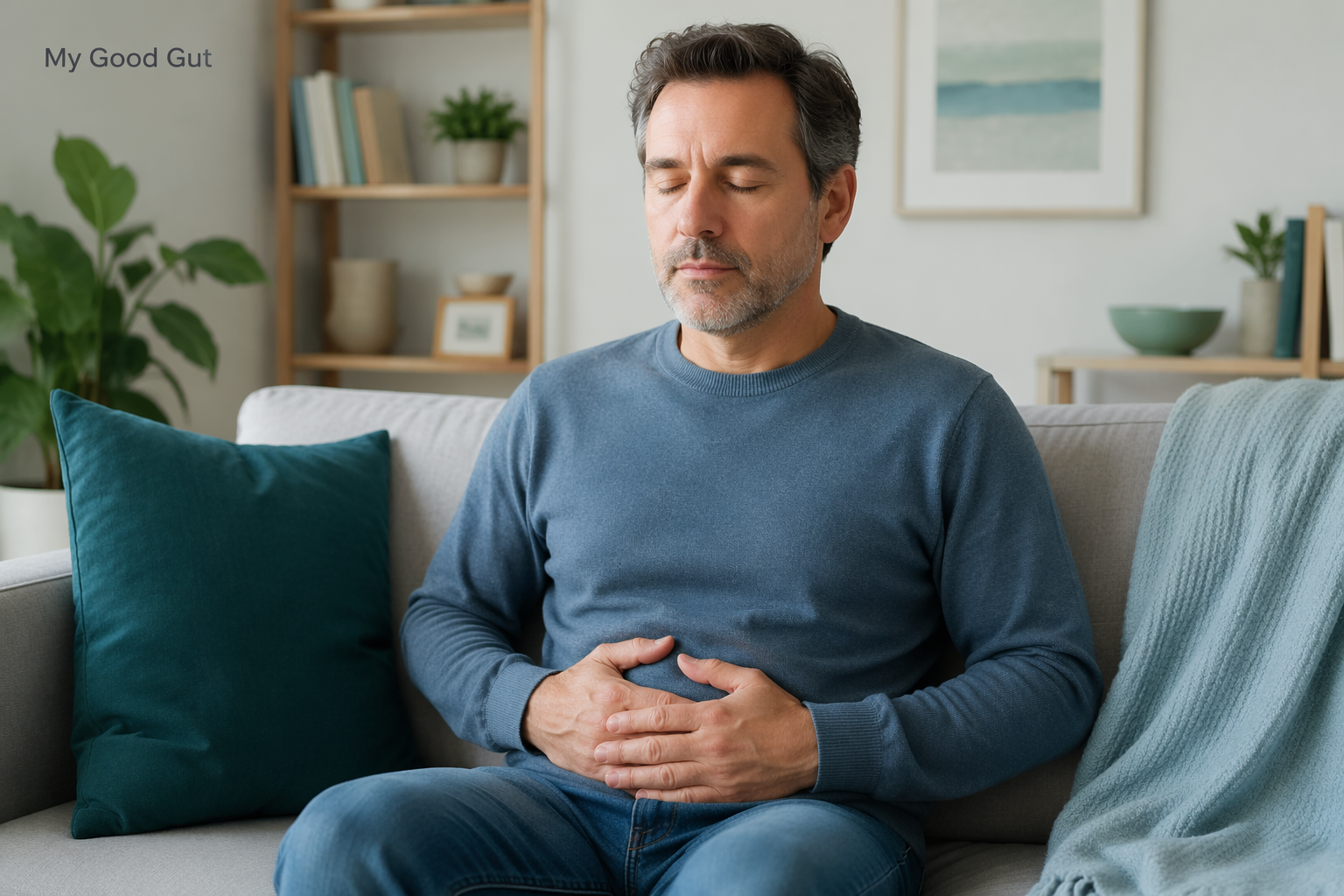
Irritable bowel syndrome (IBS) is a functional gastrointestinal disorder, which means the symptoms are real even when scans or routine tests look normal. It does not permanently damage the intestines or colon. That is one reason key IBS symptoms can be easy to miss at first.
The usual IBS symptoms men notice start with abdominal pain and bowel habit changes. Pain often sits low in the belly and can feel like cramping, pressure, or a twisting ache. Bowel changes may show up as diarrhea, constipation, or alternating episodes of both.
Common signs of IBS in men include:
- Bloating and gas that leave your stomach feeling tight or swollen
- Urgency, or a sudden need to get to the bathroom
- An Incomplete evacuation sensation after a bowel movement
- Symptoms that flare, ease, and then return again
IBS can affect more than your gut. Fatigue, sleep disruption, back discomfort, nausea after eating, and changes in mood can all come with it. Those symptoms can weigh on IBS quality of life, especially when work, travel, or long meetings make bathroom breaks harder.
The pattern matters as much as the symptom list. IBS usually comes and goes in flares instead of staying constant every day. Many people feel better after a bowel movement, while meals, stress, or certain foods can make symptoms worse. Research on gender differences in IBS suggests that men may report bloating, urgency, and pain in ways that look different from women (source).
IBS is a common disorder in the United States, and public health sources describe it as affecting a substantial share of adults (source). This content is for educational purposes only. Digestive symptoms can have many causes, so you should seek medical evaluation if symptoms are persistent, severe, or getting worse.
What Are The IBS Subtypes (IBS-D, IBS-C, IBS-M)?
IBS is usually grouped by the bowel pattern you notice most. That helps point to the subtype and can guide treatment choices based on whether diarrhea, constipation, or both are part of your pattern. A person with IBS symptoms in women may not look the same as someone else, because IBS can show up in different combinations.
Subtype | What it usually looks like |
|---|---|
IBS-D | Loose or watery stools, sudden urgency, and a strong need to get to the bathroom fast |
IBS-C | Infrequent bowel movements, hard or lumpy stools, and straining |
IBS-M | Fluctuating bowel habits, with diarrhea and constipation switching back and forth |
Diarrhea-predominant IBS, or IBS-D, is the form most tied to frequent loose stools and urgency. You may feel a sudden, hard-to-control need to go, and cramping can show up before a bowel movement.
Constipation-predominant IBS, or IBS-C, is the opposite pattern. Bowel movements happen less often, stools feel hard or lumpy, and passing stool may take real effort. Bloating and a sense of incomplete emptying are common too.
Mixed IBS, or IBS-M, means your stool pattern changes from flare to flare. One stretch may look like diarrhea, while the next feels like constipation. Those fluctuations can make the pattern feel harder to predict than the other types.
Symptoms can vary a lot from person to person. IBS symptoms can differ from person to person, and some public health sources note that women with IBS often report more symptoms during their periods (source). Subtype matters because the same diet, medication, or symptom plan does not work equally well for every pattern, so the right next step depends on whether loose stools, hard stools, or both are driving your symptoms.
This content is for educational purposes only and is not a substitute for personalized medical advice. Persistent, severe, or worsening symptoms should still prompt a qualified healthcare professional. Results vary by person, and any dietary or supplement advice should be individualized.
Where Is IBS Pain Felt In Men?
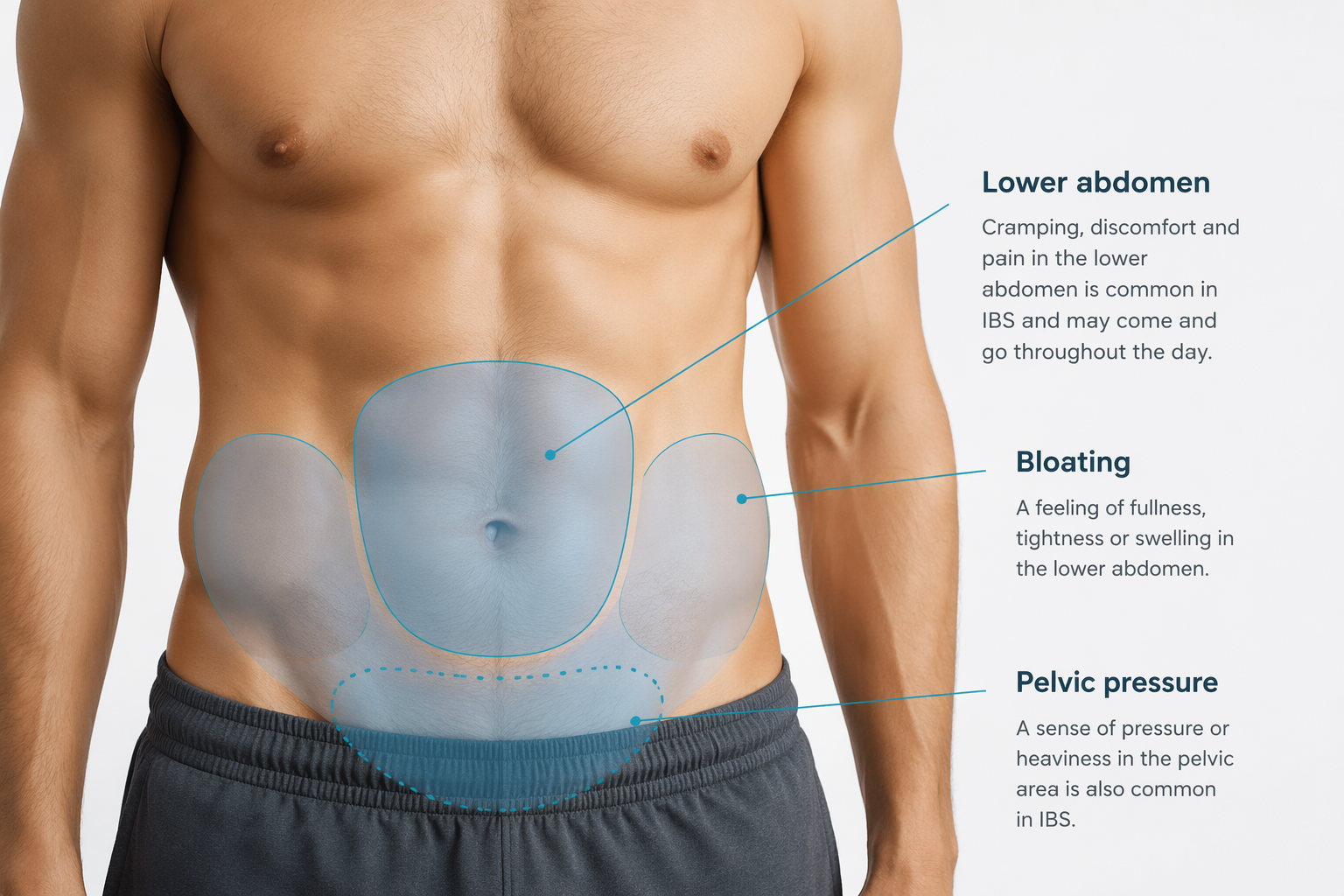
IBS pain usually shows up as abdominal pain or cramping in the lower belly, but it can feel more like a moving ache than one fixed spot. Men often notice it with bloating, diarrhea, constipation, or fluctuating bowel habits. The pain may shift from side to side. It often feels crampy or gassy after meals or during stress, and it often eases after a bowel movement.
That post-bowel-movement relief is one of the clearest clues that the pain fits IBS. Bloating and constipation can make the discomfort feel heavier and more persistent. Trapped gas and backed-up stool can create lower abdominal pressure, an incomplete evacuation sensation, and pelvic pressure that makes it feel like you still need to go. In some men, IBS and posture also matters, since long stretches of sitting can make the pain feel worse. IBS can also bring urgency to defecate or mucus in stool.
A few patterns help separate IBS from other causes:
Condition | Typical pain pattern |
|---|---|
IBS | Crampy, shifting, tied to bowel changes, often better after pooping |
Appendicitis | Sharper, steadily worse, often starts near the belly button and moves to the lower right side |
Prostatitis | Pelvic floor, perineum, groin, or lower back pain with urinary burning or a weak stream |
Reflux | Burning behind the breastbone or in the upper abdomen after meals |
Prostate overlap with IBS can be confusing, because bloating and constipation may press on the bladder and cause urinary urgency or frequent urination. Still, pain that stays on one side, keeps getting worse, or comes with fever, vomiting, blood in stool, testicular pain, or severe urinary symptoms needs prompt medical evaluation. Digestive symptoms can have many causes, so persistent or worsening pain deserves a clinician’s review.
What Causes IBS Symptoms And Overlap In Men?
IBS symptoms often start when the gut and brain stop syncing well. When the Gut-brain axis is off, normal digestion can feel amplified. That can show up as cramping, bloating, urgency, pain, constipation, diarrhea, or a mix that changes from week to week.
Stress and mood shifts can push symptoms harder than food alone. A rough work stretch, poor sleep, anxiety, or depression can tighten the gut-brain loop and make flares more likely. That helps explain why you may feel steady for days, then flare during a tense or exhausting period.
Several common patterns and triggers stand out:
- After an infection: IBS can start after a bad stomach bug or severe gastroenteritis. This is often called post-infectious IBS.
- After microbes change: Ongoing bloating, gas, and irregular stools can happen when the gut microbiome shifts. A lingering bacterial overgrowth may play a role.
- After certain meals: Fatty foods, large meals, caffeine, alcohol, and some high-FODMAP foods can trigger symptoms for some people.
- After a hard week: Poor sleep, stress, and anxiety often make bowel symptoms worse, even when the food itself seems ordinary.
A hydrogen breath test may help a clinician evaluate small intestinal bacterial overgrowth, but test results need to be interpreted in context because SIBO is only one possible contributor to IBS-like symptoms (source).
IBS can also mimic non-digestive problems. Gas and bloating can press on the bladder and create urgency or more frequent urination. Prostate overlap with IBS can make pelvic discomfort feel confusing, especially when the pain seems urinary or prostate-related rather than bowel-related.
- Check in with a healthcare professional if you have persistent pelvic pressure.
- Get evaluated if urinary changes keep coming back.
- Seek medical care if the pain does not follow a typical bowel pattern.
A clinician can help sort out what fits IBS and what needs a different workup.
How Is IBS Diagnosed In Men?
IBS diagnosis is usually a clinical call, not a single lab result. A clinician looks for a repeating pattern of abdominal pain tied to bowel changes, then uses tests to rule out other problems that can look similar.
The timing matters too. A clinician may consider IBS when symptoms have been present for at least three months and follow a repeating pattern of abdominal pain tied to bowel changes (source). The pain should connect to changes in stool frequency, stool form, or short-term relief after a bowel movement. That pattern helps separate IBS from a short-lived stomach bug or a one-off food reaction.
A focused visit usually centers on the clues that matter most:
- When symptoms started: A clear start point helps show whether the pattern is steady or worsening.
- What sets off flares: Meals, stress, travel, and poor sleep can all play a role.
- What the stool looks like: Loose, hard, mixed, urgent, or unpredictable stools point in different directions.
- What happens in the bathroom: Urgency, incomplete emptying, and relief after going can all support IBS.
- Which pattern fits best: Diarrhea-predominant IBS, constipation-predominant IBS, or a mixed pattern can shape the next step.
Basic testing may include blood work and stool tests. These checks look for anemia, inflammation, infection, or other digestive conditions that can mimic IBS. That matters because an IBS diagnosis is about finding the best fit while not missing something more serious.
Some men also need a hydrogen breath test. That test may help when bloating, gas, and diarrhea are the main complaints. Doctors may order it if they suspect carbohydrate intolerance or small intestinal bacterial overgrowth, especially when symptoms keep cycling without a clear pattern.
Test | Why it may be used |
|---|---|
Blood work | Checks for anemia or inflammation |
Stool tests | Looks for infection or other bowel problems |
Hydrogen breath test | Checks for carbohydrate intolerance or SIBO |
Colonoscopy | Used when red flags, age, or an unusual pattern raise concern |
Colonoscopy is not routine for every man with suspected IBS. The colon often looks normal in IBS. It becomes more appropriate when Red flag symptoms are present, when age raises the need for screening, or when the picture does not match a typical IBS pattern.
When to see a doctor for IBS becomes clearer if symptoms are persistent, worsening, vague, or hard to sort out. A gastroenterologist can confirm the likely diagnosis and decide whether more testing is needed. Persistent, severe, or worsening symptoms deserve a medical evaluation.
What Red Flags Mean It May Not Be IBS?
Blood in the stool is not a typical IBS symptom, and rectal bleeding should be evaluated because it can signal another condition (source). Clear or white mucus can happen with IBS, but any rectal bleeding deserves prompt medical evaluation because it may point to hemorrhoids, infection, inflammatory bowel disease (IBD), or colorectal cancer.
A few warning signs deserve extra attention:
- Unexplained weight loss: IBS usually does not cause ongoing weight loss. Rapid or steady loss can signal a more serious digestive problem or another illness in your body.
- Fever, new anemia, or unusual weakness: These signs do not fit the usual IBS pattern. They can suggest infection, long-term inflammation, or hidden intestinal bleeding.
- Nocturnal diarrhea: Diarrhea that wakes you from sleep is concerning because IBS symptoms usually happen during the day. Nighttime symptoms can suggest IBD, infection, or another gastrointestinal disorder.
- Severe, persistent pain: Pain that keeps getting worse or does not ease is not something to brush off as an IBS flare. It can signal inflammation, a blockage, or another urgent problem.
The threshold for care should be lower when symptoms are new, persistent, or getting worse. Men often delay care by blaming stress, food, or a rough week at work, but that can keep a real problem from getting checked soon enough.
IBS treatment options help when the pattern truly fits IBS, and Diet and lifestyle management for IBS can support symptom control too. Red flags change the picture, and they should push you toward prompt medical evaluation.
This content is for educational purposes only and is not a substitute for personalized medical advice. Digestive symptoms can have many causes, so you should consult a qualified healthcare professional for persistent, severe, or worsening symptoms. Results vary by person, and any dietary or supplement advice should be individualized.
How Do You Calm An IBS Flare-Up?
The quickest way to calm an IBS flare is to simplify the next few hours and avoid the things most likely to stir up your gut.
During an IBS flare, smaller meals and steady fluid intake can be easier to tolerate than a large meal, and public health guidance also recommends eating smaller meals and avoiding foods or drinks that stimulate the intestines (source). If diarrhea is part of the flare, an oral rehydration drink can help replace fluids. If you’re hungry, stick with bland, low-fat foods like toast, rice, bananas, or plain oatmeal. Skip caffeine, alcohol, greasy food, and very high-fiber meals because they can make cramping, diarrhea, and bloating worse.
Comfort measures can ease the pressure fast:
- Heat: Place a heating pad or warm pack on your abdomen, and check heating pad formats and safe use before a long session.
- Position: Rest in whatever position reduces pain.
- Movement: Take a short walk only if it feels soothing.
- Breathing: Slow your breathing and give your nervous system a chance to settle.
The brain-gut connection can turn stress into more spasm. A few calm minutes can make the flare feel less sharp.
Medication depends on your symptom pattern.
Symptom pattern | Common short-term approach |
|---|---|
Diarrhea-predominant IBS | An antidiarrheal such as loperamide may help |
Constipation-predominant IBS | A laxative or stool-softening approach may help |
Severe bloating or possible blockage | Avoid antidiarrheals and get medical advice |
Use medicines only as directed. If your symptoms do not fit your usual pattern, hold off and get checked before trying to treat it like a routine flare.
For the next day or two, smaller meals may be easier to tolerate, and public health guidance for IBS includes eating smaller meals and avoiding foods or drinks that can stimulate the intestines (source). Stick with foods you usually tolerate and avoid known triggers. A temporary Low-FODMAP diet can help some people, but it should stay short term. The broader Diet and lifestyle management for IBS plan still matters. Slow fiber changes, steady hydration, regular movement, sleep, and realistic stress control can help keep symptoms from building.
IBS pain is often crampy, may show up after eating or during stress, and can ease after a bowel movement. It is different from pain caused by infection or obstruction. Seek urgent care if you have severe pain, pain fixed in one spot, fever, vomiting, black or bloody stool, fainting, chest pain, new urinary symptoms, or a swollen hard abdomen.
Prompt evaluation is also important if symptoms are rapidly worsening, you cannot keep fluids down, you look dehydrated, or constipation brings severe pain with no gas passing. If flares affect sleep, work, stamina, libido, or intimacy, that can happen with IBS, but persistent or changing symptoms still deserve a qualified healthcare professional’s review. If the pattern feels off, ask whether a SIBO breath test makes sense before assuming it is just IBS.
IBS Symptoms In Men FAQs
These FAQs focus on IBS symptoms in men that are often easy to brush off, from bloating and abdominal pain to changes in bowel habits. They also help you see which patterns fit IBS and when a closer medical look makes sense.
1. What Triggers IBS In Men?
IBS in men is often set off by a mix of food, stress, past stomach infections, and sometimes SIBO, and your triggers may be different from someone else’s. Common triggers include wheat, dairy, gluten, citrus, beans, cabbage, milk, and carbonated drinks, but true food allergies are rarely the main cause. The Gut-brain axis also helps explain why anxiety, stress, or depression can worsen pain, bloating, urgency, or bowel changes, so a simple diary of meals, stress, recent illness, and symptom timing can help you spot patterns to share with your doctor if they keep happening.
2. What Is The Best IBS Medication?
There isn’t one best medication for IBS, because the right choice depends on whether you have IBS-D or IBS-C, along with how bad your pain, urgency, or bowel changes are. IBS-D treatment usually focuses on slowing diarrhea and easing urgency, while IBS-C treatment aims to relieve constipation, hard stools, and straining. Antispasmodics, fiber supplements, or probiotics may help some people, but the safest and most effective plan should be discussed with a clinician, especially if symptoms are persistent or worsening. This information is for educational purposes only and is not a substitute for personalized medical advice.
3. Can IBS Affect Erections Or Libido?
Yes, IBS can affect erections or libido indirectly. Ongoing pain, bloating, flare-related fatigue, sleep trouble, anxiety, and low mood can make sex feel less comfortable or less appealing, even though IBS is not a direct sexual disorder. If erection problems or a lasting drop in libido continue when your IBS is calmer, or if the change is new, talk with a urology or primary care clinician to check for other causes. Mucus in stool can happen with IBS, but it does not explain every sexual change.
4. Does IBS Cause Bloating In Men?
Yes, bloating is common in IBS symptoms men notice, and it can feel like fullness, tightness, visible swelling, and bloating and gas after meals or later in the day. In IBS in men, slower or irregular transit can trap stool and gas in IBS-C, speed things up in IBS-D, or swing between both in IBS-M, and SIBO may add extra fermentation and pressure in some people. If bloating comes with constipation, diarrhea, alternating bowel habits, or urgency to defecate, that pattern points more toward IBS than a one-off meal reaction, and a simple first step is to cut back on one gas trigger for a few days, such as carbonated drinks, onion-heavy meals, or sugar alcohols. For swelling that feels confusing, IBS and water retention can help separate fluid shifts from true bloating.