

IBS colonoscopy guidance explains when the procedure is useful and when symptoms can be evaluated without it. Many people with bloating, diarrhea, constipation, or abdominal pain worry that a normal colonoscopy will miss the real problem, especially when the diagnosis still feels uncertain.
IBS is a functional gut disorder, which means symptoms come from how the bowel works rather than visible damage, and the next steps often depend on red flags, age, and test results.
That is why this article covers the symptom pattern that supports IBS, the warning signs that make colonoscopy more appropriate, and the blood, stool, and breath tests that often come first. It also explains how prep can affect symptoms, what a normal result does and does not mean, and which findings point toward conditions like IBD, celiac disease, microscopic colitis, or colorectal cancer.
Readers will get a clear path for deciding what belongs in the conversation with a healthcare professional.
Adults with IBS symptoms, caregivers, and primary care patients often need practical guidance before agreeing to an invasive test. For someone with long-standing bloating and diarrhea but no bleeding or weight loss, a symptom-based workup may come first, while a new change after age 45 deserves faster review.
That kind of context helps people move from uncertainty to a more informed next step, and the rest of the article lays out that decision clearly.
IBS Colonoscopy Key Takeaways
- IBS is usually diagnosed from symptoms and history, not colonoscopy.
- Colonoscopy cannot confirm IBS because IBS does not cause visible colon damage.
- Bleeding, weight loss, anemia, fever, or nighttime symptoms raise concern.
- Age 45 and older may call for colorectal cancer screening colonoscopy.
- Blood, stool, and breath tests often come before colonoscopy.
- Colonoscopy helps rule out IBD, polyps, cancer, diverticular disease, and microscopic colitis.
- A normal colonoscopy supports IBS, but ongoing symptoms may still need follow-up.
How Is IBS Diagnosed?
Irritable Bowel Syndrome diagnosis usually starts with your symptom pattern and medical history, not a single test. IBS is a functional gastrointestinal disorder, which means the problem is in how your gut works rather than in visible damage. In classic cases, clinicians use the Rome IV IBS diagnostic criteria and the Rome Criteria to match a clear symptom pattern before deciding whether more testing is needed.
The core pattern is specific:
- Pain pattern: Recurrent abdominal pain at least 1 day per week in the last 3 months
- Bowel link: Pain that improves or worsens with bowel movements
- Stool change: Pain tied to changes in stool frequency or stool form
- Extra context: Symptoms may track with stress, food triggers, or a change after infection, including post-infectious IBS
That is why the question “can colonoscopy detect IBS” gets a careful answer. A colonoscopy cannot diagnose IBS because IBS does not usually cause ulcers, inflammation, lesions, or other structural changes. A colon that looks normal can still fit IBS very well. It also does not settle every alternative, because bile acid diarrhea testing is separate from anything a scope can show.
Your history and physical exam guide the next step:
| What the clinician checks | Why it matters |
|---|---|
| Symptom timeline | Shows whether the pattern fits IBS |
| Stool changes | Helps separate constipation, diarrhea, and mixed patterns |
| Triggers | Points toward food, stress, or infection-related clues |
| Alarm features | Flags bleeding, weight loss, anemia, or other concerns |
Studies have found that symptom-based IBS criteria can identify many patients accurately, which helps explain why clinicians can often make an IBS diagnosis without colonoscopy (source). Testing is mainly reserved for atypical or concerning symptoms, and it is used to rule out other causes rather than prove IBS.
When Do You Need A Colonoscopy?
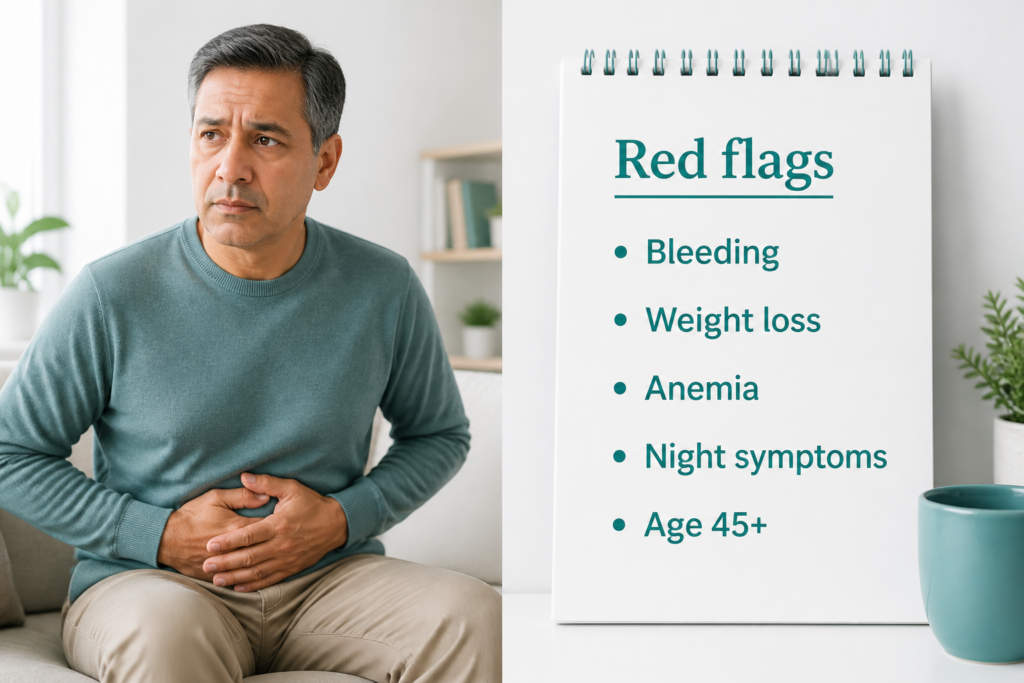
A colonoscopy is not usually needed to diagnose irritable bowel syndrome (IBS) when your symptoms fit the usual pattern and there are no warning signs. In many lower-risk cases, clinicians start with a symptom-based diagnosis and a few noninvasive tests instead of an immediate procedure. That approach helps rule out other causes without jumping straight to an invasive test.
A colonoscopy becomes more appropriate when your symptoms point away from a straightforward IBS pattern. Alarm features include:
- Rectal bleeding or blood in the stool
- Unexplained weight loss
- Iron-deficiency anemia
- Persistent fever
- Symptoms that wake you from sleep
- New symptoms that start around age 45 to 50 or later
Progressive or unusual changes can also shift the workup toward colonoscopy. Worsening abdominal pain, occult blood in stool, or lab results that do not fit IBS can all change the plan. A quick guide to recognize IBS red flags early can help you sort out what needs faster follow-up.
Age and family history matter too. In the United States, routine colorectal cancer screening begins at age 45 for average-risk adults according to current national guidance (source). It may start earlier or happen more often if you have a family history of colorectal cancer or other risk factors. That means a colonoscopy can be done for screening, for IBS-like symptoms, or for both.
| Situation | Colonoscopy is more likely |
|---|---|
| Typical IBS symptoms, no red flags, younger adult | Often no, at first |
| IBS-like symptoms plus alarm features | Yes, more often |
| Age 45+ with screening needs | Often yes, depending on your plan |
| Family history or higher risk | Often earlier or more frequent |
Younger adults with classic IBS symptoms are often managed conservatively first. Older age, family history, or unusual findings lower the threshold for an IBS colonoscopy discussion, so bring both your symptoms and screening history to your healthcare professional.
What Tests Come Before A Colonoscopy?
When IBS-like symptoms don’t come with alarm signs, doctors often start with tests that are easier on your body than a colonoscopy. The goal is to look for anemia, inflammation, infection, or celiac disease before moving to an invasive procedure. That approach can spare you from extra testing when the pattern still fits IBS.
A first round of testing for IBS-like symptoms often includes a complete blood count, inflammatory markers such as CRP, and celiac testing with tTG-IgA when symptoms fit that possibility (source).
- Complete blood count: checks for anemia, which can point to bleeding or another condition that needs more workup.
- CRP inflammation marker: helps look for inflammation that is less consistent with IBS and more concerning for conditions like IBD.
- TTG-IGA celiac test: screens for celiac disease when gluten-related symptoms are possible.
Stool tests for IBS can also change the next step, especially when symptoms are less clear. The most useful IBS test types often include blood, stool, and breath checks that narrow the cause without jumping straight to colonoscopy.
Common stool tests include:
- Fecal occult blood testing: looks for hidden blood in the stool.
- Stool studies: check for infection, including Giardia, which can cause diarrhea, cramping, and bloating.
- Fecal calprotectin: helps separate inflammatory bowel disease from IBS by pointing to gut inflammation.
Breath testing can be considered when bloating, gas, and diarrhea raise concern for small intestinal bacterial overgrowth. Lactose breath testing can also help when lactose intolerance may be contributing to IBS-like symptoms (source).
Some patients may also be offered specialized blood biomarker tests. IBS-Chek is one example that may help identify post-infectious IBS in selected cases, especially after a stomach infection. It is not right for everyone, and it does not replace a full medical evaluation.
These tests help narrow the possibilities. They do not diagnose IBS by themselves. Diagnosis still depends on your symptoms, medical history, and criteria such as the Rome criteria. Colonoscopy is usually reserved for age-appropriate screening, red-flag symptoms, or abnormal results.
Which Blood Tests Are Common?
Blood work often comes before colonoscopy when your symptoms look like IBS but still need a closer check. A complete blood count, or CBC, can show anemia, infection clues, or other changes that suggest your symptoms may not be IBS alone. Low hemoglobin or iron-related changes can shift the workup toward another cause, and sometimes toward colonoscopy if alarm features are present.
Common blood tests include:
- CRP inflammation marker: This marker can stay normal in IBS. An elevated result raises concern for IBD or another inflammatory condition that may need colonoscopy or more testing.
- TTG-IGA celiac test: This is common when chronic bloating, diarrhea, or weight loss is part of the picture. Celiac disease is usually confirmed with blood testing and upper endoscopy with biopsy, not colonoscopy alone.
- Other blood work: Normal CBC, CRP, and celiac test results can make IBS more likely when the symptom pattern fits and stool tests do not point to inflammation or infection (source).
Blood tests work best as triage, not a final answer. They help separate IBS from IBD without rushing into a procedure, and that broader approach to inflammatory screening is supported in older evidence (source).
Which Stool And Breath Tests Help?
Stool tests for IBS-like symptoms can sort out a lot early on. They can check fecal calprotectin, hidden blood, and infectious germs such as Giardia, which helps separate IBS from inflammatory bowel disease or an infection that needs different treatment. A low fecal calprotectin result can make active intestinal inflammation less likely, and in a patient whose symptoms still fit IBS and who has no alarm signs, colonoscopy may not be the next step (source).
These stool tests are especially useful when symptoms point more toward infection than IBS:
- Ongoing diarrhea
- Recent travel
- Exposure to contaminated water
- A sudden change from your usual pattern
Breath tests add another layer of clarity. A SIBO breath test can look for small intestinal bacterial overgrowth, which matters when sorting out SIBO versus IBS, and lactose breath testing can show whether dairy is behind bloating, gas, or loose stools. When both stool and breath tests are reassuring, your clinician may feel more comfortable using a symptom-based IBS approach instead of moving straight to colonoscopy.
These tests do not rule out every colon problem, but they do narrow the cause and help guide whether colonoscopy, imaging, or no further invasive testing makes the most sense. Older guidance on these noninvasive checks is discussed in PUBMED (source).
What Can Colonoscopy Rule Out?
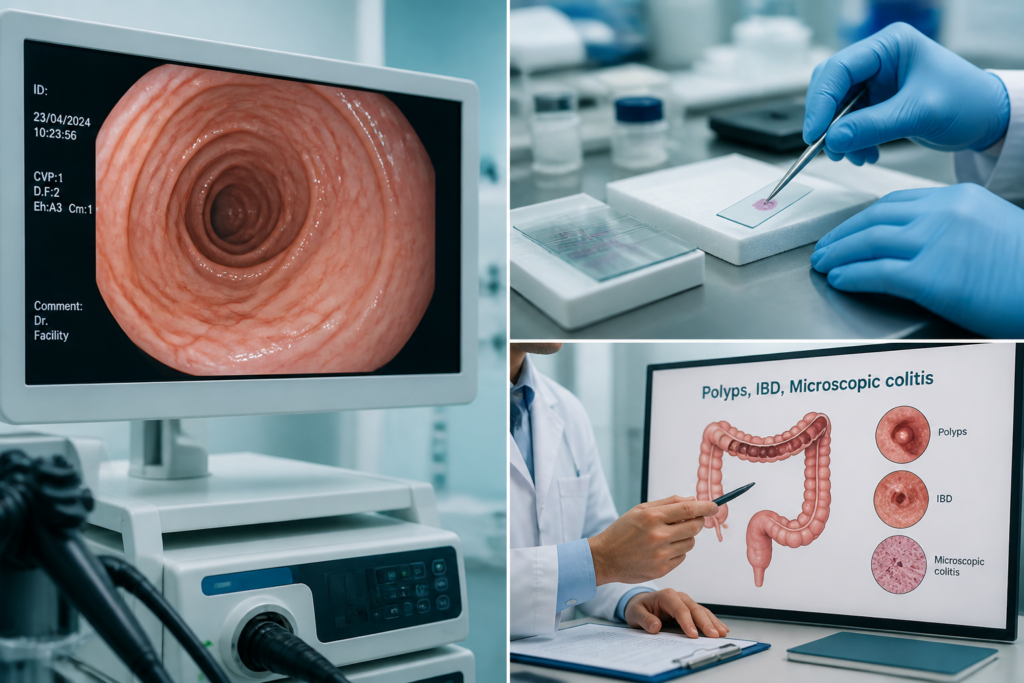
Colonoscopy is mainly used to rule out other colon diseases that can look like IBS, not to confirm IBS itself. A normal exam can narrow the picture toward a functional bowel disorder. That is why the question of can colonoscopy detect IBS comes up so often in the IBD vs IBS conversation.
The test can help identify or exclude several conditions:
- Inflammatory Bowel Disease: Colonoscopy can reveal visible inflammation, ulcers, and biopsy changes that point to Crohn’s disease or ulcerative colitis. This is the main way to rule out IBD with colonoscopy when symptoms include diarrhea, pain, bleeding, or urgency.
- Colonic polyps and cancer: Colonoscopy can detect colonic polyps and colorectal cancer. Both can cause bowel habit changes, rectal bleeding, and unexplained abdominal symptoms.
- Diverticular disease: Diverticulosis and related colon changes may appear during the exam. If they do, the focus may shift away from IBS and toward a colon-based condition.
- Other structural problems: Narrowed areas, masses, lesions, and sometimes microscopic colitis on biopsy may also be found. Follow-up CT or MRI may be needed if more detail is required.
Colonoscopy is more likely to find a cause other than IBS when symptoms include bleeding, anemia, weight loss, or a strong family history of colorectal disease (source). When the test finds a clear organic cause, treatment usually moves toward inflammation control, polyp removal, cancer workup, or more testing instead of IBS-only symptom care. If the exam is normal, ongoing or worsening symptoms still deserve medical follow-up, because a normal result does not explain every digestive problem (source).
How Should You Prepare For Colonoscopy?

Good colonoscopy preparation has one simple goal. Your large intestine needs to be completely clean so the clinician can see inflammation, polyps, colorectal cancer, diverticular disease, and other structural changes clearly.
That usually means two parts:
- Diet: Follow the clear-liquid or low-residue plan exactly as prescribed.
- Bowel cleanse: Take the laxative-based prep as directed so stool does not hide important findings.
Split-dose bowel preparation is often the best-tolerated option. You take half the laxative the night before and the other half the morning of the procedure. Common choices include polyethylene glycol, or PEG, solutions and other laxative preparations. The exact option depends on your medical history and the clinician’s instructions.
During colonoscopy preparation, it helps to know what the short term can feel like. Bowel prep can temporarily change the gut microbiome, including bacterial abundance and diversity, for a period after the procedure (source). You may also notice cramping, bloating, loose stools, or even temporary relief once the colon is fully emptied.
During the procedure itself, the clinician uses a camera to inspect the colon. Polyps may be removed, and biopsies may be taken if needed. Good prep helps those steps go more smoothly and supports a clearer exam.
Most bowel changes settle after the test. Contact a healthcare professional if symptoms are severe, persistent, or worsening, especially because colonoscopy risks and complications, while uncommon, deserve attention when pain, fever, or bleeding continues.
What Does A Normal Result Mean Next?
A normal colonoscopy is reassuring because it means the doctor did not see visible inflammation, ulcers, masses, or other structural changes in the colon. That supports the idea that IBS is a functional gastrointestinal disorder, which means the bowel can look normal even when symptoms are real and disruptive. It also shows why symptom history remains essential for IBS diagnosis.
When your symptoms fit a typical IBS pattern and there are no warning signs, a normal result often shifts the focus from more invasive testing to symptom care and a clinical diagnosis. In that setting, negative colonoscopy reassurance can be enough to move forward without another procedure right away. Follow-up usually depends on whether the pattern stays stable or starts to change.
A simple next step often looks like this:
- Low-risk, steady symptoms: reassurance, diet changes, stress support, and symptom tracking
- Persistent or changing symptoms: targeted follow-up such as blood tests, stool tests, or breath tests if they were not already done
- New alarm signs: faster medical review for a broader workup
A normal-looking colon can still miss problems found only under the microscope. That is why a Microscopic Colitis biopsy may matter in chronic watery diarrhea, IBS-D-like symptoms, older age at first symptoms, or a pattern that does not fit straightforward IBS. If biopsy confirms microscopic colitis, treatment changes because it is managed differently from IBS.
Repeat colonoscopy is not usually needed just because you have IBS. It may still be appropriate for age-based colorectal cancer screening, for checking colonic polyps, or when family history, alarm features, or a major symptom shift raises a different concern. The result is best reviewed with a qualified healthcare professional, along with your history and any colonoscopy preparation issues that could have affected what was seen.
IBS Colonoscopy FAQs
These FAQs cover the most common concerns about IBS colonoscopy, including how it fits into an Irritable Bowel Syndrome diagnosis, when negative colonoscopy reassurance can help, and how the Rome Criteria guide care. They set up the answers below with clear context before you talk through next steps.
1. Can Colonoscopy Trigger An IBS Flare?
A colonoscopy usually doesn’t cause a lasting IBS flare, but you may notice short-term cramping, bloating, diarrhea, or a temporary shift toward constipation afterward. The evidence is mixed, and bowel prep and gut microbiome changes can irritate the bowel for a short time, while the scope, air, or biopsies may add brief discomfort. If symptoms last more than a few days, become severe, or include bleeding, fever, or vomiting, talk with a healthcare professional. New GI symptoms after age 50, or around 45 in some guidance, also deserve a closer look than IBS alone, especially when reviewing colonoscopy risks and complications.
2. Will You Need Sedation For IBS Colonoscopy?
Yes, colonoscopy is usually done with sedation, so you’ll feel relaxed and often sleepy during the test. Depending on the clinic and your health history, your care team may use lighter or deeper sedation, and the medicine lowers awareness and memory of the exam, which is why the procedure often feels shorter and less stressful than you expect. You’ll usually need someone to drive you home afterward, and that’s a normal part of the prep, not a sign that your IBS is more severe.
3. What If Your Colonoscopy Finds Nothing?
A normal colonoscopy does not confirm IBS, but it can rule out other conditions that can look the same. If there are no red flags or abnormal findings, your clinician may stop more invasive testing and shift to a symptom-based IBS plan. Care often turns to diet changes, stress support, bowel habit support, and treatment matched to your main symptoms, while persistent diarrhea, bleeding, weight loss, anemia, or ongoing pain may mean biopsies or other diagnoses like microscopic colitis or celiac disease need a fresh look.
4. When Should IBS Symptoms Worry You?
IBS-like symptoms that begin after about age 45 to 50 deserve faster medical review, because new bowel changes at that age are more likely to need colonoscopy. Rectal bleeding, blood in the stool, occult blood on testing, nocturnal diarrhea that wakes you from sleep, unexplained weight loss, iron-deficiency anemia, fever, and steadily worsening abdominal pain are red flags that can point to something beyond IBS and may lead to colonoscopy. This content is for educational purposes only and is not a substitute for personalized medical advice, and persistent, severe, or worsening digestive symptoms should be reviewed by a qualified healthcare professional.