

IBS red flags are warning signs that point beyond routine irritable bowel symptoms and toward something that needs medical attention. For adults and families living with ongoing digestive symptoms, the hard part is knowing when bloating, diarrhea, or cramping stops looking like IBS and starts looking like IBD, infection, or another condition.
In plain terms, red flags are signs IBS usually does not explain, and spotting them early helps you know when to seek care and what details to share with a clinician.
This article covers the symptoms that deserve a closer look, from blood in the stool and unintentional weight loss to fever, vomiting, nighttime symptoms, and a bowel-habit change that feels very different from your usual pattern.
It also explains how urgent care, same-day review, and watchful waiting differ, plus which IBS tests such as fecal calprotectin, CBC, CRP, ESR, and colonoscopy often come into play. Readers will get a practical way to sort out what needs monitoring, what needs prompt follow-up, and what should not wait.
That clarity matters for people managing IBS, caregivers noticing a change, and primary care teams deciding when a gastroenterologist should be involved. A person whose symptoms begin after age 50, or whose diarrhea wakes them at night and comes with iron-deficiency anemia, needs a faster evaluation than someone with a familiar flare pattern.
Keep reading for a calm, evidence-based way to separate routine IBS from symptoms that deserve action.
IBS Red Flags Key Takeaways
- Blood in the stool and rectal bleeding are red flags.
- Unintentional weight loss needs prompt medical review.
- Fever, vomiting, and nighttime symptoms are not typical IBS.
- New symptoms after age 50 deserve closer evaluation.
- Iron-deficiency anemia can signal bleeding or inflammation.
- Fecal calprotectin helps distinguish IBS from IBD.
- Severe pain, black stools, or fainting need emergency care.
What Are IBS Red Flags?
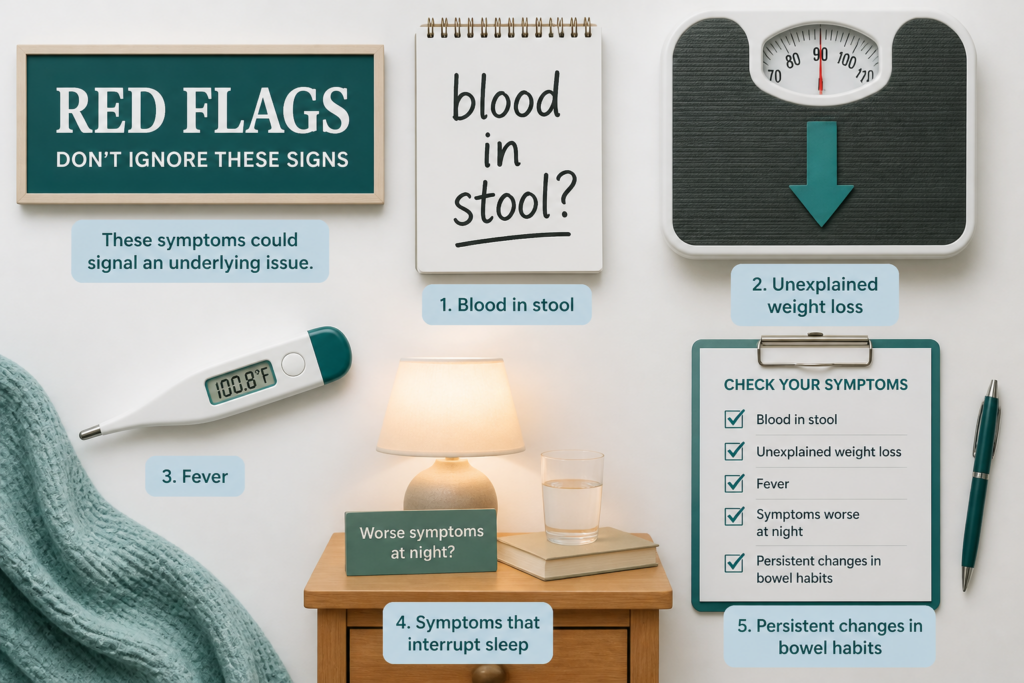
Irritable Bowel Syndrome (IBS) is a functional gastrointestinal disorder. That means the gut can look normal on tests even when it does not work normally. Cramping, bloating, gas, diarrhea, and constipation can all happen without visible inflammation or damage.
IBS red flags are different. These alarm symptoms IBS does not usually explain can point to inflammatory bowel disease, cancer, infection, or another condition. That is why clinicians sort symptoms into routine follow-up, testing, or urgent evaluation. Typical IBS often comes and goes over weeks, while red flags feel out of step with your usual pattern.
Watch for these warning signs:
- Blood in the stool or rectal bleeding
- Unintentional weight loss
- Iron-deficiency anemia
- Fever
- Persistent vomiting
- Symptoms that wake you from sleep
- A sudden new or rapidly worsening change in bowel habits
Extra evaluation matters if your symptoms begin after age 50, if you have a strong family history of colorectal cancer or IBD, or if the change is clearly different from your usual IBS pattern. Those shifts deserve timely review instead of being assumed to be a flare.
IBS is common, and it is often not dangerous. But serious bowel condition symptoms can overlap with IBS, IBD, and other disorders. Fecal calprotectin and other tests may help sort out inflammation. Personalized medical advice is the safest next step when symptoms are new, severe, or off-pattern.
Which IBS Symptoms Require Urgent vs Routine Care?
A simple triage ladder can help you sort IBS symptoms without guessing.
| Urgency level | What it can look like | What to do |
|---|---|---|
| Self-monitor | Cramping, bloating, gas, or stool changes that feel familiar and settle without fever, bleeding, unintentional weight loss, or waking you from sleep | Watch the pattern, hydrate, and note triggers |
| Same-day primary care review | Rectal bleeding, blood in the stool, nocturnal diarrhea, persistent fever, iron-deficiency anemia, a palpable abdominal mass, family history of gastrointestinal cancer, or age over 50 onset | Contact a primary care clinician or gastroenterologist the same day |
| Emergency care | Severe or fast-worsening pain, black stools, large-volume bloody stool, fainting, signs of dehydration, trouble keeping fluids down, or a rigid or swollen abdomen | Go to urgent care or the emergency department now |
Mild IBS flares usually stay in the self-monitoring lane. The pattern often looks familiar, and the symptoms ease with time. It should not include fever, rectal bleeding, nocturnal abdominal pain, or anything that keeps waking you from sleep.
The same-day group is where alarm symptoms IBS overlap with more serious conditions. Even one red flag deserves prompt review, because IBS-like symptoms can also appear with inflammatory bowel disease or structural disease. Clinicians may use fecal calprotectin to check for inflammation and help sort out the cause.
Emergency care is for signs of instability or obstruction. Severe pain that ramps up quickly, black stools, large-volume bleeding, fainting, dehydration, vomiting that keeps you from drinking, or a hard swollen belly should not wait.
When to see a doctor for bowel symptoms comes down to change, severity, and safety. If you are unsure where a symptom fits, seek medical review rather than waiting. Persistent, severe, or worsening digestive symptoms need personalized medical advice and should not be assumed to be IBS.
How Do You Tell IBS From IBD?
IBS vs IBD often comes down to how inflammation shows up. IBS is a functional gut disorder, which means the bowel looks normal but does not work normally. Inflammatory Bowel Disease includes Crohn’s disease and ulcerative colitis, and it causes true inflammation in the intestines.
The criteria for IBS diagnosis help support a diagnosis, and the ROME criteria are part of that picture. Even so, alarm features deserve a closer look because overlapping symptoms can hide a different cause.
A few red flags point away from IBS and toward inflammatory disease or another organic problem:
| Red flag | Why it matters |
|---|---|
| Blood in the stool | Can point to inflammation, infection, or colorectal disease |
| Unintentional weight loss | Suggests more than IBS may be going on |
| Fever | Often fits inflammation or infection |
| Waking at night with pain or urgency | Nocturnal abdominal pain and nocturnal diarrhea are less typical for IBS |
| Iron-deficiency anemia or other abnormal labs | Can reflect blood loss, inflammation, or poor absorption |
| Elevated inflammatory markers or fecal calprotectin | Raises concern for IBD or another inflamed bowel condition |
These findings do not automatically mean a serious diagnosis. They do mean IBS should not be assumed. In a careful differential diagnosis IBS workup, your clinician may look for celiac disease, microscopic colitis, infection, IBD, or colorectal cancer.
Early referral matters because missed IBD can let inflammation worsen. That can raise the risk of complications and sometimes lead to more intensive treatment or surgery. Seek medical review for persistent or worsening symptoms, especially with bleeding, new onset after age 50, nocturnal symptoms, fever, or unexplained anemia.
What Tests Might Your Doctor Order?
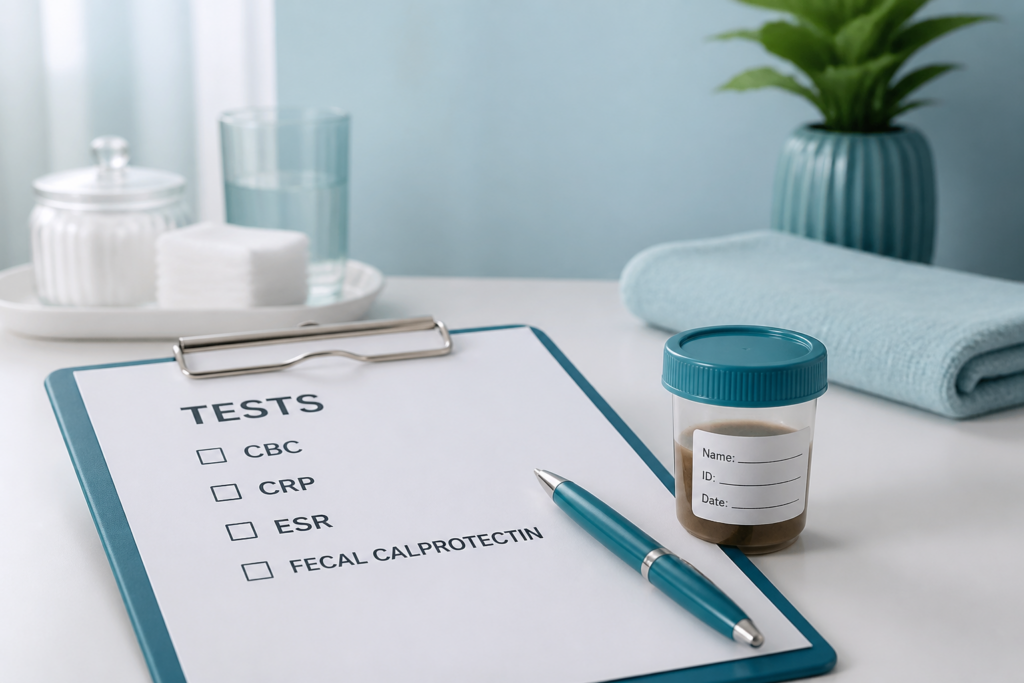
When red flags appear, testing usually starts with blood work and stool studies. The aim is to avoid calling it IBS too soon. The testing for IBS process helps build the differential diagnosis IBS and points toward other causes.
Common first tests include a complete blood count (CBC), which can show anemia, and albumin, which may suggest inflammation, poor absorption, dehydration, or low protein levels. Doctors also often order C-reactive protein (CRP) and erythrocyte sedimentation rate (ESR). Abnormal results raise concern for inflammatory bowel disease (IBD) or another organic cause. Iron-deficiency anemia is a major red flag, and an unexplained low iron level deserves attention even when symptoms seem mild.
Stool testing becomes more important when you have diarrhea, blood in the stool, or symptoms that keep coming back. These tests help rule out infection and other non-IBS causes. They also matter when C. difficile risk is part of the picture, such as after recent antibiotics or healthcare exposure.
Faecal calprotectin is a non-invasive stool test that can show intestinal inflammation and help distinguish IBS from IBD, although coverage for prolonged diarrhea depends on the health system or insurer (source, source).
Colonoscopy is commonly considered when bleeding, iron-deficiency anemia, unexplained weight loss, or new symptoms after age 50 are present (source, source).
- Bleeding or blood in the stool
- Iron-deficiency anemia or unexplained low iron
- Unexplained weight loss
- New symptoms after age 50
- Abnormal blood or stool results
A colonoscopy lets your doctor inspect the colon directly and take a biopsy if needed. IBS colonoscopy results can help show how that exam separates IBS from more serious conditions.
What Should You Do After A Red Flag Appears?
The safest first step is to treat a new red flag as a real signal, not just a rough IBS day. Rectal bleeding, black or tarry stool, unintentional weight loss, new symptoms after age 50, nighttime symptoms that wake you, persistent fever, new anemia, a lump you can feel, repeated vomiting, or pain that is getting much worse all deserve prompt medical review. That is the moment to seek prompt medical attention, especially when the pattern does not fit your usual IBS symptoms.
A simple triage check can make when to see a doctor for bowel symptoms easier to sort out:
| Urgency level | What it can look like | What to do |
|---|---|---|
| Watch and track | A mild, one-time change that is improving within 24 to 48 hours | Monitor closely and note what changes |
| Same-day or next-day visit | Ongoing bleeding, weight loss, fever, night sweats, nighttime symptoms, or a major shift from your usual pattern | Book medical review with your primary care clinician or gastroenterologist |
| Emergency care | Severe abdominal pain, repeated vomiting, fainting, dehydration, heavy bleeding, or a hard mass with worsening symptoms | Go to emergency care now |
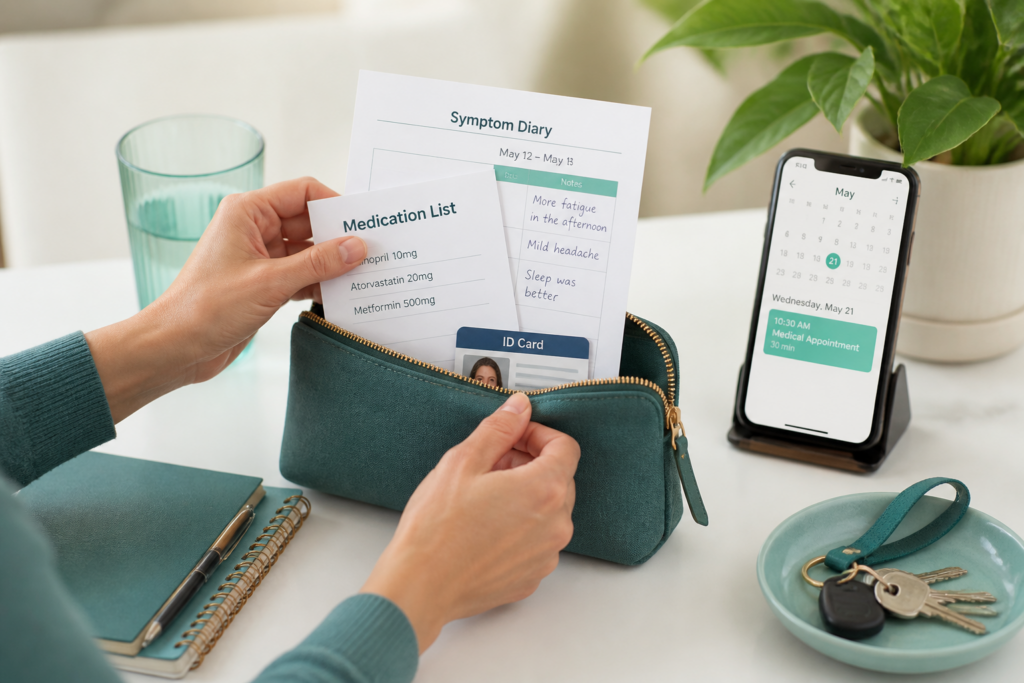
Before your appointment, write down the details that help a clinician move faster:
- When the symptom started
- How often it happens
- Whether it is getting worse
- Stool color and appearance
- Pain location and whether it improves after a bowel movement
- Fever, chills, or night sweats
- Recent travel or infection exposure
- Medicines and supplements you take
- Any recent weight change
A yes-or-no diary can also help you spot when IBS stops looking typical. Track bleeding, black stool, fever, nighttime symptoms, pain, and bowel changes for a few days.
The first tests to discuss often include a complete blood count and iron studies for anemia, C-reactive protein or erythrocyte sedimentation rate for inflammation, celiac serology when appropriate, fecal calprotectin for stool inflammation, and stool infection testing when symptoms fit, including C. difficile risk. Colonoscopy indications include bleeding, anemia, age-related risk, and alarm features that keep pointing away from IBS, and the diagnostic yield is often highest when those clues are present.
Digestive symptoms can have many causes. Early assessment matters because delayed diagnosis of inflammatory bowel disease or another organic condition can lead to avoidable complications. This guidance is meant to support, not replace, personalized medical advice, and the My Good Gut red-flag checklist can help you organize what to watch before you seek prompt medical attention.
IBS Red Flags FAQs
These IBS red flags FAQs cover the warning signs that deserve a closer look and the questions people often ask when symptoms stop feeling like routine IBS. They can help you tell which questions need prompt medical attention and which belong in a calm conversation with your doctor.
1. How Do You Calm An IBS Flare-Up?
A mild IBS flare often settles best with a bland, low-fat day of smaller meals, less caffeine, no alcohol, and fewer spicy foods. Water helps, and an electrolyte drink can be useful if diarrhea is part of the flare. Simple foods you already tolerate are usually better than a strict cleanse or a big diet overhaul, and the low FODMAP diet is usually something to discuss later if flares keep happening. For Irritable Bowel Syndrome, over-the-counter options may help when used as directed, but severe, new, or worsening symptoms, or red flags like blood in stool, fever, vomiting, or unexplained weight loss, should prompt medical care.
2. How Do You Know If IBS Is Serious?
IBS can still be serious when red flags appear, and your clinician may order tests to rule out IBD, celiac disease, microscopic colitis, infection, or colorectal cancer. Blood in the stool, unexplained weight loss, iron-deficiency anemia, other abnormal labs, and vitamin or mineral deficiencies that do not fit IBS all deserve prompt attention. Symptoms that wake you from sleep are especially concerning, and new digestive symptoms after age 50, especially with a family history of gastrointestinal cancer, should be evaluated rather than brushed off.
3. Why Can IBS Feel So Debilitating?
IBS can feel much bigger than an upset stomach because cramping, bloating, gas, diarrhea, and constipation can be frequent, unpredictable, and disruptive enough to affect work, sleep, and daily plans. The brain and gut can become extra sensitive, so normal bowel activity may feel like pain or urgency even when tests are normal, and fatigue or a run-down feeling can make it feel like more than a bowel problem. Stress and anxiety can raise symptom intensity, a low FODMAP diet may help some people manage flare patterns, and persistent low-grade fever, new anemia, or major unexplained weight loss are not typical IBS signs and should be checked.
4. Can IBS Symptoms Change Suddenly?
Yes, IBS symptoms can change, but a sudden shift in your usual pattern deserves attention. New pain, a new bowel habit, or symptoms that worsen quickly should not be brushed off, and diarrhea that lasts more than 2 to 3 weeks, happens at night, or keeps getting worse is a red flag. If your symptoms started after an infection, or you’ve had recent antibiotics, fever, blood in the stool, weight loss, or a family history of GI cancer, IBD, or celiac disease, ask a clinician about evaluation, since post-infectious IBS can look a lot like something more serious.