

IBS antidepressants compare low-dose tricyclic antidepressants and SSRIs for symptom relief, not depression alone. For people who have already tried diet changes, probiotics, or over-the-counter options, the hard part is deciding which medicine fits pain, bowel pattern, and side effects.
These medicines work as gut-brain neuromodulators, which means they change how pain and bowel signals are processed, and the payoff is a clearer way to discuss IBS treatment choices with a clinician.
The sections ahead break down which drugs are used, how TCAs differ from SSRIs, what the evidence says about overall symptom improvement, and how low-dose titration usually works. Readers also get a practical look at side effects, when constipation or diarrhea should steer the choice, and when tapering or switching makes more sense. That kind of comparison can turn a vague medication discussion into a focused plan with talking points, dosing ranges, and safety checks.
For adults living with IBS, especially those balancing work, family, and daily symptom flares, the most useful details are often the ones that clarify what to ask next. Primary-care clinicians will also find a concise patient-facing frame for shared decision-making, including a case where a person with IBS-D and cramping may do better on a low-dose TCA than an SSRI.
The next sections give that practical context and help move the conversation forward with confidence.
IBS Antidepressants Key Takeaways
- IBS antidepressants are used at low doses for symptom control, not just mood.
- TCAs usually fit pain, cramping, and diarrhea-predominant IBS better.
- SSRIs may suit constipation or anxiety-linked symptoms more often.
- Both classes can improve overall IBS symptoms, but evidence quality is mixed.
- Low-dose titration is standard, and benefits often take weeks to appear.
- Common TCA side effects include drowsiness, dry mouth, and constipation.
- Choice should reflect bowel pattern, side effects, and shared decision-making.
What Are IBS Antidepressants?
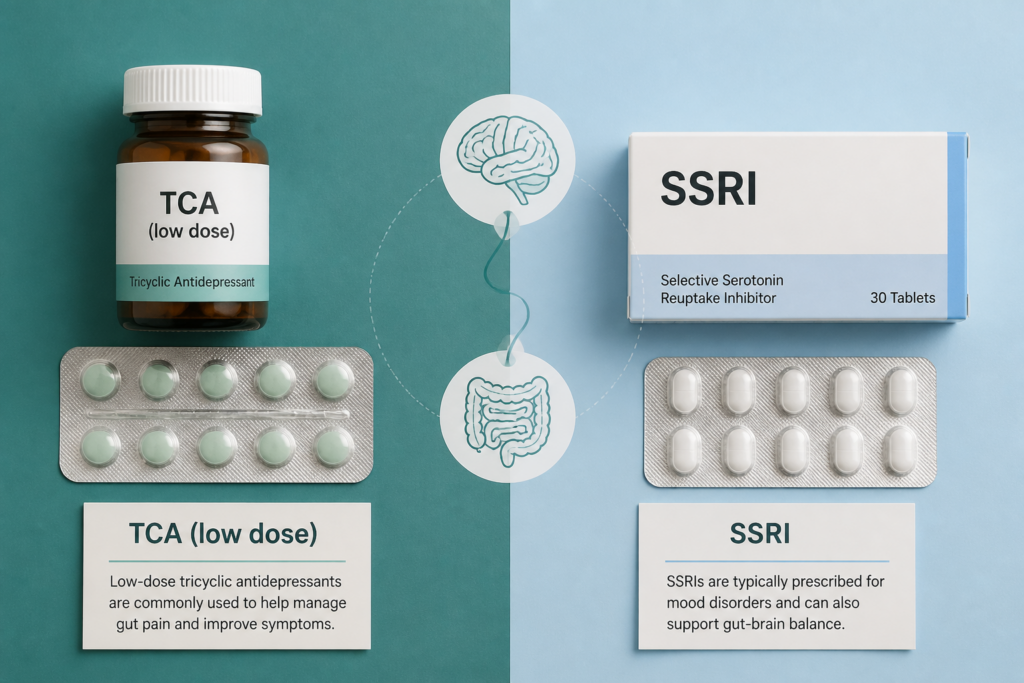
IBS antidepressants are low-dose medicines used to manage irritable bowel syndrome symptoms, not to treat depression alone. The main groups are tricyclic antidepressants and selective serotonin reuptake inhibitors, and both are used as neuromodulators for IBS because they can change how pain and gut signals are handled. That matters because the brain–gut interaction links stress, pain, and bowel function in both directions.
Tricyclic antidepressants are often a better fit when pain, cramping, or loose stools are the main problem. They can reduce visceral pain signaling, calm abdominal spasms, and may slow gut movement, which can help when diarrhea is prominent.
SSRIs work differently. They may support brain-gut symptom regulation, help when anxiety comorbidity IBS is part of the picture, and can speed gut transit. That makes them a reasonable option when constipation is part of the symptom mix.
A simple comparison can help you see the pattern:
| Medicine group | Common IBS fit | Typical effect |
|---|---|---|
| Tricyclic antidepressants | Pain, cramping, diarrhea-predominant IBS | May reduce pain and slow motility |
| SSRIs | Constipation, anxiety-linked symptoms | May ease stress-linked symptoms and speed transit |
The evidence is encouraging, but it has limits. Meta-analyses, reviews, and clinical series suggest IBS antidepressants can improve overall IBS symptoms, yet study quality is mixed and the benefit is not the same for every person. A reported NNT IBS antidepressants can help frame the odds, but it shifts across studies and IBS subtypes, so it works best as a rough guide.
These medicines usually make the most sense after first-line steps have already been tried, including a low FODMAP diet, lifestyle changes, probiotics, and over-the-counter options such as IBS peppermint oil. They are usually part of a broader IBS plan, not a stand-alone fix, and the goal is to support your gut health rather than promise a cure.
Choice usually comes down to the symptom pattern, side-effect tolerance, and how you feel about low-dose titration. Clinicians often match the medicine to pain, diarrhea, constipation, and anxiety, then adjust slowly through shared decision-making.
Which Antidepressants Are Used For IBS?
The antidepressants used for irritable bowel syndrome (IBS) are usually grouped by how they affect pain, bowel habits, and anxiety. The best match depends on your symptom pattern, not mood alone. Abdominal pain, visceral hypersensitivity, diarrhea, constipation, anxiety, and sleep all play a role.
The main drugs are straightforward to sort:
| Class | Common options | Usual IBS fit |
|---|---|---|
| TCAs | amitriptyline, imipramine, desipramine, nortriptyline | Better for pain, gut sensitivity, and diarrhea-predominant IBS |
| SSRIs | fluoxetine, paroxetine, citalopram | More often considered when anxiety or low mood is part of the picture |
TCAs for IBS are usually the more pain-focused option. Amitriptyline for IBS is often used when abdominal pain and visceral hypersensitivity are front and center. Nortriptyline and desipramine may be easier to tolerate than amitriptyline or imipramine because they usually cause less sedation and less anticholinergic burden.
SSRIs for IBS can still help some people, especially if anxiety or low mood is part of the decision. Fluoxetine for IBS and paroxetine for IBS are both commonly discussed, along with citalopram. These medicines are not usually the first pick when pain relief is the main goal, even though they may feel less constipating for some patients.
The evidence shows why clinicians often split them this way:
| Drug class | Study summary | Global symptom improvement | NNT IBS antidepressants | Pain signal |
|---|---|---|---|---|
| TCAs | 12 randomized controlled trials, 787 patients | 57% vs 36% with placebo | 5 | Stronger benefit for abdominal pain |
| SSRIs | 7 randomized controlled trials, 356 patients | 55% vs 33% with placebo | 5 | No statistically significant pain benefit |
That means both groups can improve overall IBS symptoms. The difference is in what they seem to help most. TCAs tend to be stronger for pain and bowel habit control, while SSRIs may fit better when mood symptoms are part of the plan.
Dosing also differs from depression treatment. TCAs are usually started low for IBS, often at 10 to 25 milligrams at night. Some people move up to 25 to 50 milligrams if needed and tolerated. Those doses are often below the amounts used for depression.
SSRIs are generally used closer to standard depression doses. That can make them feel less tailored to gut pain, even when they are the right choice for the full symptom picture. For that reason, low-dose TCA treatment is often the more common IBS strategy.
Side effects can help narrow the choice:
- Amitriptyline and imipramine: more likely to cause sleepiness, dry mouth, and constipation
- Nortriptyline and desipramine: often better tolerated, with less sedation and fewer anticholinergic effects
- SSRIs: sometimes less constipating, but usually less helpful for abdominal pain
If constipation is already a problem, nortriptyline or desipramine may be easier to live with than amitriptyline for IBS. If diarrhea, pain, and poor sleep are the main issues, a low-dose TCA often makes more sense than an SSRI.
How Do You Choose Between TCAs And SSRIs?
The best choice usually comes down to your main bowel pattern and the side effects you can live with. For IBS, the class is often chosen for its gut effect first, not just for depression or anxiety symptoms.
| Factor | TCAs for IBS | SSRIs for IBS |
|---|---|---|
| Best fit | Diarrhea, urgency, cramping | Constipation, low mood, or anxiety symptoms |
| Gut effect | Slows bowel movement | Can speed bowel movement |
| Common downsides | Constipation, dry mouth, drowsiness, urinary retention | Nausea, diarrhea, insomnia, agitation, sexual side effects |
TCAs are often a better fit for diarrhea-predominant IBS treatment because their anticholinergic effect can calm the bowel and reduce spasm further. That same slowing effect can help when urgency is the biggest problem. It can also work against you if constipation is already part of your pattern.
SSRIs for IBS work in the opposite direction for many people by increasing motility. They can increase motility, so they may make sense in constipation-predominant IBS treatment or when anxiety comorbidity IBS is part of the picture. But that same activating effect can worsen loose stools, and sleep or sexual side effects can make them a poor match if you are sensitive to medication changes.
That tradeoff is often what decides the final call in real life. A person with cramping and frequent stools may do better with a TCA. Someone with harder stools who wants to avoid extra slowing of the bowel may discuss an SSRI, though the evidence is weaker.
Guidelines lean in that direction. The American College of Gastroenterology recommends TCAs for IBS symptom relief, and the American Gastroenterological Association suggests TCAs while recommending against SSRIs based on current evidence. The overall guideline signal favors TCAs first.
The choice is also different from a standard antidepressant decision. For IBS, the goal is usually to slow the bowel without causing too much constipation or to avoid activating side effects like insomnia. If constipation remains a major issue, a clinician may talk through other options such as linaclotide rather than relying on an SSRI alone. The IBS antidiarrheal drugs page can also help you compare bowel-slowing options.
If you have IBS-D and want less urgency and pain, TCAs usually align better. If constipation is the bigger issue, an SSRI may come up, but the evidence is weaker and the side effects deserve close attention.
How Should You Start, Titrate, And Taper Them?
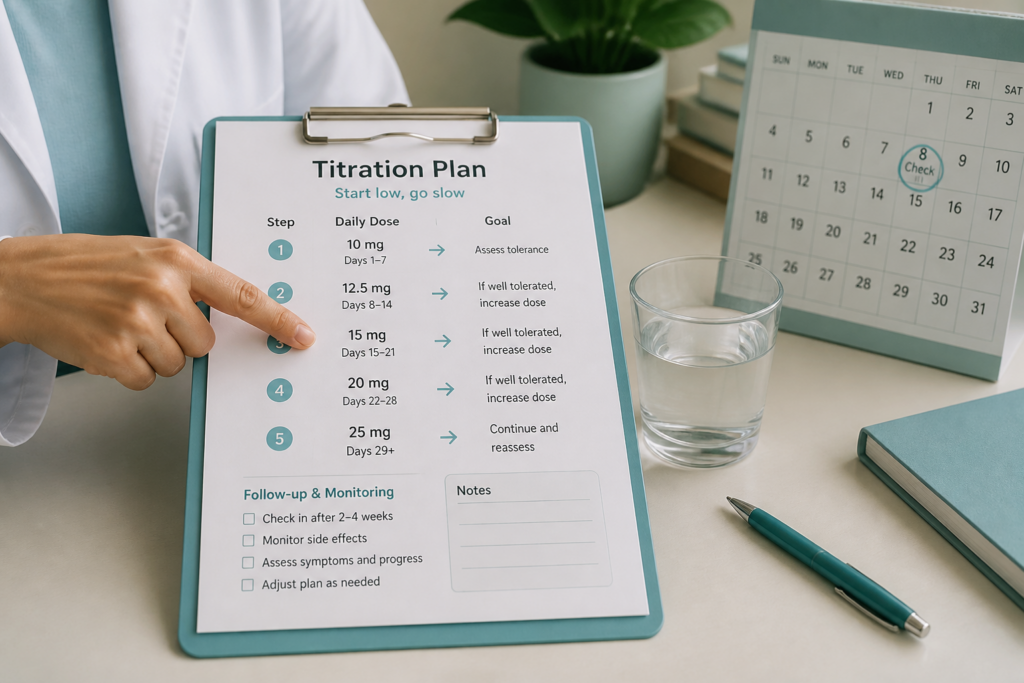
Start with the whole picture, not the prescription pad. For IBS, the usual first move is to confirm the subtype, look back at diet, fiber, probiotics, and antispasmodics, and review your current medicines before choosing a drug. TCAs and SSRIs can both help, but the best fit depends on constipation, diarrhea, pain, heart rhythm risk, and other serotonin-raising medicines. Benefit is gradual, so follow-up matters from the start. The IBS drug options gives a broader view of where these options fit.
| Drug | Usual start | Titration pace | Typical target or tolerability range | Expected onset |
|---|---|---|---|---|
| Amitriptyline | 10 mg at night | Increase by 10 mg every 1 to 2 weeks | Often 10 to 30 mg for IBS, with more side effects above about 50 mg | 2 to 6 weeks |
| Imipramine | 10 to 25 mg at night | Step up slowly every 1 to 2 weeks | Low-dose symptom control | 2 to 6 weeks |
| Desipramine | 10 to 25 mg at night | Increase in small steps every 1 to 2 weeks | Lower-sedation TCA option | 2 to 6 weeks |
| Nortriptyline | 10 to 25 mg at night | Increase in small steps every 1 to 2 weeks | Often better tolerated than older TCAs | 2 to 6 weeks |
| Fluoxetine | 10 to 20 mg daily | Increase after tolerability is clear | Often useful when constipation is prominent | 2 to 6 weeks |
| Paroxetine | 10 mg daily | Increase slowly if needed | Watch for withdrawal and constipation | 2 to 6 weeks |
| Citalopram | 10 to 20 mg daily | Increase cautiously if needed | QT caution at higher doses | 2 to 6 weeks |
Low-dose amitriptyline is often the starting TCA strategy, and dose titration amitriptyline should stay slow. IBS treatment aims for symptom control, not antidepressant-range dosing. That is why amitriptyline for IBS usually starts at night and rises only if sleepiness, constipation, and pain stay manageable.
Use the same pacing rules for both classes:
- Wait long enough to judge tolerability before increasing.
- Use smaller steps if sedation, constipation, or medication sensitivity appears.
- Recheck pain, bloating, and bowel pattern before each change.
- Favor TCAs for diarrhea-predominant IBS or pain-heavy IBS.
- Favor SSRIs for constipation-predominant IBS treatment.
Stopping needs the same care as starting. Do not stop suddenly after longer use. Step down over weeks, and slow the taper if dizziness, nausea, anxiety, sleep trouble, or gut symptoms flare. Some people need longer treatment, so dose changes should go with symptom tracking and a clinician review.
Safety checks matter with every switch. Watch for drug interactions, QT prolongation, and serotonin syndrome warning signs like agitation, tremor, fever, sweating, or confusion. Extra caution is smart if you have heart rhythm problems, severe constipation, or take other serotonin-raising medicines. The terms fluoxetine for IBS, paroxetine for IBS, and citalopram for IBS all belong in that risk review, not just the benefit discussion.
When Should You Avoid Them Or Switch Treatments?
Some IBS medicines are a poor fit when safety risks outweigh the likely benefit. TCAs need extra caution if you have a history of serious heart rhythm problems, known QT prolongation, severe liver disease, untreated bipolar disorder, recent mania, or a high overdose risk. They can also be more sedating and more cardiotoxic than SSRIs, so the margin for error is smaller.
The biggest interaction risks are easy to miss when your medication list is long. TCAs can build up with strong CYP inhibitors or with some SSRIs, which can slow liver metabolism and raise blood levels. That can increase toxicity, so a dose review or a different choice may be safer.
A few red flags deserve special attention:
- Serotonin syndrome risk: SSRIs can become dangerous with other serotonergic drugs, including MAOIs, some migraine medicines, tramadol, linezolid, and St. John’s wort.
- QT-prolongation risk: Avoid or switch if you take other QT-prolonging medicines, have low potassium or magnesium, or have a personal or family history of arrhythmia.
- Cardiac monitoring: A baseline electrocardiogram is worth discussing when the agent is higher risk or cardiac risk factors are already present.
Common warning signs of serotonin syndrome include agitation, sweating, tremor, diarrhea, fever, and muscle stiffness. That pattern needs prompt medical attention.
A switch from a TCA to an SSRI often makes sense when constipation, urinary retention, heavy drowsiness, dry mouth, or weight gain becomes hard to live with. The phrase adverse events tricyclics dry mouth captures one of the most common reasons people stop a TCA. SSRIs may fit better when pain relief is less central and anxiety, low mood, or constipation is more prominent.
Sometimes the better move is beyond antidepressants altogether. For nonconstipated IBS, rifaximin can help when bloating or diarrhea stay stubborn, and trial data showed a modest but consistent benefit, with persistent symptoms reduced (RR 0.84, 95% CI, 0.79 to 0.90). Psychological therapies can also help when stress, gut-directed anxiety, or symptom flares keep breaking through. If constipation is part of the picture, linaclotide may deserve a separate conversation.
When the response is unclear or the side effects are hard to sort out, the diagnosis needs another look. A clinician should review every medicine and supplement, including OTC products, and consider fecal calprotectin when inflammatory disease needs to be ruled out. Complex cases often benefit from gastroenterology-psychiatry collaboration, especially when the safest next step is not obvious.
IBS Antidepressants FAQs
These FAQs cover common questions about IBS antidepressants, including how neuromodulators for IBS fit with the brain-gut interaction, when a low FODMAP diet may still matter, and what somatisation and IBS can mean in daily life. They’re here to help you compare options before you talk with your clinician.
1. How Long Do IBS Antidepressants Take To Work?
You may notice the first sign of change within a few weeks, but IBS antidepressants are usually judged over 6 to 12 weeks. Early gains are often slow, with less pain, fewer flare-ups, or steadier bowel control showing up before full benefit, and the first month is usually too soon to call it a failure. Older studies were small and short, so results need caution, while the ATLANTIS trial followed people for 6 months, and during the first 3 months you’ll often stay on a low dose, track symptoms and side effects, and review whether the medicine is worth continuing.
2. Can IBS Antidepressants Worsen Constipation?
Yes, some IBS antidepressants can worsen constipation, especially tricyclic antidepressants (TCAs), because their anticholinergic effects slow the gut and can also cause dry mouth, drowsiness, and urinary retention. Selective serotonin reuptake inhibitors (SSRIs) are less likely to cause this, and they may even ease constipation in some people. If constipation is mild, taking the medicine at night, drinking enough fluids, and using a stool softener or another constipation plan your clinician approves can help, but a lower dose or a switch from a TCA to an SSRI may be a better fit if symptoms become troublesome or your IBS pattern changes. Side effects vary by person, so you should contact a healthcare professional if constipation is persistent, severe, or worsening.
3. Do They Help IBS Pain Without Depression?
Yes. Antidepressants can ease IBS pain even if you do not have depression, and tricyclic antidepressants have the strongest pain evidence. SSRIs are less convincing for pain itself, even though seven randomized trials with 356 patients found better overall symptoms at 55% versus 33% with placebo, or an NNT of 5. The studies were small and mixed, so pain-predominant IBS often favors TCAs when constipation risk and side effects fit your symptoms, but you should still talk with a qualified healthcare professional because results vary by person.
4. Can You Take Them With IBS Medications?
Many people can take antidepressants for IBS alongside other medicines, but the safest mix depends on the specific drug, your dose, and whether you’re using a tricyclic antidepressant (TCA) or an SSRI. Rifaximin is often used for nonconstipated IBS and does not have a known major interaction with antidepressants, but your prescriber should still review your full medication list. The biggest concerns are higher TCA levels with some drugs, serotonin syndrome risk with other serotonergic medicines, and added dry mouth, dizziness, constipation, or diarrhea when you combine treatment with IBS antispasmodic drugs or laxatives.