

IBS antidiarrheal drugs can help make diarrhea less urgent, less frequent, and easier to plan around. For people living with IBS-D, the hard part is often balancing fast relief against the risk of constipation, cramping, or missing a better iBS treatment fit. These medicines mainly slow stool output and improve consistency, which can make day-to-day symptoms easier to manage.
The article breaks down loperamide, bismuth subsalicylate, rifaximin, eluxadoline, and bile acid sequestrants such as cholestyramine and colesevelam. It also shows where each option tends to help most, what side effects and safety limits matter, and when a short-term OTC choice is enough versus when a prescription makes more sense. The comparison includes a practical view of speed, symptom coverage, and when bile acid problems may be part of the picture.
Adults with IBS-D, caregivers, and primary care teams will find the clearest value here, especially when the goal is to choose a medicine that fits real life and not just labelling. A simple example is the person whose urgency improves with loperamide but whose bloating stays unchanged, which points toward a different next step. That kind of sorting can help turn a scattered medication search into a more focused clinician conversation.
IBS Antidiarrheal Drugs Key Takeaways
- Antidiarrheal drugs mainly reduce urgency, stool frequency, and looseness.
- Loperamide is usually the fastest OTC option for diarrhea control.
- Bismuth subsalicylate can help short-term diarrhea but not pain much.
- Rifaximin and eluxadoline may offer broader IBS-D symptom relief.
- Bile acid sequestrants can help when bile-related diarrhea is suspected.
- Constipation, gallbladder issues, and alcohol use affect drug safety.
- Persistent or worsening diarrhea needs clinician review, not repeated self-treatment.
What Are IBS-D Antidiarrheal Drugs Used For?
IBS antidiarrheal drugs are meant to make diarrhea less urgent, less frequent, and easier to plan around when you have irritable bowel syndrome with diarrhea. They can slow bowel movements and help stool form up, which often makes bathroom trips more predictable. That type of IBS relief can matter on workdays, travel days, or any time urgency keeps running the show.
Their limits matter just as much as their benefits. These medicines usually target stool changes, not the full IBS-D picture. Pain, cramping, and bloating often need a different approach, even when the diarrhea improves.
Common options and how they tend to fit into care:
- Loperamide: Often used for short-term diarrhea control and urgency reduction, but it is not meant to provide broad, durable IBS relief.
- Bismuth subsalicylate: Can calm loose stools and may help during brief flare-ups, but it is not a complete treatment for IBS-D.
- Bile acid sequestrants: These can help when bile acid issues are part of the problem rather than the standard diarrhea pattern alone.
- Cholestyramine and colesevelam: These are bile acid sequestrants that may be considered when regular antidiarrheal drugs are not enough or when bile-related diarrhea is suspected.
That difference matters because IBS-D does not look the same in every person. If urgency and stool form are the main problems, an antidiarrheal may be a good fit. If abdominal pain or bloating are the bigger issue, a different prescription or symptom-targeted plan may work better.
These medicines support day-to-day symptom management, not diagnosis or follow-up. Persistent, severe, or worsening diarrhea should still be discussed with a qualified healthcare professional.
Which Symptoms Do They Help Most?
Some antidiarrheal drugs help the diarrhea side of irritable bowel syndrome with diarrhea (IBS-D) more than pain or bloating. That matters because urgency, loose stools, cramping, and bloating do not all respond the same way.
A quick comparison makes the pattern easier to see:
| Option | Helps most | Helps less reliably |
|---|---|---|
| Loperamide | Stool frequency, looseness, urgency | Bloating, abdominal pain |
| Bismuth subsalicylate | Short-term diarrhea control, firmer stools | Pain, bloating |
| Rifaximin | Diarrhea, bloating, abdominal discomfort | Response varies |
| Bile-acid sequestrants | Loose stools tied to bile acid malabsorption, stool consistency | Pain, bloating |
| Eluxadoline | Diarrhea, urgency, sometimes abdominal pain | Bloating |
Loperamide is often the fastest option for stool control. Small studies suggest it may also improve stool consistency and ease pain a little, but it usually does not cover the whole IBS-D picture on its own.
Bismuth subsalicylate works more like a short-term diarrhea helper. It can firm stools and reduce bathroom trips, but it is less likely to change pain or bloating much.
Rifaximin and eluxadoline can feel broader for some people. Rifaximin may help diarrhea along with bloating and discomfort. Eluxadoline can ease diarrhea and urgency, and some people report less pain.
If bloating and abdominal pain are your main symptoms, antidiarrheals alone may not be enough. That is especially true when bile acid malabsorption is part of the picture.
Which Drugs Stop IBS Diarrhea Fastest?
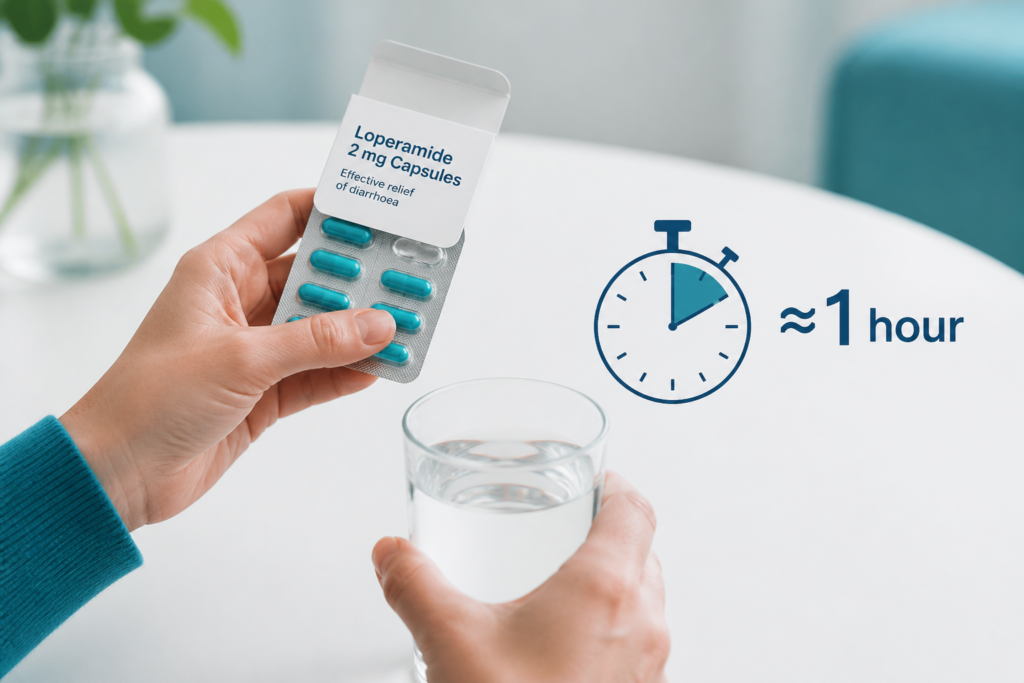
For over-the-counter relief, loperamide is usually the first medicine people reach for. Loperamide can start to improve diarrhea within about 1 hour (source). It can slow stool output, but it is best used for short-term symptom control, not as a full treatment for IBS with diarrhea.
Bismuth subsalicylate can also calm diarrhea, but it is usually the gentler over-the-counter choice. That can make it useful during a brief flare, especially when symptoms are mild to moderate. It may not hold up as well when IBS-D keeps coming back.
A quick side-by-side view helps:
| Option | How fast it may help | Best fit | Main limit |
|---|---|---|---|
| loperamide | Often within about 1 hour | Fast stool frequency and urgency control | Usually does not help pain or bloating much |
| bismuth subsalicylate | Short term | Mild diarrhea control | Often less effective for repeated flares |
| rifaximin | Over days, not the same day | XIFAXAN (rifaximin) 550 mg is a prescription option for adults with IBS-D, and the usual course is 2 weeks (source). | Not a rescue medicine |
| eluxadoline | Over days to weeks | Ongoing symptom control | Not meant for sudden flares |
That gap matters because the fastest drug is not always the most complete answer. Loperamide and bismuth subsalicylate may slow diarrhea, but they usually do little for the abdominal pain and bloating that often come with IBS-D. Prescription options like rifaximin and eluxadoline can make more sense when you need broader control. Colesevelam may also come up if bile acid issues are part of the picture.
Use speed as one piece of the decision, not the whole thing. Think about how often your flares happen, whether you need short-term relief or steadier control, and whether your symptoms are severe, persistent, or getting worse. If that pattern fits, a clinician visit is the right next step.
How Do Loperamide, Bismuth, And Rifaximin Compare?
These three options can all ease diarrhea, but they fit different needs.
If your main problem is frequent loose stools, loperamide is often the quickest OTC choice for stool control. It slows gut movement, so it can reduce urgency and bathroom trips. Bismuth subsalicylate is a better match when diarrhea comes with mild nausea, indigestion, or traveler’s-type stomach upset. Rifaximin works differently. It targets bacteria in the gut and is usually used as a short prescription course rather than for immediate relief.
| Medicine | How it works | How fast it may help | IBS-D evidence | Typical use | Main safety flags |
|---|---|---|---|---|---|
| loperamide | Slows bowel movement | Often fastest | Helps diarrhea control, but may not improve the full IBS symptom pattern | As needed or short term. It comes as tablets, capsules, instant melts, and some products with simeticone | Can cause constipation. Use extra care with severe pain, major bloating, or possible infection |
| bismuth subsalicylate | Firms stool and can calm mild upset stomach | Short-term relief | Limited direct clinical efficacy data for IBS-D | Repeated doses over a short period, following the label | May not fit people avoiding salicylates or taking blood thinners |
| rifaximin | Targets bacteria in the gut | Not instant | Strongest IBS-D-specific support here. It is FDA-approved for adults with IBS-D | 550 mg for a 2-week course | Prescription-only, so clinician guidance matters, especially if symptoms are severe or changing |
The main tradeoff is symptom focus. Loperamide is best for fewer bowel movements and less urgency. Bismuth may help when diarrhea arrives with extra stomach upset. Rifaximin may be the better fit if you want an IBS-D treatment, including some cases of post-infectious IBS.
Safety matters as much as relief. Loperamide can backfire if constipation or blockage is already a concern. Bismuth deserves caution if salicylates or blood thinners are in the picture. Rifaximin should be used with a clinician, especially when symptoms are persistent, severe, or shifting.
For a simple OTC option, loperamide is usually the quickest fit. For broader upset-stomach relief, bismuth subsalicylate may be worth discussing. For an IBS-D-specific prescription, rifaximin is the most targeted path, and the NNT NNH tradeoff can help you weigh benefits against side effects.
Who Should Avoid Certain IBS-D Drugs?
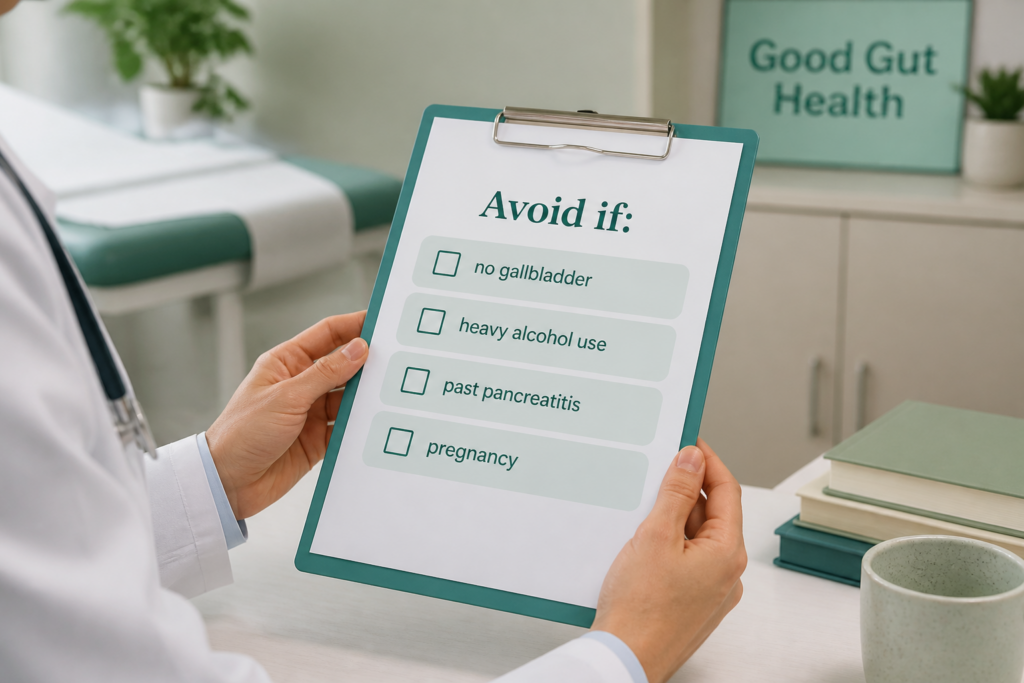
Some IBS-D medicines are a poor fit in certain situations, and the wrong one can make symptoms or risks worse.
A few situations deserve extra caution:
- Eluxadoline: avoid it if you do not have a gallbladder or if you drink more than 3 alcoholic beverages a day. Both raise the risk of serious pancreatitis and other severe abdominal complications. Past pancreatitis is another reason to avoid it.
- Rifaximin: avoid it if you have a hypersensitivity to rifamycins. It may also be a poor fit if you take medicines that affect P-glycoprotein or OATP transporters, or if you use warfarin, because drug levels and bleeding risk can change.
- Loperamide: skip it if you already tend toward constipation or if other IBS medications have left you backed up. Slowing the gut too much can worsen pain, bloating, and hard stools. Too much can also trigger dangerous fast or irregular heart rhythms.
- Pregnancy or breastfeeding: do not self-start IBS-D drugs without medical advice. Safety data can be limited, and the best choice depends on your symptoms, trimester, and health history.
Some symptoms mean you should be checked before treating IBS-D on your own:
- C. difficile history
- Severe liver disease
- Unexplained bloody diarrhea
- Repeated dizziness, constipation, worsening diarrhea, or a strong medication allergy
These signs can point to a different problem that needs different care. A cautious approach helps you avoid the wrong medication and keeps the focus on the real cause of your symptoms.
What Contraindications Matter Most?
The biggest safety checks for IBS-D drugs are the ones that turn a helpful medicine into a risky one.
Before you start treatment, check these warnings:
- Gallbladder removal: Eluxadoline can raise the risk of pancreatitis if you do not have a gallbladder, so it is usually avoided after surgery.
- Pancreatitis, bile-duct problems, or heavy alcohol use: These can make severe abdominal pain and inflammation more likely with certain IBS-D medicines.
- Severe constipation or bowel obstruction: Loperamide, alosetron, and similar gut-slowing drugs can push constipation too far.
- Drug allergies or ingredient sensitivity: Bismuth subsalicylate may not be a good fit if you react to salicylates.
- Pregnancy or breastfeeding: Safety data are limited, so OTC and prescription options should be reviewed with a clinician first.
The rule is simple. If a drug slows the gut, it can also slow it too much. That risk is higher if you already have constipation or take other medicines that cause constipation.
A short-term loperamide trial can also be a clue that you need a medical check. If diarrhea keeps coming back and you need it for more than 48 hours, call a doctor instead of repeating self-treatment.
Seek urgent help for new severe upper abdominal pain, especially if it comes with nausea, vomiting, fever, or pain that spreads to your back. Those symptoms are not a routine side effect.
Careful screening helps you avoid treating the symptom while missing the cause.
How Do You Choose The Right IBS-D Treatment?
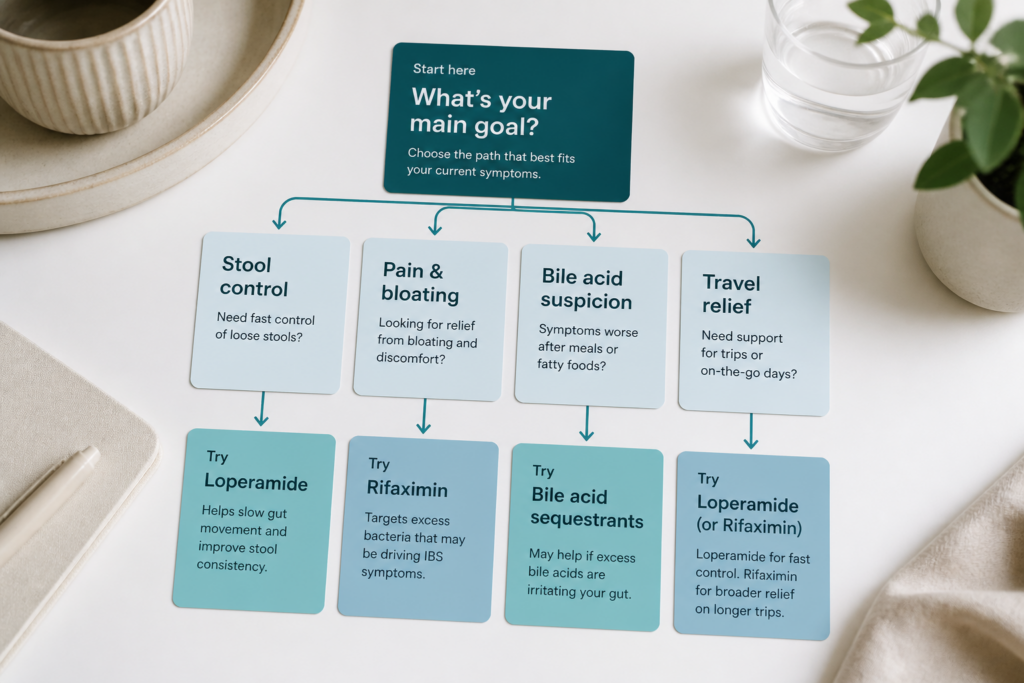
The best IBS-D treatment is the one that matches your main goal, not just the one that slows diarrhea the fastest.
If stool control matters most, an over-the-counter option such as loperamide may be the simplest place to start. If you want broader relief, rifaximin is often a better fit for global symptom improvement. If cramping and pain are leading the way, a symptom-focused plan usually makes more sense than a stool-only approach, and the broader ibs treatment picture matters too.
A quick comparison can help you sort speed from scope:
| Option | Best fit | Typical role |
|---|---|---|
| Loperamide | Fast diarrhea control | Short-term stool control |
| Bismuth subsalicylate | Short-term symptom relief | Occasional diarrhea support |
| Rifaximin | Broader IBS-D relief | Better for overall symptom control than rescue use |
| Eluxadoline | Select adults with IBS-D | More restricted use |
| Bile-acid binders | Suspected bile-driven diarrhea | Targeted support |
Fast relief is not always the best long-term fit. Loperamide and bismuth subsalicylate are usually used for short-term diarrhea control. Rifaximin is better for broader IBS-D improvement, but it is not the usual choice when you need immediate rescue.
Safety should come first, especially with more restrictive drugs. Gallbladder status, alcohol use, constipation risk, pregnancy, age, and a history of severe side effects can all change what is appropriate. That matters most for eluxadoline and alosetron, which have tighter limits than simpler over-the-counter choices.
Bile acid malabsorption is worth keeping on your radar. Bile acid malabsorption may be present in a meaningful subset of people with IBS-D, so clinicians may consider it when diarrhea is hard to control (source). In that subgroup, bile acid sequestrants such as cholestyramine or colesevelam may help more than a standard antidiarrheal.
Other options can fit specific patterns:
- Dietary changes: helpful when symptoms flare after meals
- Probiotics: reasonable for a low-intensity trial
- Tricyclic antidepressants: useful when pain, urgency, and gut-brain signaling overlap
- Amitriptyline: a common tricyclic antidepressant choice
- SSRIS: generally not suggested for symptom control
The simplest safe option that fits your symptom pattern is usually the best next step. If your symptoms are persistent, severe, or worsening, talk with a clinician before trying medicines at random. The antidepressant path can also be part of the plan, and various IBS antidepressants can help when pain and stress signaling are part of the picture.
When Do Diet, Probiotics, And Antispasmodics Fit?
Diet is often the first move when your main goal is to spot triggers, not to treat diarrhea with medicine. A low FODMAP diet, a food and symptom journal, and a quick check for lactose or gluten-related patterns can make flare-ups easier to spot, especially when symptoms hit after meals or during stress.
Diet changes tend to work best over time, not as instant relief. Softer fiber choices like oat bran, barley, and some fruits are often easier on the gut than rough, high-insoluble-fiber foods. Sleep, exercise, relaxation, and other stress tools can also lower the day-to-day load of IBS-D symptoms.
A simple way to think about the options is by goal:
- Gentler support: Diet changes and probiotics for IBS can help steady symptoms over time, especially when bloating or stool changes still linger after food changes.
- Pain control: IBS antispasmodic drugs fit best when cramping and abdominal pain are part of the picture, and antispasmodics can also be layered with an antidiarrheal plan.
- Peppermint oil: Peppermint oil has evidence from randomized trials and may help some people with IBS symptoms, including pain and spasm (source).
- Broader medication plans: Antispasmodics may fit alongside antidiarrheals, and some people also need tricyclic antidepressants when pain and gut sensitivity stay active.
Probiotics may be worth a trial as add-on support, not as a replacement for prescribed care. Results vary by person and strain, and the evidence is mixed, so it’s reasonable to stop if gas, cramping, or diarrhea get worse.
Persistent, severe, or worsening symptoms deserve medical review. IBS-D can overlap with other causes, and diet or supplements should be individualized rather than treated as one-size-fits-all fixes.
What New IBS-D Treatments Are Emerging?
The most promising IBS-D medicines also target brain-gut and serotonin pathways. That matters because diarrhea and abdominal pain often show up together. A treatment that can ease both may fit your symptoms better than an older symptom-only option.
The main prescription choices break down like this:
| Treatment | What it targets | Early evidence | Main caution |
|---|---|---|---|
| alosetron | Serotonin signaling in the gut | The only drug specifically approved for IBS-D, with a narrow role for selected patients | Use is restricted after a 2000 withdrawal and 2002 return because of safety concerns |
| eluxadoline | Mixed opioid receptors in the intestine | Phase III clinical efficacy data show benefit, with an NNT NNH range of about 9 to 15 depending on dose | Pancreatitis risk matters, especially if you do not have a gallbladder |
| LX-1031 | Peripheral serotonin synthesis | An early phase study reported lower serotonin-related markers and some symptom improvement, but it remains investigational (source) | Still investigational, so it is not standard care |
| ondansetron and crofelemer | Symptom-directed gut pathways | Sometimes considered for diarrhea control or related relief | Evidence in IBS-D is less established than for approved options |
Post-infectious IBS is part of the picture too, since IBS-D can start after an infection and may respond differently to serotonin-focused treatment.
The big takeaway is practical. These therapies are more targeted than older options, but the clinical picture is still limited. You can discuss them as possible next-step treatments with your clinician, especially if diarrhea and pain are both getting in the way of daily life.
Which Options Look Most Promising?
The most promising options are the ones that target IBS-D more directly than standard antidiarrheals. That matters when diarrhea is frequent, disruptive, or not well controlled by simpler treatment. In practice, that often points to prescription therapies designed for symptom control rather than just slowing the bowel.
A few options stand out for different reasons:
| Option | What stands out | What to watch for |
|---|---|---|
| rifaximin | FDA-approved for adults with IBS-D. It is usually given as a short 2-week course at 550 mg. | Symptoms can return, so retreatment may matter. |
| Retreatment with rifaximin | A repeat course of rifaximin may be used if symptoms return, but retreatment should be guided by a clinician (source). | It is helpful for relapsing IBS-D, but it is not a permanent fix. |
| alosetron | The only drug specifically approved for IBS-D. | Use is much more limited because it was withdrawn in 2000 and reintroduced in 2002 with restricted indications. |
| Targeted prescription therapies | These may fit better than OTC choices when symptoms are persistent. | They can come with tighter prescribing rules, closer monitoring, or narrower eligibility. |
That retreatment option is one reason rifaximin gets so much attention. A time-limited course can feel more realistic than a daily medicine when symptoms flare, settle, and then return. Even so, it works best within a clinician-guided plan.
Safety and access matter just as much as symptom relief. The best choice is the one that balances benefit, safety, and availability for your situation, especially when prescriptions, restrictions, or recurring symptoms are part of the picture.
IBS Antidiarrheal Drugs FAQs
These FAQs cover the most common questions about IBS antidiarrheal drugs, from when they may help to how they compare with other options. If you’re weighing choices, the complete IBS medication guide can help put the bigger picture in context.
1. Can IBS-D drugs cause constipation?
Yes. Some IBS-D medicines can slow the bowel too much and lead to constipation, and loperamide carries the clearest risk. The safest approach is to start low, use the lowest dose that helps, and stop if you notice cramping, bloating, dry mouth, dizziness, harder stools, no bowel movement, or worse abdominal pain. Medications such as amitriptyline and SSRIS can also affect bowel habits, so persistent or worsening symptoms should be reviewed by a qualified healthcare professional.
2. Are antidiarrheals safe for daily use?
Some antidiarrheals can be used short term or on an intermittent basis for IBS-D, but daily use depends on the medicine, your symptom pattern, and a clinician’s advice. OTC loperamide is usually meant for brief use, and the NHS advises not taking it for more than 48 hours without medical guidance, especially if diarrhea keeps returning. Longer-term daily treatment may fit selected prescription options such as rifaximin or bile acid sequestrants like cholestyramine, but you should still watch for constipation, bloating, abdominal pain, dehydration, or red flags like blood in the stool, fever, or weight loss.
3. Do IBS-D drugs interact with other medicines?
Most IBS-D medicines have limited interaction issues, but you should still tell your clinician and pharmacist about every prescription, over-the-counter drug, vitamin, and supplement you use. Rifaximin should be avoided if you have a rifamycin allergy, and it may interact with warfarin and with P-glycoprotein or OATP inhibitors that can affect absorption. Bismuth subsalicylate can also be a problem with aspirin, other salicylates, anticoagulants, and any drug that raises bleeding risk, while loperamide or another antidiarrheal deserves a safety check if you also take medicines that affect heart rhythm, cause sedation, or slow the gut.
4. Can you use IBS-D drugs during travel?
Yes, you can often use short-term antidiarrheals during travel, especially loperamide, which usually starts working within about an hour and can help with urgent diarrhea before a flight, car ride, or long event. Loperamide and bismuth subsalicylate may calm diarrhea, but they usually do little for abdominal pain or bloating, so they’re best for symptom control rather than full IBS-D relief. If you’ve been prescribed rifaximin or another IBS-D medicine, keep it in the original container in your hand luggage or day bag, use antidiarrheals only as directed, and seek care if symptoms are severe, last more than a few days, or come with fever, blood in the stool, dehydration, or worsening pain.