

Peppermint oil for IBS is a short-term symptom option, not a cure. For adults trying to calm cramping, bloating, and abdominal discomfort without adding a lot of complexity, the hard part is separating real benefit from reflux risk and inconsistent products.
Peppermint oil is a menthol-based supplement that may relax intestinal muscle and ease spasms, and this overview shows how to judge dosing, safety, and whether it fits your symptom pattern.
The sections ahead cover how well enteric-coated capsules work, which dose ranges show up in studies, how brands differ, and who should avoid peppermint oil. You’ll also get plain-language guidance on side effects, how long a short trial should last, and what label details matter most when comparing over-the-counter options. A quick checklist will help turn the evidence into a practical decision.
That matters for people with IBS, and for caregivers and busy professionals who need clear steps instead of guesswork. One person may get less bloating with a two-week capsule trial, while another notices heartburn and stops right away, which is why symptom tracking and reflux warnings are part of the plan.
My Good Gut keeps the focus on IBS treatment choices that are realistic, medically grounded, and easy to use.
IBS Peppermint Oil Key Takeaways
- Peppermint oil may ease IBS cramping, bloating, and abdominal pain.
- Enteric-coated capsules are the best studied form for IBS.
- Many studies used peppermint oil for about one to two weeks.
- Heartburn and reflux can worsen, especially in people with GERD.
- Product strength, coating, and dosing schedule vary by brand.
- Stop use if symptoms worsen, and seek care for red flags.
- Pregnancy, breastfeeding, and gallbladder disease need extra caution.
What Is Peppermint Oil For IBS?
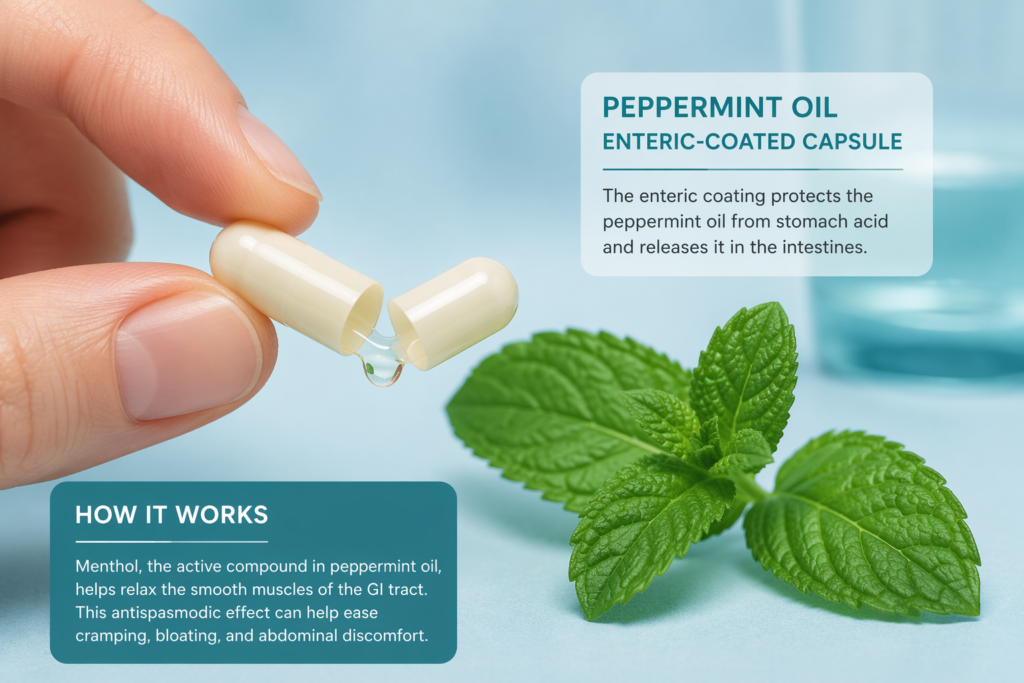
Peppermint oil is a short-term, symptom-focused option for irritable bowel syndrome (IBS), not a cure. Its active compound, menthol, has a menthol antispasmodic effect that may relax gut muscle and ease abdominal pain and cramping. For readers comparing medication-style options, IBS antispasmodic drugs sit in the same general symptom-relief category.
Peppermint oil is used by some people with IBS to ease symptoms such as cramping, bloating, and abdominal discomfort during flare-ups (source).
- Abdominal cramping: squeezing pain that may come and go
- Bloating: a swollen, heavy feeling in the belly
- Flatulence: extra gas that adds pressure and discomfort
- Overall symptom burden: the mixed pattern of IBS symptoms that can disrupt your day
Enteric-coated capsules help peppermint oil pass through the stomach and release farther down the gut. That can improve targeting of bowel spasms and may lower stomach irritation for some people. Common labels you may see include Colpermin, Apercap, Colomint, ColoPep, Mintec, and PepperMinn.
The evidence is encouraging, but it is not the same for everyone. Clinical studies and reviews generally show that peppermint oil can improve global IBS symptoms and reduce abdominal cramping, bloating, and abdominal pain. Results vary, and some people do not get enough relief to stay with it. If you have ongoing reflux or heartburn, or if symptoms are severe, worsening, or come with red flags, peppermint oil should not replace medical advice.
How Well Does Peppermint Oil Work?
Peppermint oil can help some people with IBS, and the meta-analysis below explains how much relief studies found. A meta-analysis found that enteric-coated peppermint oil improved global IBS symptoms and abdominal pain more than placebo, which supports a short trial for symptom relief (source). The published DOI points to the same trial set.
Pain relief also showed up, but the benefit was smaller than the effect on overall symptoms. That helps set a realistic expectation. Peppermint oil may ease pain, but it does not work the same way for everyone, and it may not help right away.
The GRADE ratings add useful context for how much trust to place in the findings:
- Global symptom relief: GRADE was high because the effect was large and the results were consistent.
- Abdominal pain: GRADE was moderate because some randomized controlled trials had risk of bias.
- Adverse events: GRADE was low because safety data were limited and less precise.
The trial results were also steady across studies. Heterogeneity was essentially absent for the main outcomes, with I-squared at 0 percent, even though the studies varied by country, year, and design.
For many adults, peppermint oil is a reasonable nonprescription option to consider as part of an IBS plan. It is not a fast fix, and it should not replace medical care. Extra caution matters if you have gastroesophageal reflux disease, since peppermint oil can worsen reflux in some people. Stop it and speak with a clinician if your symptoms worsen, your pain changes, or you notice red flags that need medical review.
When and How Should You Try Peppermint Oil?

A short, time-limited trial is the safest way to judge peppermint oil for IBS. Clinical studies of peppermint oil for IBS commonly used enteric-coated capsules and short treatment periods of about 2 weeks or longer, which supports a time-limited trial rather than open-ended use (source).
The best time to try it is during a predictable flare or while bloating, cramping, or abdominal discomfort is already active. That makes it easier to tell whether the change comes from peppermint oil rather than a naturally better day. Enteric-coated capsules are usually the first choice because they pass through the stomach and may lower the chance of stomach upset.
A practical trial plan looks like this:
- Start with enteric-coated capsules: These are often better tolerated than non-coated forms.
- Use it consistently for 1 to 2 weeks (source).
- Track the same symptoms each day: Bloating, cramping, abdominal pain, and stool changes are the main ones to watch.
- Match it to your routine: Take it in a way that fits your meals and daily schedule so you can stick with it.
- Stop if it clearly worsens symptoms: Heartburn, gastroesophageal reflux disease symptoms, nausea, or stomach pain are signs to pause and check in with a clinician.
If you do not notice meaningful improvement after 1 to 2 weeks, peppermint oil may not be the right fit for you. It is a symptom-management option, not a replacement for diagnosis or ongoing care. That matters even more if you are comparing it with other over-the-counter options or if your symptoms are severe, persistent, or changing in a way that needs medical attention.
How Do Enteric-Coated Brands Compare?
Enteric-coated peppermint oil brands aim for the same outcome, but the label details still matter a lot. Colpermin, Mintec, Colomint, ColoPep, Apercap, and PepperMinn are all designed to keep peppermint oil from releasing in the stomach and to deliver it to the intestine, where IBS cramping is usually felt.
The biggest differences are in dosing and formulation. Some products use liquid peppermint oil inside an enteric-coated capsule. Others come in softgel or capsule formats with slightly different oil amounts per pill. That means the brand name tells you less than the full label does.
| What to check | Why it matters |
|---|---|
| Enteric coating | Helps the capsule pass through the stomach before it opens |
| Peppermint oil amount per capsule | Shows how closely the product matches study dosing |
| Capsule or softgel format | Can affect release and how it feels for you |
| Dosing schedule | Should line up with the evidence-based trial pattern |
Studies of enteric-coated peppermint oil for IBS commonly used a dose of 0.2 to 0.4 mL taken three times daily (source). Many branded products are built around that spacing so intestinal exposure stays steady across the day.
The coating is there to reduce release in the stomach. That can lower the chance of upper-GI side effects like heartburn, reflux, burping, or nausea. Those side effects are usually uncommon with enteric-coated capsules, but they still happen for some people.
In practice, products can feel a little different because coating quality and capsule design affect how well the capsule holds up before it reaches the intestine. A brand that works well for one person may still feel off for another.
When you compare options, focus on these points:
- Coating: Make sure it is truly enteric-coated.
- Strength: Check the peppermint oil amount per capsule.
- Schedule: Match the dosing to the trial range as closely as you can.
Those details matter more than marketing claims, and they give you a better shot at choosing enteric-coated peppermint oil that fits your symptoms and routine.
Which Dose And Form Should You Choose?
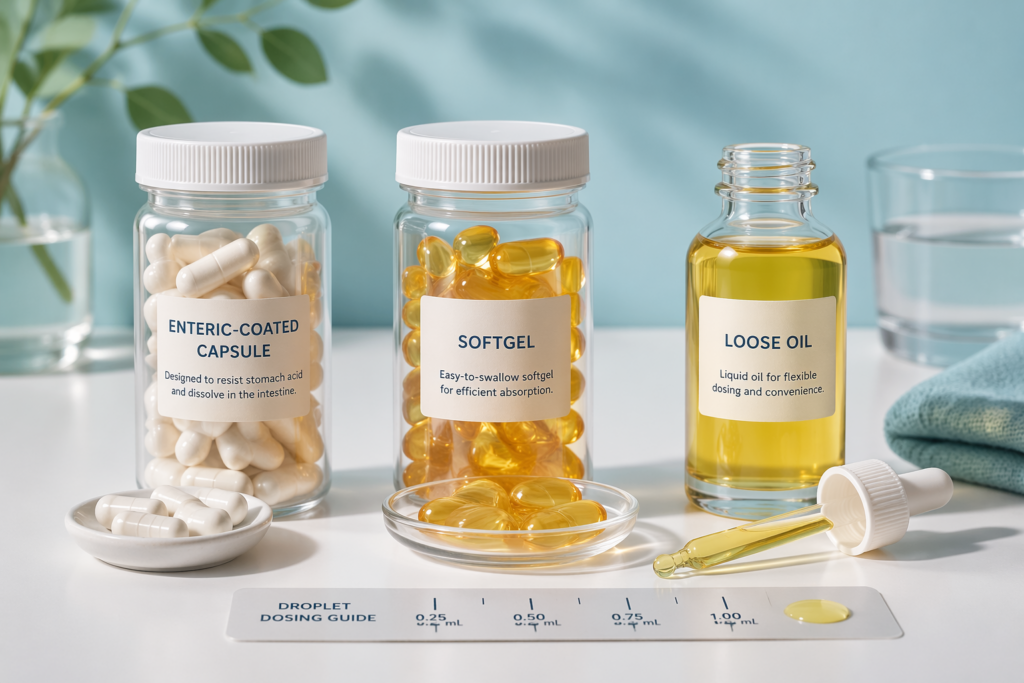
Enteric-coated peppermint oil remains the most studied option for IBS because most trials used that form. The coating helps the oil pass through the stomach and release farther down in the intestines, which may reduce reflux or nausea. That makes it a more practical starting point than loose oils or teas.
Enteric-coated peppermint oil is usually studied in capsule forms that are taken three times a day, and product strength can vary by brand (source). That pattern is a trial-backed starting regimen, not a universal dose for every person. Brands can vary, so dosing and formulation matter as much as the ingredient list.
A quick label check can keep your trial clear and manageable:
| What to check | Why it matters |
|---|---|
| Milligrams per capsule | Tells you the actual strength |
| Daily frequency | Shows how often the product is meant to be taken |
| Enteric coating | Helps the capsule release in the intestines |
| Trial length | Keeps the trial short and intentional |
Tea, oil drops, and skin products do not have the same study support for IBS relief. Even when they contain Mentha piperita, they are not equivalent to enteric-coated peppermint oil. The other IBS medications can help you compare this option with other IBS choices.
If you have gastroesophageal reflux disease or a sensitive upper GI tract, be extra cautious. Stop if heartburn, nausea, or other symptoms get worse. A brief trial is usually the safest way to see whether the capsules fit your body and your routine.
If the product is hard to take consistently, side effects show up, or symptoms do not improve, talk with a clinician about next steps. Digestive symptoms can have many causes, and your plan should fit your medical advice and your symptom pattern.
Who Should Avoid Peppermint Oil?
Peppermint oil is not a good fit for everyone with IBS. The biggest caution is reflux. If you have gastroesophageal reflux disease, frequent acid reflux, or burning after meals, peppermint oil can relax the lower esophageal sphincter and make heartburn, regurgitation, or chest burning worse, even in enteric-coated products. That matters because relief should not come with extra upper-GI irritation.
Some groups need extra caution before starting it:
- Gallbladder disease or gallstones: peppermint oil may affect bile flow and can make right upper belly pain or cramping feel worse.
- Pregnancy or breastfeeding: safety and tolerability data are limited, so a clinician should weigh the risks and benefits first.
- Multiple medicines: antacids and acid-suppressing drugs can change when enteric-coated peppermint oil opens, which may affect how well it works.
- Sensitive stomach or nausea: if your gut is already touchy, peppermint oil may add more irritation than relief.
Stop and reassess if you notice heartburn, nausea, vomiting, blurred vision, perianal burning, rash, or other allergic reactions. Peppermint oil can cause side effects such as heartburn, nausea, perianal burning, rash, and other irritation, and higher doses may increase the chance of adverse reactions (source). A medication review is also smart if you take one of the IBS antidepressants options.
The simple rule is this: if you have reflux, gallbladder problems, are pregnant or breastfeeding, or take several medicines, peppermint oil should not be a casual add-on. This information is educational only, and persistent, severe, or worsening digestive symptoms need personalized medical advice. Results vary by person, and the HHS says to seek medical guidance when symptoms are ongoing or concerning (source).
Where Does Peppermint Oil Fit In An IBS Flare Plan?
Peppermint oil can fit into an IBS flare plan when abdominal cramping, bloating, or spasms are the main problems. It makes the most sense when abdominal cramping, bloating, or spasms are the main problems, and trial evidence supports enteric-coated peppermint oil capsules as a short-term option for IBS, and many studies used treatment periods of about 2 weeks or longer (source). For a broader view of IBS treatment, peppermint oil is one option among several, not a replacement for medical care.
Many adults do best taking it during a flare window, usually before meals or between meals if the label allows that timing. Rescue medicine or clinician-directed treatment belongs closer to the front of the line when symptoms are more severe or are getting worse. That can matter if diarrhea is part of your pattern, because IBS antidiarrheal drugs may fit a different plan when loose stools take over.
Flare-day basics can make peppermint oil work better:
- Keep meals simple: Choose smaller portions and easy-to-digest foods.
- Avoid trigger foods: Skip the obvious foods that usually set off symptoms.
- Stay hydrated: Sip water or another clear fluid through the day.
- Calm the pace: Eat slowly, rest, or take a brief walk when symptoms spike.
A simple tracking check helps you judge benefit and side effects. Watch for changes in cramp strength, bloating, stool pattern, heartburn, and reflux. Global symptom relief may show up as a steady easing of several symptoms, not just one. If you feel worse after starting it, that matters too.
Use this priority list to decide when to stop self-managing and get help:
- Stop peppermint oil and seek care soon for persistent or worsening pain, fever, vomiting, blood in stool, dehydration, new severe constipation, or new severe diarrhea.
- Pause and call a clinician if gastroesophageal reflux disease flares, gallbladder concerns come up, you are pregnant or breastfeeding, or a medicine could interact.
- Bring your notes to a visit if symptoms keep returning or a short trial does not help.
The downloadable decision aid/workbook can help you decide when peppermint oil belongs in your flare plan, when to pause it, what to log, and what to ask if IBS keeps cycling back.
Peppermint Oil For IBS FAQs
These FAQs cover the evidence behind peppermint oil for IBS, from meta-analysis and systematic review findings to randomized controlled trial and placebo-controlled trial results, with practical context on NNT, PRISMA, and GRADE.
For general medicine and supplement basics, USA.gov offers plain-language help.
1. Can Peppermint Oil Cause Heartburn?
Yes, peppermint oil can trigger heartburn in some people because it may relax the lower esophageal sphincter, which can let stomach acid move back up. Chewed or non-enteric forms are more likely to cause this, while enteric-coated capsules are designed to lower that risk by releasing farther down in the intestine. If you already get reflux or chest burning, take peppermint oil with food if it helps you tolerate it, use it exactly as directed, and stop and speak with a clinician if heartburn, nausea, or stomach upset gets worse.
2. Is Peppermint Oil Safe During Pregnancy?
Peppermint oil is not something you should assume is safe during pregnancy or while breastfeeding, because the evidence is limited even though it’s often used for IBS relief. If you’re pregnant, trying to conceive, or breastfeeding, check with your clinician before starting oral enteric-coated capsules or any peppermint oil product. Pregnancy-specific advice should come from trusted, authoritative sources like NHS-style medicine guidance, which separate pregnancy, breastfeeding, and interaction details for a reason.
3. How Long Until Peppermint Oil Works?
Enteric-coated peppermint oil is usually a short trial, not an instant fix, and IBS studies often run for at least 2 weeks. Some people notice less cramping or bloating in the first few days, but the fuller benefit often takes 1 to 2 weeks of steady use. If you still do not feel clear improvement after about 2 weeks, or if you develop heartburn, reflux, nausea, or worse belly pain, stop and check in with a clinician.
4. Should You Take Peppermint Oil With Food?
It depends on the form. Enteric-coated peppermint oil is often taken before meals or between meals so the capsule can pass through the stomach and release in the intestine, where it’s meant to work. Taking it with food may feel gentler and may reduce stomach upset, but food can also slow release and make it work less well, and heartburn is the most common upper-GI side effect. Many IBS trials use an enteric-coated 0.2–0.4 mL three times daily range, so timing matters as much as dose, and if heartburn is a concern, it usually makes sense to take it away from meals.