


IBS symptoms, types, flare-ups, and red flags can be hard to sort out when abdominal pain, bloating, and bowel changes keep shifting. For many adults, the harder part is knowing whether a bad week is a familiar pattern or something that needs a clinician.
IBS is a long-term gut-brain interaction disorder that changes how the bowel works without causing permanent structural damage. Clear symptom clues make that call less guesswork and more practical next steps.
The sections below compare IBS-C, IBS-D, IBS-M, and IBS-U, then show how a flare-up differs from a steadier baseline. They also cover common triggers such as food, stress, caffeine, alcohol, and menstrual changes, along with a short symptom log and appointment prep checklist. Red flags like bleeding, weight loss, fever, vomiting, and symptoms that wake you at night are called out clearly.
Primary care clinicians, gastroenterology teams, registered dietitians, and family caregivers will find this especially useful when they need a shared way to sort symptoms fast. A week of loose stools after coffee points in a different direction than new rectal bleeding or waking with pain, and that difference changes the next step.
Use the details here to document the pattern, compare the subtype, and know when medical care should happen soon.
IBS Symptoms, Types, and Red Flags Key Takeaways
- IBS commonly causes abdominal pain, bloating, gas, and changing bowel habits.
- IBS-C, IBS-D, IBS-M, and IBS-U reflect different stool patterns.
- Flare-ups often intensify pain, urgency, constipation, diarrhea, and nausea.
- Food, stress, caffeine, alcohol, and menstrual changes can trigger symptoms.
- Red flags include blood in stool, weight loss, fever, night symptoms, and vomiting.
- A symptom log can track pain timing, stool form, triggers, and medications.
- Seek medical evaluation when symptoms are severe, worsening, or outside your usual pattern.
What Is IBS And How Is It Diagnosed?
Irritable Bowel Syndrome (IBS) is a common, long-term gut-brain interaction disorder that mainly affects the large intestine. It can cause very real symptoms without leaving permanent structural damage or active inflammation behind. If the picture still feels fuzzy, the IBS guide and tips can help put the symptoms in context.
The pattern doctors look for is usually more than one isolated problem. Recurrent abdominal pain or discomfort, plus changes in bowel habits such as diarrhea, constipation, or alternating patterns, points more toward IBS than a one-time stomach bug. The brain-gut axis helps explain the mix of nerve and digestion signals, and visceral hypersensitivity can make normal gut activity feel painful, bloated, or urgent.
The diagnosis of IBS is mostly clinical, so your history matters most. Clinicians ask how long symptoms have been present, how often they happen, and whether food, stress, or hormonal changes seem to trigger them. Stress and IBS often travel together, so that pattern is worth mentioning even when it seems unrelated.
Typical diagnostic steps often include:
- Symptom review: pain pattern, bowel changes, bloating, and how often symptoms return
- History check: timing, triggers, family history, recent infections, travel, or medication changes
- Basic testing: blood tests or stool tests to look for anemia, infection, inflammation, or other clues
- Breath testing: hydrogen breath tests when lactose intolerance or small intestinal bacterial overgrowth is a concern
- Scope-based testing: colonoscopy or endoscopy when age, symptoms, or red flags call for a closer look
The IBS diagnosis guide goes deeper on when those tests are usually considered. Most of the time, testing is used to rule out other causes rather than prove IBS on its own.
IBS usually does not lead to serious complications such as inflammatory bowel disease or colorectal cancer, but it can look similar to both at first. That is why IBS vs IBD can be confusing, and why persistent, severe, or changing symptoms deserve medical attention. IBS is common in U.S. adults, and how many IBS cases go undiagnosed is part of why the published figures differ, since many people with symptoms never get a formal diagnosis. Public health and clinical sources describe IBS as affecting roughly 10% to 15% of adults, while diagnosis usually depends on a symptom-based evaluation rather than a single test (source, source). This content is for educational purposes only and is not a substitute for personalized medical advice.
What Symptoms Does IBS Cause?
IBS often shows up as changing symptoms from day to day. The most common IBS symptoms are abdominal pain, abdominal cramping, bloating, and changes in bowel habits. That mix can make meals, work, and travel feel unpredictable.
Abdominal pain is one of the hallmark signs. It often sits in the lower abdomen and may improve after a bowel movement, flare just before one, or leave you feeling like the relief was only partial. The pain can also feel like squeezing, pressure, or waves of cramping that come and go through the day. Most IBS stomach cramps sit low in the belly and ease once stool passes.
A few other patterns are easy to watch for:
- Bloating and gas: Your belly may feel full, tight, or stretched, and the swelling can be more noticeable after meals or later in the day.
- Stool changes: Stools may be loose, watery, or mushy with diarrhea, or hard, dry, and lumpy with constipation.
- Bathroom frequency: Some people need to go several times in one day, while others may only go a few times a week.
- Mucus in stool: A small amount of mucus can show up again and again, especially when the same bowel pattern keeps returning.
- Nausea or low appetite: Some people feel queasy after eating or simply do not feel like eating much, especially when cramping and bloating are active. The appetite loss during flares tracks with active cramping and bloating, and eating usually picks back up as the flare settles.
These symptoms often travel together. One day may bring bloating and IBS bowel urgency. Another may bring constipation and a dull ache. That shifting pattern is one reason IBS symptoms can feel so frustrating, but it also helps a clinician recognize the condition when the overall story fits. IBS can also reach beyond the bowel. Reported links include IBS-related weight gain and IBS-related water retention, along with IBS and acne breakouts and posture and IBS pain.
Medical evaluation matters if your symptoms are severe, keep getting worse, last a long time, or come with bleeding, fever, weight loss, or waking at night to use the bathroom. Digestive symptoms can have many causes, so persistent or intense problems deserve a qualified healthcare professional’s attention. This content is for educational purposes only and is not a substitute for personalized medical advice.
How Do IBS Types Differ?
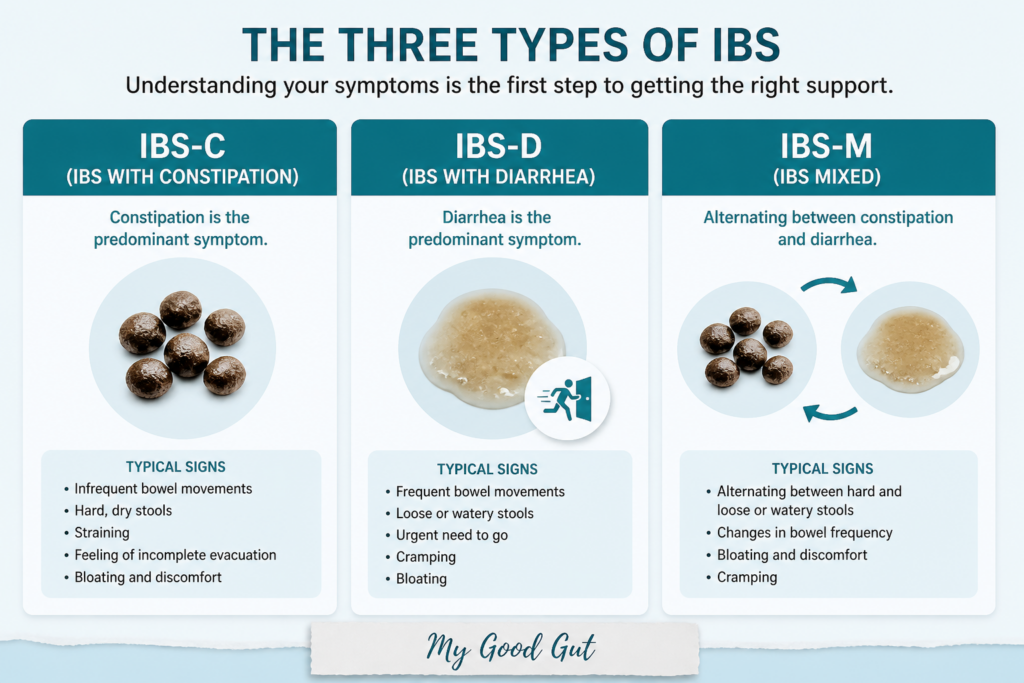
The four IBS subtypes are usually grouped by the bowel pattern that shows up most often. That matters because IBS often involves dysmotility, or uneven gut movement, and one flare-up can be less useful than the pattern you keep seeing. A symptom map helps you compare stool frequency, stool form, urgency, and emptying instead of focusing on a single bad day.
| Subtype | Usual stool pattern | Other common clues |
|---|---|---|
| IBS-C | Infrequent bowel movements with constipation | Straining, hard, dry, or lumpy stools, plus a feeling of incomplete evacuation |
| IBS-D | More frequent bowel movements with diarrhea | Loose or watery stools, urgency, and trouble holding it once the urge starts |
| IBS-M | Alternates between constipation and diarrhea | Stool form shifts between hard or lumpy and loose or watery over days or weeks |
| IBS-U | Does not fit one clear pattern | Symptoms are still real, but stool form and frequency do not stay steady enough to classify |
When constipation is the main pattern, IBS constipation often comes with bloating, straining, and that stubborn sense that you still have not fully emptied. IBS-D can feel very different. It may bring sudden urgency, loose stools, and quick trips to the bathroom, which is why some people use loperamide (Imodium) for short-term symptom relief.
A quick check can help you sort your pattern:
- Frequency: Are bowel movements less frequent, more frequent, or swinging both ways?
- Stool form: Are stools hard and dry, loose and watery, or changing between the two?
- Urgency: Do you need the restroom fast, or do you feel backed up and slow?
- Emptying: Do you often feel incomplete evacuation after you go?
IBS-M can feel inconsistent because the pattern changes over days or weeks. IBS-U is used when symptoms are bothersome but do not stay in one bucket long enough to label. These subtype patterns can change over time, and they help guide next-step evaluation and treatment choices.
What Do IBS Flare-Ups Feel Like?
An IBS flare-up often feels like your usual symptoms have been turned up several notches. An IBS flare can last for hours or for several days, and symptoms often come and go in waves rather than following a fixed schedule (source, source).
The symptoms that often show up together are:
- abdominal cramping or pain that may ease after a bowel movement
- urgency, diarrhea, constipation, or a switch between both
- mucus in the stool
- nausea or a lower appetite, especially after eating
A flare can also affect more than your gut. Fatigue, poor sleep, muscle or back aches, and a shorter fuse for stress or anxiety can make the episode feel more draining than an ordinary upset stomach. Visceral hypersensitivity may play a part, since it can make the gut feel pain and pressure more strongly than usual. The tiredness with IBS can hang on after the gut settles, and it often has more than one cause, including broken sleep.
Baseline IBS is often milder and more predictable, while a flare is sharper, more disruptive, and more likely to follow food triggers, emotional stress, menstrual cycle changes, or another personal trigger. For some people, caffeine is a major trigger, and the IBS caffeine trigger pattern becomes easier to spot once you start tracking it. On long car journeys and flights, travel nausea and IBS are often reported together, without one being shown to cause the other.
During an episode, these steps can make the day feel more manageable:
- eat smaller, simpler meals
- pause common food triggers such as dairy, high-fat foods, caffeine, alcohol, artificial sweeteners, gluten, and gas-producing foods
- add soluble fiber slowly only if fiber for IBS usually helps your pattern
- rest when you can and sip fluids often
- use gentle movement or a heating pad for abdominal cramping
- track food, stress, and symptom timing so patterns become easier to see
Some people also find peppermint oil helpful for cramping, and a low-FODMAP diet may help when used as a short, structured trial. Digestive symptoms can have many causes, so persistent, severe, or worsening symptoms should be reviewed by a qualified healthcare professional. This content is for educational purposes only and is not a substitute for personalized medical advice.
Women with IBS
Women with IBS symptoms may experience a change or fluctuation in bowel habits related to their menstrual cycles. They may have painful menstrual cycles or have pelvic pain that may be difficult to characterize as gastrointestinal or gynecologic pain as the two often overlap. Women going through menopause may experience a change in bowel habits.
Childbirth, weakening of the pelvic floor, and pelvic organ prolapse can contribute to evacuation disorders which may lead to more severe difficulties with constipation or diarrhea.
- Related Article: men with IBS
Children with IBS
IBS affects not just adults but also children, often in different ways. For a focused look at how IBS presents in kids, check out our article on IBS in kids. It covers everything from spotting the symptoms to effective treatment strategies for young ones.
Which Symptoms Are Red Flags?
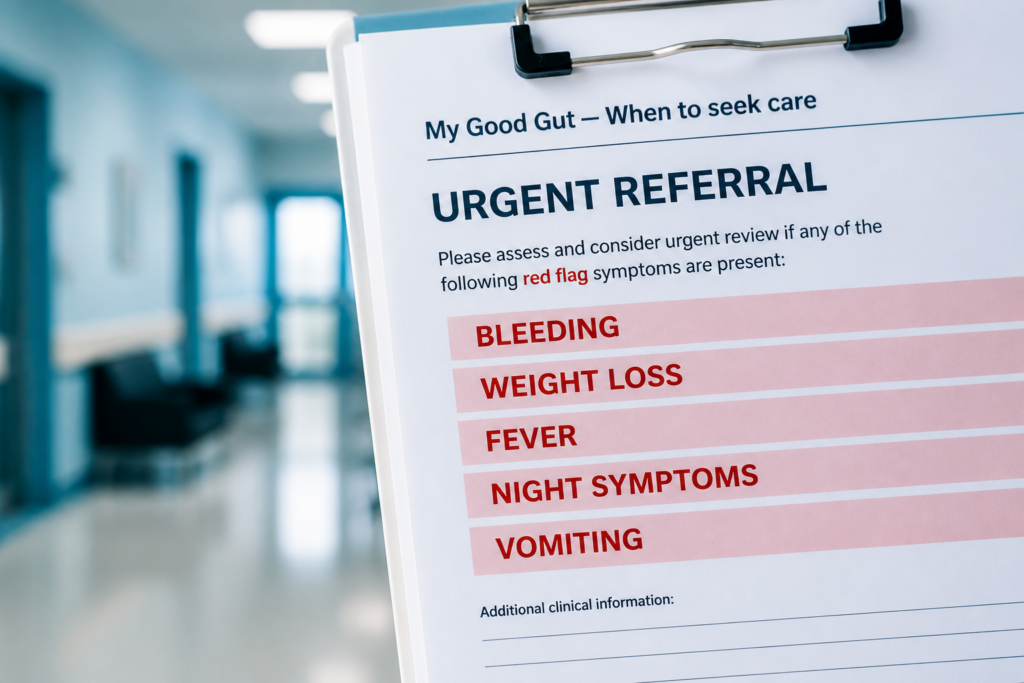
IBS pain often flares and settles, but certain red flag symptoms fall outside that pattern and need medical attention.
Watch for these warning signs:
- Rectal bleeding or blood in the stool
- Unexplained weight loss, persistent or unexplained fever, or iron-deficiency anemia
- Severe or worsening abdominal pain that does not ease after a bowel movement
- Pain or diarrhea that regularly wakes you from sleep
- Persistent vomiting, severe diarrhea, or trouble swallowing
- New symptoms that begin after age 50
Blood in the stool is not typical of IBS. It can signal inflammation, infection, or another gastrointestinal condition that should not be assumed to be IBS.
The IBS vs IBD distinction matters because symptoms can overlap with inflammatory bowel disease and colorectal cancer. Similar symptoms can appear with other conditions, so these warning signs should not be assumed to be IBS.
If your symptoms are severe, worsening, or outside your usual pattern, get medical evaluation soon. Digestive symptoms can have many causes, and timely care helps rule out something more urgent.
What Should You Track Before Your Appointment?

The diagnosis of IBS depends on patterns you can describe clearly. A daily log works best when it includes these details:
- Start and pattern: Note when symptoms began, how often they show up, and whether they come and go in episodes or stay constant. That pattern is one of the clues clinicians use in the diagnosis of IBS.
- Stool pattern: Record stool form and bowel frequency each day. Add diarrhea, constipation, or a mix, plus mucus, urgency, and a feeling of incomplete emptying. Those details can point toward IBS-C, IBS-D, IBS-M, or IBS-U.
- Pain and triggers: Write down whether belly pain improves after a bowel movement, worsens after eating, or flares with stress, menstrual changes, or specific foods. Repeating trigger patterns can make the overall picture easier to spot.
- Red flag symptoms: Track blood in the stool, black stools, fever, unexplained weight loss, waking from sleep with symptoms, or persistent vomiting. These signs may point to something other than IBS and deserve prompt medical attention.
- Past care: Bring a list of prior tests, prescriptions, over-the-counter medicines, supplements, and diet changes. That helps your clinician see what has already been ruled out and whether medicine side effects, infection, inflammation, or another digestive disorder could be involved.
- Whole-body clues: Include fatigue, nausea, sleep disruption, anxiety, and flares around your menstrual cycle. A fuller symptom map can make the pattern easier to recognize.
- Food triggers: Note fatty meals, caffeine, alcohol, chocolate, and gas-producing foods when they seem linked to flares. A short food and symptom log can help you and your clinician look for patterns.
Some guidance recommends keeping a diary of what you eat and any symptoms you get so trigger foods are easier to identify (source, source).
Bring the log to your visit, even if it feels incomplete. Clear details give your clinician a stronger starting point and can help guide the next steps.
You can track in any notebook or get a pre-made journal like this popular Food Sensitivity Journal that includes space for all the information:
IBS Symptoms FAQs
These FAQs help you make sense of IBS symptoms and the questions that often come with them, including fiber for IBS, peppermint oil, probiotics for IBS, and Cognitive Behavioral Therapy. If you’re also sorting through various IBS causes, this set gives you a clearer starting point.
1. Is Bloating A Common IBS Symptom?
Yes, bloating is often part of IBS, and it can show up with IBS-related gas, belly tightness, a feeling of fullness, or visible abdominal distension. It usually fits IBS best when it comes with belly pain and changes in bowel habits, and it can feel worse after certain foods, eating too fast, or during stress. If the bloating is new, lasting, much worse than usual, or paired with weight loss, vomiting, fever, blood in the stool, or worsening pain, you should get medical evaluation instead of assuming it’s IBS.
2. Can IBS Cause Mucus In Your Stool?
Yes, IBS can cause mucus in your stool, and the amount is usually small and clear or whitish. Small amounts of clear or whitish mucus can show up when your bowel is irritated, especially if you also have abdominal pain or cramping, bloating, gas, diarrhea, constipation, or a feeling that you still need to go after a bowel movement. The mucus in the stool with IBS guide gives more detail. Mucus by itself does not diagnose IBS, and frequent mucus with blood, fever, weight loss, or worsening pain should be checked by a clinician because another condition may be causing it.
3. Do Stress And Anxiety Worsen IBS Symptoms?
Yes. Stress and anxiety can make IBS flare more often because the brain-gut axis can make your gut more sensitive, which may raise pain, cramping, bloating, diarrhea, or constipation during tense periods. IBS also often overlaps with fatigue, muscle or back aches, sleep problems, anxiety, depression, and stress sensitivity, and early-life stress or a history of abuse can make flares harder to predict. If stress and IBS seem closely linked or symptoms are affecting daily life, Cognitive Behavioral Therapy and other behavioral treatments can be a helpful layer alongside diet and self-care.
4. Can Food Triggers Change IBS Symptoms?
Yes, food triggers can change your IBS symptoms, and they’re often personal, so one meal may bother you while it leaves someone else fine. Common triggers include high-FODMAP foods, dairy, caffeine, and alcohol, and some people also notice flares with stress or around menstrual cycles. A short food-symptom log for 1 to 2 weeks can help you spot patterns, and an IBS diet guide can help you compare options without trying to cut everything at once. The goal is to find likely food triggers, not to remove every food, and any low-FODMAP diet or probiotics for IBS approach should be individualized.