

A gastrointestinal disorders guide on symptoms, tests, and care helps sort out digestive problems that keep returning. Digestive symptoms can look minor on paper while interrupting meals, sleep, and daily routines.
GI disorders are conditions that affect the digestive tract and the organs that support digestion. The goal here is a clearer way to spot common signs, separate likely conditions, and know when medical care matters.
The sections below cover IBS, GERD, celiac disease, IBD, lactose intolerance, and diverticular disease, along with symptoms like bloating, diarrhea, constipation, reflux, nausea, and abdominal pain. They also explain blood work, stool tests, breath tests, endoscopy, and colonoscopy, plus diet and lifestyle steps that often come first. Expect a symptom checklist and a practical filter for deciding what can wait and what needs a clinician.
Primary care clinicians, gastroenterologists, registered dietitians, and caregivers will find the most value here, especially when they need to triage digestive complaints without missing red flags. A teacher with weeks of constipation and new blood in the stool, for example, needs a faster path to evaluation than someone with a brief flare after a heavy meal. The next sections lay out the signs, tests, and care steps in clear, usable terms.
Gastrointestinal Disorders Key Takeaways
- GI disorders affect the digestive tract and supporting organs like the liver, pancreas, and gallbladder.
- Common symptoms include abdominal pain, bloating, diarrhea, constipation, reflux, nausea, and appetite changes.
- IBS is functional, while IBD, GERD, and celiac disease involve inflammation, reflux, or tissue damage.
- Stool tests, blood work, breath tests, and scopes help identify the cause of persistent symptoms.
- Diet, hydration, movement, and trigger-food tracking often start care for constipation, reflux, and IBS.
- Blood in stool, weight loss, severe pain, jaundice, or swallowing trouble need prompt medical attention.
- Treatment should match the cause, from lifestyle changes to medicines or specialty care.
What Are Gastrointestinal Disorders?
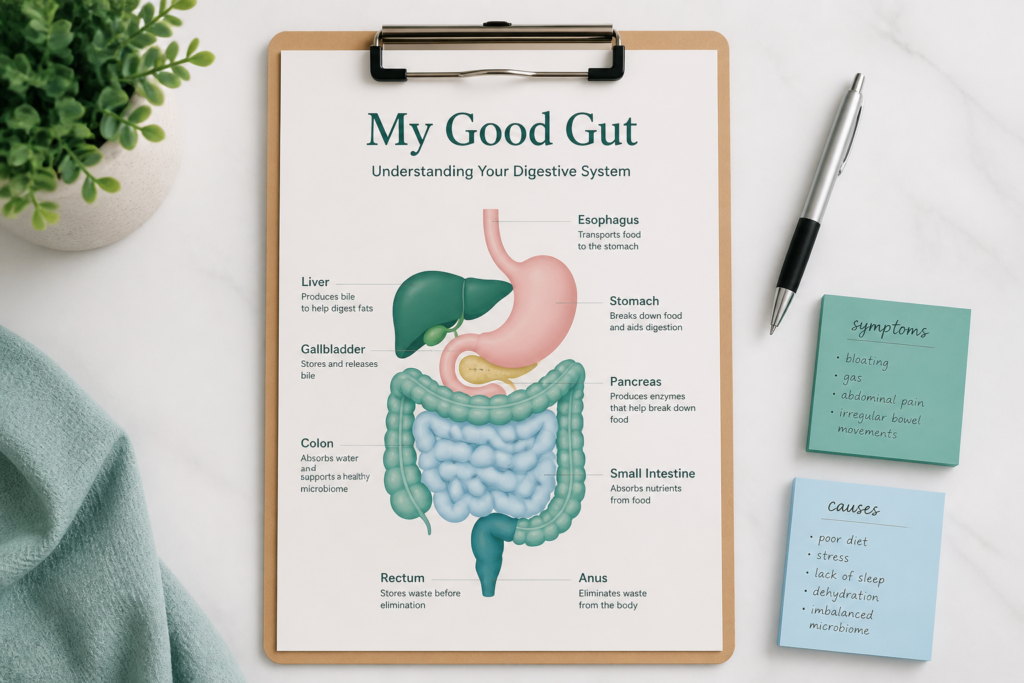
Gastrointestinal disorders are conditions that affect the gastrointestinal (GI) tract and the digestive system. That includes the mouth, esophagus, stomach, small and large intestines, rectum, and anus. It also includes accessory organs such as the liver, pancreas, and gallbladder.
GI disorders are not one disease. They are a broad category that can affect movement, inflammation, absorption, and elimination in the digestive tract. That is why the symptoms can look very different from one person to another.
Doctors often group these problems into two broad patterns:
- Functional GI disorders: symptoms are present, but standard tests do not show a clear structural or biochemical cause.
- Structural or organic disorders: tests may show inflammation, ulcers, polyps, blockages, or tissue damage.
These problems can be mild and temporary, or chronic and severe. Some need only short-term care, while others require follow-up or specialist treatment. Symptoms of GI disorders can overlap with everyday complaints, so it helps to know what to watch for.
- Abdominal pain
- Diarrhea
- Bloating
- Constipation
- Reflux
- Nausea
- Appetite changes
One person may mainly feel bloated. Another may notice constipation, reflux, or stomach pain first.
Persistent, worsening, or severe symptoms deserve medical evaluation. A steadier gut health plan starts with knowing what falls inside this category. From here, you’ll see which GI disorders are most common, how major conditions differ, and when your symptoms should prompt a doctor visit.
Which GI Disorders Are Most Common?
GI disorders span everything from a short bout of stomach upset to chronic problems that need ongoing care. That is why the same symptom can feel mild for one person and serious for another. Heartburn, nausea, bloating, diarrhea, and belly pain can all point to very different causes, and constipation and its treatment has a hub of its own. Bloating that builds after most meals and follows no single food can point to SIBO, when bacteria overgrow the small intestine. Dairy that reliably brings on gas and diarrhea points to lactose intolerance and its management.
The most common conditions often fall into a few familiar groups:
- Gastroesophageal Reflux Disease (GERD): GERD is one of the most common digestive disorders in the United States. Frequent Heartburn or regurgitation is a clue that it may be more than an isolated upset stomach.
- Peptic ulcers: Peptic ulcers can affect adults. Burning upper abdominal pain, nausea, and pain that gets worse when the stomach is empty are common signs.
- Irritable Bowel Syndrome (IBS): IBS is a common, symptom-driven diagnosis. It often brings cramping, bloating, diarrhea, constipation, or a mix of bowel pattern changes.
- Celiac disease and colorectal cancer: Celiac disease is less common than IBS, but early diagnosis matters because it can prevent longer-term problems. Colorectal cancer becomes more likely with age, so screening matters.
- Diverticular disease and Diverticulitis: diverticular disease starts with small pouches in the colon. When those pouches become inflamed or infected, Diverticulitis can bring abdominal pain, fever, and changes in bowel habits.
- Lactose intolerance and gastritis: Lactose intolerance means trouble digesting lactose. Gastritis is inflammation of the stomach lining, and it can be short term or chronic.
If nausea, fullness, or slow digestion keep hanging around, gastroparesis causes may also be worth discussing with a clinician. Results vary by person, and persistent, severe, or worsening symptoms should be evaluated by a qualified healthcare professional.
How Do IBS, IBD, GERD, and Celiac Disease Differ?
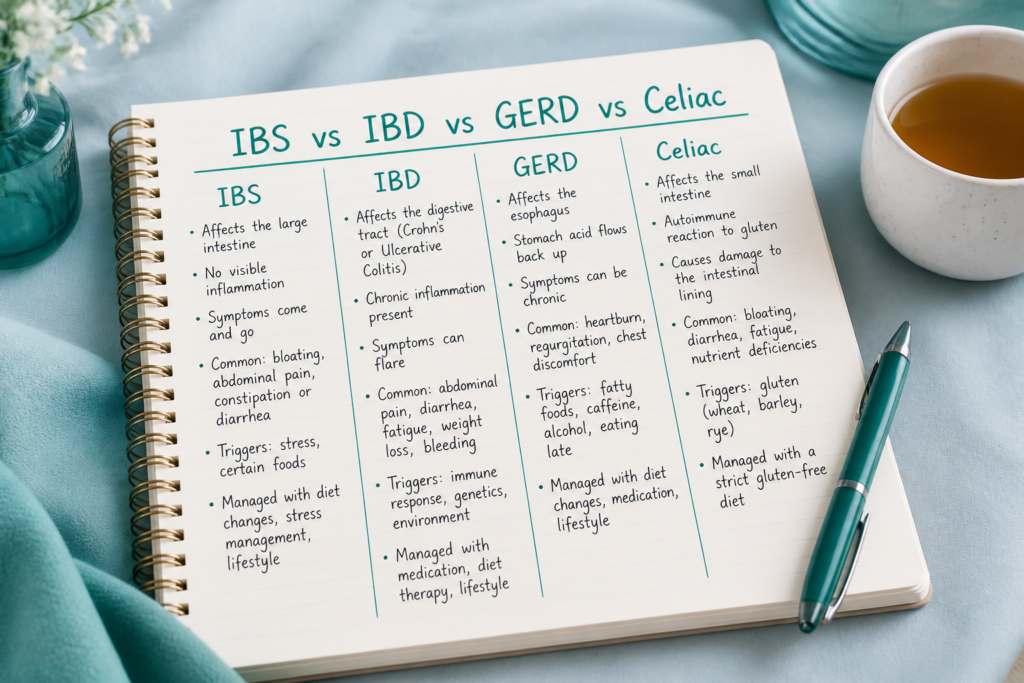
These conditions separate most clearly by where the problem starts. Some are functional, some involve inflammation or damage, and GERD starts in the esophagus rather than the intestine.
| Condition | What it is | Hallmark clues |
|---|---|---|
| IBS | IBS is a functional disorder of gut-brain interaction. The bowel looks normal, but the nerves and muscles are overly sensitive. | Recurring abdominal pain or cramping, bloating, gas, and diarrhea, constipation, or mixed stools. It can affect adults at many ages and is reported more often in women than men. |
| IBD | Inflammatory Bowel Disease includes Crohn’s disease and ulcerative colitis. It causes chronic intestinal inflammation and can lead to structural damage. | Severe or persistent diarrhea, blood in the stool, weight loss, fatigue, and ongoing abdominal pain. |
| GERD | Gastroesophageal Reflux Disease, or GERD, is repeated acid reflux into the esophagus. | Frequent heartburn, regurgitation, chest discomfort, and sometimes trouble swallowing, often worse after eating. |
| Celiac Disease | Celiac Disease is an autoimmune reaction to gluten that damages the small intestine lining. | Diarrhea, bloating, weight loss, anemia, fatigue, and poor nutrient absorption. |
The IBS guide goes deeper on the pain and stool changes that often point to Irritable Bowel Syndrome. IBS can feel miserable, but it does not cause structural damage.
The inflammatory bowel disease page covers the main forms of IBD. Blood, weight loss, fatigue, and steady pain point more toward inflammation than IBS. Crohn’s disease can affect any part of the gastrointestinal tract from mouth to anus, while ulcerative colitis stays in the colon and rectum and affects the innermost lining.
A quick way to sort them is this:
- IBS: pain and bowel changes without structural damage
- IBD: inflammation, blood, and more persistent symptoms
- GERD: upper-GI acid reflux with heartburn and regurgitation
- Celiac Disease: gluten-triggered injury and malabsorption
Persistent, severe, or worsening symptoms deserve medical care so you can sort out the cause and get the right plan.
What Tests Do Doctors Use For GI Symptoms?
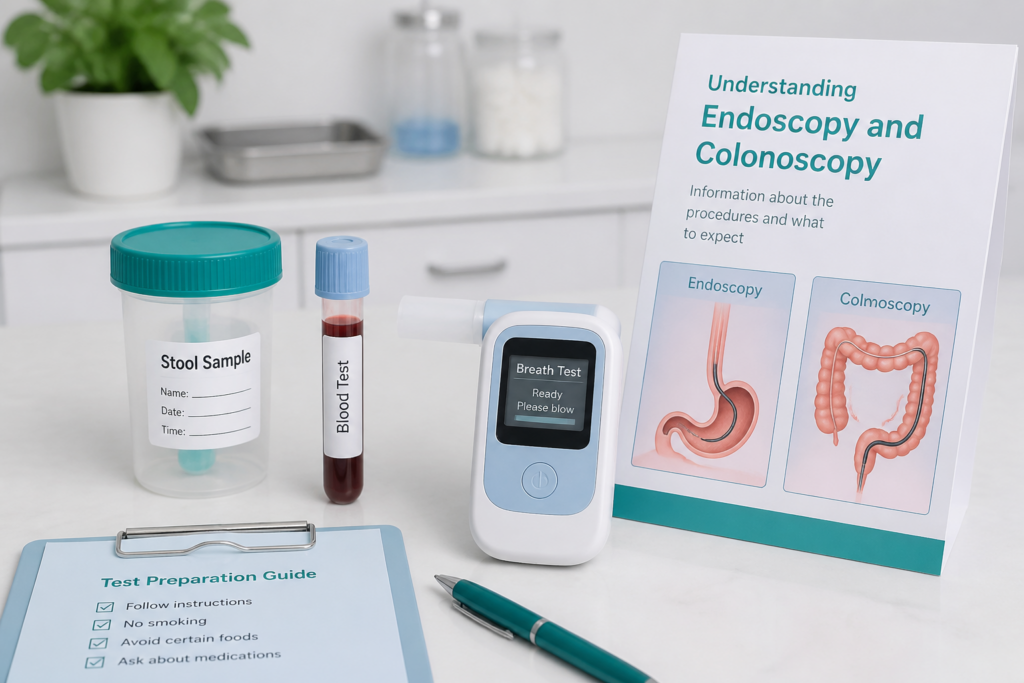
Some symptoms need prompt medical care instead of home treatment alone. Ongoing Diarrhea, severe constipation, persistent bloating, frequent nausea or vomiting, blood in the stool, unexplained weight loss, severe abdominal pain, trouble swallowing, and jaundice all deserve a medical visit. The hard part is that IBS, GERD, Celiac Disease, food intolerances, infections, Inflammatory Bowel Disease, and SIBO can look very similar at first.
A symptom-based workup often starts with a few common patterns:
| Symptom pattern | Tests often used | What the test can show |
|---|---|---|
| Diarrhea that is acute, lingering, or unexplained | Stool culture, infection panel, fecal calprotectin, fecal lactoferrin, occult blood test | Infection, bowel inflammation, hidden bleeding |
| Bloating, diarrhea, gas, or weight loss | Celiac blood tests, breath tests for lactose intolerance or SIBO | Gluten-related disease, sugar malabsorption, changes tied to the gut microbiome |
| Fatigue, pale skin, or possible blood loss | Complete blood count, iron studies | Anemia or iron loss |
| Yellow skin or eyes, right-sided pain, or vomiting with pain | Liver tests, ultrasound, computed tomography (CT) | Biliary or Liver problems, fluid buildup, gallbladder or structural issues |
| Reflux, swallowing trouble, bleeding, chronic diarrhea, or concern for IBD | Upper endoscopy, colonoscopy, flexible sigmoidoscopy, virtual colonoscopy, upper or lower gastrointestinal series | Structural problems, inflammation, polyps, bleeding sources, or celiac changes |
Blood tests usually answer questions about anemia, inflammation, and the Liver. Stool tests help sort out infection, hidden bleeding, and bowel inflammation. Breath tests, imaging, and scopes come in when the pattern points away from simple food triggers and toward something deeper.
These scope tests each look at a different part of the gut:
- Upper endoscopy: examines the Esophagus, stomach, and upper small intestine.
- Colonoscopy: looks at the colon and can find inflammation, bleeding, or polyps.
- Flexible sigmoidoscopy: checks the lower colon when symptoms seem centered there.
- Virtual colonoscopy and upper or lower GI series: help map anatomy when a broader view is needed.
If your symptoms are severe, persistent, or getting worse, a qualified healthcare professional should guide the next step. This content is for educational purposes only. Digestive symptoms can have many causes, so you should consult a qualified healthcare professional for persistent, severe, or worsening symptoms. Results vary by person, and any dietary or supplement advice should be individualized.
How Are GI Disorders Treated First?
First-line treatment starts with the cause, not the label. A reflux plan looks different from IBS care, and both differ from treatment for infection or inflammatory disease. For many common GI problems, clinicians often start with diet and lifestyle changes before adding medicine or procedures, although the first step depends on the cause and severity (source, source).
A simple symptom checklist can help you spot patterns and make changes that fit your body:
- IBS: A low-FODMAP approach may help some people when it’s done with professional guidance. FODMAPs are certain carbs that can ferment in the gut and trigger pain, gas, or bloating.
- Constipation: More fiber and more fluids often help stool stay softer and easier to pass. Gentle daily movement can also support regular bowel habits.
- Reflux: Smaller meals, weight loss if needed, and avoiding lying down soon after eating are common first steps. Large evening meals and late snacks often make symptoms worse.
- Trigger foods: Dairy, gluten, spicy foods, alcohol, and caffeine matter most when they clearly line up with your symptoms. If a food keeps causing the same reaction, it belongs on your watch list.
Lifestyle changes can help across several GI disorders. Regular exercise supports bowel function and stress control. Smoking cessation matters a lot for reflux. Meditation, yoga, and therapy may help when stress makes symptoms flare, because the gut-brain axis links digestion and mood.
Medicines are chosen by cause, not just by symptom. Antacids and anti-diarrheals can ease short-term discomfort. Acid blockers and proton pump inhibitors, or PPIs, are often used for reflux or ulcers. Short antibiotic courses may be used for certain infections. Probiotics may help in some cases, depending on the condition and the Gut microbiome.
Probiotic strains and what they target is worth comparing, but it should stay secondary to diagnosis and medical care.
Inflammatory bowel disease often needs stronger prescription treatment when basic steps are not enough. That can include immunosuppressants or biologics. These medicines are used to control inflammation and reduce flares, not as general remedies for everyday stomach upset.
Treatment should move up when symptoms keep going, bleeding starts, inflammation is severe, or there is obstruction or structural disease. In those cases, specialty therapy, endoscopy-guided treatment, or surgery may be part of the plan. This tiered approach keeps care matched to how serious the problem is and how you respond to earlier steps.
This content is for educational purposes only. Digestive symptoms can have many causes, so you should consult a qualified healthcare professional for persistent, severe, or worsening symptoms. Results vary by person, and any diet or supplement advice should be individualized.
When Should You Seek Medical Care?
Some digestive symptoms can wait for a routine visit. Others deserve faster care because they can point to something more serious.
Contact a clinician if symptoms keep going or get worse, especially with:
- Ongoing diarrhea
- Severe constipation
- Chronic bloating
- Nausea and vomiting
- Any bowel change that does not settle over time
New or progressive changes in bowel habits matter even more in adults over screening age. Colorectal cancer can start as benign polyps, so direct evaluation such as colonoscopy may be needed.
Seek medical evaluation sooner if you have:
- Blood in the stool, which can point to peptic ulcer bleeding, inflammatory bowel disease, Diverticulitis, or colorectal cancer
- Unexplained weight loss, which can happen with inflammation, poor absorption, or another gut or liver problem
- Severe or lasting abdominal pain, which may fit bowel obstruction, inflammatory bowel disease, Diverticulitis, or a Gallbladder problem
- Trouble swallowing or jaundice, which can signal liver or bile duct disease
- Repeated vomiting, which can cause dehydration and may happen with infection, obstruction, or ulcer bleeding
Get emergency care right away for intense abdominal pain with a hard or swollen belly, black or red stools, vomit that looks like blood, fainting, or dehydration from repeated vomiting or diarrhea.
If symptoms are severe, recurring, or affecting daily life, do not self-treat for long. Arrange a visit with a clinician and share when symptoms started, how often they happen, and what makes them worse. Digestive symptoms can have many causes, so persistent, severe, or worsening symptoms need medical review. This content is for educational purposes only and is not a substitute for personalized medical advice.
Gastrointestinal Disorders FAQs
If you’re sorting through gastrointestinal disorders, these FAQs cover the common questions people ask about GI disorders. They also help you make sense of the symptoms of GI disorders before you read the answers below.
1. What symptoms suggest a GI disorder?
Abdominal pain, bloating and gas, diarrhea, constipation, heartburn, nausea, vomiting, and belly swelling can all point to a GI disorder, especially when several symptoms show up together instead of after a one-time stomach bug.
Pay close attention if your bowel habits change for more than a few days or keep coming back, or if pain is frequent, severe, or tied to meals, because IBS, IBD, celiac disease, infections, ulcers, and gallstones can look similar at first. Blood in the stool, black stools, unexplained weight loss, fatigue, worsening symptoms, trouble eating, trouble swallowing, or dehydration should prompt medical care.
2. What causes gastrointestinal disorders?
Gastrointestinal disorders usually fall into two groups. Functional disorders cause symptoms without clear damage on standard tests, while structural or organic disorders show inflammation, ulcers, polyps, blockages, or tissue injury. Infections, autoimmune disease, food intolerances like lactose intolerance and celiac disease, constipation triggers such as low fiber, poor hydration, inactivity, pelvic floor dysfunction, medications, stress, travel, irregular meals, and poor sleep can all play a role.
Bloating may point to IBS, celiac disease, food intolerances, or SIBO, persistent diarrhea may suggest IBD, celiac disease, infection, or IBS-D, and abdominal pain can come from ulcers, IBS, IBD, or gallstones.
3. Are gastrointestinal disorders contagious?
Some gastrointestinal disorders are contagious, but many common ones are not. Gastroenteritis and other infections can spread through viruses or bacteria in contaminated food, water, or close contact, while IBS, IBD, and celiac disease are not passed from person to person.
Because diarrhea, bloating, and belly pain can happen in both, the cause matters, and a proper diagnosis helps separate a short-term infection from a long-term condition.
4. Which doctor treats gastrointestinal disorders?
For new or mild digestive symptoms, you usually start with your primary care clinician or GP. They can check common causes, order blood work, stool tests, or imaging, and decide whether your symptoms fit a gastrointestinal disorder anywhere from the esophagus to the gallbladder.
If symptoms are persistent, severe, recurrent, or unclear, a gastroenterologist can look deeper with an upper endoscopy or colonoscopy. A surgeon may be needed for blockage, gallbladder disease, appendicitis, or hernia problems, and a registered dietitian can help when food triggers, IBS, lactose intolerance, or celiac disease are part of the picture.
5. When are GI symptoms an emergency?
Severe or persistent abdominal pain, repeated vomiting, blood in your stool, black stools, and trouble swallowing are red flags that need prompt medical evaluation. Go to the ER right away if you have dehydration, fainting, confusion, a hard swollen belly, or pain that becomes suddenly intense or gets worse fast.
Call your clinician soon for ongoing diarrhea, severe constipation, chronic bloating, frequent nausea, or unexplained weight loss, and if you are unsure whether it belongs in urgent care or the ER, get immediate medical advice instead of waiting.
This content is for educational purposes only. Digestive symptoms can have many causes, and readers should consult a qualified healthcare professional for persistent, severe, or worsening symptoms. Results vary by person, and any dietary or supplement advice should be individualized based on the cause.