


Gut health isn't a score you earn by cutting out dairy, gluten, or every food that causes one uncomfortable meal. It describes how well your digestive tract digests food, absorbs nutrients, and passes stool comfortably, alongside the microbes that live mostly in your colon.
Bloating after rushed lunches, reflux after late meals, and bowel habits that swing between constipation and diarrhea don't all have the same cause. The NHS target of 30 grams of fiber daily can be useful, but adding fiber too quickly may increase gas or cramping, and PHGG may be easier to tolerate than psyllium for some people. Regular meals, fluids, movement, sleep, and repeat symptom patterns often offer clearer starting points than an extreme elimination diet or a random supplement.
Persistent symptoms may need a closer look for IBS, reflux, lactose intolerance, or another digestive condition. Blood or black stool, unintended weight loss, trouble swallowing, persistent vomiting, or fever with significant pain need clinical attention rather than another food experiment.
Gut Health Key Takeaways
- Gut health involves digestion, nutrient absorption, comfortable bowel movements, and gut microbes.
- There is no single test or score that confirms a healthy gut.
- Fiber-rich plant foods support regularity, but increase fiber gradually to limit gas.
- Regular meals, fluids, movement, sleep, and stress routines can support digestion.
- Probiotics are strain-specific and do not work for every digestive symptom.
- IBS, reflux, lactose intolerance, and inflammatory bowel disease need different approaches.
- Blood in stool, weight loss, persistent vomiting, or significant pain need clinical evaluation.
What Does Gut Health Mean?

Gut health is how well your digestive tract digests food, absorbs nutrients, and passes stool comfortably, with a stable community of gut microbes doing its share. It is not a score, a single food rule, or proof that a supplement is working.
The question what is gut health usually comes down to whether your digestive health feels manageable from day to day. For most people, a healthy gut means bowel movements that are regular for them, manageable gas, and eating without dread. These patterns differ from person to person, so digestive tract health is best compared with your usual routine rather than someone else’s.
There is no agreed scientific definition of gut health and no single test that can confirm a healthy gut (source). Gut health and overall health are connected because digestion helps your body use nutrients, the intestines contribute to immune activity, and the gut-brain link can affect how digestive symptoms feel. That connection does not mean the gut explains every symptom, mood change, or health concern.
Possible signs of an unhealthy gut matter most when they persist, disrupt daily life, or differ from your normal pattern:
- Ongoing bloating, pain, constipation, diarrhea, reflux, or urgent bowel movements.
- Unintentional weight loss, greasy stools, or trouble maintaining nutrition.
- Symptoms that begin after a stomach infection or continue despite basic routine changes.
Bloating, constipation, diarrhea, reflux, and irritable bowel syndrome (IBS) can each call for different approaches. The rest of this guide explains how digestion works, what shapes it each day, and when symptoms may need more than a habit change.
How Do Digestion and Gut Microbes Work?
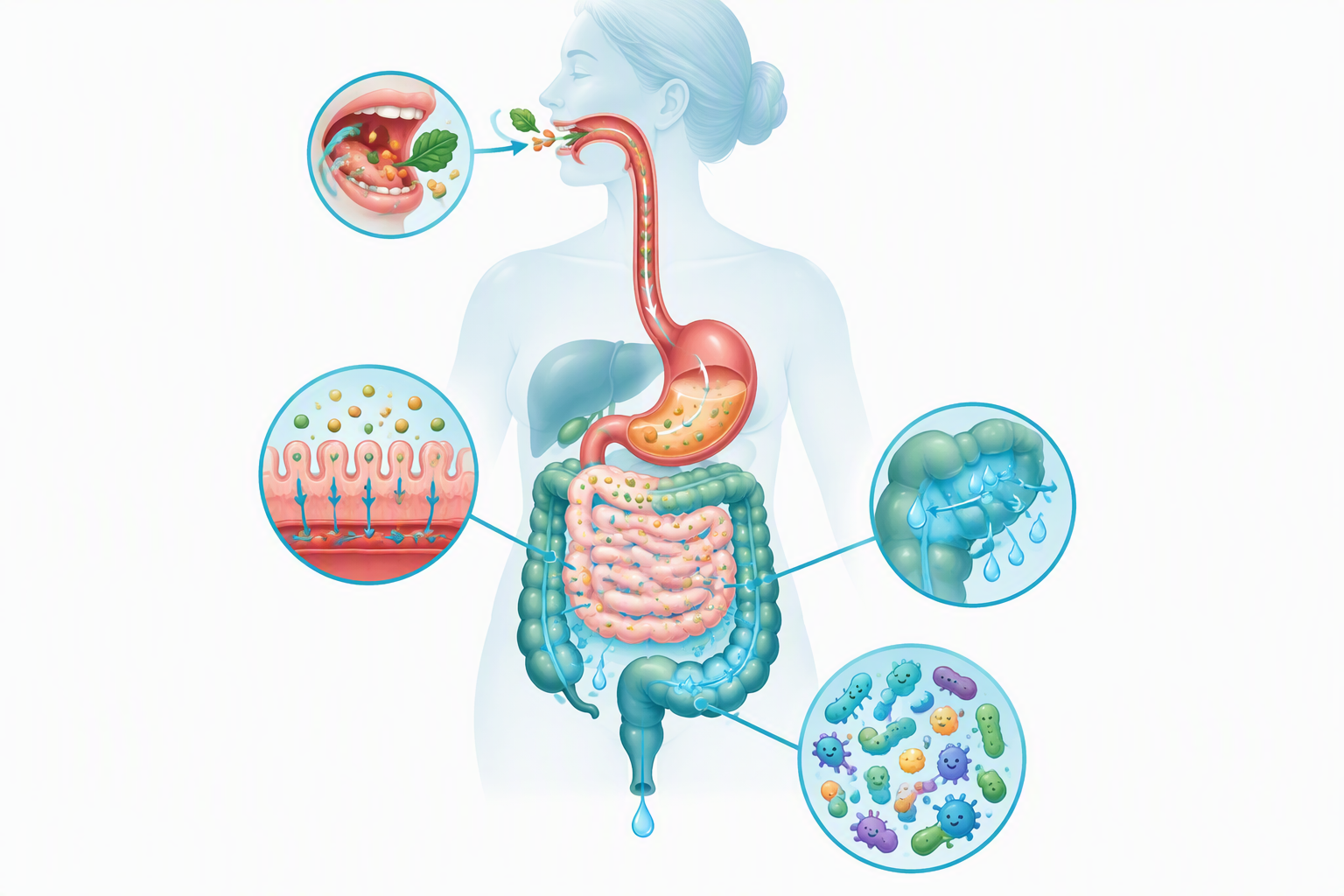
The digestive tract is one continuous pathway from your mouth to your colon, where food is broken down, nutrients are absorbed, and water is reclaimed before waste forms. The National Institute of Diabetes and Digestive and Kidney Diseases describes this coordinated process across the mouth, stomach, small intestine, and large intestine (source). how digestion works, step by step covers each stage in more detail, while digestive tract health can also be affected by eating pace, hydration, movement, and meal timing.
Your gut microbiome includes trillions of intestinal bacteria and other microbes, most of which live in the colon. the microbes that run your gut explains how these organisms ferment fiber, help train the immune system, and produce compounds your body can use. A diverse gut microbiome is a research marker, not a score for how well you eat.
Digestion and microbes are two views of the same system. Prebiotic foods, including fiber-rich plant foods, are foods that feed good gut bacteria and may support beneficial gut bacteria over time. Probiotic foods and drinks, such as yogurt with live cultures or kefir, provide live microorganisms, though they do not replace a varied eating pattern.
Learning how to support gut bacteria often starts with small food changes you can repeat, rather than strict rules or a perfect diet.
What Shapes Gut Health Each Day?

Among small food changes to support gut bacteria, methylcellulose or partially hydrolyzed guar gum (PHGG) may be easier to tolerate than psyllium if psyllium repeatedly causes more gas because they ferment less. Although building meals around fiber-rich plants still matters because different plant foods feed different parts of the gut microbiome, a varied plate supports gut health more reliably than relying on one "perfect" food.
Regular movement supports healthy digestion habits by helping keep the bowel moving and may also support microbial diversity. movement that helps digestion covers practical routines for busy days, along with why intense workouts can sometimes trigger cramps, urgency, or loose stools. A brisk walk or other moderate activity may be a better fit when symptoms are already active.
Sleep affects digestion through your body clock, which helps coordinate appetite, digestion, and bowel habits. what sleep does for digestion explains why short or irregular sleep may show up as reflux, bloating, or changes in your bathroom routine. Most adults need about seven to nine hours of sleep each night, and a steady sleep schedule makes that easier to reach (source).
Stress can trigger digestive symptoms before food reaches your stomach because the gut and brain continually send signals back and forth. how stress reaches the gut explains why pressure may bring on cramps, urgency, or a knotted feeling, while persistent symptoms can add stress in return. Small routines that create a pause before meals can be a useful part of a gut health lifestyle.
Medicines and recent infections can also affect bowel habits, bloating, and appetite. Do not stop a prescribed medicine without advice, especially if a new digestive symptom began after a medication change.
How Do Alcohol, Smoking, Shift Work, and Travel Affect Digestion?

Beyond the daily habits and medicines that affect bowel patterns, alcohol, smoking, shift work, and travel can upset digestion even when your meals are generally balanced. Healthy digestion habits, including regular meals, fluids, and sleep when possible, provide a useful baseline, but symptoms that follow one of these patterns often need a more specific response.
Heavy drinking or regular alcohol use irritates the stomach lining, loosens the intestinal barrier, and shifts the microbiome (source). How alcohol affects the gut connects these changes with reflux, loose stools, and next-day bloating.
Smoking can weaken the valve above the stomach, slow ulcer healing, and change bowel habits. How smoking changes digestion also covers the short-term bowel changes that can occur after quitting.
Eating and sleeping against your body clock can raise the likelihood of reflux, constipation, and IBS-type symptoms. Digestion on night and rotating shifts focuses on realistic routines for unpredictable schedules.
New foods and water, time-zone changes, and long periods of sitting can contribute to travel constipation or traveler's diarrhea. Keeping your gut settled while traveling can help you prepare without overhauling your trip.
Water and digestion are closely connected because fluids help soften stool and move waste through the bowel. If you're deciding how to improve gut health, build fiber-rich foods for gut health into meals gradually. Vegetables for gut health and beans for gut health can be useful choices, but a sudden fiber increase may worsen gas and bloating. A practical gut health lifestyle can include oatmeal, berries, and nuts at breakfast, beans and vegetables at lunch, and vegetables, whole grains, and protein at dinner while limiting heavily processed, sugary, or fried foods that aggravate symptoms.
Which Daily Habits Support Digestion?
Regular meal times and slower eating can make digestion more predictable. Long gaps can leave you overly hungry by dinner, while rushed lunches and late, heavy meals may worsen reflux, bloating, or irregular bowel habits.
Set a realistic pace for your fiber goal. The NHS adult target is 30 grams of fiber a day (source). Vegetables, fruit, beans, lentils, whole grains, nuts, and seeds all count, and their fiber feeds gut bacteria and supports regular bowel movements, but a sudden increase may cause gas or cramping.
As fiber intake rises, spread fluids across the day. A short walk after a meal may also feel better than sitting still, especially after a larger lunch or dinner. Keeping similar sleep and wake times can help you spot whether poor sleep tends to line up with symptom flares.
Pay attention to repeat patterns before cutting out whole food groups. Coffee on an empty stomach, large portions, skipped meals, or eating close to bedtime may be more useful clues than a single uncomfortable meal. What to eat for gut health covers fiber types, prebiotic foods, probiotic foods, fermented foods, FODMAPs, and meal timing in more detail.
Fermented foods do not always contain live probiotics, and a food labeled as fermented is not automatically a probiotic food. Start with food choices that fit your routine, then consider a fiber or probiotic supplement only when you have a specific reason to try one.
When Do Digestive Symptoms Need More Than a Habit Change?

Even with supportive daily habits, occasional bloating, gas, heartburn, or loose stools after a rich meal, travel, or a stressful week usually settle. Symptoms that return for weeks, wake you at night, or interfere with meals, work, or sleep deserve more attention than another habit change.
The signs of an unhealthy gut can be hard to read because bloating, gas, heartburn, stomach pain, constipation, diarrhea, and fatigue can have several causes. What common digestive symptoms mean sorts these concerns by symptom pattern, including reflux, bowel changes, and discomfort connected to meals.
Blood or black stool, unintended weight loss, trouble swallowing, persistent vomiting, fever with significant pain mean a clinician, not a diet change.
Knowing when to see a doctor for digestive symptoms also matters when the pattern is less dramatic but keeps disrupting daily life. Constipation that alternates with diarrhea, pain that makes meals difficult, or symptoms after ordinary foods may point to irritable bowel syndrome (IBS), reflux, food intolerance, or another digestive disorder.
Testing is most useful when it addresses a clear question, rather than trying to explain every symptom at once. When gut testing is worth doing explains what stool, breath, and microbiome tests may clarify, what they cannot answer, and why a home kit is not a diagnosis.
A brief symptom record that notes timing, food changes, sleep disruption, and effects on daily routines can make a medical conversation more focused.
Where Do IBS, Probiotics, and Other Gut Conditions Fit?

Some symptoms point beyond general gut health or IBS. Reflux, celiac disease, inflammatory bowel disease, lactose intolerance, and other gastrointestinal conditions have distinct causes, testing, and care paths. Gastrointestinal disorders and their care can help match your concern with the type of evaluation that may make sense.
After symptom patterns warrant a closer look, IBS can be considered when abdominal pain is linked with a change in bowel habits and red-flag symptoms are not present (source). It is a functional disorder, meaning the gut can look structurally normal even when its function is disrupted. When gut symptoms are IBS can help you recognize common patterns, including constipation-predominant, diarrhea-predominant, and mixed bowel habits. Symptoms that are persistent, worsening, or difficult to connect to meals deserve a more focused evaluation.
Probiotics are live microorganisms, not a universal answer for bloating, gas, or irregular stools. Effects vary by strain, so a long ingredient list or a high colony-forming unit count does not show that a product suits your symptoms. Where probiotics fit explains how strain-specific research can guide your choices while food-first habits remain the priority. Regular meals, fiber choices that agree with you, fluids, and sleep often provide a steadier foundation than supplement trial and error.
The everyday habits above remain the practical base that condition-specific care builds on.
Gut health and immunity are linked through the gut wall, where most immune cells sit, which is one reason gastrointestinal health shows up in energy and mood as well as digestion. Gut microbiome diversity is a research marker of that resilience, not a target to chase.
Gut Health FAQs
Common gut health questions often center on symptoms, everyday habits, food choices, and patterns that may need more attention. These FAQs offer clear context without treating every digestive change as a cause for alarm.
1. What Is a 7-Day Gut Reset?
A 7-day gut reset is a short, gentle experiment, not a detox or a promise of symptom relief. Focus on regular meals, fewer ultra-processed, sugary, greasy, or artificially flavored foods, and a slow increase in fiber to support digestion. Raising fiber too fast can trigger gas and bloating, so small changes give your gut time to adjust. Persistent, severe, or worsening symptoms call for healthcare guidance rather than more self-experimentation.
2. Can Antibiotics Affect Gut Health?
Antibiotics can alter the balance and diversity of gut microbes while treating a bacterial infection. Some people notice temporary loose stools, diarrhea, gas, bloating, or stomach upset, while others have no digestive changes. Stress can also affect your stomach and gut bacteria, so symptoms may have more than one cause, especially if you already deal with diarrhea, constipation, reflux, or IBS.
Take antibiotics exactly as prescribed, and do not stop, skip doses, or try to counteract treatment with supplements or restrictive diets. Contact the prescribing clinician if symptoms are persistent, severe, worsening, or concerning.
Gut microbiome diversity drops during a course and usually recovers within weeks, faster with fiber and regular meals.
3. Do Probiotics Improve Gut Health?
Probiotics are live microorganisms that may support a specific symptom or condition, but they do not help every digestive concern. Choose supplements by the full strain identifier, such as 35624 or 299v, and research on that same strain and outcome, not by species name or a larger CFU count alone. Probiotic foods, including yogurt with live cultures, kefir, kimchi, sauerkraut, kombucha, miso, and tempeh, may contain live microbes, but fermented foods do not always retain them. Check labels and judge supplements by ingredients and symptom changes.
Ways to support a healthy microbiome without a supplement are the ones above: varied plants, regular meals, sleep, and movement. Healthy gut bacteria are fed, not bought.
4. Does Stress Affect Gut Health?
Stress can affect gut health and mental well-being through the two-way gut-brain connection. During stressful periods, changes in digestive signaling and microbial activity may contribute to stomach discomfort, bloating, bowel urgency, constipation, or diarrhea, though stress does not explain every digestive condition. Regular sleep, gentle movement, meals that fit your routine, breathing exercises, relaxation, and time outdoors may help you feel more comfortable. When anxiety, low mood, or digestive symptoms disrupt daily life, healthcare or mental-health support can complement digestive care.
Stress management for gut health does not require a program. Regular meals, a walk, and a consistent bedtime do most of the work.
5. Is There a Scientific Definition of Gut Health?
Not an agreed one. The gut health definition most experts use is functional: digestion, absorption, and comfortable bowel habits without disease, plus a stable microbiome. A gut health scientific definition with a threshold or score does not exist, so signs of a healthy gut are judged on how you feel and function, not a number.
6. What Are the Simplest Ways to Improve Gut Health?
Ways to improve gut health naturally come down to habits that protect your gut every day: regular meals, whole grains for gut health alongside beans and vegetables, water for gut health as fiber goes up, a daily walk, and a fixed sleep window. Added sugars and gut health pull in opposite directions, so cutting back helps. Gut-friendly foods matter more than gut health supplements, and most gut health products sold online have no evidence behind them.