


IBS and coffee often need a practical, symptom-based guide because the same cup can feel harmless for one person and rough for another. Morning routines get complicated fast when coffee brings cramping, urgency, bloating, or reflux before the day has even started. For people trying to sort out trigger patterns, the clearest next step is a way to test what coffee is doing in a real routine.
Coffee affects IBS through more than caffeine alone, which is why the article covers motility, stomach acid, low-FODMAP choices, decaf, low-acid options, and simple add-in swaps. It also lays out a short elimination trial, a symptom diary, and a stepwise reintroduction plan so the pattern is easier to read. That kind of structure helps turn a vague suspicion into a clearer decision about whether to reduce, modify, or pause coffee.
This is especially useful for adults with IBS, caregivers, and busy professionals who need short, reliable guidance they can test without overhauling breakfast. A person with IBS-D may find that a half-cup with food causes less urgency than a full mug on an empty stomach, while someone with constipation may notice the opposite. The next sections keep the focus on practical changes and when to bring in a clinician or dietitian for personalized help.
IBS and Coffee Key Takeaways
- Coffee can trigger IBS symptoms differently from person to person.
- Caffeine, acidity, and coffee compounds may affect gut motility and acid levels.
- IBS-D often reacts more strongly to coffee than constipation-predominant IBS.
- A symptom diary helps connect coffee timing, portion size, and add-ins with symptoms.
- A two-week caffeine-free trial can clarify whether coffee is a trigger.
- Smaller servings, decaf, low-acid coffee, and food pairing may reduce symptoms.
- Persistent or severe symptoms warrant medical or dietitian guidance.
What Is The Link Between IBS And Coffee?
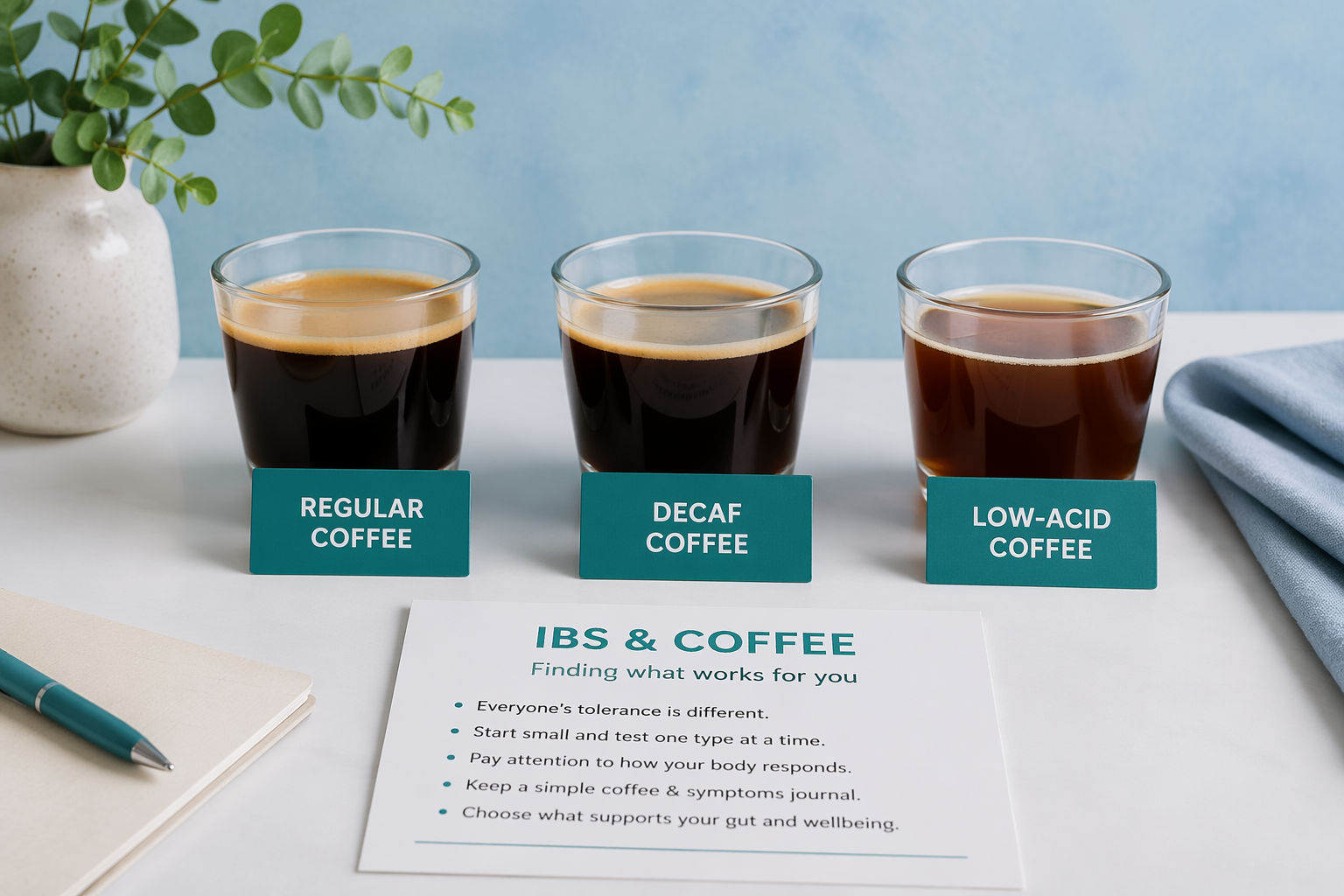
Coffee is a common suspect among IBS-friendly drinks when you're sorting out IBS and coffee symptoms, but the link is different for each person. Some people feel cramping, urgency, or a bowel movement within minutes of a cup. Others can drink one or more cups with little change.
The research picture is mixed. Some cohort research has linked moderate coffee or teas for IBS with lower long-term IBS risk, but these findings do not predict each person's response (source). That does not mean coffee is harmless for everyone with IBS. Group data can look neutral or even protective while one person still gets pain, bloating, urgency, or stool changes after [coffee and IBS] overlap in daily life.
Population studies have limits when you're testing your own body. A drink can look fine in research and still be the thing that [coffee triggers IBS symptoms] for you. The effect often depends on gut sensitivity, caffeine dose, whether you drank it on an empty stomach, and what else was in the cup.
The link is often stronger in [IBS-D and coffee]. People with [diarrhea-predominant IBS] are more likely to notice faster gut movement, looser stools, and a stronger urge to go. Coffee can stimulate the colon, which matters more when your symptoms already lean toward speed.
That makes coffee worth tracking instead of treating as an automatic forever-ban. A [symptom diary for IBS] can help you spot patterns across coffee, caffeine, timing, and add-ins. A short elimination trial can also show whether a lower-caffeine choice, decaf, or low-acid coffee feels easier on your gut.
- Track: note the type of coffee, how much you drank, and whether you had food with it.
- Test: try a short break from coffee, then reintroduce it in a smaller amount.
- Adjust: compare regular, decaf, and low-acid coffee with the same meal timing.
IBS is common worldwide, and symptom tracking is a reasonable self-management tool when a person is trying to identify coffee as a trigger (source). If symptoms stay unpredictable, a dietitian or clinician can help you test low-FODMAP options and shape a plan that fits your routine.
Why Does Coffee Trigger IBS Symptoms?
Coffee can trigger different IBS symptoms for different reasons. In caffeine and IBS, the issue is not just one ingredient. Caffeine, acidity, and other natural compounds can all push your gut in different directions. That helps explain why coffee triggers IBS symptoms for some people but not others.
A few common mechanisms are at work:
- Nervous system stimulation: Caffeine wakes up your brain and your bowel. It can speed gut motility, which means food and stool move through faster. That can feel helpful if you have constipation-predominant IBS, but it can also worsen loose stools, urgency, and that rushed feeling if you have diarrhea-predominant IBS.
- Digestive hormone release: Coffee can raise gastrin and cholecystokinin, two hormones that increase peristalsis and turn on the gastrocolic reflex. That reflex is your gut's "time to go" signal after eating or drinking. In a sensitive IBS gut, the result can be sudden cramping, bathroom urgency, and diarrhea soon after your cup.
- Acidity and stomach irritation: Coffee is naturally acidic, and it can also increase stomach acid. For some people, that leads to heartburn, a burning feeling, sour stomach, bloating, or upper belly discomfort. It may also speed gastric emptying, which can add to that unsettled feeling.
- Non-caffeine compounds: Coffee contains many bioactive compounds, and its acidity and caffeine content can contribute to digestive symptoms in some people (source, source).
That mix is why one person mainly feels urgency and loose stools, while another notices cramping, nausea, or upper abdominal pressure. The same cup can affect different IBS subtypes in different ways.
These are the details that often change how strong the reaction feels:
Factor | Why it matters |
|---|---|
Dose | More coffee can mean more stimulation |
Timing | Early morning may hit a sensitive gut harder |
Brewing method | Strength and acidity can vary |
Empty stomach vs. with food | Coffee on an empty stomach may feel harsher |
So the question is usually not whether coffee is always bad. It is which part of coffee is setting off your symptoms, and how much your gut can tolerate in a real morning routine.
How Does Coffee Affect Different IBS Types?
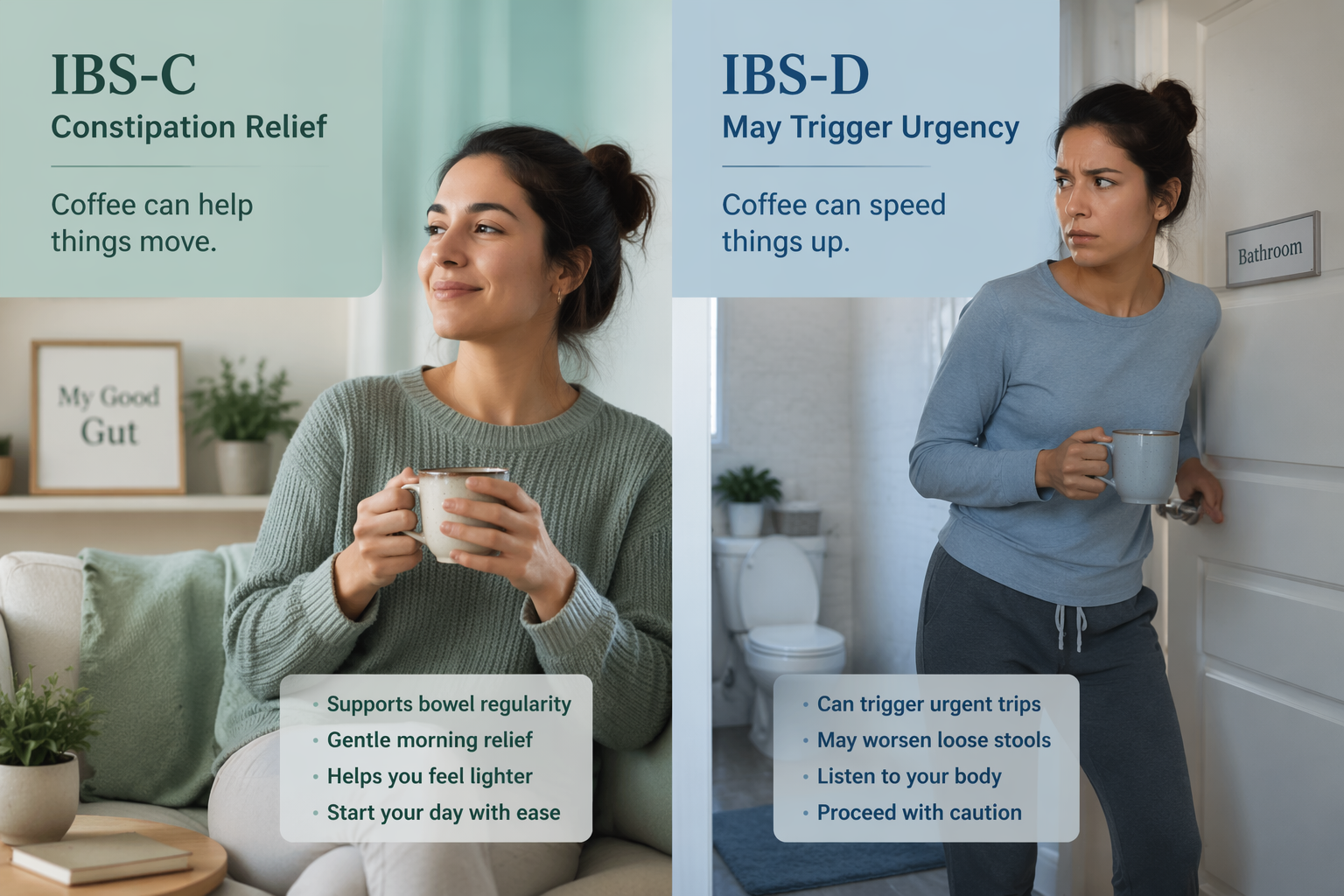
Coffee can act like a nudge for your bowels because caffeine stimulates gut motility. That means it speeds movement through the digestive tract. In constipation-predominant IBS, that can help. In diarrhea-predominant IBS, it can worsen urgency, loose stools, and cramping.
For IBS-D and coffee, flare days are usually the hardest. Coffee is more likely to trigger abdominal discomfort, a sudden bathroom trip, or looser stool when your gut is already on edge. During those stretches, it often helps to pause coffee or cut back for a few days. When symptoms calm down, try a small amount with food instead of on an empty stomach.
For constipation-predominant IBS, coffee may help prompt a bowel movement, especially in the morning. More is not always better. Too much can still cause jitteriness, reflux, or later cramping. The smallest amount that reliably helps is usually the safest place to start.
Mixed IBS is a recognized subtype, and coffee use is common enough that many readers will need to test their own tolerance rather than rely on population averages (source, source). A simple rule can make this easier:
- Constipated day: Try a small serving and watch for a bowel movement.
- Diarrhea day: Reduce or skip coffee if urgency is building.
- Quiet day: Test your usual amount and note timing, portion size, and additives.
Individual tolerance matters a lot. Some people handle a small cup, a different roast, cold brew, or a lower-caffeine option without trouble. Others react more to milk, creamers, or sugar alcohols.
The evidence is mixed. Some studies link coffee with lower IBS risk overall, but your response can still differ. A short symptom diary or brief elimination trial can show whether caffeine and IBS is helping, hurting, or both. Results vary by person, and any dietary change should be individualized.
Should You Quit Coffee Or Just Modify It?
A simple rule cuts through a lot of coffee guesswork. If coffee reliably brings on cramping, urgency, bloating, reflux, or a fast bowel movement soon after you drink it, start by adjusting the dose, timing, and add-ins. If the same reaction keeps showing up, use a short elimination test instead of trying to decide whether coffee is the main trigger or only part of it.
A short caffeine-free reset can help create a cleaner baseline for symptom tracking, and improvement during the reset may suggest that coffee is a trigger for that person (source, source).
- Stop all caffeine for 2 weeks. That includes coffee, tea, energy drinks, and caffeine pills.
- Keep the rest of your routine steady. Eat on your usual schedule and avoid changing several foods at once.
- Track symptoms daily. Note stool pattern, pain, bloating, reflux, nausea, and how soon symptoms appear after meals.
- Compare the pattern.
Meal timing matters too. The 2-hour coffee rule is a useful guide because coffee on an empty stomach exposes the stomach lining to acid without food buffering it. That can make nausea, urgency, or discomfort feel worse. To avoid coffee on empty stomach, try having it with or after a low-FODMAP breakfast, or choose a low-acid blend if mornings are your roughest time.
Reintroduction works best when you change one variable at a time:
- Start with a half-cup.
- If that feels fine, try a full cup on another day.
- Then test strength, brewing method, and timing.
- After that, try additives like creamer, syrups, and artificial sweeteners.
That stepwise approach helps you separate coffee from the extras. A symptom diary makes the difference clearer, especially when comparing decaf vs regular coffee.
Your IBS pattern can also shape the choice:
IBS pattern | Coffee approach |
|---|---|
Diarrhea-predominant IBS | Smaller servings, decaf, or pairing with food may reduce urgency |
Constipation-predominant IBS | Coffee may help bowel movements, but portion control still matters |
Mixed IBS | Test coffee during stable periods and pause changes during flares |
Quit coffee for now if even small amounts keep causing symptoms, if every reintroduction brings the reaction back, or if it makes daily life unpredictable. If symptoms are persistent, severe, or worsening, seek personalized medical or dietitian guidance.
How Can You Make Coffee Gentler On Your Gut?
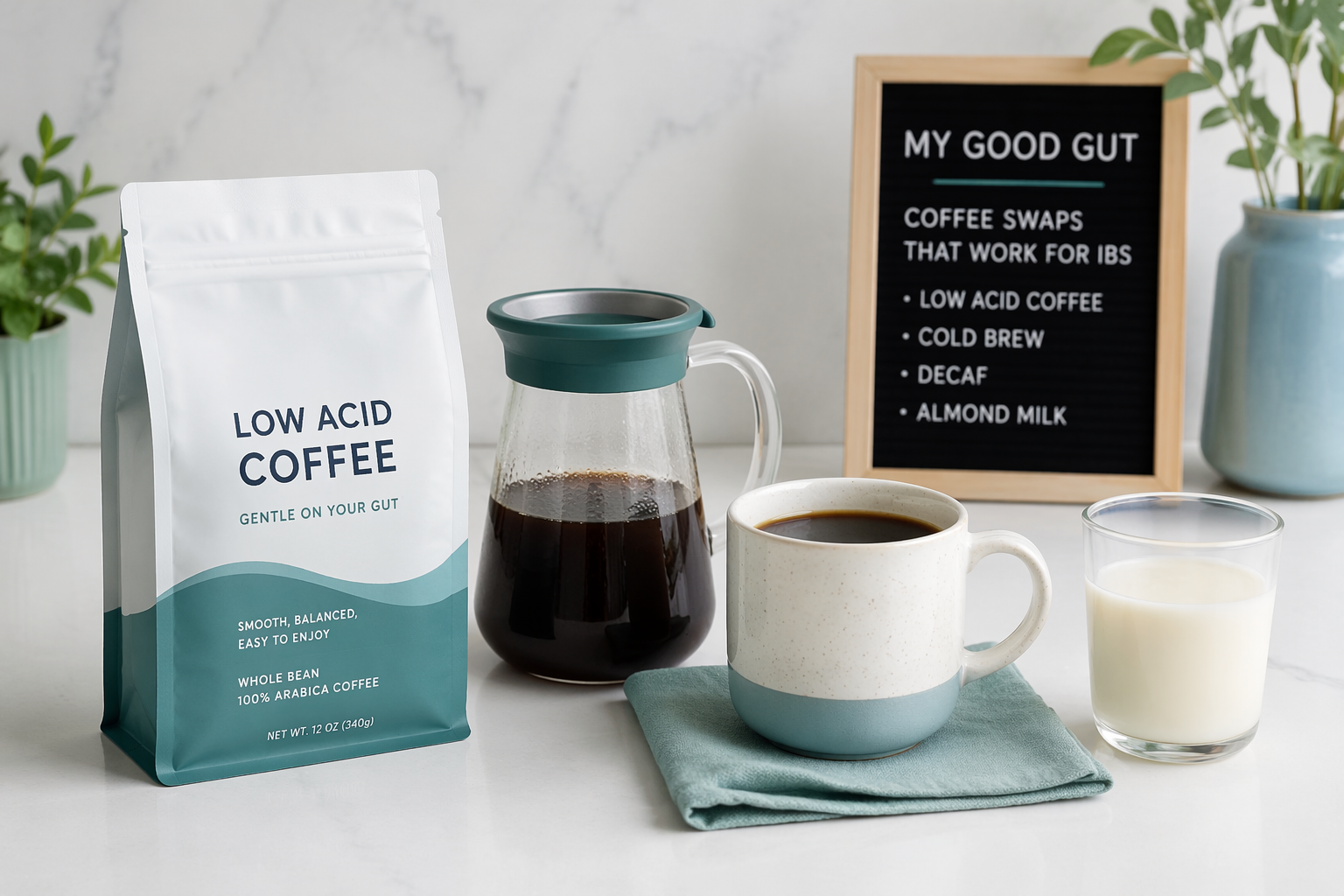
Coffee does not have to be an all-or-nothing trigger. If hot brewed coffee sets off burning, urgency, or cramping, start by making the cup gentler instead of cutting it out right away. A IBS-friendly drinks guide can help you think beyond coffee, but small changes often work first.
A few swaps are worth testing one at a time:
- Choose lower-acid coffee: Lower-acid options such as dark roasts or cold brew are common first changes when regular coffee feels harsh, and some people find them easier to tolerate (source, source).
- Shrink the serving: A half-cup or smaller mug can keep the ritual in place while lowering symptom risk. Many people with IBS do better with one to two cups a day than with several large servings.
- Pair it with food: Coffee on an empty stomach can be rough. Try it after breakfast or with a small snack if nausea, urgency, or stomach discomfort tends to follow your morning cup.
If milk or creamers seem to be part of the problem, the additive matters as much as the coffee itself. IBS and coconut milk is one example of a simple swap to test, especially if you want a dairy-free option. Almond milk, macadamia milk, and lactose-free dairy can also fit into plant milks and IBS testing when you keep sweeteners and gums simple.
Decaf can help if caffeine seems like the main trigger, but it is not a guaranteed fix. Decaf and IBS can work well for some people, yet decaf still contains a little caffeine and other gut-stimulating compounds. That is why FODMAP coffee and low-FODMAP coffee are better treated as practical tests than promises.
Keep the experiment simple. Change one thing for several days, jot down symptoms in a basic diary, and notice what actually helps. If the roast, serving size, or additive makes a clear difference, keep it. If symptoms persist, a two-week elimination approach or personalized care from a clinician or dietitian is the next sensible step, especially when you are comparing coffee alternatives for IBS.
This content is for educational purposes only and is not a substitute for personalized medical advice. Digestive symptoms can have many causes, and you should seek help for persistent, severe, or worsening symptoms. Results vary by person, and any dietary or supplement advice should be individualized.
When Should You Get Medical Or Dietitian Advice?
Some symptoms need prompt medical attention, even if coffee seems involved. Blood in the stool, unexplained weight loss, fever, nighttime symptoms, vomiting, or a sudden change in bowel habits can point to something beyond IBS, so a qualified healthcare professional should check them soon. Persistent, severe, or worsening digestive symptoms also deserve evaluation because this guidance is educational only and individual responses vary.
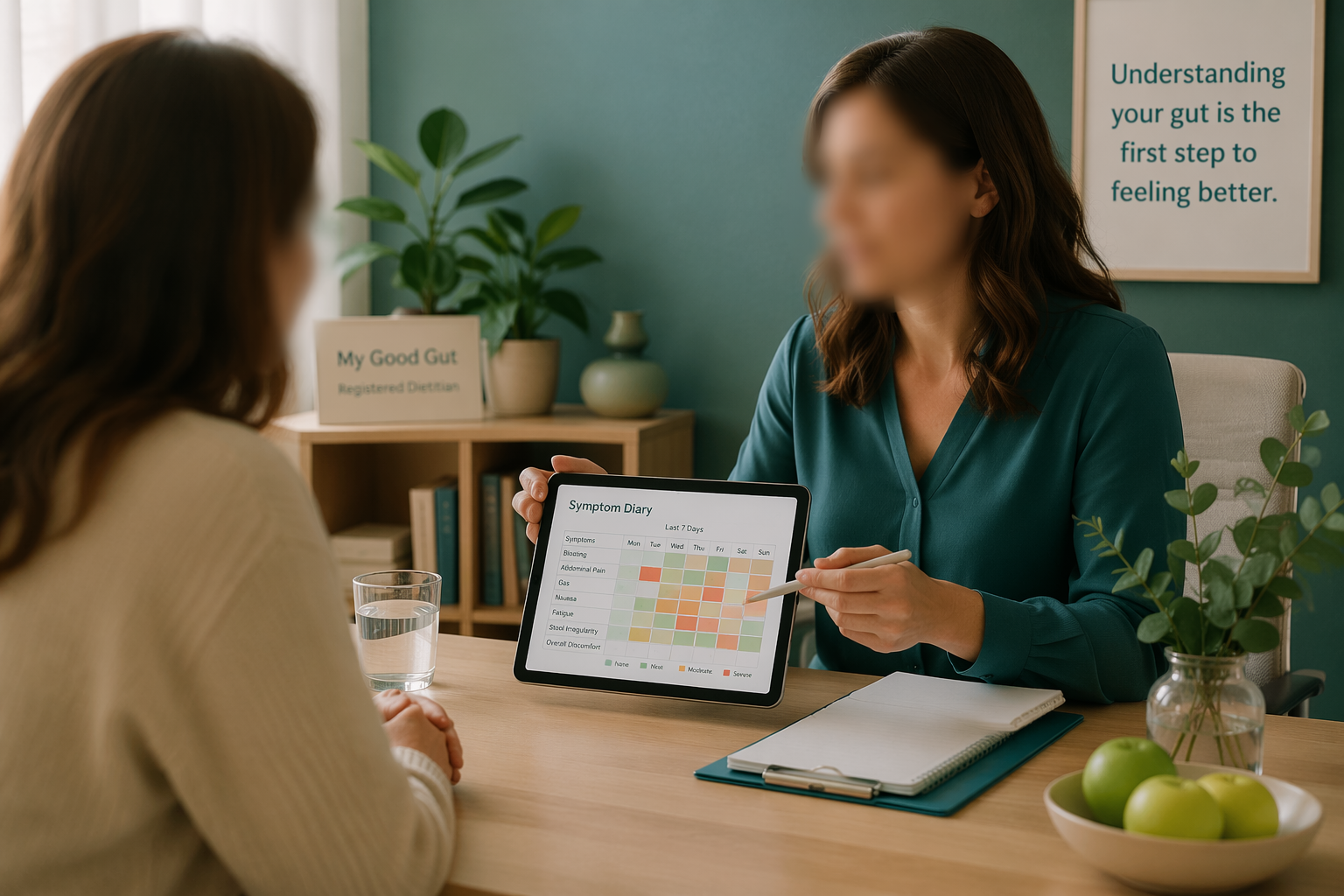
When small changes do not help, self-testing has reached its limit. If smaller portions, decaf, timing changes, or low-FODMAP coffee still leave you uncomfortable after a few weeks, talk with a clinician or registered dietitian. Clinical guidance often starts by reducing caffeine, and a two-week caffeine-free trial can help show whether coffee is part of the problem or whether another trigger is involved.
A symptom diary for IBS makes that conversation far more useful when you are comparing coffee details and add-ins. Track these details:
- Coffee details: type, portion, timing, and whether it was a FODMAP coffee choice
- Additives: artificial sweeteners and IBS symptoms, plant milks and IBS symptoms, or other extras
- Body cues: pain, bloating, urgency, reflux, or stool changes
- Pattern clues: what improved, what got worse, and how long it lasted
Personalized low-FODMAP planning matters most when your symptoms are mixed or the trigger list keeps growing. One-size-fits-all coffee advice can miss the real picture when you also react to dairy, sweeteners, or meal timing. A short elimination timeline helps too, especially when you can note when each change started and how long you kept it up. That record gives your care team a clearer path to tailored advice, whether you are sorting out a stubborn trigger or testing gentle options like peppermint for gut comfort or ginger for gut relief.
IBS And Coffee FAQs
These FAQs cover the most common concerns about IBS and coffee, including coffee and IBS symptoms, safer swaps, and coffee alternatives for IBS. You'll get a quick starting point before the answers below go deeper.
Caffeine content varies by brew method and serving size, so a small cup of coffee may contain far less or far more caffeine than a large or highly concentrated cup (source, source).
1. Is Decaf Better For IBS?
Decaf is often the better first test for IBS if caffeine seems to trigger urgency or loose stools, because it reduces the nerve stimulation that can speed gut movement. In decaf and IBS, it still helps to remember that decaf is not caffeine-free, and coffee can also contain acids and other natural stimulants that may bother your digestion. When you compare decaf vs regular coffee, think of decaf as a lower-trigger option to try, not a guaranteed fix, and adjust portion size or switch drinks if your symptoms still flare.
2. Does Coffee On An Empty Stomach Worsen IBS?
Coffee can feel harsher on IBS when you drink it on an empty stomach because its acidity and stimulant effect may raise stomach acid, speed digestion, and irritate a sensitive gut lining. That can make heartburn, bloating, cramping, and general discomfort more noticeable. A practical rule is to avoid coffee on empty stomach and either pair it with a low-FODMAP breakfast or wait about 30 to 60 minutes after eating. Tolerance varies, so track your symptoms and see whether food before coffee makes your mornings calmer.
3. How Much Coffee Is Too Much For IBS?
There isn’t one fixed coffee limit for IBS, but caffeine can speed gut movement and act like a laxative, so larger servings are more likely to trigger urgency, cramping, or looser stools, especially if you have IBS-D. As a rough guide, an 8 oz black coffee has about 95 mg caffeine, drip coffee can run 170 to 185 mg, French press about 223 mg, cold brew about 280 mg, and espresso about 68 mg. A conservative starting point is 1 to 2 small cups a day, and a half-cup or smaller serving may sit better than a full mug. If coffee still bothers you, try a smaller cup, sip it slowly, or mix one serving with decaf, and keep in mind that your threshold may be lower if your brew is strong, your IBS type is more sensitive, or you drink coffee without food.
4. Can Coffee Cause IBS Diarrhea?
Coffee can speed digestion by stimulating gastrin and cholecystokinin, which can raise peristalsis and trigger the gastrocolic reflex. In an IBS-sensitive gut, that may show up as cramping, urgency, and diarrhea, especially if you drink it quickly, on an empty stomach, or already have IBS-D. Real-world reports fit that pattern, and a Monash report noted symptoms returning in up to one third of people when caffeine was reintroduced after elimination, while an MDPI review on coffee and gastrointestinal effects describes the same gut-motility pathways. If diarrhea happens the same way each time, try a smaller serving, decaf, or a short coffee break to see whether your stools settle.