


When bathroom trips become urgent, bloody, or leave you feeling like you still need to go, ulcerative colitis is one possible cause that needs medical evaluation. It is a lifelong inflammatory bowel disease in which immune-driven inflammation causes ulcers in the rectum and colon.
IBS can cause diarrhea and cramping, but it does not cause the intestinal inflammation or rectal bleeding associated with ulcerative colitis. Crohn's disease can look similar, so blood and stool tests, including fecal calprotectin, plus colonoscopy and biopsies help confirm what is happening. Disease extent, from proctitis to pancolitis, shows how far inflammation has spread but does not always reflect how disruptive symptoms feel.
More than six bloody bowel movements a day with signs of whole-body illness can signal severe disease and needs prompt care. Treatment can control inflammation and support remission, while regular follow-up helps monitor flares, complications, and long-term colon cancer risk.
Ulcerative Colitis Key Takeaways
- Ulcerative colitis is chronic IBD that causes continuous inflammation in the rectum and colon.
- Bloody diarrhea, urgency, tenesmus, cramping, and rectal bleeding are common symptoms.
- Disease extent ranges from rectal-only proctitis to pancolitis affecting the entire colon.
- Colonoscopy with biopsies helps distinguish ulcerative colitis from Crohn's disease, IBS, and infections.
- Mesalamine, corticosteroids, immunosuppressants, and biologics can help control active inflammation.
- Severe bleeding, dehydration, fever, or a swollen painful abdomen require urgent evaluation.
- Regular monitoring helps identify flares, complications, and increased colon cancer risk over time.
What Is Ulcerative Colitis?
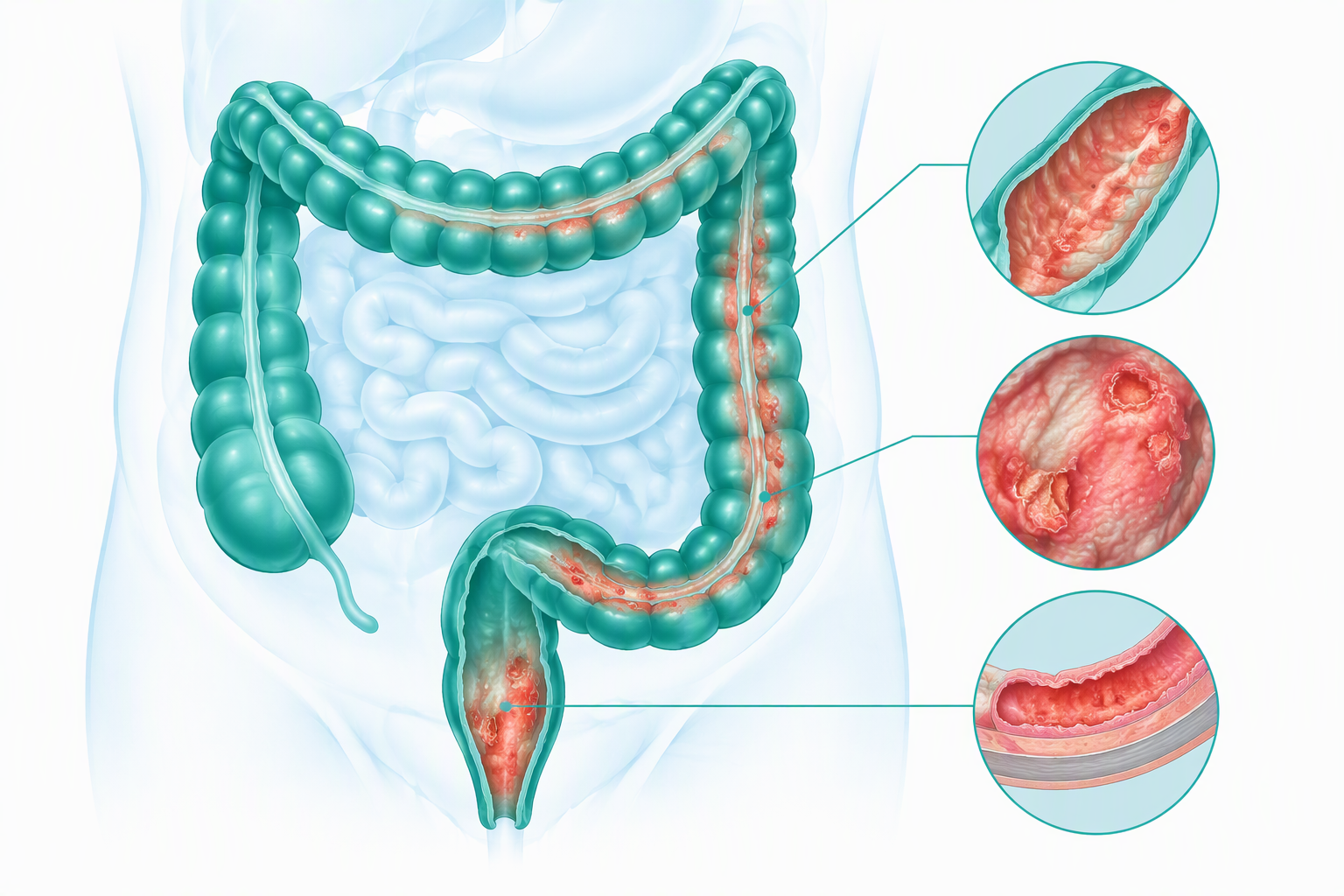
Ulcerative colitis is a lifelong inflammatory bowel disease in which an abnormal immune response causes inflammation and ulcers in the large intestine. It is not occasional digestive upset, although treatment can help control inflammation and symptoms. Cleveland Clinic describes it as a chronic condition that can alternate between active disease and remission (source). Inflammatory bowel disease as a whole includes ulcerative colitis and Crohn’s disease.
With ulcerative colitis, inflammation affects the inner lining of the rectum and colon, which form the large intestine. It usually starts in the rectum, the last part of the large intestine before a bowel movement, then can spread upward in one continuous area through part or all of the colon. The inflammation does not extend through the full thickness of the bowel wall.
Persistent irritation can create small open sores, called ulcers, in the colon lining. These sores may make mucus or bleed, which can leave blood or mucus in your stool. An inflamed colon can also cause:
- Diarrhea that persists or returns
- Urgency, or a sudden bowel movement that is hard to delay
- Cramping or lower abdominal pain
- Tenesmus, the feeling that stool is still there after you use the bathroom
- Rectal bleeding
Symptoms often follow a relapsing and remitting pattern. During ulcerative colitis flare-ups, inflammation is active and bowel symptoms may become more disruptive. In ulcerative colitis remission, inflammation and symptoms are reduced or absent, sometimes for long periods. Each person’s pattern differs, and new or ongoing rectal bleeding needs medical evaluation, even when other symptoms have improved.
This overview of ulcerative colitis, a form of inflammatory bowel disease (IBD), starts with the colon ulcers that give the condition its name.
How Does Disease Extent Affect Ulcerative Colitis?
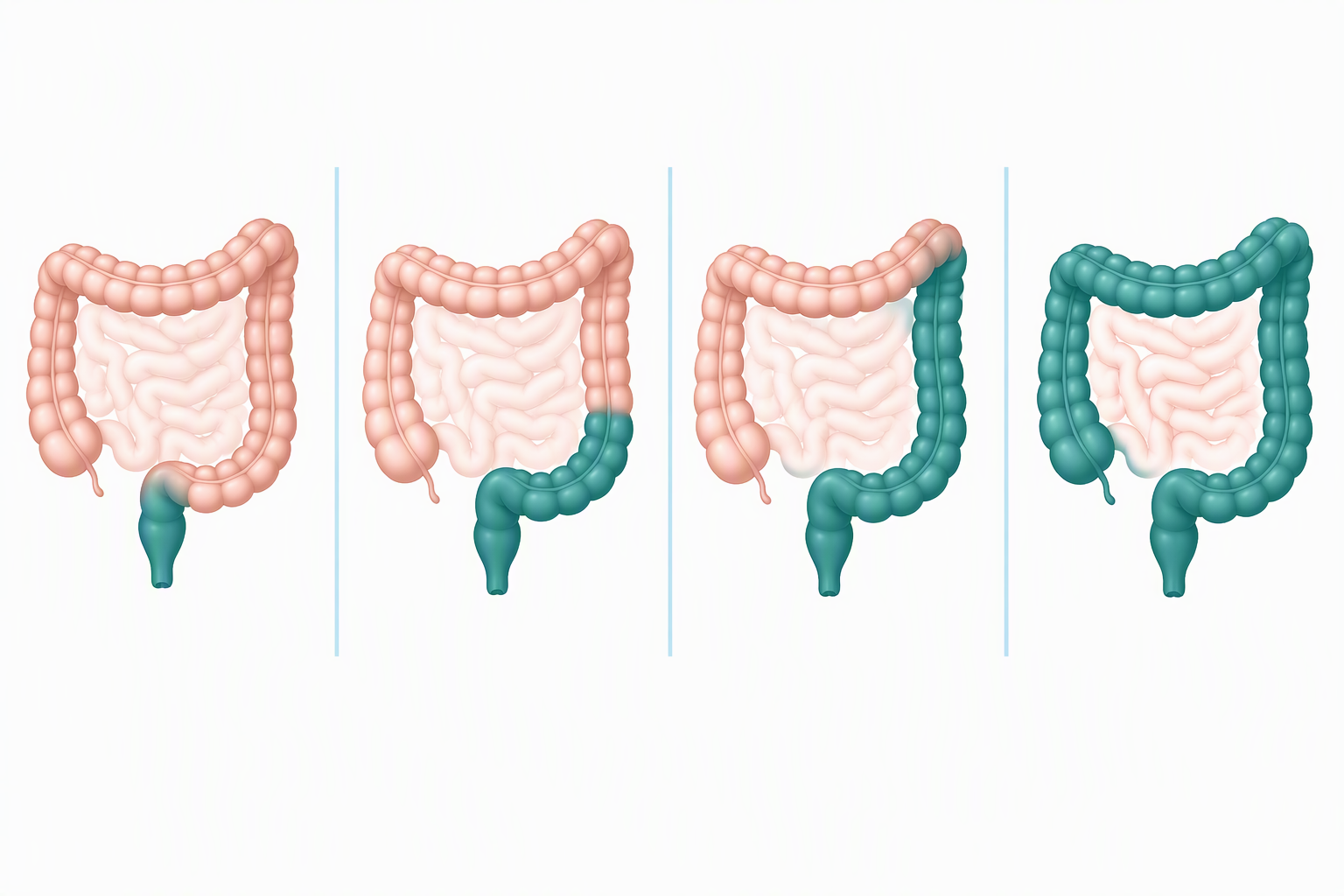
Disease extent identifies which parts of the rectum and colon have ulcerative colitis inflammation and ulcers. It does not measure how intense the inflammation is. The condition begins in the rectum and can extend upward in one continuous area, unlike Crohn's disease, which may leave healthy skip areas between inflamed sections. A colonoscopy lets a gastroenterologist map that pattern.
Lower-colon patterns include:
- Ulcerative proctitis: Inflammation is limited to the rectum.
- Proctosigmoiditis: Inflammation involves the rectum and sigmoid colon, the curved lower portion of the colon.
Even proctitis can cause disruptive symptoms because rectal inflammation often causes bleeding, bowel urgency, and tenesmus. Where inflammation is located does not predict how difficult symptoms will be each day.
Left-sided colitis extends from the rectum through the left side of the colon, while pancolitis affects the entire colon. Greater extent does not automatically mean more severe disease, but it helps guide treatment, monitoring, and discussions about long-term colon cancer risk.
Extent and disease activity are separate measures. Although limited proctitis can be highly active and pancolitis can be in remission, activity may be mild, moderate, severe, or fulminant. Severe ulcerative colitis can involve more than six bloody bowel movements a day along with signs of whole-body illness, and fulminant ulcerative colitis can involve more than 10 bloody bowel movements a day with fever, rapid heart rate, and severe anemia, which needs urgent care (source).
Extent can change over time, and symptoms alone cannot show where inflammation remains. Prompt medical attention is important for:
- Worsening bleeding or diarrhea
- Fever or marked abdominal pain
- Dizziness or dehydration
Treatment may control symptoms and visible inflammation even if disease that began in the rectum later spreads farther into the colon.
What Symptoms Can Ulcerative Colitis Cause?

Although disease extent shows where inflammation occurs, ulcerative colitis symptoms often come and go. During a flare, symptoms may disrupt daily life, then ease or disappear during remission. Their severity depends partly on how much of the colon is inflamed. Diarrhea, blood or mucus in stool, and abdominal pain are common signs of the condition.
Common bowel symptoms include:
- Bloody diarrhea: Loose, frequent stools that contain visible blood, mucus, or sometimes pus.
- Rectal bleeding: Blood on toilet paper, in the toilet, or mixed with stool.
- Bowel urgency: A sudden need for a bowel movement that can make work, travel, and errands harder.
- Tenesmus: A lingering need to pass stool even when little or nothing comes out, often with rectal discomfort and repeat bathroom trips.
- Abdominal cramping: Pain or cramping, often before or during a bowel movement.
Diarrhea by itself does not confirm ulcerative colitis. Ongoing bleeding, urgency, or pain deserves attention, especially if symptoms are changing. Spotting a colitis flare early can help you notice patterns to discuss with a clinician.
Inflammation and blood loss can also lead to fatigue, anemia, poor appetite, unintended weight loss, and feeling unwell. Anemia may cause weakness, dizziness, or shortness of breath. Difficulty maintaining weight or nutrition needs medical evaluation rather than restrictive eating.
Extraintestinal manifestations are effects outside the digestive tract. About a third of people with ulcerative colitis develop symptoms outside the gut, including joint pain or swelling, skin sores or rashes, red or painful eyes, vision changes, and liver or bile-duct problems, and in up to a quarter these signs appear before the bowel diagnosis (source).
Schedule an appointment for persistent blood in stool, recurrent diarrhea, urgency, cramping, fatigue, weight loss, or symptoms that interfere with daily life. Seek prompt guidance for worsening bleeding, more frequent stools, fever, dehydration, severe fatigue, or new joint, skin, or eye symptoms. A dated symptom log can capture stool frequency, urgency, bleeding, pain, and changes over time.
Emergency evaluation is needed for:
- Severe or constant abdominal pain, or a swollen or rigid abdomen.
- Heavy rectal bleeding, fainting, confusion, chest pain, or trouble breathing.
- Inability to keep fluids down, severe dehydration, or high fever with worsening illness.
These warning signs do not confirm a complication, but they should not be monitored at home.
An ulcerative colitis flare-up is simply this list returning after a quiet stretch.
What Causes Ulcerative Colitis?
Beyond the symptoms ulcerative colitis can cause, the exact cause of ulcerative colitis is unknown. UC likely develops through a mix of inherited vulnerability, an immune system that remains active, gut-microbiome changes, and environmental influences. It is a real inflammatory disease that needs medical care, not the result of anything you ate, did, or failed to do.
Several factors may play a role:
- Inherited susceptibility: Certain genes can make UC more likely, but they do not directly cause it. People with a parent, sibling, or child who has IBD are more likely to develop UC, while many others have no known family history (source).
- Ongoing immune activity: In people who are susceptible, the immune system may keep reacting in the colon after a trigger. This response can cause lasting inflammation and injury to the colon’s lining.
- Gut and environmental influences: Changes in intestinal microbes, known as the gut microbiome, may affect immune signaling and the protective gut lining. Researchers are still studying these connections.
A viral or bacterial infection may help trigger an immune reaction in some cases, but it does not explain every diagnosis. UC is not contagious.
No single food, hygiene practice, lifestyle habit, or environmental exposure has been proven to cause UC. Stress and certain foods can worsen diarrhea, cramping, urgency, or other symptoms during a flare, but they do not create the disease. Noticing these patterns can help you discuss symptoms and treatment with a gastroenterologist without blaming yourself.
Ulcerative colitis causes and ulcerative colitis risk factors overlap: ulcerative colitis genetics and a family history of ulcerative colitis raise the odds, and genetics and ulcerative colitis research continues through ulcerative colitis clinical trials.
How Does Ulcerative Colitis Differ From Crohn's Disease?
Ulcerative colitis and Crohn's disease are both types of inflammatory bowel disease, but they affect the digestive tract differently. The clearest difference is location: ulcerative colitis involves only the rectum and colon, usually beginning in the rectum and spreading upward. Crohn's disease can affect any part of the digestive tract, from the mouth to the anus. How Crohn's disease differs can help place these distinctions in context.
Feature | Ulcerative colitis | Crohn's disease |
|---|---|---|
Pattern of inflammation | Continuous, without healthy gaps between affected colon areas | Patchy, with inflamed sections separated by healthy tissue |
Depth of inflammation | Mainly affects the colon’s inner lining | May extend through the full bowel wall |
Common complications | Surface ulcers and bleeding | Narrowing, bowel blockage, fistulas, and abscesses |
Both conditions may cause:
- Diarrhea
- Cramping
- Fatigue
- Reduced appetite
- Unintended weight loss
Bloody diarrhea, urgency, and tenesmus are especially common with ulcerative colitis (source).
Symptoms cannot confirm either condition on their own. A gastroenterologist may use blood and stool tests, a colonoscopy with tissue samples called biopsies, and sometimes imaging to identify the condition and rule out infections or other causes. The inflammation’s pattern and depth can affect both the diagnosis and step-up treatment for colitis.
How Is Ulcerative Colitis Diagnosed and Treated?
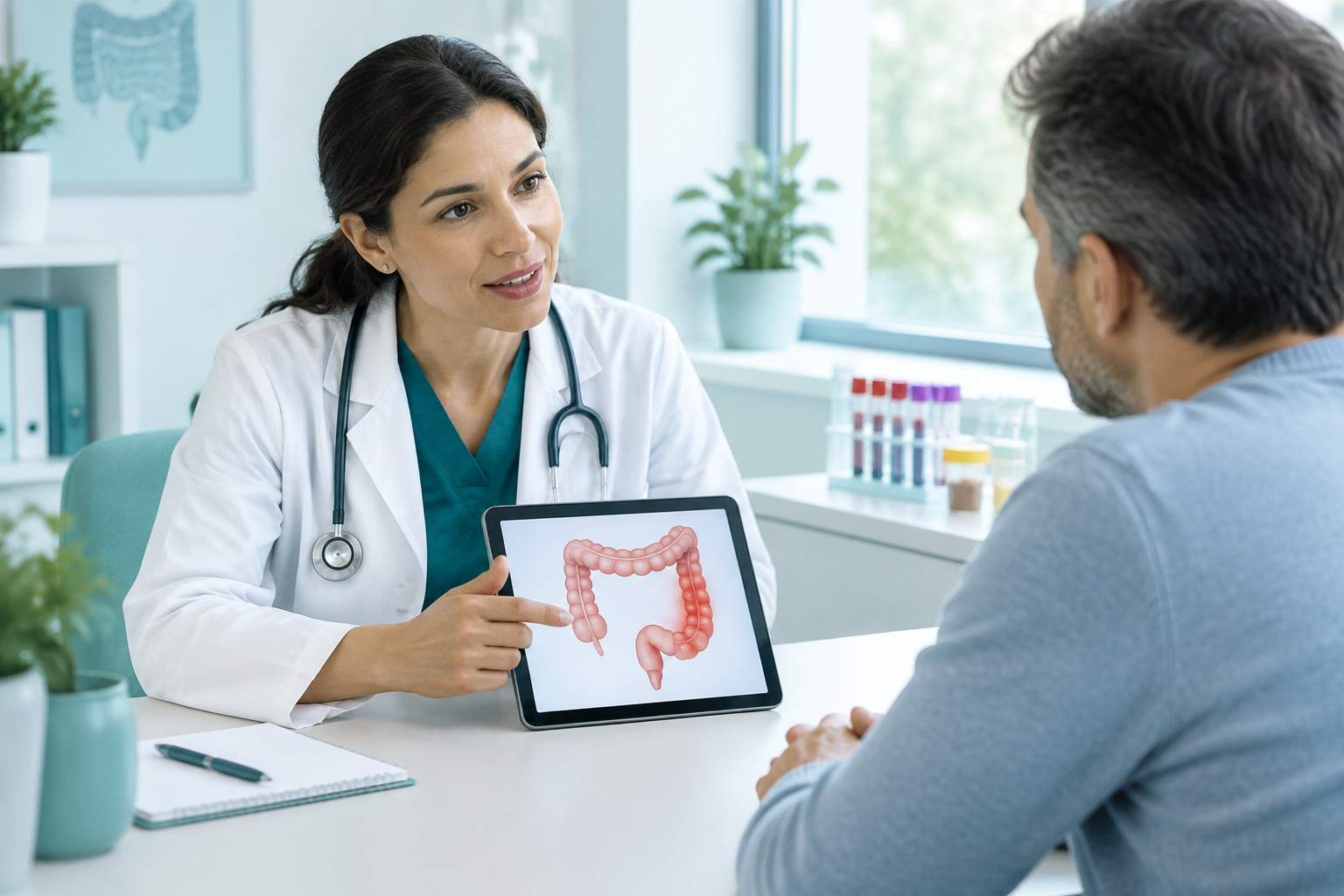
Because symptoms alone cannot distinguish ulcerative colitis from Crohn's disease, ulcerative colitis diagnosis combines your symptom history with tests that identify inflammation in the colon. A clinician reviews bloody diarrhea, urgency, cramping, bowel frequency, tenesmus, weight changes, recent infections, medicines, and a family history of IBD, then performs a physical exam. Because infections, IBS, and Crohn's disease can cause similar symptoms, clinicians confirm ulcerative colitis with testing alongside a clinical evaluation.
Blood tests can identify anemia, inflammation, dehydration, or nutrition concerns. Stool testing may check for infection, bacteria, blood, white blood cells, and fecal calprotectin, a marker of intestinal inflammation. C-reactive protein (CRP) can also reflect inflammation, though it may stay normal in active disease.
Colonoscopy allows a gastroenterologist to examine the large intestine, determine how far inflammation extends, and collect tissue samples called biopsies, and colonoscopy for ongoing bowel symptoms is the same procedure used when IBS is the question. A flexible sigmoidoscopy examines only the lower colon and may be used when a full colonoscopy is unsuitable. Biopsy findings help confirm the inflammatory pattern and rule out similar conditions (source).
Imaging does not usually establish the diagnosis on its own, but it can help assess complications or symptoms that may point beyond the colon. The full picture from your exam, lab work, endoscopy, biopsies, and imaging guides treatment planning.
Ulcerative colitis treatment aims to control active inflammation, bring on remission, and maintain symptom relief and healing seen on endoscopy. Ulcerative colitis medications may include:
- 5-aminosalicylates (5-ASAs): Mesalamine may be taken by mouth, rectally, or both, based on where inflammation is located.
- Corticosteroids: These can control moderate or severe flares quickly but are not used long term because of significant side effects.
- Immunosuppressants: These may help when disease remains active or returns.
- Biologics and targeted oral medicines: These options may fit more severe disease or disease that has not responded to earlier treatment.
Treatment steps up when inflammation is not adequately controlled. Regular follow-up helps your care team adjust the plan as symptoms and test results change.
Ulcerative colitis tests center on colonoscopy for ulcerative colitis, and treatment is graded for mild to moderate ulcerative colitis versus moderate to severe ulcerative colitis, with biologics for ulcerative colitis reserved for the latter.
What Are the Long-Term Outlook and Surgery Options?
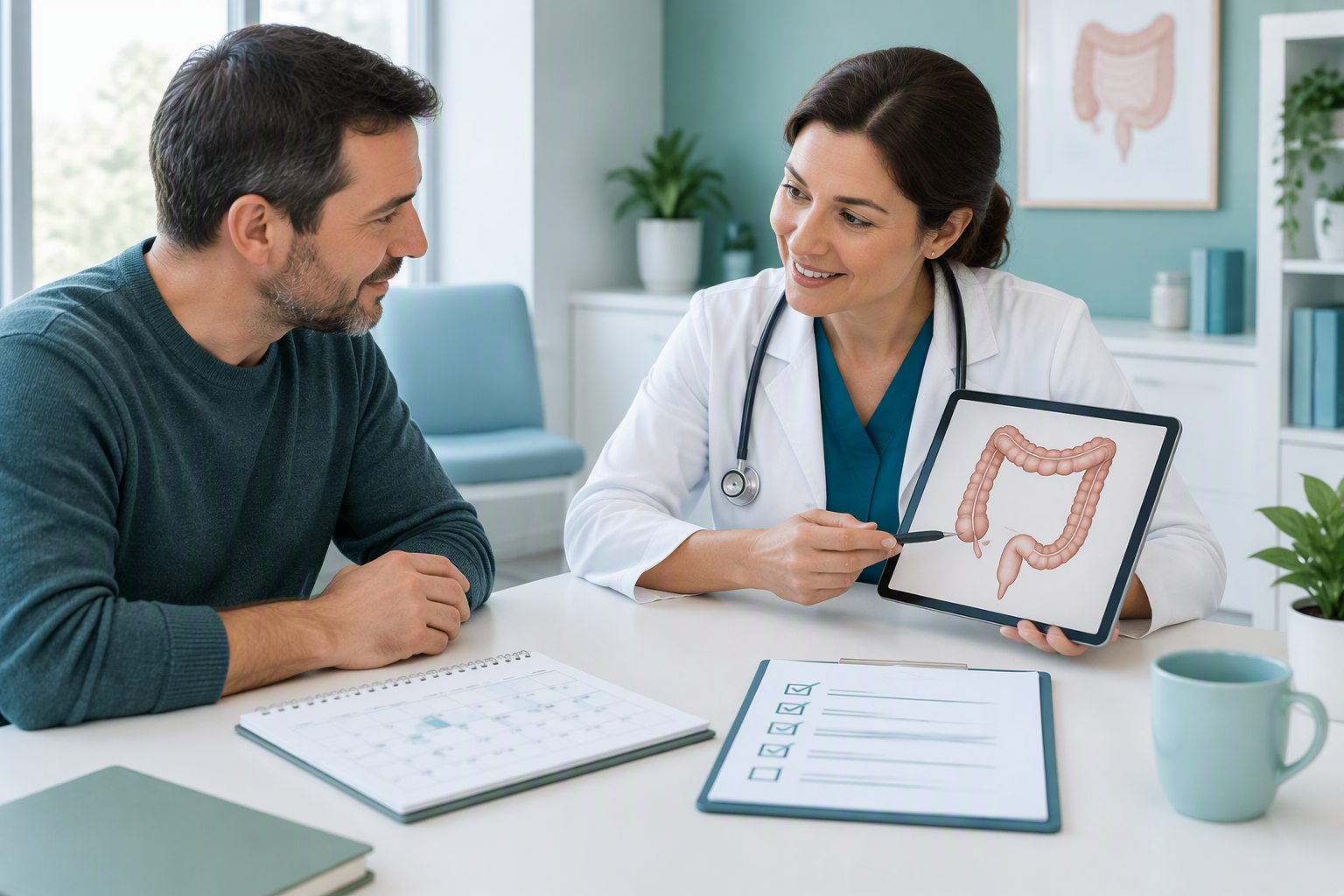
After treatment begins, ulcerative colitis often moves between ulcerative colitis remission, when symptoms and inflammation are controlled, and relapse, when inflammation becomes active again. Medicine can control inflammation and some people have long symptom-free periods, but your outlook depends on disease extent, severity, treatment response, complications, and regular follow-up.
Contact your gastroenterologist if you notice signs of renewed inflammation:
- Increased stool frequency, blood in the stool, or sudden urgency.
- New or worsening abdominal pain, fatigue, or unexplained weight change.
- Ongoing diarrhea, fever, dehydration, or increasing bleeding.
- Abdominal swelling or pain that feels different from your usual symptoms.
Feeling well does not always mean inflammation has healed. Scheduled visits, blood or stool tests, and colonoscopy help monitor inflammation and the long-term colon cancer risk.
Ulcerative colitis complications can affect more than the bowel. These extraintestinal manifestations can affect treatment planning and monitoring. Inflammatory bowel disease raises venous thromboembolism, or blood clot, risk by three to four times, especially during flares, hospitalization, or corticosteroid use.
Seek emergency care for:
- Severe abdominal pain with a swollen abdomen.
- Heavy bleeding, fainting, or confusion.
- An inability to keep fluids down or severe dehydration.
These symptoms can signal major blood loss, severe inflammation, infection, or toxic megacolon and should not be managed by waiting for a flare to pass.
Ulcerative colitis surgery, including colectomy, may be considered when medicine cannot control inflammation, side effects are unacceptable, bleeding is severe, toxic megacolon occurs, precancerous changes or colorectal cancer develop, or symptoms substantially limit daily life. A colectomy removes the colon, while a proctocolectomy removes the colon and rectum. Population-level evidence estimates that up to 15 percent of people with ulcerative colitis need colectomy, but this does not predict your course.
After proctocolectomy, an ileostomy routes waste from the small intestine through an abdominal opening into an external pouch. Some eligible people may choose an internal pouch procedure. Ask about the reason and urgency for surgery, recovery, expected bowel function, and effects on nutrition, work, relationships, and future monitoring.
Ulcerative Colitis FAQs
These FAQs cover common ulcerative colitis concerns, helping you prepare for clearer conversations about symptoms, testing, treatment, and daily life with the condition.
1. What Foods Can Trigger Ulcerative Colitis Flares?
No food causes ulcerative colitis, and diet does not replace inflammation as the driver of a true flare. During active symptoms, an ulcerative colitis diet may avoid foods that worsen diarrhea, cramping, gas, or urgency, including raw high-fiber produce, nuts and seeds, greasy or spicy meals, alcohol, caffeine, and dairy if you are lactose intolerant. Tolerance can shift during remission, so focus on your own meal-and-symptom patterns. Contact a gastroenterologist for worsening symptoms or bloody diarrhea, and consider a registered dietitian to protect nutrition.
2. Can Stress Worsen Ulcerative Colitis Symptoms?
Stress does not cause ulcerative colitis or its underlying intestinal inflammation, but it can make ulcerative colitis flare-ups harder to manage. Abdominal pain, urgency, diarrhea, fatigue, and poor sleep may feel more disruptive, which does not mean the symptoms are “all in your head.” Contact your gastroenterology care team if symptoms persist, worsen, or differ from your usual pattern. Stress-reduction habits can support coping, but they cannot rule out active inflammation, dehydration, complications, or a need to adjust medication.
3. Is Ulcerative Colitis Hereditary?
Ulcerative colitis can run in families, but it is not passed down in a predictable way. A minority of people with IBD report a family history, and having a parent, sibling, or child with it raises the odds. Still, most relatives of someone with ulcerative colitis will not develop it.
Family history is only one part of what causes ulcerative colitis. Genes may interact with immune changes, gut microbiome differences, and environmental factors. Share this history with a clinician if ongoing bowel symptoms develop.
4. Can Ulcerative Colitis Affect Pregnancy?
Ulcerative colitis can affect pregnancy, especially during active inflammation, but well-controlled disease often supports a healthy pregnancy. Before conception, discuss disease activity, nutrition, and treatment with your gastroenterologist and obstetric clinician.
Keeping inflammation controlled throughout pregnancy is usually important. Review medications with both care teams rather than stopping treatment on your own, since a flare may create greater concerns. Monitoring for you and the baby depends on disease activity and treatment needs.