


Meals can become stressful when a few bites bring fullness, nausea, or bloating that lasts for hours. For gastroparesis, small frequent meals, softer textures, and steady fluids are usually a practical starting point. Gastroparesis delays stomach emptying, so larger or tougher meals can sit longer and worsen discomfort.
Five or six modest meals may feel more manageable than two or three large ones, especially when foods are mashed, blended, well cooked, or finely chopped. A 2014 randomized trial of 56 people with insulin-treated diabetes and gastroparesis found that a small-particle diet reduced nausea, vomiting, post-meal fullness, and bloating. A small-meal sample day can include familiar options such as scrambled eggs, yogurt, chicken noodle soup, applesauce, baked fish, and mashed potatoes.
When a flare makes solids difficult, adjusting a familiar meal to a softer or liquid form can help maintain intake without forcing food. Frequent vomiting, unintentional weight loss, or trouble keeping fluids down can signal that nutrition support is needed.
Gastroparesis Diet Key Takeaways
- Eat five or six small meals instead of large meals when fullness or nausea is common.
- Choose soft, mashed, blended, well-cooked, or finely chopped foods when tolerated.
- Limit high-fat and high-fiber foods that may slow stomach emptying or worsen symptoms.
- During flares, reduce portions and shift familiar foods toward smoother textures or liquids.
- Sip fluids steadily, often between meals, rather than relying on large drinks with food.
- Diabetes meal planning should account for both blood glucose patterns and delayed stomach emptying.
- Seek prompt care for frequent vomiting, dehydration signs, unintentional weight loss, or inability to keep fluids down.
How Should You Eat With Gastroparesis?
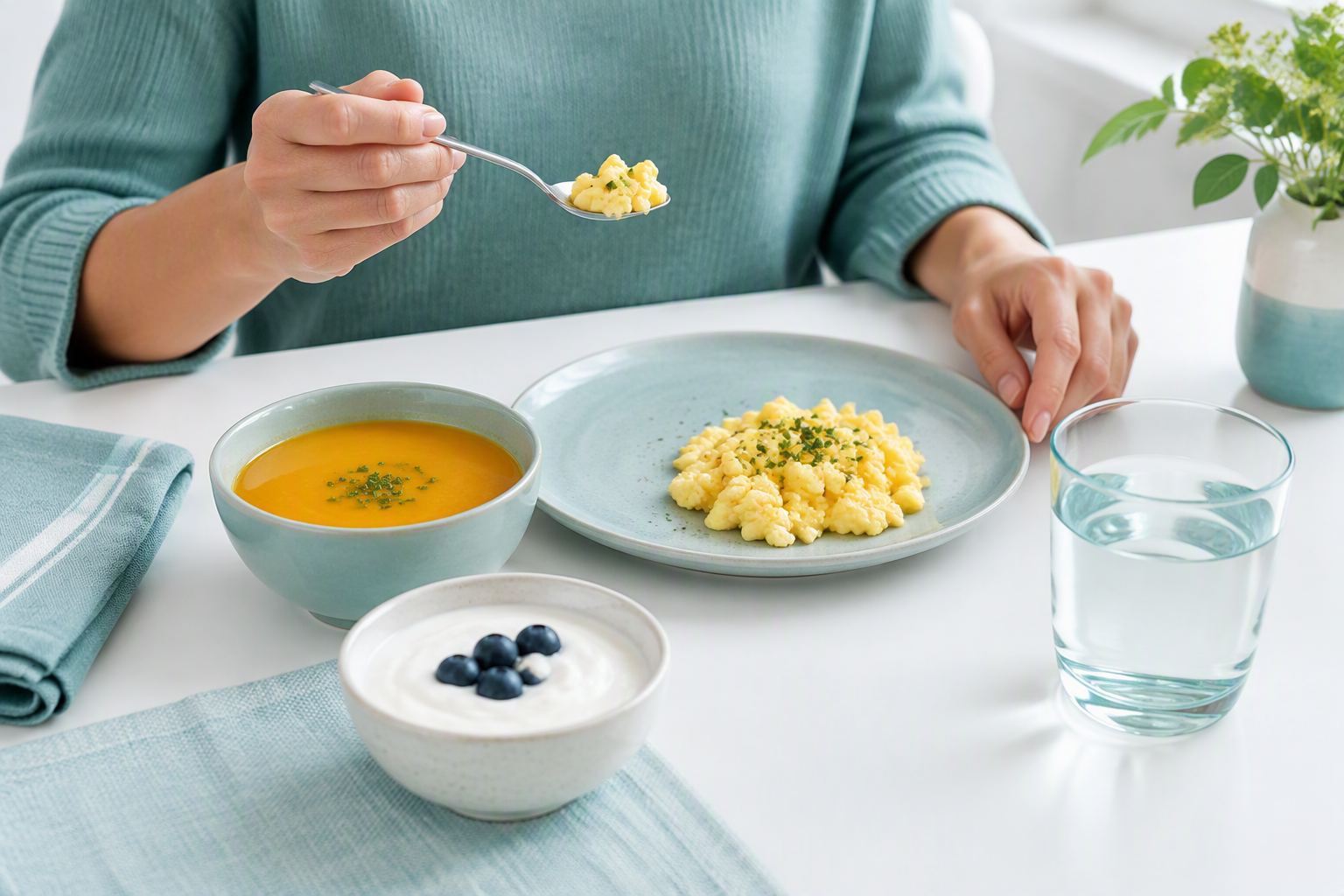
Small frequent meals are a practical starting point for gastroparesis. With delayed gastric emptying, food remains in the stomach longer, so five or six modest, nourishing meals may feel more manageable than two or three large ones. Smaller portions can reduce early fullness, nausea, bloating, and discomfort (source).
This advice assumes the diagnosis has been confirmed by testing. A gastroparesis diet is not a rigid menu. It helps you make meals less demanding for a stomach that empties slowly while still keeping nutrition and enjoyment in view.
Soft foods that are mashed, blended, well cooked, or finely chopped are often easier to manage. Many people start by cutting back on fat and fiber, because both can slow stomach emptying further. Neither needs to be eliminated completely. Why the stomach slows in the first place is covered in the gastroparesis hub.
A manageable eating pattern can include:
- Keep portions modest: Serve a small amount first, then have more later if hunger returns.
- Choose softer textures: Try smooth soups, yogurt, scrambled eggs, mashed potatoes, tender fish, or blended fruit instead of foods with tough skins, seeds, or large raw pieces.
- Slow your pace: Take small bites, chew thoroughly, and pause between bites rather than rushing.
- Stop at early fullness: Save the rest for another small meal instead of pushing through discomfort.
A small-particle diet provides a more structured version of this texture-focused approach. In a 2014 randomized trial of 56 people with insulin-treated diabetes and gastroparesis, 20 weeks on this eating pattern reduced nausea and vomiting, fullness after meals, and bloating more than a standard diabetes diet (source).
If your symptoms have not been confirmed yet, the gastric emptying test for gastroparesis is where that starts.
Which Foods Are Easier or Harder to Eat?
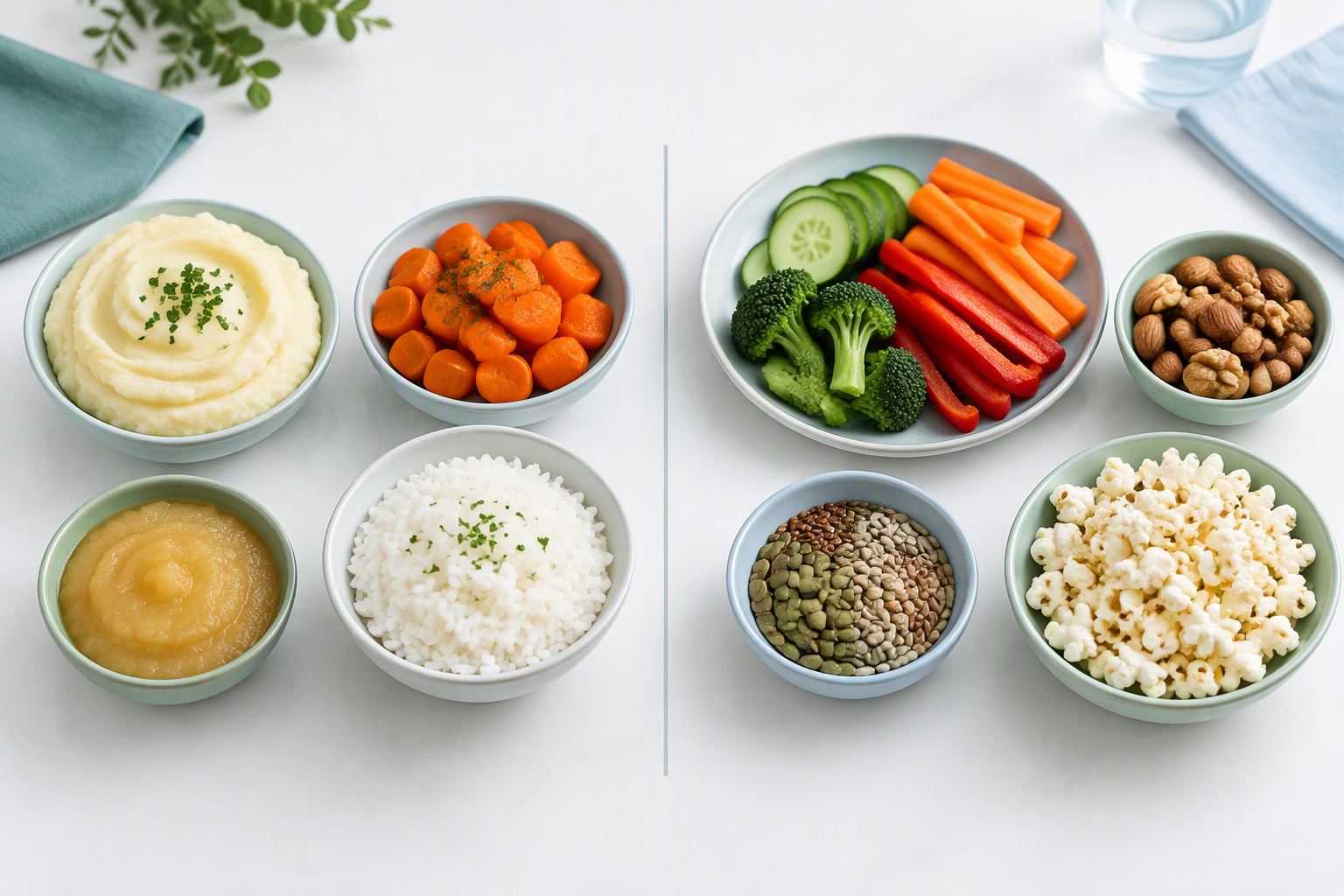
The easiest foods are usually soft, lower in fat, and lower in roughage, but portion size and your symptoms still matter. A food that feels manageable on a steady day may be harder during a flare, so use these ideas as starting points rather than permanent rules.
Texture matters with fruit. Peeled, ripe fruit, applesauce, and canned fruit in water or natural juice may go down more easily than fruit with tough skins, seeds, or membranes. Cooking or blending fruit can further soften it. Orange membranes may be difficult even if orange juice feels manageable.
Cooked and peeled vegetables are often easier than raw salads or crisp sides. Options with a soft texture include:
- Carrots, green beans, squash, peeled zucchini, and skinless potatoes that are fork-tender or mashed
- Canned vegetables with soft textures
- Strained vegetable juice when solid vegetables are difficult during a flare
Raw vegetables, skins, seeds, corn, celery, broccoli, Brussels sprouts, cabbage, cauliflower, onions, and sauerkraut may be harder to tolerate because of their texture and roughage. The NHS advises cutting back on insoluble fiber, such as wholegrain bread, beans, and some vegetables and fruits (source).
Refined grains may feel easier to manage than bran, whole grains, or high-fiber cereals. White bread, white rice, plain pasta, saltines, grits, Cream of Wheat, and Cream of Rice are common choices. Cleveland Clinic's gastroparesis diet sheet uses cereals with 2 grams of fiber or less per serving as a practical guide (source). Oatmeal is less clear-cut, since some people tolerate a small serving while others find it too filling or fibrous.
High-fiber foods, including beans, lentils, whole nuts, seeds, popcorn, and tough produce, can stay in the stomach longer. Poorly digested fibrous material can sometimes form a bezoar, a compact mass that may block the stomach outlet (source). That is why rough, stringy, or seedy foods are the first to cut when symptoms are active.
High-fat foods can also feel heavier because fat may slow stomach emptying. Fried foods, fast food, fatty or tough meats, heavy cream, rich cheeses, and desserts are common trouble spots. Lean proteins and lower-fat dairy, baked, broiled, or steamed, are often easier, though a small serving of a higher-fat food may still fit if it does not worsen fullness, nausea, or pain.
What Could a Day of Small Meals Look Like?
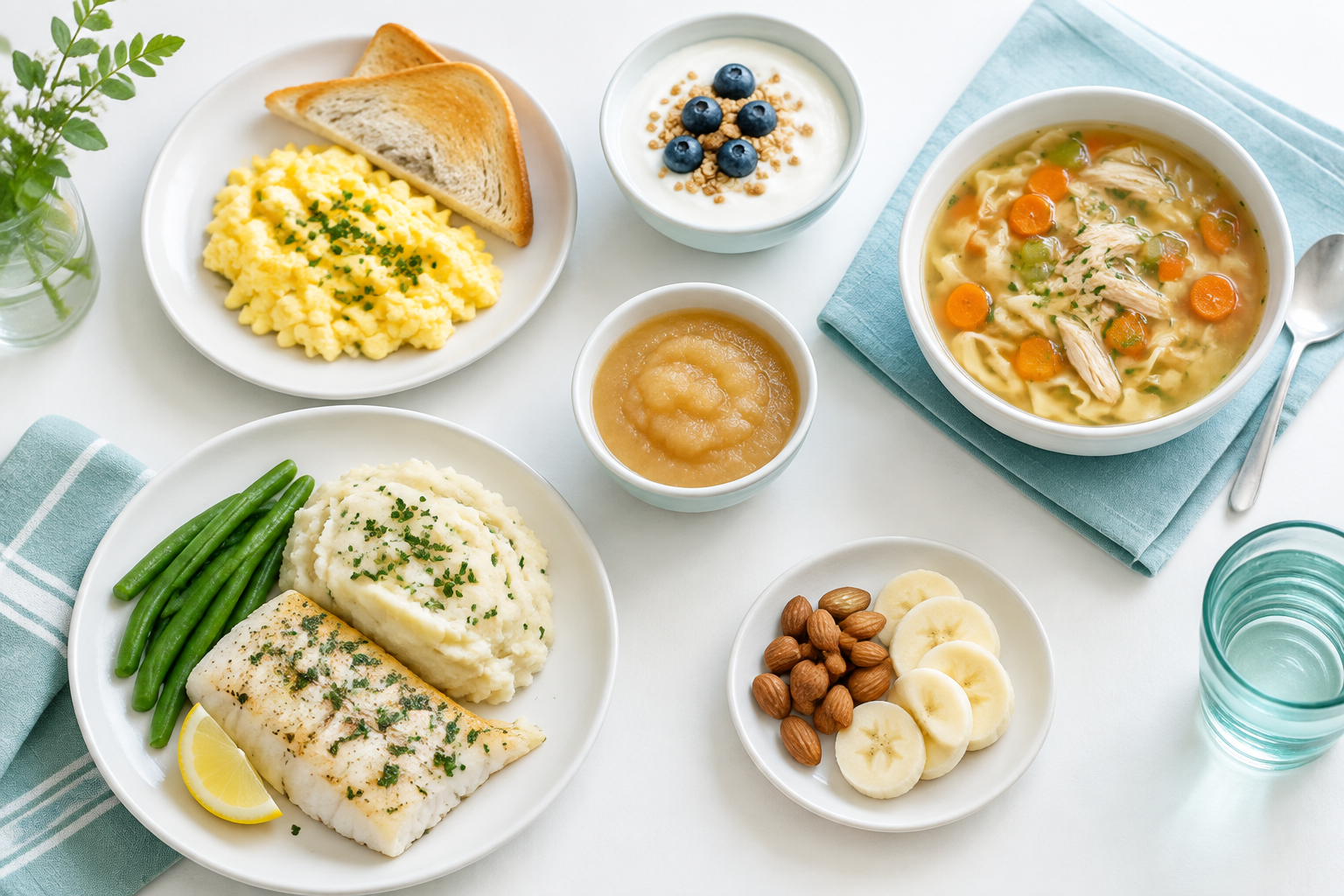
A flexible gastroparesis meal plan spreads familiar foods across the day, so no single eating occasion has to feel like a full meal. These portions are starting points, not targets. If early fullness begins after a few bites, save the rest for later rather than forcing yourself to finish.
A sample day might include:
Time of day | Small meal or snack |
|---|---|
Morning | One small scrambled egg with one slice of white toast |
Later morning | Low-fat yogurt, if tolerated |
Midday | A small bowl of chicken noodle soup with a few plain crackers |
Afternoon | Applesauce or peeled canned peaches packed in juice |
Evening | Baked fish, mashed peeled potatoes, and about 1/2 cup of very soft cooked carrots |
Later evening | Pudding or a nutrition shake, if tolerated |
This pattern combines lean proteins, softer starches, and small snacks without locking you into a strict schedule. Let appetite and symptoms guide the timing. Nausea, vomiting, or stronger early fullness may make smaller portions, slower eating, or a liquid option more comfortable.
Dinner can also change texture without becoming a different meal:
- Peel and thoroughly cook vegetables until very soft.
- Mash the carrots or potatoes with a little broth for a smoother consistency.
- Flake the fish finely to make chewing easier.
- Blend the components into a smooth soup when blended food sits better.
Keep that softer texture when you reheat leftovers. Keeping leftovers gives you another small eating occasion and lets your stomach set the pace.
How Can You Eat During and After a Flare?
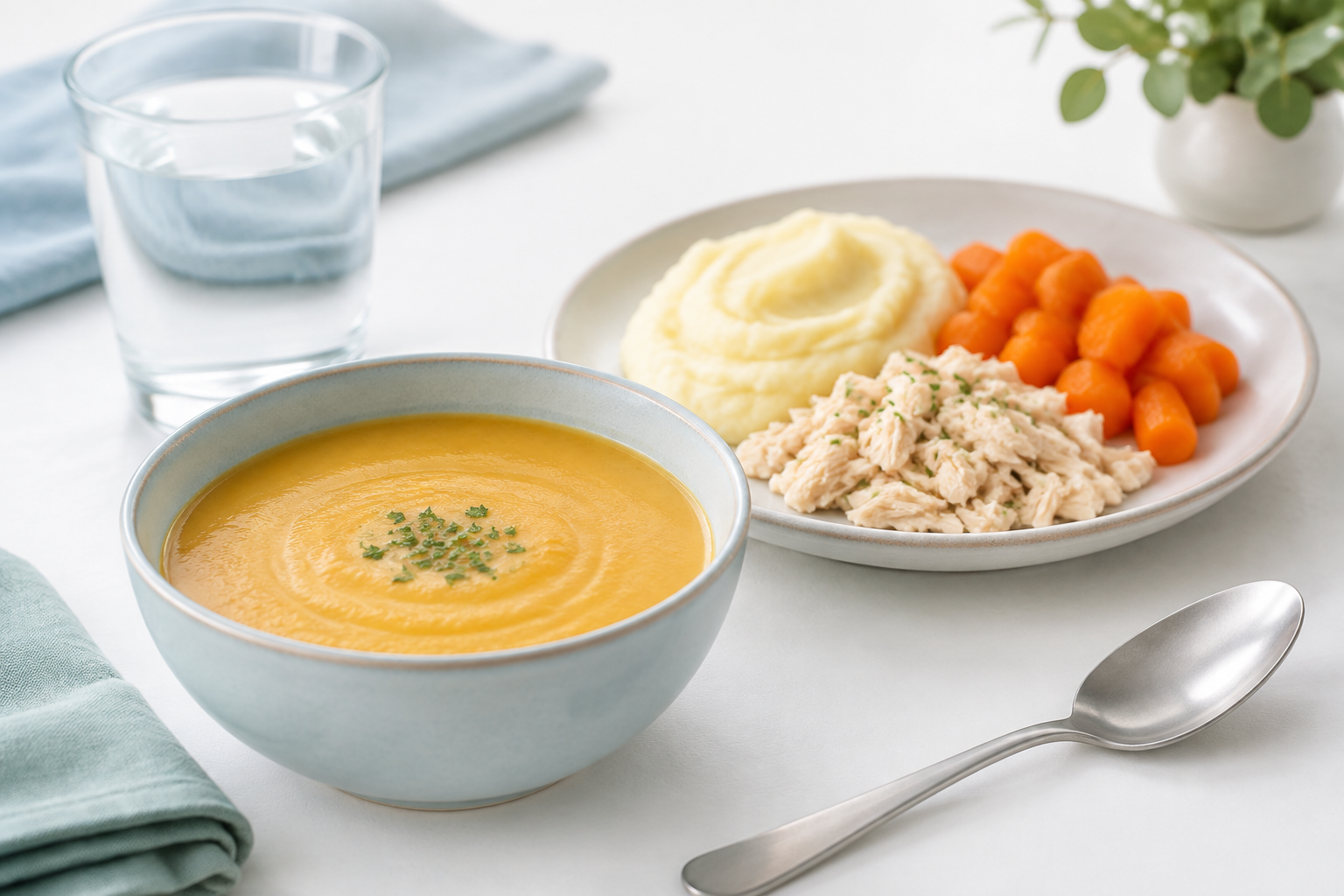
A flare does not require a fixed diet phase. Keep your usual small meals when possible, then make portions smaller and eat more slowly if nausea or early fullness worsens. As you chew each bite until smooth, let your tolerance that day guide the texture.
Before giving up on solids, try adapting a familiar meal:
- Smaller bites: Cut tender chicken into tiny pieces and make peeled potatoes and well-cooked carrots very soft.
- Softer texture: Mash the vegetables when chewing feels tiring or fullness comes quickly.
- Smooth option: Blend the meal into a soup when solids feel like too much. Blended food is a useful middle ground before liquids.
These changes follow the small-particle idea without a rigid schedule.
When solids are difficult, liquids and smoothies may be easier to manage for a short time. Liquid meals can include:
- Blended soups: Choose smooth soups without chunks, skins, or seeds.
- Thinned mashed potatoes: Add a tolerated liquid until the texture is easier to swallow.
- Smoothies: Use ingredients you already know you tolerate.
- Liquid nutrition drinks: These may help when food intake is low.
Liquids may work better than puréed foods for some people, while others manage purées more comfortably. If you cannot take in enough food or fluids, contact your clinician rather than remaining on liquids indefinitely. Persistent symptoms may also lead to a discussion about gastroparesis medicines that help the stomach empty.
As symptoms ease, try a small serving of soft, well-cooked food before returning to familiar meals. Move back to smoother textures if nausea, vomiting, or early fullness returns. A meal that works one day may need a gentler version the next.
When Do You Need Nutrition Support or Care?
Diet changes are not enough when you cannot meet your calorie, nutrient, or fluid needs. Unintentional weight loss or frequent vomiting can mean that smaller portions and softer foods are no longer providing enough nourishment. Contact your clinician promptly rather than restricting your diet further on your own. Severe symptoms may lead clinicians to consider liquid nutrition or other nutrition support (source).
Prompt medical care is needed when dehydration may be developing. Seek help if:
- You cannot keep food or liquids down.
- You are urinating very little.
- You feel dizzy, faint, or unusually weak.
- Vomiting is frequent or your weight is dropping without intention.
Hydration often goes better with small, steady sips than with large drinks at meals. Cleveland Clinic’s diet sheet suggests 6 to 10 cups of fluid a day for most adults.
A registered dietitian can help when your food options have become very limited, symptoms repeatedly interrupt meals, or maintaining weight and fluids feels difficult. They can shape broad food guidance into meals you can tolerate, including liquid meals when solid food is difficult.
An oral rehydration solution can replace fluids and electrolytes after vomiting.
How Do Fruit, Nut Butters, Drinks, and Diabetes Fit In?
Four practical questions come up once the basics are in place: whether fruit still fits, whether smooth nut butter is easier than whole nuts, when to drink, and how to plan meals around blood sugar with diabetes.
Can You Eat Fruit With Gastroparesis?
Yes, particularly soft ripe fruits in small portions. A ripe banana, applesauce, melon, or peeled, cooked, or canned peaches and pears may sit better than firm raw fruit. Canned fruit packed in water or natural juice, along with strained low-fiber juice, can offer other options.
Fiber varies by serving, but texture matters too. Because dried fruit, berry seeds, skins, and tough citrus membranes may be harder to tolerate, try one fruit form at a time, then adjust the amount around your symptoms.
Are Smooth Nut Butters Easier Than Whole Nuts?
Smooth nut butter may be easier to tolerate than whole nuts because grinding creates a softer texture. Chunky nut butter still has pieces that can be harder to manage during a flare, while smooth versions may offer a more manageable protein option.
Grinding does not remove a nut butter’s fiber or fat. Try a small amount if it suits you, since higher-fat foods can still worsen fullness or nausea. Texture may help, but your symptoms determine whether nut butter fits your meals.
Should You Drink Fluids With Meals?
You can drink with meals if it feels comfortable, but a large drink may add to fullness. Take small sips with food and have more fluids between meals. Spacing liquids and solids by about an hour may help, though it is not a strict rule.
Steady sipping matters more than avoiding fluids. Water, low-fat clear broth, diluted or strained low-fiber juice, caffeine-free tea, and oral rehydration solutions may work.
How Do You Plan Meals With Diabetes?
With diabetes, meals should support the blood sugar range set by your healthcare team. High blood sugar can further slow delayed gastric emptying, making nausea, fullness, and other symptoms harder to manage.
Meal size, timing, and texture can affect both digestion and glucose patterns. Discuss changes with your diabetes care team or dietitian so your meals and glucose plan work together instead of following a one-size-fits-all pattern.
Gastroparesis Diet FAQs
These are the diet questions people ask most, from fiber and fat to fizzy drinks and walking after meals.
1. How Much Fiber Should You Eat With Gastroparesis?
There is no single fiber target for gastroparesis. High-fiber foods and rough roughage may be harder for your stomach to empty, worsening fullness or nausea and sometimes contributing to bezoars. Foods most often limited include raw vegetables, fruit skins, bran, whole grains, beans, nuts, seeds, and popcorn. Applesauce and peeled, well-cooked vegetables may be easier to tolerate, while your clinician or dietitian can tailor fiber to your symptoms and nutrition needs (source).
2. Can Carbonated Drinks Worsen Gastroparesis Symptoms?
Yes. Soda and sparkling water can increase gas, bloating, pressure, or stomach discomfort for some people with gastroparesis, though they are not a trigger for everyone. If fizzy drinks make symptoms worse, still water or another noncarbonated drink may be easier to tolerate. Alcohol can also irritate the stomach, and avoiding smoking is part of common gastroparesis lifestyle guidance.
3. How Much Fat Is Too Much For Gastroparesis?
There’s no universal daily fat limit for gastroparesis. Because fat can slow stomach emptying, high-fat foods and large meals may increase fullness, nausea, or pain. Baked or steamed lean protein and lower-fat dairy are often easier to tolerate than fried foods, fatty meats, heavy cream, or rich cheese. Small portions of higher-fat foods may still fit. Let your symptoms and ability to eat enough guide a plan with your care team.
4. Should You Walk After Eating With Gastroparesis?
Stay upright for one to two hours after eating instead of lying down. Although a relaxed walk may help encourage stomach emptying if you tolerate it, it will not relieve symptoms for everyone, and sitting upright is enough when walking increases nausea, bloating, or fullness. Avoid vigorous exercise right after a meal, and slow down or rest upright if movement makes you feel worse.