


When nausea, vomiting, or fullness after a few bites keeps disrupting meals, it's reasonable to wonder whether gastroparesis is the cause. A gastroparesis diagnosis requires both symptoms that fit and objective evidence that the stomach empties too slowly after a blockage is ruled out. Symptoms alone can overlap with functional dyspepsia and other digestive conditions.
A gastric emptying scan measures how much of a standardized meal remains in the stomach over four hours, making preparation part of an accurate result. Food, medicines that affect digestion, and high blood glucose can change the measurement, so the testing center's fasting and medication instructions matter. Under the standard protocol, more than 10% of the meal remaining at four hours generally indicates delayed emptying, and the AGA recommends four-hour testing because shorter studies can miss it.
Gastroparesis Diagnosis Key Takeaways
- Symptoms alone cannot confirm gastroparesis because several digestive conditions cause similar nausea, fullness, and vomiting.
- Diagnosis requires delayed stomach emptying on testing after a physical blockage is ruled out.
- Four-hour gastric emptying scintigraphy is the standard test for measuring delayed stomach emptying.
- Follow fasting, medication, and blood glucose instructions carefully to support interpretable scan results.
- More than 10% retention at four hours generally indicates delayed gastric emptying.
- Two-hour testing can miss delayed emptying that becomes clear on four-hour imaging.
- A normal scan may prompt evaluation for functional dyspepsia, medication effects, or another digestive condition.
Why Can’t Symptoms Alone Confirm Gastroparesis?

Persistent nausea, vomiting, bloating, upper abdominal discomfort, or feeling full after only a few bites can be frustrating, especially when eating becomes difficult. Poor appetite, fullness that lasts long after meals, or trouble maintaining weight also deserve attention, but no symptom pattern can confirm gastroparesis on its own.
A gastroparesis diagnosis requires both symptoms that fit and objective evidence that the stomach empties abnormally slowly. Symptoms cannot show the rate of stomach emptying, and other digestive conditions can cause nausea, fullness, pain, and vomiting.
How gastroparesis is diagnosed usually comes down to three steps: reviewing your symptoms, checking for a blockage, and measuring how fast the stomach empties. Causes, symptoms, and outlook are covered under gastroparesis as a whole.
The history and physical exam guide the next tests rather than establish the condition. Your clinician may ask about:
- Meal patterns: Whether symptoms start while eating, soon afterward, or hours later, and whether a small amount of food leaves you uncomfortably full.
- Vomiting and intake: How often vomiting occurs, what it looks like, and whether food or fluids are becoming hard to keep down.
- Health history: Diabetes, prior stomach or intestinal surgery, neurologic conditions, and other illnesses that can affect stomach movement.
- Medicines: Some medications can slow stomach emptying, so bring a complete medication list.
The physical exam may look for signs that ongoing vomiting or limited intake has affected hydration or nutrition. Those findings can affect how quickly testing is arranged, while medical testing supplies the evidence needed to identify delayed emptying.
Before stomach movement is measured, clinicians usually rule out a physical obstruction. An ulcer, mass, or narrowed passage near the stomach’s exit can create symptoms similar to slow emptying, so this is a routine step rather than a sign that a blockage is expected.
Upper endoscopy uses a flexible camera passed through the throat to inspect the esophagus, stomach, and first part of the small intestine. A computed tomography scan or an upper gastrointestinal series, an X-ray test using contrast liquid, can also look for a blockage. None measures how quickly the stomach empties, but excluding an obstruction makes later motility testing easier to interpret (source).
Bring a symptom timeline, medication list, and notes about how symptoms relate to meals to make the appointment more focused.
How Do You Prepare for a Four-Hour Gastric Emptying Scan?
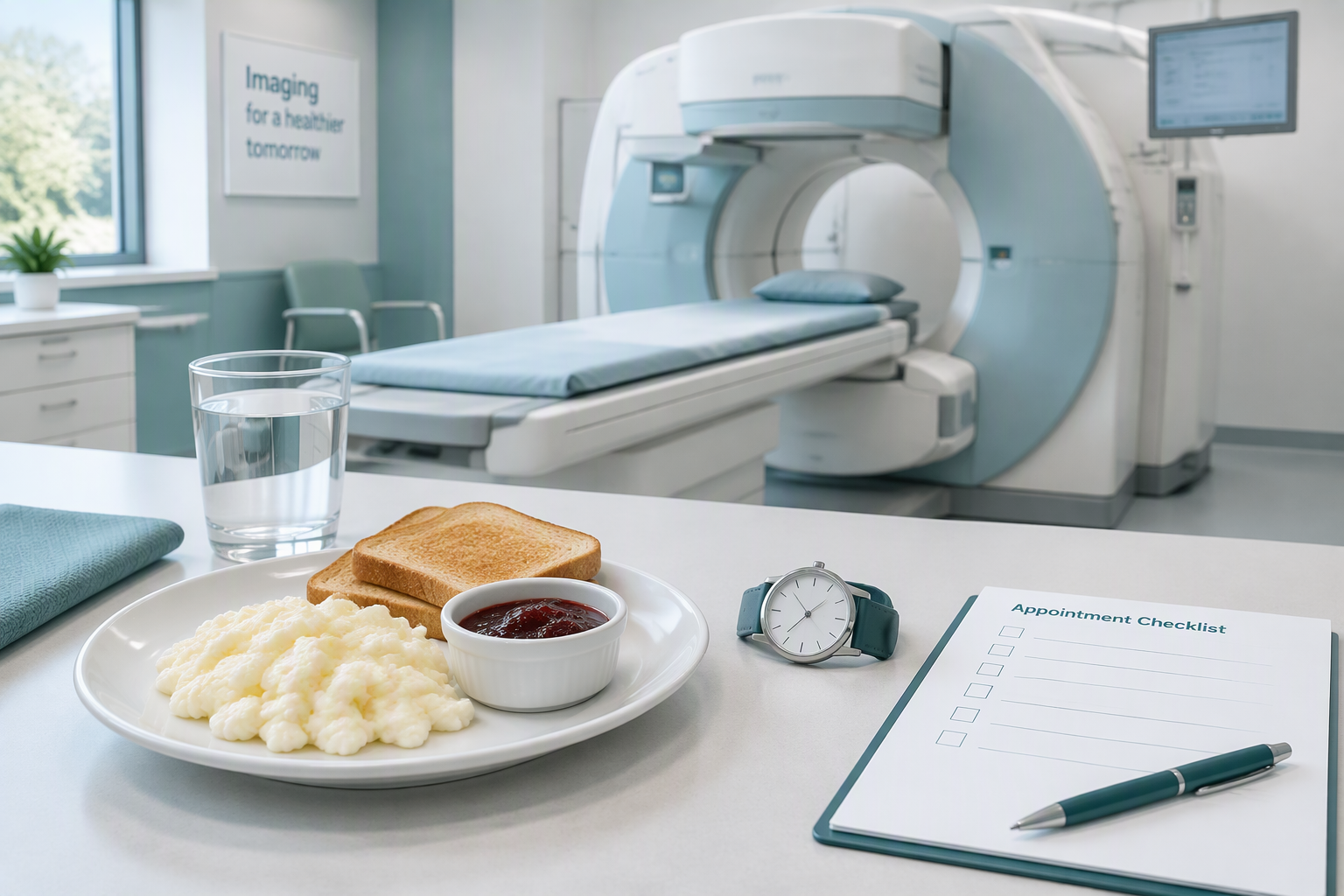
After a blockage is ruled out, four-hour gastric emptying scintigraphy, also called a gastric emptying study or scan, is the standard test for confirming delayed stomach emptying. You eat a standardized meal containing a small amount of radioactive tracer while a gamma camera measures what remains in your stomach over about four hours.
A common protocol uses egg whites, toast, jam, and water, with images taken at the start and again at 60, 120, 180, and 240 minutes (source).
The appointment usually follows these steps:
- Eat the meal provided by the testing center within its specified time.
- Have the first images taken immediately after finishing the meal.
- Return for the remaining images at the scheduled intervals, including the four-hour mark.
Ask about accommodations before your appointment if you have an egg, gluten, or other food allergy. Do not bring a substitute meal, since a different meal can make your results harder to compare with standard reference values.
Fasting instructions matter because gastric emptying scintigraphy needs to measure the test meal, not food still being digested from earlier. Follow your center’s directions about fasting, water, and morning medicines, and call if you accidentally eat or drink something restricted.
Medication changes should be planned with your prescriber and testing center. Medicines that can affect stomach emptying include:
- Opioids and cannabis: These can slow emptying.
- Prokinetics: These medicines speed stomach movement.
- Anti-nausea and nerve-signaling medicines: These can alter the measurement.
- GLP-1 receptor agonists: Medicines such as semaglutide may slow emptying.
American College of Gastroenterology guidance notes that medicines affecting emptying, including opioids, cannabis, prokinetics, and anti-nausea drugs, may be paused for 48 hours before testing when the prescriber agrees (source).
If you have diabetes, arrange blood glucose checks and medication timing before fasting. High blood glucose can temporarily slow stomach emptying, so ask the testing center for its required test-day glucose range and bring the supplies needed to follow that plan.
What Do Your Gastric Emptying Results Mean?
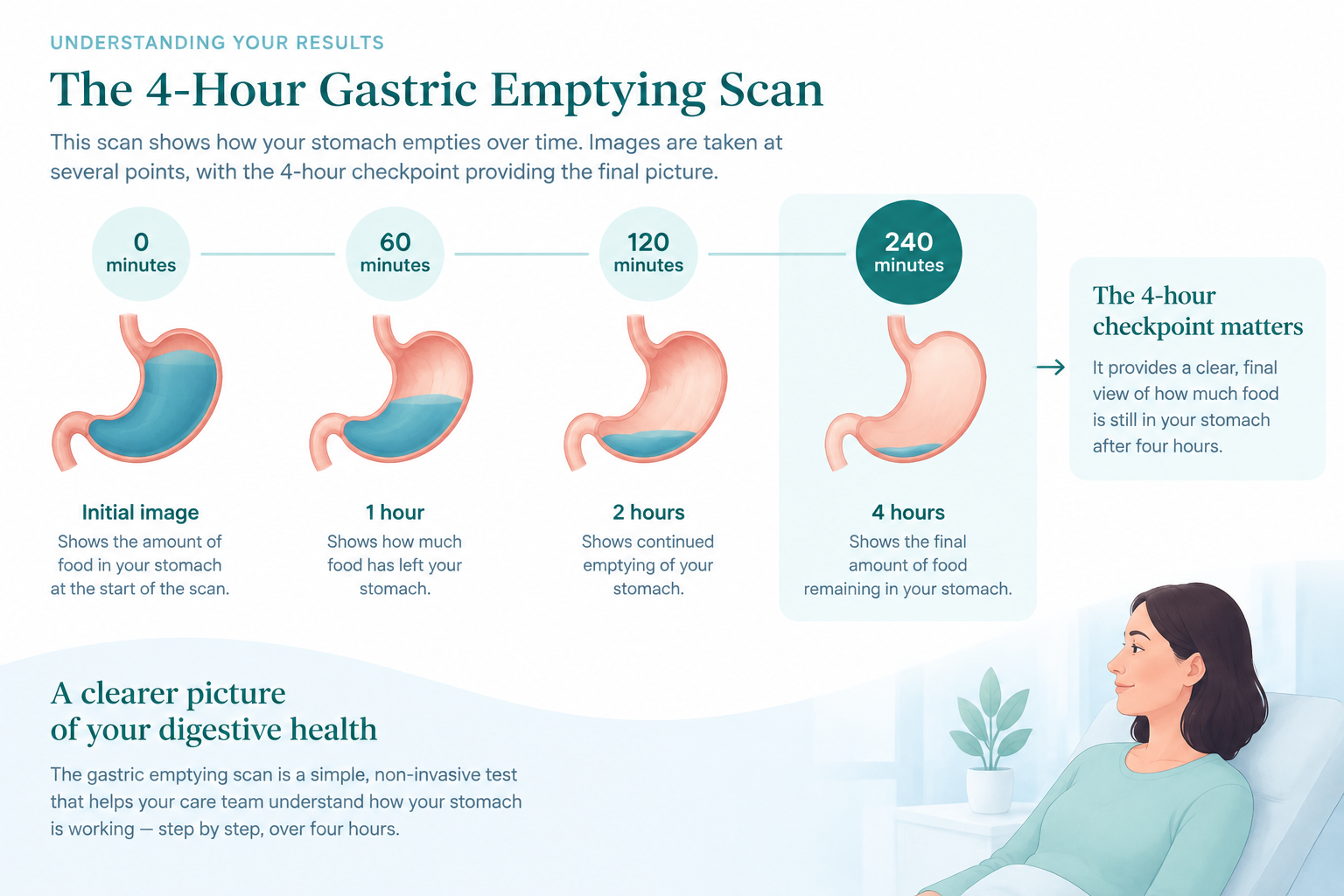
The scan report gives retention, the share of the test meal still in your stomach at each imaging time. Under the standardized solid-meal protocol, more than 10% retained at four hours generally indicates delayed gastric emptying.
The four-hour measurement matters most. A gastric emptying test can appear normal at an earlier image but show delayed emptying later, which means a 90-minute or two-hour study may miss a delay. Although some reports flag more than 60% retention at two hours, earlier results cannot be projected forward instead of completing four-hour imaging. The American Gastroenterological Association’s 2025 guideline recommends four-hour testing rather than two-hour testing because shorter studies can miss delayed emptying (source).
For a standardized four-hour gastric emptying scintigraphy protocol, the 2022 AGA practice update grades the severity of retention as summarized in a 2026 JAMA review (source):
- Mild: 10 to 15% retained at four hours.
- Moderate: 16 to 35% retained at four hours.
- Severe: More than 35% retained at four hours.
These categories apply to the standardized four-hour protocol, not every type of gastric emptying study.
An abnormal result supports a gastroparesis diagnosis when your symptoms fit and testing has ruled out a physical blockage. Ask how confidently the scan can be interpreted, whether medications or preparation may have affected it, and whether diabetes, prior surgery, or another possible cause needs further evaluation. Once delayed emptying is confirmed, how gastroparesis is treated depends on the scan findings and how symptoms affect eating, hydration, and daily life.
A normal result does not mean persistent nausea, early fullness, or vomiting should be dismissed. Confirm whether the scan lasted the full four hours, consider whether test conditions influenced the result, and discuss other explanations, including functional dyspepsia. Food is often an early step after a positive result, starting with gastroparesis diet changes.
Which Other Tests and Explanations Come Up?

A few other tests come up along the way. Blood work checks for problems that can add to symptoms, a breath test or a swallowed capsule can stand in for the scan in some cases, and a normal scan raises its own question about what else could explain the symptoms.
Can Blood Tests Diagnose Gastroparesis?
No. Blood tests for gastroparesis cannot measure whether food leaves your stomach too slowly. Although an abnormal result cannot confirm gastroparesis and normal blood work cannot rule it out, confirmation instead depends on a gastric emptying test.
Blood work can still help explain persistent symptoms or show effects of poor intake. It may identify:
- Blood glucose changes: High or low levels that may affect symptoms and stomach function.
- Dehydration: A possible result of frequent vomiting or limited fluid intake.
- Infection or inflammation: Signs that another condition could be contributing to nausea, bloating, or vomiting.
- Nutritional deficiencies or malnutrition: Problems that can develop when eating enough food is difficult.
None of these findings proves delayed stomach emptying. Your clinician considers the results with your medical history and other evaluation, then may order gastric emptying testing if symptoms continue. Normal blood work does not make disruptive symptoms less real or less deserving of answers.
When Is a Gastric Emptying Breath Test Used?
A gastric emptying breath test may be an alternative when standard scintigraphy cannot be performed. It estimates how quickly food moves out of your stomach without producing scan images, though it is not automatically the right choice for everyone.
During the gastric emptying breath test, you eat a prepared meal containing a labeled substance. The process usually involves:
- Eating the test meal.
- Providing breath samples at scheduled intervals for about four hours.
- Allowing the meal to leave your stomach so the labeled substance can be absorbed, processed by your body, and exhaled as measurable breakdown products.
The timing and amount of those breakdown products help estimate your stomach-emptying speed. Because this is an indirect measurement rather than an imaging test, your clinician interprets it alongside your symptoms and other test findings. The carbon-13 spirulina breath test is FDA-approved for diagnosing gastroparesis.
What Does a Wireless Motility Capsule Measure?
A wireless motility capsule is a swallowed sensor that travels through your digestive tract and helps clinicians estimate transit time, or how long material takes to move through different areas.
Its sensors record:
- pH: Changes in acidity.
- Pressure: Muscle activity as the digestive tract moves contents along.
- Temperature: Readings that help identify where the capsule is during its journey.
This test is used in selected situations when clinicians need another way to assess digestive transit, including movement beyond the stomach. Unlike a gastric emptying scan, which measures how quickly a test meal leaves your stomach, a wireless motility capsule tracks its own passage through the tract. The two tests answer different questions, so their results are not interchangeable.
Preparation can vary, especially if you take medicines that affect digestion. Ask what to eat, drink, or temporarily pause before the test so you can arrive prepared.
Could Normal Emptying Mean Functional Dyspepsia?
A normal gastric-emptying result generally points away from gastroparesis, even when your symptoms remain frustrating and disruptive. Early fullness, nausea, upper abdominal discomfort, and feeling uncomfortably full after meals can occur with either gastroparesis or functional dyspepsia.
Symptoms alone cannot tell the two apart. The American Gastroenterological Association’s 2022 update notes that these conditions can share symptoms, and symptom severity does not closely reflect how delayed stomach emptying is (source).
Objective testing helps clinicians distinguish gastroparesis from functional dyspepsia. If the test is normal, clinicians usually consider other explanations rather than confirm gastroparesis. Functional dyspepsia, which involves ongoing upper digestive symptoms without delayed emptying or another clear cause, may be one possibility, but a normal scan alone does not confirm it.
A practical question for your appointment is, “What could explain my persistent symptoms if stomach emptying is normal?” Depending on your health history, medication effects or another digestive condition may warrant consideration.
Gastroparesis Diagnosis FAQs
These are the questions that come up most around testing, from GLP-1 medicines to what a normal scan means.
1. Should You Pause GLP-1 Medicines Before a Gastric Emptying Test?
Yes. GLP-1 receptor agonists, including semaglutide and tirzepatide, slow stomach emptying and may make a gastric emptying test look delayed. Tell both your prescriber and testing center about the medicine, and mention it too if you are scheduled for an upper endoscopy. Ask whether to pause it and for how long, but do not stop it independently.
2. Can Diabetes Affect a Gastroparesis Diagnosis?
Yes. Diabetes is the most common known cause of gastroparesis because ongoing high blood sugar can damage nerves that move food from the stomach. Diabetes or digestive symptoms alone do not confirm the diagnosis. High blood glucose around a gastric emptying scan can temporarily slow emptying, making results harder to interpret, so review your blood sugar and preparation instructions with the test team. NIDDK lists other known causes as vagus nerve injury from surgery on the esophagus, stomach, or small intestine, hypothyroidism, autoimmune diseases such as scleroderma, Parkinson’s disease, multiple sclerosis, and viral stomach infections, though in most cases no cause is found (source).
3. Can Medications Mimic Gastroparesis During Testing?
Yes. Medicines can change gastric transit, so a gastric emptying study may appear abnormal when the delay comes from a medication rather than gastroparesis. While opioids, cannabis, and some medicines that affect nerve signaling can slow emptying and prokinetic medicines speed it up, certain anti-nausea medicines may also alter results.
Which medicines to pause depends on the drug and the test, and the ACG guideline suggests about 48 hours for most of them. Share all prescriptions, over-the-counter medicines, and cannabis use with your clinician, and only pause or adjust them as instructed.
4. Can Gastroparesis Develop After a Normal Scan?
A normal gastric emptying scan means delayed emptying was not detected at the time of testing. Nausea, bloating, early fullness, or vomiting alone do not confirm gastroparesis, so your clinician may look for other causes of ongoing symptoms rather than assume the scan missed it.
Stomach emptying can change over time. If symptoms persist, worsen, or change after a normal scan, follow-up may include reassessment or repeat testing based on your situation.