


Vomiting undigested food hours after a meal or getting full after a few bites doesn't automatically mean gastroparesis, but persistent symptoms need medical attention. Gastroparesis is delayed stomach emptying without a physical blockage, and its symptoms can include nausea, bloating, upper abdominal discomfort, and appetite loss.
Diabetes, prior stomach or esophageal surgery, viral illness, and medicines such as opioids or GLP-1 receptor agonists can contribute, yet many other conditions can look similar. Functional dyspepsia, for example, can cause fullness and nausea without delayed emptying. A 4-hour gastric emptying scan confirms slow emptying when more than 10% of the meal is still in the stomach, while endoscopy or imaging rules out a blockage.
Persistent vomiting with trouble keeping fluids down, severe or rapidly worsening pain, blood in vomit, fainting, or major blood glucose swings need prompt care. For ongoing symptoms, smaller meals and adjustments to fat, fiber, and texture may help alongside treatment tailored to the cause and nutritional needs.
Gastroparesis Key Takeaways
- Gastroparesis delays stomach emptying despite no physical blockage.
- Nausea, early fullness, vomiting, bloating, and upper abdominal discomfort are common symptoms.
- Diabetes is a leading known cause, but surgery, medicines, and viral illness may contribute.
- Symptoms alone cannot confirm gastroparesis because functional dyspepsia and other conditions can overlap.
- Four-hour gastric emptying scintigraphy is a common test for confirming delayed stomach emptying.
- Smaller meals and lower-fat, lower-fiber, softer foods may be easier to tolerate.
- Repeated vomiting, dehydration, severe pain, blood in vomit, or extreme blood glucose changes need prompt care.
What Is Gastroparesis, and Who Gets It?
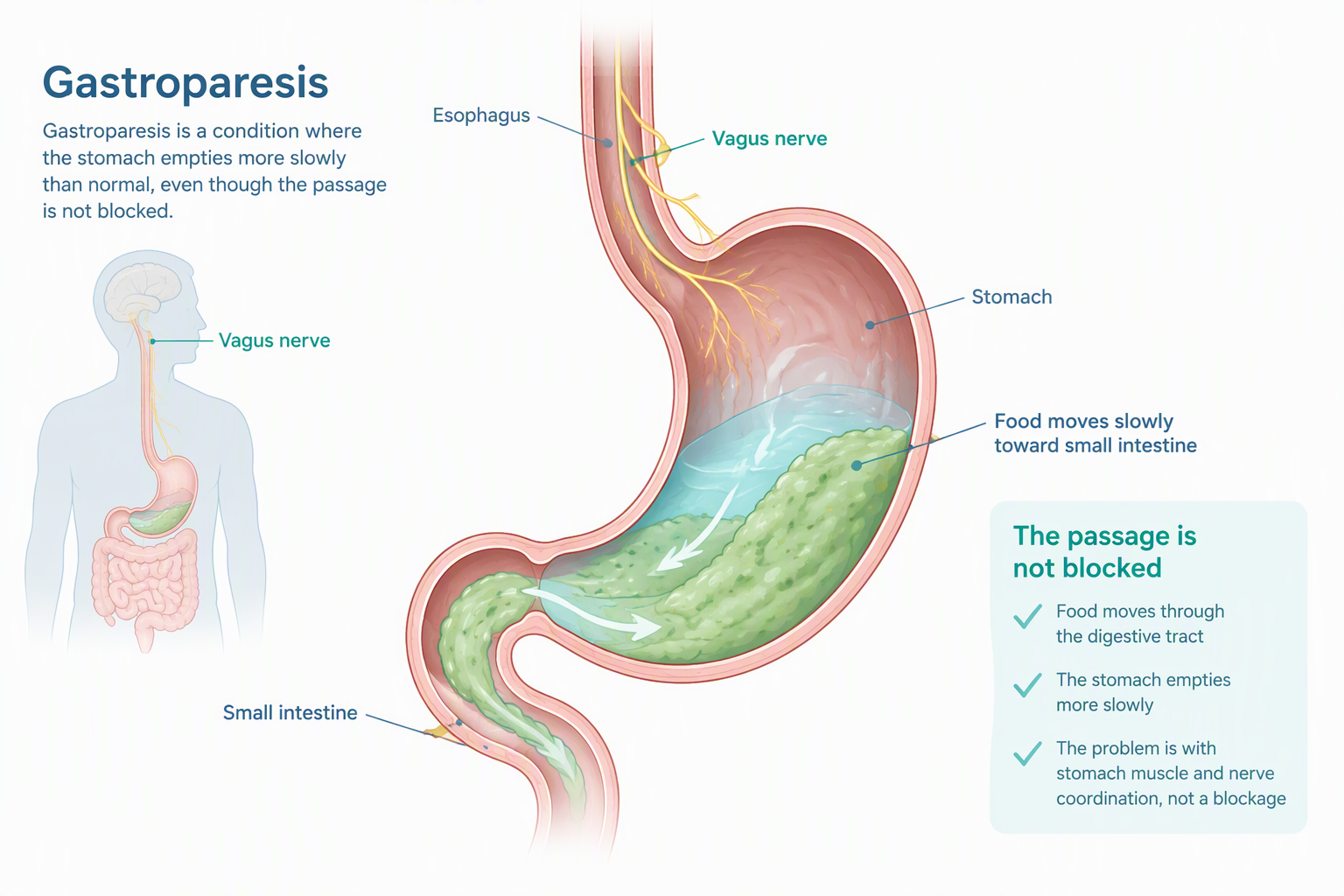
Gastroparesis is a chronic digestive disorder in which food moves from the stomach into the small intestine more slowly than normal, even though no physical blockage is present. This delayed gastric emptying is sometimes called “stomach paralysis,” but stomach movement usually has not stopped completely.
The problem starts in the system that moves food onward. Stomach muscles, nerves, and chemical signals must work together, and the vagus nerve helps regulate that process. When those signals or muscles do not work properly, food can remain in the stomach longer than expected.
Diabetes is the most common known cause. Blood sugar that remains high over time can damage nerves, including the vagus nerve, and interfere with stomach movement. Diabetic gastroparesis can affect people with type 1 or type 2 diabetes, although most people with diabetes do not develop it. The National Institute of Diabetes and Digestive and Kidney Diseases (NIDDK) reports that gastroparesis affects about 10 men and 40 women per 100,000 people, meaning women are affected about four times as often as men, while similar symptoms occur in about 1 in 4 U.S. adults (source).
Neurologic conditions, connective-tissue diseases, and prior surgery can also contribute, and gastroparesis shares its symptoms with many gut disorders beyond a slow stomach. When no underlying cause is identified after a clinician reviews medical history and testing, the condition is called idiopathic gastroparesis. Idiopathic means the cause is unknown, not that symptoms are imagined or unimportant.
Its usual symptoms also come from many other digestive conditions, which is why a test, not a symptom checklist, confirms it.
What Symptoms and Warning Signs Should You Know?

Gastroparesis symptoms usually start or worsen during or after meals, and they can swing from mild to severe from one day to the next. Noting that timing helps when you describe what is happening to a clinician.
Early satiety is feeling full after only a few bites or soon after starting a meal, while prolonged fullness lasts well beyond the meal. Both can reduce appetite and make it hard to eat enough throughout the day.
Nausea is common, and some people vomit, though not everyone does. Vomiting food that still looks undigested several hours after eating suggests it sat in the stomach too long.
Other possible symptoms include:
- Upper abdominal pain: Pressure, discomfort, or pain in the upper belly.
- Bloating: A tight, swollen feeling or visible abdominal distension, often after meals.
- Belching and indigestion: Frequent burping or lingering discomfort after eating.
- Reflux and heartburn: Burning behind the breastbone or a sour taste when stomach contents move upward.
- Appetite loss and constipation: Reduced intake and constipation may occur, sometimes for separate reasons.
Difficulty eating or keeping food down can lead to unintended weight loss, dehydration and malnutrition, electrolyte problems, and low energy. For people with diabetes, delayed digestion can make blood glucose unpredictable because food may reach the small intestine later than expected.
Get care right away for any of these warning signs, most of which NIDDK lists (source):
- Repeated vomiting or an inability to keep fluids down.
- Very little urination, marked dizziness, fainting, or extreme weakness.
- Severe, sudden, or rapidly worsening abdominal pain.
- Vomit containing blood or material that looks like coffee grounds.
- Vomiting for more than an hour, fever, difficulty breathing, or very high or very low blood glucose.
Symptoms that keep interfering with meals or cause weight loss you did not intend also need a medical appointment, even without warning signs.
What Causes Gastroparesis?
Gastroparesis occurs when the nerves or muscles that move food out of the stomach do not work properly. The vagus nerve carries signals between the brain and stomach to coordinate these contractions. When that signaling is damaged or disrupted, delayed gastric emptying can leave food in the stomach longer than expected.
Diabetes is the most common known cause. Over time, high blood sugar can damage the vagus nerve and other nerves that regulate stomach movement. Cleveland Clinic estimates that diabetes accounts for about one-third of cases, while idiopathic cases account for about one-quarter to one-half (source).
A 2026 JAMA review of a large U.S. database found type 2 diabetes in about 51.7% of recorded cases, type 1 diabetes in another 5.7%, medicines in about 12%, surgery in about 15%, and no identifiable cause in about 11% (source). These estimates differ because specialist-clinic studies and insurance databases include different patient populations. The link between diabetes and gastroparesis is strong, but most people with diabetes never develop it.
Other causes and risk factors include:
- Surgery: Postsurgical gastroparesis can develop after stomach or esophageal surgery affects nearby nerves, including the vagus nerve.
- Viral illness: Symptoms can begin with a stomach virus and persist after the infection has passed, by which point the trigger is hard to prove.
- Medicines: Opioid pain relievers such as oxycodone and morphine are well known to slow emptying. Anticholinergic medicines, some antidepressants such as amitriptyline, and GLP-1 receptor agonists such as semaglutide and tirzepatide can slow it too. Talk with the prescriber before stopping any of them.
- Other conditions: Parkinson’s disease, multiple sclerosis, and scleroderma can affect the nerves or muscles involved in stomach emptying. Hypothyroidism and cystic fibrosis may also be associated. Some autoimmune, endocrine, and connective-tissue conditions can contribute, but having one does not mean gastroparesis will develop.
When none of these explains it, the label is idiopathic gastroparesis.
How Is Gastroparesis Diagnosed?

Symptoms can point to gastroparesis, but they cannot confirm it. Diagnosis requires evidence of slow stomach emptying once a blockage or another cause has been ruled out, which is why how gastroparesis is confirmed comes down to testing rather than a symptom checklist.
The most common look-alike is functional dyspepsia without delayed emptying, which can cause fullness, nausea, and upper-belly discomfort even when emptying is normal or nearly normal. The 2022 AGA update adds that symptoms do not track closely with how delayed emptying is, so a bad week says little about the result (source).
The evaluation starts with your symptom pattern, medical history, medicines, diabetes status, and any prior abdominal surgery, followed by a physical exam. Blood tests may help identify health problems contributing to symptoms or affecting later testing.
Structural problems must be ruled out before stomach emptying is measured. An upper endoscopy examines the upper digestive tract, while an upper gastrointestinal series or CT scan may help identify an ulcer, tumor, or gastric outlet obstruction. These tests can find a reason for symptoms, but they do not measure how quickly food leaves the stomach (source).
A gastric emptying study measures stomach movement more directly. Options may include:
- 4-hour gastric emptying scintigraphy: You eat a small, low-fat meal, usually egg whites, containing a trace amount of radioactive material, and images track what remains in your stomach over four hours. More than 10% of the meal retained at four hours indicates delayed emptying. The AGA grades the result as mild at 10 to 15%, moderate at 16 to 35%, or severe above 35%.
- Gastric-emptying breath test: Breath samples taken after a prepared meal estimate how quickly it moves through the stomach. Availability and suitability vary.
- Wireless motility capsule: A swallowed sensor provides information about movement through the digestive tract, including the stomach. It is not suitable when a narrowing could prevent the capsule from passing.
The ACG guideline calls scintigraphy the standard test, recommends measuring a solid meal over at least 3 hours, and advises pausing medicines that affect emptying, such as opioids and anti-nausea drugs, for 48 hours beforehand (source).
How Is Gastroparesis Managed?

There is no single cure for gastroparesis, so care is built around the cause, how severe the symptoms are, and how you respond. The priorities are easing symptoms, treating what drives them, and protecting hydration and nutrition.
Food changes usually come first. NIDDK recommends five or six small meals a day instead of two or three large ones, built on low-fat, low-fiber, soft, well-cooked foods, with liquid meals or pureed food when solids are too hard (source). Eat slowly and shrink portions further during flares. There’s more on eating with gastroparesis, including meal size and texture.
Foods that may be easier to manage include:
- Lower-fat choices: Fat can slow stomach emptying, so greasy foods may worsen nausea or early fullness.
- Lower-fiber options: Some fiber, particularly insoluble fiber, can be difficult to tolerate. Large amounts of raw fruits and vegetables may also trigger symptoms.
- Softer textures: Well-cooked, pureed, blended, and liquid foods, including soups and smoothies, may be easier during flares than solid versions of the same foods.
Carbonated drinks and alcohol are also on NIDDK’s list to avoid. For fluids, it suggests low-fat broths, clear soups, low-fiber juices, sports drinks, and oral rehydration solutions.
A registered dietitian can help when food choices shrink or weight is falling. If meals still cannot meet nutritional needs, the care team may recommend tube feeding.
Gentle walking after meals may support stomach emptying when you feel well enough. With diabetes-related gastroparesis, blood glucose management also matters because changing glucose levels and delayed emptying can worsen each other.
Antiemetics such as ondansetron ease nausea and vomiting but do not speed emptying, while metoclopramide, a prokinetic, strengthens the stomach contractions that move food onward (source). There’s more on gastroparesis treatment options, from prokinetics to procedures.
Medicines that slow emptying, including opioids, cannabis, anticholinergics, and GLP-1 receptor agonists, are often reviewed and sometimes stopped, but only with the prescriber’s agreement. For severe symptoms that have not improved, specialists may consider gastric peroral endoscopic myotomy (G-POEM), a procedure that cuts the muscle at the stomach outlet so food can pass more easily.
What Complications Can Gastroparesis Cause, and What Is the Outlook?

Most gastroparesis complications come from ongoing vomiting or not eating enough, which is why hydration and nutrition sit at the center of care.
Possible complications include:
- Dehydration: Frequent vomiting can cause significant fluid loss.
- Electrolyte imbalances: Changes in minerals such as potassium may affect muscles, nerves, and heart rhythm.
- Malnutrition and unplanned weight loss: Limited intake, food avoidance, or trouble keeping food down can leave the body short on calories and nutrients.
- Harder-to-control blood glucose: In people with diabetes, delayed and unpredictable digestion can make insulin timing and blood glucose management more difficult.
- Bezoars: These hardened masses of undigested food can collect in the stomach and sometimes block its outlet into the small intestine.
- Lower quality of life: Nausea, pain, disrupted meals, and uncertainty about symptoms can affect sleep, work, social plans, and emotional well-being.
Gastroparesis is generally not life-threatening, but dehydration, electrolyte problems, malnutrition, or major blood glucose swings can become serious if they go untreated. That is what the warning signs earlier are for.
Gastroparesis is usually chronic, and the outlook depends on the cause. MedlinePlus notes that medicines may offer temporary benefit or cause side effects with long-term use, while endoscopic or surgical myotomy may bring longer-term improvement for some people (source).
When a medicine is the cause, symptoms can improve once it is stopped with the prescriber’s agreement.
Gastroparesis FAQs
These are the questions that come up most once gastroparesis is on the table, from whether it lasts to how GLP-1 medicines fit in.
1. Can gastroparesis go away?
Gastroparesis is usually a long-term condition that treatment can help manage, rather than cure. Symptoms may improve when an underlying cause can be addressed. If a medication slows stomach emptying, symptoms can ease after it is stopped or changed with your prescriber’s agreement. People whose symptoms started after a viral illness often respond well to treatment. Improvement may look like fewer flare-ups, better nutrition, and more predictable meals, even when stomach emptying does not fully return to normal.
2. Can GLP-1 medicines cause gastroparesis?
GLP-1 receptor agonists such as semaglutide and tirzepatide slow stomach emptying and may worsen or resemble gastroparesis symptoms. A 2026 JAMA review includes these medicines among those that may be stopped during treatment. Nausea, bloating, and early fullness are common medication effects and do not alone confirm gastroparesis. If symptoms persist, become severe, or make eating difficult, contact your prescriber. Do not stop a GLP-1 medicine on your own.
3. Is gastroparesis dangerous?
Gastroparesis is usually not life-threatening, but ongoing symptoms can lead to serious complications. Frequent vomiting may cause dehydration and electrolyte imbalances, while eating too little can contribute to malnutrition. In people with diabetes, delayed stomach emptying can make blood glucose levels harder to predict and manage. Get prompt medical care for the warning signs described above, especially if you cannot keep liquids down, have severe pain, faint, or notice signs of dehydration.
4. Can you have gastroparesis without vomiting?
Yes. Gastroparesis can cause early fullness, nausea, bloating, and upper abdominal pain without vomiting. Symptoms vary between people and may change from day to day. During one flare, you might feel full after only a few bites, while another may bring mainly nausea or bloating. Vomiting can happen when food stays in the stomach for a long time, but not vomiting does not rule out delayed stomach emptying. A gastric emptying study, not the presence of vomiting, is what confirms it.