


H. pylori can cause ulcers by weakening the stomach's protective barrier, allowing acid and pepsin to injure the tissue beneath it. The infection is not the same as an ulcer, and feeling better after treatment does not prove the bacteria are gone.
A urea breath test or stool antigen test can detect active H. pylori, while blood antibody testing cannot confirm that treatment worked. Testing may need careful timing because proton pump inhibitors, antibiotics, and bismuth can produce false-negative results, and the American College of Gastroenterology recommends 14-day optimized bismuth quadruple therapy when antibiotic susceptibility is unknown.
Ulcer pain may improve before the infection clears or the tissue heals, so follow-up matters even when symptoms fade. Confirmation testing at least four weeks after antibiotics provides the clearest answer about eradication and helps determine whether further treatment is needed.
H. pylori Ulcers Key Takeaways
- H. pylori weakens the stomach lining and allows acid and pepsin to cause ulcers.
- Infection can cause gastritis without producing symptoms or an ulcer.
- Urea breath and stool antigen tests detect active H. pylori infection.
- Blood antibody tests cannot confirm that treatment successfully cleared H. pylori.
- Proton pump inhibitors, antibiotics, and bismuth can affect test accuracy.
- Treatment combines acid suppression with multiple antibiotics, often for 14 days.
- Confirm eradication at least four weeks after antibiotics using breath or stool testing.
How Does H. pylori Cause Ulcers?
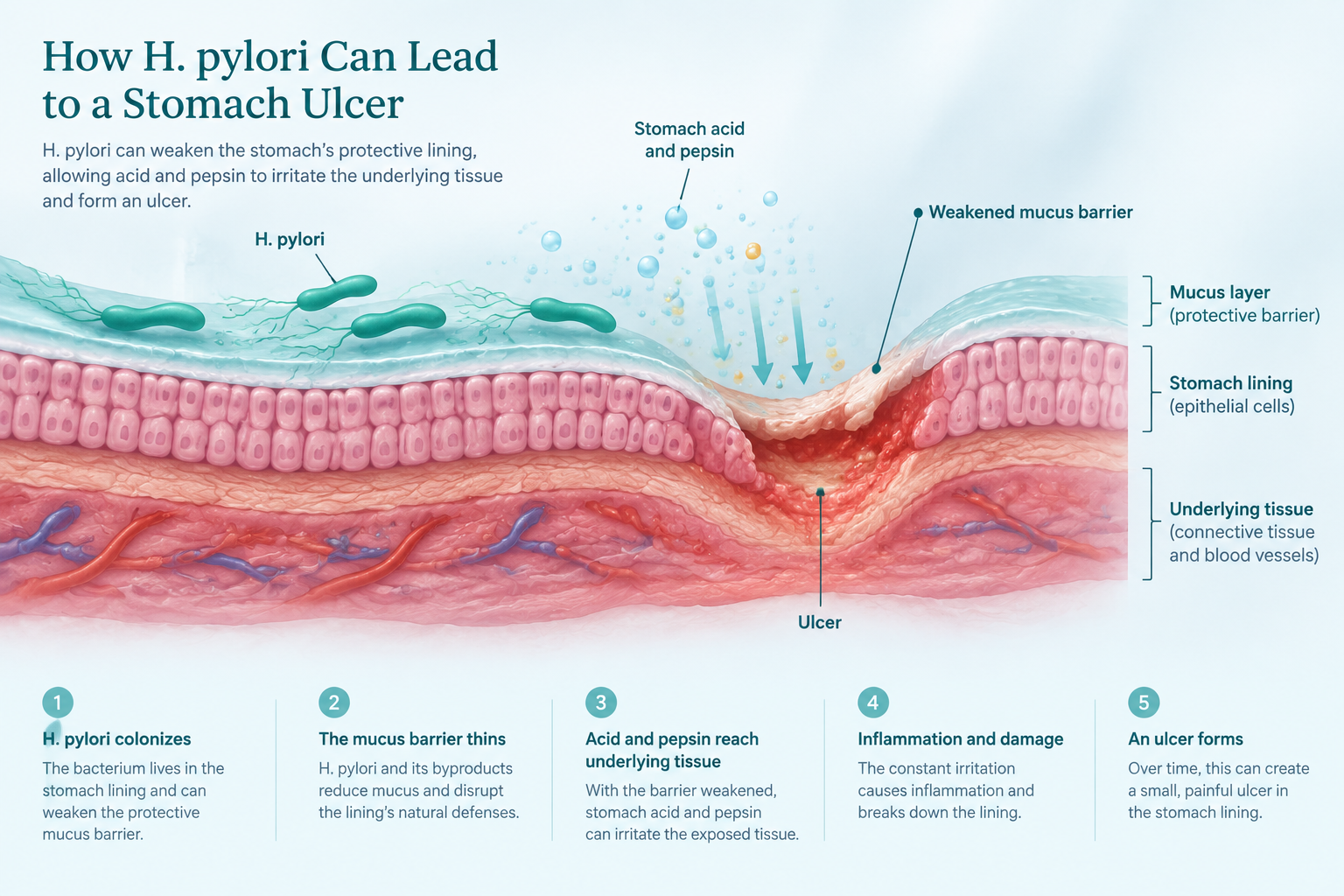
Helicobacter pylori (H. pylori) is a common, spiral-shaped bacterium that can live in the stomach and colonize the duodenum, the first part of the small intestine. More than half of the global population may carry it, and infection often begins in childhood. Many people never develop symptoms.
Helicobacter pylori infection is not the same as an ulcer. The bacterium can cause gastritis, which means inflammation of the stomach lining. A peptic ulcer is an open sore in the stomach lining, called a gastric ulcer, or in the upper small intestine, called a duodenal ulcer. Most infected people remain symptom-free, and infection does not prove that an ulcer is present. The broader condition is explained in peptic ulcer disease as a whole.
In the United States, about 35 percent of people carry H. pylori, according to the National Institute of Diabetes and Digestive and Kidney Diseases (NIDDK). MedlinePlus gives a similar estimate of 30 to 40 percent (source). NIDDK also reports that nearly everyone with the infection develops chronic gastritis, although most infections still do not progress to an ulcer.
H. pylori survives stomach acid by producing urease, an enzyme that changes the chemical conditions immediately around the bacterium. This local effect helps it remain near the stomach lining. It does not make the whole stomach less acidic or shield the lining from injury (source).
Several effects can then weaken the tissue barrier:
- Mucus and mucosal damage: The infection can weaken the protective layers that separate stomach tissue from acid and pepsin, a protein-digesting enzyme.
- Inflammation: Ongoing inflammation can leave the lining more vulnerable to irritation and breakdown.
- Cell injury: Bacterial factors such as VacA and CagA may harm cells and intensify inflammation.
When acid and pepsin reach the tissue beneath that barrier, an ulcer may form in the stomach or duodenum. That is why infection and ulcer are related but different problems.
A 2024 review in JAMA estimates that H. pylori accounts for about 42 percent of peptic ulcers. It is a major cause, but not every ulcer results from the infection. Pain-relieving medicines, smoking, and alcohol can also affect ulcer risk, so identifying H. pylori remains an important part of evaluating suspected peptic ulcer disease.
How Are H. pylori Ulcers Tested and Treated?

Because H. pylori is one recognized cause of peptic ulcers, adults with a current or past stomach or duodenal ulcer should discuss H. pylori testing with a clinician. Treating an active infection can lower the chance of ongoing ulcer problems, but testing is targeted rather than a reason for everyone with stomach discomfort to self-test. Not every ulcer or digestive symptom has the same cause (source).
For many people, noninvasive testing is enough. A urea breath test involves swallowing a harmless, labeled urea substance and breathing into a collection tube, with bacterial byproducts appearing in the breath if H. pylori is present. A stool antigen test checks a stool sample for proteins linked to active infection. Together, they can identify active infection without an endoscopic procedure.
Blood antibody tests are less helpful for identifying a current infection because antibodies can remain after the bacteria are gone. They also cannot confirm that treatment worked. Breath and stool testing are generally better choices when the goal is to detect active infection or verify eradication (source).
Endoscopy may be chosen when bleeding, a complication, or another upper digestive problem needs direct investigation. During an upper endoscopy, a flexible camera passes through the mouth to inspect the stomach and upper small intestine. Tissue samples can be taken at the same time, making endoscopy with biopsy useful when the ulcer itself needs closer examination. It is not necessary for everyone with suspected H. pylori.
Some medicines suppress the bacteria enough to produce a false-negative result. Proton pump inhibitors, antibiotics, and bismuth can all affect testing, so timing matters:
- Ask the clinician or testing service how long to hold a proton pump inhibitor before testing. A two-week hold is commonly advised for breath or stool testing.
- Confirm that at least four weeks have passed since the last antibiotic dose before a test intended to detect active infection.
- Do not stop a prescribed medicine on your own. The right timing depends on why the medicine was prescribed and whether another plan is needed while it is held.
H. pylori treatment combines acid suppression with multiple antibiotics to clear the bacteria and give ulcer tissue time to heal. Proton pump inhibitors such as omeprazole, lansoprazole, and pantoprazole reduce stomach acid, while bismuth subsalicylate can help protect the stomach lining. Antibiotics may include amoxicillin, clarithromycin, metronidazole, or tetracycline, with the exact combination shaped by antibiotic resistance, allergies, previous treatment, and local guidance. Acid-reducing medicine and NSAID changes matter too, as covered in peptic ulcer treatment beyond antibiotics.
When antibiotic susceptibility is unknown, the American College of Gastroenterology recommends 14-day optimized bismuth quadruple therapy as a first-line option. Clarithromycin- or levofloxacin-based regimens are generally reserved for infections known to be susceptible. For people without a penicillin allergy, 14-day rifabutin triple therapy or vonoprazan dual therapy may be alternatives (source).
Side effects can make a multi-medicine course difficult, but feeling better early does not show that the infection is gone. Take every dose for the full prescribed course, and contact the prescriber about significant side effects or difficulty continuing. Stopping or changing treatment without guidance can leave the infection active and may complicate later antibiotic selection.
After treatment, arrange a urea breath test or stool antigen test to confirm that H. pylori has cleared. Wait at least four weeks after finishing antibiotics, and confirm the proton pump inhibitor hold with the clinician or testing service before scheduling the test. Blood antibody testing cannot establish a cure because it may remain positive after successful treatment.
If H. pylori remains, the clinician can select a different combination rather than simply repeat antibiotics that did not work. Repeated treatment failures may also lead to further evaluation, including testing that helps identify which antibiotics are likely to work. Keep the follow-up test on your calendar before treatment ends so confirmation does not get lost once symptoms improve.
What Should You Expect With an H. pylori Ulcer?

Living with an H. pylori ulcer raises practical questions: what the first signs look like, which foods make the pain worse, how long the infection can linger, and how long healing takes once treatment starts.
What Are the First Signs of an H. pylori Ulcer?
The first signs of an H. pylori ulcer can include a dull, burning, or gnawing ache in the upper abdomen, between the breastbone and navel. Pain may come and go for days or weeks. Some people with H. pylori have no clear ulcer symptoms, so symptoms alone cannot confirm the cause.
Pain timing varies. It may occur when your stomach is empty, between meals, two to three hours after eating, or at night. Food or an antacid may ease the discomfort briefly, but relief does not show that an ulcer is healing. Similar patterns can occur with other digestive conditions.
Other symptoms linked with stomach ulcers or stomach inflammation may include:
- Indigestion: Bloating, frequent burping, or discomfort after eating
- Nausea: Sometimes accompanied by a reduced appetite
- Early or lasting fullness: Feeling full sooner than usual or remaining full longer than expected
- Unintended weight loss: Weight changes without trying to lose weight
These symptoms are not specific to H. pylori. Reflux, medication effects, and other stomach conditions can feel similar, so testing is needed to identify the cause.
Some ulcer warning signs need urgent medical care:
- Possible gastrointestinal bleeding: Black, tarry stools or vomit containing blood or material that resembles coffee grounds
- Possible significant blood loss: Dizziness, fainting, or unusual fatigue alongside bleeding symptoms
- Possible serious complication: Sudden, severe, sharp, or persistent abdominal pain
These symptoms can signal bleeding or a perforation, which is a hole in the stomach or intestine. Seek urgent care rather than waiting for a routine appointment when they occur.
Which Foods Can Make Ulcer Pain Worse?
No special diet eliminates H. pylori or clears an ulcer. Food choices may make discomfort easier to manage, but treating the infection requires appropriate medical care. Dietary changes should support comfort rather than serve as the primary treatment.
Some foods and drinks may worsen pain or indigestion, but tolerance varies from person to person. Possible triggers include:
- Spicy foods: These may increase burning or discomfort for some people.
- Acidic foods and drinks: Citrus, tomatoes, and other acidic choices can feel irritating when symptoms are active.
- Coffee: Caffeine or the drink’s acidity may aggravate symptoms in some people.
- Alcohol: Alcohol can make stomach discomfort worse and may be worth avoiding while symptoms are active.
A universal forbidden-food list is not useful. The practical question is whether a particular item repeatedly worsens your own pain or indigestion. Removing many foods after one uncomfortable meal can create unnecessary limits, so look for a pattern before making major changes.
Symptoms can also reflect the timing of ulcer pain rather than a direct food reaction. Track whether discomfort follows eating or appears independently of particular foods. Eating or taking an antacid may ease the ache briefly, but that relief does not mean food treated the ulcer.
A simple record can help you discuss recurring symptoms with a clinician. Note the following:
- Food and drinks: What you consumed and roughly when.
- Timing: When discomfort began and how long it lasted.
- Other symptoms: Bloating, burping, indigestion, nausea, or early fullness.
Reduced appetite and unintended weight loss are symptoms, not dietary triggers. Mention them to your clinician instead of trying to manage them through food changes alone.
How Long Can H. pylori Stay in Your Stomach?
H. pylori can stay in your stomach for years, often after you acquire it during childhood. Its persistence helps explain why infection can continue without obvious symptoms. Many people carry the infection without knowing it, and it can remain until treatment clears it.
Most people with H. pylori have no symptoms. Others develop gastritis, which means inflammation of the stomach lining, or peptic ulcers. Carrying the bacterium does not mean you will definitely become ill.
The infection timeline can differ from the ulcer timeline. H. pylori may be present for years before ulcer pain begins. Pain may fade, return, or improve for a while as inflammation changes. A symptom-free period does not prove that the bacterium is gone or that an ulcer has healed.
Symptoms alone cannot show whether treatment worked. A clinician-recommended breath or stool test is needed. Follow-up may use either of these methods:
- Urea breath test: Detects signs of H. pylori by analyzing your breath after you take a test solution.
- Stool antigen test: Looks for H. pylori proteins in a stool sample.
A test of cure checks whether the bacterium remains after treatment, which symptom relief cannot show. Ask about the right timing and preparation because acid-reducing medicines and antibiotics can affect results. Confirmation testing is the reliable way to establish whether the infection has cleared.
How Long Does an H. pylori Ulcer Take to Heal?
Healing an H. pylori ulcer requires treating both the infection and the injured stomach lining, with antibiotics targeting H. pylori while acid suppression gives ulcer tissue time to recover. The treatment plan should be completed as prescribed so the infection clears while the ulcer heals. Bismuth quadruple therapy is one option when the clinician selects that regimen.
PPIs may remain part of the plan while the ulcer recovers, depending on the regimen. Some treatment plans include other medicines, and recovery time depends on the ulcer, infection, and regimen.
Many ulcers heal within about four weeks with PPI treatment. A 2024 review reported that PPIs heal 80 to 100 percent of ulcers within four weeks. Clearing H. pylori reduced ulcer recurrence from about 50 to 60 percent to 0 to 2 percent, but these figures cannot predict an exact healing date for every person (source).
Continue follow-up even if pain, burning, or indigestion improves early. Symptoms may ease before H. pylori is cleared or the ulcer has healed. Stopping antibiotics early can leave the infection behind and contribute to antibiotic resistance, so ask your clinician about side effects instead of stopping treatment yourself.
Follow-up testing checks whether treatment worked:
- Complete the prescribed antibiotics and acid-suppressing treatment.
- Use the follow-up plan your clinician recommends after treatment.
- Schedule testing at least four weeks after antibiotics end. Follow your clinician’s instructions about pausing acid-suppressing medicines, since they can affect test results.
Symptoms can continue or return after H. pylori clears, and they cannot show whether the ulcer has healed. Keep follow-up appointments even when you feel well because confirmation testing, not symptom relief alone, shows whether treatment eradicated the infection.
H. pylori Ulcers FAQs
These are the questions people ask most about H. pylori ulcers, from recurrence to cancer risk.
1. Can H. pylori Ulcers Come Back?
Yes, an H. pylori ulcer can return if the infection persists after treatment or you become infected again. Feeling better does not confirm that the bacteria are gone, so recurring symptoms should lead to a clinician’s evaluation rather than an assumption about reinfection.
Complete the prescribed antibiotic course, even if symptoms improve, to help clear H. pylori and reduce antibiotic resistance. A test of cure usually uses a breath or stool test at least four weeks after antibiotics. If infection remains, your clinician may select a different regimen instead of repeating the first.
2. Can H. pylori Ulcers Cause Bleeding?
Yes. An H. pylori ulcer can damage a blood vessel and cause gastrointestinal bleeding. Warning signs include black, tarry stools or vomit containing blood or material that resembles coffee grounds. Seek emergency medical care for these symptoms rather than monitoring them at home. Sudden, severe, sharp, or persistent abdominal pain also needs urgent evaluation because it may signal bleeding or perforation. Dizziness, fainting, or unusual fatigue can accompany significant bleeding and require prompt care.
3. Are H. pylori Ulcers Contagious?
H. pylori ulcers aren’t contagious, but the bacterium that can cause them can spread between people. It may spread through close contact with saliva, vomit, or stool. Contaminated food or water may also play a role, though the route is often unclear in any one case. Infection doesn’t mean anyone did anything wrong.
Many people acquire H. pylori in childhood and have no symptoms. It can inflame the stomach lining, a condition called gastritis, and cause peptic ulcers, but most infected people never develop an ulcer.
4. Can H. pylori Ulcers Cause Stomach Cancer?
Long-term H. pylori infection can keep the stomach lining inflamed and cause changes associated with a higher risk of stomach cancer. Having the infection or an ulcer does not mean cancer is inevitable, and symptoms alone cannot confirm cancer. Risk relates to factors such as persistent infection and changes in the stomach lining (source).
A clinician can determine whether testing and treatment are appropriate for you. Treatment aims to clear the bacteria and help the ulcer heal by reducing stomach acid. The ACG-preferred course lasts 14 days and combines antibiotics with a proton pump inhibitor. A breath or stool test typically confirms clearance at least four weeks after antibiotics, following your clinician’s instructions.