


Celiac disease is diagnosed through a combination of blood tests and, for most adults, a small-intestinal biopsy rather than symptoms alone. Testing is most accurate while you're still eating gluten, so stopping wheat, barley, and rye beforehand can make a negative result harder to trust.
The process can feel unclear when a positive tTG-IgA result points toward celiac disease but does not confirm it, or when low total IgA changes which tests are useful. The American College of Gastroenterology recommends a structured approach that may include IgG-based testing, upper endoscopy, biopsy, or HLA-DQ2 and HLA-DQ8 genetic testing when results conflict. Knowing what each step can and cannot show makes the next conversation with your clinician more straightforward.
Celiac Disease Diagnosis Key Takeaways
- Celiac testing usually begins with tTG-IgA and total IgA blood tests.
- Continue eating gluten during testing unless your clinician advises otherwise.
- Gluten avoidance can cause false-negative blood tests and biopsies.
- Most adults need an upper endoscopy with duodenal biopsies after positive blood tests.
- Low total IgA may require tTG-IgG or DGP testing.
- HLA-DQ2 and HLA-DQ8 absence makes celiac disease extremely unlikely.
- Confirmed diagnosis should precede starting a strict gluten-free diet.
Identify Who Should Get Celiac Testing

Recurring digestive symptoms, certain health findings, or a first-degree relative with celiac disease are reasons to discuss celiac disease testing with a clinician. Symptoms alone cannot confirm the condition, and you do not need every possible symptom before asking about evaluation.
Persistent or recurring symptoms that may prompt testing include:
- Diarrhea or constipation that returns over time.
- Abdominal pain, bloating, or visible distension.
- Weight loss without an obvious cause.
- Signs of poor nutrient absorption, such as an ongoing nutrient deficiency.
Less obvious findings can also lead to testing, even when digestive symptoms are mild or absent. These include unexplained iron deficiency, low bone density, elevated liver enzymes, or a rash that may be dermatitis herpetiformis, an itchy skin condition associated with celiac disease. None of these findings proves that you have celiac disease.
Thyroid disease or another condition associated with celiac disease may also make celiac disease screening worth discussing. The celiac disease hub explains why the condition can affect more than digestion.
Family history matters even when you feel well. A parent, sibling, or child with confirmed celiac disease is a reason to ask about celiac screening for family members.
A clinician weighs symptoms alongside your medical and family history, an examination when appropriate, and test results. Bloating, diarrhea, and fatigue also occur with conditions such as irritable bowel syndrome (IBS) and lactose intolerance, so a symptom checklist cannot identify the cause by itself, and celiac symptoms that prompt testing are covered in more detail separately.
Home celiac screening kits and commercial food-sensitivity panels cannot establish a diagnosis or replace clinical evaluation. Bring any results to your appointment, including home test results, and mention whether you have reduced gluten. Eating less gluten can affect the accuracy of some celiac tests, which is why clinician-guided celiac disease testing matters.
The United States Preventive Services Task Force (USPSTF) found no trials evaluating screening in people without symptoms. Its review therefore does not show a benefit to testing everyone, while symptoms, associated conditions, and an affected relative provide specific reasons to discuss celiac disease screening (source). Before testing, describe changes in your symptoms and diet so the clinician can choose the most informative first step.
Keep Eating Gluten Before Testing
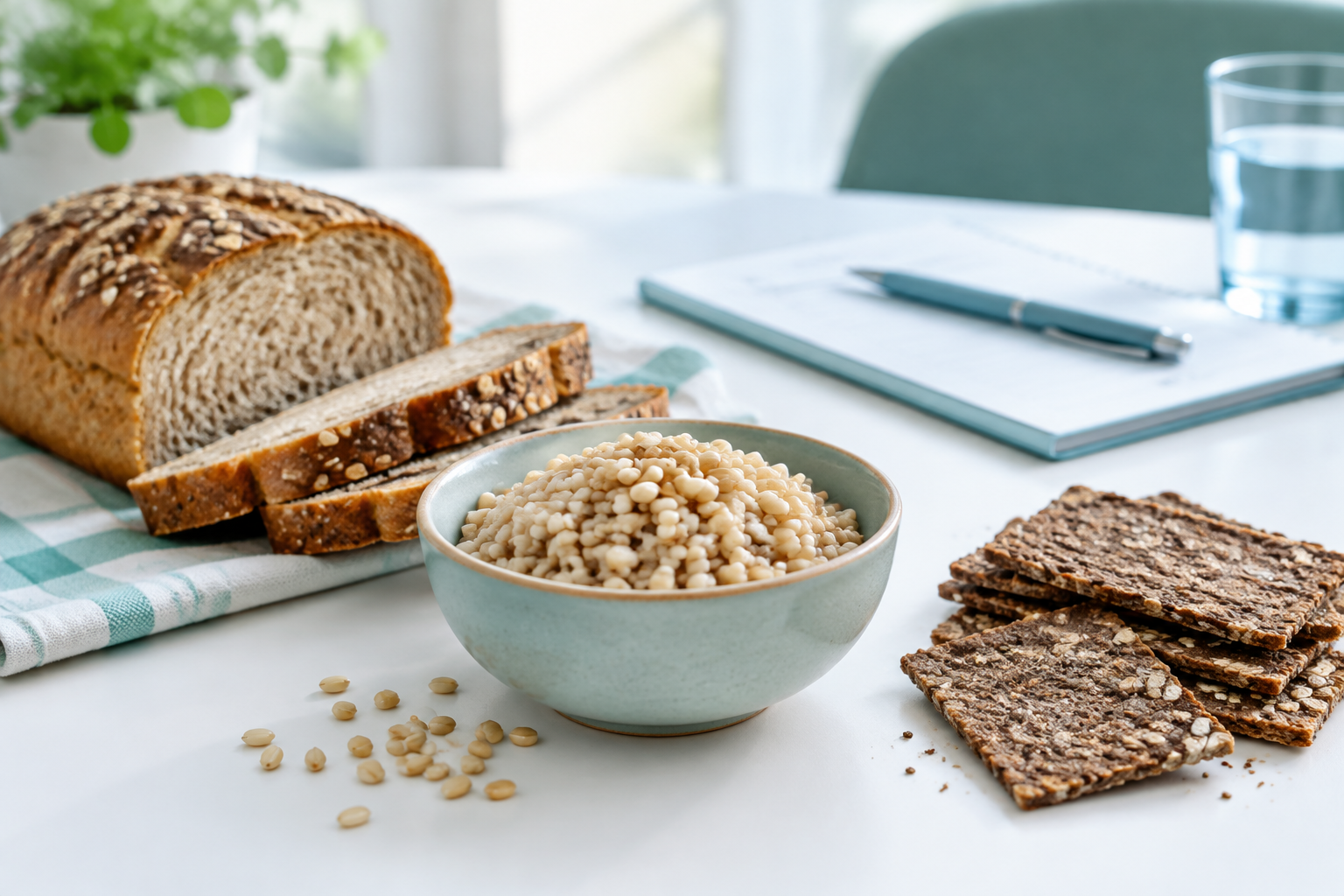
Blood tests and a possible small-intestinal biopsy are most dependable while you’re still eating gluten. Wheat, barley, and rye contain gluten, so stopping these foods too early can make the results harder to interpret. The National Institute of Diabetes and Digestive and Kidney Diseases supports testing while gluten remains in your diet (source).
Many people ask, “Do I need to eat gluten before a celiac test?” In most cases, you should continue eating gluten-containing foods throughout testing, not only until the first blood draw. Your clinician can explain whether symptoms, previous results, or another health condition changes that plan.
Avoiding gluten can affect both parts of the diagnostic process. Celiac disease antibody levels may fall after gluten is removed, while the small intestine may begin to heal. Blood work or a biopsy can then look normal even when celiac disease has not been fully ruled out. A negative test after starting a gluten-free diet may therefore be a false negative rather than a clear answer (source).
If you’ve reduced or removed gluten, share that information rather than assuming a negative blood test settles the question. Bring these details to your appointment:
- Diet change: The date you changed your diet and whether gluten was fully or partly removed.
- Current foods: Any wheat, barley, or rye foods you still eat.
- Previous results: Blood tests, biopsy reports, or other testing completed after the dietary change.
- Reason for testing: The symptoms or family history that led to the evaluation.
A clinician may discuss a gluten challenge if reliable testing is still needed after gluten avoidance. This involves eating gluten again for a period before repeat blood testing and, sometimes, a biopsy. The amount and duration depend on your medical history and testing plan, so a general article cannot set the right schedule for you.
Reintroducing gluten can bring symptoms back, and a gluten challenge may not suit everyone. Previous reactions, symptom severity, and the strength of the concern about celiac disease all affect that decision. Symptoms can guide the discussion, but they do not establish a diagnosis on their own. Ask how your current diet could affect test accuracy and which testing sequence makes sense.
If you still eat gluten, keep eating it until testing is complete. If you’ve stopped, bring your diet history and previous results to the appointment instead of restarting gluten independently. That information gives your healthcare professional a clearer basis for deciding what comes next.
Get the Right Celiac Blood Tests

For most adults, testing starts with a blood test called tTG-IgA. It detects tissue transglutaminase antibodies linked to the immune response to gluten. Blood tests guide the next step, but they cannot establish a diagnosis by themselves, and only a confirmed diagnosis starts celiac treatment after diagnosis. Results are most useful while you are eating gluten, so tell your healthcare professional if you have already reduced or removed it.
The initial blood draw usually includes two tests:
- tTG-IgA: This is the preferred first-line test for most people. In those eating gluten, it has a sensitivity of 63 to 93 percent and a specificity of 96 to 100 percent (source). Sensitivity describes how often a test detects celiac disease when it is present. Specificity describes how often it stays negative when celiac disease is absent. Neither measure makes a result a stand-alone diagnosis.
- Total IgA: The total IgA test checks whether your body produces enough immunoglobulin A for the tTG-IgA result to be dependable. It does not detect celiac antibodies. IgA deficiency can make a negative tTG-IgA result misleading, which is why these tests are commonly ordered together.
When total IgA is low, a healthcare professional may choose IgG-based alternatives:
- tTG-IgG: This looks for a different antibody class directed at tissue transglutaminase.
- DGP testing: This checks for immunoglobulin G antibodies to deamidated gliadin peptides.
- Pediatric criteria: IgG results do not meet the IgA-based requirements used in certain pediatric assessments that may avoid a biopsy.
These are targeted alternatives for IgA deficiency, not routine additions for everyone. The American College of Gastroenterology addresses IgG testing in its clinical guideline (source).
A weakly positive or uncertain tTG-IgA result may lead to an endomysial antibody IgA test, known as EMA-IgA. This follow-up test is highly specific, so a positive result is less likely when celiac disease is not present. EMA-IgA can clarify an unclear result, but it does not replace first-line testing. It is also used in some pediatric no-biopsy assessments, which follow a separate pathway from the usual adult evaluation.
Home celiac screening kits provide preliminary information that a healthcare professional must interpret. A positive result still needs clinical evaluation, and a negative result does not prove that celiac disease is absent. Bring the report to a healthcare professional instead of treating the kit as the final step or starting a gluten-free diet based on it. Removing gluten before follow-up testing can make later results harder to interpret.
Commercial food-sensitivity panels are not substitutes for celiac antibody tests. A wheat or gluten flag on one of these panels does not diagnose celiac disease. If an earlier negative result conflicts with ongoing symptoms or a strong family concern, ask:
- Which antibody tests were ordered?
- Was total IgA checked?
- Were you eating gluten before the blood draw?
- Is further evaluation needed?
The test names, lab report, and details about your gluten intake give the clinician useful context when a negative result does not fit the broader picture.
Confirm the Diagnosis With a Biopsy

In adults, a positive blood test is usually followed by an upper endoscopy. The blood test detects antibodies that suggest an immune response to gluten, while a duodenal biopsy checks whether the lining of the small intestine has been injured, and the findings together usually confirm a celiac disease diagnosis.
During the procedure, a gastroenterologist guides a thin, lighted camera through your mouth and stomach into the duodenum, the first part of the small intestine. The camera shows the lining, but it cannot reliably reveal injury visible only under a microscope. The gastroenterologist takes several tiny tissue samples during that one endoscopy.
The biopsy involves more than one sample because injury can be patchy. Samples from different parts of the duodenum make characteristic changes less likely to be missed. All the samples come from one procedure.
A pathologist examines the samples for signs of injury:
- Villi: These finger-like projections help absorb nutrients. In celiac disease, they may be shortened or flattened, a change called villous atrophy.
- Inflammatory cells: Higher numbers of immune cells can be another sign of injury in the intestinal lining.
Neither finding is read in isolation. The pathologist's report is considered alongside your blood results and clinical history because other conditions can also affect the small intestine.
A negative blood test does not rule out every case. If your symptoms or family history still raise concern, a gastroenterologist may recommend endoscopy, especially if you were eating little gluten before the blood draw. An endoscopy can provide information that blood tests alone may miss, though the decision depends on your circumstances.
Testing in children sometimes follows a different path. Some children can receive a celiac diagnosis without a biopsy when tTG-IgA is at least 10 times the upper limit of normal and EMA-IgA is positive on a second serum sample (source). If tTG-IgA is positive but below that level, a biopsy is usually needed. This exception is not a routine shortcut for adults.
If you have already reduced gluten, tell the gastroenterologist before deciding on a biopsy. The amount you were eating can affect how blood and tissue results are interpreted, so it is worth discussing before the procedure.
Interpret Results and Choose the Next Step

A celiac disease diagnosis depends on how the test results fit together, not on one result alone. Your clinician considers your symptoms, gluten intake, family history, antibody tests, and total IgA level, which helps show whether a common antibody test is reliable. Small-intestinal biopsies may also be needed.
The result can guide your next conversation:
- Positive tTG-IgA: A positive tTG-IgA blood test raises suspicion but does not confirm celiac disease in most adults. After reviewing your symptoms, gluten intake, and results, your clinician may discuss an upper endoscopy to collect small-intestinal biopsies.
- Negative blood test: A negative result is more reassuring if you were eating gluten and your total IgA level is normal. Your clinician may look for another cause of your symptoms, but ongoing symptoms, a first-degree relative with celiac disease, or a related condition may still call for further evaluation.
- Borderline or conflicting results: A borderline tTG-IgA result may need follow-up. An EMA-IgA test can help clarify an uncertain positive. If your total IgA is low, ask whether immunoglobulin G (IgG)-based testing would be more useful.
- Testing after gluten avoidance: Going gluten-free before testing makes a negative result less informative and may require review of your testing history. Tell your clinician how long you have avoided gluten. A medically supervised gluten challenge, in which you eat gluten before testing, may be an option, but the amount and duration vary, and it may not suit everyone.
When you had already stopped eating gluten or have low total IgA, a negative result needs particular care and a review of your gluten intake and total IgA level. That is why your testing history matters as much as the result on the page.
An HLA-DQ2 and DQ8 genetic test looks for gene variants linked to celiac disease using blood or a cheek swab. It can help when results conflict, when you stopped eating gluten before testing, or when a first-degree relative wants to understand their risk. If neither HLA-DQ2 nor HLA-DQ8 is present, celiac disease is very unlikely. Having either variant cannot confirm the condition because many people carry these genes without developing it, according to MedlinePlus (source).
At your follow-up, ask whether you ate enough gluten for testing, whether total IgA was checked, and whether your symptoms or risk factors warrant another step. Feeling better without gluten does not prove celiac disease, and one unclear result is not an established diagnosis. Once a diagnosis is confirmed, treatment becomes the next conversation.
Celiac Disease Diagnosis FAQs
These are the testing questions people ask most, from how much gluten to eat to what a genetic test means.
How Much Gluten Is Needed Before Testing?
Keep eating your usual gluten-containing foods during celiac blood testing and any biopsy unless your clinician advises otherwise. Wheat, barley, and rye contain gluten. Cutting it out can lower antibody levels and let the intestine heal, causing a negative result even when celiac disease is present, according to the NHS (source).
If you’ve already reduced gluten, tell your clinician what you eat now, when you changed your diet, your symptoms, and any earlier results. A negative blood test after avoiding gluten doesn’t rule out celiac disease. Your clinician can decide whether a supervised gluten challenge is appropriate and, if so, how much gluten to eat and for how long.
Can a Child Be Diagnosed Without a Biopsy?
Yes. Selected children may be diagnosed without an endoscopy or intestinal biopsy, but this is a strict pediatric exception, not the usual approach for adults. For children, tTG-IgA generally must reach at least 10 times the upper limit of normal. A positive EMA-IgA test from a second, independent blood sample must then confirm the result. EMA-IgA is highly specific, and when tTG-IgA is positive but below that threshold, a biopsy is usually needed.
What Does a Negative HLA-DQ2 and DQ8 Test Mean?
A negative HLA-DQ2 and DQ8 genetic test makes celiac disease extremely unlikely because nearly everyone with the condition has at least one of these gene variants. Using a blood sample or cheek swab, HLA-DQ2 and HLA-DQ8 genetic testing can help clarify uncertain test results or assess risk if you have a close relative with celiac disease. A positive result means celiac disease is possible, not confirmed: These variants are common, and many people who carry them never develop the condition. Blood tests and, when needed, a biopsy establish whether you have celiac disease.
What Happens After a Positive Celiac Diagnosis?
A positive celiac blood test in an adult usually needs confirmation before treatment begins. During an upper endoscopy, a gastroenterologist passes a thin, lighted camera through your mouth and takes several samples from the duodenum, the first part of the small intestine. This biopsy lets a pathologist check for inflammation and villous atrophy, damage to the intestine’s finger-like lining. Once testing confirms the diagnosis, your clinician may check for anemia, nutrient deficiencies, liver changes, and bone health. A strict, lifelong gluten-free diet helps manage celiac disease because even trace gluten can injure the intestine without causing symptoms.