


The 10 IBS foods to avoid and swaps cover the ingredients most likely to stir up pain, bloating, gas, and bowel changes. Meals get frustrating when one lunch feels safe and the next leaves the rest of the day off balance.
FODMAPs are fermentable carbs that can draw in water and create gas during digestion. The payoff is a practical shortlist of trigger foods and realistic alternatives for everyday meals.
The coverage stays on high-FODMAP foods, dairy and lactose, wheat and gluten, sugar alcohols, fried foods, caffeine, alcohol, and soda. It also shows how triggers shift by symptom pattern, including IBS-D, IBS-C, bloating, and gas. Expect a low-FODMAP swap table, label-reading cues, and a simple elimination plan with food diary notes.
Adults living with IBS, along with caregivers and busy family cooks, stand to gain the most because the advice turns symptom patterns into workable meal choices. A breakfast of wheat toast, regular yogurt, and coffee can point to a flare, while oats, lactose-free yogurt, and still water often make the next meal easier to judge.
Keep reading for the foods in your diet with IBS most likely to cause trouble and the swaps that help meals stay manageable.
IBS Foods to Avoid and Swaps Key Takeaways
- High-FODMAP foods often trigger IBS symptoms.
- Garlic, onion, wheat, dairy, and some fruits are common trouble spots.
- Sugar alcohols can cause gas, bloating, and diarrhea.
- Fried and high-fat foods may worsen cramping and loose stools.
- Caffeine, alcohol, and soda often aggravate flares.
- Symptom-specific swaps matter for IBS-D, IBS-C, and bloating.
- Food diaries, elimination trials, and clinician support clarify personal triggers.
1. High-FODMAP Foods That Trigger IBS
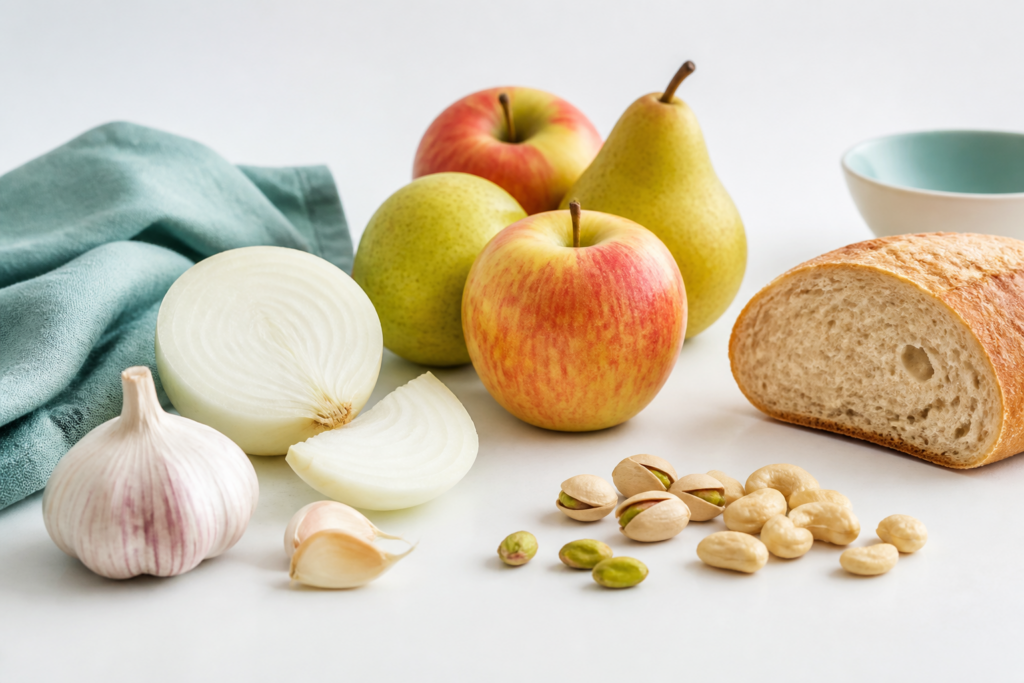
Many people with IBS report symptoms after foods high in FODMAPs, which are fermentable carbohydrates such as lactose, fructans, and polyols (source). In practice, the highest-risk high FODMAP foods often include garlic, onion, wheat and rye breads, milk, yogurt, apples, pears, cherries, broccoli, cauliflower, pistachios, cashews, and sugar alcohols IBS shoppers may see on labels as sorbitol, mannitol, or xylitol.
Portion size matters just as much as the food itself. A small serving may feel fine, but symptoms can flare when several IBS trigger foods stack up in one meal or when hidden ingredients push you past your limit.
The first patterns to watch are:
- Allium and grain triggers: garlic, onion, wheat, rye, and wheat-based pasta
- Dairy and fruit triggers: milk, yogurt, apples, pears, cherries, and other high-fructose fruits
- Vegetable, nut, and sweetener triggers: broccoli, cauliflower, pistachios, cashews, certain beans, and sugar alcohols IBS products often use in “sugar-free” foods
Same-day swaps can make meals easier to handle:
| If you usually eat | Try this instead |
|---|---|
| Wheat bread or pasta | Rice, oats, or gluten-free grains |
| Regular milk or yogurt | Lactose-free milk or plain low-lactose yogurt |
| Apples or pears | Banana or citrus |
| Cauliflower or beans | Carrots, zucchini, spinach, or cucumber |
A simple flare rule helps keep the load down. Build your plate around one clear starch, one easy-to-digest protein, and one tolerated vegetable. The low FODMAP diet for IBS can help you lower symptom load while you track patterns in a food diary IBS log. Triggers vary from person to person, and they can change from one flare to the next.
2. Dairy & Lactose That Trigger IBS
Dairy can be tricky because many adults make less lactase, the enzyme that breaks down lactose. That overlap is why lactose intolerance and IBS can look alike. Milk, ice cream, and other soft dairy often trigger bloating, gas, or loose stools, and rich dairy can feel worse during a flare because fat slows digestion.
| Dairy choice | Why it may feel easier | Simple swap |
|---|---|---|
| Lactose-free milk or yogurt | Same dairy taste with less lactose | Use it in cereal, smoothies, or coffee |
| Aged cheese | Lower lactose in small portions | Try cheddar, parmesan, or Swiss |
| Fortified non-dairy milk | No lactose at all | Choose soy, almond, oat, or pea milk |
A short test-and-track plan works better than cutting out every dairy food at once. Try a few days of lactose-free eating, note what changes, then reintroduce one dairy item at a time to find your limit. Watch labels too, since lactose can hide in sauces, baked goods, and packaged foods.
If dairy still feels unclear, a hydrogen breath test can help separate lactose intolerance from IBS-related sensitivity. That matters when symptoms keep returning and you want a clearer plan before restricting dairy long term.
3. Wheat & Gluten That Trigger IBS
Wheat can bother your gut for reasons that go beyond gluten. It is high in fructans, a fermentable carb that can pull water into the intestines and add gas, bloating, and diarrhea in sensitive people.
The gluten and IBS link is more complicated than many labels suggest. For some people, the real trigger may be wheat components such as fructans and amylase-trypsin inhibitors, not gluten alone. A short, structured trial can help you sort that out, especially if you have IBS-D or suspect non-celiac gluten sensitivity.
A simple low-FODMAP swap plan can make meals easier to manage:
- Choose: rice, quinoa, corn, potatoes, and gluten-free oats
- Swap: wheat bread, pasta, and crackers for versions made from safer grains
- Check: ingredient lists for onion, garlic, inulin, honey, and sugar alcohols
- Track: symptoms in a food diary during your trial period
Gluten-free for IBS is not automatic. Many packaged foods still contain high-FODMAP ingredients, so the label matters less than the full ingredient list. If symptoms are frequent, severe, or getting worse, a gastroenterologist or registered dietitian can help you test changes safely and avoid cutting out more than you need.
4. Sugar Alcohols That Trigger IBS
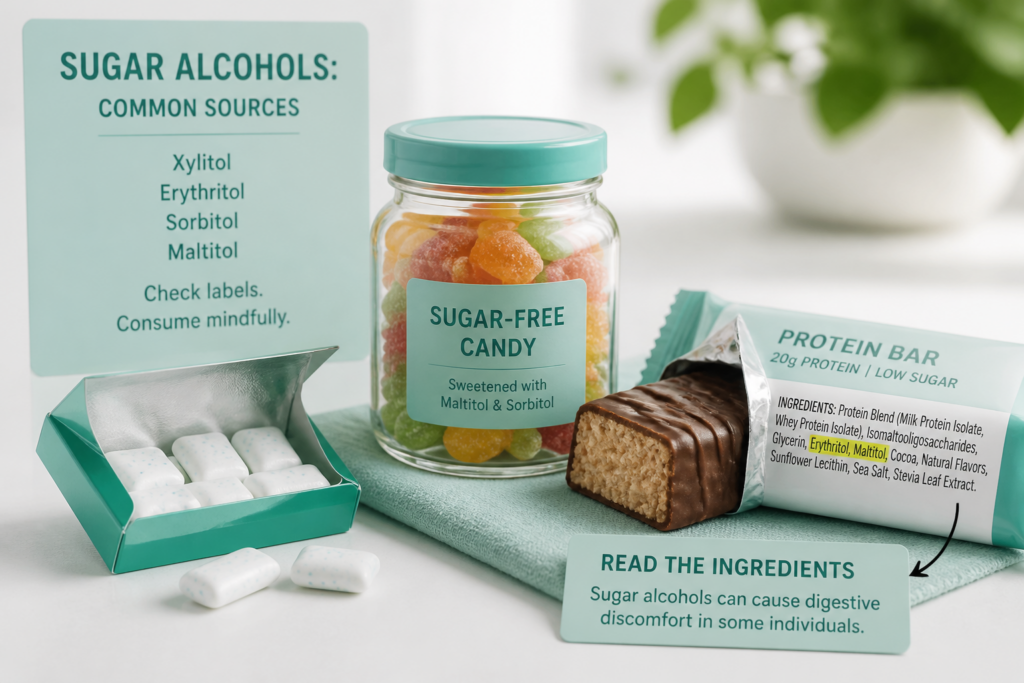
Sugar alcohols such as sorbitol, mannitol, and xylitol can cause gas, bloating, and diarrhea because they are poorly absorbed and may have a laxative effect in some people (source). Some people react to tiny amounts, while others notice symptoms only after a larger serving.
The main ingredients to watch for are:
- Sorbitol: often found in sugar-free gum, mints, and candy
- Mannitol: sometimes used in protein bars, baked goods, and packaged snacks
- Xylitol: common in gum, breath products, and some reduced-sugar foods
- Other label terms: maltitol, isomalt, lactitol, erythritol, and ingredients ending in “-ol”
For many readers, sugar alcohols IBS symptoms start with gas and bloating. These ingredients are easy to miss in foods that seem harmless at first glance, including sugar-free gum, mints, candies, protein bars, baked goods, and packaged snacks. A short food diary can also help sort out artificial sweeteners IBS reactions.
During trigger testing, plain unsweetened foods are the safest swap. Try one suspected sweetener at a time, then wait to see whether your symptoms return.
5. Fried & High-Fat Foods for IBS
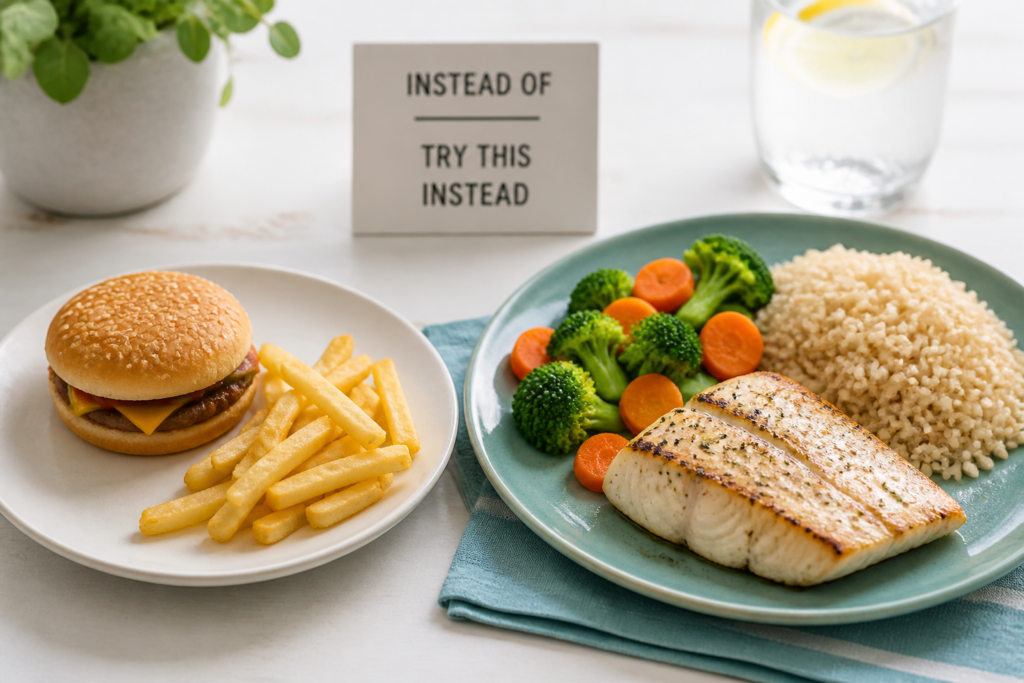
Fat can be rough on IBS because it slows digestion, raises gut sensitivity, and can trigger stronger bowel contractions. That often means more cramping, bloating, and diarrhea, especially with IBS-D. Temple Health also points to fried and fatty foods as common trouble spots.
Foods to watch for include:
- Fast food, greasy takeout, and fried snacks
- Creamy sauces, heavily breaded items, and fatty cuts of meat
- Large restaurant meals that pile several rich foods together
Smaller servings are usually easier for you to tolerate than one heavy plate. Test modest amounts first, avoid stacking several high-fat foods in the same meal, and be extra careful during a flare. Fat intake IBS patterns are dose-dependent and personal, so one person may handle a little fat while another reacts after a single rich meal.
Lower-fat swaps can help:
- Bake, grill, roast, air-fry, steam, or poach instead of frying
- Choose lean chicken or fish instead of fried meats
- Swap cream sauces for broth-based or tomato-based sauces
- Serve plain rice or potatoes when you want a gentle side
A symptom and meal log can help you spot your threshold. A 2019 review also linked ultra-processed foods IBS risk to four daily servings, which is a good reason to keep meals simpler when you can.
6. Caffeine, Alcohol & Soda That Trigger IBS
When your IBS flares, caffeine, alcohol, and soda can be rough on your gut. Caffeine may speed up bowel movement, which can bring diarrhea, urgency, or cramping, so coffee, energy drinks, and strong tea often need a pause during bad days. Alcohol can irritate the digestive tract and change bowel habits, and carbonated drinks can add gas and bloating. The mix of caffeine alcohol IBS triggers is personal, so small tests help you find your limit.
A practical starting point is to keep portions modest and reach for still, non-caffeinated drinks when symptoms are active:
- Caffeine: Cut back on coffee, energy drinks, and strong tea during flares.
- Alcohol: Keep intake small and avoid pairing it with other triggers.
- Soda: Skip fizzy drinks when bloating or gas is already a problem.
- Hydration: Aim for about 1.5 liters a day, or roughly 8 to 10 drinks of non-caffeinated fluid.
- Plain water: Increase it if caffeine or alcohol leaves you dehydrated or constipated.
Regular meals and steady fluids can smooth out symptom swings. A brief food diary also helps you spot your own tolerance.
7. Garlic, Onion & Beans That Trigger IBS
Garlic, onion, and beans are common examples in this group.
Three patterns usually drive the reaction:
- Garlic and onion: They’re high in fructans, a type of carbohydrate found in many high FODMAP foods. Fructans can draw water into the bowel and increase gas.
- Beans and other legumes: Their fermentable carbs and fiber may feel fine in small amounts, then become harder to handle in larger servings.
- Portion size: The same food may sit well at one meal and flare symptoms at another. The amount often matters as much as the ingredient.
Simple swaps can keep flavor on the plate. Garlic-infused oil adds taste without the same hit, scallion green tops or chives work better than onion, and rice, carrots, and lactose-free sides can replace onion-heavy sauces.
For beans, rinse canned beans well, start with a very small serving, and test lentils or chickpeas in modest amounts before you write off legumes altogether. If you suspect IBS food triggers, a food diary or short elimination trial can help you spot your pattern.
If symptoms stay severe, unclear, or disruptive, a gastroenterologist or registered dietitian can help you confirm triggers and build a safer low-FODMAP plan. This is for educational purposes only and is not a substitute for personalized medical advice. Digestive symptoms can have many causes, and any dietary advice should be individualized.
8. IBS Foods To Avoid By Subtype
Your IBS foods to avoid list changes by subtype, and the best clue is the symptom pattern you notice after meals.
The most useful approach is to match foods to the symptom you feel most often:
| Subtype | Foods to limit | Why they may matter |
|---|---|---|
| IBS-D | Caffeine, alcohol, greasy or fried foods, and larger servings of sugar alcohols | These can speed transit or draw extra water into the bowel, which may worsen loose stools and urgency |
| IBS-C | Processed snacks, refined grains, heavy cheese-based meals, and low-fluid days | These can crowd out fiber for IBS and may slow digestion in some people |
| Bloating and gas | Garlic, onion, beans, wheat-based foods, and some dairy foods | These are common IBS trigger foods because they often contain FODMAPs that ferment and create gas |
A low-FODMAP approach may help some people with IBS, but symptom response varies and the plan should be personalized with reintroduction and tracking (source).
For constipation, balance matters just as much as restriction. Too little fluid or too little fiber can slow things down, while too much insoluble fiber can feel rough for some people.
Practical swaps keep meals realistic:
- For IBS-D: Choose smaller coffee servings, skip fried sides, and watch sugar alcohols in gum or candy.
- For IBS-C: Swap white-flour snacks for oats, fruit, or nuts, and pair meals with water.
- For bloating: Try garlic-infused oil, green onion tops, lactose-free dairy, or smaller servings of beans.
The same food may bother one person and not another. If a food seems to trigger more than one symptom, test it carefully instead of cutting it out all at once. For more targeted support, IBS diet for diarrhea can help you fine-tune your next move. IBS diet for constipation can do the same when constipation is the main issue.
9. IBS-Friendly Breakfast Foods To Choose
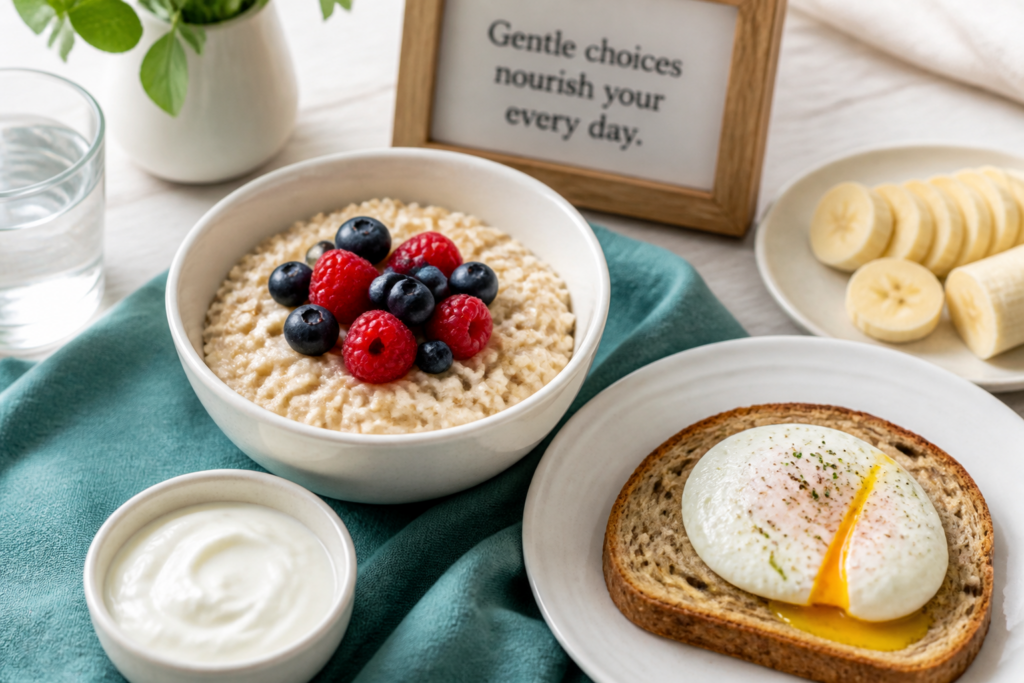
A simple breakfast formula keeps mornings steadier, and IBS meal planning helps turn breakfast into a repeatable pattern.
Build each plate around:
- Base: one low-FODMAP starch, such as oats, rice cakes, or gluten-free toast
- Protein: eggs, lactose-free yogurt, or peanut butter
- Produce: a tolerated fruit or vegetable in a sensible portion
- Fat: a small amount of nut butter, seeds, or oil for staying power
Oats are a smart starting point because they bring soluble fiber, which is often easier to tolerate than insoluble fiber during a flare. Some IBS guidance recommends adding small amounts of fiber-rich foods such as linseeds if they are well tolerated, but the right amount depends on the person (source). That can be a helpful fiber for IBS choice when you want more regularity without overdoing it.
Quick breakfasts that fit the pattern include:
| Fast meal | Easy swap |
|---|---|
| Oats with lactose-free yogurt and berries | Use strawberries, blueberries, or grapes |
| Rice cakes with peanut butter and banana | Keep the banana portion modest |
| Eggs with tolerated gluten-free toast | Skip heavy, wheat-based extras |
Keep breakfast calmer by limiting high-FODMAP add-ins, sugar alcohols like sorbitol, and hard-to-digest vegetables during bloating or an IBS flare. A food diary makes the pattern clearer, especially because tolerance can change from day to day. Small, steady swaps usually tell you more than a full kitchen overhaul.
10. Calmer IBS Foods And When To Get Help
Some foods hit harder than others during a flare. The most common IBS foods to avoid are the ones that ferment fast, sit heavy, or speed your gut up.
The worst offenders usually show up in this order:
- Onion and garlic, especially in sauces, soups, and seasoning blends
- Wheat-heavy meals and beans, which can load on fermentable carbs
- Certain fruits like apples, pears, mango, and watermelon
- Large dairy servings, fried foods, and the caffeine alcohol IBS combo
- Sugar alcohols in gum, protein bars, and sugar-free treats
When symptoms are flaring, a simple what to eat during a flare checklist can take the pressure off. A Low FODMAP diet often helps you narrow triggers, but no single plan works for everyone.
Try these calmer choices first:
- Plain oats, rice, or potatoes
- Eggs or another simple protein you tolerate
- Bananas or a small serving of another tolerated fruit
- Lactose-free yogurt if lactose intolerance and IBS both seem to be part of the picture
- Small portions of cooked vegetables like carrots, zucchini, or spinach
Breakfast works best when it stays plain. A good pattern is one gentle starch, one protein, and one tolerated fruit or cooked vegetable. Skip high-FODMAP fruit, regular milk, heavy fat, and caffeine when those clearly worsen symptoms. Many people also feel better when fat intake IBS meals are kept lower in the morning.
Your symptom pattern should guide the swap, not just the diagnosis:
| Symptom pattern | First foods to trim | Better early swaps |
|---|---|---|
| IBS with diarrhea | Greasy foods, caffeine, sugar alcohols | Rice, eggs, bananas |
| IBS with constipation | Very low fiber intake, heavily processed meals | Oats, potatoes, cooked vegetables |
| Bloating and gas | Onion, garlic, beans, large wheat portions | Rice, eggs, lactose-free yogurt |
A short-term elimination diet for IBS can help you spot personal triggers. A low-FODMAP plan may reduce symptoms for some people with IBS, and the diet works best with structured reintroduction and follow-up (source). A food diary IBS log can make the pattern easier to see.
Get medical or dietitian help if symptoms are severe, persistent, or getting worse. Ongoing pain, major bowel habit changes, weight loss, blood in stool, fever, or signs of dehydration need prompt attention because digestive symptoms can have many causes. Results vary by person, and any diet changes should be individualized.
IBS Foods To Avoid FAQs
These FAQs cover common questions about IBS food triggers, from the IBS diet to where probiotics IBS, peppermint oil, and guidance from the British Dietetic Association may fit into your routine. The answers below help you sort through the basics without guesswork.
1. Can Small Portions Still Trigger IBS?
Yes, a small portion can still trigger IBS if it pushes you past your personal threshold, especially with common triggers like lactose, which can vary by dairy type and by person. The dose matters, so more trigger food usually means a higher chance of symptoms, but a flare or a meal packed with several triggers can make even a small serving feel like too much. If one food keeps setting off symptoms, treat even a small amount as a trigger for you and try a smaller swap or a different form, and seek care if symptoms keep coming back or get worse.
2. How Do You Read IBS Trigger Labels?
Start with the ingredient list, not front-of-package claims, and scan for sugar alcohols, high-FODMAP ingredients, lactose, wheat, barley, rye, and malt. Sugar alcohols such as sorbitol and mannitol, plus similar sweeteners, are poorly absorbed and can trigger gas, bloating, or a laxative effect, while hidden dairy ingredients like milk solids, whey, curds, and lactose can show up in sauces, snacks, and packaged foods. If a label feels confusing, choose the shorter ingredient list or a simpler swap, and check breads, soups, seasonings, and processed foods for hidden gluten sources.
3. Should You Eliminate Foods One At Time?
Yes, a structured elimination diet for IBS is usually more helpful than cutting out lots of foods at once, because it helps you spot your personal triggers instead of guessing. A low FODMAP plan often starts with a short elimination phase of about 2 to 6 weeks, then reintroduces foods one at a time every few days so you can watch for bloating, pain, gas, or bowel changes. Keeping a food and symptom diary makes patterns easier to spot and helps you avoid restricting your diet more than you need.
4. Do IBS Triggers Change By Flare?
Yes, your IBS triggers can change from flare to flare. A food that feels fine one week may bother you during a constipation-heavy stretch, a diarrhea flare, or a bloating episode because stress, hormones, meal size, and gut sensitivity can shift how you react. A short flare log with the food, portion, timing, and symptoms can help you spot patterns without tracking every bite, and that kind of personalization matters because IBS reactions are different from person to person.
5. Can Restaurant Meals Worsen IBS Symptoms?
Restaurant meals can worsen Irritable Bowel Syndrome (IBS) symptoms because they often hide common triggers like dairy, gluten, fried foods, caffeine, and high FODMAP ingredients, and your triggers may be different. A safer choice is a simple order such as grilled protein with plain rice or potatoes and steamed vegetables, with sauces, dressings, garlic, and onion on the side. If rich foods or bigger portions bother you, eat less, skip carbonated drinks or alcohol, and check the menu before you go so you can choose with less stress.
Here are other articles to help live with IBS: