

IBS meal planning for low FODMAP meals can feel simple on paper and unpredictable at the table. Busy professionals and caregivers often need meals that fit symptoms, tight schedules, and a short grocery list without setting off bloating, pain, or urgency.
Low FODMAP means keeping certain fermentable carbs low enough to reduce symptoms for many people. The payoff is a practical way to build repeatable meals, shop faster, and spot pattern changes.
Expect a clear starting strategy, a low FODMAP grocery list, and a plate formula built around a base carb, protein, and a few safe vegetables. It also covers portion size, meal prep, and the small swaps that make familiar dishes easier to keep in rotation. A sample week and symptom tracking steps show how to test changes without rebuilding every meal from scratch.
For adults living with IBS, and for caregivers who handle day-to-day meals, the value is less guesswork and fewer trial-and-error dinners. Dietitians and clinicians can use the same framework to compare patterns, adjust fiber or lactose choices, and document what changed after each test meal.
One dinner of rice, chicken, and cooked zucchini can tell a useful story when the portions and ingredients stay consistent, and the next steps stay practical from there.
IBS Low FODMAP Meal Planning Key Takeaways
- Pick one starting strategy and keep other meal variables steady.
- Stock simple staples like rice, oats, potatoes, eggs, canned tuna, and lactose-free options.
- Build meals around one base carb, one protein, and one or two tolerated vegetables.
- Watch portions closely because low FODMAP foods can trigger symptoms in larger servings.
- Match meals to IBS-C, IBS-D, or mixed symptoms instead of using one rule everywhere.
- Repeat simple breakfasts, lunches, and dinners to cut decision fatigue on busy weeks.
- Track symptoms, stool changes, and triggers through elimination, reintroduction, and personalization.
How Do You Start An IBS Meal Plan?
IBS meal planning works best when you pick one starting lane and keep the rest steady. For many people, step 1 low FODMAP is the clearest first test because it lets you watch food patterns without changing everything at once. A plain IBS diet overview can help you compare that path with a higher-fiber change or a gluten-free trial when your history points that way.
Build your low FODMAP grocery list before day one so low-prep meals stay easy to repeat:
- Staples: plain rice, oats, and potatoes
- Proteins: eggs, canned tuna, and canned chicken
- Dairy and swaps: lactose-free dairy or fortified alternatives
- Produce: carrots, zucchini, and spinach
- Flavor basics: olive oil, salt, and simple herbs
Familiar meals usually work better than a full recipe overhaul. Swap high-FODMAP ingredients for lower-FODMAP options, keep breakfasts and lunches simple, and use low FODMAP meal prep to batch-cook a few safe grains and proteins. That turns a gut-friendly meal plan into something you can keep using on busy weeks.
Meal planning guides can also cut decision fatigue. Monash’s 5-day low FODMAP meal plan with linked recipes is a helpful model because it shows how practical meals come together without hard-to-find ingredients.
A realistic starter window is 2 to 6 weeks. Keep meals steady enough to spot symptom patterns, and focus on one or two goals at a time. Use that window to notice what changes help before you add more.
A simple reset can look like this:
- Pick one starting strategy and stay with it.
- Keep meals consistent while you test the change.
- Track bloating, pain, stool changes, and energy.
IBS nutrition is not one-size-fits-all, so fiber, gluten avoidance, and low FODMAP changes can affect people differently. Digestive symptoms can have many causes, and persistent, severe, or worsening symptoms should be reviewed with a qualified healthcare professional.
How Do You Build Low FODMAP Meals?
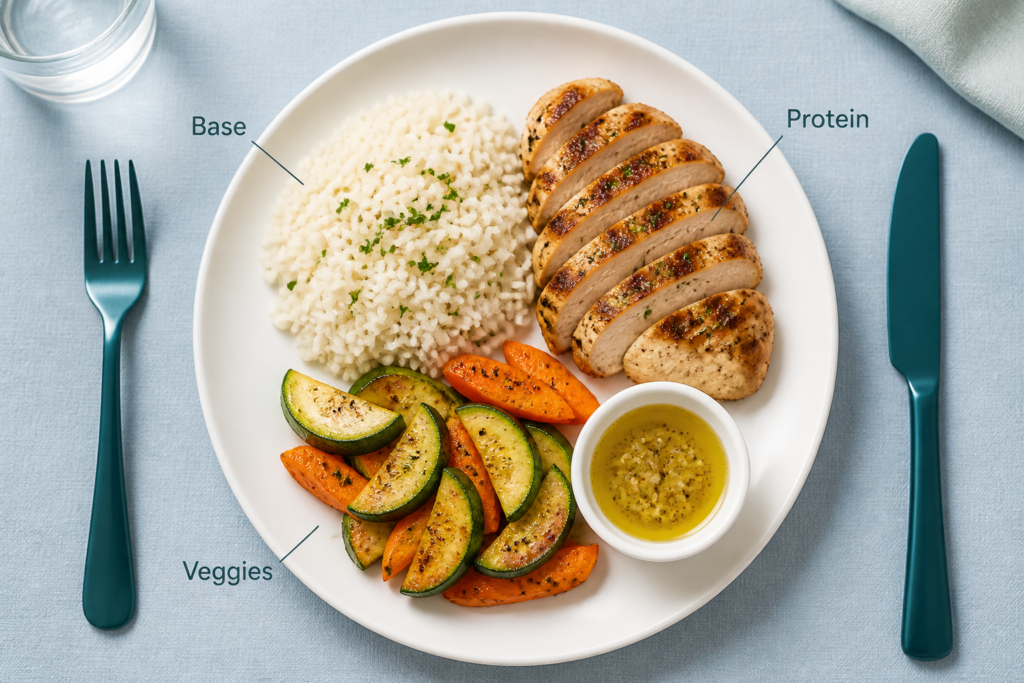
The low FODMAP diet for IBS gives you the big picture, but meal building works best when you start with structure. Choose a tolerated carbohydrate from a low Fermentable Oligo-, Di-, Monosaccharides And Polyols (FODMAP) base, then add a protein before you layer on extras. That approach makes a low FODMAP meal plan easier to repeat and keeps low FODMAP recipes practical on busy days.
A simple plate usually starts here:
| Part of the meal | Good starting choices | Smart swaps |
|---|---|---|
| Base carbohydrate | Rice, potatoes, oats, quinoa, gluten-free pasta | Keep portions modest if the food is dose-sensitive |
| Protein | Eggs, chicken, fish, tofu, firm cheese | Choose plain versions when you can |
| Flavor | Chives, scallion greens, herbs, citrus | Garlic-infused oil, low-FODMAP sauces, garlic substitute low FODMAP options |
Portion size matters just as much as the ingredient list. Monash University notes that foods like zucchini, broccoli, firm bananas, and blueberries are only low FODMAP in certain serving sizes. The FODMAP app and the Monash FODMAP app are the easiest ways to check serving limits when a food, fruit, vegetable, or mixed sauce feels uncertain.
Simple lactose free swaps can make meals feel more familiar without stirring up symptoms. Try lactose-free dairy instead of regular milk, use garlic-infused oil instead of fresh garlic, and lean on chives or scallion greens instead of onion. Those changes often make a garlic substitute low FODMAP routine much easier to live with.
The most dependable pattern is one base, one protein, and one or two low-FODMAP vegetables or toppings. Keep the rest of the plate simple so you can spot what helps and what doesn’t. Test one change at a time, because tolerance varies from person to person. Persistent, severe, or worsening symptoms deserve guidance from a qualified healthcare professional.
How Do You Adjust Meals For Your IBS Pattern?
IBS nutrition works best when you match meals to the pattern that shows up most often. With constipation-predominant IBS, more soluble fiber and gentler portions usually feel easier. With diarrhea-predominant IBS, simpler, lower-fat meals often settle better. Mixed IBS usually lands in the middle and shifts with the day’s symptoms.
An IBS diet for constipation can help you narrow your foods to eat and avoid. An IBS diet for diarrhea is a useful next step when urgency, loose stools, or cramping is the main issue.
| IBS pattern | Best meal focus | Foods to limit | Easy swaps |
|---|---|---|---|
| IBS-C | Soluble fiber, steady fluids, moderate portions | Large servings of bran, sudden fiber jumps | Oatmeal instead of bran cereal, fruit in tolerated portions, beans in small amounts |
| IBS-D | Low-FODMAP staples, lean protein, plain starches | Onion, garlic, wheat-heavy meals, caffeine, alcohol, very spicy food, high-fat dishes | Rice or potatoes instead of wheat sides, chicken or fish instead of fried protein |
| Mixed IBS | Simple base meals with room to adjust | Rough, gas-producing foods during bloating or pain | Keep meals plain on flare days, then add tolerated foods back slowly |
Even IBS-friendly ingredients can become a problem when the serving gets too big. Even IBS-friendly ingredients can become a problem when the serving gets too big. Start with moderate amounts, watch your response, and change one variable at a time so you can see what helps.
For constipation, increase fiber slowly and pair it with enough fluid. A gradual increase is easier to tolerate than a big jump, and some guidance suggests starting with small changes before raising intake further (source, source).
For diarrhea, keep meals calm and predictable. Lean proteins, plain starches, and low-FODMAP basics are often the safest anchor. Smaller, more frequent meals can also help when fullness or cramping sets off symptoms.
Mixed IBS asks for flexibility, not perfection. Build the plate around a simple base, then use soluble-fiber foods when stools are loose or irregular and scale back rougher, more gas-producing foods when pain or bloating flares. That keeps your IBS nutrition practical and easier to stick with.
How Do You Plan A Week Of IBS Meals?
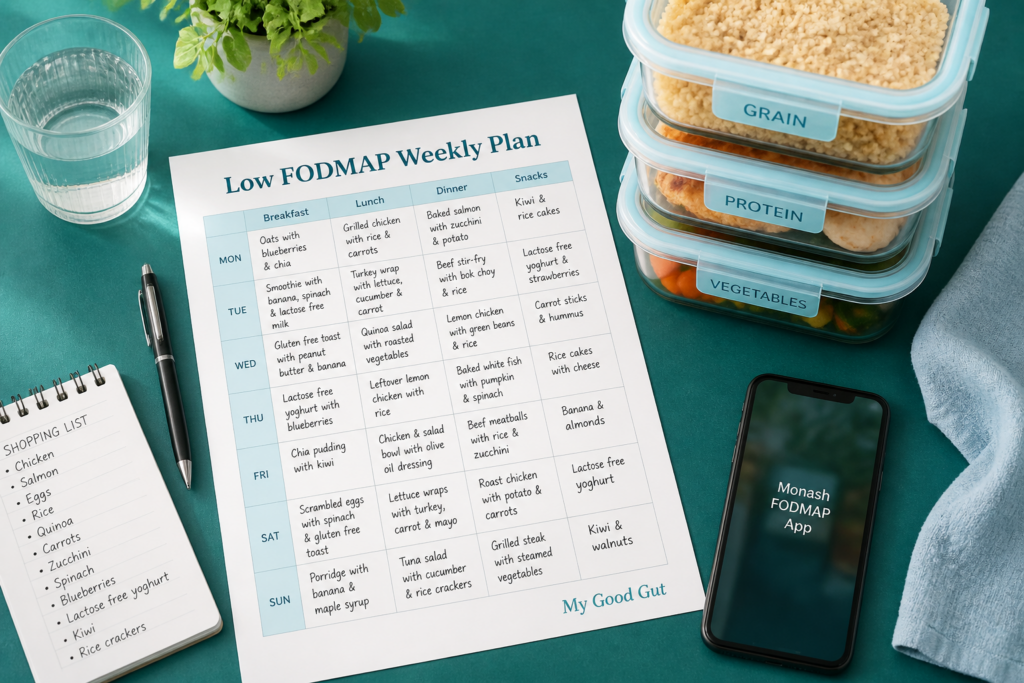
A low FODMAP meal plan works best when it feels repeatable, not like a brand-new project every morning. For IBS meal planning, start with 2 or 3 breakfasts, 2 lunch options, 3 dinner bases, and 2 or 3 snacks. That rhythm gives you enough range for a 7-day IBS meal plan without rebuilding every plate from scratch. It also keeps low FODMAP meal prep realistic on busy weeks.
A simple week can look like this:
- Breakfasts: oatmeal with berries, eggs with toast, or lactose-free yogurt with banana
- Lunches: grain bowls with chicken and cooked vegetables, or soup with rice and crackers
- Dinners: rice bowls, roasted potatoes with fish, or tofu with sautéed zucchini and carrots
- Snacks: tolerated fruit, yogurt if dairy works for you, plain crackers, or peanut butter on rice cakes
| Day | Breakfast | Lunch | Dinner |
|---|---|---|---|
| Mon | Oatmeal, blueberries | Chicken rice bowl | Salmon, potatoes, green beans |
| Tue | Eggs, toast, kiwi | Soup, crackers | Tofu, rice, carrots |
| Wed | Yogurt, strawberries | Grain bowl, cucumber | Chicken, roasted zucchini, potatoes |
| Thu | Oatmeal, banana | Leftover soup | Fish, rice, spinach |
| Fri | Eggs, toast, orange | Rice bowl, bell peppers | Tofu, potatoes, carrots |
| Sat | Yogurt, berries | Leftover grain bowl | Chicken, rice, cooked greens |
| Sun | Oatmeal, grapes | Simple soup | Leftover dinner plate |
Weekend prep does the heavy lifting. Cook one grain, roast a tray of vegetables, and prepare one protein. Keep sauces and toppings separate so meals stay easy to assemble. Freeze extra lunch or dinner portions that hold up well, label each container with the meal and date, and save a few emergency meals for low-energy days.
A calmer grocery cart helps too:
- Pantry basics: rice, oats, gluten-free pasta, crackers, broth, olive oil
- Proteins: eggs, chicken, fish, tofu, canned tuna
- Produce: spinach, carrots, zucchini, potatoes, cucumbers, berries, bananas, kiwi
- Dairy or alternatives: lactose-free milk, yogurt, or tolerated plant-based options
- Simple snacks: rice cakes, peanut butter, plain popcorn, fruit
A repeatable template keeps meals flexible. Breakfast is carbohydrate plus protein plus tolerated fruit. Lunch and dinner are protein plus starch plus cooked vegetables. Snacks are one simple item that fits your symptom pattern.
This structure keeps a low FODMAP breakfast, low FODMAP lunch, and low FODMAP dinner rotation practical across the week. Safe substitutions, smaller portions, and leftover rotations help your low FODMAP meal plan feel sustainable instead of restrictive.
This content is for educational purposes only and is not a substitute for personalized medical advice. Digestive symptoms can have many causes, so you should consult a qualified healthcare professional for persistent, severe, or worsening symptoms. Results vary by person, and any dietary change should be individualized.
How Do You Track Symptoms And Personalize?
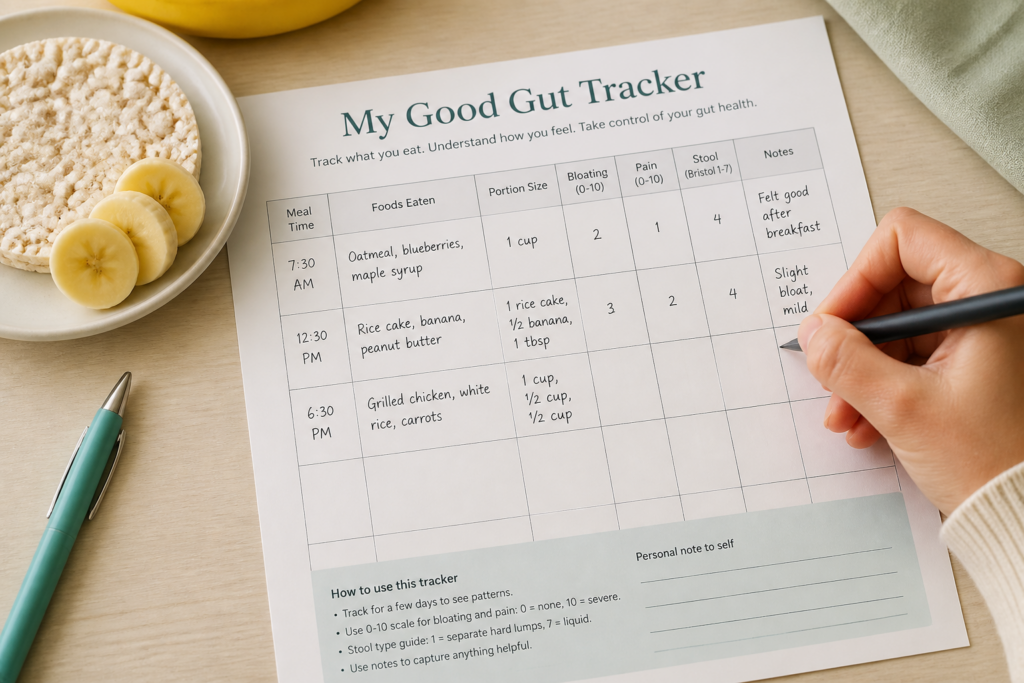
A clear IBS log turns guesswork into patterns, and the My Good Gut workbook/toolkit uses a three-phase system to help you sort them out.
| Phase | What you do | What it tells you |
|---|---|---|
| Elimination | Follow a temporary strict low FODMAP elimination phase, then reintroduce foods one group at a time to see what triggers symptoms (source, source). | Whether a simpler menu settles your baseline symptoms |
| FODMAP reintroduction | Test one food group at a time with a small, repeatable challenge and a pause between tests | Whether a trigger is dose-related, pattern-related, or best left for later |
| Personalization | Keep the foods and portions that work for your body | What your long-term meals can look like without constant guesswork |
Keep the daily tracker simple:
- Meal time
- Foods eaten
- Portion size
- Changes in bowel movements, bloating, pain, gas, or urgency
- Notes about stress, sleep, or travel when they clearly match a flare
These are the key KPIs to watch during the trial:
- Symptom frequency: how often symptoms show up across the week
- Symptom severity: how intense the pain, bloating, gas, or urgency feels
- Stool consistency: whether stools trend loose, hard, or mixed
- Urgency: how often you feel rushed to the bathroom
- Meal triggers: how often one meal seems tied to a flare
One bad day does not erase a good week. Patterns matter more than a single rough meal.
Reintroduction works best when you keep the serving small and repeat the same challenge before moving on. Monash University guidance can help you verify low FODMAP portions, and the Monash FODMAP app is useful for checking thresholds. A FODMAP app can also help when you need quick portion checks on the go.
Personalization should follow your symptom pattern:
- Constipation: Keep meals regular and fiber-aware. The IBS fiber guide can help you balance fiber without overdoing it.
- Diarrhea or urgency: Favor simpler meals and steadier portions.
- Mixed symptoms: Personalize by food and timing instead of using one rule for every meal.
Serving size matters because many low FODMAP foods become harder to tolerate as portions grow. Some people also notice symptom changes with gluten even without celiac disease, so keep that clue in your notes without jumping to conclusions. This tracking system is meant to build confidence over time, but persistent, severe, or worsening symptoms should be reviewed with a qualified healthcare professional, since results vary by person and diet changes should be individualized.
IBS Meal Planning FAQs
These FAQs answer the most common IBS meal-planning questions, from low FODMAP choices and portion sizes to easy swaps and symptom-friendly routines. They’re here to help you cut the guesswork and plan with more confidence.
1. What Foods Are Best For IBS Meal Plans?
The best IBS meal plans lean on simple, low-FODMAP staples like rice, rice noodles, gluten-free or spelt bread, eggs, unmarinated meats, firm tofu, and lactose-free milk or yogurt. Soluble-fiber choices such as oats, select nuts and seeds, and canned legumes in small portions can help keep digestion steadier, while firm cheeses and soy milk made from soy protein add quick protein. A foods to eat and avoid guide like IBS foods to avoid can help, but serve sizes low FODMAP still matter, so check the Monash FODMAP app before you build meals.
2. How Do You Make IBS-Friendly Snack Choices?
Portable IBS-friendly snacks work best when you keep them simple, portioned, and easy to grab between meals. Good picks include plain rice cakes, lactose-free yogurt, kiwi, oranges, grapes, or a small handful of pumpkin seeds, and the cashews low FODMAP portion is about 10 cashews for many people. If onion, garlic, beans, wheat-heavy snacks, very spicy foods, or high-fat choices bother you, skip them and use quick pairings like fruit plus nuts, crackers plus cheese if tolerated, or leftover protein in a small container, while limiting caffeine and alcohol at snack time.
3. Can You Eat Out While Following IBS Meals?
You can eat out while managing Irritable Bowel Syndrome (IBS) if you keep the order simple and watch for common high-FODMAP ingredients like onion, garlic, creamy sauces, and breaded toppings. Safer swaps usually include rice or potato bases, plain gluten-free pasta, and lean proteins such as chicken, turkey, eggs, fish, or tofu. Ask for meals grilled, baked, or steamed with sauces on the side, and fall back on a plain protein, a starch, and a cooked vegetable when the menu feels unclear.
4. What Are Easy IBS Meal Prep Substitutions?
Easy IBS meal prep works best when you keep the basics steady and swap out the trigger ingredients. Garlic-infused oil or chives make a garlic substitute low FODMAP, and lactose free swaps like lactose-free milk or plain plant milk work well in simple recipes. Build around rice, potatoes, oats, eggs, chicken, tofu, and simple vegetables, then use the Monash FODMAP app to check portions and try canned, rinsed beans only when a recipe still feels too heavy.
- source: https://www.niddk.nih.gov/health-information/digestive-diseases/irritable-bowel-syndrome/low-fodmap-diet
- source: https://www.monashfodmap.com/blog/faq-how-long-do-i-need-to-be-on-the-low-fodmap-diet/
- source: https://www.niddk.nih.gov/health-information/digestive-diseases/constipation/eating-diet-nutrition
- source: https://www.nhs.uk/conditions/constipation/self-help/
- source: https://www.monashfodmap.com/recipe/low-fodmap-cashew-nut-serving-size/
- source: https://www.monashfodmap.com/blog/low-fodmap-snacks/