

An IBS-D diet guide for diarrhea relief lays out the foods, habits, and low FODMAP steps that can make stools more predictable. Urgency, loose stools, and last-minute bathroom searches can turn normal meals into a daily calculation. A low FODMAP plan trims certain fermentable carbs that often drive diarrhea, gas, and cramping, and the goal is a clearer sense of what actually helps. By the end, the path to steadier meals and fewer flare-prone choices is much easier to map.
The sections here cover soluble fiber, hydration, symptom journaling, low FODMAP elimination and reintroduction, and when OTC options or specialist support make sense. A stool-firming meal pattern, a simple food challenge tracker, and clear examples of safer swaps keep the advice practical rather than restrictive.
For adults living with IBS-D and caregivers who plan meals around it, practical answers matter more than theory. One example from the meal approach is a plate of rice, chicken, and cooked carrots after a garlic-heavy dinner has been causing urgency. That kind of change gives busy routines a steadier base, and the sections below show how to put it into practice.
IBS-D Diet for Diarrhea Relief Key Takeaways
- Soluble fiber can help firm stool better than bran.
- Sip fluids through the day to replace diarrhea losses.
- A food and symptom diary helps identify your own triggers.
- Low FODMAP diets work best with elimination and reintroduction phases.
- Rice, oats, eggs, chicken, and cooked vegetables are common steadier choices.
- Loperamide, peppermint oil, or probiotics may help some people.
- Weight loss, blood in stool, or nighttime diarrhea needs medical evaluation.
What Should An IBS-D Diet Do?
An IBS-D diet can help stool become more formed, ease urgency, and make bathroom trips more predictable. Low-FODMAP approaches and other diet changes are commonly used to reduce IBS symptoms, but response varies from person to person (source). For many people, an IBS diet for diarrhea works best when it starts with the basics of an IBS diet. That keeps meals useful instead of stressful.
The most helpful dietary strategies for IBS usually center on a few steady habits:
- Soluble fiber: Choose oats, beans, and fruit more often. Soluble fiber is usually easier to tolerate than rougher insoluble fiber, and adult goals often fall between 22 and 34 grams a day.
- Hydration and IBS: Sip fluids through the day to replace what diarrhea removes. Large drinks with meals can feel heavy, so it helps to adjust the timing to what your body handles best.
- Symptom diary: Track what you eat, then note urgency, stool consistency, bloating, and pain. A simple record can reveal patterns without turning meal planning into a chore.
A low fermentable oligosaccharides, disaccharides, monosaccharides and polyols (FODMAP) elimination phase can also help you spot dietary triggers. Foods come back one at a time so you can tell what helps and what does not. That step-by-step approach keeps the plan flexible and short term.
Results vary by person, and the best IBS-D diet is the one that improves comfort without becoming overly restrictive. If diarrhea keeps going, gets worse, or starts affecting weight, sleep, or daily routines, a gastroenterologist or registered dietitian nutritionist can help shape the plan. These dietary strategies for IBS should fit real meals and leave room for normal life.
What Is A Stool-Firming Meal Plan?
A stool-firming meal plan is a practical eating pattern for diarrhea-predominant irritable bowel syndrome (IBS-D). It aims to reduce urgency and loose stools by emphasizing soluble fiber, gentle starches, and simple meal structure. That usually helps more than simply raising fiber across the board.
A common starting point is a moderate fiber intake, with more attention on soluble fiber than on total fiber alone. Clinical guidance often recommends increasing fiber gradually and choosing forms that are easier to tolerate, such as psyllium (source). Even so, soluble fiber such as psyllium and pectin matters more than insoluble fiber like bran, which can feel harsh on a sensitive gut.
A simple meal formula helps keep things steady:
| Part of the meal | Why it helps | Easy examples |
|---|---|---|
| Low-FODMAP carbohydrate | Gives you a calm base | Rice, potatoes, oats, sourdough, quinoa |
| Lean protein | Makes the meal more filling | Eggs, chicken, fish, tofu |
| Soluble-fiber food | Helps bulk and firm stool | Psyllium, oats, peeled apple, citrus, carrots, barley |
That structure is a good example of Dietary strategies for IBS because it keeps meals easier to digest and less likely to trigger gas, bloating, or diarrhea. It also fits a stool-firming IBS-D diet better than a mixed plate packed with different high-fiber foods.
Portion size matters too. Smaller servings of oats, apples, citrus, carrots, or barley are often easier to tolerate than large, bulky portions. During flare-ups, even healthy foods can feel like too much.
This approach is different from general high-fiber advice. The goal is not to max out fiber from every source. It is to choose the right type, keep fruit portions reasonable, and pair foods in ways that support firmer stools without overwhelming digestion. That is the heart of an IBS diet for diarrhea.
Hydration still matters. Fluids should be spread through the day, and intake should be adjusted to replace losses from diarrhea and to fit personal needs. Health guidance for diarrhea focuses on preventing dehydration rather than giving one universal fluid target (source).
Which Foods May Help Firm Stool?
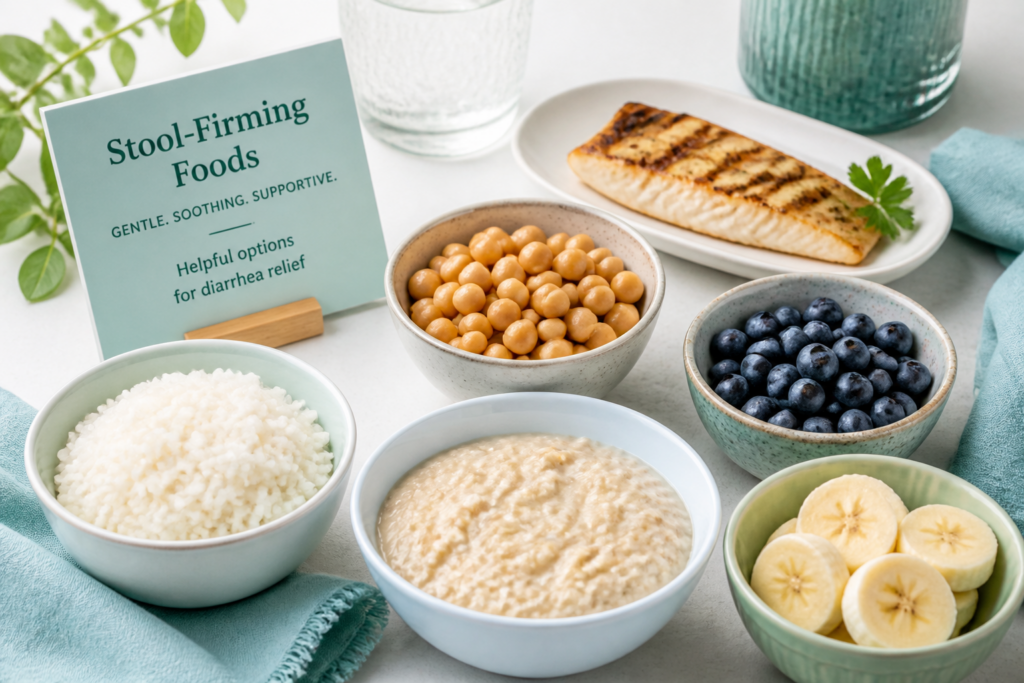
Stool-firming foods are usually simple, lower in fat, and easier to digest. The IBS diet for constipation guide is useful when your symptoms swing the other way, but IBS-D usually calls for gentler choices that add bulk without extra urgency. The goal is a steadier day, not a bland plate forever.
A practical starting point looks like this:
- Grains: Plain white rice, rice cereal, oats, and quinoa are steady picks on a Low-FODMAP foods list. They add bulk without the heavy fat load that can make urgency worse.
- Fruits: Unripe banana, blueberries, and kiwi are often easier to tolerate than high-FODMAP fruit. Sorbitol-heavy fruit choices can do the opposite, since sorbitol may draw water into the bowel and loosen stool.
- Vegetables: Soft-cooked carrots, zucchini, and spinach are often gentler than raw produce or onion- and garlic-heavy dishes. Simple cooking also keeps meals easier to predict.
- Proteins: Eggs, chicken, turkey, fish, and firm tofu usually do not loosen stool. They make meals more filling without the fried or very fatty foods that can be rough on IBS-D.
- Extras: Lactose-free dairy and small portions of canned, rinsed chickpeas can fit for some people with Lactose intolerance and IBS.
Psyllium is often a first choice among fiber supplements. Clinical guidance from the National Institute of Diabetes and Digestive and Kidney Diseases recommends trying soluble fiber such as psyllium and increasing it slowly (source).
A symptom log helps you spot patterns, especially when you test one change at a time. Start low, increase slowly, and track your response, because results vary from person to person.
Which Foods And Drinks Should You Limit?
The most common IBS-D flare foods are the ones that pack in FODMAPs fast. IBS foods to avoid often overlap with your own dietary triggers, especially when lactose intolerance and IBS show up together.
High-FODMAP foods can draw water into the intestines and may worsen gas, bloating, cramping, and loose stools in some people with IBS. Clinical education from Johns Hopkins Medicine and the National Institute of Diabetes and Digestive and Kidney Diseases both describe low-FODMAP eating as a way to identify foods that trigger symptoms (source, source). Common examples include dairy milk, ice cream, yogurt, wheat-based products, lentils, garlic, onions, apples, cherries, peaches, and pears. Caffeine, alcohol, carbonated drinks, high-fructose juices, and other fructose-heavy drinks can also speed up bowel activity.
| Common trigger | Easier swap |
|---|---|
| Large, high-fat meals | Smaller meals with lean protein, rice, oats, potatoes, eggs, and cooked vegetables |
| Sugar-free gum, mints, and candies with sorbitol | Simple snacks with short ingredient lists |
| Juice or soda | Plain water, caffeine-free herbal tea, or a small electrolyte drink |
| Garlic- and onion-heavy meals | Mild sauces and lower-FODMAP seasonings |
Spicy foods and IBS can be a rough match for some people, even when the rest of the meal is simple. The low FODMAP diet works best as a short-term filter, not a forever ban list. It helps you spot which FODMAPs bother you, then reintroduce foods one at a time to find your safest long-term pattern.
Keep meals and drinks steady across the day. That makes symptom journaling clearer and helps you see which foods are driving symptoms before you bring them back later.
How Do You Use The Low FODMAP Diet?
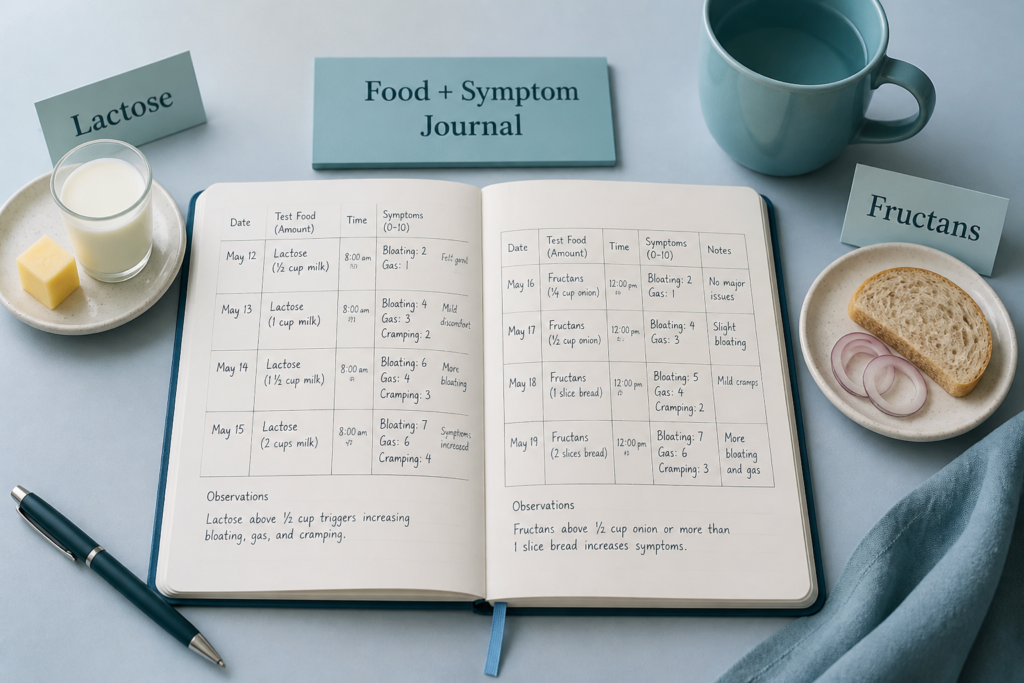
The low FODMAP diet for IBS works best with a clear elimination and reintroduction plan.
The low-FODMAP diet is usually used as a short-term elimination approach for IBS-D. Clinical guidance commonly describes an elimination phase followed by reintroduction, and some patient education resources describe the first phase as lasting about 2 to 8 weeks (source, source). During that window, watch for changes in loose stools, urgency, gas, and cramping.
Keep the first phase simple and steady. Remove High-FODMAP foods as fully as you can. Avoid major changes in caffeine, exercise, sleep, or other habits at the same time. That makes it easier to see whether FODMAPs are the issue or whether something else is driving symptoms.
A simple roadmap helps you stay organized:
| Phase | What you do | What you watch |
|---|---|---|
| Elimination | Keep meals plain and cut back on High-FODMAP foods | Stool changes, urgency, gas, cramping |
| Reintroduction | Test one FODMAP subgroup at a time, then one food at a time | Which trigger brings symptoms back |
| Maintenance | Keep the foods you tolerate and limit the ones that bother you | A steady routine you can live with |
During reintroduction, move slowly and test one subgroup at a time. That might mean lactose first, then Fructose, then fructans, excess fructose, or polyols. Testing one food at a time helps you spot the pattern without blaming a whole category after one rough day.
A food and symptom log makes the pattern clearer:
- What you ate: the food and portion
- When you ate it: the time and meal
- What changed: stool changes, gas, pain, or urgency
- How long it lasted: whether symptoms faded or built up
If symptoms improve or stay stable, start reintroduction. If they stay severe, worsen, or come with red flags, pause and contact a clinician or gastroenterologist. A Registered GI dietitian can help you avoid unnecessary restriction, keep meals balanced, and interpret your results with more confidence.
The goal is not long-term restriction. It is learning what you tolerate so you can build a sustainable plan that fits real life. This content is for educational purposes only and is not a substitute for personalized medical advice. Digestive symptoms can have many causes, so persistent, severe, or worsening symptoms deserve evaluation. Results vary by person, and any dietary changes should be individualized.
How Do You Build A Daily IBS-D Routine?
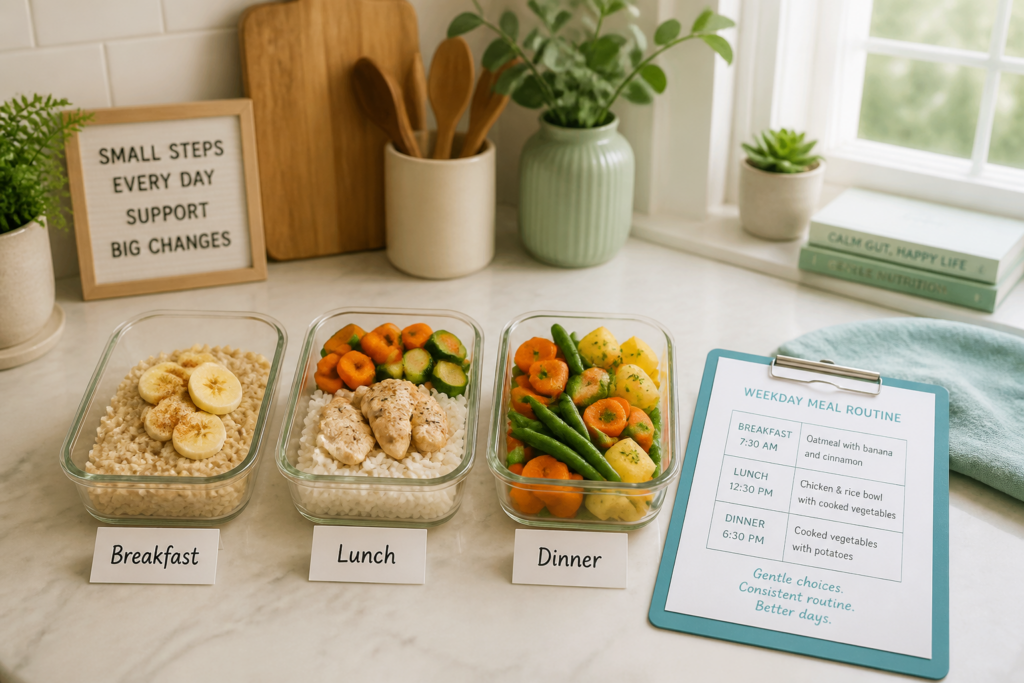
A steady routine can make IBS-D feel more predictable. Large meals can trigger the gastrocolic reflex and may increase urgency in some people, so regular meal timing and moderate portions are common practical steps (source). For practical IBS meal planning, the day works best when it feels regular instead of random.
A simple rhythm gives your gut fewer surprises:
- Meal timing: Eat breakfast, lunch, and dinner at about the same times each day, then add one or two planned snacks instead of grazing.
- Portion size: Keep meals moderate so they feel steady, not heavy.
- Soluble fiber: Aim for a soluble fiber source at most meals, such as oats, chia, kiwi, slightly underripe bananas, carrots, potatoes, rice, or a small serving of low-FODMAP nut butter.
- Low-FODMAP swaps: Use lactose-free yogurt instead of regular yogurt, choose rice or potatoes instead of large wheat-heavy portions, and switch to cooked vegetables when symptoms are flaring.
- Fluids: Sip water across the day, aim for about 8 cups as a general reference, and limit coffee to 2 cups if it makes symptoms worse.
- Common triggers: Ease back on alcohol, carbonated drinks, sugary drinks, and spicy foods and IBS flare-ups if heat tends to bother you.
| Meal | Sample choice | Why it fits |
|---|---|---|
| Breakfast | Oatmeal with chia and blueberries | Gentle fiber and a simple start |
| Lunch | Rice with grilled chicken, carrots, and zucchini | Balanced, filling, and easy to digest |
| Snack | Banana or lactose-free yogurt | Small, practical, and stool-firming |
| Dinner | Salmon with potatoes and green beans | Moderate fiber with a steady meal base |
| Optional snack | Small handful of walnuts if tolerated | Helpful if you need a second snack |
Hydration and IBS also matter in a daily routine. Pair drinks with meals and snacks so you stay hydrated without overfilling your stomach. A gluten-free diet may help some people, but it is not the same as low FODMAP foods list planning.
A Symptom diary can help you compare daily patterns with meal timing. Record meal timing, portion size, stool form, urgency, and any foods that seemed suspicious. That kind of journaling often shows patterns faster than memory alone, but responses vary a lot, so the sample menu is a starting point rather than a universal fix.
The My Good Gut fiber chart can make this easier by helping you choose fiber-rich foods without drifting into overly strict rules. Use it with your journal, keep the routine simple for a week or two, and adjust one variable at a time so you can see what actually changes your stools and urgency.
When Should You Get Extra Help?
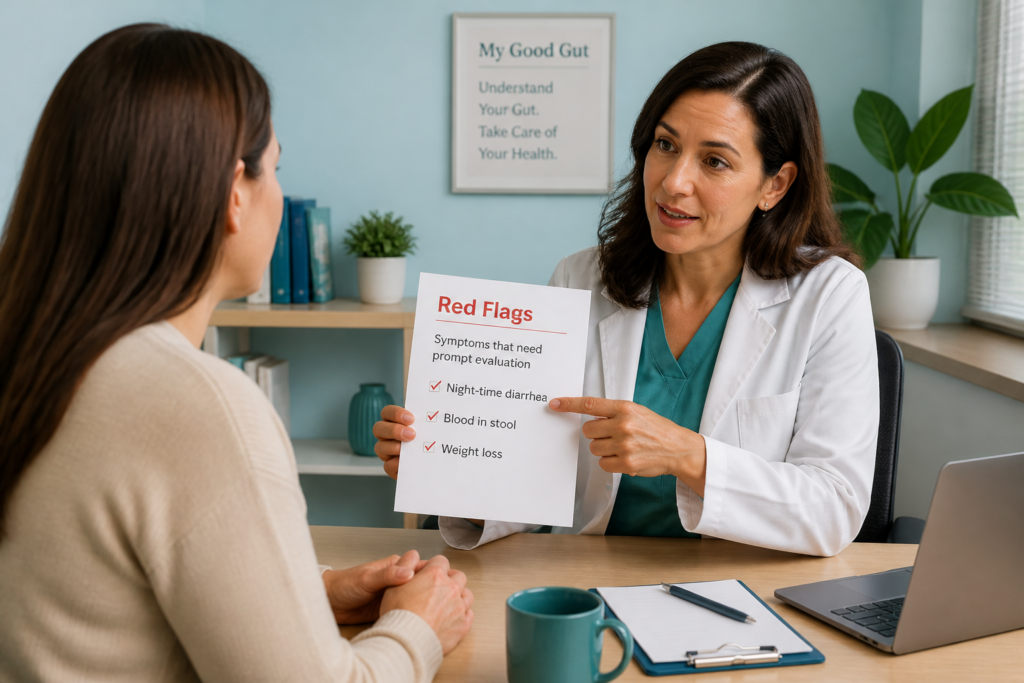
IBS-D deserves a closer look when the pattern changes.
Seek care sooner if you notice any of these:
- Persistent weight loss, blood in the stool, fever, or diarrhea that wakes you at night.
- A flare that is clearly getting worse instead of staying predictable.
- Dizziness, dry mouth, very dark urine, weakness, or trouble keeping fluids down.
- Frequent urgency or bowel movements that disrupt work, travel, caregiving, or daily routines.
Dehydration can show up as dizziness, dry mouth, dark urine, weakness, and trouble keeping fluids down (source).
When symptoms are new, severe, or changing over time, a primary care clinician or gastroenterologist may order basic blood work or stool tests to rule out other causes of diarrhea or unintentional weight loss before assuming it is only IBS-D.
A Registered GI dietitian is especially helpful during the low FODMAP reintroduction phase, when short-term restriction should shift into structured food challenges. That is how you learn which foods you tolerate.
Loperamide (Imodium), Peppermint oil, and Probiotics for IBS may also come up, but the right choice depends on your symptoms and overall plan.
Extra help is part of good IBS care, not proof that the diet failed. It can make your plan safer, less restrictive, and easier to live with.
IBS-D Diet FAQs
These IBS-D FAQs cover the questions you hear most when meals, symptoms, and daily routines start to feel unpredictable. They offer a simple way to sort through common diet choices before every bite starts to feel like a test.
1. Can Soluble Fiber Help IBS-D?
Soluble fiber can help IBS-D because it absorbs water and can make stools easier to pass, while insoluble fiber may bother some people. Start with oats, bananas, applesauce, citrus, or beans if you tolerate them, and the IBS fiber guide explains which types are usually gentler. Add fiber slowly over several days or weeks, drink enough fluids, and track your symptoms, since results vary and a supplement can be discussed later if food changes are not enough.
2. Do Probiotics Help IBS Diarrhea?
Yes, Probiotics for IBS may help some people with IBS-D, but the benefit varies and they are not a sure fix for diarrhea or urgency. Try one product with a clearly named strain for about 1 month, and track stool frequency, urgency, and pain so you can judge whether it helps. If nothing improves after 4 weeks, or if diarrhea is persistent, severe, or worsening, stop the trial and speak with a qualified healthcare professional. Peppermint oil is another option to discuss.
3. Should You Take Fiber Supplements?
Fiber supplements can be worth trying if loose stools are still a problem. Psyllium is usually the first choice because it is the best-studied option for helping firm stool and support regularity. Start low and increase the dose every few days as you tolerate it, then favor soluble fiber and gentler fiber types over bran while watching for 1 to 2 weeks for gas, bloating, cramping, urgency, or pain.
4. When Should You Reintroduce Trigger Foods?
Reintroduce trigger foods after your short elimination phase once your symptoms have settled enough to give you a clear baseline. Test one FODMAP subgroup at a time, starting with a small amount and increasing over a few days while you track bloating, pain, urgency, and diarrhea in a food or symptom diary. If symptoms stay mild, you can keep going with that challenge, but if they flare, stop, wait until things calm down, and use the results to build a more flexible low FODMAP routine.
- source: https://myhealth.alberta.ca/Health/aftercareinformation/pages/conditions.aspx?hwid=acg9466
- source: https://www.niddk.nih.gov/health-information/digestive-diseases/irritable-bowel-syndrome/treatment
- source: https://www.niddk.nih.gov/health-information/digestive-diseases/diarrhea/treatment
- source: https://www.hopkinsmedicine.org/health/wellness-and-prevention/fodmap-diet-what-you-need-to-know
- source: https://www.nidirect.gov.uk/conditions/dehydration
- source: https://gastro.org/clinical-guidance/probiotics-for-the-management-of-gi-disorders/
- HHS: https://hhs.gov/
- HHS Vulnerability Disclosure: https://hhs.gov/vulnerability-disclosure-policy/index.html