


IBS and popcorn can fit together when the serving is small, the popcorn is plain, and symptoms are stable. For adults with IBS, caregivers, and digestive health content teams, the key question is not whether popcorn is always safe, but how fiber, preparation, and toppings change the outcome.
This article covers low FODMAP fit, safe serving sizes, air-popped versus movie-theater popcorn, and the toppings most likely to trigger gas, bloating, pain, or diarrhea. It also gives practical test steps, simple swaps, and clear warning signs that call for medical evaluation.
That matters now because people with IBS often need snack advice they can use the same day, not broad rules that miss IBS subtype and flare status. A small bowl of plain popcorn may work on a calm day, while a butter-heavy batch can trigger symptoms within hours, so the next steps need to be specific. Continue for the serving tips and trigger checks that make the choice clearer.
IBS and Popcorn Key Takeaways
- Plain popcorn can fit some IBS eating patterns.
- Air-popped popcorn is usually the safest option.
- Start with 1 to 2 cups for a tolerance test.
- Butter, oil, and heavy seasoning raise symptom risk.
- IBS-D and flare phases often need smaller portions.
- Chew thoroughly to reduce hull irritation and discomfort.
- Seek medical evaluation for bleeding, vomiting, fever, or severe pain.
Can You Eat Popcorn With IBS?

Popcorn and IBS can work together for some people, but not for everyone. Plain popcorn is often a low FODMAP snack, and it can fit your eating pattern when your symptoms are stable and your portion stays small. It is also a whole grain, which is part of why best snacks for IBS often includes it in modest amounts.
The main issue is fiber. Insoluble fiber popcorn moves through the digestive tract with less breakdown than softer foods. That can be fine for some people. It can be tougher when the bowel is already sensitive, since the rough texture and hulls may add cramping, gas, bloating, or popcorn hulls digestive issues.
Tolerance also depends on your IBS subtype and whether you are in a flare. IBS-C may sometimes handle popcorn better because extra fiber can support bowel movements. IBS-D, IBS-M, or any flare phase can make popcorn more likely to bring on urgency, looser stools, or pain. The same snack can feel easy one week and irritating the next.
Portion and preparation matter just as much as the food itself. Plain popcorn can fit some IBS eating patterns in small amounts, but the most appropriate serving depends on your symptoms and personal tolerance. General nutrition sources describe a standard serving as about 3 cups of air-popped popcorn, so IBS guidance should stay conservative unless a low-FODMAP source confirms a larger amount for your plan (source).
Common versions compare like this:
Popcorn type | IBS fit | Why it matters |
|---|---|---|
Plain air-popped | Often the easiest option | Fewer added triggers and less fat |
Movie-theater popcorn | Higher risk | Usually heavy in butter, oil, and salt |
Pre-packaged popcorn | Higher risk | May include flavorings and additives |
Microwave popcorn | Mixed to higher risk | Can contain saturated fat and strong seasoning |
The whole grain popcorn benefits are real. Compared with chips or many crackers, plain popcorn is usually more filling and less processed. So, is popcorn good for IBS? Sometimes. It is a moderate-risk snack, not an automatic yes.
A cautious trial works best:
- Start with plain air-popped popcorn.
- Keep the first serving close to the low FODMAP amount.
- Skip butter, heavy oil, artificial flavorings, and very salty seasoning.
- Watch for symptoms over the next several hours.
- Stop testing it if it repeatedly makes things worse.
If popcorn keeps causing significant pain, bloating, diarrhea, constipation changes, or other concerning digestive symptoms, stop testing it and seek medical evaluation. Digestive symptoms can have many causes, and repeated trouble with popcorn should not be assumed to be IBS without a closer look.
What Serving Size Of Popcorn Is Likely Safe For Your IBS Type?
Plain popcorn is a whole-grain snack that is usually low in fermentable oligo-, di-, mono-saccharides and polyols, but the serving that feels safe with irritable bowel syndrome (IBS) is often smaller than the top low-FODMAP limit. Fiber can matter as much as FODMAPs here. That is why the question "Is popcorn good for IBS" depends less on a simple yes or no and more on the amount, your symptoms, and what you pair it with.
Portion control popcorn works best when you start small and build only if your gut stays calm. A practical framework looks like this:
Situation | Practical serving |
|---|---|
Starter test | 1 to 2 cups of air-popped popcorn |
Standard serving | About 3 cups |
Higher low-FODMAP ceiling for plain popcorn | Up to about 7 cups, or 120 grams |
A cautious starter test can begin with 1 to 2 cups of plain air-popped popcorn, then move toward a standard serving of about 3 cups only if symptoms stay calm. USDA and Mayo Clinic Health System both describe about 3 cups as a typical serving of air-popped popcorn (source).
IBS subtype also changes the odds. IBS-C may handle a modest serving better because insoluble fiber can support regularity. IBS-D often does better with less, especially if popcorn tends to speed things up or lead to urgency. If you notice Diarrhea after popcorn, that is a clear sign to cut the portion back next time.
IBS-M can swing from one day to the next. Popcorn may feel fine during a stable week and feel like too much during stress, bloating, or recovery from a flare. In that setting, treat it as a test food, not an automatic snack.
A simple test plan helps you sort it out:
- Eat one small serving on its own.
- Skip butter, garlic seasoning, cheese powder, and other trigger toppings.
- Keep it away from other high-fiber foods in the same snack.
- Watch for bloating, pain, gas, urgency, or stool changes over the next 6 to 24 hours.
- If symptoms stay quiet, move toward about 3 cups before trying a larger amount.
When your symptoms are stable, a plain serving may fit. When bloating is visible, diarrhea is recent, or cramping is active, stay closer to the starter size even if the popcorn is low FODMAP.
Which Popcorn Prep Methods Are Safest?
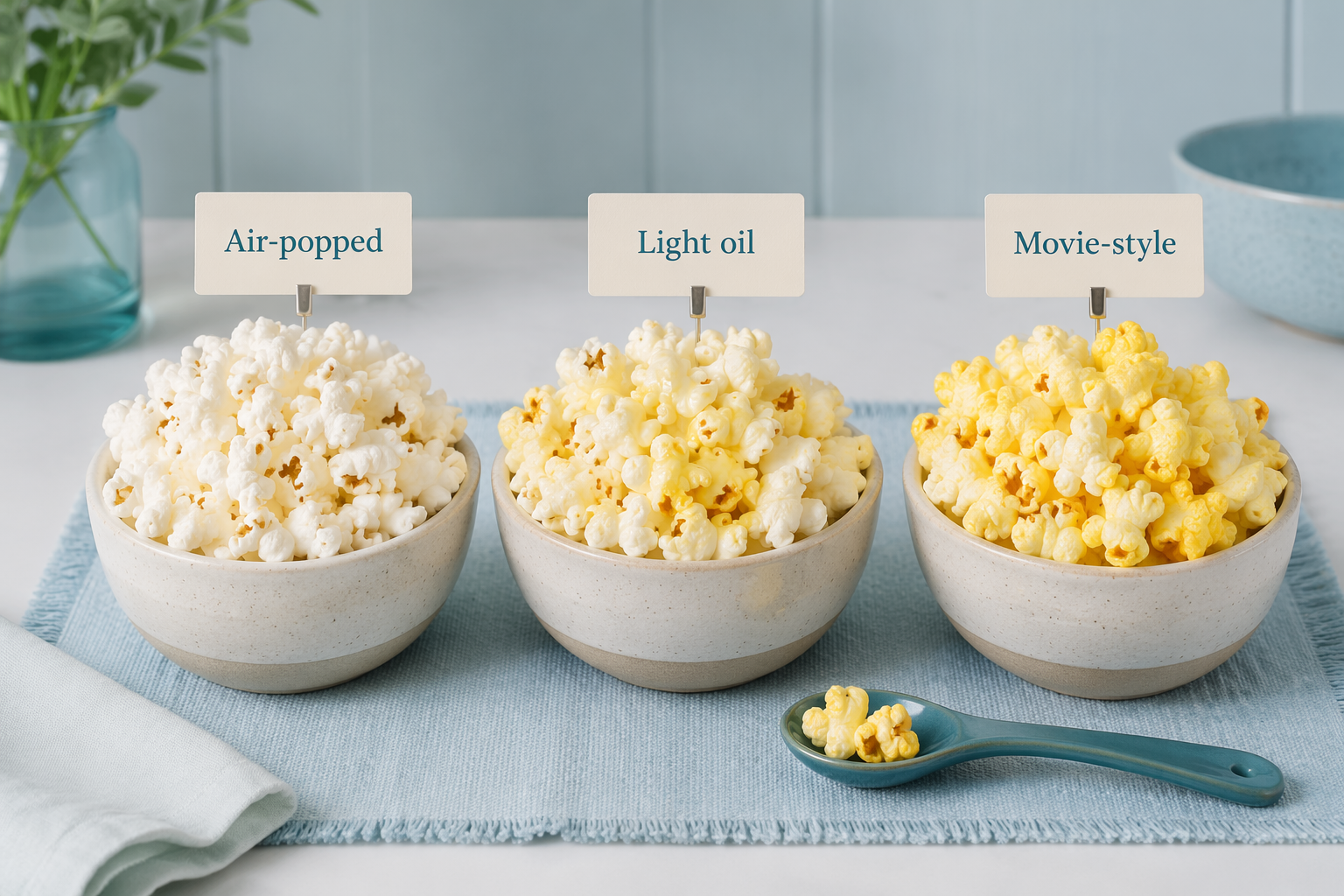
Popcorn preparation for IBS is usually easiest to manage when you keep the fat low and the toppings simple. Air-popped popcorn is the lowest-risk option. Stove-popped popcorn with a small amount of oil sits in the middle. Microwave and pre-packaged popcorn can be more unpredictable, and movie-theater popcorn is usually the hardest on a sensitive gut.
Air-popped popcorn is often the safest choice because it starts plain. It has no added butter, no heavy coating, and no extra seasoning blend to irritate your stomach. That makes it easier to keep the portion modest and add only what your gut tends to tolerate.
The main differences are easy to see at a glance:
Method | Fat level | Additives | IBS risk |
|---|---|---|---|
Air-popped | Low | None or very few | Lowest |
Stove-popped with minimal oil | Low to moderate | Simple toppings only | Moderate |
Microwave or pre-packaged popcorn | Variable, often higher | Butter flavoring, artificial flavors, sweeteners, seasoning blends | Higher |
Movie-theater popcorn | High | Butter, oil, heavy salt, flavor coatings | Highest |
Stove-popped popcorn can still fit a low-FODMAP routine if you keep the oil light. A small drizzle of olive oil, a pinch of salt, or a little lactose-low ghee is often easier to handle than greasy or buttery coatings. That matters because high-fat toppings can bother you more than the popcorn itself.
Pre-packaged popcorn vs homemade is another place where symptoms can change fast. Packaged versions often include saturated fat, butter flavoring, artificial flavorings, high-fructose corn syrup, or seasoning mixes. Those extras are often the problem, not the kernels.
Movie theater popcorn saturated fat is often the biggest issue for IBS. The buttery, salty coating can aggravate abdominal pain and diarrhea in people who react to richer foods. If fat is a known trigger, this is the version most worth skipping.
Safer swaps are simple:
- Air-pop at home
- Keep seasonings plain
- Avoid garlic powder, onion powder, and spicy blends
- Use nutritional yeast for a cheesy taste
- Choose olive oil or a light touch of ghee instead of heavy butter
Popcorn toppings to avoid overlap with the foods that commonly trigger IBS, turning a simple snack into a problem. Plain or lightly seasoned popcorn is the gentlest place to start.
How Should You Test Your Tolerance Safely?
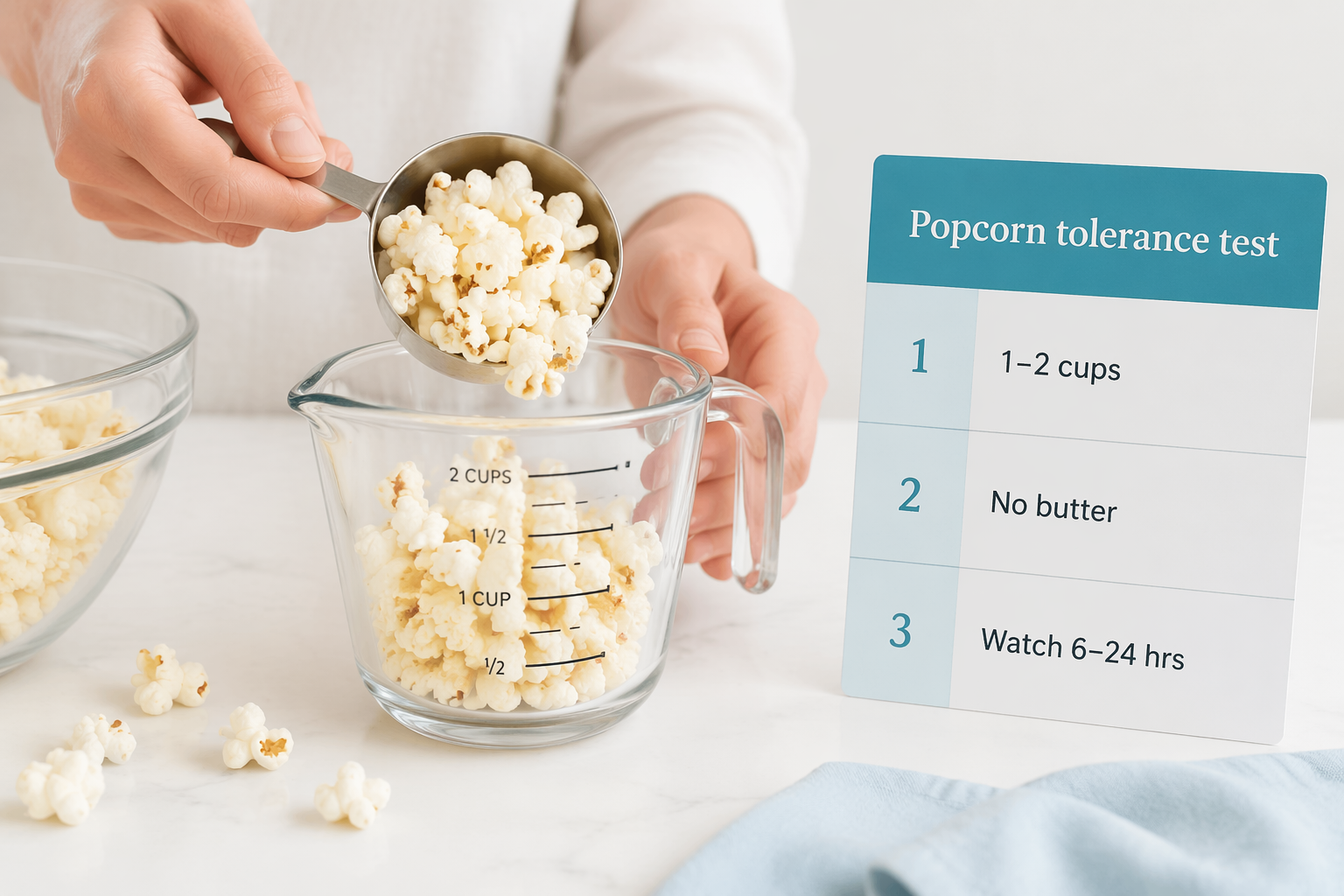
Start with a small test and keep the rest of the meal plain. A cautious starter serving is 1 to 2 cups of plain air-popped popcorn. Some general guidance treats about 3 cups as a standard serving, but a smaller amount is the better first step if you’re in an IBS flare or know that high-fiber foods bother you.
Keep the test simple so the result is easier to read. Avoid these common add-ons and side dishes in the same meal:
- Greasy toppings
- Heavy butter
- Spicy seasoning blends
- Other high-fiber foods
Stacked triggers can make bloating, cramping, gas, and urgency more likely. That makes it harder to tell whether popcorn itself is the issue.
Preparation matters as much as Portion control popcorn. Plain air-popped popcorn is usually the easiest version to test because it has fewer variables than movie-theater style popcorn or heavily buttered popcorn. If you want to try a more convenient option later, a lower-fat microwave variety may be a reasonable step-up.
Chewing also changes how well you tolerate it. Chew popcorn thoroughly and take smaller bites so the insoluble fiber, hulls, and half-popped kernels are broken down more fully. That can reduce the scratchy, hard-to-digest feeling some people notice.
Watch your symptoms for 6 to 24 hours after eating. Track these details in a simple food diary:
- Bloating
- Pain
- Gas
- Nausea
- Urgency
- Loose stools
- Constipation
- Portion size
- Preparation method
- Seasoning used
Your past response to FODMAPs, nuts, or raw vegetables can help predict how you’ll do with popcorn. If the first test feels fine, increase only in small steps. Stop testing and seek medical advice if popcorn keeps causing strong pain, vomiting, blood in the stool, or symptoms that get worse instead of settling.
When Should You Avoid Popcorn Or See A Doctor?
Popcorn is a poor fit during a flare. If your gut feels inflamed, crampy, or extra sensitive, the fiber and hard hulls can feel abrasive. It’s usually better to wait until symptoms settle.
You should also skip popcorn if you have severe diarrhea, strong urgency, or worsening abdominal pain. Diarrhea after popcorn can be more likely when the snack is coated with butter, oil, or greasy seasonings. Flavored popcorn can be tricky too, especially when it contains garlic powder, onion powder, or mixed seasonings. Those ingredients are common IBS triggers because they often include fermentable oligo-, di-, mono-saccharides and polyols.
Stop eating popcorn if it keeps causing sharp pain, bloating, or a scratchy feeling. Un-popped kernels, half-popped pieces, and hull fragments can irritate the intestine and make symptoms worse.
Seek medical evaluation if your symptoms are persistent, severe, or getting worse. Red flags include:
- Bleeding
- Vomiting
- Fever
- Significant pain
Get help sooner if popcorn seems to cause a blockage-like pattern of pain, constipation, or trouble passing gas or stool. Gastrointestinal Specialists advice is to treat that pattern as a possible warning sign, not as a routine food sensitivity. Those symptoms can point to inflammatory bowel disease, gastroparesis, or a food allergy or intolerance.
IBS And Popcorn FAQs
These FAQs cover the most common popcorn and IBS concerns, from portion size to toppings and low-FODMAP fit. If you’ve seen Healthline popcorn IBS discussions or searched Popcorn low FODMAP, the questions below help sort out what matters most.
1. Can Popcorn Trigger An IBS Flare?
Yes, popcorn can trigger an IBS flare for some people because its insoluble fiber can speed digestion and lead to gas, bloating, cramping, stomach pain, or diarrhea, especially when portions are too large. If you have IBS-C, a small Air-popped popcorn serving size may sometimes support regularity, but Popcorn preparation for IBS matters because the hulls can feel rough on an irritated gut and even a modest serving may worsen discomfort during a flare. When symptoms are active, it’s often best to skip popcorn, avoid common Popcorn toppings to avoid, and treat it as a personal trigger if it reliably brings on symptoms.
2. What Popcorn Is Best For IBS?
Air-popped popcorn is usually the best place to start because it skips the extra oils, butter, and flavorings that can make microwave or movie-style popcorn harder to tolerate. Keep the portion modest and the snack low-fat, since Insoluble fiber popcorn can still be rough if you overdo it, and that can lead to Popcorn bloating gas pain. Simple toppings like a light drizzle of olive oil or a pinch of salt are usually safer than cheese powders, garlic, onion, or spicy blends, and a small amount of ghee or nutritional yeast can work if you already know you tolerate them.
3. Why Does Popcorn Upset Some IBS Stomachs?
Popcorn is mostly insoluble fiber, especially cellulose and hemicellulose, so it can move through your gut quickly. That fast transit can raise gas, bloating, cramping, and pain, and Popcorn hulls digestive issues can be more noticeable when Un-popped kernels digestion adds extra rough texture. IBS-C may tolerate it better than IBS-D, but butter, oil, cheese powder, and heavy seasoning can make symptoms feel heavier, so popcorn is not automatically off-limits and your IBS type, portion size, and toppings matter a lot.
4. Are Popcorn Hulls Hard To Digest With IBS?
Yes, popcorn hulls and half-popped kernels can be harder to handle with IBS because the sharp pieces may irritate your gut and make popcorn bloating gas pain more likely, especially if you eat them quickly. Popcorn and gas can also get worse when insoluble fiber adds to bloating, distension, or cramping, especially if the batch has lots of broken pieces. Chew popcorn thoroughly, take smaller bites, and choose fully popped air-popped popcorn with fewer hulls, and if hull-heavy popcorn keeps causing pain, a stuck feeling, or a flare, it’s better to skip it and choose a softer snack.