


IBS and tomatoes often come down to portion size, preparation, and your own symptom threshold. For adults, caregivers, and busy parents who are trying to sort out whether tomatoes belong on the menu, the hardest part is that one meal can feel fine while the next one brings bloating, reflux, or cramping. FODMAPs are fermentable carbs that can trigger symptoms in sensitive people, and a clear plan can show what to eat, test, and tolerate with more confidence.
Fresh tomatoes are usually low FODMAP in modest servings, but sauces, paste, ketchup, and sun-dried tomatoes can behave very differently. The sections ahead cover research on tomato forms, acidity and histamine issues, practical serving sizes, and a simple step-by-step way to test tolerance at home. Expect concrete guidance on cooking, de-seeding, checking labels, and tracking symptoms so the next decision is easier to make.
That approach is especially useful for people with IBS who need meals that fit workdays, school schedules, and family dinners without guesswork. An office manager might handle a few cherry tomatoes in a lunch salad but react to jarred sauce, while a parent may notice that peeled, cooked tomatoes sit better than raw slices. The goal is a calmer, more informed food pattern that helps you decide when to keep tomatoes, when to scale back, and when to bring the pattern to a dietitian or clinician.
IBS and Tomatoes Key Takeaways
- Fresh tomatoes are often low FODMAP in modest portions.
- Sauce, paste, ketchup, and sun-dried tomatoes are more concentrated.
- Acidity can trigger reflux even when FODMAPs are low.
- Histamine, skins, and seeds may worsen symptoms for some people.
- Test one tomato form at a time with plain foods.
- Track symptoms for 24 to 48 hours after each test.
- Persistent or severe reactions deserve dietitian or clinician review.
What Does the Research Say About Tomatoes And IBS?
The research gives you a calm starting point. Fresh, ripe tomatoes are usually low in fermentable oligosaccharides, disaccharides, monosaccharides, and polyols (FODMAP) when you keep the portion moderate, so the question of are tomatoes low FODMAP usually comes down to serving size rather than a strict yes or no. Monash University (source) is the best-known reference here, and its Monash University tomato serving is about a serve size 75 grams tomatoes, which is roughly one small tomato or about five cherry tomatoes.
Tomatoes and IBS do not follow the same pattern for everyone. Some people eat them without any trouble, while others notice bloating, pain, cramping, or bowel changes. That is why personal testing matters more than a one-size-fits-all rule.
Portion size is where the FODMAP load starts to matter most. Larger servings can raise the load fast, and concentrated forms may be harder to tolerate than a few fresh slices on a sandwich or salad. A practical tomato FODMAP serving size can also include about 100 grams of tinned tomatoes for many people, as long as the rest of the meal stays low FODMAP.
Tomato form | What the research suggests |
|---|---|
Fresh tomatoes | Usually tolerated best in modest amounts |
Tinned tomatoes | Often workable in measured portions |
Roma or plum tomatoes | May need a smaller serving |
Cherry tomatoes | Often fit better in the tested portion range |
Acidity is a separate issue from FODMAPs. The idea behind high acidity tomatoes reflux is simple. Tomatoes can irritate heartburn, acid reflux, abdominal discomfort, cramping, or diarrhea even when they still fit a low-FODMAP meal. In that case, the problem may be acid irritation rather than FODMAPs alone.
A few other factors can shape your response:
- Histamine sensitivity: A smaller group of people may react, but the evidence is still limited.
- Tomato varieties tolerance: Ripeness, growing conditions, and the testing method can all change what you tolerate.
- Symptom logging: Your own notes give you the clearest picture of your threshold.
Research can guide your starting point, but it cannot predict your exact limit. Digestive symptoms can have many causes, so persistent, severe, or worsening symptoms deserve a check-in with a qualified healthcare professional.
Can Tomatoes Trigger IBS Symptoms?
Tomatoes can trigger irritable bowel syndrome (IBS) symptoms for some people, but they are not a major trigger for everyone. Your tolerance can be very different from someone else’s. That is why tomatoes and IBS usually come down to your own threshold, not a blanket rule.
Fresh ripe tomatoes are generally low in FODMAP in small servings, but larger portions can still change your response. That’s why the question are tomatoes low FODMAP often gets a reassuring answer for modest portions. A good starting point is about half a medium tomato or up to three cherry tomatoes.
FODMAP stacking is where trouble can start. Tomatoes alone may stay within your limit, but the total load can rise when you eat them with other high-FODMAP foods in the same meal. That can tip you into cramping, bloating, diarrhea, or urgency even if the tomato portion seemed harmless on its own.
Tomato symptoms people often notice include:
- Abdominal pain: often more obvious during an IBS flare or after a large serving
- Bloating and gas: more likely with concentrated tomato foods or meals that already include other triggers
- Loose stools or urgency: more common with bigger portions or rich sauces
- General discomfort: sometimes tied to acidity, seasoning, or added onion and garlic rather than the tomato itself
Tomatoes are usually not the main cause of bloating and gas for most people from a fermentation standpoint. Still, they can add to symptoms in sensitive people or when you eat too much at once. The cherry tomatoes IBS trigger question is a good example, because a mild food can become a problem when your gut is already stressed.
Tomato form | Usual IBS note |
|---|---|
Fresh tomato | Often tolerated in small portions |
Cherry tomatoes | Often fine in small servings |
Tomato sauce | More likely to bother sensitive people |
Large tomato portions | Higher chance of symptoms |
If tomatoes seem suspicious, test them one step at a time:
- Try a small, plain serving first.
- Track pain, bloating, gas, stool changes, and urgency for the next 24 hours.
- If symptoms repeat, try cooking, de-seeding, or choosing lower-FODMAP brands.
Persistent or worsening symptoms should be discussed with a qualified healthcare professional or dietitian. Digestive symptoms can have many causes, and results vary by person.
Why Do Tomatoes Bother Some People?
Tomatoes can bother you for more than one reason at once. A small serving may sit fine, while a larger portion of sauce can feel rougher because it’s more concentrated, more acidic, and sometimes more irritating to a sensitive gut. That’s why form matters so much, especially with sauce, paste, and other tomato concentrates.
Here’s the simplest way to think about the main triggers:
- Fructose in tomatoes: Some people don’t absorb excess fructose well. In IBS, that sugar can pull water into the bowel and add to gas production, which may lead to diarrhea, cramping, and bloating.
- Acidity: Tomatoes are naturally acidic. That can irritate the upper digestive tract and worsen reflux, burning, or nausea even when the serving is low FODMAP.
- Histamine load: Tomatoes contain histamines and other biogenic amines. If histamine intolerance tomatoes seem to be part of your pattern, you may notice bloating, flushing, headache, or gut discomfort that feels bigger than the amount you ate.
- Fiber structure: Raw tomato skins and seeds can be harder on a sensitive gut. Their insoluble fiber may feel more irritating during an IBS-D flare or when stools are already loose.
- Nightshade compounds: Tomatoes are nightshades, and some people suspect a nightshade sensitivity tomato pattern. The evidence is much thinner here than it is for fructose, acidity, or histamine, so it makes more sense to track your own response than to blame every tomato equally.
The raw vs cooked tomatoes digestion question matters too.
Tomato form | Why it may feel easier or harder |
|---|---|
Raw tomato | More skin, seeds, and crunch, which can feel harsh in a flare |
Cooked tomato | Softer texture, but acids and concentration can still trigger symptoms |
Tomato sauce or paste | More concentrated, so fructose and acidity may hit harder |
Peeled and seeded tomato | Often gentler because some insoluble fiber is removed |
Monash-based low-FODMAP guidance leans heavily on portion size, not a simple yes-or-no rule. That matches real life for many people. A few bites in a meal may be fine, while a big bowl of marinara is not.
PubMed-indexed research points to a mixed picture. Fructose malabsorption, reflux sensitivity, histamine reactions, and mechanical irritation from skins and seeds can overlap. SIBO and tomatoes can be a tricky mix too, since SIBO may make you more sensitive to fermentable carbs and gas-producing meals.
A simple test can help you spot the pattern:
- Try a small serving of one tomato form.
- Keep the rest of the meal plain.
- Track symptoms for the next 24 hours.
- Compare raw, cooked, peeled, and processed versions.
- Bring repeated reactions to a clinician or dietitian if symptoms keep piling up.
If tomatoes keep causing reflux, diarrhea, or pain, the issue may be your serving size, the form, or something beyond IBS alone. Digestive symptoms can have many causes, and persistent or worsening symptoms deserve medical guidance.
Which Tomato Forms Are Most Tolerable?
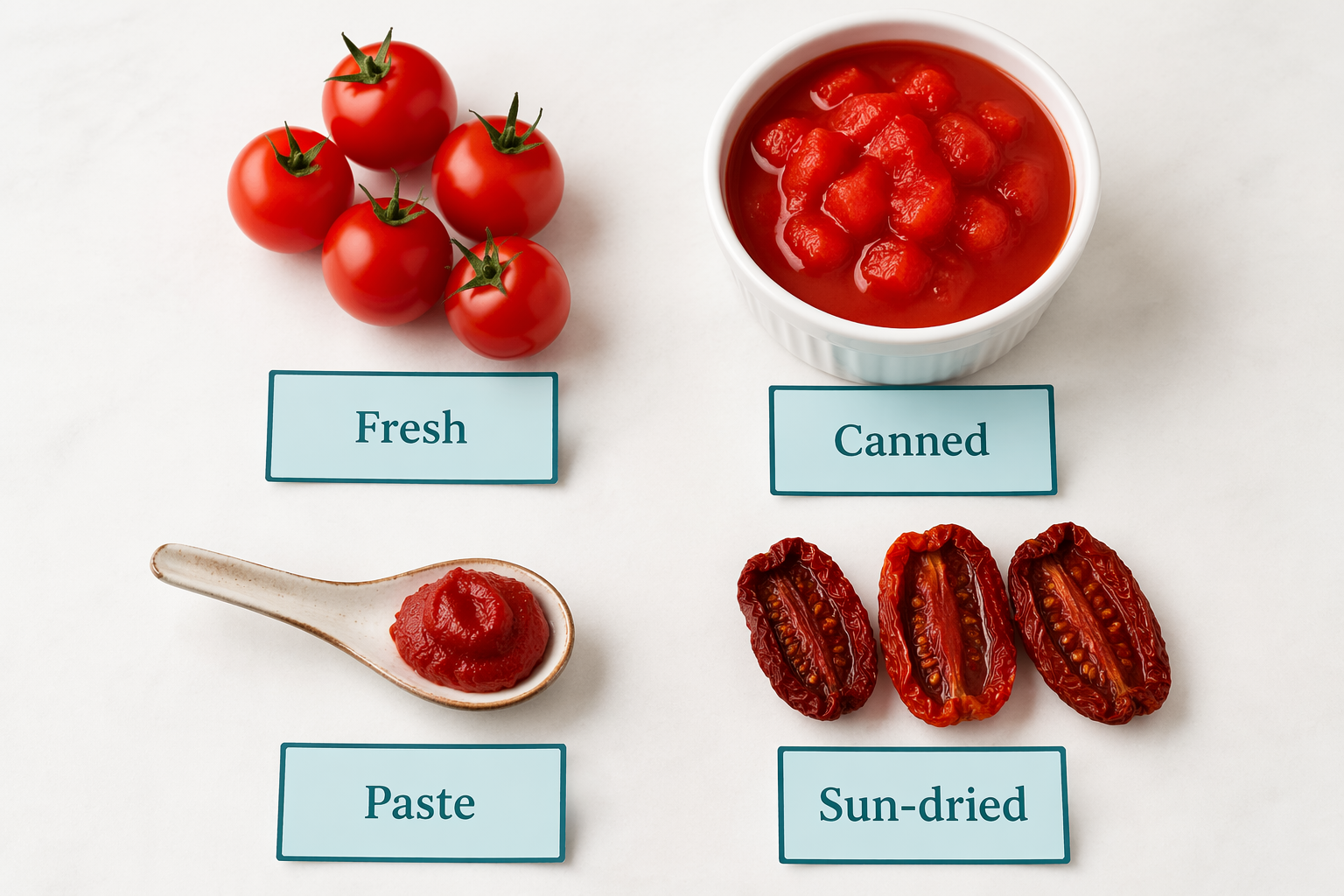
Fresh tomatoes are usually the safest place to begin because they tend to be lower in FODMAPs than concentrated tomato products. For many people with IBS, a measured serving of about 75 grams works well. That is roughly one small tomato or about five cherry tomatoes.
Roma and plum tomatoes can be a little harder to tolerate, so a smaller portion is often the better test. The difference between raw vs cooked tomatoes digestion can also matter, since some people feel better with cooked tomatoes while others react more to the added ingredients than the tomato itself.
Tomato form | Usual IBS fit | Practical note |
|---|---|---|
Fresh tomatoes | Safer | Start with a small measured serving |
Canned tomatoes | Caution | Check for garlic, onion, and added sugar |
Tomato sauce | Caution | Plain versions may work better than seasoned ones |
Tomato paste | Avoid or very cautious | Highly concentrated, so the tomato paste FODMAP load is easier to overshoot |
Ketchup | Caution | Ketchup low FODMAP depends on portion and the sweeteners used |
Tomato juice | Caution | Liquid form is easy to overdrink |
Sun-dried tomatoes | Avoid or very cautious | Very concentrated and easy to overeat |
Fresh, ripe tomatoes are often the most forgiving option when you keep the portion modest. Removing the skins and seeds can also help if those parts seem to bother you. A simple salad with vegetables and IBS symptoms and a few tomato slices is usually easier on your gut than a big raw bowl with lots of extras.
Processed tomato foods are more likely to trigger symptoms. Canned tomatoes FODMAP issues can come from the tomato itself, but packaged versions also often contain onion, garlic, sugar, or high-fructose corn syrup. The same pattern shows up with tomato sauce, ketchup, and tomato juice, so the label matters as much as the serving size.
A simple DIY low-FODMAP tomato sauce can be a safer middle ground. Plain canned tomatoes, olive oil, salt, and herbs keep the flavor without onion- or garlic-heavy seasonings. That makes a low-FODMAP tomato sauce easier to use for pasta, pizza, or a family dinner.
Practical steps can improve tolerance without promising a cure:
- Keep portions moderate and start with the simplest form.
- Cook tomatoes simply when you want to test a gentler option.
- Remove skins and seeds when possible.
- Pair tomatoes with low-FODMAP ingredients instead of onion-heavy or garlic-heavy recipes.
- Test one form at a time and track symptoms for a full day or two.
Sun-dried tomatoes deserve extra caution because they are dense and easy to overeat. The phrase sun-dried tomatoes FODMAP usually points to a very small serving, such as 3 pieces or about 8 grams, as the most likely fit for a low-FODMAP approach. Even then, your own tolerance matters more than any single number.
The plain-language takeaway is simple. Start with measured servings of fresh tomatoes. Move to simple canned or sauce options only if the ingredient list stays clean. Treat tomato paste, ketchup, juice, and sun-dried tomatoes as more concentrated choices that are more likely to hide problem ingredients.
How Do You Test Your Tomato Tolerance?
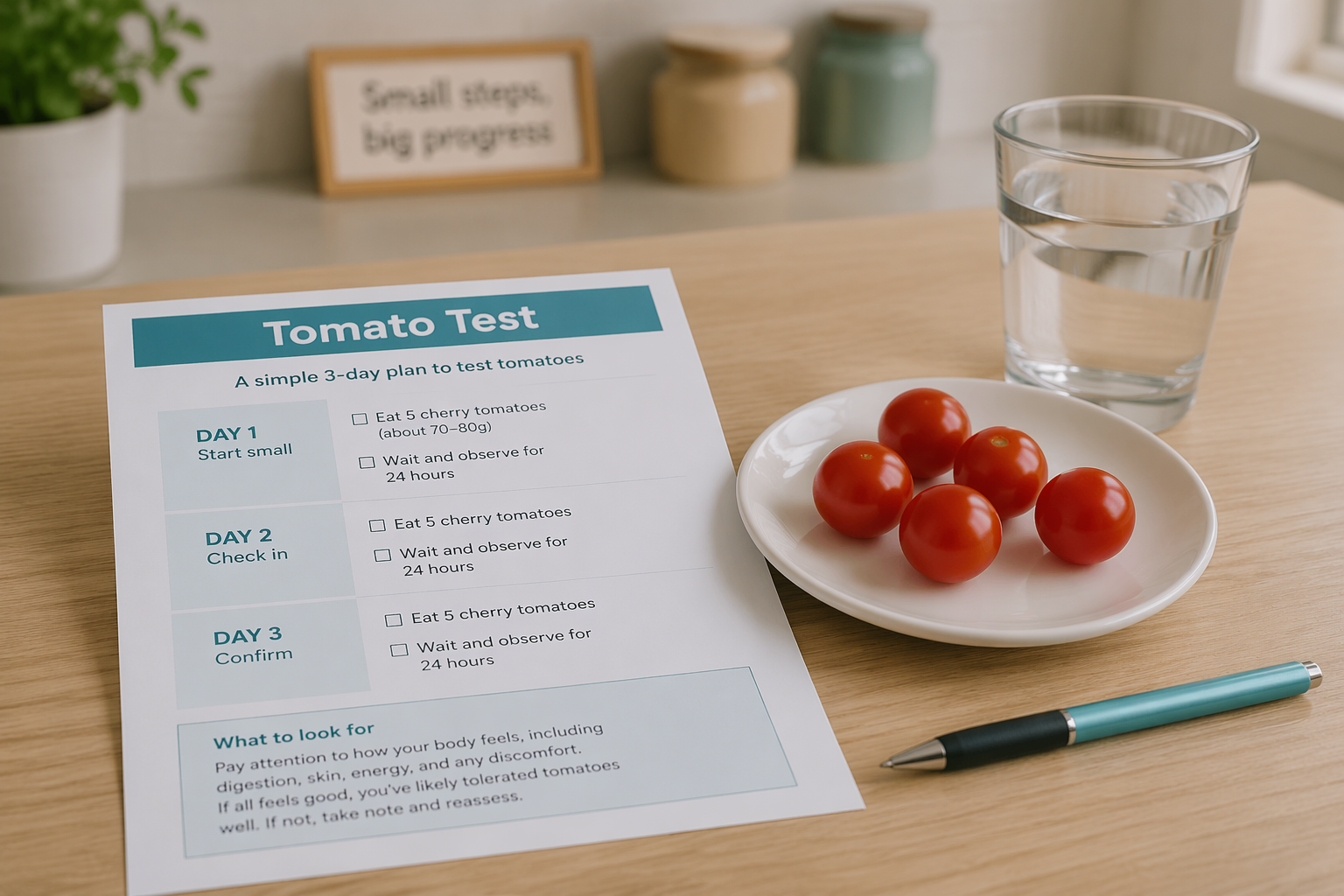
A careful tomato test works best when your meals stay calm and your variables stay few. That makes it easier to tell whether tomatoes are the trigger or whether something else is behind the symptoms, like FODMAP stacking, stress, travel, or another food that slipped into the same meal.
Start with a baseline phase of about 3 days. Avoid tomatoes during that stretch and keep the rest of your eating pattern steady. Hold off on new spices, new snacks, and other big diet changes so you get a cleaner read on your body.
The test works best when you change one thing at a time:
- Pick one tomato form first. Plain fresh tomato is the best starting point for most people.
- Keep the meal simple. Eat it by itself or with a plain food such as rice, eggs, or chicken.
- Leave out confounders. Skip onion, garlic, spicy sauces, and other high-FODMAP ingredients that can blur the result.
- Start with a small serving. A few bites is enough for the first try.
- Increase only if the first test goes well. Try a standard serving on a different day if the small amount feels fine.
That step-up approach matters because portion size and total fructose load can change how tomatoes sit with your gut. A serving that feels fine once may be too much in a bigger meal or on a day when your intake is already high. A registered dietitian low-FODMAP plan can help you judge those portions more precisely when the pattern is hard to read.
Compare tomato forms separately so you can spot the difference between fresh and processed foods:
Tomato form | Test approach | What to watch |
|---|---|---|
Fresh tomato | Start small and keep it plain | Bloating, pain, reflux, diarrhea |
Fresh tomato, larger serving | Try on a separate day if the small serving goes well | New or stronger symptoms |
Sauce, paste, juice, ketchup | Test on a different day from fresh tomato | Reactions from concentration or added ingredients |
Canned tomatoes | Test separately | Digestion compared with fresh |
Sun-dried tomatoes | Test cautiously and on their own | Stronger reaction from a concentrated form |
Processed tomato products often behave differently from fresh ones. A simple safe, caution, and avoid matrix can help you track which forms you tolerate best without turning dinner into a lab experiment.
Track symptoms for 24 to 48 hours after each test. Write down the tomato form, the amount you ate, the time symptoms started, and whether they eased on their own or after something else, like a bowel movement, antacid, or rest.
The most useful symptoms to record are:
- Bloating
- Reflux
- Diarrhea
- Cramping
- Constipation
- Abdominal pain
Interpret the result conservatively. One mild symptom after a large serving does not always mean tomatoes are off-limits. Repeated symptoms after a small serving suggest that specific form may not work well for you, and you may need to limit it or review the reintroduction with a qualified dietitian experienced in gastrointestinal disorders.
If the pattern still feels unclear, or if symptoms are severe, persistent, or worsening, consult gastroenterologist IBS care instead of guessing. Keep the log steady, move slowly, and treat the result as a guide for your next meal, not a forever verdict.
When Should Tomato Symptoms Point To Something Else?
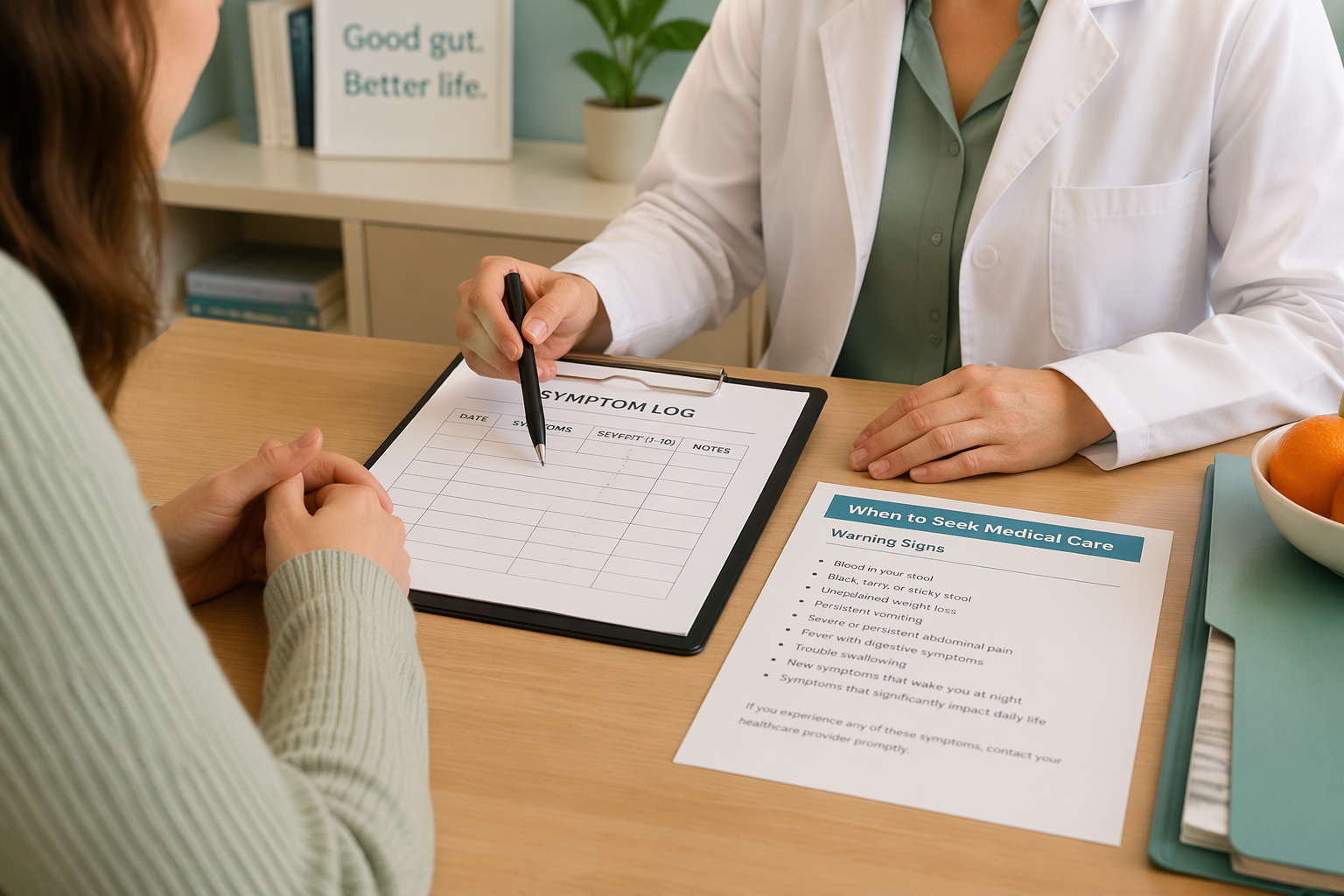
Tomatoes are not always the whole story. If symptoms show up mainly after a big serving, a rich sauce, or ketchup, IBS can still fit the pattern. But when bloating, diarrhea, cramping, constipation, or abdominal pain happen after many different foods, you need a broader look than tomato sensitivity alone.
Your overall IBS pattern matters too. Diarrhea-predominant, constipation-predominant, bloating-heavy, and pain-heavy IBS can point to different drivers. A tomato reaction should be read in the context of the full picture, not as a stand-alone clue. That matters even more when other foods also seem risky, as with avocados and IBS, where one meal can expose a wider trigger pattern.
Some patterns deserve a closer workup:
- Carbohydrate malabsorption: If a small plain tomato still causes symptoms, SIBO and tomatoes, poor fructose absorption, or sucrase-isomaltase deficiency may be involved. A gastroenterologist or dietitian can help sort that out, especially if fruit, sweets, or starchy foods also bother you.
- Reflux or burning: high acidity tomatoes reflux is a common clue when symptoms are worse after tomato sauce, ketchup, or a large evening meal rather than after every tomato exposure.
- Possible food sensitivity: a nightshade sensitivity tomato pattern can happen for some people, but it should not be assumed before more common causes are checked.
Watch for warning signs that call for medical evaluation instead of food tracking alone:
- Allergy-type signs: hives, itching, swelling, wheezing, or fast-onset symptoms after eating tomatoes
- Inflammation red flags: blood in the stool, fever, unexplained weight loss, nighttime symptoms, persistent vomiting, or worsening abdominal pain
- Other causes: IBD, diverticulitis, or another non-IBS condition, especially if pain is sharp, severe, or steadily worse
Raw skins and seeds can also be rough on irritated bowels, so they may bother people with IBD or diverticulitis more than smooth tomato sauces. If a plain fresh tomato test and a comparison with processed tomato products still leave you unsure, it may be time to consult gastroenterologist IBS care rather than guess. This educational content is not a substitute for personalized medical advice, and persistent, severe, or worsening symptoms deserve a clinician’s review.
IBS And Tomatoes FAQs
These FAQs cover the tomato questions people with IBS ask most often, including portion size, processing, and shopping for certified low-FODMAP products. For more personalized guidance, a registered dietitian low-FODMAP can help you spot your own pattern without guesswork.
1. Can You Eat Tomatoes During An IBS Flare?
Small amounts of ripe, peeled tomatoes are often okay during an IBS flare, especially when you eat them plain and keep the serving modest. Tomatoes are acidic, so they can still trigger cramping, heartburn, or diarrhea in sensitive people, and bloating is more likely when you eat too much or pair them with high-FODMAP foods. Skip paste, thick sauces, and canned tomatoes with onion or garlic for now, and avoid tomatoes if they reliably set off your symptoms during flares. If you want a gentler swap, ginger and IBS can be easier on your gut.
2. Are Tomato Sauces Harder On IBS?
Yes. Tomato sauces can be harder on IBS because cooking and reducing tomatoes can make a tomato paste FODMAP load feel more concentrated, and jarred sauces often add garlic, onion, sugar, or high-fructose corn syrup. Portion stacking matters too, since sauce on top of other higher-FODMAP foods can push the meal past your limit. A garlic-infused oil low FODMAP swap or a DIY low-FODMAP tomato sauce keeps flavor while skipping common triggers, and ketchup low FODMAP choices usually work best when you check the serving size.
3. Do Tomatoes Affect IBS-D And IBS-C Differently?
IBS-D often reacts more to tomato skins, seeds, and insoluble fiber, which can add rough texture and worsen urgency, loose stools, or cramping. For your first test, compare peeled, deseeded tomatoes with whole raw ones so you can see whether texture is the real trigger. IBS-C is more likely to notice acidity and slower transit, so small portions of cooked, peeled tomatoes may bring more heartburn, bloating, or pressure than diarrhea, and it helps to start by identifying your main symptom pattern first.
4. How Much Tomato Is Usually Tolerable?
A practical tomato FODMAP serving size often starts with the Monash University tomato serving of 75 grams, so label reading and portion control still matter. For a cautious test, 1/2 cup plain canned tomatoes or 2 tablespoons plain tomato paste can work, while Roma or plum tomatoes may need a smaller portion and yellow tomatoes are often tolerated up to about 100 grams. Watch for FODMAP stacking, and check labels on canned tomatoes FODMAP, sauces, paste, and sun-dried tomatoes FODMAP products for onion, garlic, or sweeteners.
Sources
- Monash University FODMAP data (source)