


Choosing over-the-counter IBS medication gets tricky when diarrhea, constipation, cramping, and bloating do not point to the same remedy. Busy professionals often need relief that fits a workday, travel plans, or a family schedule without making symptoms swing the other way. OTC means a medicine you can buy without a prescription, and the right choice depends on the symptom pattern in front of you. The goal here is a practical match between IBS subtype, symptom relief, and safer next steps.
The coverage here centers on loperamide for IBS with diarrhea, psyllium and polyethylene glycol for constipation, and enteric-coated peppermint oil or simethicone for pain and gas. It also lays out when to try one option, when to switch, and when fiber, laxatives, or antidiarrheals need a slower pace. A simple symptom-match table and safety notes help turn a crowded shelf into a short, usable decision path.
Adults living with IBS, along with family members helping them manage symptoms, will get the most value from the clear dose cautions and the red flags that call for medical care. That matters when a flare starts during a meeting and loperamide helps the urgency but not the cramping, or when PEG eases constipation but needs a steadier routine. My Good Gut keeps the focus on symptom-specific choices, careful use, and the point where prescription care becomes the better move.
Over-the-Counter IBS Key Takeaways
- Loperamide is often the first OTC choice for IBS-D.
- Psyllium and PEG are common starting points for IBS-C.
- Peppermint oil can help cramping, pain, and some bloating.
- Simethicone may ease gas pressure and discomfort.
- Mixed IBS often needs symptom-by-symptom treatment.
- Start low, increase slowly, and watch for constipation or diarrhea.
- Blood, fever, weight loss, or worsening pain need medical evaluation.
What OTC Option Fits Your IBS Symptoms?
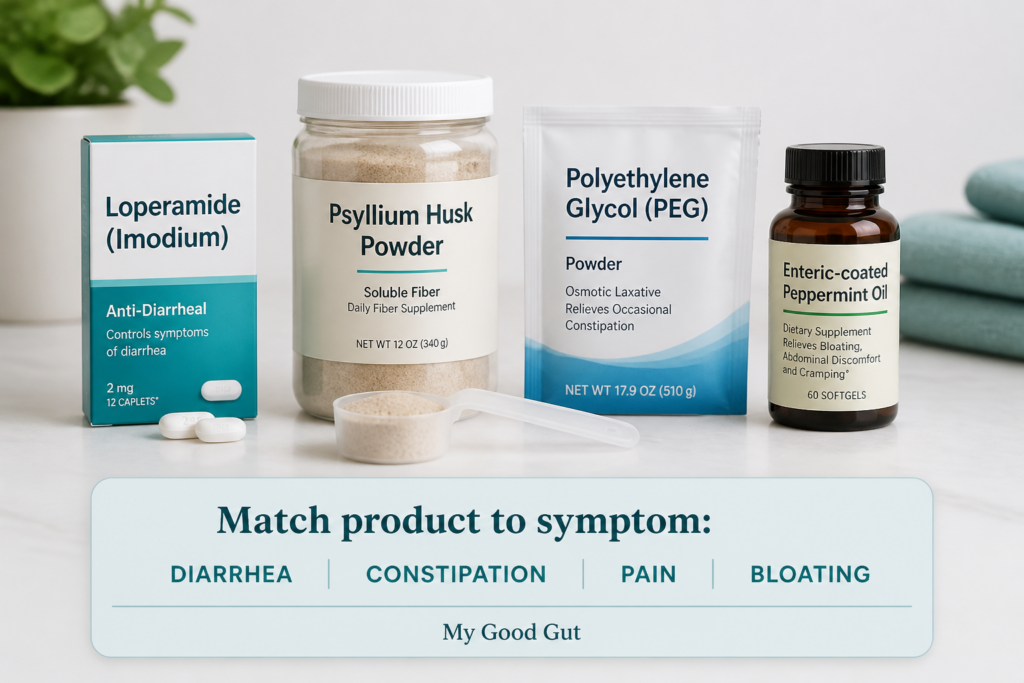
The best over-the-counter medication for IBS depends on your main symptom pattern, because these products help manage symptoms rather than the root cause. Different IBS types have different treatments.
If diarrhea leads the day, loperamide Imodium is often the first thing to try. If constipation is the bigger issue, psyllium or polyethylene glycol (PEG) usually makes more sense. For cramping, enteric-coated peppermint oil for IBS can be a strong fit, especially when pain and bloating show up together.
A quick symptom match can keep the choice from getting overwhelming:
| Main IBS pattern | Good first OTC option | What it tends to help most |
|---|---|---|
| IBS-D | Loperamide Imodium | Loose stools, urgency, stool frequency |
| IBS-C | Psyllium or PEG | Hard stools, infrequent stools, easier passage |
| Mixed IBS | Symptom-by-symptom treatment | Flare-by-flare matching |
| Pain or cramping | Enteric-coated peppermint oil | Spasms, abdominal pain, some bloating |
| Gas or bloating | Simethicone | Gas discomfort, pressure |
For IBS-D, loperamide can help when loose stools and urgency are getting in the way of work, travel, or daily routines. It can slow stool movement and cut down bathroom trips. It usually does not do much for pain or bloating on its own, so those symptoms may need a second option.
For IBS-C, a constipation-first approach usually works better than trying to chase every symptom at once. Psyllium is often the most flexible fiber choice because it can help both constipation and diarrhea by bulking stool and supporting more regular transit. PEG is useful when the main goal is softer, easier-to-pass stools. Both are common OTC remedies for IBS, but your response can differ depending on how sensitive your gut is.
Mixed IBS usually responds best to a symptom-by-symptom plan instead of one all-purpose product. A flare with diarrhea may call for loperamide, while a constipation flare may call for psyllium or PEG. When cramping is the worst part, peppermint oil for IBS can be the most practical next step.
Enteric-coated peppermint oil works a little differently from a plain capsule. The coating helps it pass through the stomach and dissolve farther down in the intestines. There, peppermint can relax smooth muscle and ease cramping, pain, and some bloating. That makes enteric-coated peppermint oil for IBS a useful choice when spasms and bowel changes happen at the same time.
A short trial and a simple fallback plan can save you time:
- If the first option helps: keep using it as directed and note what improved.
- If it barely helps: switch to the next symptom-matched option.
- If symptoms overlap: combine treatments carefully, such as bowel-habit support plus peppermint oil.
- If symptoms worsen, change pattern, or stay disruptive: stop self-treating and get individualized medical guidance.
IBS can shift from week to week, so the best over-the-counter medication for IBS is the one that matches how you feel right now. If one choice falls flat after a reasonable trial, move to the next symptom-matched option and get medical guidance when symptoms stay disruptive or change in a worrying way.
How Should You Use OTC IBS Remedies Safely?
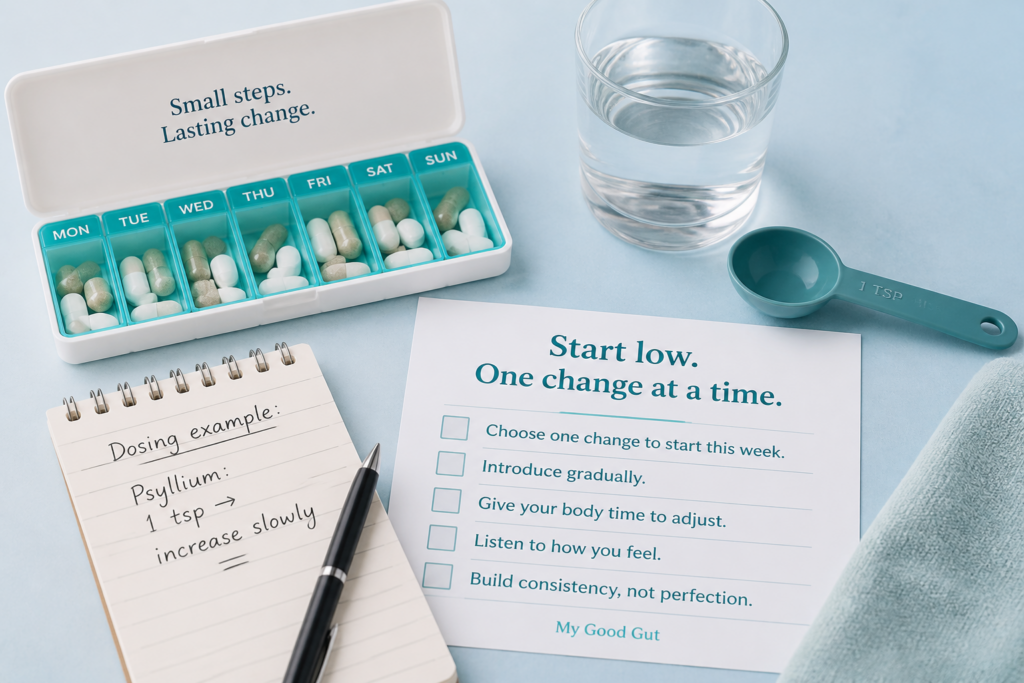
Safe use matters as much as the remedy you choose. An over-the-counter medication for IBS can help you manage symptoms, but the wrong dose, timing, or mix can make things worse.
A simple rule helps here: start low and change one thing at a time.
- If you have IBS with diarrhea: Use loperamide only as needed. Start with the lowest effective dose. Stop if constipation begins. Continuous use without medical guidance is risky because too much can cause severe constipation and can also hide a symptom change that needs evaluation.
- If you have IBS with constipation: Soluble fiber supplements, especially psyllium husk, are often a good long-term starting point. A common first step is about one teaspoon daily, then a gradual increase over days to weeks. Plenty of water helps the fiber absorb fluid, add bulk, and soften stool.
- If fiber makes symptoms worse: Slow the pace instead of forcing it. Rapid increases can trigger more gas, cramping, and bloating. Insoluble fiber, such as wheat bran, can worsen symptoms for some people, so a lower dose or a different approach may work better.
- For tougher constipation days: Osmotic laxatives such as polyethylene glycol, often sold as MiraLAX, are usually gentler when used as directed. Diarrhea is the main side effect. Stimulant laxatives Dulcolax Senokot are better for occasional rescue use because frequent use can lead to cramping and a pattern your body may start to rely on.
Here’s a quick comparison of common options:
| Remedy | Best fit | Main caution |
|---|---|---|
| Loperamide | IBS with diarrhea | Can cause constipation if overused |
| Psyllium and other fiber supplements for IBS | IBS with constipation | Increase slowly and drink water |
| Osmotic laxatives | Short-term constipation relief | May cause diarrhea |
| Stimulant laxatives Dulcolax Senokot | Occasional rescue use | Cramping and frequent-use problems |
Many OTC products need extra caution if you take other medicines or have kidney disease, heart disease, or pregnancy-related concerns. The same is true if you already use other constipation and diarrhea products. Check labels carefully, and avoid stacking multiple laxatives or antidiarrheals unless a clinician tells you to do so.
That caution also applies to probiotics for IBS, since they may help some people but are not a substitute for medical care. The same is true for soluble fiber supplements and fiber supplements for IBS. If a product makes your symptoms shift in a new or uncomfortable way, stop and reassess instead of pushing through.
Stop self-treatment and get medical advice if you notice worsening pain, vomiting, fever, blood in the stool, unintentional weight loss, dehydration, a new change in bowel habits, symptoms that last beyond a short OTC trial, or severe constipation or diarrhea after starting a remedy. Digestive symptoms can have many causes, and persistent or worsening symptoms deserve a qualified healthcare professional’s input.
When Should You Switch To Prescription Care?
IBS medicines help manage symptoms, not replace a diagnosis. If your OTC plan is still leaving you with diarrhea, constipation, pain, or bloating, it’s time to think about a clinician visit. The IBS treatment path works best when it matches your IBS subtype, whether that’s IBS with diarrhea, IBS with constipation, or mixed IBS.
Some symptoms should prompt medical evaluation instead of more self-treatment:
- Blood or bleeding: rectal bleeding or blood in the stool
- Body changes: unexplained weight loss or iron-deficiency anemia
- Night symptoms: diarrhea that keeps waking you up
- Whole-body signs: fever or severe, persistent vomiting
Those signs can point to something other than IBS. They deserve a real workup.
A practical threshold is often easier to use than people expect. If your symptoms stay moderate to severe after a reasonable OTC trial, wake you at night, or interfere with eating, work, sleep, or leaving the house, it’s time to reassess with a healthcare professional. The same is true if your pattern changes, your flares worsen, or the symptoms no longer look like your usual flare pattern.
Prescription options often depend on the symptom pattern and your history:
| Symptom pattern | Prescription options a clinician may consider | What they’re used for |
|---|---|---|
| IBS with diarrhea | rifaximin for SIBO, alosetron | May help when diarrhea is the main problem |
| IBS with constipation | linaclotide Linzess, plecanatide Trulance, prucalopride | May help ease constipation and improve bowel movements |
| Mixed or shifting symptoms | Individualized plan | Guided by testing, history, and safety factors |
The guide to IBS medications can help you compare options before an appointment. A low-FODMAP diet can still stay in the picture, since FODMAP triggers often matter even when prescription care is part of the plan. Some people also ask about functional medicine IBS approaches, but those should never replace medical evaluation when red flags or major disruption show up.
Natural and lifestyle steps still make sense first, especially for milder flares. But if your symptoms are new, worsening, or no longer fit your usual pattern, stop rotating OTC products and get evaluated sooner so you can move toward the right prescription path.
OTC IBS FAQs
These FAQs cover common questions about IBS, OTC remedies for IBS, evidence-based IBS supplements, the low-FODMAP diet, FODMAP triggers, functional medicine IBS approaches, and when options like rifaximin for SIBO come up. For a quick snapshot of how common IBS is, IBS facts and statistics can help frame the choices before you compare options.
1. Which OTC IBS Medicine Helps Diarrhea?
For IBS-D, loperamide Imodium is usually the main OTC choice during a flare, and it can reduce urgency. Use it as needed during a flare, not as a daily long-term fix unless a clinician tells you to, because too much can cause severe constipation and hide a pattern that needs review. Bismuth subsalicylate Pepto-Bismol can also help some short diarrhea episodes, but it’s more of a symptom helper than a full IBS treatment, and neither option usually eases IBS-related belly pain. Skip antidiarrheals if you have blood in the stool, fever, severe pain, or diarrhea that keeps coming back or getting worse.
2. Which OTC IBS Medicine Helps Constipation?
For IBS-C, start with psyllium husk, one of the most useful soluble fiber supplements, and increase slowly with plenty of water. Begin low, such as about 1 teaspoon daily or 3 to 4 g, and increase slowly with plenty of water so you limit gas and bloating. If you need faster relief, polyethylene glycol MiraLAX is an osmotic laxative that draws water into the colon and often works in 1 to 3 days, while methylcellulose can be a gentler backup if fiber supplements for IBS feel too gassy. Stimulant laxatives Dulcolax Senokot may cause more cramping, so talk with a healthcare professional if constipation keeps going or gets worse.
3. Can I Take Probiotics For IBS?
You can try probiotics for IBS, but the evidence is mixed, so they work best as a time-limited trial rather than a sure fix. The Bifidobacterium and Lactobacillus groups have the most support, and some people notice less bloating and gas after about 3 to 4 weeks, while others feel little change. If you do not improve or your symptoms get worse, stop the probiotic and talk with a clinician, then review top IBS supplements as part of a wider evidence-based IBS supplements plan.
4. Do IBS Antispasmodics Cause Drowsiness?
OTC antispasmodics for IBS can still cause dry mouth, dizziness, or blurred vision, though hyoscine or Buscopan often relieve cramping without making you sleepy. Buscopan often relieves cramping within 30 to 45 minutes by relaxing intestinal smooth muscle, while enteric-coated peppermint oil reaches the intestines and offers a non-sedating option for many people. If you need to stay alert for work or driving, peppermint oil for IBS is often the better fit, but it can also trigger heartburn or reflux, so stop and seek medical advice if symptoms are persistent, severe, or worsening (source).