


Natural home remedies for IBS work best when they match the symptom pattern that’s actually causing trouble. For adults trying to manage constipation, diarrhea, bloating, or cramping without overcomplicating meals or routines, IBS self-care can feel frustrating when one approach helps one symptom and worsens another. IBS is a long-term gut disorder that causes recurring bowel changes and abdominal discomfort, and the right at-home plan should make your next step clearer.
This overview covers how to choose between soluble fiber, peppermint oil, probiotics, calming routines, and food changes based on whether IBS-C, IBS-D, or mixed IBS is showing up. It also explains safety concerns, starting doses, trial timing, and when a remedy is a bad fit. The aim is a practical decision path, plus a simple way to track what helps, what doesn’t, and what to stop.
That matters most for busy professionals, parents, teachers, and anyone who needs workable relief without expensive testing or extreme diets. A teacher with urgency before class, for example, may do better with peppermint oil and trigger-food changes than with more fiber, while someone with IBS-C may need psyllium first. My Good Gut keeps the focus on clear, evidence-informed choices so you can move ahead with more confidence.
Natural Home Remedies for IBS Key Takeaways
- Match remedies to your main IBS symptom pattern.
- Soluble fiber often helps IBS-C and mixed IBS.
- Peppermint oil is most useful for pain and cramping.
- Probiotics may help, but strain and dose matter.
- Start with one remedy at a time and go low.
- Track stool form, urgency, bloating, pain, and side effects.
- Stop and seek care for bleeding, weight loss, or worsening symptoms.
How Do You Match Remedies To Your IBS Symptoms?
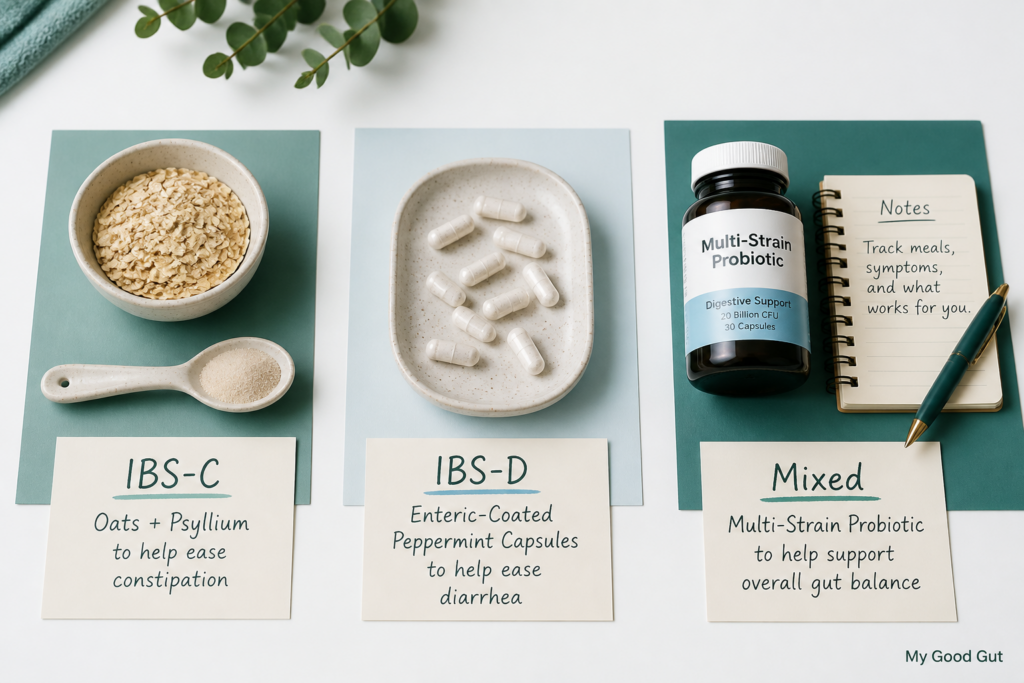
The safest way to use natural home remedies for IBS is to start with your main symptom pattern. Irritable bowel syndrome (IBS) has no cure, so IBS self-help works best when you match the remedy to the problem that bothers you most, whether that’s constipation, diarrhea, bloating, pain, or urgency.
| Symptom pattern | Best-fit home approach | Watch for |
|---|---|---|
| IBS-C | Soluble fiber, steady fluids, gentle movement | Fiber that leaves you feeling fuller or more cramped |
| IBS-D or urgency-heavy IBS | Lower trigger foods, calming routines, careful fiber use | Added fiber that increases looseness or urgency |
| Mixed IBS | Symptom-by-symptom changes based on the current flare | One symptom easing while another gets worse |
| Bloating and pain | Peppermint oil for IBS | Mint products that trigger reflux or stomach upset |
For constipation-dominant IBS, stool-softening support usually matters more than pain alone. Soluble fiber, enough fluids, and regular movement are often the most useful home remedies IBS can respond to. If diarrhea is the bigger problem, focus on calming bowel overactivity and trimming trigger foods first.
Mixed IBS calls for a flexible plan. One week may need constipation support, while the next may need diarrhea control. That is why a single routine often does not fit every flare.
When bloating and abdominal pain are the biggest issues, peppermint oil for IBS can be a targeted option. Multiple randomized controlled trials have linked peppermint oil with better global symptoms and lower symptom severity scores in IBS, and some studies also report improvements in stool frequency and stool form (source).
The broader IBS treatment guide can help you compare other options. Your own response should still guide the final choice, especially with natural home remedies for IBS and other home remedies IBS may or may not tolerate well. Track likely triggers, notice tradeoffs, and change course if one symptom improves while another worsens. Digestive symptoms can have many causes, so seek medical advice if symptoms are persistent, severe, or worsening.
Which Remedies Fit IBS-C, IBS-D, Or Mixed IBS?
The best remedy depends on your main symptom pattern, not just the IBS label. If constipation, diarrhea, and bloating all show up at different times, it usually helps to match the option to the symptom that is loudest that week.
| IBS pattern | Best-fit remedies | Why they help | Main cautions |
|---|---|---|---|
| IBS-C | Psyllium, gentler fiber strategies | Adds bulk and can soften stools without working like a harsh stimulant laxative | Start low if you cramp or bloat easily |
| IBS-D | Peppermint oil, probiotics | May calm spasms, urgency, and loose stools while supporting gut microbiota modulation | Peppermint oil can worsen reflux or heartburn |
| Mixed IBS | Peppermint oil, psyllium, Iberogast STW-5, probiotics | Helps when pain, stool swings, and bloating change from day to day | Timing and dose matter, and herbal blends can feel different for each person |
For IBS-C, psyllium for IBS is usually the most balanced fiber choice. It can support stool softness without the push you get from a stimulant laxative. A 2017 randomized trial found benefit across IBS subtypes. Some people still do better with a lower dose at first to cut down on gas or cramping.
For IBS-D, peppermint oil for IBS often fits best when cramping, urgency, and loose stools are the main problems. Multiple randomized controlled trials and at least one Phase 3 study found improvements in global symptom scores, IBS Severity Scoring System ratings, stool frequency, and stool form. The best peppermint oil for IBS can still irritate reflux or heartburn in sensitive people.
Mixed IBS often responds better to symptom timing than to one fixed label. Peppermint oil can help when spasms and pain dominate. Psyllium can help when stools swing too hard or too loose. Iberogast STW-5 is one of the herbal remedies for IBS that may help bloating and cramping, but botanical blends can affect people differently.
Probiotics for IBS are worth a careful trial in any subtype, especially when bloating or irregularity is part of the picture. Strain matters, results vary by person, and it makes sense to stop if gas or discomfort gets worse.
A simple way to choose is this:
- Constipation leads: start with fiber-first options.
- Pain and urgency lead: try peppermint oil.
- Symptoms alternate: use a mixed approach with fiber, peppermint oil, or selected probiotics.
Digestive symptoms can have many causes, so persistent, severe, or worsening symptoms should be evaluated by a qualified healthcare professional. This content is for educational purposes only.
What Should You Try First At Home?
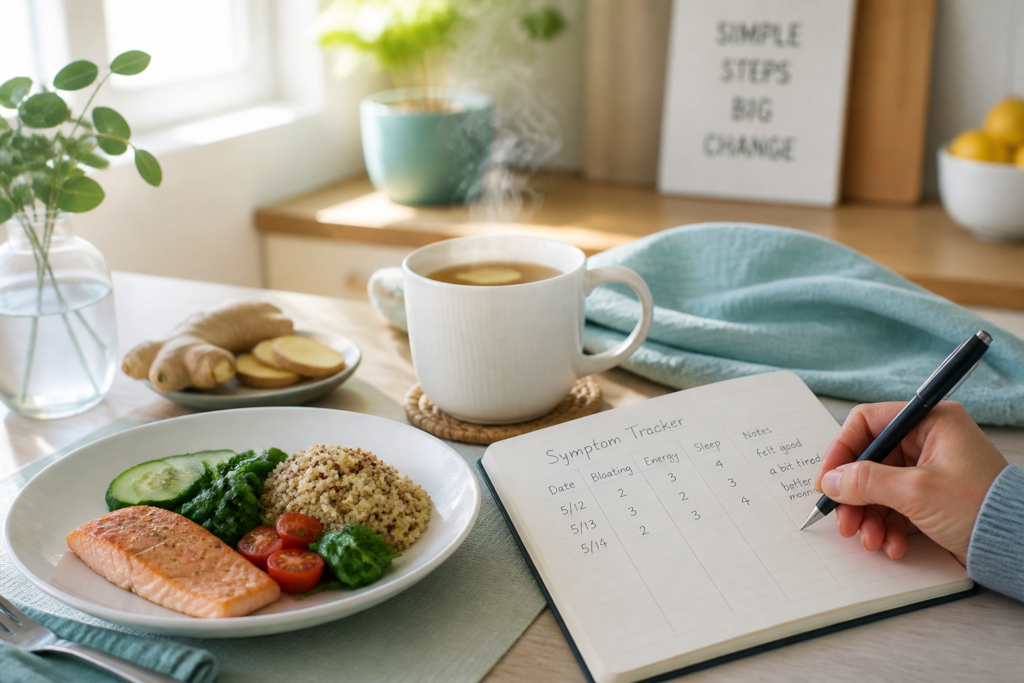
Start with the simplest changes first. Smaller, steadier meals often calm IBS before supplements do. It also helps to slow down on very large or high-fat meals and watch whether onion, garlic, spicy foods, alcohol, or too much caffeine reliably make your symptoms worse.
A simple order can keep this from feeling overwhelming:
- First: Start with simpler meal changes and track likely triggers for one to two weeks before adding a new remedy (source).
- Second: If constipation shows up in your pattern, try soluble fiber for IBS, especially psyllium or methylcellulose. Increase slowly and drink enough water so you lower the chance of extra gas or bloating.
- Third: If cramping, bloating, or pain after meals is the main problem, peppermint oil is often a practical early choice. Follow the label, and stop if it brings on reflux or heartburn.
- Fourth: If those steps help only partly, a basic probiotic can be worth a short trial. A 2019 review found promise in some multi-strain products, but the long-term evidence is still limited. Treat it as a test, not a sure fix.
For flare days, comfort measures can take the edge off. Using a heating pad safely may ease tight, sore muscles. Warm noncaffeinated tea can also help, and chamomile is a common option. Ginger (Zingiber officinale) for digestion may be useful too, especially when nausea or post-meal unease is part of the picture.
If you want a broader look at supplement choices after the basics, top ibs supplements can help you sort the options. The usual order is simple and practical: diet first, then fiber for IBS with soluble fiber if constipation is part of your pattern, then peppermint oil for cramping, and then probiotics or soothing heat and tea based on the symptoms you notice most often.
How Do Fiber, Peppermint Oil, And Probiotics Compare?
Fiber is often the best first step when your main problem is stool form or irregular bowel movements. For many people with IBS-C or mixed IBS, soluble fiber, especially psyllium, can make stools easier to pass and may ease pain tied to constipation. The tradeoff is that it usually works slowly, and some people notice more gas or cramping at first.
Peppermint oil is usually the stronger pick for cramping and abdominal pain. It relaxes gut muscle, so it can calm spasms and bloating more directly than fiber. That makes it a better fit for many people with IBS-D or IBS-M when pain after meals is the main issue.
Probiotics are the least predictable option. They may help bloating, pain, or stool changes, but the effect depends on the strain, the dose, and the product quality. Harvard has also cautioned that evidence is still not strong enough to recommend specific products for everyone, and some supplements may not contain the microbes listed on the label.
The practical comparison looks like this:
| Remedy | Best symptom target | Likely IBS match | Typical timing |
|---|---|---|---|
| Fiber | Stool consistency and regularity | IBS-C, IBS-M, and some IBS-D | Several days to a few weeks (source, source) |
| Peppermint oil | Pain, cramping, and spasms | IBS-D and IBS-M, especially after meals | Days to a couple of weeks (source, source) |
| Probiotics | Bloating and overall symptom burden | Worth trying when gas is prominent | Often longer before a clear verdict (source, source) |
Psyllium-based [fiber for IBS] is usually the most broadly useful across subtypes, but a lower dose can be easier on a sensitive gut. Peppermint oil is often the better fit when cramping keeps hijacking your day. [Probiotics for IBS] may help some people through [gut microbiota modulation], while [prebiotics for IBS] can be trickier because they sometimes increase gas before they help.
The safest way to test these options is to change one remedy at a time. That gives you a clean read on what actually helps your body, whether your main issue is constipation, diarrhea, pain, or gas. Results vary by person, and any dietary or supplement choice should be individualized. This content is for educational purposes only. Digestive symptoms can have many causes, so persistent, severe, or worsening symptoms should be evaluated by a qualified healthcare professional.
How Do You Use Each Remedy Safely?
Start with one remedy at a time and use the lowest practical dose. Increase slowly, and follow product labels and clinician guidance for fiber, peppermint oil, probiotics, teas, and herbal blends (source, source). That makes it easier to see what helps and what brings on side effects, especially with fiber, peppermint oil, probiotics, teas, and other supplements. Adding several new products at once can make symptom tracking messy fast.
Fiber is often a smart first step, but the type matters. Soluble fiber is usually easier on the gut than rough, high-bulk fiber, and methylcellulose can be a good option if you bloat easily. Increase slowly, drink enough water, and pause if gas or cramping gets worse. Talk with a clinician first if you have a bowel obstruction risk, severe constipation, or trouble swallowing.
Some herbal remedies for IBS act more like active treatment than a soothing cup of tea. Peppermint oil can calm spasms, but it can also worsen reflux or heartburn if you have GERD. Iberogast STW-5 and similar blends may interact with medicines, and they are not a great choice during pregnancy, breastfeeding, or liver concerns. Fennel (Foeniculum vulgare) is sometimes used for bloating, but it still deserves the same cautious, step-by-step approach.
A few other choices need the same careful read:
- Probiotics: Temporary gas or bloating can happen before any benefit shows up. Check with a healthcare professional first if you are immunocompromised, have a central line, or are recovering from serious illness.
- Teas: Look for caffeine, laxative herbs, and added ingredients that can worsen diarrhea or cramping.
- Supplements: Read labels closely. Natural does not always mean safe.
The evidence is mixed for curcumin (turmeric) for IBS, and study quality has been uneven. Aloe vera for IBS also has mixed support, and some products raise toxicity concerns. Prebiotics for IBS can help some people, but they can also increase gas at first.
If you are pregnant, take prescription blood thinners, or notice severe pain, bleeding, fever, vomiting, weight loss, or worsening symptoms, stop the remedy and get medical advice. This content is for educational purposes only and is not a substitute for personalized medical advice. Digestive symptoms can have many causes, so you should consult a qualified healthcare professional for persistent, severe, or worsening symptoms. Results vary by person, and any dietary or supplement advice should be individualized.
How Much Should You Start With?
Start low and change only one thing at a time. That makes it easier to tell whether a remedy is helping or stirring up more gas, cramping, or bloating. Start with the lowest label dose or a clinician-recommended dose, then increase slowly if the product is tolerated. Exact amounts vary by product and formulation, so use the package directions for psyllium, peppermint oil, and probiotics (source, source).
A cautious starting point for common options looks like this:
- Psyllium: Start with a low label dose and increase slowly if you tolerate it well.
- Peppermint oil: Choose an enteric-coated capsule and start with the lowest label dose.
- Probiotics: Start modestly and stick with one product for several weeks before deciding if it helps.
- Ginger tea: Grate about 1/2 teaspoon of fresh ginger into hot water and steep for 10 minutes. This simple version of ginger (Zingiber officinale) for digestion can work well after meals or during nausea-prone flare-ups.
- Peppermint tea: Use one tea bag or a small handful of fresh leaves in hot water for 5 to 10 minutes. This is a gentle first step before trying capsules.
Give each remedy several days before adjusting it. If symptoms keep getting worse, stop the remedy and talk with a healthcare professional.
How Long Should You Trial It?
Timing matters because different IBS remedies work on different schedules.
Try not to judge a remedy after just a few days. Side effects or a clear flare are different. Probiotics often need more patience, while peppermint oil, ginger, fiber, and mind-body therapies may show benefits on different timelines.
Give each remedy a fair trial before deciding whether it helps. Fiber, peppermint oil, and mind-body therapies may show benefits on different timelines, while probiotics often need a longer trial before the effect is clear (source, source).
Look for real-world wins, not perfection. Fewer flare-ups, less urgency, and better control on stressful days matter more than one symptom score.
Stop sooner if you get diarrhea, worse constipation, major pain, or any new alarm symptoms. This content is for educational purposes only and is not a substitute for personalized medical advice. Persistent or worsening IBS symptoms should be reviewed with a qualified healthcare professional, because results vary by person and any approach should be individualized.
What Should You Avoid Or Watch For?
A few common triggers are worth watching closely when your IBS flares. Foods high in fermentable carbs can draw water into the intestines and feed gas, which is why beans, cabbage, cauliflower, garlic, and many dairy foods may lead to bloating, cramping, or loose stools for some people.
A low-FODMAP diet can help you spot patterns without assuming every trigger affects you the same way. The goal is not to cut everything forever. It is to notice which foods line up with your symptoms and which ones do not.
Fiber deserves a slow start, even when you choose gentler options like psyllium or methylcellulose. A rapid increase can add gas and abdominal pressure before your body settles in. It helps to watch whether constipation improves and whether your stool becomes more consistent over time.
Drinks and sweeteners matter too. Alcohol and caffeine can irritate the digestive tract and speed up bowel movements, so coffee, alcohol, and even chocolate may worsen diarrhea, urgency, or stomach discomfort. Sugar-free gum, mints, and diet foods can also be a problem because sugar alcohols are poorly absorbed and often cause extra gas and diarrhea.
A simple watch list can help you stay steady:
- Pause any food, drink, fiber supplement, or herbal blend that reliably worsens pain, bloating, or bowel changes
- Limit herbal formulations that mix several ingredients or include stimulant herbs
- Avoid starting several new remedies at the same time
- Reintroduce only a small amount if you want to test a possible trigger again
If one product seems to make symptoms worse every time, step back and keep notes. Seek medical advice if your symptoms are persistent, severe, or worsening.
Who Should Skip Certain Fiber Or Herbal Remedies?
Some fiber and herbal remedies are a poor fit for certain people, even when they seem mild. The safest move is to start with the least risky option that matches your symptoms, then stop before adding herbs that could complicate your care.
A few groups should be extra careful:
- Pregnancy or breastfeeding: Skip herbal products unless a clinician says they’re okay. Safety data for aloe vera for IBS and concentrated turmeric products is limited, and supplement strength can vary a lot. When you need a gentler option, fluids, regular meals, and a small amount of soluble fiber from oats or psyllium may be the safer place to start.
- Prescription medicines: Fiber supplements can lower medicine absorption, so spacing them a few hours away from pills is often wise. Extra caution matters if a remedy may affect blood clotting, blood sugar, or stomach irritation.
- Heart disease or heart medicines: Herbal products are not automatically harmless. A food-first approach is usually safer than trying several extracts at once.
- Severe GI disease, recent bowel surgery, swallowing trouble, or a blockage history: Skip bulking fiber supplements unless a healthcare professional clears them. A low-dose soluble fiber, symptom tracking, or medical guidance may fit better.
Curcumin (turmeric) for IBS is worth a careful look only if it fits your medication list and your stomach tends to tolerate supplements. Aloe vera deserves similar caution because the evidence is mixed and the safety concerns are stronger than the symptom claims.
Which Side Effects Mean You Should Stop?
Some side effects are a clear stop sign. If a remedy brings on severe or cramping abdominal pain that is new, intense, or much worse than your usual IBS pattern, stop using it and get medical evaluation. The same is true if you notice gastrointestinal bleeding, such as black or tarry stools, bright red blood in the stool, or vomit that looks like blood or coffee grounds.
Symptoms that keep getting worse after a short trial also deserve attention. If diarrhea, constipation, bloating, or pain becomes harder to manage instead of easing, pause the remedy and talk with a healthcare professional. Stop a supplement, herb, or fiber product if it causes ongoing nausea, repeated vomiting, dizziness, or dehydration.
Treat possible allergic reactions as urgent. Stop the product and get immediate help if you notice:
- Hives or itching
- Swelling of the lips or face
- Wheezing or chest tightness
- Trouble breathing
This content is for educational purposes only and is not a substitute for personalized medical advice. Digestive symptoms can have many causes, and persistent, severe, or worsening symptoms should be checked by a qualified healthcare professional.
How Do You Track Results And Adjust?
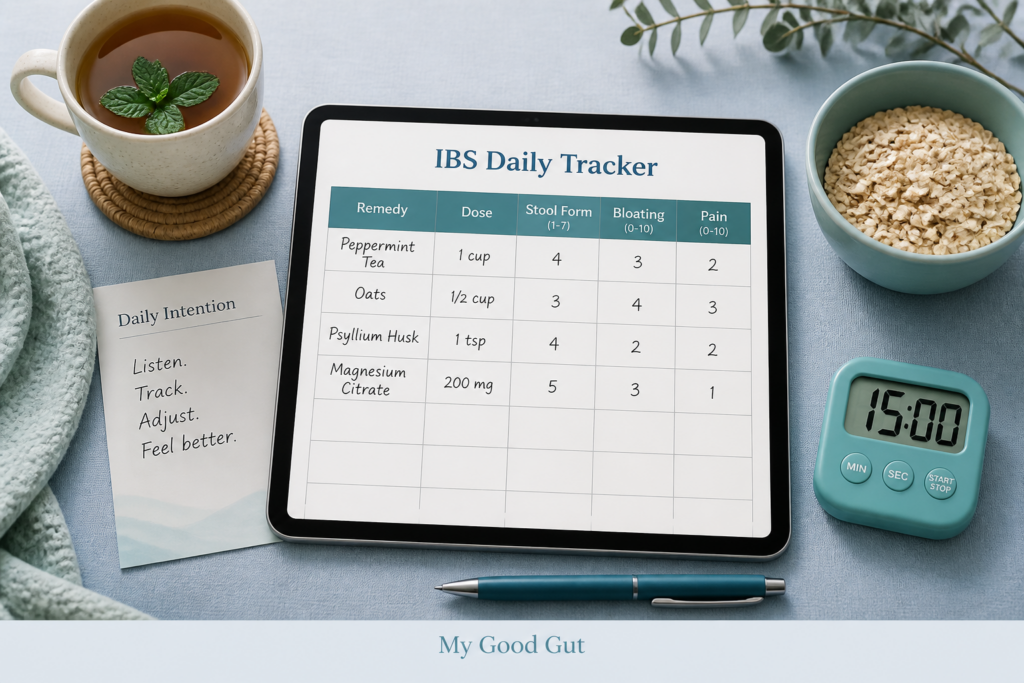
A simple tracker makes IBS self-help feel a lot less random. It helps you tell the difference between a real pattern and one rough day after a stressful lunch or a late night.
Use the same daily fields each time so your notes stay easy to compare:
- Remedy used: fiber, probiotic, peppermint oil, or another home step
- Dose or amount: how much you took or ate
- Timing: when you used it and how close it was to meals
- Food context: what you ate and whether a trigger food showed up
- Stress level: low, medium, or high
- Bowel movements: frequency and any urgency
- Stool form: the same simple scale every day
- Bloating and pain: rate both on a small scale
- Side effects: gas, cramps, nausea, or anything new
Track only a few clear key performance indicators so you do not drown in details. The most useful ones are stool frequency, stool form, urgency, bloating severity, abdominal pain, and how much symptoms interrupt work or daily routines.
| KPI to watch | What to note |
|---|---|
| Stool frequency | How often you go |
| Stool form | Loose, normal, or hard |
| Urgency | Mild, moderate, or strong |
| Bloating | None, mild, moderate, or severe |
| Abdominal pain | Where it is and how bad it feels |
| Daily disruption | Missed tasks, breaks, or schedule changes |
A change counts most when it lasts for several days, not just one morning.
Trial timing matters too. Fiber often works best when it is increased slowly, because a rapid jump can worsen gas or bloating in some people (source, source). It can also stir up gas or bloating for some people. Probiotics often need at least a month before any benefit shows up, and symptoms may return after you stop.
The safest way to adjust is one variable at a time:
- Keep the remedy steady if it helps a little.
- Change only one thing, such as dose, timing, or food pairing.
- Stop the remedy if symptoms clearly get worse.
- Switch to a different approach instead of stacking several new treatments at once.
That approach gives you cleaner signals when meals, stress, and bowel changes all overlap.
A simple 2- to 4-week workbook or checklist can make symptom tracking easier to follow and compare over time (source). It should include a daily symptom log, a remedy tracker, side-effect notes, and a weekly review box that asks whether the change feels clinically meaningful. IBS has no cure, and worsening symptoms should be reviewed with a qualified healthcare professional.
What Should You Log Each Day?
A simple daily log helps you see what’s actually changing. Memory gets fuzzy fast when IBS symptoms flare, so a short note each day is usually more useful than trying to recall a whole week at once.
Track these details in a notebook app, spreadsheet, or paper tracker:
- Symptoms: abdominal pain, bloating, gas, urgency, constipation, or diarrhea
- Stool pattern: loose, hard, or normal, plus bowel movement count, straining, incomplete emptying, or sudden urgency
- Severity and timing: rate symptoms from 0 to 10 and note when they were worst
- Food and drinks: everything you ate and drank, with special attention to fiber changes, trigger foods, caffeine, alcohol, and large meals
- Remedies tried: peppermint oil, probiotics, fiber, herbal tea, or relaxation practices, plus dose, timing, and your response
- Daily context: stress level, sleep length and quality, and any medication or supplement changes
A few lines are enough if you keep them consistent. The goal is not a perfect diary. It’s a clear record that helps you compare flare-ups, spot patterns, and judge whether a remedy is helping or just lining up with a better day.
When Should You Try The Next Remedy?
Give each remedy a fair trial before you move on. IBS symptoms often change slowly, so a stable 2 to 4 week trial is usually enough to judge whether it’s helping. If side effects are bothersome or the remedy clearly makes things worse, stop sooner and choose a different option.
A partial response still matters. Less pain, less bloating, or fewer urgent bowel movements can mean the remedy is working, even if you’re not symptom-free yet. Little or no change usually means it’s time to switch. When one symptom improves but another does not, use your main goal to decide the next step:
- Stack when the first remedy helps and the added risk feels low, but you still need support for another symptom.
- Switch when the first remedy causes gas, cramping, diarrhea, or constipation.
- Stay with it when your symptoms are clearly trending better.
More complex patterns usually need clinician-guided care. That’s especially true for IBS-C, IBS-D, and mixed IBS. A low-FODMAP plan often works best as a short elimination phase for about 2 weeks, followed by reintroduction. If stress and pain drive your flares, CBT for IBS, hypnotherapy for IBS, or biofeedback for IBS may be worth discussing.
Seek medical advice before the next step if your symptoms are severe, worsening, or persistent, or if you’re not sure the pattern is really IBS. My Good Gut’s guidance can support your choices, but it does not replace personalized care.
Natural IBS Remedies FAQs
These FAQs cover the most common questions about home remedies IBS, including natural home remedies for IBS, acupuncture for IBS, and fennel (Foeniculum vulgare). They’re here to help you sort through practical options, safety notes, and when a simple at-home step may not be enough.
1. Can IBS symptoms go away on their own?
Yes, IBS symptoms can ease on their own for a while, especially after a flare tied to stress, certain foods, or a change in routine. Some people recover after a short episode, while others have symptoms that come and go for years, so results vary from person to person. If your symptoms are mild and rare, simple habit changes may help manage them, but persistent, severe, or worsening symptoms deserve a plan and a check-in with a healthcare professional because digestive symptoms can have many causes.
2. Is low-FODMAP a home remedy for IBS?
The low-FODMAP diet is better thought of as a structured plan than a simple home remedy for IBS. It usually starts with a short elimination phase, often around two weeks, so you can see whether certain fermentable carbs line up with your symptoms. After that, foods are added back one group at a time to spot your personal triggers and avoid cutting out more than you need. A dietitian can make the process easier, safer, and more balanced.
3. Can stress relief help IBS flare-ups?
Stress can trigger IBS flare-ups through the brain-gut connection, so calming your nervous system may ease cramping, urgency, and bowel changes for some people. An 8-week mindfulness program has been linked with better GI symptoms in IBS, and behavioral therapies for IBS can include relaxation training, meditation, yoga, and hypnosis. During a flare, try 5 to 10 minutes of slow breathing, a body scan, gentle stretching, yoga for IBS, biofeedback for IBS, or symptom tracking after stressful days, poor sleep, or skipped breaks. Results vary, and mind-body therapies for IBS are support tools, not a cure, so seek medical advice if symptoms are persistent, severe, or worsening.
4. When should you see a doctor for IBS?
IBS can’t be cured, so it’s smart to book medical advice if symptoms keep coming back, get worse, or don’t improve after safe home steps like fiber, diet changes, or stress reduction. Seek urgent care if you have rectal bleeding, unexplained weight loss, fever, vomiting, severe or new abdominal pain, anemia, or symptoms that wake you from sleep. If bowel habits change suddenly, symptoms start later in life, or IBS is affecting work, sleep, eating, or daily life, the IBS medication guide can help you prepare for a non-urgent visit, and a clinician can check for IBS using the ROME IV criteria and rule out other causes.