


Yogurt can be a smart food choice for IBS, but the wrong cup can also bring bloating, cramps, and urgent bathroom trips. A low-FODMAP plan limits fermentable carbs that can pull water into the gut and feed gas production. Clear steps here show which yogurt types are worth trying, how lactose and labels change tolerance, and when to stop the experiment.
The evidence points to a few practical paths, including plain Greek yogurt, lactose-free dairy, and select plant-based options with short ingredient lists. It also covers live active cultures, probiotic strain claims, serving-size limits, and common add-ins like inulin, sweeteners, and fruit blends that can complicate IBS symptoms. The result is a simple way to compare options, run a small home tolerance test, and keep a low-FODMAP approach grounded in real meals.
Meal planners, caregivers, registered dietitians, and clinicians will find the most value here because the choices affect comfort, symptom control, and daily food planning. A small plain serving can be fine for one person and rough for another, which is why the article includes a useful test with 2 to 3 tablespoons and a 24-hour symptom check. The next sections turn that kind of trial into practical guidance you can use with more confidence.
IBS and Yogurt Key Takeaways
- Yogurt may help some IBS symptoms, especially bloating, pain, and irregular bowel habits.
- Plain Greek yogurt and lactose-free dairy are often the safest first tests.
- Low-FODMAP servings are small, especially for dairy Greek yogurt.
- Live active cultures matter, but they do not guarantee symptom relief.
- Added sweeteners, inulin, fruit, and gums can trigger IBS reactions.
- Start with 2 to 3 tablespoons and track symptoms for 24 hours.
- Stop testing and seek help for bleeding, severe pain, weight loss, or repeated flares.
What Does The Research Say About Yogurt And IBS?
The research on yogurt, a cultured dairy choice for IBS, is encouraging, but it is not one-size-fits-all. Clinical trials and meta-analyses suggest that probiotic yogurt can ease bloating, abdominal pain, gas, and irregular bowel habits for some people, especially when it contains live active cultures. Results still vary by symptom pattern, product type, and how much culture survives in the final product.
That difference matters because not every yogurt offers the same benefit. Yogurts with Lactobacillus and IBS-relevant strains, along with Bifidobacterium, may help support bowel regularity and gut movement over time. Plain yogurt with little meaningful probiotic content is less likely to do much. One small study suggested that some people with IBS may improve after regular homemade live-culture yogurt, but the evidence is not strong enough to treat that response as typical. Public IBS guidance says diet triggers vary widely from person to person (source). The full report is available through homemade yogurt (source).
A practical read of the evidence looks like this:
- More likely to help: constipation-predominant IBS and mixed IBS, especially when dairy is tolerated.
- Less likely to help: symptoms driven by lactose intolerance, a higher FODMAP load, or sensitivity to additives.
- Worth checking: plant-based and lactose-free options, since gums, thickeners, prebiotic fibers, or high-fructose ingredients can still trigger symptoms.
For yogurt for IBS, the label matters as much as the symptom pattern. If you want to test yogurt and irritable bowel syndrome in your own diet, start with a modest serving of a simple product with live active cultures. If symptoms worsen or the ingredient list looks crowded, pause and check in with a clinician or dietitian. Probiotics for IBS may help, but the fit has to match your body.
Can Yogurt Help Or Trigger IBS Symptoms?
Yogurt sits in a middle ground for people with IBS. Yogurt is often easier to tolerate than milk because fermentation and culturing can reduce lactose, although it still contains some lactose and may still trigger symptoms in sensitive people (source). It still contains some lactose, though, which is why the same serving can feel fine one day and irritating the next for yogurt and irritable bowel syndrome.
The upside usually comes from probiotics for IBS. Some people notice less bloating, gas, constipation, or diarrhea after adding the right yogurt, especially when the gut microbiome and IBS seem tied to slower or uneven digestion. Small studies suggest the effect may be more noticeable in constipation-predominant IBS or mixed IBS, where gut motility and probiotics may matter more. Results still vary from person to person.
Yogurt can also trigger a flare when the fit is wrong for your body. Lactose intolerance and yogurt can lead to bloating, cramps, gas, diarrhea, or a fast-fermenting feeling in people who react to dairy, and that risk is often higher with IBS with diarrhea. On a low-FODMAP approach, these details matter:
- Dairy Greek yogurt: often better tolerated in small portions
- Higher-fat yogurt: may be harder on diarrhea-prone symptoms
- Added ingredients: sweeteners, inulin, extra fiber, and large amounts of fruit can raise the odds of trouble
A small plain serving is the best place to test yogurt for IBS. Track symptoms for the next 24 to 48 hours. If the pattern stays unclear or symptoms keep flaring, a dietitian or clinician can help you decide whether yogurt belongs in your routine.
Which Yogurt Types Are Most IBS-Friendly?
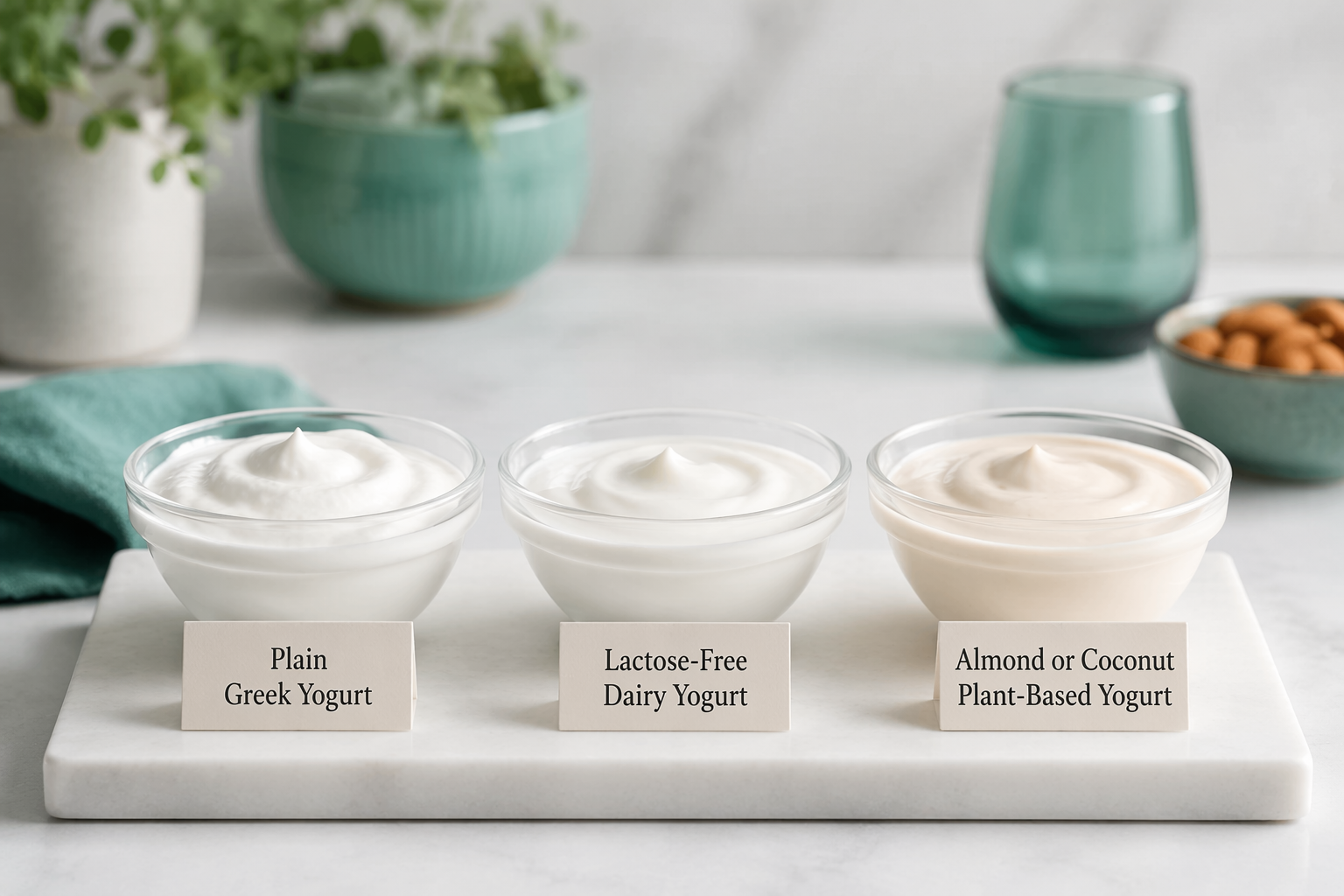
Plain yogurt with a short ingredient list is a sensible first test for IBS because it is easier to track for lactose, sweeteners, and other triggers (source). For many people, that means testing low-FODMAP yogurt choices made from lactose-free dairy or a simple strained Greek yogurt for IBS before moving on to products with more add-ins.
Here's how the main options compare:
- Greek yogurt: Straining removes some lactose, so it often sits better than regular yogurt. Plain, low-fat, active-culture versions are usually the best first step if lactose seems to be part of your trigger pattern.
- Lactose-free yogurt: This is real dairy with lactase added to break down lactose. It is often one of the safest IBS-friendly choices when dairy itself is not the issue.
- Kefir: Kefir is not technically yogurt, but it can still be worth trying. Fermentation can make it nearly lactose-free, and it often contains a broader mix of probiotic strains than typical yogurt.
- Plant-based yogurt alternatives: Coconut, almond, and small servings of soy versions can work well for some people. Coconut yogurt low FODMAP choices and almond yogurt IBS options are most useful when the ingredient list stays simple and the portion stays modest.
- Flavored yogurt: This is the least predictable choice for IBS. Fruit prep, added sugar, and sweeteners can raise the FODMAP load or trigger bloating even when the base yogurt would have been fine.
Additives deserve attention too. Gums, thickeners such as carrageenan, and high-fructose ingredients can turn a reasonable pick into a rough one.
The practical rule for how to choose yogurt for IBS is simple:
- Start with plain lactose-free yogurt or plain strained Greek yogurt.
- Try kefir or simple plant-based yogurt alternatives only if the serving is small and the label is short.
- Watch your symptoms for the next day or two.
- Get support if reactions keep showing up.
A qualified dietitian or clinician can help you sort out whether dairy, FODMAPs, or something else is driving the pattern.
How Do You Read A Yogurt Label For IBS?
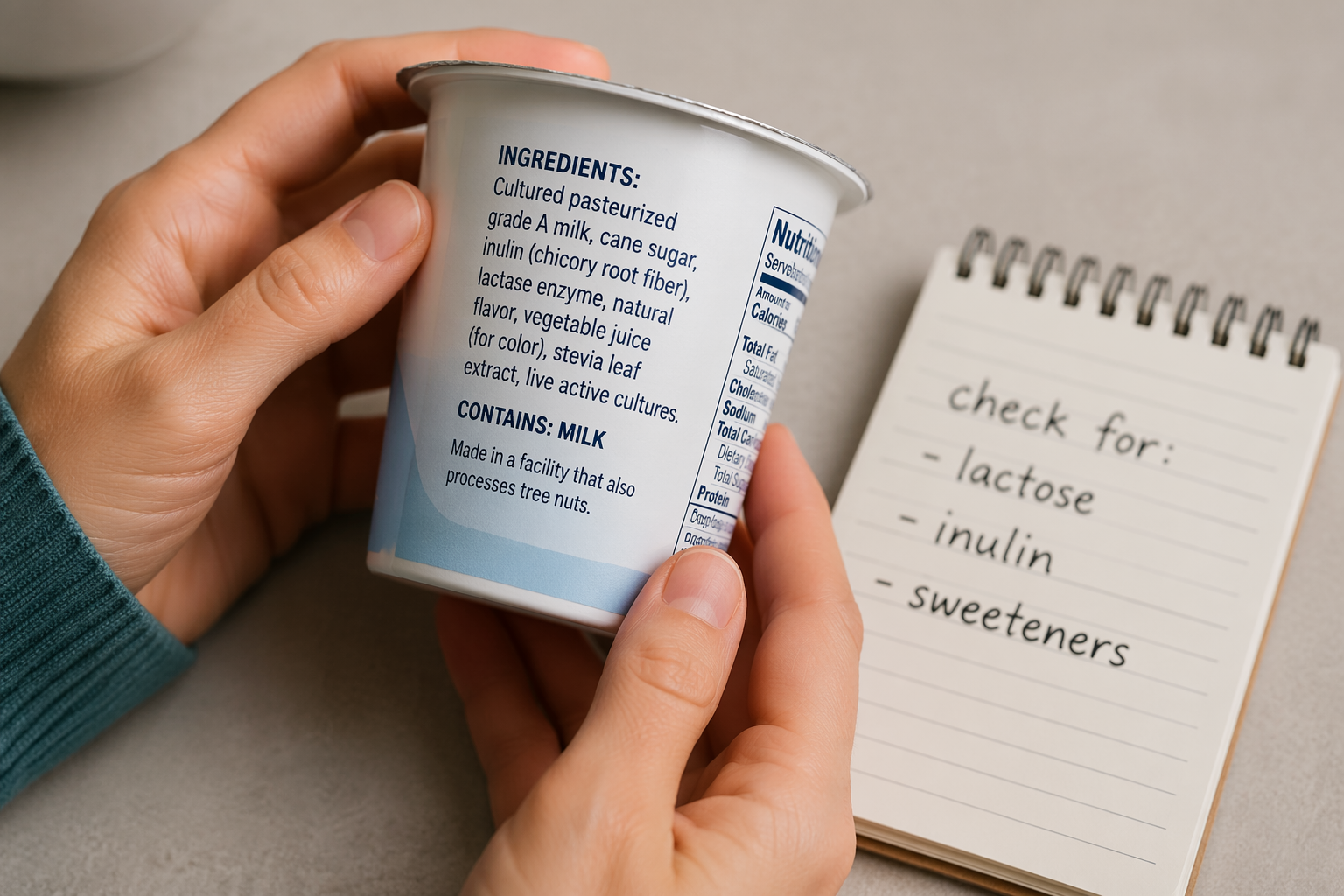
The ingredient list tells you more than the front of the cup. When you're learning how to choose yogurt for IBS, the safest starting point is plain unsweetened yogurt with a short label and live active cultures, because flavored versions often bring extra sugar and trigger ingredients.
A quick scan helps you separate better picks from riskier ones:
- Check lactose wording: lactose-free or lactase-treated yogurt may sit better if dairy bothers you. Milk, whey, and milk solids can be harder to tolerate when lactose is part of the problem.
- Watch for sweeteners: skip products with honey, high-fructose syrups, sorbitol, xylitol, other sugar alcohols, and artificial sweeteners. That also means you should avoid high-fructose corn syrup.
- Avoid fermentable extras: inulin, chicory root, and fruit add-ins high in FODMAPs can raise bloating and gas. It also helps to avoid added thickeners when the label starts to look crowded.
- Read the culture claim carefully: The Live and Active Cultures seal indicates that yogurt meets a live-culture standard set by the dairy industry, but it does not guarantee symptom relief for IBS (source).
Treat diet, light, and low-calorie labels with caution. These products often replace sugar with ingredients that can irritate IBS. If possible, choose plain yogurt and sweeten it yourself with a low-FODMAP option.
A pilot study has been cited to suggest that homemade live-culture yogurt may help some people with IBS, but the response rate and dose should be checked against the original report before publication (source).
How Should You Test Yogurt At Home?
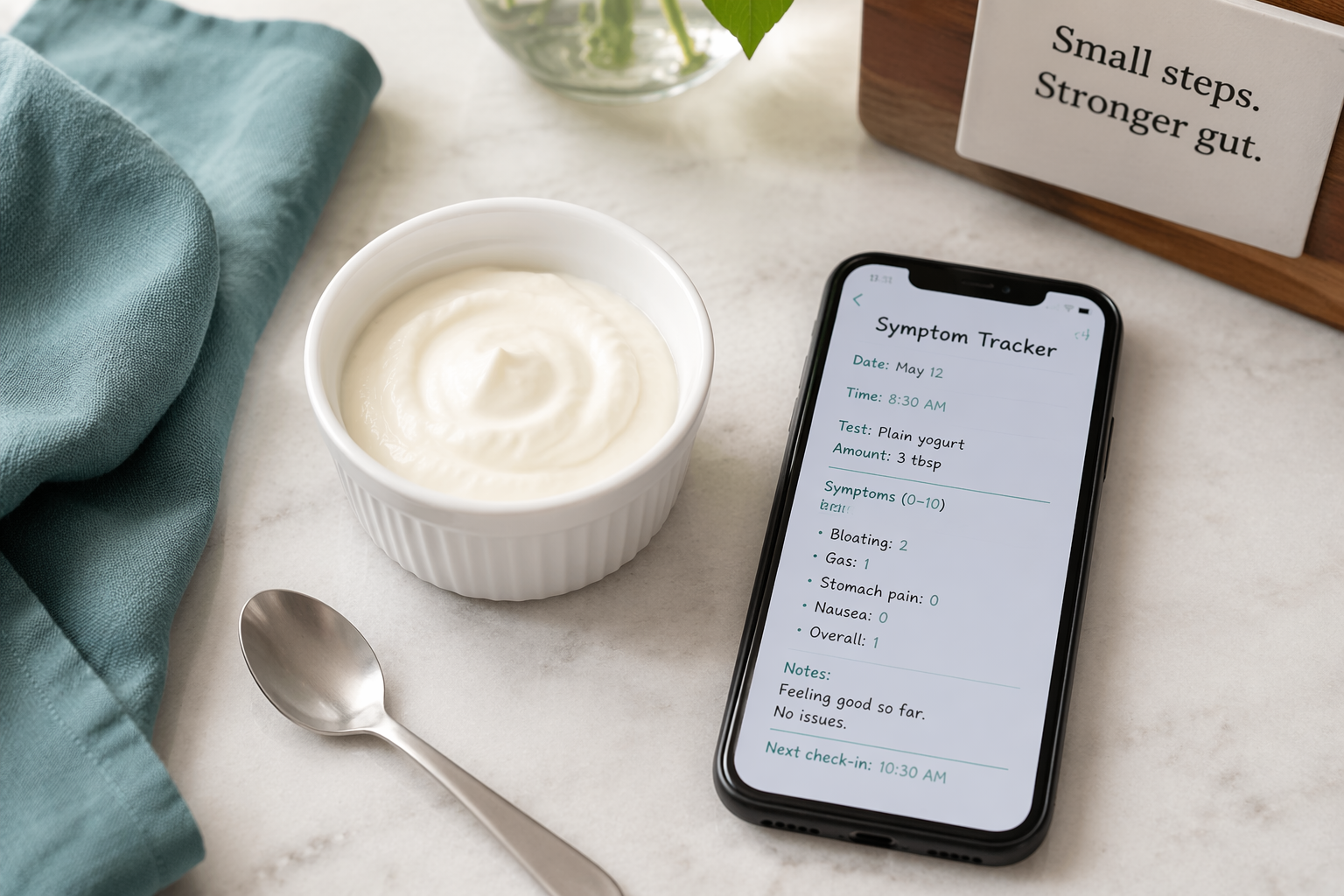
A careful yogurt trial can tell you more than a guess ever will. Start with plain unsweetened yogurt, with no fruit, granola, or other add-ins. Start with a small serving of plain yogurt so you can test tolerance without a large lactose or FODMAP load (source).
The cleanest test keeps everything else steady. Eat the yogurt on its own or with a familiar meal you already tolerate well. Then watch for bloating, gas, pain, urgency, stool changes, and nausea for about 24 hours. If your symptoms tend to show up later, keep tracking for up to 72 hours before you decide whether the yogurt helped, did nothing, or caused trouble.
A slow step-up matters more than a fast jump. IBS tolerance often depends on dose as much as yogurt type, so one small win does not mean a full bowl will work. The same rule applies to Greek, lactose-free, and plant-based options. If several small trials go well without a clear flare, move to a larger portion. If the same yogurt reliably makes you feel worse, stop that type and try a better-tolerated option.
A simple at-home protocol looks like this:
- Pick one yogurt type and keep the rest of the meal routine familiar.
- Start with 2 to 3 tablespoons.
- Increase the serving size gradually across about three days while you track symptoms, so you can spot a consistent pattern (source).
- Read the ingredient label before you blame the dairy itself.
- Watch for sweeteners, fruit, gums, thickeners, sugar alcohols, and added fiber such as inulin.
- Use the same reintroduction rule for each new yogurt.
- Move up only after several small trials feel stable.
The label matters because some people react to extras, not to the live cultures or lactose. That's true for many store-bought products and for homemade yogurt for IBS as well. One pilot study of 189 people with IBS found improvement after 500 to 750 milliliters of homemade, live-culture yogurt each day for six months, but that result won't predict yours. If your response stays mixed or hard to read, a dietitian can help you sort out dose, lactose, and low-FODMAP fit without turning meals into a guessing game.
When Should You Stop And Get Help?
If yogurt clearly makes your symptoms worse, stop the trial. More cramping, bloating, gas, diarrhea, or a sudden rush to the bathroom usually means it is not a good match for your IBS subtype or low-FODMAP plan.
Treat these as red flags, not normal adjustment signs:
- Bloody stool: needs medical evaluation
- Severe diarrhea: stop self-testing and get help
- Rapidly worsening abdominal pain: do not keep experimenting
- Unwanted weight loss: pause reintroduction and get guidance
- Repeated reactions to “safe” options: step back from trial and error
Yogurt can still contain lactose, even when it feels gentle. That matters when you are dealing with lactose intolerance and yogurt at the same time, especially if you have IBS-D or fast gut reactions after fermented dairy. Some people also react to full-fat dairy with sudden cramps or urgency, which can point to a strong gastrocolic reflex response.
A registered dietitian can help with low-FODMAP portions, lactose-free choices, and a slower reintroduction plan. A gastroenterologist is the better next stop if pain is significant, symptoms keep coming back, or you have blood, weight loss, or severe diarrhea. This content is for educational purposes only and is not a substitute for personalized medical advice.
IBS And Yogurt FAQs
These FAQs walk through the main yogurt questions that come up with IBS, including lactose, low-FODMAP choices, probiotic labels, serving size, and how to read CFU colony forming units without getting stuck in the fine print.
1. Is Lactose-Free Yogurt Better For IBS?
Lactose-free yogurt can be easier on IBS if lactose is one of your triggers, because lactase breaks down much of the lactose before you eat it. It usually fits low-FODMAP eating better than regular yogurt, but portion size still matters, especially if the rest of the meal adds lactose. Plain, low-fat, active-culture options are often the simplest pick, but lactose-free yogurt is not automatically IBS-safe if it contains added sugar, sugar alcohols, inulin, or other additives.
2. Can Greek Yogurt Be Low-FODMAP?
Yes, Greek yogurt for IBS can fit a low-FODMAP approach, but only in a very small serving. Monash guidance cited by competitors puts dairy Greek yogurt at about 23 g, or roughly 1¼ tablespoons, because straining removes some whey and lowers lactose compared with regular yogurt. It is higher in protein, which may help it feel more filling, but that does not make a large portion easier on your gut, so start with the tested serving and be cautious if lactose or dairy proteins trigger your symptoms.
3. How Much Yogurt Is Safe With IBS?
Start with 2 to 3 tablespoons, or just a few spoonfuls, of plain yogurt so you can test tolerance without a big lactose or low-FODMAP load. Keep the first try plain, because fruit, sweeteners, and mix-ins can make it harder to tell whether yogurt is the trigger. If you feel steady over the next 24 hours, increase slowly over the next few tries, and stop or scale back if bloating, cramps, gas, or urgent stools show up. Lactose-free and plant-based yogurts can still bother IBS, so check labels for added prebiotic fibers, gums, thickeners, and high-fructose ingredients.
4. Is Chobani Yogurt Good For IBS?
Chobani can be a reasonable IBS option for some people, but the exact cup matters because plain, simple versions are usually easier to tolerate than flavored products with extra add-ins. Start with the live-culture claim and probiotic count, since some yogurts do not contain enough active cultures to matter, and the International Dairy Foods Association’s Live & Active Cultures seal uses a benchmark of at least 100 million CFU per gram. Lactose is often the bigger issue than yogurt itself, so plain Greek or lactose-free Chobani-style products are often a safer first try, while regular dairy versions can still bother you if you’re sensitive or if the serving is too large. Watch the ingredient list for inulin, chicory root fiber, sorbitol, xylitol, honey, high-fructose syrups, fruit-heavy blends, gums, and sweeteners, then test a small plain serving first and move to lactose-free yogurt, plain Greek yogurt, or a live-culture homemade option if bloating, pain, or loose stools show up. The 189-person yogurt study was encouraging, but it does not mean every yogurt will work the same way for you.