


IBS and ginger benefits, safety, and dosing are often discussed together because many people want something simple that might ease nausea, bloating, or cramping. For adults managing IBS, the hard part is knowing whether ginger will help calm symptoms or make stool changes, reflux, or urgency worse. Ginger is a root used as tea, fresh slices, powder, or capsules, and the right choice depends on symptom pattern, dose, and tolerance. This introduction gives a practical way to judge whether it belongs in a daily routine.
The article covers where ginger has the clearest support, which forms are easiest to use, and how common dosing around 1 to 2 grams per day fits into a careful trial. It also explains why IBS-C may respond differently than IBS-D, what side effects to watch for, and when ginger should be stopped. Readers will also find a simple comparison of tea, fresh root, chews, and capsules, plus a safety checklist for reflux, gallbladder issues, pregnancy, and blood thinner use.
My Good Gut readers, especially busy caregivers, teachers, and office workers handling IBS around family meals and workdays, will find the most value here. A common pattern is someone trying a weak cup of ginger tea for nausea, then realizing looser stools show up before any real symptom relief appears. Clear next steps matter most when the goal is practical relief without adding more digestive guesswork.
IBS and Ginger Key Takeaways
- Ginger may help IBS symptoms, but it is not a cure.
- Nausea has the strongest support for ginger use.
- Bloating, gas, and cramping may improve for some people.
- IBS-C may tolerate ginger better than IBS-D.
- Tea, fresh root, capsules, and chews all fit different needs.
- A cautious trial often stays near 1 to 2 grams daily.
- Stop ginger if reflux, loose stools, or pain worsen.
What Can Ginger Do For IBS Symptoms?
Ginger can help with some IBS symptoms, but it works best as a symptom aid, not a cure. For people living with irritable bowel syndrome (IBS), the strongest support is for nausea. Evidence for bloating, gas, cramping, and bowel urgency is weaker, and much of the real-world support for ginger and Irritable Bowel Syndrome is anecdotal. That makes ginger for IBS worth a careful trial, not a sure fix.
Nausea is where ginger has the clearest track record. Ginger may help nausea for some people, but the best-supported evidence is for nausea in general rather than IBS-specific symptoms (source). If nausea tends to show up with your flares, that is one reason ginger often gets tried early.
The other possible benefits come from how ginger acts on the gut. A ginger antispasmodic effect may help relax intestinal smooth muscle. That can ease the tight, squeezing feeling that often comes with IBS cramping. Ginger for bloating and ginger for gas may also help because ginger can work as a carminative, which means it may help move trapped gas and reduce the heavy, stretched feeling after meals.
Some people also notice steadier digestion, but that effect is less predictable. Ginger may support motility, and that could help food move through the stomach and intestines at a more even pace. The response can differ depending on whether your IBS leans toward diarrhea, constipation, or a mix of both.
The likely reason ginger helps at all is tied to its active compounds, especially 6-gingerol. Gingerols have anti-inflammatory and antioxidant activity, which may help explain why ginger feels soothing for some people. Those are plausible mechanisms, not proof that ginger is a clinical IBS treatment.
Different forms can make ginger easier to fit into your day:
Form | Best for | Practical note |
|---|---|---|
Fresh root | Tea, cooking, gentle daily use | Easy to use, but dosing is less exact |
Ginger tea | Nausea, bloating, after-meal discomfort | Simple and soothing |
Powder in food | Routine use | Harder to measure closely |
Capsules or standardized extracts | Consistent dosing | Often easiest for 1 to 2 grams per day |
Ginger chews | Portability | Handy for work, travel, or caregiving days |
A short trial with the form you can use consistently gives you the clearest read on whether it belongs in your routine.
Who Is Ginger Most Likely To Help?
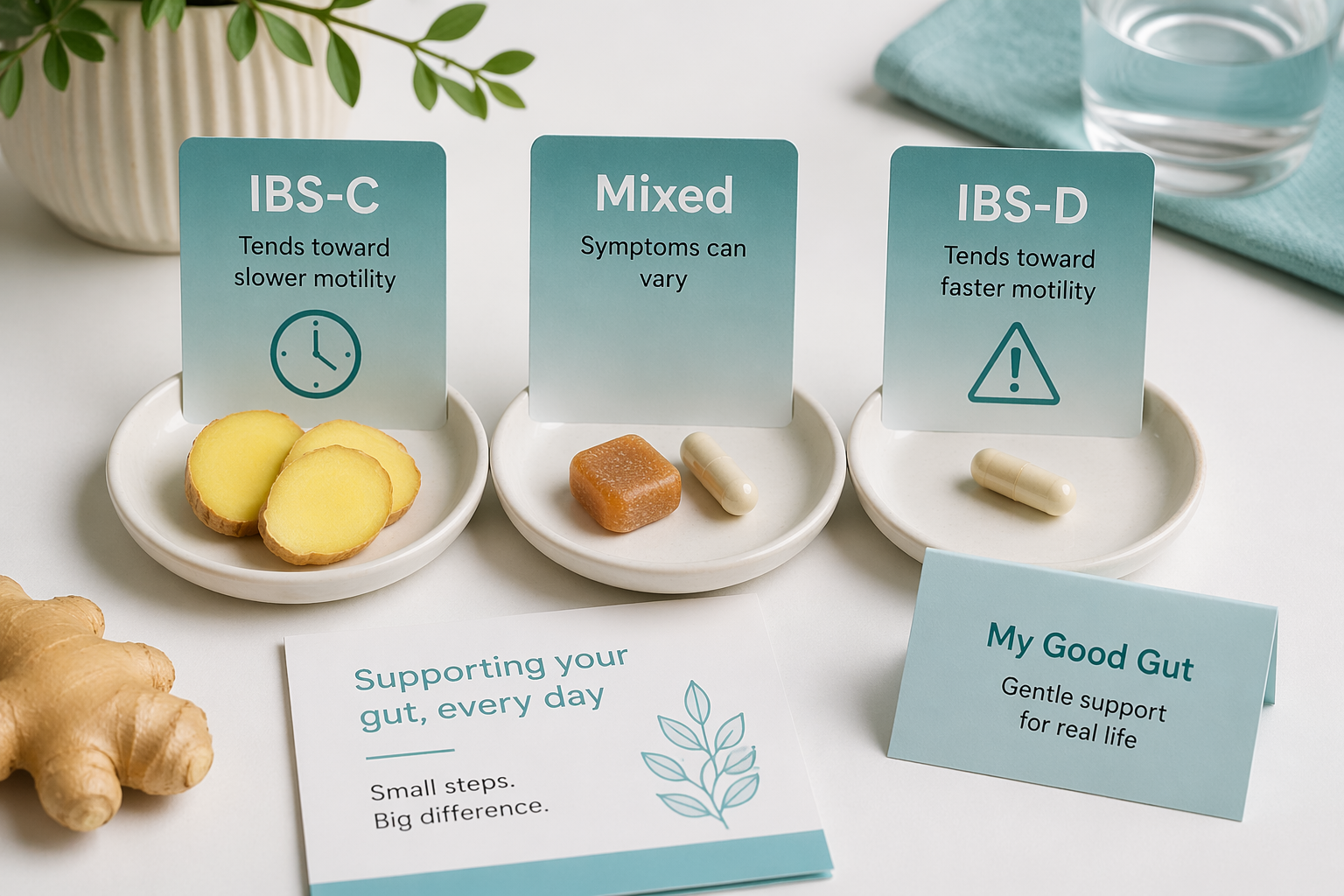
Ginger is most likely to help when your IBS leans toward constipation, slow stools, or a backed-up feeling. Its ginger prokinetic effect may support ginger gut motility, which can help food move through your digestive tract more smoothly. For some people, that also means less bloating, less nausea, and a bit more regularity.
IBS pattern | Ginger is more likely to… | Watch for |
|---|---|---|
IBS-C | Support bowel regularity and ease ginger for bloating | Loose stools if the dose feels too strong |
IBS-D | Feel too stimulating or worsen symptoms | More urgency, looser stools, or cramping |
Mixed IBS | Help on constipated days and irritate diarrhea days | Results that shift with each flare |
IBS-D is often a poor fit for ginger. If loose stools, urgency, or frequent bathroom trips are already part of your day, ginger's motility boost can make things move faster. That does not mean every person with diarrhea will react badly. It does mean higher amounts deserve caution.
Mixed-pattern IBS is the least predictable. Ginger may feel helpful when constipation is the main issue, then feel too warming or stimulating when diarrhea shows up. The label matters less than your actual symptom pattern.
Tolerance is usually better when your symptoms are mild and steady. People who do best with ginger often have less active diarrhea and no strong sensitivity to spicy or warming foods. If even small amounts of tea or capsules upset your stomach, ginger may not be a great everyday choice.
Fresh ginger is often used in low-FODMAP eating plans in small amounts, but exact serving sizes should be checked against a reliable low-FODMAP guide before use. Ginger powder is more concentrated, so smaller amounts are a safer starting point for symptom tracking (source). If you are building calmer meals too, best vegetables for IBS can help you keep the rest of the plate gentle. If tomatoes tend to bother you, tomatoes and IBS may also matter.
A few practical clues can help you judge fit:
- Better signs: steadier stools, less nausea, and a calmer belly after small amounts
- Poorer signs: more cramping, urgency, or looser stools after tea, capsules, or powder
- Dose caution: smaller amounts are a safer starting point for tracking (source)
- Symptom fit: ginger for gas may help some people, but only if it does not push stools too loose
Ginger can be a useful tool, but it is not a one-size-fits-all fix. Watch for looser stools, cramping, or urgency flares, and scale back if those show up.
How Should You Try Ginger Safely?
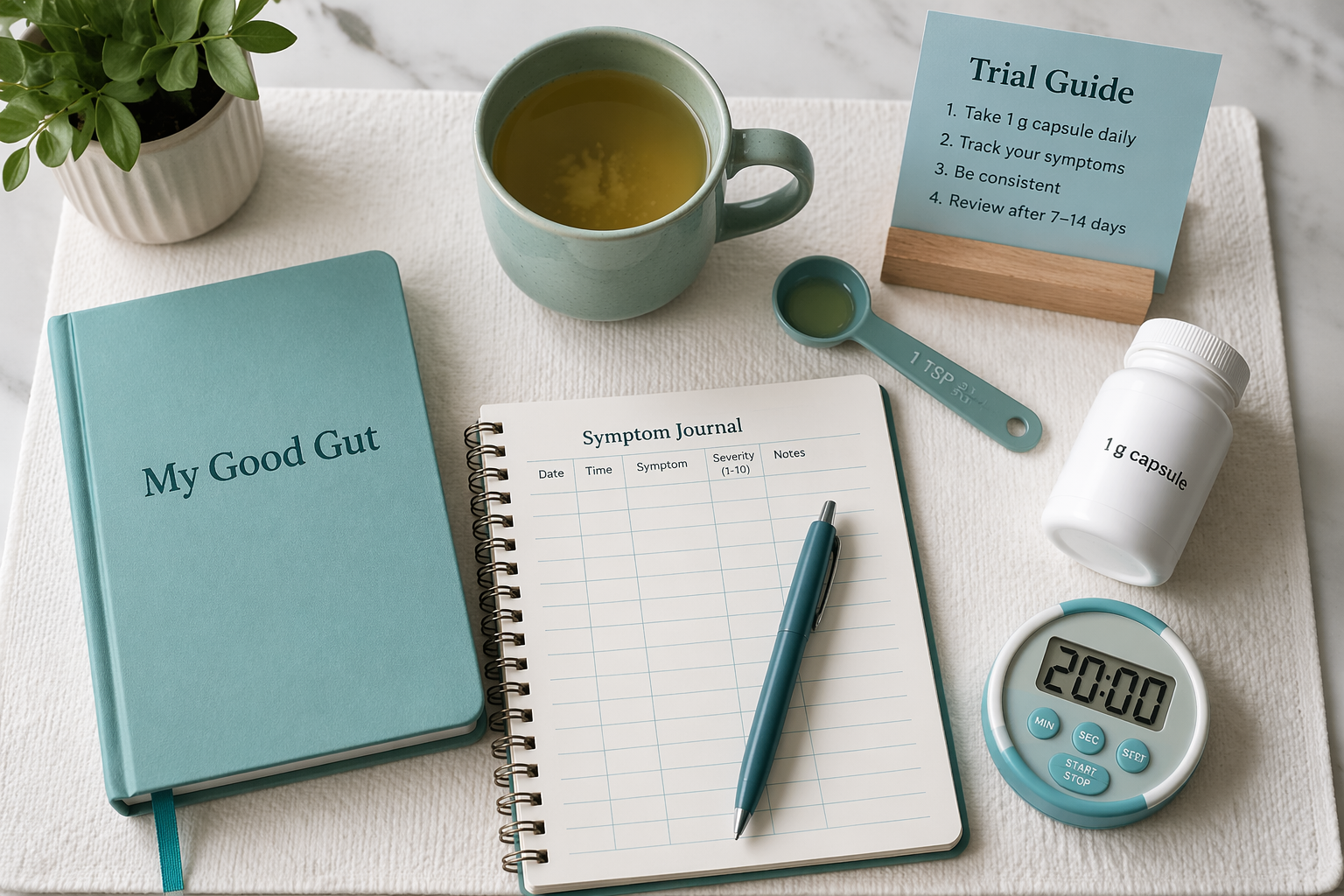
Start with one mild form and give your body time to respond. A weak cup of ginger tea for digestion is a low-pressure first test because it is easy to sip, easy to stop, and easy to compare with your usual symptoms. Keep the rest of your routine steady for a few days so you can tell whether ginger is helping or not.
A simple form guide can make the trial less guessy:
Form | Best fit | Typical use |
|---|---|---|
Fresh ginger tea | First trial, mild symptoms, daytime use | Steep thin slices or a quarter-sized piece of fresh root in hot water for 5 to 10 minutes |
Ginger supplements | More exact daily dosing | Helpful when you want a consistent amount |
Standardized extracts | Steadier repeat dosing | Useful when you want the same dose each day |
A cautious trial usually starts with a small amount and increases only if symptoms stay stable. If ginger is helping and side effects stay mild, dose changes should stay conservative and should be guided by a clinician when other conditions or medicines are involved (source). Tea is often the gentlest place to begin, while capsules can be easier when you want precision.
The symptom pattern matters too. Ginger may fit better if constipation, nausea, or slow digestion are part of your picture, including IBS-C. People with diarrhea-predominant symptoms usually need more caution because ginger can sometimes speed the gut and make looseness worse.
Track symptoms before and after each dose change so it is easier to tell whether ginger is helping or causing side effects. A simple food and symptom journal can make that pattern easier to see (source). Watch bloating, cramping, stool pattern, reflux, and nausea.
If you feel a small benefit and side effects stay mild, increase slowly within the lower studied range. If symptoms get worse, stop and try a different form or a lower amount. A simple decision checklist for your trial looks like this:
- Choose one form: tea, capsules, or extract
- Start low: begin near the gentlest dose
- Monitor closely: note symptom changes and side effects
- Adjust slowly: change only one thing at a time
- Stop if needed: back off if reflux, pain, or loose stools worsen
Use extra caution if you have heartburn, GERD, gallbladder problems, are pregnant or breastfeeding, take diabetes medicines, or use blood thinners. Stop ginger and seek medical advice for worsening pain, vomiting, bleeding, severe reflux, or any digestive change that does not settle.
This content is for educational purposes only and is not a substitute for personalized medical advice. Digestive symptoms can have many causes. Results vary by person, and any dietary or supplement advice should be individualized.
What Does The Research Actually Show?
The honest answer is that ginger clinical studies are promising, but they are not decisive for IBS. Small trials suggest ginger is usually well tolerated, yet it has not consistently beaten placebo for overall symptom relief. That is why ginger and Irritable Bowel Syndrome can be a helpful fit for some people without being a sure thing.
A small ginger trial suggested that symptom changes were modest and not clearly better than placebo, so the evidence remains suggestive rather than decisive (source). That makes the ginger vs placebo comparison hard to call a clear win for ginger alone.
Several limits keep the picture fuzzy:
- Small samples: Many trials include too few people to give a strong answer.
- Short timelines: Most studies do not run long enough to show steady symptom changes.
- Mixed forms: Fresh root, dried ginger, and extracts are not the same product.
- Different doses: Trials often use different amounts and schedules.
- Mixed outcomes: Some studies track bloating or pain, while others focus on total IBS symptoms.
That uncertainty does not mean ginger has no value. It means the evidence is suggestive, not settled.
The biology still makes sense, though. Ginger contains active compounds such as gingerols and shogaols, including 6-gingerol. These compounds may support anti-inflammatory ginger effects in the digestive tract and colon. Ginger may also act as a ginger antispasmodic, which could ease cramping, and as a prokinetic, which means it may help move food and gas along more smoothly.
That mix of actions could explain why some people notice less bloating, less nausea, or easier digestion. A review from the National Center for Biotechnology Information summarizes this safety and mechanism evidence in more detail (source). The idea also fits work on reducing the over alert connection between the brain and the gut (source), which can shape how strongly you feel pain and pressure.
If ginger is tried, a conservative approach is to start low and stay within the dose used in the study or product instructions. Higher amounts can cause heartburn, loose stools, or more bowel activity in some people (source).
Here is a simple way to compare common forms:
Form | Typical use | What to expect |
|---|---|---|
Fresh root tea | Gentle, flexible option | Mild taste and easy sipping |
Dried ginger or powder | Useful in food or tea | More concentrated than fresh root |
Capsules or extracts | More precise dosing | Easier to track grams per day |
If you try ginger, start low and watch your own pattern. A ginger dosage IBS plan works best when you pay attention to dose, timing, and how your gut reacts. Digestive symptoms can have many causes, so persistent, severe, or worsening symptoms deserve a conversation with a qualified healthcare professional. This content is for educational purposes only and is not a substitute for personalized medical advice. Results vary by person, and any dietary or supplement advice should be individualized.
When Should You Stop Ginger And Choose Something Else?

Ginger is worth stopping when it starts making your gut feel more reactive instead of steadier. If you notice new or worse heartburn, indigestion, nausea, or looser stools, the dose may be too high, or ginger may not be a good fit for you right now. Tolerance also varies from person to person, so what feels fine for one reader can feel irritating for another.
Extra caution matters if you live with IBS-D or you already tend to have an overactive gut. Ginger can affect motility and fluid movement, which may help some people and backfire for others. When urgency, cramping, or loose stools increase, it usually makes more sense to stop and reassess than to keep pushing through.
A fair trial should have a stopping point if your main symptoms are not improving. Bloating, pain, and bathroom trips should feel at least a little more predictable if ginger is helping. If they are not, other natural remedies for IBS may fit better, and symptom-targeted support often works better than a supplement that keeps falling short.
Common alternatives depend on what bothers you most:
- Cramping and pain: peppermint oil IBS support may be a better match.
- Food triggers: a structured low-FODMAP approach can help you spot patterns.
- Persistent symptoms: clinician-guided or prescription treatment may make more sense than another herbal option.
- Broader food choices: avocados for IBS may fit into a wider symptom-aware eating plan.
Stop self-treating and get medical advice right away if you have severe or worsening abdominal pain, persistent vomiting, blood in the stool, unexplained weight loss, fever, or symptoms that keep escalating. Safety also matters before you keep going with ginger, especially if you take blood thinners, are pregnant or breastfeeding, have other medical conditions, or have reacted badly to herbs before. A healthcare professional can help you decide whether ginger should be avoided or used cautiously.
IBS and Ginger FAQs
These FAQs cover ginger for IBS, ginger supplements, ginger clinical studies, and other natural remedies for IBS, including peppermint oil IBS. They’re meant to help you compare the basics before you try anything new.
1. Can Ginger Trigger An IBS Flare-Up?
Yes, ginger can trigger an IBS flare-up for some people, especially at higher doses, so start with a low dose. Early signs include mild heartburn, stomach burning, cramping, looser stools, or diarrhea, and people with IBS-D or a more sensitive gut may notice this more often. Start with a low dose, and if you notice faster bowel movements, rising urgency, or sharper cramps after taking ginger, it may not be a good fit for you. This content is for educational purposes only and is not a substitute for personalized medical advice, and persistent, severe, or worsening symptoms should be checked by a healthcare professional.
2. Does Ginger Help IBS Nausea?
Yes, ginger for nausea may help with IBS-related nausea, but the research on IBS symptoms still looks mixed, so it’s best viewed as a helpful option, not a sure fix. Human studies on nausea have found that ginger can work about as well as some prescription anti-nausea medicines, and its active compounds, including gingerols and shogaols, may calm digestive movement and reduce inflammation in the gut. It may also help with bloating, gas, cramping, and urgency, but results vary by person, and nausea that is persistent, severe, or getting worse should be checked by a healthcare professional.
3. Can You Take Ginger With IBS Meds?
Ginger is often tolerated alongside IBS medicines, but it’s smart to check with a clinician if you take any prescription drug, especially blood thinners, antiplatelet drugs, or diabetes medication. Ginger may raise bleeding risk with anticoagulants and may affect blood sugar control, so the combination should be individualized. Stop using it and get medical advice if it brings on heartburn, indigestion, loose stools, or extra bowel activity, and avoid starting ginger on your own during pregnancy, breastfeeding, or if you have a complex medical history.
4. Is Ginger Tea Better For IBS?
Ginger tea is often the gentler choice if you want a low-effort start, especially compared with capsules or chews, but it gives you less exact dosing. A weak cup made with a few thin slices or a coin-sized piece of fresh root steeped for 5 to 10 minutes lets you test ginger tea for digestion without overdoing it, and fresh ginger is often counted as low FODMAP ginger at about 1 teaspoon per meal. Tea is a good fit for nausea, mild cramping, and general soothing, while capsules or powder make more sense if you want a more consistent daily amount and tighter control.
5. How Fast Does Ginger Work For IBS?
For nausea or a heavy, slow-feeling stomach, you may notice ginger within minutes to a few hours, especially as weak tea or a small dose before meals. Its effect on stomach emptying can show up sooner than broader IBS symptom changes, so IBS-C may feel a benefit first, while IBS-D may notice looser stools or cramping sooner if the dose is too strong. A sensible trial is 1 to 2 weeks for daily tracking, with a fuller judgment after a few weeks of steady use if you’re looking for changes in bloating, nausea, or bowel regularity. Scale back or stop if urgency, faster stools, or cramps get worse, and remember that results vary by person.