


Avocado and IBS can work together, but portion size often decides whether the fruit stays on the plate or becomes a problem. Many adults with IBS notice bloating, gas, cramps, or loose stools after a larger serving, even when a small amount seems fine. FODMAPs are fermentable carbs that can draw water into the bowel and feed gas-producing bacteria, which makes the serving size and meal mix matter. Clear portion guidance, symptom clues, and a simple reintroduction plan can help separate a real trigger from a tolerated food.
The coverage here focuses on why avocado may cause symptoms, how polyols like perseitol and the fruit's fat content affect the gut, and which portions usually fit a low-FODMAP approach. It also walks through small test servings, meal pairing, ripeness, FODMAP stacking, and when to pause or seek medical advice. Expect practical checkpoints you can use at the grocery store, at lunch, and during a symptom diary review.
For adults living with IBS, plus caregivers helping with meal decisions, the value is in making avocado feel less like a guessing game. A dietitian might use a 1 to 2 tablespoon test portion, then note whether bloating starts after avocado alone or after guacamole with garlic and onion. My Good Gut keeps the focus on usable next steps so you can judge tolerance with more confidence and less stress.
IBS and Avocados Key Takeaways
- Many people with IBS can tolerate avocado in small portions.
- Polyols like perseitol can trigger bloating, gas, cramps, or diarrhea.
- Avocado fat may speed gut movement and worsen urgency.
- Start with about 20 to 30 grams, or 1 to 2 tablespoons.
- Test avocado in a simple meal, not with garlic or onion.
- Ripeness, portion size, and meal pairing all affect tolerance.
- Stop testing if symptoms are severe, repeated, or hard to explain.
Can You Eat Avocado With IBS?
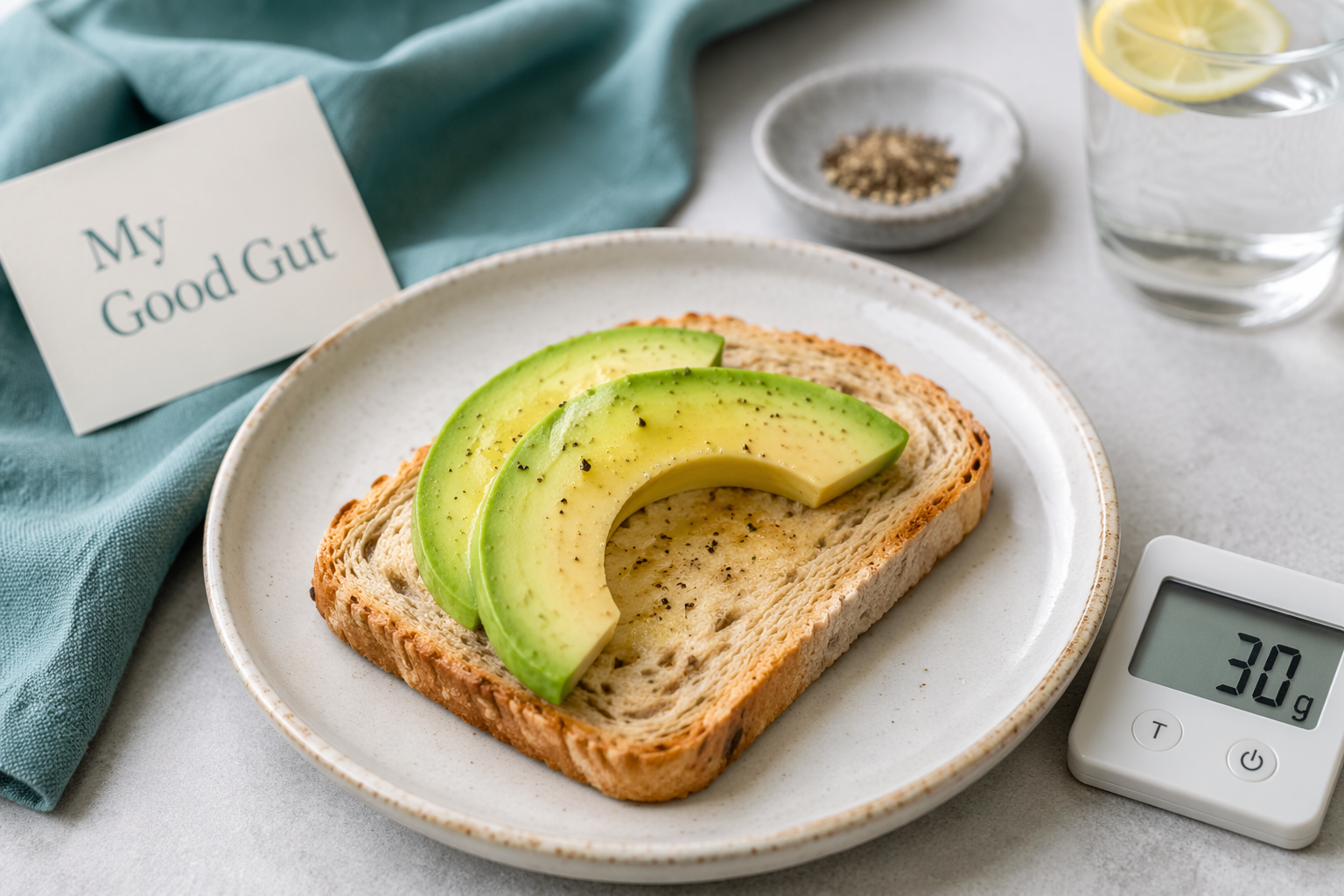
Yes, many people with irritable bowel syndrome can include avocado, but small portions are more likely to fit a low-FODMAP plan and larger servings can trigger symptoms in some people (source). The real question is whether your symptoms react more to polyols, fat, or a larger serving.
Avocados can cause trouble for two separate reasons. They contain polyols, especially sorbitol and perseitol. These can ferment in the large intestine and pull water into the bowel, which may lead to bloating, gas, cramps, or diarrhea. Avocados are also high in fat, and fat can speed gut movement or trigger the gastrocolic reflex, which is the colon's response after eating.
A simple way to judge avocado IBS tolerance is to test your dose and watch your symptom pattern. The avocado bloating gas diarrhea pattern often shows up when the portion is too large, when the avocado is very ripe, or when you already react to other high-fat or high-polyol foods.
Try this approach:
- Start small: Begin with a few bites, not a full avocado.
- Keep it simple: Eat it with foods you already tolerate well.
- Compare portions: Try a normal serving on one day and a larger one on another.
- Track timing: Notice whether symptoms show up soon after eating or later.
- Pause if needed: If avocado keeps causing symptoms, limit it for now and consider a controlled reintroduction later.
Avocado is not automatically off-limits. Its avocado fiber content, monounsaturated fats, and vitamins can still fit a balanced diet. Hass avocado nutrition is one reason many people want to keep it on the menu. If you tolerate it, modest amounts can fit alongside vegetable choices for IBS and other digestive-friendly foods.
Why Might Avocado Trigger IBS Symptoms?
Avocado can also affect tolerance through perseitol and fat. The first is avocado and FODMAPs, especially polyols. The second is fat, which can change how quickly your gut moves even when the serving looks small enough on paper.
Polyols are short-chain carbs that can be hard for people with IBS to handle. In avocado, the key one is perseitol in avocado, which is why the older sorbitol avocado label was updated after Monash University retested the fruit. Monash ran a pure perseitol standard beside avocado samples on high-performance liquid chromatography, or HPLC, and found that perseitol, not sorbitol, was the main polyol.
That matters because perseitol and other polyols can affect your gut in a few ways:
- Slow absorption: They may pass through the small intestine without being fully absorbed.
- Osmotic pull: They can draw water into the bowel.
- Fermentation: When they reach the large intestine, gut bacteria break them down and produce gas.
That mix helps explain why polyols and IBS often show up together. It can lead to bloating, cramps, urgency, and looser stools, especially after a larger serving or when your gut is already sensitive. That is why avocado bloating gas diarrhea can happen even when the rest of the meal feels harmless.
Fat is a separate trigger. Avocado is naturally rich in fat, and fat can affect motility on its own. It may speed movement through the gut or trigger the gastrocolic reflex, which is the normal urge to have a bowel movement after eating. So even if the FODMAP portion seems fine in the Monash FODMAP app, your body may still react to the fat load.
Practical testing matters here:
- Portion: A smaller amount may be easier to tolerate than a full serving.
- Ripeness: Riper avocado may feel different than firmer fruit.
- Meal pairing: Avocado on toast may sit differently than avocado in a rich meal.
If avocado seems to trigger symptoms, the issue may be the combination of polyols plus fat, not avocado alone.
Is It The FODMAPs Or The Fat?
The pattern matters because the same meal can point to polyols, fat, or FODMAP stacking. The issue may come from the FODMAP polyols in avocado or from its fat content, so one reaction does not always mean the same trigger.
Avocado contains perseitol, a polyol related to sorbitol. In plain terms, polyols and IBS often do not mix well because these sugars can be poorly absorbed. When that happens, they may pull water into the gut or ferment. That can lead to bloating, gas, or looser stools. That is why a sorbitol avocado reaction can show up even when the serving looks small.
Fat can cause symptoms too. A rich meal can speed up gut movement or trigger the gastrocolic reflex. That is the body’s natural push to move things along after eating. The result can be cramps or urgency even when the FODMAP load is low.
A simple symptom pattern can help you sort out the likely cause:
- More likely polyols or FODMAP stacking: symptoms after a small avocado serving plus other FODMAP foods
- More likely fat: symptoms after a larger, richer meal with little FODMAP content
- More likely stacking: avocado with foods like blackberries, where the combined fermentable load becomes too much
The term FODMAP stacking matters because foods can add up even when each one seemed fine alone. The low FODMAP diet targets fermentable carbohydrates, not fat, so avocado and FODMAPs should be judged alongside portion size and the rest of the meal. If avocado causes symptoms at a low-FODMAP portion, test both serving size and meal mix before blaming just one trigger.
How Much Avocado Is Usually Low FODMAP?
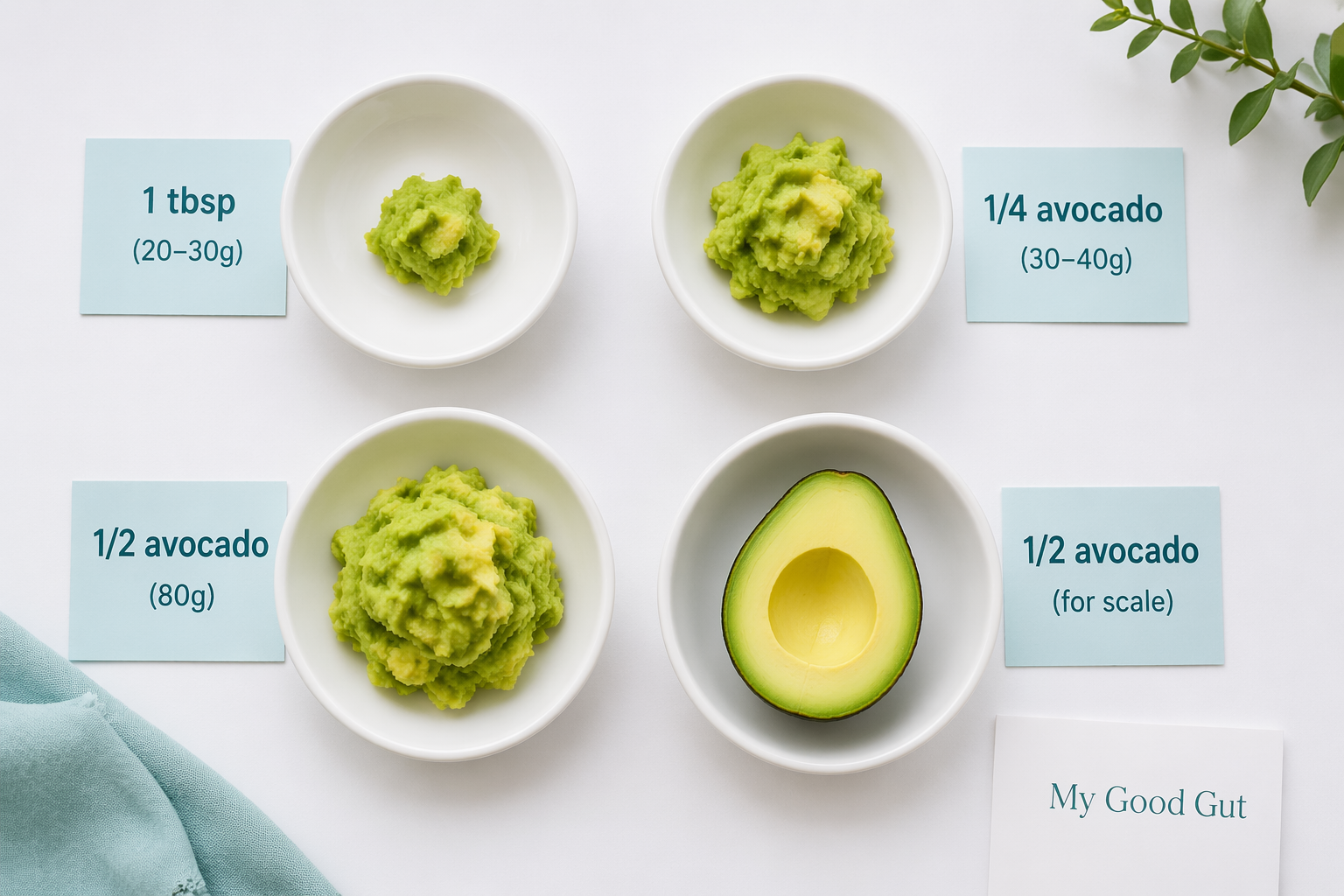
The safest starting point is a 1/8 avocado serving, or about 20 to 30 g. For many people, that falls in the low-FODMAP avocado serving range and works well as a first test of your avocado portion size. It’s also the safest place to begin when you’re checking the safe serving size avocado IBS readers can usually try.
A 1/4 avocado moderate FODMAP portion is usually around 30 to 40 g. Some people with IBS handle that amount well, but others still notice mild bloating, pressure, or looser stools. That middle range is useful, but it’s not a sure fit for everyone.
A 1/2 avocado high FODMAP serving is usually around 80 g. That amount is more likely to trigger bloating, pain, or loose stools, especially if you’re sensitive to polyols. If avocado has felt questionable before, this is the portion to save for later.
A quick visual guide helps when you’re actually building a meal:
- A few thin slices on toast often fit a low-FODMAP avocado serving
- A small scoop in a salad often lands in the moderate range
- A measured tablespoon is easier to track than guessing by eye
- A whole avocado half is often too much for sensitive IBS symptoms
Serving size matters more than whether avocado is simply allowed. The Monash University FODMAP app remains the most practical avocado low-FODMAP guide because recommended amounts can change when foods are retested. That makes a current reference more useful than an old food list.
Fiber is part of the story, too. About 50 g of avocado provides roughly 3 g of fiber, while half an avocado has about 4.6 g. Small portions can support bowel regularity and gut health without pushing your FODMAP load too high for many people.
How Do IBS Subtypes Change Tolerance?
Subtype matters because the same avocado serving can feel calm for one person and set off symptoms for another. Your IBS subtype, gut sensitivity, and the rest of the meal all shape tolerance. A food that feels fine on a quiet day can still cause trouble during a flare.
For IBS-D, avocado is often a mixed bag. Even when the portion stays low FODMAP, the fat may make loose stools, urgency, or cramping more likely. Higher-fat meals can speed gut movement and trigger the gastrocolic reflex, which is why a small test portion usually makes more sense than a big scoop.
For IBS-C, a measured serving may sit better than greasy or fried foods. The fat and fiber can help a meal feel more satisfying. Larger portions can still bring bloating, pressure, or a heavy feeling, so the question is whether the avocado helps you feel settled without too much fullness.
IBS-M often follows the current flare pattern more than the label on the chart. Some days behave more like IBS-D, and other days lean toward IBS-C. Mixed meals can blur the picture even more.
A simple way to choose your next step is:
- Diarrhea and urgency are the main issue: start with a smaller test portion.
- Constipation is more common: try a plain, measured serving.
- Your pattern changes often: follow your most recent symptoms, not your subtype alone.
Guacamole, avocado toast, and sushi rolls can also hide the real trigger. Garlic, onion, wheat, and other high-FODMAP ingredients may be the bigger problem, which makes it harder to know whether the avocado or the full meal is driving symptoms.
How Should You Test Avocado Safely?
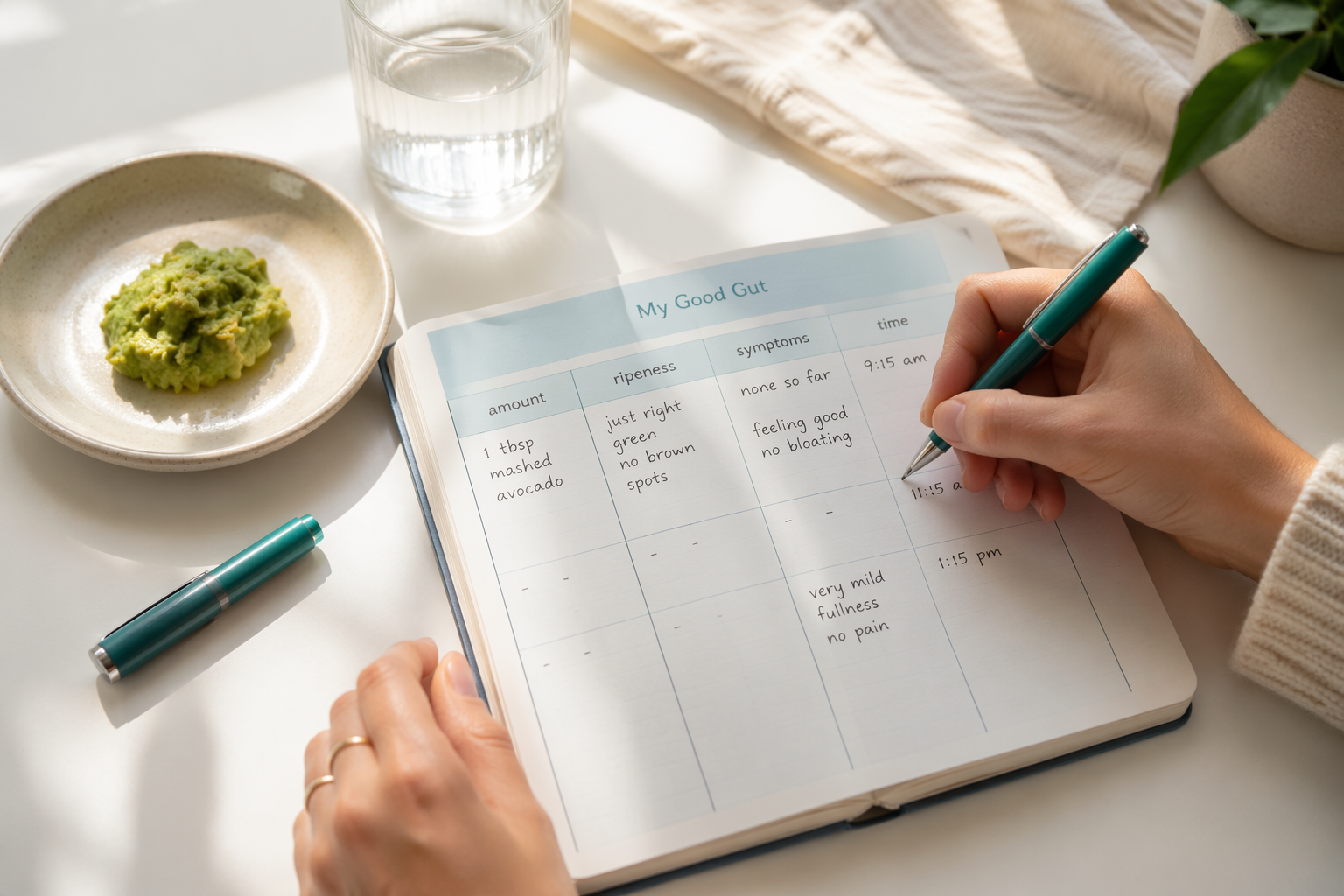
Start avocado testing only after your elimination phase has settled. If symptoms are still changing day to day, the result won’t mean much. A steady baseline makes avocado reintroduction guidance useful because it helps you isolate avocado instead of chasing a random flare.
A measured first challenge keeps the test simple. Try about 1 to 2 tablespoons, one or two thin slices, or less than 30 grams. Keep the rest of the meal low FODMAP and plain, then wait long enough for delayed symptoms before you increase the portion on another test day.
A food journal for IBS helps you see your real pattern instead of guessing. Write down the exact amount, how ripe the avocado was, what else was on the plate, when symptoms started, and what those symptoms felt like. That makes it much easier to track tolerance avocado by avocado and spot your personal threshold.
Avocado FODMAP testing works best in a calm, low-trigger setting. Mixed meals can blur the results fast:
- Best first test: Avocado on its own in a simple meal
- Avoid at first: Guacamole with garlic or onion
- Avoid at first: Avocado toast with wheat bread
- Avoid at first: Sushi, salads, and mixed bowls with extra trigger foods
That caution matters because stacked ingredients can hide the real cause. Garlic, onion, wheat, and other sorbitol-containing foods may be the true problem, not the avocado itself. A plain test gives you cleaner answers.
Your IBS subtype can also guide what you notice during the challenge. If you have IBS-D, watch for urgency and looser stools. If you have IBS-C, bloating and heaviness may show up first. If you have IBS-M, note which pattern appears after avocado and whether it repeats.
IBS pattern | Common signs to watch for |
|---|---|
IBS-D | Urgency, looser stools, cramping |
IBS-C | Bloating, heaviness, slower bowel movements |
IBS-M | Alternating loose stools and constipation |
Stop the challenge if symptoms are moderate to severe or if the same reaction happens after each test. You should also consult registered dietitian IBS support if symptoms are frequent, confusing, or tied to an elimination and reintroduction diet. A dietitian can help you set portion steps and timing without turning meals into guesswork.
What Portion Should You Start With?
Start small so you can see how your body reacts. A good first test is about 20 to 30 g of avocado, or roughly 1 to 2 tablespoons mashed or 1 to 2 thin slices if you’re eyeballing it. For many people, that’s the safe serving size avocado IBS testing can begin with, and it works best as a garnish rather than the main part of the meal.
Keep the rest of the plate simple. A low-FODMAP avocado serving is easier to judge when you skip garlic, onion, wheat bread, and other sorbitol-heavy foods in the same meal.
A few kitchen cues make measuring easier:
- 1 tablespoon mashed: about the size of a golf ball
- 1 to 2 thin slices: only a few bites
- Same portion each time: easier to compare results
If that feels fine, increase on a later day. Many people start with a 1/8 avocado serving and only then move toward a 1/4 avocado moderate FODMAP amount. Good avocado reintroduction guidance also means keeping a food diary so you can track tolerance avocado by timing, bloating, pain, diarrhea, or constipation.
When Should You Stop Or Continue?
The safest rule is simple. Stop the avocado test if your symptoms are clearly worse than your usual baseline after the portion you tried, especially when bloating, cramping, loose stools, urgency, or nausea show up within a few hours.
If the reaction is mild, brief, and hard to separate from your normal IBS pattern, you can stay with the same amount for one more try. When the result feels fuzzy, pause and repeat the test on a different day instead of increasing right away. My Good Gut often encourages this slower pace because it makes patterns easier to trust.
When you do increase, wait about 2 to 3 days between changes. That gives your gut time to settle. Moving too fast can blur the cause and make it harder to tell whether avocado, or something else, triggered the flare.
Symptom type can help you decide what to do next:
- Diarrhea or urgency: try a smaller amount next time, or wait longer before retrying.
- Bloating or pain after a larger serving: you may have reached your personal limit.
- Symptoms after avocado with garlic, onion, or wheat bread: FODMAP stacking may be the real issue.
A food and symptom diary helps you spot your tolerance threshold. Record the amount, ripeness, what else you ate, and how soon symptoms started. If small amounts stay comfortable, keep avocado in measured portions. If every increase causes the same flare, step back to the last tolerated amount or discuss the pattern with a qualified healthcare professional.
When Should Avocado Symptoms Prompt Medical Advice?
Mild, short-lived IBS symptoms after avocado can often be watched at home if they settle within a day or so. Dehydration is the bigger concern. Dizziness, very dark urine, a dry mouth, or being unable to keep fluids down should prompt medical evaluation.
It’s also time to stop self-testing if the pattern keeps repeating. Prolonged diarrhea, worsening belly pain, or symptoms that come back after a tiny reintroduction, such as about 1/8 of a medium avocado, are signs to pause and check in with a clinician. Blood in the stool, black stools, and unexplained weight loss are not typical avocado reactions and deserve prompt medical advice. If your response stays inconsistent or you have not eaten avocado in a while, a small reintroduction can help test tolerance.
Practical next steps can keep the picture clearer:
- Stop the suspected trigger for now.
- Sip fluids and rest.
- Write down what you ate, how much avocado you had, and how your symptoms changed.
- Seek care if symptoms are frequent, severe, or hard to explain.
- ginger benefits for IBS may offer extra comfort while you sort out the trigger.
- Consult registered dietitian IBS support if you want a guided low-FODMAP elimination and reintroduction plan.
IBS and Avocadoes FAQs
These FAQs cover the most common avocado IBS questions, from portion size and ripeness to how avocado fits into an elimination and reintroduction diet. If you’re using an avocado low-FODMAP guide, the answers below can help you make steadier meal choices.
1. Can Ripe Avocado Be Worse For IBS?
Ripe avocado is usually not worse for IBS. In Monash retesting and the supporting literature, unripe avocado had more perseitol, and the perseitol in avocado dropped as the fruit ripened. If ripe avocado still bothers you, the issue may be the fat content, since dietary fat can speed gut activity and trigger cramping or urgency. A small, fully ripe portion may sit better, but your own symptom response matters most.
2. Do Avocado Oils Trigger IBS Symptoms?
Avocado oil is FODMAP-free because it has no carbohydrates, so it’s unlikely to trigger your IBS through FODMAPs alone. Most people tolerate it well, but very oily meals can still cause nausea, cramping, or looser stools if your fat tolerance is low. If you feel worse after avocado oil, the richer meal or other trigger foods may be the real issue, and a registered dietitian who specializes in gastrointestinal health can help you test it with a structured low-FODMAP elimination and reintroduction plan. This is for educational purposes only and is not a substitute for personalized medical advice, and persistent or worsening symptoms should be reviewed by a qualified healthcare professional.
3. How Fast Do Avocado Symptoms Start?
Avocado symptoms can start within minutes for some people, but they often show up several hours later or even the next day. That delayed pattern fits FODMAP sensitivity, since avocado polyols like sorbitol and perseitol can ferment in the large intestine and draw water into the bowel, which may lead to bloating, gas, cramping, or looser stools within 24 to 48 hours. If you feel heavy, nauseated, or worse after a larger, fattier serving, fat may be part of the trigger too, so watch for both immediate discomfort and delayed symptoms before deciding whether avocado is a personal trigger.
4. Can Avocado Mix With Other IBS Triggers?
Avocado can be part of a trigger-heavy meal, but symptoms may come from FODMAP stacking when you combine it with other moderate- or high-FODMAP foods. Guacamole is a common trouble spot because restaurant and store versions often add garlic and onion, so the reaction may not be from avocado alone, and tomato triggers in IBS can follow the same mixed-meal logic. When you test tolerance, keep trigger foods about 6 to 8 hours apart, try avocado on its own first, and track symptoms after mixed meals so you can spot the full pattern instead of blaming avocado by default.