


Oatmeal can be one of the first foods people try when IBS makes breakfast unpredictable, but the wrong serving or topping can turn a calm meal into a problem. For busy caregivers and working professionals, that creates a familiar tension between wanting something simple and needing something that won't set off bloating, urgency, or constipation. IBS means a long-term pattern of bowel symptoms such as pain, bloating, diarrhea, constipation, or both. The right approach shows where oatmeal fits, how to test it, and what details matter most.
That starts with the parts that actually change tolerance, including soluble fiber, beta-glucan, oat type, portion size, and FODMAP add-ins. The article covers how rolled, quick, and steel-cut oats compare, why certified gluten-free oats matter for cross-contact risk, and which toppings and liquids are easiest to trial first. It also gives a simple way to track symptoms so a plain bowl, an oatmeal recipe, or a swap to another grain can be judged on evidence instead of guesswork.
This is especially useful for adults managing IBS alongside work, school runs, and family meals, where breakfast has to be practical and predictable. A teacher who tests half a cup of rolled oats with lactose-free milk may learn more from that one calm morning than from weeks of trial and error. Clear next steps make it easier to decide whether oatmeal belongs in the routine, needs a smaller portion, or should be reviewed with a gastroenterologist or RDN.
IBS and Oatmeal Key Takeaways
- Oatmeal can help some IBS symptoms because beta-glucan is a soothing soluble fiber.
- IBS-C often does better with oats than IBS-D, but portion size still matters.
- Rolled oats are usually the easiest first test for sensitive digestion.
- Plain oats are often low-FODMAP in modest servings, but add-ins can raise symptoms.
- Certified gluten-free oats reduce cross-contact risk for people avoiding gluten.
- Overnight oats, cooked oats, and oat toppings can each affect tolerance differently.
- Repeated reactions to plain oats deserve a clinician or RDN review.
What Does Oatmeal Do For IBS Symptoms?
Oatmeal for IBS, one of the gentler IBS-friendly grains, can be a helpful starting point because it brings in soluble fiber, especially beta-glucan, which absorbs water and forms a soft gel in the gut. That gel can help soften hard stools, support steadier bowel movements, and feel gentler than many rougher grain foods. For many people, brown and white rice is another calm option, but oats often give you more fiber without the scratchy texture that bran-heavy cereals and whole-wheat products can bring.
The effect depends a lot on your irritable bowel syndrome (IBS) pattern. If you have IBS-C, a reasonable bowl of oats may help things move more smoothly. If you have IBS-D, a smaller serving often works better because too much fiber can still add bulk and increase urgency. In that way, [IBS and oatmeal] can be a mixed match that works best when portion size stays modest.
Here’s a simple way to test oats without making your symptoms harder to read:
- Start small: Use a modest portion and watch how your gut responds for a day or two.
- Keep toppings plain: Try bananas, peanut butter, or a little maple syrup before adding lots of fruit, sugar alcohols, or seeds.
- Choose the oat type carefully: Steel-cut, rolled, and instant oats can all sit differently in your stomach.
- Watch for cross-contact: Pick certified gluten-free oats if gluten is a concern.
- Change one thing at a time: That makes it easier to tell whether the oats, the milk, or the toppings caused the reaction.
Oats are often considered low-FODMAP in the right serving size, and Monash University’s guidance supports that approach when portions stay appropriate (source). That is why oatmeal can work as a gut-soothing food for some people, while others still notice bloating and gas, cramping, or a faster bowel response after eating it. The same bowl can feel calm one day and too much the next.
The safest approach is to test your tolerance one variable at a time and keep notes on portion, oat type, and toppings. If symptoms keep flaring, a gastroenterologist or Registered Dietitian Nutritionist can help you sort out whether oats fit your IBS plan.
How Does Beta-Glucan Affect IBS-C And IBS-D?
Beta-glucan, the main soluble fiber in oats, forms a soft gel in your gut. That gel changes how quickly food and water move through the bowel, which is why oats can affect IBS with constipation and IBS with diarrhea in different ways. For many people, that makes oatmeal a flexible option rather than a one-size-fits-all answer.
If diarrhea is your main pattern, oats may help your stool become more formed. The gel can add bulk and slow transit a bit, which may also calm urgency. If constipation is your main issue, the same fiber can draw water into the colon and help hard stool move more easily. The effect is usually gradual, so steady portions and enough fluids matter more than one large bowl.
There is a tradeoff to keep in mind. Beta-glucan is fermented by gut bacteria, which can support helpful microbes in a prebiotic-like way. That same process can also trigger bloating and gas, pressure, or pain if your gut is sensitive to fermentable fibers. Resistant starch in oats can add to that effect for some people.
A slow trial gives you the clearest read on whether oats fit your pattern:
- Constipation: Start small and watch for softer, easier stools over several days.
- Diarrhea: Use a modest serving and note whether stool becomes more formed.
- Bloating and gas: Increase slowly if your gut tends to react to fermentable foods.
- Fluids: Pair oats with enough liquid so the fiber can do its job.
That gradual, symptom-based approach helps you see whether oats support your digestion or make symptoms louder.
Which Oat Types And Low-FODMAP Portions Work Best?
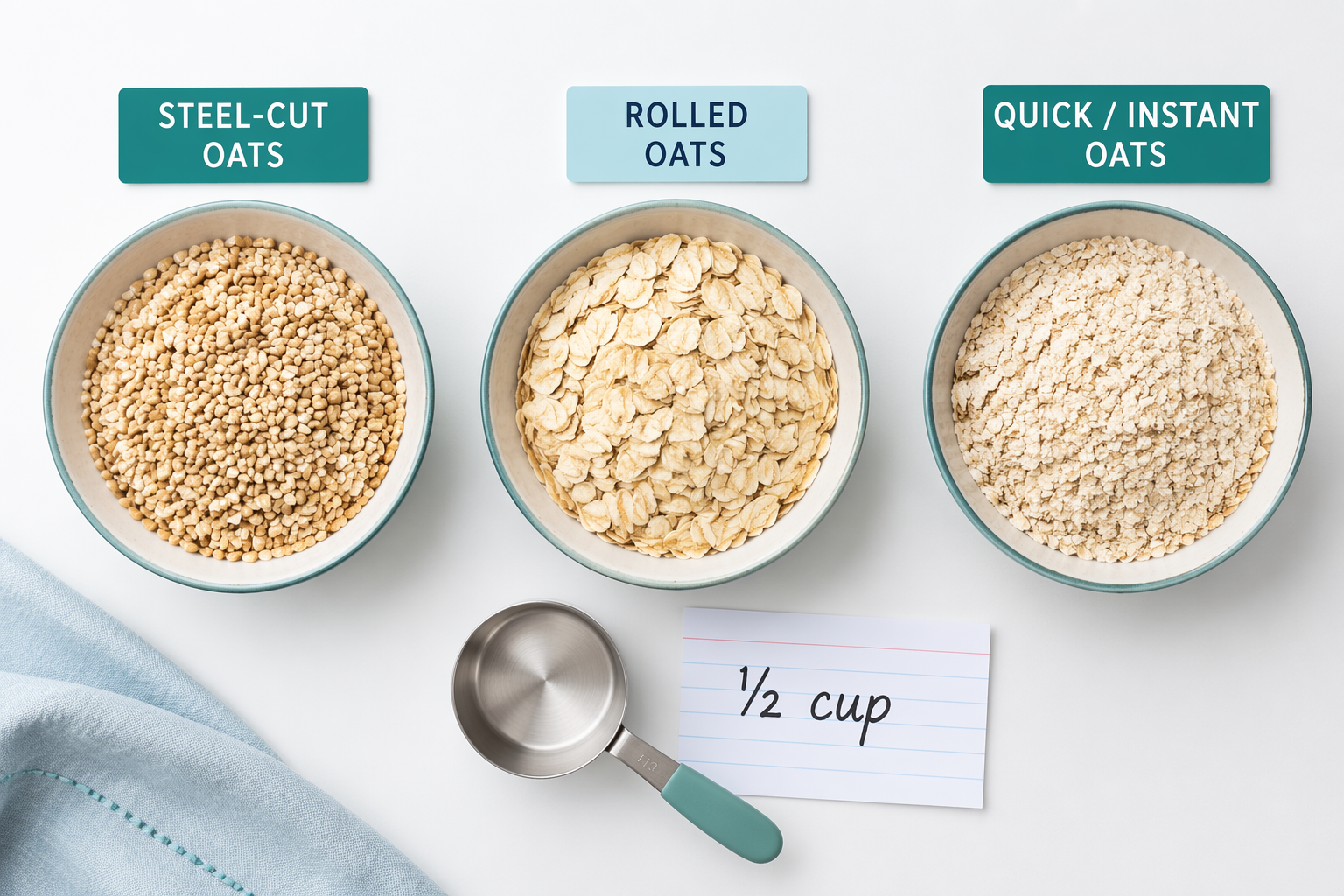
Plain rolled oats are usually the best first test. They're easy to measure, easy to cook, and often gentler than more processed oat products. For many people with IBS, IBS and grains is less about cutting out every grain and more about finding the right form and serving.
Oat type | How it usually feels | Practical first test |
|---|---|---|
Rolled oats | Soft, familiar, and often the easiest starting point | About 1/2 cup uncooked, or roughly 40 to 50 grams |
Quick oats | More broken down and sometimes easier in a smaller serving | About 1/4 cup dry for the first trial |
Steel-cut oats | Heartier and less processed, which can feel heavier for a very sensitive gut | Try only if rolled oats sit well |
Oat groats | The least processed and the slowest to cook | Best saved for later testing if you tolerate oats at all |
Portion size for oats matters as much as the oat type. A modest bowl is a smarter place to begin than a large breakfast. Many low-FODMAP oat guides use about 1/2 cup uncooked rolled oats as a starting serving, while quick oats may need a smaller dry portion for some people (source).
Cooked oats vs raw oats also changes how they land in your gut. Warm porridge is usually easier to digest than raw oats in muesli or granola. Overnight soaking can soften the texture, but it does not make a big serving automatically safer.
A few products are more likely to cause trouble:
- Instant oatmeal high FODMAP: Many flavored packets include honey, dried fruit, inulin, or sugar alcohols.
- Heavily mixed oat blends: Granola-style products often add extra sweeteners, nuts, and dried fruit.
- Large portions: Even a better choice can become harder to tolerate when the bowl gets too big.
The FODMAPs in oats are usually not the main issue in plain oats. The bigger problem is often the add-ins, the serving size, or a meal that stacks several triggers at once. Keep toppings plain during your first test so you can tell what caused the reaction.
A simple trial plan works best:
- Start with plain rolled oats.
- Cook them with water or a lactose-free or other low-FODMAP milk alternative.
- Keep toppings simple, like cinnamon or a few berries.
- Use the same serving size for several tries.
- If symptoms stay calm, increase slowly. If they flare, try a smaller portion or a more processed oat before ruling oats out.
Tolerance is personal, and it can change with the full meal. If oatmeal bothers you, a simpler preparation or smaller serving may still fit your routine before you decide oats are not a match.
Are Certified Gluten-Free Oats Safer For Avenin?
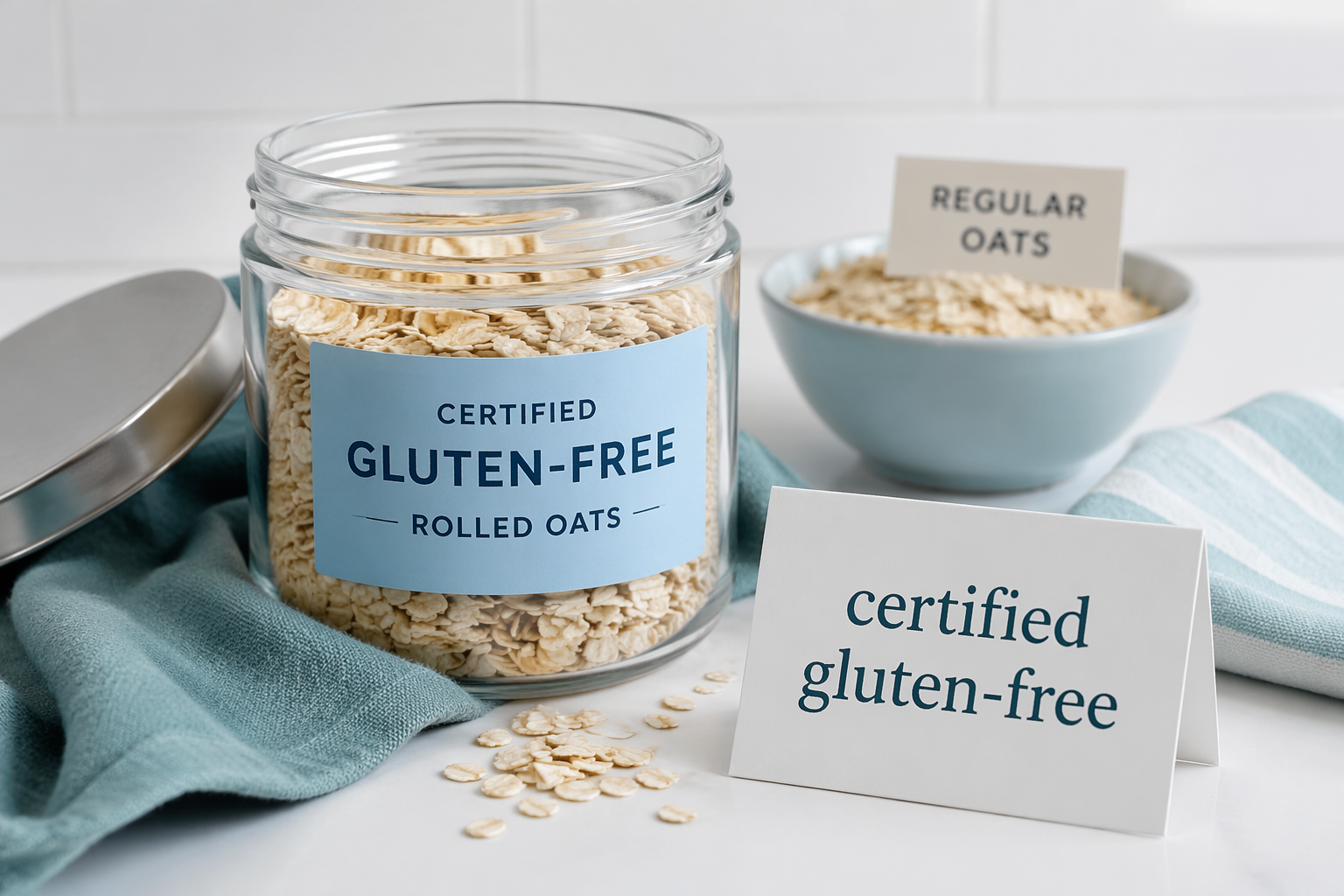
Pure oats are naturally gluten-free, but the bigger issue is what happens before they reach your bowl. Regular oats are often milled or packed in facilities that also handle wheat, barley, or rye, so cross-contamination oats wheat is often the real concern, not the oat itself.
Certified gluten-free oats are the better choice when the goal is to reduce gluten cross-contact as much as possible, especially for people who need to avoid gluten for medical reasons (source). That matters most if you have celiac disease, non-celiac gluten sensitivity, or IBS and you want to cut down avoidable triggers.
A different issue is Avenin, the oat protein some people react to on its own. If symptoms show up after plain oats and also after certified products, the problem may be Oat intolerance rather than a labeling problem.
A simple trial can help you sort out your next step:
- Choose certified gluten-free oats when cross-contact risk is the main concern.
- Pause oats for now if your symptoms are strong, repeatable, or getting worse.
- Talk with a clinician or RDN if the reaction keeps happening, since another cause such as SIBO or a different digestive condition may be involved.
Gluten-free oats can fit many IBS plans, but they are not the right match for everyone.
When Do SIBO Or Red Flags Explain Oat Reactions?

Oat reactions are not always about oats alone. A bigger serving, a sudden jump in fiber, or daily bowls can increase gut fermentation and leave you with gas, bloating, or cramping. If oatmeal is new for you, increase the portion slowly and give your gut time to adjust.
A one-variable-at-a-time approach makes the pattern easier to read:
- Portion size: Keep the oat amount steady across a few trials before changing anything else.
- Oat type: Try steel-cut, rolled, and instant oats one at a time.
- Cooking method: Test a softer, longer-cooked bowl if that sits better.
- Liquid choice: Compare water, regular milk, and lactose-free milk.
- Toppings: Remove sweeteners, dried fruit, inulin, and sugar alcohols during testing.
This kind of testing helps separate oat intolerance from lactose, gluten cross-contact, or a high-FODMAP add-in. Cross-contamination oats wheat can matter, especially if one brand seems to bother you more than another. Certified gluten-free oats may lower that risk, but they do not solve every reaction.
If plain oats keep causing symptoms, the issue may be bigger than toppings or portion size. That pattern can point to oat-specific sensitivity or Fructan sensitivity, and it deserves more than endless self-testing. Repeated reactions to plain oatmeal are a sign to stop guessing and look at the bigger picture.
SIBO is worth bringing up if symptoms hit unusually fast after oats or if slow-digested carbs seem to trigger bloating no matter how small the serving is. When smaller portions and lower-FODMAP changes do not help, the next step is to consider other causes of symptoms, including SIBO or another digestive condition, with a clinician's guidance (source). A gastroenterologist can help decide whether breath testing makes sense.
Use this red-flag checklist so you do not assume every flare is just IBS:
- Persistent symptoms: Ongoing or worsening pain, bloating, or bowel changes
- New warning signs: Unexplained weight loss, vomiting, blood in stool, or fever
- Night symptoms: Pain that wakes you from sleep
- Escalating reactions: Symptoms that keep getting stronger instead of settling
If oatmeal still feels confusing after careful trials, or if rebuilding fiber feels overwhelming, a Registered Dietitian or other qualified healthcare professional can help you sort out the next step. This content is for educational purposes only and is not a substitute for personalized medical advice.
IBS and Oatmeal FAQs
These FAQs cover the basics of IBS and oatmeal, from how oats may fit your symptoms to which prep styles tend to work best. You'll also find practical answers on Oatmeal for IBS, Oats and IBS and oatmeal, Oatmeal recipes for IBS, and when a Gut-soothing food feels soothing.
1. Can overnight oats trigger IBS symptoms?
Overnight oats low FODMAP can work for many people with IBS, but tolerance is personal and dose-dependent. Soaking often makes oats easier on your gut than Cooked oats vs raw oats, yet it does not guarantee relief if you’re very sensitive. Rolled oats are usually gentler than Steel-cut oats because they soften and break down faster, and a small bowl is more likely to sit well than a large one. Some people also do better with oats baked into foods than with a full bowl of oatmeal. Start small, watch your symptoms, and get personalized help if problems keep happening or worsen.
2. Which oatmeal toppings are safest for IBS?
Start with plain oats and simple liquids like water, lactose-free milk, or low-FODMAP plant milks such as almond, hemp, or oat milk and IBS-friendly options, since regular cow’s milk can bother you if lactose is a trigger. Good toppings in small amounts include blueberries, raspberries, strawberries, walnuts, almonds, peanuts, a little maple syrup, stevia, and cinnamon. Skip apples, blackberries, cashews, pistachios, honey, agave, dried fruit, and oversized or very sugary bowls, and keep your first test bowl simple because [Instant oatmeal high FODMAP] can be harder to tolerate for some people while [Oat milk and IBS] may work better when you test one change at a time.
3. Should you eat oatmeal during an IBS flare?
Oatmeal can still work during an IBS flare if you keep the portion small and prepare it simply, but it is not a must for everyone with IBS. Oats may help some people feel steadier because of their fiber, while others get more gas, bloating, or cramping if fiber increases too quickly, so start low and only build up after symptoms settle. Keep the bowl bland with water or a tolerated milk alternative, skip high-FODMAP add-ins like honey, dried fruit, or certain dairy toppings, and pause oats if they clearly worsen your pain, bloating, diarrhea, or constipation while you seek tailored advice for persistent, severe, or worsening symptoms.
4. How quickly can oatmeal affect digestion?
Oatmeal can affect your digestion within hours because its soluble fiber for the gut and Resistant starch are fermented by gut bacteria in the large bowel, which may lead to gas, pressure, or cramping soon after a meal. If the same reaction happens every time after one bowl, it points more to intolerance or a low symptom threshold than to normal adjustment. When you increase oats slowly, changes are usually more gradual, and microbiome adaptation often takes days to weeks. Mild gas can be normal, but worsening pain, urgent bowel changes, or symptoms that continue even with smaller portions deserve a closer look.