


IBS and grains often collide because certain grain carbs can set off bloating, gas, cramps, and stool changes. For adults managing IBS, the hard part is that one bowl of bread, pasta, or cereal can feel fine one day and cause trouble the next. FODMAPs are fermentable carbohydrates that can pull water into the bowel and break down quickly, which is why portion size and grain type matter so much. The next few sections map out which grains tend to be harder on the gut and which choices are usually easier to fit into everyday meals.
Wheat, barley, and rye show up often as triggers, especially when fructans are the problem rather than gluten itself. The article also covers low FODMAP grains, including rice, quinoa, buckwheat, amaranth, and corn foods, plus the role of soluble and insoluble fiber, processing, and serving size. Readers will also get practical ways to test grains more calmly, such as starting with smaller portions, choosing softer preparations, and using a simple symptom log.
Dietitians, gastroenterologists, and busy caregivers will find the most value here, especially when meals need to stay realistic without causing extra discomfort. A small switch from wheat bread to a modest serving of sourdough or plain rice can be enough to show whether fructans or fiber load are driving symptoms. That kind of detail helps turn guesswork into a clearer plan, and it gives you a steadier path to discuss with a registered dietitian or clinician.
IBS and Grains Key Takeaways
- Wheat, barley, and rye often trigger IBS symptoms because of fructans.
- Gluten is not always the main issue when grain symptoms show up.
- Portion size can change whether a grain feels tolerable.
- Rice, quinoa, buckwheat, amaranth, and corn are often easier choices.
- Soluble fiber is usually gentler than insoluble fiber during flares.
- Longer cooking, fermentation, and proofing can improve tolerance.
- A food and symptom log helps identify personal grain triggers.
What Do IBS and Grains Have in Common?
IBS and grains often clash for the same reason, which makes grains a key part of building an IBS diet. Many grains contain fermentable oligo-, di-, mono-saccharides and polyols, or FODMAPs. These carbs can draw water into the bowel and ferment quickly. The result can be bloating, gas, abdominal discomfort, and stool changes that lean toward diarrhea or constipation.
Fructans are the main grain trigger to watch. For many people with irritable bowel syndrome (IBS), wheat or bread symptoms come from Fructans rather than gluten itself. That means the issue is often the grain’s carb pattern, not the protein people usually blame first.
The low FODMAP diet for IBS is most useful when you think about portion size, not just the food name. A grain may be fine at a half serve and much less comfortable at a full serve. Cooking, soaking, milling, and other processing steps can also change how well a grain is tolerated.
Grain choice | What it often means for IBS |
|---|---|
Low FODMAP grains | Usually easier to tolerate in modest portions |
High-FODMAP grains | More likely to trigger bloating, cramps, or stool changes |
Grains are not all the same. Some provide useful fibre and steady energy. Others can aggravate symptoms if your gut is already sensitive. The best choice depends on your usual bowel pattern, your meal plan, and how much you handle in one sitting.
- Diarrhea-predominant IBS: smaller portions and gentler grains often work better.
- Constipation-predominant IBS: fibre can help, but the fibre type still matters.
- Mixed IBS: careful testing usually works better than blanket avoidance.
If symptoms stay unclear, a registered dietitian or gastroenterologist can help you compare grain options and cut down on trial-and-error while keeping meals realistic for a busy week.
Which Grains Commonly Trigger IBS Symptoms?
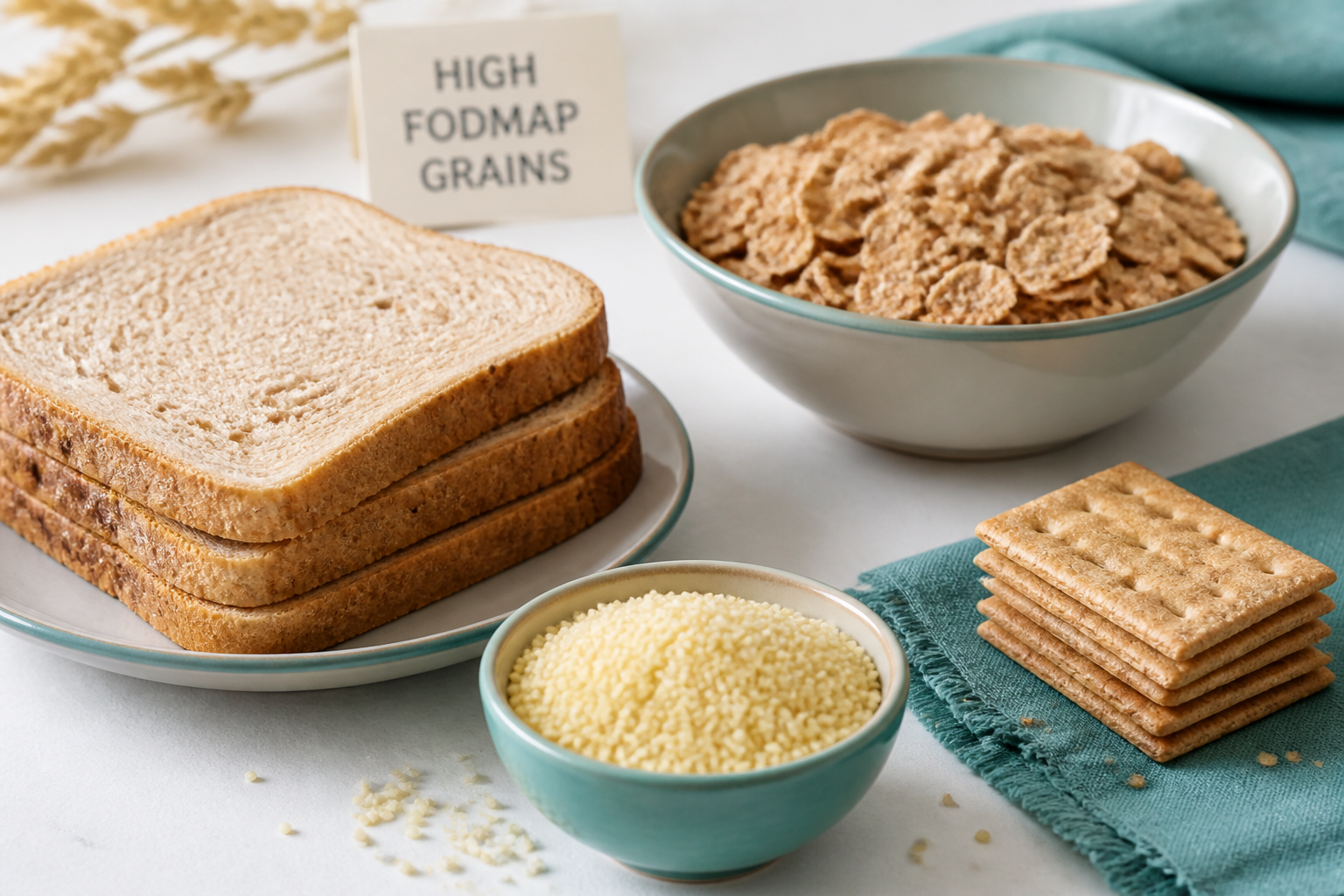
Wheat, barley, and rye are common IBS triggers because they contain fructans, a type of fermentable carbohydrate that can contribute to bloating, gas, abdominal pain, and diarrhea in some people with IBS (source). That pattern shows up often in IBS food triggers, especially when several grain foods land on the same plate. A review in The Lancet also supports the idea that wheat symptoms in IBS are often tied to FODMAPs rather than gluten alone (source31809-9/fulltext)).
The trigger pattern is measurable, not just anecdotal. A study of wheat varieties found that fermentable carbohydrates were present in measurable amounts, and fructans were concentrated more in bran than in refined flour (source). That helps explain why whole-grain wheat can feel rougher than refined flour.
Common [High-FODMAP grains] include:
- Breads and wraps: wheat, barley, rye, and mixed-grain versions
- Pasta and crackers: wheat-based staples that add up fast
- Breakfast cereals: especially wheat or barley cereals
- Bulgur, couscous, and semolina dishes: usually wheat-based and often worth limiting during flares
Symptoms after wheat-based foods do not automatically mean gluten is the problem. If celiac disease has already been ruled out, fermentable carbs are often the more likely issue. That's where [Sourdough fermentation and FODMAPs] can matter, since fermentation can lower some of those carbs.
A [Low FODMAP bread] may sit better than standard sandwich bread. Portion size still matters, and mixed-grain sides deserve the same caution. Keep notes on your own tolerance so you can spot patterns without guesswork.
Which Grains Are Better Tolerated?
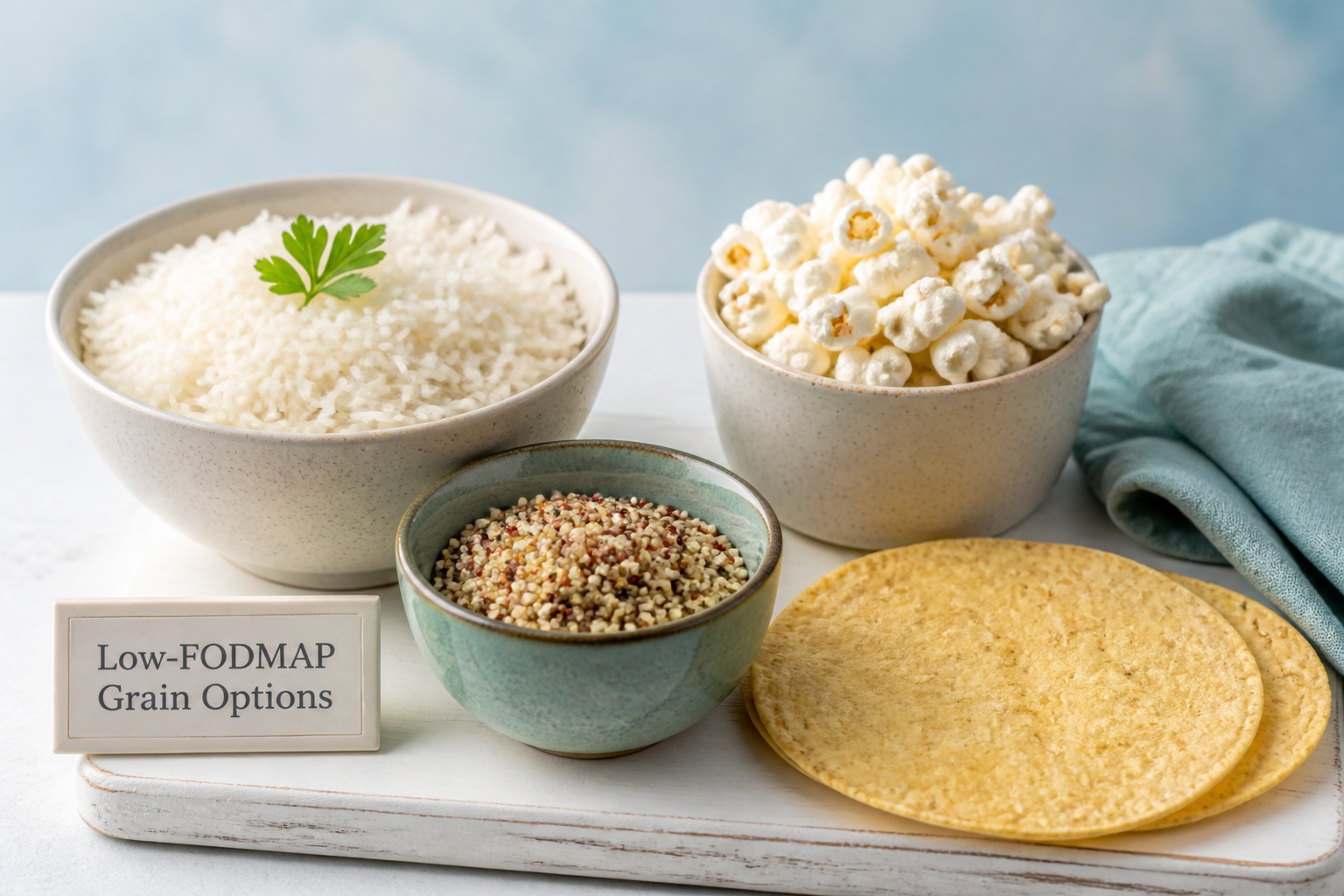
White rice and basmati rice are often the easiest grains to start with. They are very low in FODMAPs, gentle, and useful when you want a calmer meal. IBS and rice can be a helpful place to learn how these simple staples fit into your routine, and IBS safe foods can help you build a broader list over time.
A few options are often easier to tolerate:
Option | Why it may feel easier | Simple serving note |
|---|---|---|
Low FODMAP rice | Light texture and low fiber load | Keep it plain first |
Basmati rice for IBS | Mild flavor and easy digestion | Pair with simple proteins |
Quinoa low FODMAP | Adds fiber and complete plant protein | Rinse well and cook soft |
Buckwheat low FODMAP | Naturally gluten-free and filling | Use in porridge or side dishes |
Amaranth low FODMAP | Small grains with a soft texture | Start with a small portion |
Pseudocereals are a smart next step. They are not true grains, but they work like grains in meals. Quinoa, buckwheat, and amaranth are naturally gluten-free, and sensible portions are often well tolerated. Quinoa is especially useful because it gives you more protein than many other grain choices.
Corn foods can also work well. Corn tortillas, polenta, and plain popcorn are often easier options when you keep toppings simple and skip onion, garlic, or heavy sauces. Millet, sorghum, and teff also widen your Whole grains low FODMAP choices.
These foods often sit better because they contain fewer fermentable carbs. That may help ease bloating, gas, pain, and bowel changes. Start with plain, simply cooked grains, then add tolerated vegetables and protein so you can test your response without making dinner more complicated.
How Do Fiber and Processing Change Tolerance?
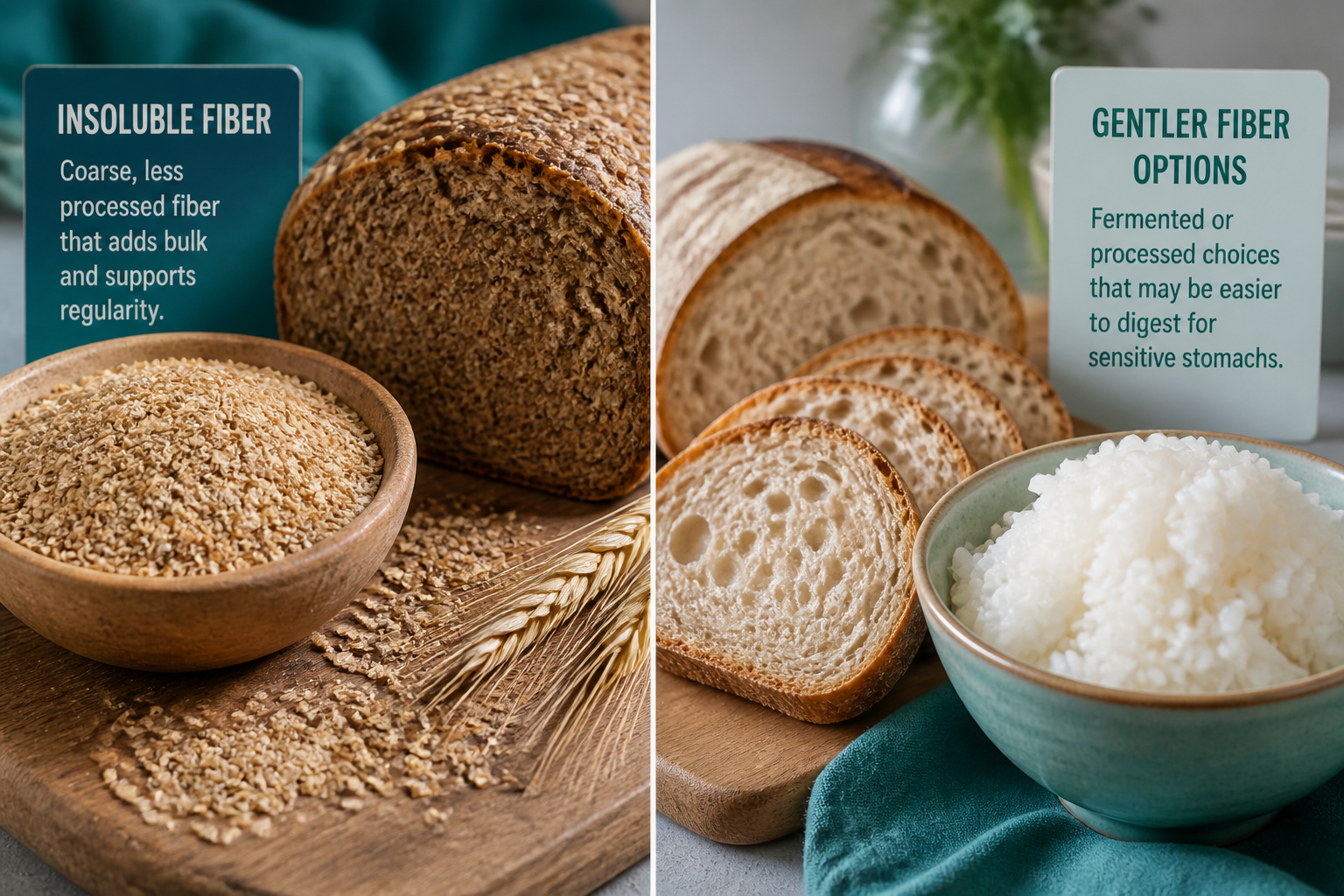
Fiber and IBS often come down to the type of fiber, the amount, and how the grain was processed. Soluble fiber dissolves in water and can help soften stool, so it is often easier on a sensitive gut. Insoluble fiber works differently. It adds bulk and can move through the bowel faster, which may feel harsh in wheat bran, dense whole-grain breads, and other bran-heavy foods.
That faster transit can be a real problem when symptoms are already active. If bloating, cramping, gas, or loose stools show up after wheat bran or heavy whole grains, those foods are worth scaling back for now. The same caution applies to some Whole grains low FODMAP choices when the serving gets too large.
Portion size matters just as much as the grain itself. A food can stay low in fermentable oligo-, di-, mono-saccharides and polyols at a half serve and become harder to tolerate at a full serve. Smaller portions are often the easiest first change, especially when you are testing a new grain or reintroducing one after a flare.
What changes tolerance | Why it matters |
|---|---|
Smaller serving | Lowers the FODMAP load and the fiber hit |
Longer cooking | Softens texture and can make grains easier to digest |
Milling, proofing, or fermentation | Can change how the grain behaves in your gut |
Rapid fiber jumps can also backfire. A big increase all at once may trigger marked bloating, gas, and discomfort. Managing fiber intake for IBS works better when you increase fiber slowly over several weeks and watch your own response.
Processing can help more than many people expect. Sourdough bread is often better tolerated in moderation because fermentation and proofing can reduce certain fermentable carbs. Extended fermentation can reduce some fermentable carbohydrates in wheat bread, so sourdough and similar breads may be better tolerated by some people with IBS (source).
If a grain bothers you, don't assume it has to be off the menu forever. Try a smaller portion, cook it longer, or choose a different preparation method before you cut it out completely. Small adjustments are often the most practical way to keep Fiber and IBS changes tolerable, and they make Portion size FODMAP testing much easier day to day.
How Do You Choose Grains for IBS?
Grain choices work best when they follow your symptom pattern, not a rigid food rule. If diarrhea, constipation, and mixed IBS affect you differently from week to week, the grain that feels fine one day may feel rough the next.
A simple starting point is to match grains to how your gut feels that day:
IBS pattern | Grains to favor | What to watch |
|---|---|---|
IBS-D | Oats, rice, and other softer, soluble-fiber grains | Coarse bran, large servings, and heavy grain bowls |
IBS-C | Gradual adds of oats, quinoa, and other fiber-rich grains | Bloating or cramping if fiber rises too fast |
IBS-M | Choose based on the current symptom pattern | Swapping between very high- and very low-fiber meals too quickly |
Managing fiber intake for IBS usually works best when you adjust it around your current symptoms. If constipation is the main issue, a sudden fiber jump can make gas and cramping worse before it helps. If diarrhea is more common, soluble fiber often feels gentler than rougher, insoluble-fiber grains.
For meal planning, start with lower FODMAP grains and keep the portion modest. White rice for IBS is a common first choice because it’s easy to portion and easy to pair with lean protein and cooked vegetables. Quinoa can also fit well. Portion size FODMAP matters here, because a grain that works in a small serving can become harder to tolerate in a large bowl.
Gluten vs FODMAP is not the whole story. Symptoms may come from fructans, total fiber load, or the way a grain was processed. Proofed or fermented wheat foods may sit better than denser, less processed versions.
Test one grain at a time for a few weeks, and keep a brief food-and-symptom diary. Track timing, portion size, and symptom type. If a grain bothers you, try a smaller serving, cook it longer, or change the preparation before removing it completely.
Keep enough starch in the plan while you test. That helps meals stay satisfying and helps you avoid cutting calories or variety too much. A physician or registered dietitian can tailor a low-FODMAP or IBS-targeted plan, especially if symptoms are persistent, severe, or changing.
This guidance is educational only and is not a substitute for personalized medical advice. Digestive symptoms can have many causes, and recurring problems despite careful grain changes should be evaluated by a qualified clinician, including consideration of celiac disease or another digestive condition.
IBS and Grains FAQs
These FAQs cover the most common questions about IBS and grains, with a focus on everyday choices, portion size, and how Low FODMAP grains can fit into meals without the guesswork.
They're here to help you feel more confident before you test changes or talk with a dietitian.
1. Does gluten-free mean IBS-friendly?
No, gluten-free does not automatically mean IBS-friendly for every person. Many packaged gluten-free foods still contain fructans, so the issue is often Gluten vs FODMAP rather than gluten alone, and wheat can still bother some people even without celiac disease. For a deeper look, IBS and gluten can overlap in confusing ways, while Certified gluten-free oats are a separate choice and Gluten-free oats are usually better tolerated in standard portions like about 1/2 cup dry. Portion size still matters, and your own symptoms should guide what stays on your plate.
2. Can IBS overlap with celiac disease?
IBS and celiac disease are different conditions, even though bloating, belly pain, and diarrhea can look very similar. Some people react to wheat foods because of fermentable carbs, and the Monash FODMAP list can help show when FODMAPs are the bigger issue in IBS and grains. Don’t start a low-FODMAP plan before celiac disease is ruled out, because cutting wheat and similar grains too early can blur test results. A physician or registered dietitian can tailor the plan to your symptoms and tolerance, since triggers vary a lot from person to person.
3. Are oats always safe for IBS?
Oats are not always safe for everyone with IBS, but IBS and oatmeal can often fit when you choose Certified gluten-free oats and stay within a tested portion. Commonly tolerated amounts are about 1/2 cup uncooked rolled oats or steel-cut oats, or about 1/4 cup uncooked quick oats. Oats provide soluble fiber, so Fiber and IBS often connect here in a helpful way, but your symptoms still matter, and Gluten-free oats may need a slow test before you know what works.
4. Can white rice still trigger symptoms?
Yes. White rice for IBS, including basmati rice for IBS, is very low in FODMAPs, so it’s usually a safe grain choice and a common example of low FODMAP rice. Even so, very large portions can still bother your gut, and the bigger trigger is often the full meal, especially onion, garlic, rich sauces, and heavy toppings. A plain bowl first is the safest test, then you can add ingredients one at a time and watch how you feel.