


IBS and alcohol can be a frustrating mix because the same drink may seem fine one night and cause bloating, cramps, diarrhea, constipation, or nausea the next. For adults living with IBS, that uncertainty is especially hard when drinks show up at dinners, school events, or work gatherings. Alcohol is a gut irritant, and IBS means the bowel reacts more strongly than it should, so the useful takeaway is a clearer read on which drinks, mixers, and habits are most likely to cause trouble.
My Good Gut’s coverage here looks at how alcohol triggers IBS symptoms, which beverages are lower risk, and how low-FODMAP mixers can change the picture. It also breaks down beer, wine, spirits, and cocktails, then shows how to test tolerance with small servings, food pairing, hydration, and symptom tracking. Readers also get practical ways to judge next-day reactions and decide when skipping alcohol is the better call.
That makes this especially helpful for busy parents, teachers, and professionals who need simple choices they can trust before a night out or a family meal. A glass of dry wine with food may sit fine for one person, while a beer or sweet cocktail leads to morning urgency for another. With a few careful notes and a steady trial, the pattern becomes easier to see, and the next step becomes much more straightforward.
IBS and Alcohol Key Takeaways
- Alcohol can trigger IBS symptoms, but reactions vary widely.
- Bloating, cramps, diarrhea, constipation, and nausea are common responses.
- Beer, sweet cocktails, and fizzy mixers often cause more trouble.
- Dry wine and plain spirits are usually simpler choices.
- Small servings with food and water are easier to tolerate.
- Next-day symptoms can reveal a delayed alcohol reaction.
- Repeated flares mean cutting back or avoiding alcohol may help.
Can You Drink Alcohol With IBS?
Alcohol is a common gut irritant, and that matters a lot when you live with irritable bowel syndrome (IBS). Some people can have an occasional drink and feel fine. Others get bloating, cramping, abdominal pain, gas, nausea, diarrhea, or constipation after even one serving. The study on alcohol patterns and gastrointestinal symptoms in IBS supports that uneven experience (source).
There isn’t one rule that fits everyone. Your tolerance depends on the drink, the amount, your current symptom level, and how reactive your gut is that day. Some people can handle moderate drinking, while others find that even a small amount is enough to set off a flare.
The evidence is mixed, but the real-world pattern is fairly steady. A population-based case-control study found alcohol intake to be a possible trigger for functional gut symptoms, which matches what many people notice in daily life (source). About one-third of people with IBS report symptoms after drinking, and some feel better when they cut back or stop altogether.
Alcohol can also affect you twice. The first hit may come while you are drinking or soon after, when the gut becomes more irritated. The second hit may show up later as next-day symptoms after drinking, which means a drink that seemed harmless at dinner can still lead to delayed bloating, looser stools, worse constipation, or a general “my gut feels off” feeling the next morning.
That delay is one reason does alcohol trigger IBS is such a common question. For some people, the answer is clearly yes. For others, the effect shows up only after a certain amount, a rough day, or a poor night of sleep. Binge drinking and IBS is usually a worse combination than a single small drink because larger amounts are more likely to irritate digestion.
A practical way to think about IBS and alcohol is to treat it like a personal tolerance test, not a universal yes-or-no rule. The type of drink matters. So does whether it is carbonated, sugary, high in sugar alcohols, or mixed with a trigger-heavy mixer. Low FODMAP alcohol choices can be useful for some people, even though “low FODMAP” does not mean symptom-free for everyone.
Low-risk choices often come down to the details:
- Dry wine and IBS: Dry red or white wine may be easier for some people than sweeter wines, but alcohol itself can still irritate the bowel.
- Plain spirits with simple mixers: Clear spirits mixed with soda water or a low-FODMAP mixer may be better tolerated than cocktails with lots of juice or syrup.
- Smaller servings: A half pour can be easier to handle than a full glass, especially if your symptoms are already active.
Strict limits or full abstinence make more sense when alcohol keeps causing trouble, even after you change the type or amount. If you are in an active flare, if repeated symptom worsening follows drinking, or if your test drinks keep leading to cramps, diarrhea, constipation, or nausea, skipping alcohol altogether is often the most practical choice.
A simple check can help you judge where you stand:
Situation | What it often means |
|---|---|
One small drink causes clear symptoms | Alcohol may be a strong trigger for you |
Symptoms show up the next day | Your gut may be reacting later, not immediately |
Only certain drinks bother you | The drink type, mixer, or serving size may be part of the problem |
Every trial leads to a flare | Total abstinence may be the least disruptive option |
If you want a low-risk way to test your tolerance, keep it simple. Choose one drink, keep the serving small, drink with food, and avoid stacking alcohol with greasy meals, carbonated mixers, or a late night. Then watch both the same-night response and the next-day symptoms after drinking pattern over the next 24 hours.
The safest path is often the most honest one. If alcohol reliably triggers symptoms despite smaller servings or lower-risk choices, your body is giving you useful information. In that case, removal is usually easier than constant damage control. This content is for educational purposes only and is not a substitute for personalized medical advice.
The bigger picture is reassuring. Some people with IBS can drink occasionally, some need strict limits, and some do best without alcohol at all. There is no single answer for everyone with alcohol and IBS, so careful trial, symptom tracking, and close observation usually tell you more than any generic rule. Keep notes on what you drank, how much you had, and how your gut reacted so you can decide whether your personal tolerance is low enough to limit or skip it.
How Does Alcohol Trigger IBS Symptoms?
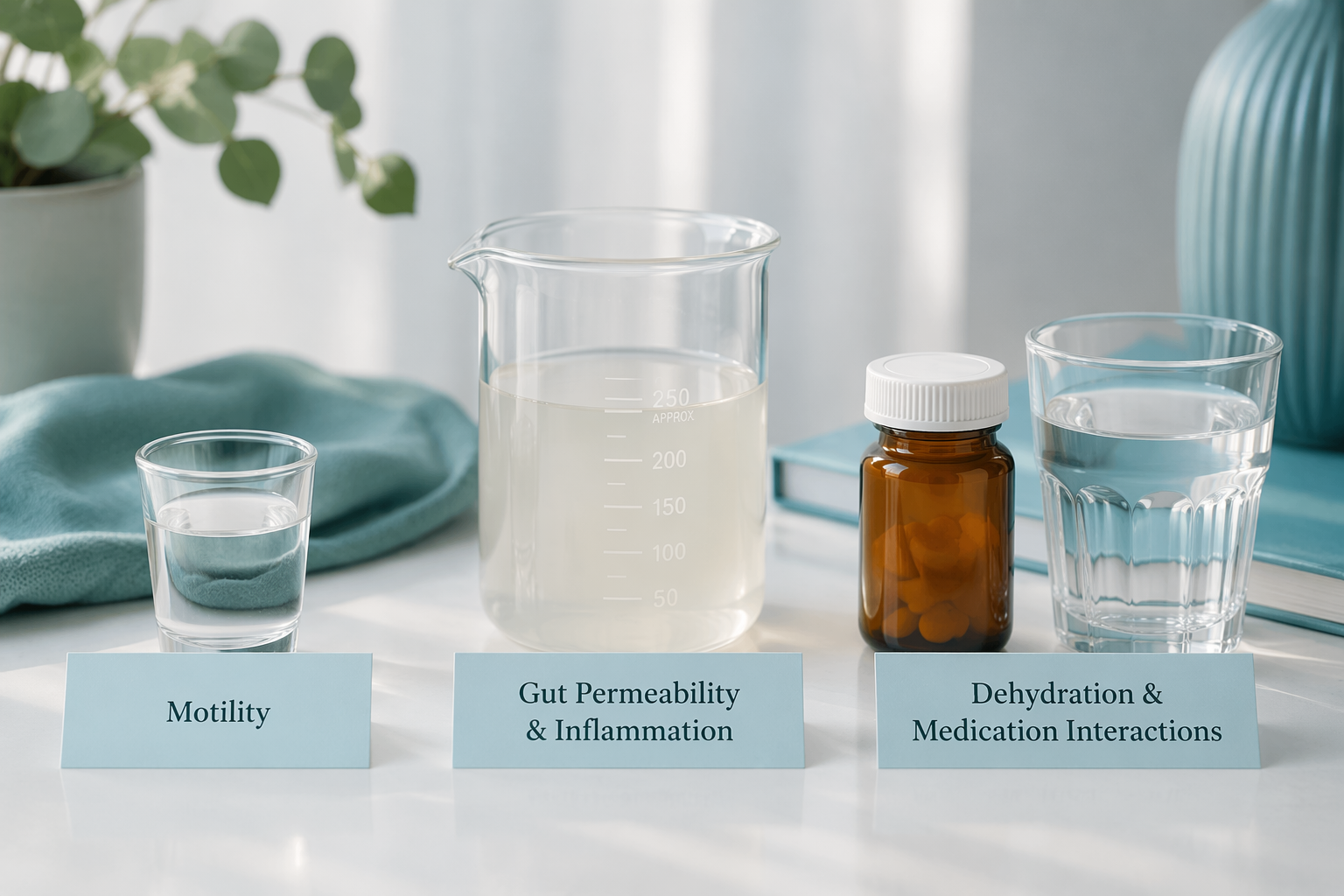
Alcohol can irritate your gut in more than one way, and that’s why Alcohol and IBS can feel so unpredictable from one night to the next. In people with IBS, even a small amount may trigger bloating, cramping, nausea, or looser stools because a sensitive digestive tract reacts more strongly than a steadier one. The exact response often depends on the drink, the amount, and whether you ate beforehand.
A major reason is motility, which is the speed at which food and waste move through your intestines. Alcohol can push that speed in either direction. When transit speeds up, stool has less time to firm up, so urgency and diarrhea can follow, especially in IBS-D. When transit slows down, stool stays in the colon longer, which can make constipation, trapped gas, and that unfinished feeling more likely.
Alcohol can also affect the gut lining. That lining acts like a barrier, and alcohol may inflame it and weaken the tiny seals between cells. Gut permeability and alcohol often travel together in gut health discussions because a leakier barrier can leave the bowel more reactive. Some people use the phrase Leaky gut for this idea. The simpler takeaway is that a more irritated lining can make cramping, spasms, and pain easier to set off when you already have visceral hypersensitivity.
The microbiome matters too. Microbiome disruption from alcohol can shift the mix of gut bacteria, and that may increase inflammation and gas production. If drinking happens often, or if it lines up with another trigger such as a rich meal or stress, symptoms can stack up. That is when bloating, abdominal discomfort, and irregular stools become more noticeable than they would after a single isolated drink.
Dehydration is another separate piece of the puzzle. Alcohol acts as a diuretic, which means it increases fluid loss through urine. That extra fluid loss can pull water from the colon and leave stool harder and drier. For IBS-C, that can mean more straining, slower bowel movements, and next-day discomfort. For busy parents and professionals, one evening out can turn into a rough morning that affects work, school drop-off, or the commute.
The dose matters a lot, and heavier drinking raises the risk more than light sipping does. Binge drinking and IBS is a combination that deserves extra caution because heavy alcohol intake can speed gut motility and increase the risk of next-day diarrhea, particularly in individuals with diarrhea-predominant IBS (source). While specific thresholds vary by person, limiting intake and avoiding binge patterns is generally recommended to reduce symptom severity (source). It has also been tied to more nausea, stomach pain, and indigestion. Research on alcohol-related bowel symptoms has also pointed to consumption and the symptoms of IBS. (source)
The tricky part is that alcohol usually does not act through just one pathway. Faster or slower motility, gut lining irritation, microbiome shifts, and dehydration can all overlap after cocktails, several drinks, or drinking on an empty stomach. That is why the same amount can feel fine one week and send your gut off the rails the next.
A simple way to think about the main effects is this:
Alcohol effect | What it can do in IBS | Symptoms you might notice |
|---|---|---|
Faster motility | Speeds stool movement through the gut | Urgency, diarrhea, cramping |
Slower motility | Delays bowel movements | Constipation, trapped gas, incomplete emptying |
Gut lining irritation | Raises sensitivity and inflammation | Pain, spasms, nausea |
Microbiome disruption | Changes bacteria balance and gas production | Bloating, discomfort, irregular stools |
Dehydration | Reduces water in the stool | Harder stools, straining, next-day discomfort |
Your own pattern matters more than any one-size-fits-all rule. A beer with dinner may feel different from two mixed drinks on an empty stomach. A glass of wine on a calm evening may be easier to tolerate than the same drink during a stressful week when your gut is already on edge.
Next-day symptoms after drinking can be the clearest clue of all, especially when the reaction is not obvious in the moment. A flare may show up as morning diarrhea, lower belly pain, constipation, nausea, or just a gut that feels off well into the next day. If you notice a repeat pattern, it helps to look at the whole picture instead of blaming alcohol alone:
- Type of drink: Beer, wine, spirits, and sugary mixers can affect you differently.
- Amount: More drinks usually mean more irritation and a stronger gut response.
- Timing: Drinking on an empty stomach can hit harder.
- Food pairing: Greasy meals, carbonated drinks, and high-FODMAP mixers can add to symptoms.
- Your IBS subtype: IBS-D and IBS-C can react in opposite ways to the same evening.
The most useful goal is not to label every drink as bad. It is to notice which combinations push your gut past its comfort zone. Once you can spot that pattern, you can make a better call about whether to limit, swap, space out, or skip alcohol when symptoms are already active.
A few practical clues can make that pattern easier to see:
- Track the drink, the amount, and the time you had it.
- Note whether you ate, and what else was on the plate or in the mixer.
- Watch for symptoms the same night and the next morning.
- Compare reactions across different drinks instead of assuming all alcohol behaves the same.
- Pay attention to whether stress, poor sleep, or a flare was already building before you drank.
That kind of tracking gives you a clearer view of what your gut can handle. It also helps you separate a true alcohol trigger from a night when several stressors landed at once.
Alcohol can also interact with cocktails in a very literal way. Carbonation, sugar alcohols, citrus, and high-FODMAP mixers may add their own load on top of the alcohol itself. If your symptoms are already sensitive, those extras can be enough to turn a mild reaction into a bigger flare. A smaller pour with a simple mixer is often easier to judge than a layered drink with several moving parts.
The bottom line is that alcohol and IBS symptoms often rise together because multiple systems are involved at once. Motility, mucosal irritation, gut permeability, microbiome changes, and dehydration can all combine, and the effect is usually stronger when the drinking is heavier. Paying attention to next-day symptoms after drinking gives you the best clue about your own threshold, and that makes it easier to choose what to keep, what to change, and what to skip.
How Do Different IBS Subtypes React To Alcohol?
Knowing your IBS subtype gives you a better clue about what alcohol is likely to do. Alcohol tends to push the gut toward looser stools more often than it helps constipation, so the same drink can feel very different depending on whether you live with IBS-D, IBS-C, or IBS-M.
IBS subtype | What alcohol is most likely to do | Drinks that often cause more trouble | Safer approach |
|---|---|---|---|
IBS-D | Trigger urgency, looser stools, cramping, gas, and next-day diarrhea | Beer, sweet cocktails, larger pours, binge drinking | Small servings, fewer mixers, less carbonation |
IBS-C | Cause bloating, irritation, dehydration, and a rough next day | Sugary drinks, carbonated drinks, heavy pours | Simple drinks, water alongside alcohol, modest portions |
IBS-M | Swing symptoms toward diarrhea one time and constipation or bloating another | Heavy drinking, mixed drinks, binges | Match the choice to your current phase |
That table is the easiest way to think about it. The label on your chart matters, but the symptom pattern you have that day matters too.
For IBS-D, alcohol is usually the riskiest. It can speed gut motility, which means food and fluid move through your system faster than normal. That faster movement can bring urgency, cramping, gas, loose stools, and diarrhea the next day.
The strongest alcohol link tends to show up in diarrhea-predominant IBS. Binge drinking is the biggest red flag because it delivers a larger dose all at once and gives your gut less time to recover. Older research also found that women with IBS reported more alcohol-related digestive symptoms than men, though individual responses vary significantly (source). This gender difference may be related to differences in gut motility or sensitivity, but further research is needed to confirm the pattern (source).
A simple IBS-D filter helps: if the drink is fizzy, sugary, or high volume, the risk goes up. That is why Beer and IBS is often a bad match, especially when the beer is carbonated and may also contain gluten. Sweet wines, dessert wines, rum drinks, and sugary cocktails can be rough too.
IBS-C can feel less dramatic at first. Alcohol may not trigger the same urgency, so it can seem safer than it does for IBS-D. Even so, it can still leave you bloated, irritated, and dry the next day.
Temporary loosening of stools is not the same as real relief. A drink that makes you go once after a slow week is not fixing constipation. It may just be irritating the bowel enough to cause a short-lived change, and sugary or dehydrating drinks can make the rebound feel worse later.
The bigger picture matters too. Gut permeability and alcohol are closely linked, and researchers also talk about microbiome disruption from alcohol as one reason some people feel off after only a few drinks. In plain terms, alcohol can affect the gut barrier that helps keep the lining stable, and that is one reason people use the phrase leaky gut after drinking.
IBS-M needs the most flexibility. Alcohol may push symptoms toward diarrhea on one night and make bloating or sluggishness worse on another. That means the best choice depends on the phase you are in, not just the diagnosis itself.
A useful shortcut is this:
- Loose phase: Treat it like IBS-D and keep alcohol light or skip it.
- Constipated phase: Focus on hydration and simpler drinks if you choose to drink.
- Unclear phase: Assume alcohol could go either direction and be extra cautious.
The drinks most likely to bother all subtypes share a few traits. They are often carbonated, sugary, or served in large portions. They also tend to irritate the gut faster than simpler options.
Common troublemakers include:
- Beer: Carbonation plus possible gluten exposure can make it harder on the gut.
- Cider: Sweetness and fermentation can be rough for some people.
- Sweet wines and dessert wines: Higher sugar content can worsen symptoms.
- Rum and sugary cocktails: Mixers and sweeteners are frequent triggers.
- Large pours of any alcohol: Dose matters more than the label on the bottle.
If alcohol sits well enough with you, smaller servings usually create less trouble than bigger ones. Fewer mixers help too. Less carbonation is often easier on your gut than bubbly drinks, especially if bloating is one of your main symptoms.
Timing matters more than many people expect. A drink that feels fine on Friday night can still lead to next-day symptoms. Alcohol can alter the gut environment and immune responses even when the amount seems modest, so a delayed flare is still a real alcohol effect.
Heavy drinking is the clearest trigger to avoid. Binge drinking is especially hard on IBS because it combines dose, speed, and dehydration. Extra caution makes sense during stress, after a day without enough water, when you are eating out, or during an active flare.
A few practical guardrails can help you make a better call:
- Pick the simplest drink you can tolerate.
- Keep the serving small.
- Skip carbonated mixers when bloating is a problem.
- Drink water before, during, and after alcohol.
- Avoid alcohol when your symptoms are already flaring.
The most helpful mindset is not “Can I drink at all?” but “What happens to my specific subtype, on this specific day, with this specific drink?” That kind of tracking gives you a better read than rules alone.
If you want a plain-language filter, use this: IBS-D calls for the most caution, IBS-C needs attention to dehydration and irritation, and IBS-M needs flexible choices based on the phase you are in. When alcohol consistently worsens symptoms, treat that pattern as a real trigger, not a coincidence.
Which Drinks And Mixers Are Low-FODMAP?
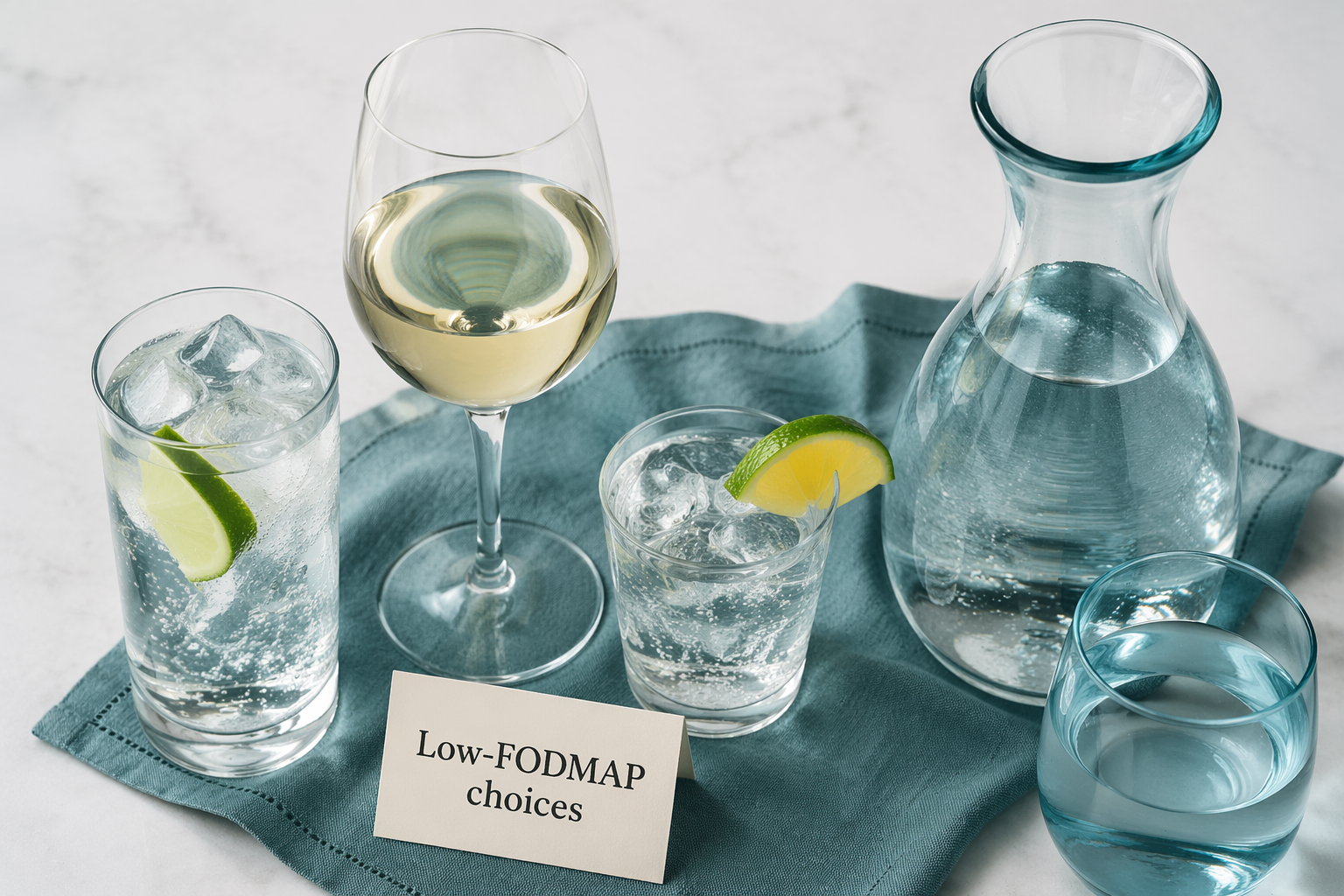
The safest starting point is usually Low FODMAP alcohol that stays simple and unsweetened. Clear distilled spirits like vodka, gin, whiskey, and tequila are often better tolerated than mixed drinks loaded with juice or syrup. Dry wine and IBS can also be a workable match for many people when the serving is moderate and the wine is truly dry.
A few drink patterns are more likely to stir up symptoms. Beer and IBS is a common issue because beer is carbonated, and many beers also contain gluten or other ingredients that can bother sensitive guts. Cider, sweet wines, dessert wines, fortified wines, rum, and sugary cocktails are also higher-risk choices because they bring more fermentable carbohydrates, more sugar, or both.
Carbonation matters even when the alcohol itself is not the main problem. Beer, sparkling wine, hard seltzers, and fizzy FODMAP mixers can add gas and make bloating feel worse. If bubbles bother you, still wine or a non-carbonated mixer is usually the calmer choice.
A simple guide can make ordering easier:
Lower-risk choice | Why it tends to work better | Higher-risk swap to avoid |
|---|---|---|
Vodka, gin, whiskey, or tequila with a simple mixer | Fewer fermentable ingredients | Cocktails built with juice and syrup |
Dry red or dry white wine | Less sugar than sweeter wines | Dessert wine or fortified wine |
Club soda or soda water with citrus | Simple and usually low-FODMAP | Sweet soda, tonic with added sweeteners, or flavored mixers |
Still water with lemon or lime | No carbonation and no added sugar | Apple juice or mango juice |
The most reliable mix is often a distilled spirit plus a plain mixer and citrus. low-FODMAP drink options fits that pattern well when you want something simple without a long ingredient list. A small splash of cranberry juice without high-fructose corn syrup is usually a better bet than apple juice or mango juice.
Sugar-free labels need a close read too. Sugary mixers trigger IBS is only part of the story, because some diet and zero-sugar drinks use sorbitol, xylitol, or similar polyols that can be just as troublesome. Diet tonics, zero-sugar sodas, flavored seltzers, and ready-to-drink cocktails deserve the same label check as sweet mixers.
The easiest choose-this-not-that rule looks like this:
- Better bet: vodka or gin with club soda and lime
- Better bet: tequila with soda water and a squeeze of citrus
- Better bet: dry white wine with a meal
- Less ideal: beer, cider, dessert wine, or a cocktail made with juice and syrup
- Less ideal: canned drinks with polyols or long ingredient lists
Moderation still matters, even with a safer choice. A larger amount of alcohol can overwhelm your gut and trigger next-day urgency, loose stool, or diarrhea after binge drinking. If your stomach gets touchy after two drinks, one well-chosen drink may be a better limit than trying to outsmart a bigger round.
That is where Vodka and IBS often gets discussed so much. Vodka itself is usually low in fermentable carbs, but the mixer makes or breaks the drink. A vodka soda is very different from a vodka cocktail with fruit juice, syrup, or a sugar-free mixer that hides polyols.
If you are testing your own threshold, keep the experiment simple:
- Pick one clear distilled spirit or one dry wine.
- Use one mixer you already know you tolerate, like club soda or still water with citrus.
- Skip carbonation if bloating is your main symptom.
- Keep the serving modest.
- Track what happens over the next 12 to 24 hours.
That kind of steady approach helps you spot patterns without guessing. It also gives you a practical way to learn which drinks fit your body instead of relying on a one-size-fits-all rule. Coconut water and IBS options can also fit a non-alcoholic, low-risk drink list.
The best answer is usually the simplest one. Choose a clear spirit or dry wine, keep the mixer plain, and leave the sweet, fizzy extras for another time.
How Do You Test Your Alcohol Tolerance?
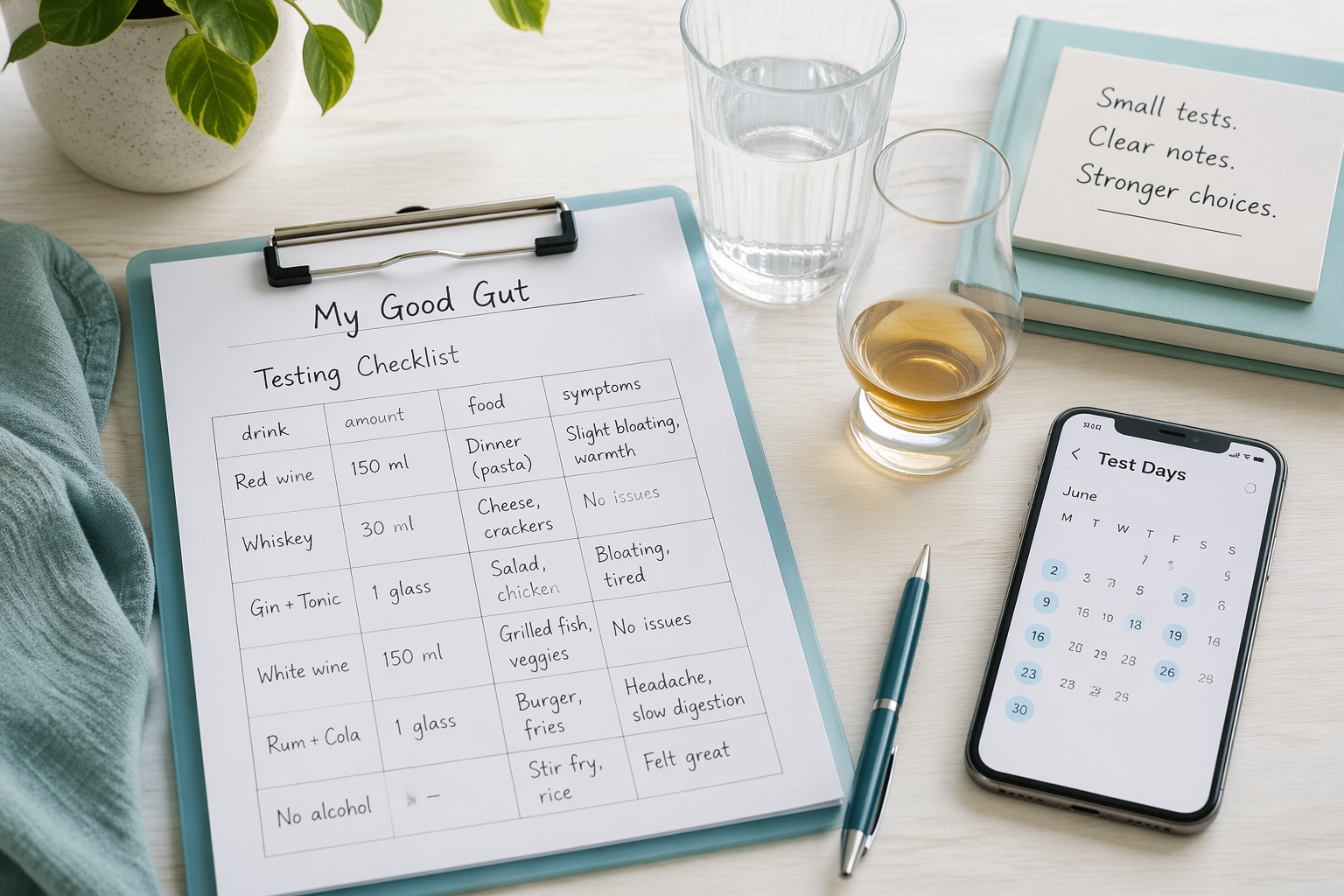
Alcohol tolerance with IBS is personal, and the safest way to learn yours is to test it gently instead of pushing through symptoms. One person may handle an occasional drink without trouble, while another flares from a small pour. The goal is to find your own pattern and respect it.
A structured trial works better than random guessing. Think of it as an elimination diet for IBS with alcohol as the variable. The point is not to prove alcohol is harmless. The point is to see which drink, amount, mixer, and setting your gut can handle.
Start with a clean baseline, then reintroduce one drink at a time:
- Go alcohol-free long enough to reset your baseline.A few stable days is the minimum recommended baseline for testing, and a full week is often better if your symptoms have been fluctuating, as this allows for a clearer pattern to emerge . However, individual tolerance varies, so extending the baseline period may help if symptoms are inconsistent (source). Keep food, sleep, caffeine, and medications as steady as you can during that stretch.
- Test one standard drink on one day only.Use a Standard drink size, not a house pour that may be larger than it looks. One serving keeps the result easier to read.
- Wait several days before the next test.Space each trial far enough apart that you can tell whether a flare came from alcohol, a meal, stress, travel, or a medication change. A rushed schedule makes the result muddy.
- Keep the drinking setup consistent.Pair alcohol with a balanced meal. Never test on an empty stomach. Alternate each drink with a full glass of water. Choose simple FODMAP mixers such as club soda, plain water, or fresh lemon or lime juice.
That last point matters more than many people expect. Sometimes the alcohol is only part of the problem. Sugary mixers trigger IBS for a lot of people, and carbonation can also add gas and pressure. The drink itself may be fine, while the cocktail format is not.
A simple diary makes the pattern much easier to spot. Track alcohol intake and symptoms every time you test:
What to record | What to note |
|---|---|
Drink type and brand | Beer, wine, spirits, cider, or cocktail |
Amount | Exact pour and number of drinks |
Mixer | Club soda, juice, soda, tonic, water, or other |
Carbonation | Still or fizzy |
Food pairing | Snack, full meal, or nothing |
Hydration | Water between drinks and after |
Bowel pattern | Normal, looser, harder, or urgent |
Digestive symptoms | Bloating, pain, nausea, gas, reflux, or cramps |
Stress level | Calm, rushed, tired, anxious, or irritated |
Timing | When symptoms started and how long they lasted |
Keep the notes plain and specific. A line like “2 oz gin with club soda, dinner included rice and chicken, one glass of water, bloating started two hours later” gives you more useful information than “felt bad.” After two or three trials, patterns usually start to stand out.
Clear stop-and-go rules help keep testing safe and useful:
- Stop the trial if you get a noticeable flare.
- Stop the trial if diarrhea or constipation worsens in a way that seems clearly tied to the drink.
- Stop the trial if pain, urgency, or nausea becomes significant.
- Stop the trial if you vomit or feel sick into the next day.
- Treat that drink as a likely trigger if symptoms are strong, prolonged, or repeat the same way more than once.
If symptoms stay mild and settle back to baseline, repeat the exact same serving on another day. That second check helps confirm tolerance instead of turning one lucky night into a rule. Two calm responses in a row mean more than a single good result.
During testing and after a successful trial, keep the dose conservative. Start with no more than one standard drink, and do not jump to two or more drinks in the same sitting. Small amounts are easier to pace, easier to track, and less likely to blur your results.
A quick self-check can help you decide how cautious to be:
Result after the test | Best next step |
|---|---|
No symptoms or only tiny changes | Repeat the same drink on another day |
Mild symptoms that clear quickly | Keep the serving size the same and monitor closely |
Clear flare, next-day symptoms, or worse bowel changes | Stop that drink and avoid retesting on your own |
Mixed results that seem tied to food or stress | Retest under steadier conditions |
Pacing helps too. Sip slowly. Keep water nearby. Avoid adding a second round just because the first one felt fine. A stable response to one drink does not automatically mean you can handle more.
Some people should not self-test at all. That includes anyone who is pregnant, takes medications that interact with alcohol, has frequent severe flares, or lives with another digestive condition that could make alcohol harder to judge safely. In those situations, talk with a clinician or registered dietitian first, and consult a gastroenterologist if your symptoms are persistent, severe, or confusing.
The safest plan is the one that respects your body’s limits. If alcohol keeps showing up as a trigger, that answer is useful. It gives you a clear line to follow instead of a night of guesswork and a rough morning after.
When Should You Avoid Alcohol Or Seek Help?

Alcohol is worth avoiding when it keeps triggering the same cycle of pain, loose stools, constipation, or bloating after you drink. If careful testing has already shown that the pattern repeats, stopping alcohol is often the simplest choice.
That matters because this is common enough to notice. Observational studies suggest that about one in three people with IBS report symptoms after drinking. When your body keeps sending the same message, repeated flares are a strong sign that abstinence may help more than more trial and error.
Some situations call for avoiding alcohol for safety, not just symptom control. These higher-risk situations deserve extra caution:
- Pregnancy: Alcohol is not a good choice during pregnancy.
- Alcohol dependence or AUD history: A past or current alcohol use disorder raises the risk of harm.
- Frequent severe flares: Repeated, intense symptoms can make recovery harder.
- Other digestive conditions: Inflammatory bowel disease or gastritis can make irritation worse.
Medication use is another major red flag. Alcohol can increase sleepiness, dizziness, stomach irritation, or constipation when it mixes with antispasmodics, pain medicines, and many other prescriptions. Before you drink, check with a clinician or pharmacist about your specific medicines. That step matters more than guessing.
The risk picture is easier to scan when you compare it side by side:
Situation | Why alcohol may be a poor choice |
|---|---|
IBS symptoms that repeat after drinking | More likely to trigger the same flare pattern |
Pregnancy | Safety concern for the pregnancy itself |
AUD history | Greater risk of harmful drinking patterns |
IBD or gastritis | Higher chance of gut irritation and symptom overlap |
Prescription medicines | Possible sedation, dizziness, constipation, or stomach upset |
If alcohol keeps bothering your gut even when you cut back and hydrate, the long-term answer may be to reduce it further or stop it completely. For many people, that change brings steadier days and fewer bathroom emergencies. It can also protect your gastrointestinal health over time.
A few harm-reduction steps can make drinking less rough if you are not avoiding it entirely:
- Use the one-for-one water strategy: Drink a full glass of water between alcoholic drinks.
- Keep hydrating afterward: Water after drinking may help with constipation and gut irritation.
- Choose smaller portions: Lower intake gives your gut less to process.
- Watch the pattern: If one drink type is consistently worse, that clue matters.
Water can help, but it does not promise a flare-free night. It may reduce dehydration and ease some irritation, but it cannot cancel out every trigger. A low-FODMAP mixer may be easier on your gut than a sugary cocktail, yet even a better mixer will not make alcohol harmless for everyone.
Seek medical help when the pattern stops looking like your usual IBS. Severe or recurrent flares deserve evaluation, especially if symptoms are getting steadily worse or the change does not match your normal pattern. Digestive symptoms can have many causes, so persistent, severe, or worsening problems should be reviewed by a qualified healthcare professional. If the flares are frequent, Consult a gastroenterologist.
Prompt care is especially important if you notice any of these warning signs after drinking:
- Dehydration that is not improving
- Repeated vomiting
- Faintness or near-fainting
- Inability to keep fluids down
- Black stools
- Vomiting blood
These are not typical IBS symptoms. They can point to bleeding, severe irritation, or another medical problem that needs quick attention.
If you are unsure whether alcohol is the real trigger, a short tracking period can make the answer clearer. Write down what you drank, how much you had, what you ate, and what happened over the next 24 hours. Patterns often show up faster than people expect, and that record can make your next conversation with a clinician or dietitian much more useful.
This content is for educational purposes only and is not a substitute for personalized medical advice. Results vary by person, and any dietary guidance should be individualized. When alcohol keeps causing symptoms even after you lower intake and hydrate well, the most practical next step is to bring the pattern to care and make a plan that fits your body.
IBS and Alcohol FAQs
These IBS and alcohol FAQs focus on the questions people ask most, from drink choices to symptom timing. Many readers also find it helpful to caffeine and IBS symptoms while they track alcohol intake and symptoms and notice how the Gut-Brain axis may shape their response.
1. Can Alcohol Cause An IBS Flare?
Yes, alcohol can trigger an IBS flare for some people, especially with larger servings or mixed drinks. It can irritate the gut and lead to bloating, cramping, abdominal pain, diarrhea, constipation, gas, or nausea, and some people react after just one drink. Even moderate drinking may shift the gut environment and immune response, so symptoms can show up later, including the next day. Binge drinking seems to carry the highest risk, but the key question is personal: Does alcohol trigger IBS for you?
2. How Long After Drinking Do Symptoms Start?
IBS symptoms can start soon after you drink, or they may show up later that night or the next day, depending on your drink, the amount, and how your body reacts to alcohol. Heavy or binge drinking is more likely to trigger next-day diarrhea, nausea, stomach pain, and indigestion, and IBS research has linked binge drinking with higher odds of nausea, stomach pain, and indigestion, at about 2.4, 2.1, and 2.0 times higher, respectively. Even moderate alcohol can still cause short-term trouble because it can irritate the gut and affect motility, absorption, and inflammation, so your own pattern matters more than any single rule.
3. Should You Drink Alcohol With IBS Medications?
Alcohol can interact with common IBS medications, including antispasmodics and some pain medicines, and it may make drowsiness, dizziness, and other side effects worse, so check the label before you drink. Some symptom-based IBS drugs, including certain antidepressants, can also hit harder with alcohol, so check the label before you drink. If you take more than one medicine, ask a clinician or pharmacist whether your specific IBS medication is safe with alcohol. Skip alcohol altogether if your warning label says not to mix, or if you’re pregnant, have a history of alcohol dependence, or deal with frequent severe flares, IBD, or gastritis.
4. Is Wine Better Than Beer For IBS?
Dry red and dry white wine are often a simpler choice than beer when you are testing tolerance, especially if carbonation is a problem. Sweet wines, dessert wines, cider, and rum-based drinks can be tougher because leftover sugars and FODMAPs ferment quickly in the gut. If you drink, start with a small serving of a dry wine or a plain distilled spirit like vodka, gin, whiskey, or tequila, and skip sugary mixers, apple or mango juice, and high-fructose corn syrup, since your response can still vary from person to person.