


A gastritis diet can make flare meals easier to tolerate, but it usually cannot heal inflammation or remove its cause. Smaller portions of mild, lower-fat, lower-acid foods may reduce burning, nausea, fullness, or pain without forcing you to ban entire food groups.
Oatmeal with banana, rice with grilled chicken, or baked fish with cooked zucchini can provide a manageable starting point. The National Institute of Diabetes and Digestive and Kidney Diseases states that diet does not cause most gastritis, so food choices should support comfort alongside care for causes such as H. pylori infection, NSAID use, alcohol-related injury, or autoimmune gastritis.
A food diary can show whether coffee, spicy dishes, dairy, or rich meals consistently worsen symptoms, while a single difficult day may reflect stress, poor sleep, medication use, or the flare itself. Persistent symptoms and warning signs such as black stools, blood in vomit, severe pain, or ongoing vomiting call for medical attention rather than another round of food restrictions.
Gastritis Diet Key Takeaways
- A gastritis diet may ease symptoms but usually does not treat the underlying cause.
- Smaller, slower meals may reduce discomfort from overeating during a flare.
- Oatmeal, rice, lean proteins, and cooked vegetables can provide gentle meal options.
- Spicy, acidic, fatty, caffeinated, or alcoholic foods may trigger symptoms for some people.
- Personal tolerance matters more than a universal list of forbidden foods.
- Test one suspected trigger at a time and track portions, timing, and symptoms.
- Black stools, bloody vomit, severe pain, or persistent vomiting require prompt medical attention.
What Can a Gastritis Diet Actually Do?

A gastritis diet may ease pain, nausea, fullness, or burning by reducing irritation around the stomach lining, but it usually does not heal inflammation or remove its cause. Relief can make daily life easier, yet needing gastritis treatment is not a dietary failure.
During a flare, bland, lower-fat, lower-acid foods may be easier to tolerate. Meals can stay balanced where possible, but no single menu works for everyone. Based on your symptoms, detailed meal timing and smaller portions can be adjusted.
Food does not cause most gastritis. Dietary needs depend on the cause, whether symptoms are short-lived or ongoing, and your personal tolerance. Gastritis from causes to care places food choices alongside the medical context.
The cause matters because comfort-focused eating cannot replace treatment:
- H. pylori infection: H. pylori gastritis can cause problems absorbing iron from food. Antibiotics may be needed to eradicate the infection, followed by testing to confirm that treatment worked. Gentle eating may reduce discomfort, but it cannot remove H. pylori.
- Nonsteroidal anti-inflammatory drugs (NSAIDs): Medicines such as ibuprofen or aspirin can injure the stomach. Discuss possible alternatives with a clinician instead of relying on food changes alone.
- Alcohol: Large amounts can cause acute erosive gastropathy, a form of stomach injury. Reducing or avoiding alcohol may limit further irritation, but diet cannot repair every type of damage.
- Autoimmune gastritis: This condition can reduce absorption of iron and vitamin B12. Easing meal-related discomfort does not correct these nutritional effects.
The National Institute of Diabetes and Digestive and Kidney Diseases states that diet does not play an important role in causing most gastritis. Large amounts of alcohol, food allergies, and rare irritation from iron supplements are exceptions (source).
Persistent, severe, or worsening symptoms may require medical evaluation, especially when the cause is unclear. Tolerable foods can support comfort while care addresses infection, medication use, alcohol, autoimmune disease, or another problem.
How Can You Eat During and After a Flare?
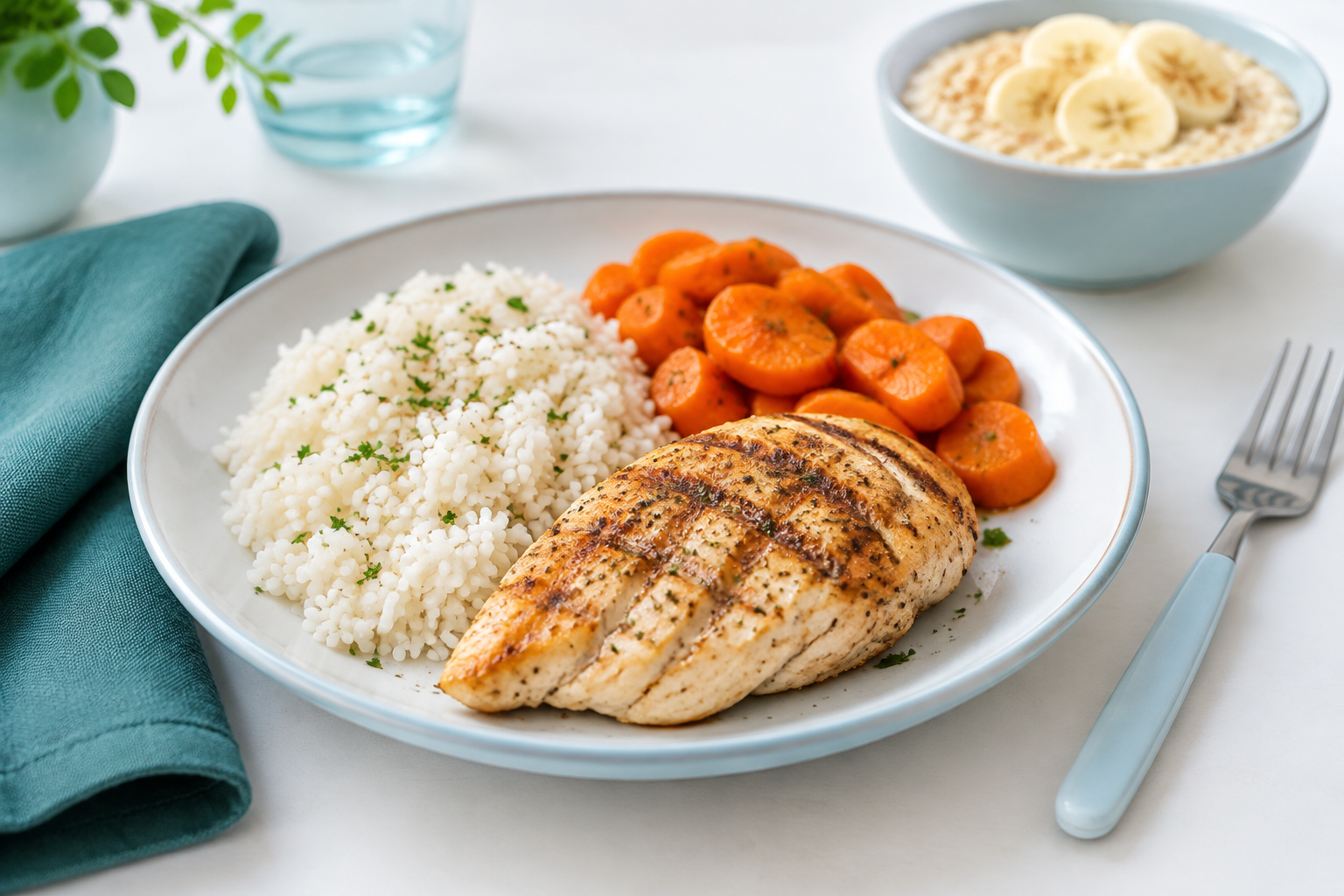
Eating during a gastritis flare is about choosing food that feels manageable, not searching for a meal that heals gastritis. Gentle choices may ease discomfort temporarily, but recurring symptoms need assessment because treatment depends on the underlying cause. A short-term change does not have to become a permanent restriction.
Large meals can worsen discomfort, so small, frequent meals may work better than skipping food or eating until overly full. Eat slowly, chew thoroughly, and begin with a modest portion of a familiar food.
A flexible day of meals can include:
- Oatmeal with banana.
- Rice with grilled chicken and cooked carrots.
- Applesauce, papaya, or low-fat yogurt.
- Baked fish with mashed potatoes or quinoa and cooked zucchini.
These are options, not rules. Cooked vegetables often feel easier than raw produce. Water or another non-caffeinated drink may sit better than coffee or energy drinks during a flare.
Sip water throughout the day. When large drinks with meals cause bloating, take smaller sips while eating and drink more between meals. If reflux also bothers you, staying upright after eating and finishing dinner a few hours before bed may help. The NHS advises seeing a doctor if stomach pain or indigestion lasts longer than a week or keeps coming back (source).
A food diary can help separate a consistent trigger from one difficult day. Record foods, portions, meal timing, symptoms, medications, sleep, and stress. Once symptoms settle, retry one suspected food in a manageable portion while keeping other meals familiar. Avoid removing an entire food group after one reaction, since stress, poor sleep, medication use, or the flare itself may have contributed.
Use this testing sequence:
- Keep meals simple and familiar until symptoms calm.
- Test one suspected food instead of changing several foods at once.
- Track symptoms over the next several hours and later that day.
- Keep comfortable foods in rotation and pause only the clearest triggers.
Meal planning should stop when warning signs appear. Seek prompt medical attention for:
- Black or tarry stools.
- Blood in vomit or vomit resembling coffee grounds.
- Severe abdominal pain.
- Persistent vomiting.
These symptoms call for medical attention rather than another menu change or trigger test.
Which Foods Tend to Help, and Which Tend to Hurt?
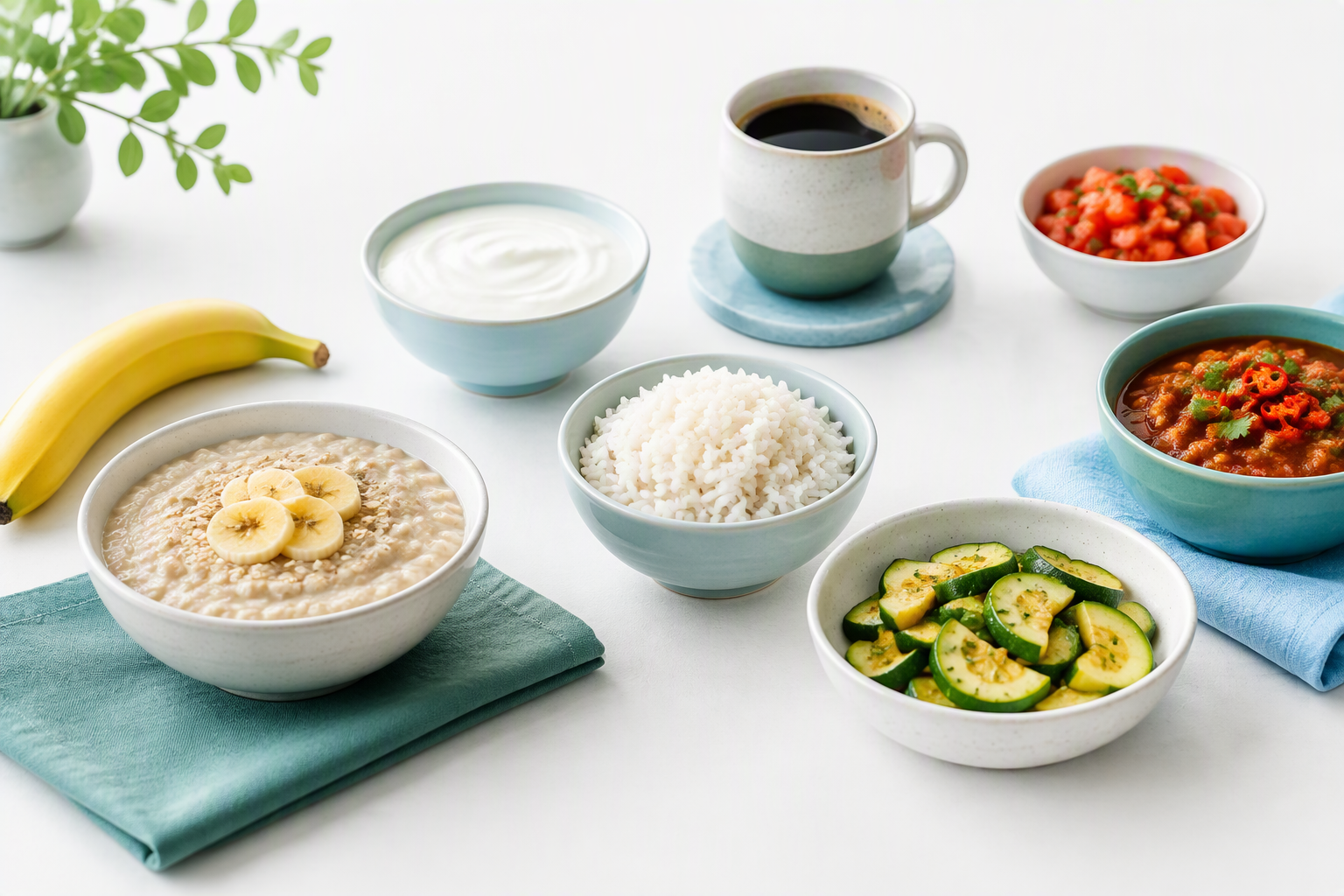
Foods that sit well are usually simple, mild meals, but your personal pattern matters more than a universal food list. Spicy, acidic, fatty, or alcoholic choices may worsen discomfort for some people, while others tolerate them. Eggs can fit your meals if they don't trigger symptoms.
Track your response before removing more foods than needed, since tolerance can vary from day to day and the most useful pattern may take time to show up. Food choices may ease symptoms, but treating gastritis depends on its underlying cause.
What Foods May Help With Gastritis Symptoms?
Starches that often sit well include oatmeal, rice, potatoes, pasta, toast, and barley. Bananas, melon, papaya, pears, and applesauce are gentle fruit choices.
Try these choices as symptoms allow:
- Cooked vegetables: Carrots, zucchini, spinach, squash, or green beans.
- Lean proteins: Skinless chicken, turkey breast, fish, eggs, or tofu.
- Other options: Mild soups, low-fat dairy, yogurt, and whole grains when tolerated.
Use these foods as tolerated rather than as a substitute for medical care. No special diet prevents or treats peptic ulcers, according to NIDDK (source). Treatment for the underlying cause may require medical care.
What Foods Commonly Worsen Gastritis Symptoms?
Foods that often worsen symptoms include:
- Seasoned foods: Spicy or heavily seasoned dishes, garlic, and onions can bother some people.
- Acidic foods: Citrus, tomatoes, tomato products, and vinegar may worsen discomfort.
- Rich or processed foods: Fried or fatty meals, packaged snacks, pastries, and candy can be harder to tolerate.
These are possible triggers, not universal rules. Plenty of people with gastritis eat spicy food without trouble.
Coffee, strong tea, carbonated drinks, and alcohol may also worsen symptoms. Track what you eat alongside how you feel, then limit confirmed triggers rather than eliminating everything. Lower-fat meals may help when rich ones cause discomfort.
Can You Eat Scrambled Eggs With Gastritis?
Yes, scrambled eggs may be a tolerable lean protein with gastritis, but preparation and portion size matter. Try a small serving cooked softly with little oil or butter. Rich additions may be harder to tolerate:
- Cream, cheese, bacon, or sausage: These can make eggs more difficult to digest.
Your symptoms should guide whether eggs stay on the menu. If discomfort follows a serving, record the portion and ingredients in a food diary or tracking app. Try a smaller amount or simpler preparation another day.
How Long Does Gastritis Take to Improve?
There’s no single recovery timeline for gastritis. Acute gastritis may improve sooner than chronic gastritis, but the cause, severity, and your individual food tolerance all shape progress. Gentler meals can ease discomfort, yet feeling better after changing your diet doesn’t show that the stomach lining has healed.
Effective treatment addresses the underlying cause. Care may include treating H. pylori, reducing stomach acid, or stopping NSAIDs when they contribute to irritation. Diet does not cause most gastritis or replace cause-specific care. Persistent, severe, or recurring symptoms need medical evaluation because acid-reducing medication, antibiotics, or other treatment may be necessary.
Gastritis Diet FAQs
These are the diet questions people ask most, from coffee and dairy to alcohol.
1. Can You Drink Coffee With Gastritis?
You may be able to drink coffee with gastritis if it doesn’t worsen your symptoms. Caffeine bothers some people, but coffee doesn’t cause gastritis or every flare. During a flare, reduce coffee or take a short break, then reintroduce it while tracking symptoms. Include strong tea, cola, and energy drinks in your notes, since a food diary can also reveal patterns with spicy, acidic, fried, fatty, processed foods, carbonated drinks, alcohol, garlic, onions, vinegar, and sweets.
2. Is Dairy Safe on a Gastritis Diet?
Dairy doesn’t need to be automatically banned on a gastritis diet. Tolerance varies, so try a small serving of lower-fat milk or plain yogurt and watch for worsening symptoms. If dairy bothers you, choose foods you tolerate and get fat from small amounts of olive oil or avocado.
Low-fat yogurt and kefir contain probiotics, while miso is a nondairy option. Probiotics may complement prescribed H. pylori treatment, but they can’t replace antibiotics or clear the infection. None is required for symptom management.
3. Can Small Meals Reduce Gastritis Discomfort?
Yes. Small, frequent meals may reduce discomfort from overfilling for some people, but they don’t treat the underlying cause. Eat slowly, chew thoroughly, and wait a while before lying down if reflux also bothers you. Drink water throughout the day, using small sips between meals if larger drinks make you bloated. A food diary or tracking app can connect meal size, foods, timing, and symptoms so you can judge whether the change helps.
4. Is Alcohol Ever Safe With Gastritis?
Alcohol is a poor choice during a flare because it can irritate the stomach lining, and heavy drinking can cause acute damage. Choose water or another non-caffeinated drink instead. Chamomile or ginger tea may suit some people if they don’t worsen symptoms.
Tolerance later depends on the cause, whether gastritis is short-lived or ongoing, and your personal response. Persistent or severe symptoms, or concerns about drinking, deserve medical attention because food changes won’t treat causes such as H. pylori infection, irritating pain relievers, or alcohol-related injury. Treatment may include medication or antibiotics (source).