


Upper-abdominal burning, nausea, early fullness, or indigestion can come from gastritis, but pain alone cannot confirm it. Gastritis is inflammation, irritation, or surface damage in the stomach lining, and it may occur with few or no noticeable symptoms. Diagnosis usually combines your symptoms and medical history with testing for Helicobacter pylori and, when needed, an upper gastrointestinal endoscopy with biopsy.
A quick symptom search can't show whether the problem is gastritis, a peptic ulcer, or functional dyspepsia. The cause matters because treatment may involve removing an irritant, reducing acid, or treating H. pylori with antibiotics. The ACG 2024 guideline recommends 14 days of bismuth quadruple therapy when antibiotic resistance is unknown, followed by testing to confirm the infection has cleared.
Bleeding signs need prompt attention rather than routine monitoring. Vomiting blood or coffee-ground-like material, black or bloody stools, severe pain, fainting, marked dizziness, or shortness of breath may signal stomach bleeding or another complication.
Gastritis Diagnosis and Treatment Key Takeaways
- Gastritis is inflammation, irritation, or surface damage in the stomach lining.
- Symptoms may include upper-abdominal discomfort, nausea, fullness, bloating, or reduced appetite.
- H. pylori, NSAIDs, alcohol, tobacco, and autoimmune conditions can contribute to gastritis.
- Breath and stool tests can detect active H. pylori infection.
- Endoscopy with biopsy can confirm gastritis and help identify its cause.
- Treatment depends on the cause and may include acid reduction or antibiotics.
- Vomiting blood, black stools, fainting, or severe pain may indicate stomach bleeding.
What Is Gastritis?
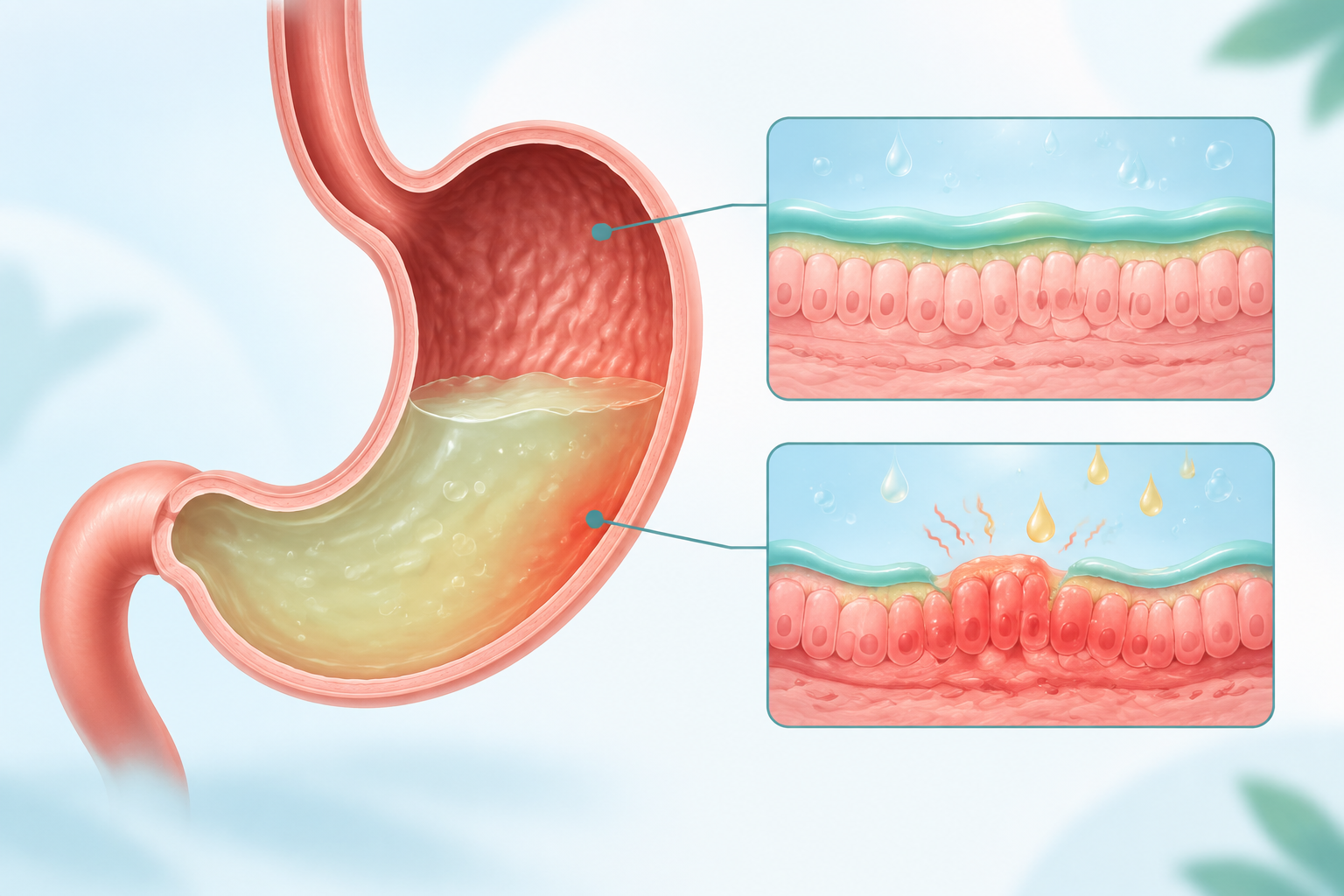
Gastritis is inflammation, irritation, or surface damage in the stomach lining. A mucus barrier normally protects stomach tissue from digestive juices, but when that barrier weakens, acid can irritate the tissue beneath it. It may cause symptoms, although some people notice nothing.
Pain alone cannot tell you it is gastritis. Acute gastritis begins suddenly, while chronic gastritis develops gradually and may continue for months or years. That distinction describes timing, not severity. Chronic gastritis may cause little discomfort, while a sudden episode can feel intense.
Erosive gastritis wears away the lining and may cause bleeding, while nonerosive gastritis causes inflammation without surface erosion. Either form can be acute or chronic, and symptoms cannot identify the type by themselves.
Possible symptoms include:
- Upper-abdominal pain, burning, or discomfort
- Nausea or vomiting
- Indigestion, bloating, belching, or gas
- Feeling full soon after starting a meal
- Reduced appetite, sometimes followed by unintended weight loss
Other digestive conditions beyond gastritis can feel similar, so symptoms alone do not confirm gastritis. Ongoing symptoms, appetite changes, or repeated vomiting are useful details to record before an appointment.
The common causes include infection, medicine-related irritation, and damage to the stomach’s protective barrier:
- Helicobacter pylori (H. pylori): This bacterium can cause gastritis, although many carriers never develop inflammation. About half of the world’s population and about 35 percent of people in the United States carry H. pylori, and nearly everyone who is infected develops chronic gastritis (source).
- Nonsteroidal anti-inflammatory drugs (NSAIDs): Repeated use of ibuprofen or naproxen can weaken the stomach’s defenses.
- Alcohol and tobacco: Heavy or binge drinking can irritate, erode, and inflame the lining. Tobacco use can add irritation and damage.
- Severe physical stress: Serious illness or major injury can trigger gastritis. Ordinary emotional stress is a different exposure.
- Other conditions: Autoimmune gastritis occurs when the immune system attacks healthy stomach-lining cells. Crohn’s disease and bile reflux may also contribute. Older age increases vulnerability but does not establish a diagnosis (source).
Before an appointment, note when symptoms occur, how long they last, and whether meals, NSAIDs, or alcohol seem connected. That pattern can help a clinician decide whether testing or treatment is needed.
How Is Gastritis Diagnosed?
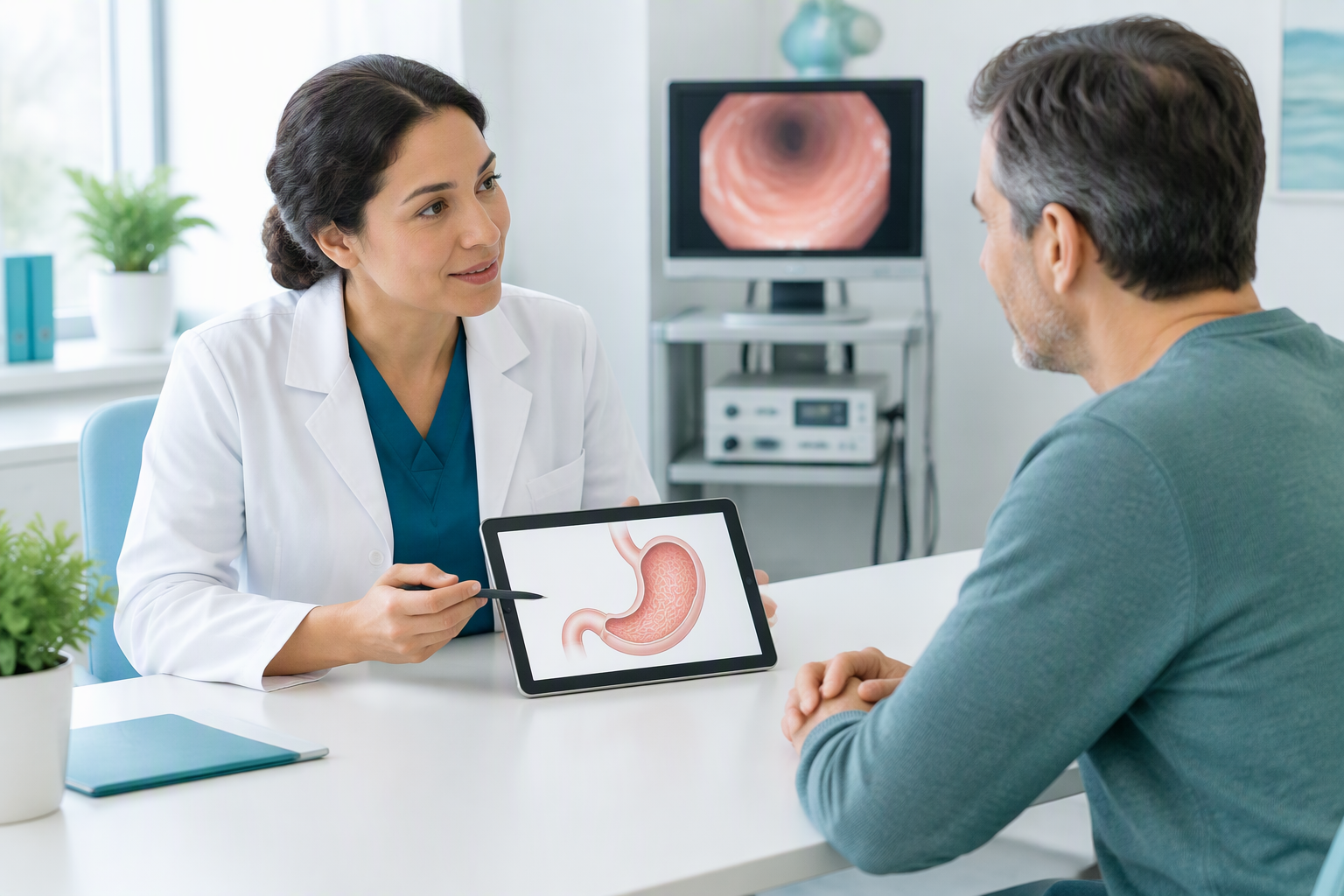
A gastritis diagnosis begins with your symptoms, medical history, and a focused examination. Your clinician may ask where discomfort occurs, whether nausea or fullness is present, how symptoms have changed, and about medicines, alcohol use, and past conditions. Other digestive problems can feel similar, so this conversation helps shape the next step.
The physical exam may include checking for abdominal tenderness or signs of illness. These findings can guide testing, but symptoms and an examination alone cannot confirm inflammation of the stomach lining (source).
Testing may look for Helicobacter pylori, often called H. pylori, a possible cause of gastritis. To detect an active infection, clinicians use a breath test or a stool test. Blood antibodies may remain after an earlier infection, so a blood test can show past exposure rather than an infection that is active now.
Some medicines can hide H. pylori and affect breath or stool test results. Proton pump inhibitors (PPIs), antibiotics, and bismuth subsalicylate may need to be paused before testing. Follow your clinician’s instructions about which medicines to stop and how long to stop them.
Other tests assess possible complications rather than confirming gastritis:
- Blood tests: These may identify anemia linked to ongoing blood loss.
- Stool tests: These may detect hidden blood, but they cannot show the stomach lining or establish gastritis on their own.
An upper gastrointestinal endoscopy uses a thin camera passed through the mouth to examine the stomach lining. During an endoscopy with biopsy, a small tissue sample may confirm gastritis and help identify its cause. Not everyone needs endoscopy. Symptoms, medical history, treatment response, and warning signs help determine whether it is appropriate.
Seek urgent medical attention for vomiting blood or coffee-ground-like material, black or bloody stools, severe abdominal pain, marked dizziness or fainting, or shortness of breath. These signs may indicate stomach bleeding or another serious problem, so do not wait for routine testing.
How Is Gastritis Treated?

Once testing has helped identify the cause and any complications, treatment for gastritis depends on the cause, test results, symptoms, and overall health. Mild gastritis found by chance may only need monitoring when H. pylori infection is absent and a biopsy shows no concerning changes (source).
H. pylori gastritis needs antibiotics alongside acid reduction. The ACG 2024 guideline recommends 14 days of bismuth quadruple therapy when antibiotic resistance is unknown (source). This first-choice combination contains:
- A proton pump inhibitor: Reduces stomach acid while the lining heals.
- Bismuth: Supports treatment against the infection.
- Tetracycline and metronidazole: Antibiotics that help clear H. pylori infection.
Take the full course even if symptoms improve sooner. Follow-up testing with a breath or stool test should take place at least 4 weeks after finishing antibiotics to confirm that the infection is gone. Testing too early can miss persistent infection.
Other medicines help control acid in different ways:
- Proton pump inhibitors: Omeprazole and similar medicines lower acid production and allow the stomach lining to heal.
- Histamine-2 blockers: Famotidine and similar medicines reduce acid release.
- Antacids: These neutralize acid already present for temporary relief, but they do not treat H. pylori gastritis or other gastritis causes.
If nonsteroidal anti-inflammatory drugs (NSAIDs) may be irritating the stomach, ask a clinician whether to reduce, stop, or change the medicine. The safest alternative depends on why the drug was prescribed, so don’t change a prescribed medicine independently.
Food does not usually cause gastritis, and strict elimination diets are not standard gastritis treatment. During a flare, smaller meals, slower eating, and staying upright after meals may ease discomfort. The guide to what to eat with gastritis can help you adjust meals without unnecessary restrictions.
Spicy, acidic, fried, fatty, or highly processed foods may worsen symptoms for some people. Adjust foods that reliably trigger discomfort rather than following a long restriction list. Reducing alcohol and tobacco may limit irritation, but these steps do not replace treatment. A growing list of food restrictions or ongoing symptoms calls for a clinician’s review.
How Is Gastritis Different From an Ulcer or Functional Dyspepsia?
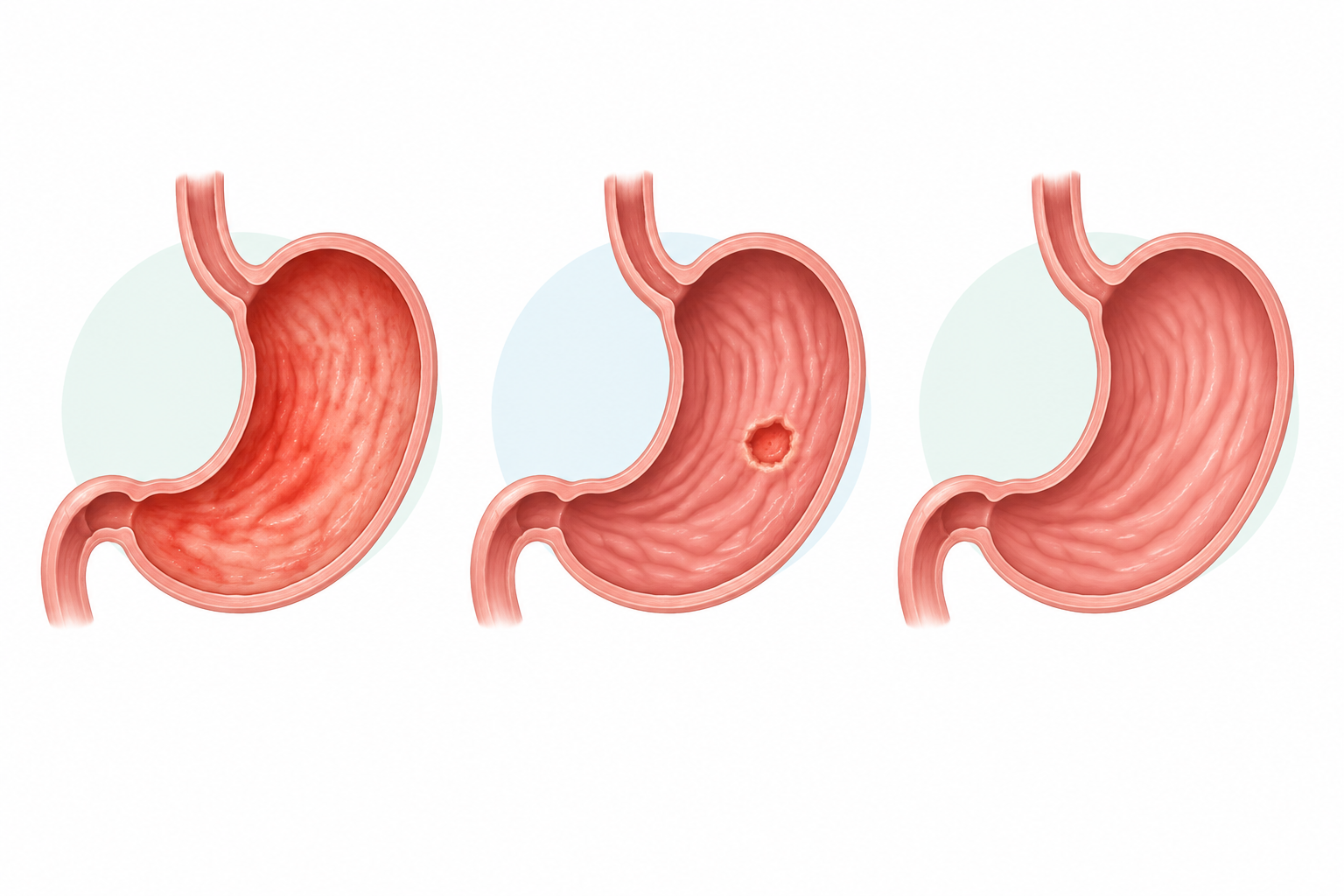
Gastritis, peptic ulcers, and functional dyspepsia can cause similar upper-belly symptoms, but they affect the digestive tract in different ways. The table below summarizes the key differences, including whether visible injury or inflammation is present.
Condition | What is happening | Common clues |
|---|---|---|
Gastritis | The stomach lining is inflamed | Upper-belly pain, nausea, fullness, or indigestion |
Peptic ulcer | A deeper sore has developed in the stomach or duodenum | Burning pain, nausea, bleeding, or anemia |
Functional dyspepsia | Digestive symptoms occur without visible inflammation or an ulcer | Early fullness, uncomfortable fullness after meals, or upper-belly discomfort |
H. pylori infection and nonsteroidal anti-inflammatory drugs (NSAIDs) can contribute to both gastritis and peptic ulcers. Gastritis does not automatically become an ulcer, although ongoing irritation can cause deeper injury. The connection between these conditions is explained in when gastritis turns into a peptic ulcer.
When an endoscopy is normal and H. pylori testing is negative, functional dyspepsia is often considered. The distinction in functional dyspepsia versus gastritis matters because visible inflammation and a normal-looking lining may lead to different treatment choices.
Symptoms alone cannot reliably tell these conditions apart, so testing may be needed when discomfort persists, returns often, or includes warning signs (source). Your clinician may assess NSAID use, H. pylori, bleeding, or anemia based on your symptoms and medical history.
Gastritis FAQs
These are the questions people ask most about gastritis, from pain-free cases to cancer risk.
Can You Have Gastritis Without Stomach Pain?
Yes. Gastritis can occur without stomach pain, and many people have no noticeable symptoms. When discomfort appears, it may feel like burning or gnawing in the upper abdomen, but having no pain cannot confirm or rule out gastritis.
Other gastritis symptoms include indigestion, nausea, vomiting, bloating, belching, gas, early fullness, feeling overly full after eating, and reduced appetite that may lead to unintended weight loss. Possible stomach bleeding needs prompt medical attention. Persistent or worsening symptoms should be assessed so the cause isn’t judged by pain alone.
Can Food Cause Gastritis?
Food and nutrition do not usually cause most gastritis. A meal can worsen existing stomach discomfort, but that reaction is different from causing inflammation in the stomach lining. Changing what you eat may help manage flare-ups, but it does not treat the underlying cause or replace needed care.
Avoid a strict forbidden-food list. If acidic, spicy, fried, fatty, or highly processed foods trigger symptoms, try limiting them and notice how you feel. Tolerable options may include oats, rice, quinoa, eggs, baked fish, cooked carrots, or zucchini. Yogurt or kefir may also suit you if tolerated, but persistent symptoms need medical attention.
How Long Does Gastritis Last?
Acute gastritis starts suddenly and, as Cleveland Clinic puts it, goes away once its acute cause does. Chronic gastritis develops gradually and may last for months or years until its cause is treated. Common causes include regular NSAID use, such as ibuprofen or naproxen, and Helicobacter pylori (H. pylori), a bacterium that infects the stomach lining. H. pylori is especially associated with chronic gastritis and can also contribute to peptic ulcers.
Does Chronic Gastritis Raise Stomach Cancer Risk?
Chronic gastritis can raise stomach cancer risk when ongoing stomach lining inflammation causes atrophic gastritis, or loss of normal lining cells, or intestinal metaplasia, in which intestine-like cells replace them. These changes are associated with higher risk, but a gastritis diagnosis does not mean you will develop cancer, according to the National Cancer Institute (source).
Uncommon autoimmune gastritis can cause atrophy when the immune system attacks healthy stomach-lining cells. Bile reflux and other conditions can also cause gastritis, but they should not be treated as equivalent cancer risks. Ask your clinician what your findings mean and whether follow-up is needed.