


Peptic ulcer disease can cause no pain, but vomiting blood, black or bloody stools, sudden severe abdominal pain, fainting, or trouble breathing require emergency care. It involves open sores in the stomach or duodenum, where acid can damage tissue after the protective lining is weakened. A bleeding ulcer may develop slowly, so fatigue, pale skin, or breathlessness can also signal a problem that needs prompt assessment.
Helicobacter pylori infection and repeated use of NSAIDs such as aspirin, ibuprofen, or naproxen are the leading causes, yet symptoms alone cannot confirm an ulcer. Testing may include a urea breath test, stool antigen test, or upper endoscopy, also called an EGD, while treatment depends on the cause. Acid-reducing medicine can support healing, but H. pylori requires prescribed antibiotics and follow-up testing.
Most ulcers heal within 4 weeks of acid-reducing treatment, and large stomach ulcers may need 8. Clearing H. pylori or reviewing regular NSAID use lowers the chance of recurrence more reliably than rigid food restrictions, while persistent or returning symptoms call for reassessment.
Peptic Ulcer Disease Key Takeaways
- Peptic ulcers are open sores in the stomach or duodenum.
- Vomiting blood, black stools, fainting, or sudden severe pain require emergency care.
- H. pylori infection and repeated NSAID use are leading ulcer causes.
- Urea breath and stool antigen tests can detect active H. pylori infection.
- Upper endoscopy can confirm ulcers, collect biopsies, and assess complications.
- Treatment may combine acid suppression, antibiotics, bismuth, and medication changes.
- Follow-up confirms healing and reduces recurrence after H. pylori or NSAID-related ulcers.
What Is Peptic Ulcer Disease and What Causes It?
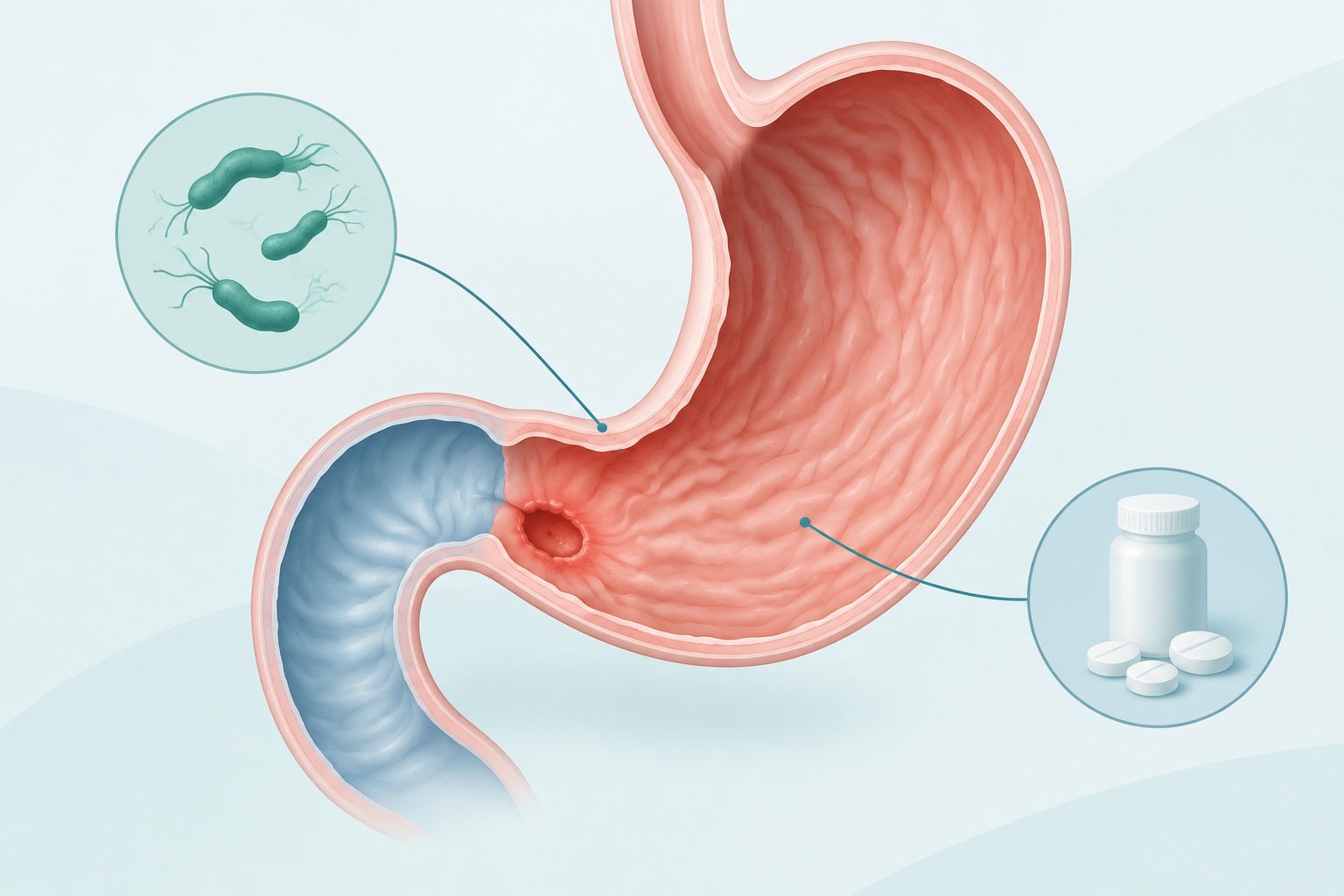
Peptic ulcer disease causes open sores in the lining of the stomach or duodenum, the first part of the small intestine. A stomach sore is a gastric ulcer, while a sore in the duodenum is a duodenal ulcer, making the difference one of location, not symptoms. Duodenal ulcers are more common and account for almost 80 percent of peptic ulcers, according to Cleveland Clinic (source).
A mucus barrier normally shields the stomach and duodenum from acid and pepsin, an enzyme that breaks down proteins. When this protection weakens, digestive juices can injure the tissue beneath it. Excess acid alone is usually not the main issue. The key causes involve damage to the protective lining or a reduced ability to maintain it.
The two leading causes are Helicobacter pylori (H. pylori) infection and repeated use of nonsteroidal anti-inflammatory drugs (NSAIDs). Information about digestive conditions beyond peptic ulcers can help place this condition in context.
- Helicobacter pylori: This bacterium can live in the stomach lining and cause ongoing inflammation. That inflammation may weaken the mucus barrier and leave tissue more exposed to acid. Infection does not always lead to an ulcer.
- NSAIDs: Regular, prolonged, or high-dose use of ibuprofen, naproxen, or aspirin can contribute to ulcers. These medicines lower prostaglandins, substances that help maintain the stomach’s protective lining. These ulcers may develop with little pain or noticeable irritation.
- Other contributors: Smoking can impair the lining’s defenses and slow healing. Severe physical illness and rare conditions that cause unusually high acid production may also play a role. Everyday emotional stress and spicy foods are not established primary causes, although they may worsen existing symptoms.
About 1 to 6 percent of people in the United States have peptic ulcers, according to the National Institute of Diabetes and Digestive and Kidney Diseases (source). A 2024 JAMA review attributes about 42 percent of ulcers to H. pylori and about 36 percent to aspirin or NSAIDs. These figures describe population patterns, not the cause of one person’s symptoms. Testing for H. pylori and reviewing regular pain-reliever use are sensible topics to raise with a healthcare professional.
Which Ulcer Symptoms Need Emergency Care?

Peptic ulcer symptoms often include burning upper-abdominal pain, but some people notice nothing until a complication develops. The pain may feel gnawing and occur in the upper-middle abdomen between meals or at night. It can also reduce appetite. Cleveland Clinic notes that up to 70 percent of people with a peptic ulcer have no symptoms.
Pain may appear with other digestive symptoms, although no single symptom confirms an ulcer:
- Bloating or frequent burping.
- Feeling full after eating only a small amount.
- Nausea, vomiting, heartburn, or an upset stomach.
A bleeding ulcer may cause sudden blood loss or slower bleeding that is harder to see. Go to the emergency department for these warning signs, which match the NHS emergency list (source):
- Vomiting red blood or material resembling coffee grounds.
- Passing black, sticky, tarry stool or red or maroon stool.
- Fainting, marked dizziness, or difficulty breathing, especially with abdominal pain or visible bleeding.
The JAMA review found that bleeding made up 73 percent of peptic ulcer complications, compared with 9 percent for perforation and 3 percent for obstruction. Slow blood loss can lead to anemia, fatigue, pale skin, or breathlessness during activity, so arrange prompt clinical assessment even when no blood is visible.
A perforated ulcer forms a hole through the stomach or upper intestinal wall. Sudden, severe, sharp pain that persists requires emergency care rather than watchful waiting. Fainting, major dizziness, or difficulty breathing also needs immediate attention, particularly alongside pain or bleeding.
Repeated vomiting, worsening fullness, or an inability to keep food or fluids down may signal an ulcer-related blockage. Seek urgent evaluation because dehydration can develop. Recurring pain, reduced appetite, or persistent milder symptoms still warrant a timely appointment when emergency signs are absent.
How Are Peptic Ulcers Diagnosed?

Diagnosis begins with your symptoms, medical history, and risk factors rather than one test. A clinician may ask about upper-abdominal discomfort, nausea, vomiting, signs of bleeding, and use of NSAIDs or aspirin. Because some ulcers cause little or no pain, these details also help assess possible complications (source).
Testing for H. pylori, a bacterium linked to many ulcers, may include:
- Urea breath test: This test detects active infection through changes after you swallow a urea-containing substance.
- Stool antigen test: This test checks a stool sample for active infection and can help confirm that treatment cleared it.
- Blood antibody test: Antibodies can remain after an earlier infection, so blood testing cannot reliably show whether H. pylori is present now or whether treatment worked.
Proton pump inhibitors, antibiotics, and bismuth can affect breath or stool results. Tell the clinician about every medicine and supplement you take, then ask whether anything needs to be paused. Never stop a prescribed medicine independently. An unexpected negative result may need reassessment if medication effects or test timing reduced its reliability.
An upper endoscopy, also called an EGD, uses a thin camera passed through the mouth and esophagus to inspect the stomach and duodenum. This procedure can confirm an ulcer, collect a biopsy, and allow H. pylori testing. Suspected bleeding, concerning symptoms, or a higher risk of complications may make endoscopy more appropriate than noninvasive tests. Other imaging or testing may help when a complication is suspected (source).
Follow-up depends on the findings and the likely cause. A duodenal ulcer is almost never malignant. A stomach ulcer, also called a gastric ulcer, carries a small cancer risk, so biopsy or repeat upper endoscopy may be needed to confirm healing. Breath or stool testing can check whether H. pylori has cleared. Persistent symptoms call for clinical reassessment rather than repeated self-treatment.
How Are Peptic Ulcers Treated and Prevented?

Treatment depends on the ulcer’s cause, not just how severe the pain feels. Your clinician may use testing for H. pylori infection, your medication history, and other findings to choose antibiotics, acid suppression, medication changes, or a combination.
For H. pylori ulcers, prescribed antibiotics remove the infection while acid-reducing medicine supports healing. Some plans also include bismuth. Complete the full course even if symptoms improve, because symptom relief does not show that the infection has cleared. A follow-up test generally checks whether treatment worked. More information about H. pylori ulcers and how they heal can help you prepare for that discussion.
The main medicines in peptic ulcer treatment options lower stomach acid so damaged tissue can repair itself. Proton pump inhibitors, or PPIs, such as omeprazole, block acid-producing pumps in stomach cells. Histamine-2 (H2) blockers also reduce acid and may support healing. Burning or pain may improve before the ulcer heals, so symptom relief alone cannot confirm recovery (source).
If NSAIDs contributed to an ulcer, treatment may include:
- Medication changes: Your clinician may stop, reduce, or replace ibuprofen or naproxen and add acid suppression, often with a PPI.
- Aspirin review: Don’t stop prescribed aspirin without medical advice, because it may protect against serious cardiovascular problems.
- Pain-relief alternatives: Acetaminophen is not an NSAID and may be suitable for routine pain relief when your health history allows it.
Regular or high-dose NSAID use, taking more than one NSAID, or a previous ulcer makes a medication review especially useful before you change a long-term pain plan.
Healing time depends on the ulcer’s cause, size, and location. PPIs such as omeprazole heal 80 to 100 percent of ulcers within 4 weeks. Stomach ulcers larger than 2 cm may need 8 weeks. Clearing H. pylori lowers recurrence from about 50 to 60 percent to 0 to 2 percent, while stopping NSAIDs heals 95 percent of ulcers (source).
Food choices may ease personal symptoms, but no specific ulcer diet has been proven to heal or prevent peptic ulcers, the same position behind eating with gastritis. Avoid foods that clearly worsen your discomfort if doing so helps, but don’t replace infection treatment or medication review with rigid restrictions. Practical prevention includes discussing regular NSAID use, reporting a past ulcer before starting these medicines, and completing prescribed H. pylori treatment. A medication review is usually more useful than searching for one food to eliminate.
How Long Do Ulcers Take to Heal, and Can They Come Back?
Pain often eases before an ulcer has closed, so follow-up matters. Healing depends on the ulcer’s cause, location, and treatment. Attend recommended follow-up after symptoms improve, since persistent or returning symptoms may signal an unresolved problem.
Preventing a return focuses on removing triggers and allowing the stomach lining to recover:
- Treat H. pylori: Confirmed Helicobacter pylori infection requires the full treatment prescribed for it.
- Review aspirin and NSAID use: Regular aspirin, ibuprofen, or naproxen may raise ulcer risk. Discuss ongoing use with a clinician before making changes.
- Avoid smoking: Smoking increases risk and can slow healing.
- Limit heavy alcohol use: Alcohol may irritate the stomach and delay recovery.
- Keep food choices flexible: Most people do not need a long list of forbidden foods. Instead, notice which foods worsen discomfort.
Gastritis and ulcers can share causes, so gastritis that can lead to an ulcer may help explain ongoing symptoms. Rigid food rules are rarely needed for ulcer prevention.
Repeated or persistent ulcers need clinical reassessment. Zollinger-Ellison syndrome is rare and involves tumors that cause unusually high acid production. It rarely explains ordinary stomach discomfort, so recurring ulcers should prompt a review of medicines, H. pylori status, and other causes rather than self-diagnosis.
Arrange follow-up if symptoms continue after treatment or return, and seek prompt care for repeated vomiting, unexplained weight loss, or signs of anemia. Follow-up may include testing for H. pylori, reviewing aspirin or NSAID use, or checking for another cause. Healing is more likely to last when treatment addresses both the ulcer and its trigger.
Peptic Ulcer FAQs
These are the questions people ask most about peptic ulcers, from silent ulcers to cancer risk.
Can an Ulcer Go Away Without Treatment?
An ulcer may seem better without treatment, but reduced pain does not prove the sore has healed. An untreated ulcer can persist, return, or cause bleeding, so new, recurring, or uncertain symptoms need clinical assessment rather than waiting for severe pain.
Effective treatment depends on the cause. Proton pump inhibitors reduce acid and help ulcers heal, while H2 blockers may also help, and Helicobacter pylori requires prescribed antibiotics with acid suppression, sometimes bismuth. Complete the course and attend follow-up testing to confirm the infection is gone.
Do Stress or Spicy Foods Cause Ulcers?
Stress and spicy food do not cause ulcers, although either can make pain or burning from an existing ulcer feel worse (source). A flare after a hot meal does not mean the food created the ulcer, and everyday stress is not among the main causes.
The leading causes are Helicobacter pylori (H. pylori) infection and NSAIDs, including aspirin. You do not need to blame yourself or avoid all spicy foods. If symptoms return, a clinician can check for the underlying cause.
Can You Have an Ulcer Without Pain?
Yes. A peptic ulcer can cause no pain or noticeable symptoms, so the absence of burning discomfort does not rule one out. Less obvious symptoms may include bloating, burping, feeling full sooner than usual, nausea, vomiting, heartburn, or an upset stomach. Sometimes a bleeding ulcer or another complication is the first sign. Seek emergency care for vomiting blood, black or bloody stools, or sudden severe abdominal pain, even if you felt well beforehand. These symptoms need prompt attention rather than home treatment.
Can a Stomach Ulcer Turn Into Cancer?
A stomach ulcer does not automatically mean cancer, but a small share of stomach ulcers can be cancerous. For that reason, doctors often take a biopsy during an endoscopy and may repeat the examination after treatment to confirm healing. Although duodenal ulcers are almost never cancerous, ongoing pain, bleeding, vomiting, or an ulcer that fails to heal calls for prompt medical follow-up, particularly when symptoms continue despite treatment. A repeat endoscopy helps clarify whether the ulcer has healed as expected.