


IBS sleep triggers and nighttime flare-ups often start with small evening patterns that are easy to miss. For many adults living with IBS, a late meal, caffeine, alcohol, or a restless night can turn into more pain, bloating, urgency, or morning fatigue. IBS is a gut disorder marked by recurring abdominal discomfort and bowel changes, and a clearer view of those nighttime links can help make evenings more predictable.
This overview covers the sleep and IBS loop, the habits that tend to spark flares, and the body changes that make symptoms feel sharper after a short night. It also walks through meal timing, sleep hygiene, symptom tracking, and the signs that point to a sleep disorder or medical evaluation. Expect practical steps, a simple tracking framework, and clear ways to test whether dinner timing, caffeine, alcohol, or irregular sleep are part of the pattern.
Digestive-focused readers, caregivers, and busy professionals who need calm, usable guidance will find the most value here. A common scenario is the person who eats late, falls asleep with bloating, then wakes with cramping and urgency the next morning. My Good Gut keeps the focus on what to change first, what to watch over two weeks, and when it’s time to bring a clinician into the conversation.
IBS Sleep Triggers Key Takeaways
- IBS and sleep affect each other in both directions.
- Late meals, caffeine, alcohol, and screens can trigger nighttime flares.
- Poor sleep can increase pain, bloating, urgency, and bowel changes.
- The gut-brain axis helps explain the sleep and IBS loop.
- Finishing dinner at least three hours before bed may reduce discomfort.
- A two-week symptom journal can reveal personal nighttime triggers.
- Loud snoring, gasping, or persistent insomnia warrant medical evaluation.
How Do IBS And Sleep Affect Each Other?
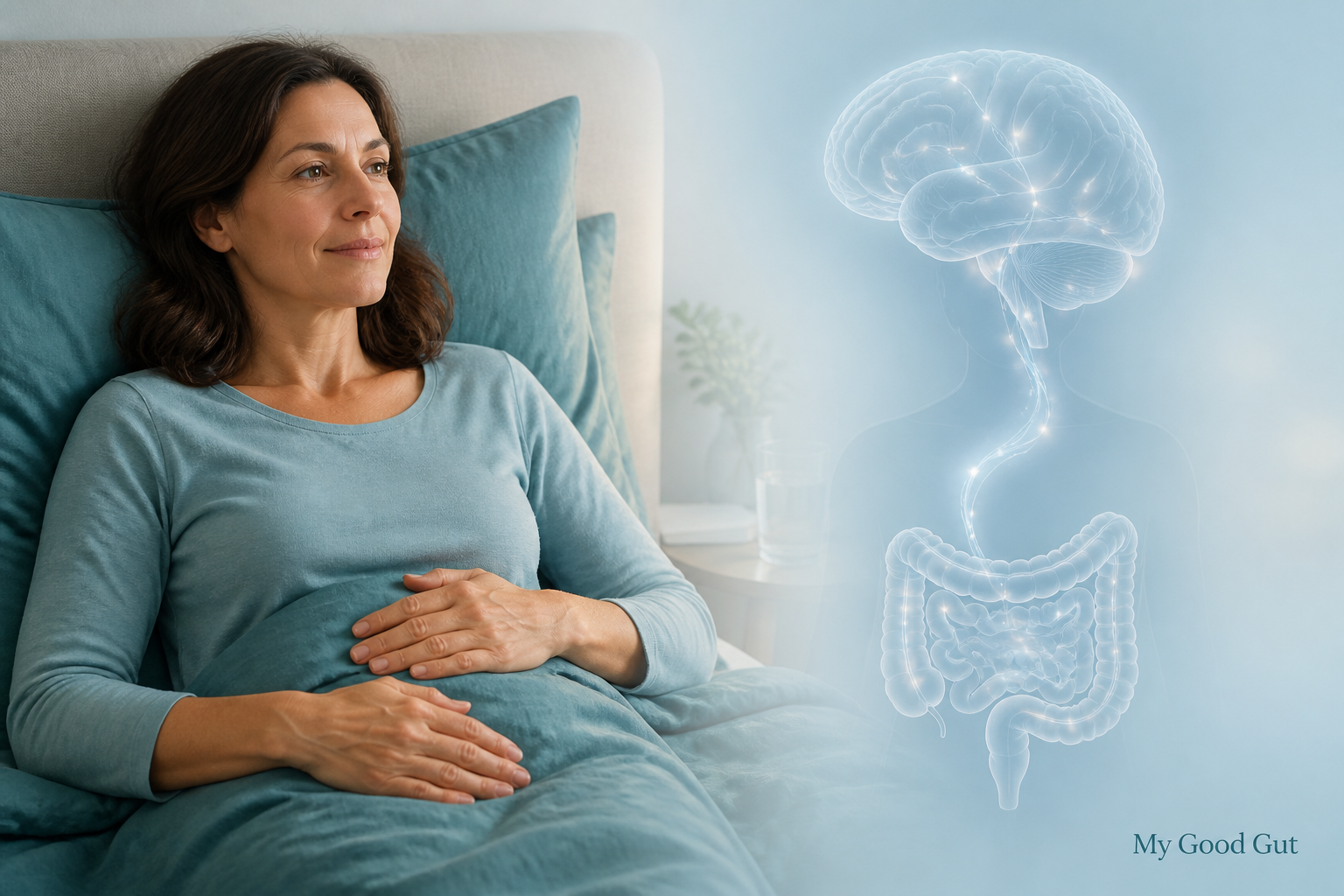
Irritable bowel syndrome (IBS) and sleep affect each other in both directions. When pain, bloating, urgency, or worry flare at night, it can be hard to fall asleep or stay asleep. Poor sleep can then make your gut feel more sensitive the next day, which can start a frustrating loop, and disrupted sleep is one of the everyday factors in what sets off IBS.
That loop is common. Sleep problems are common in people with IBS, and research has found an association between poor sleep and IBS symptoms (source). The gut-brain axis, which is the two-way communication between your digestive system and nervous system, helps explain why IBS and sleep are so closely tied.
The sleep patterns most often linked with flares often look like this:
Sleep pattern | What it can feel like |
|---|---|
Short sleep time | Not enough hours to feel rested |
Fragmented sleep | Light sleep with frequent breaks |
Nighttime awakenings | Waking from pain, urgency, or stress |
Insomnia and IBS | Trouble falling asleep or getting back to sleep |
Poor sleep quality | Feeling unrefreshed even after a full night |
Poor sleep also tends to spill into the next day. It is tied to more abdominal pain, worse overall digestive symptoms, and a lower quality of life. That is why one bad night can make the next day feel much harder to manage.
Sleep studies in IBS can look mixed on paper. Some do not show big changes in total sleep time or sleep stages. Even so, people with IBS consistently report less restorative rest, more waking at night, and more trouble with sleep and IBS symptoms.
In plain terms, when symptoms wake you up, your sleep gets lighter and less restorative. That lost rest can make the next flare feel sharper, slower to settle, and harder to shake.
Which Nighttime Habits Trigger IBS Flare-Ups?
Nighttime IBS flare-ups often begin with small evening habits that pile up. With IBS, your gut can stay extra sensitive to food timing, stress, and sleep changes. That is why IBS caffeine trigger matters for some people, even when the drink was hours earlier.
Late, heavy dinners can keep nocturnal digestion going when your body wants to slow down. Large portions, fried foods, spicy foods, and many high FODMAP choices can raise fermentation, gas, bloating, and cramps. Late-night eating can also leave you feeling off the next morning.
Evening drinks can add another layer. Coffee, tea, chocolate, soda, and stimulant drinks may speed gut movement and make diarrhea more likely overnight. Caffeine before bedtime can still matter because it can wake the bowels and disrupt sleep depth. Alcohol before sleep can irritate the gut, worsen cramping or diarrhea, and break up rapid eye movement (REM) sleep.
Habit | What it can do | A simple shift |
|---|---|---|
Late-night eating | Increases digestion, gas, and discomfort | Eat earlier and keep dinner lighter |
Caffeine | Speeds motility and may disturb sleep | Stop earlier in the day |
Alcohol | Irritates the gut and sleep cycle | Skip it close to bed |
Screens and late stimulation | Raises alertness and stress arousal | Dim lights and wind down sooner |
Screens and posture matter too. Bright screens can delay sleep, and lying flat soon after eating can make bloating, reflux-like pressure, or cramping feel stronger.
Your triggers are personal. One person reacts most to meals, while another notices tea, alcohol, or sleep timing. Tracking your evenings can help you spot your own IBS sleep triggers. A low FODMAP diet can also help you test food-related patterns more clearly. Persistent or worsening symptoms deserve medical guidance.
How Does Poor Sleep Affect IBS Symptoms?
Poor sleep can make recurring IBS symptoms feel louder the next day, even when you spent enough time in bed. Short sleep, broken sleep, frequent awakenings, insomnia, and low sleep quality can all leave your body more on edge. That is one reason sleep and IBS often feed into each other. Disrupted rest can also raise visceral hypersensitivity, which makes normal gut signals feel more like pain, pressure, or bloating.
The next-day effect often shows up fast. Many people notice cramping, bloating, or a tender belly first thing in the morning after sleep deprivation and gut sensitivity build overnight. Poor sleep can also change gut movement, which means symptoms may swing in different directions.
IBS pattern | What poor sleep may do the next day |
|---|---|
IBS-D | More urgency, looser stools, and more bathroom trips |
IBS-C | More constipation, harder stools, and a stronger sense of incomplete emptying |
Mixed IBS | Either pattern, depending on how disrupted the night was |
Fatigue and anxiety often rise with the gut symptoms. That can make breakfast, commuting, and early meetings feel much harder than usual. Ongoing daytime tiredness with IBS often follows a run of short or broken nights, and it can linger well past the morning cramping. The broader sleep and IBS pattern is simple, even if your experience is not.
- Morning pain: Self-reported poor sleep is linked with more abdominal pain and cramping.
- Bowel changes: Sleep loss can aggravate both diarrhea and constipation.
- Overall sensitivity: Poor rest can leave you more reactive to normal gut sensations.
If this sounds familiar, track your sleep, your morning symptoms, and any trigger foods for a week or two. Small changes like steadier sleep timing, less late caffeine, and calmer evening routines may help. Some people also ask about melatonin for IBS, but that is a good question to bring to a healthcare professional before trying it.
What Body And Brain Changes Link Sleep And IBS?
Sleep and IBS are tied together through more than simple tiredness. The gut-brain axis is the two-way signal line between your brain and intestines, and poor sleep can make normal gut movement feel louder, more painful, or more urgent. That same loop helps explain why a rough night can leave you more aware of cramping, bloating, or a sudden need to run to the bathroom.
A few body changes do most of the work:
Mechanism | What changes | How it can show up |
|---|---|---|
Stress response | Sleep loss can raise cortisol and change gut motility | Bowel movements may feel less predictable |
Visceral hypersensitivity | Fragmented sleep can make gut nerves more reactive | Digestion may feel sore, bloated, or overly intense |
Circadian rhythm disruption | Irregular bedtimes, jet lag, rotating schedules, and shift work and IBS can throw off body clocks | Constipation or diarrhea may become more common |
Microbiome shifts | Sleep deprivation can change the balance of bacteria in the microbiome | Fermentation and gas can increase discomfort |
These links are not just theory. Poor sleep can raise pain perception, increase bloating, and make an IBS flare feel stronger the next day. In plain terms, sleep deprivation and gut sensitivity often feed each other, and schedule changes can make the loop stronger. That is one reason some people also ask about probiotics and sleep, since gut bacteria and sleep timing can shape symptoms on both sides.
The pattern gets even clearer when your schedule changes. Travel, late nights, and rotating shifts can nudge symptoms in the same direction, which is why IBS travel triggers often feel like a preview of what disrupted sleep can do.
If your nights are short or broken, the next day’s symptoms may be part of the same pattern. Track sleep, meal timing, stress, and bowel changes together so you can spot your own triggers.
How Can You Prevent And Calm Nighttime Flares?
The biggest win is timing. Finishing dinner at least 3 hours before bedtime can help limit nighttime discomfort for some people, especially if larger or richer meals tend to worsen symptoms (source). That gives your gut more time for nocturnal digestion and can lower the odds of reflux-like pressure, gurgling, and cramping after dark.
Meal size matters too. Make breakfast or lunch your largest meal, and keep dinner lighter. That leaves less work for your gut close to sleep and can ease IBS sleep triggers before they start.
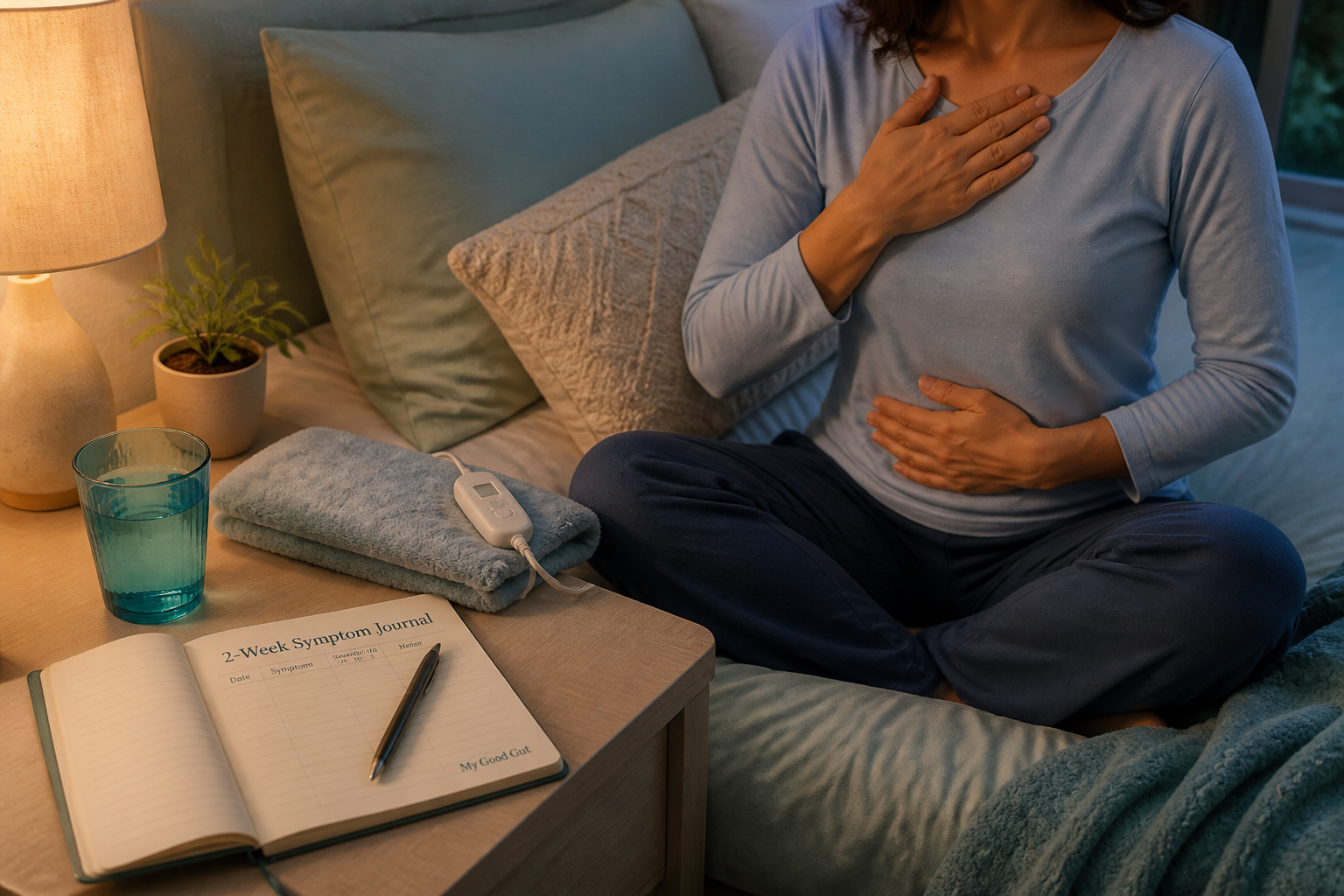
A simple symptom journal can help you spot patterns fast. Track the same few details each evening so the notes stay realistic and easy to repeat:
What to track | What to notice |
|---|---|
Late-night eating | Heavy meals, snacking close to bed, or second dinners |
Caffeine and alcohol | Any evening intake, especially if symptoms worsen later |
Screen time | Long scrolling sessions or bright devices before sleep |
Sleep timing | Bedtime changes, late nights, or sleeping in |
Stress level | Tension, worry, or a hard day before symptoms flare |
A two-week symptom journal often makes patterns clearer. Nights that line up with late-night eating, the IBS alcohol trigger, or irregular sleep timing can point to your biggest IBS sleep triggers.
A 30 to 60 minute wind-down helps calm the body before bed. Dim the lights, step away from scrolling, and cut down on blue-light exposure. Reading, gentle stretching, breathing exercises, or a warm shower can help your nervous system settle without asking your gut to work harder.
Sleep hygiene works best when it stays simple and steady. Keep your bedtime and wake time as close to the same as possible, limit evening caffeine and alcohol, and lower stress before symptoms ramp up. Poor sleep can make the gut more sensitive, which is one reason a bad night can leave your belly more reactive.
Supplements deserve caution, not hype. Small trials suggest melatonin may reduce abdominal pain in some people with IBS, but it should not be treated as a proven sleep fix (source). Probiotic evidence is still early, so both are better discussed with a healthcare professional than treated as fixes.
A sleep-disorder screen matters when self-care is not enough. Loud snoring, witnessed pauses in breathing, choking or gasping at night, severe daytime sleepiness, or ongoing insomnia despite good habits all deserve evaluation by a qualified healthcare professional. Those signs can point to a problem that needs more than meal timing and sleep hygiene alone.
What Should You Do During A Nighttime Flare?
A nighttime IBS flare can feel worse because your body is tired and your gut is still active. The first step is to stop adding more strain.
- Skip more food: Avoid another meal, especially one that is large, heavy, spicy, fried, high-fat, or high-FODMAP.
- Soothe your belly: Try a warm bath, a heating pad for nighttime cramping, slow diaphragmatic breathing, gentle stretching, or a few minutes of meditation.
- Change position: Lie on your left side or prop up your upper body a little instead of lying flat.
- Use OTC relief carefully: If you already use a pain reliever or gas product, follow the label and keep it short-term. Do not mix medicines casually or use them to delay medical care.
Small sleep hygiene steps can help too. Lower the lights, silence notifications, and use a calm cue like reading, white noise, or soft music. That can make it easier for your nervous system to settle while the flare passes.
IBS flare-ups at night can look different depending on the subtype. IBS-D often feels more urgent and crampy after poor sleep. IBS-C may feel like pressure, slow movement, and bloating.
If your nighttime IBS keeps coming back, or if you notice snoring, gasping, or long-term insomnia, talk with a healthcare professional to rule out a sleep disorder.
When Should You Rule Out Sleep Disorders?
Frequent sleep trouble is worth a closer look when your IBS flares reliably follow bad nights. About 40% of people with IBS report major sleep disturbance, so a pattern of poor sleep plus worse gut symptoms can point to something bigger than a one-off rough night.
The first clue is what comes first. If pain, reflux, bloating, or urgent bowel symptoms wake you first, the gut may be driving the disruption. If racing thoughts, trouble falling asleep, or repeated waking start the night, insomnia and IBS may be part of the same loop. That matters because insomnia and IBS can feed each other, and shift work and IBS can throw off the circadian rhythm even more.
Sleep apnea red flags deserve special attention:
- Loud snoring
- Pauses in breathing that someone else notices
- Gasping or choking during sleep
- Morning headaches or dry mouth
- Unrefreshing sleep with daytime sleepiness
Sleep apnea is common, and people with IBS who have loud snoring, gasping, or unrefreshing sleep should be evaluated for a possible sleep disorder (source).
A few simple questions can help you decide what to bring to a clinician:
Question | What it may suggest |
|---|---|
Symptoms happen most nights | Primary sleep disorder |
You wake up unrefreshed | Poor sleep quality |
You snore or gasp | Possible apnea |
IBS gets worse after short or broken sleep | Sleep may be a trigger |
If you answer yes to more than one, a sleep evaluation is worth discussing. A clinician may start with a sleep history and questionnaire, then consider a sleep study for apnea or targeted insomnia treatment. Matching care to the main sleep problem can help address the issue fueling your IBS, not just the gut symptoms.
Poor sleep can also look different by IBS subtype. In IBS-D, it may amplify pain and urgency. In IBS-C, it can worsen bloating and slowed motility. In IBS-M, it can stir up both patterns, which is a clue that sleep deserves attention too.
IBS Sleep Triggers FAQs
Sleep and IBS can influence each other in ways that feel hard to predict. These FAQs cover the most common triggers, what they may mean for your nights, and simple steps to try before you talk with a healthcare professional.
1. Does IBS Cause Nighttime Bloating?
Yes, IBS can be linked with nighttime bloating, but the bigger driver is often what and when you eat. Large, heavy, spicy, fried, or high-FODMAP dinners can keep digestion active overnight, which can increase fermentation, gas, cramping, and bloating the next day. If symptoms follow late meals, meal timing and food choice are the likely trigger, while poor sleep may be raising gut sensitivity and changing the gut microbiome in ways that make bloating feel worse. This content is for educational purposes only and is not a substitute for personalized medical advice, and persistent or worsening nighttime bloating should be discussed with a qualified healthcare professional.
2. Can Stress And Sleep Loss Trigger IBS?
Yes. Stress and poor sleep can feed each other, so a tense evening can make it harder for you to fall asleep, and a short or restless night can make IBS symptoms feel louder the next day. Higher evening stress can raise cortisol and keep your body in fight-or-flight mode, which may change gut motility and make cramping, urgency, bloating, or pain feel sharper. Dimming lights, stepping away from work and screens, and spending a few minutes on slow breathing or gentle stretching before bed can help lower arousal, but persistent or worsening nighttime symptoms should be reviewed with a qualified healthcare professional. This content is for educational purposes only and is not a substitute for personalized medical advice.
3. Do FODMAP Foods Worsen IBS Sleep?
Yes, high-FODMAP foods can make your IBS feel worse at night because they ferment in your gut and can lead to more gas, bloating, and cramping while you’re trying to sleep. Late, large, heavy dinners, especially fried, spicy, high-fat, or high-FODMAP meals, can keep digestion active longer, so finishing food 3 to 4 hours before bed often helps. If you want an evening snack, keep it small and test foods carefully, since tolerance varies from person to person, and a low FODMAP diet should be individualized with a qualified healthcare professional if your symptoms are persistent, severe, or worsening.
4. Should You Eat Before Bed With IBS?
If IBS tends to flare at night, finish your last meal a few hours before bed and keep dinner light so your gut has less to handle overnight. If you need a snack, choose something small and easy to digest, like plain crackers, oatmeal, or a banana, and try to put most of your calories earlier in the day with a bigger breakfast or lunch. Skip common evening triggers such as caffeine, chocolate, tea, alcohol, carbonated drinks, and fried or fatty foods, then pay attention to whether a bedtime snack helps you or makes symptoms worse.