


IBS and chocolate can be a confusing mix because a single bite may bring fat, caffeine, lactose, or sugar alcohols together. For adults managing IBS, that often means guessing whether a favorite treat will stay comfortable or lead to bloating, cramps, urgency, or loose stools. A chocolate trigger is usually about the ingredient mix and portion size, not just the cocoa itself, and the next steps here will help narrow down what matters most.
The breakdown covers why dark, milk, white, dairy-free, and sugar-free chocolate can act differently, which label ingredients tend to cause trouble, and how to test a serving without muddying the result. It also lays out a simple food and symptom diary approach, practical portion guidance, and signs that point to a clinician or registered dietitian instead of more trial and error. Readers will leave with a clearer way to judge their own tolerance and avoid the common mistake of blaming the wrong ingredient.
My Good Gut's approach will be most useful for people with IBS who want to keep food choices realistic, including busy professionals, caregivers, and anyone trying to reduce flare-ups without cutting out more than they need to. One person may find that a small square of dark chocolate is fine, while milk chocolate or a sugar-free bar leads to bloating within hours. With a steadier way to test, compare, and track, the path forward becomes more manageable.
IBS and Chocolate Key Takeaways
- Chocolate can trigger IBS through fat, caffeine, lactose, and sugar alcohols.
- Dark chocolate is often better tolerated than milk or white chocolate.
- Sugar-free chocolate may contain polyols that worsen gas and diarrhea.
- Short ingredient lists make label checking easier for IBS.
- Test one small serving at a time to spot your real trigger.
- Use a food and symptom diary to separate chocolate from other foods.
- Seek medical advice if symptoms are severe, persistent, or unusual.
Why Can Chocolate Trigger IBS Symptoms?
Chocolate and IBS often overlap because one bite can bring several triggers at once, which is why it comes up in any discussion of IBS trigger foods and diet. A typical bar may contain cocoa butter, added fat, refined sugar, caffeine, theobromine, and sometimes lactose or sugar alcohols. That mix helps explain why common IBS trigger foods often includes chocolate.
High-fat chocolate can affect your gut in more than one way. In some people, fat slows digestion. In others, [fat causes gut spasms], and those contractions can bring cramping, urgency, or a sudden bowel change. This is one reason [high-fat foods gut spasms] can feel so rough if you have IBS-D. The phrase [IBS triggers chocolate] is less a guess and more a reminder that one food can set off several pathways at once.
Cocoa also has a stimulant effect. [Cocoa caffeine] and theobromine can speed gut movement and make the colon more reactive. For people who are sensitive to stimulants, [caffeine and IBS] can be a hard combination, with more cramping, loose stools, or diarrhea after chocolate.
Chocolate factor | What it can do | Common IBS result |
|---|---|---|
Lactose in milk chocolate | Adds a sugar many people digest poorly | Bloating, pain, diarrhea |
Sugar alcohols | Pull water into the bowel | Gas, loose stools, cramps |
Fructans and other fermentable carbs | Ferment in the large intestine | Pressure, bloating, gas |
Milk chocolate can be harder to tolerate if you deal with [lactose intolerance chocolate] symptoms. Some cocoa products also contain fermentable carbs, including fructans, which can reach the colon intact and ferment there. That can draw water into the bowel and make gas, bloating, pressure, pain, urgency, or diarrhea more likely. Your response depends on the type of chocolate, the portion, and your sensitivity to fat, sugar, stimulants, and fermentable carbs.
Which Chocolate Types Are Usually Easier To Tolerate?
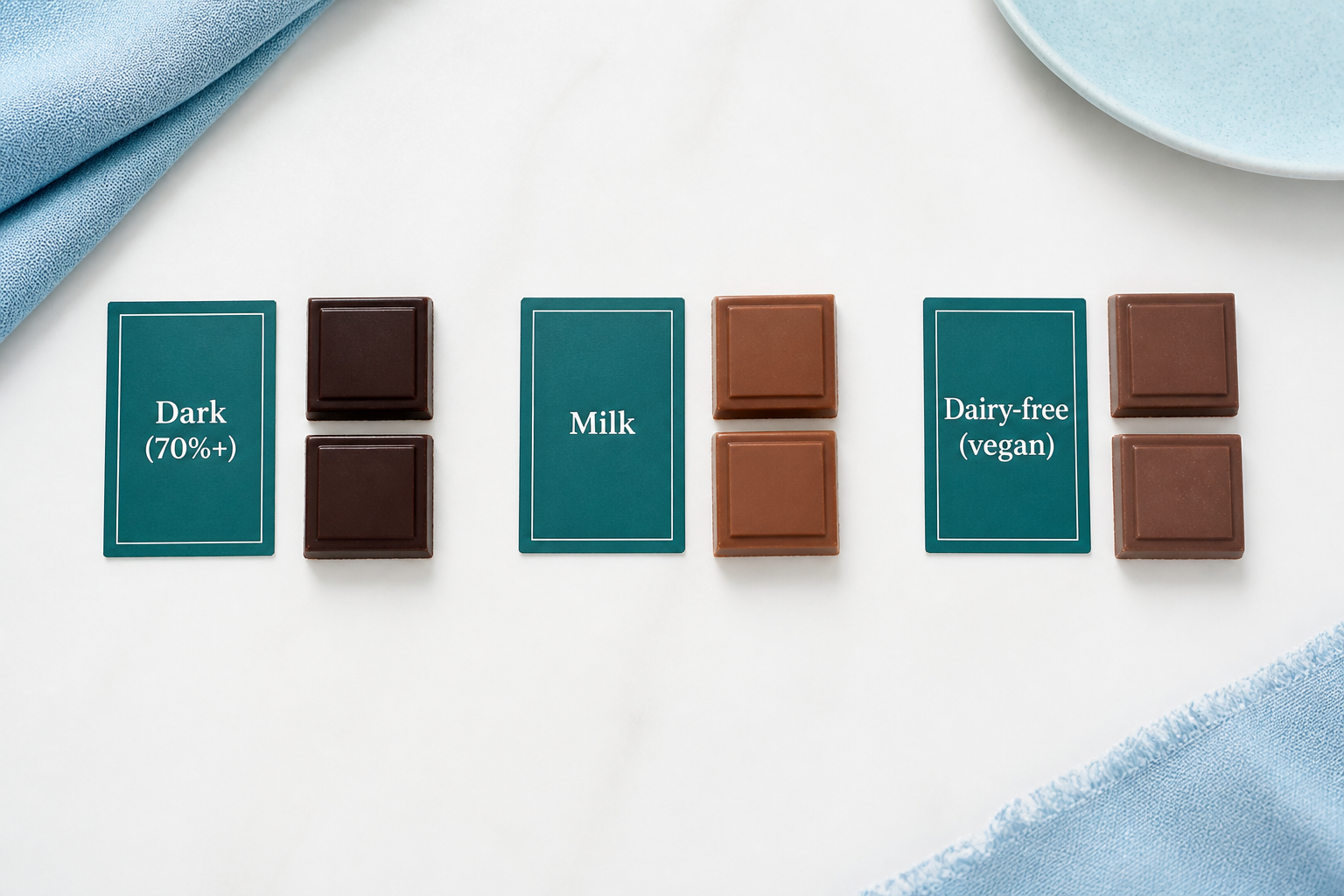
Dark chocolate is often the easiest place to start for dark chocolate low FODMAP testing because it usually has less lactose and less sugar than milk or white chocolate. Small portions tend to work better, especially in bars with higher cocoa content. The a low-FODMAP approach can help you compare serving sizes with other FODMAP triggers.
Chocolate type | IBS tolerance | Why it may help or bother you |
|---|---|---|
Dark chocolate | Often better in small amounts | Less lactose and less sugar, but very high-cocoa bars can still be rough |
Milk chocolate | More likely to trigger symptoms | milk chocolate lactose can ferment and add gas, bloating, pain, or diarrhea |
White chocolate | Hardest to predict | It has cocoa butter, sugar, and milk solids, so dairy can still be a problem |
Dairy-free or vegan chocolate | Often a better swap | Helpful for lactose intolerance chocolate needs, but labels still matter |
Sugar-free chocolate | Mixed results | Polyols can be strong FODMAP triggers |
dairy-free chocolate options can work well when lactose is one of your main issues. vegan chocolate for IBS still needs a close label check, though. Ingredients like inulin, chicory root, sorbitol, and maltitol can raise symptoms even when milk is gone.
A true low-FODMAP chocolate depends on the full ingredient list, not just the color of the bar. Very dark chocolate can still bother some people with IBS because it contains caffeine, theobromine, and fat, which may aggravate urgency or loose stools (source, source). Start small, watch your portion, and keep notes in a food and symptom diary.
What Should You Check On Chocolate Labels?
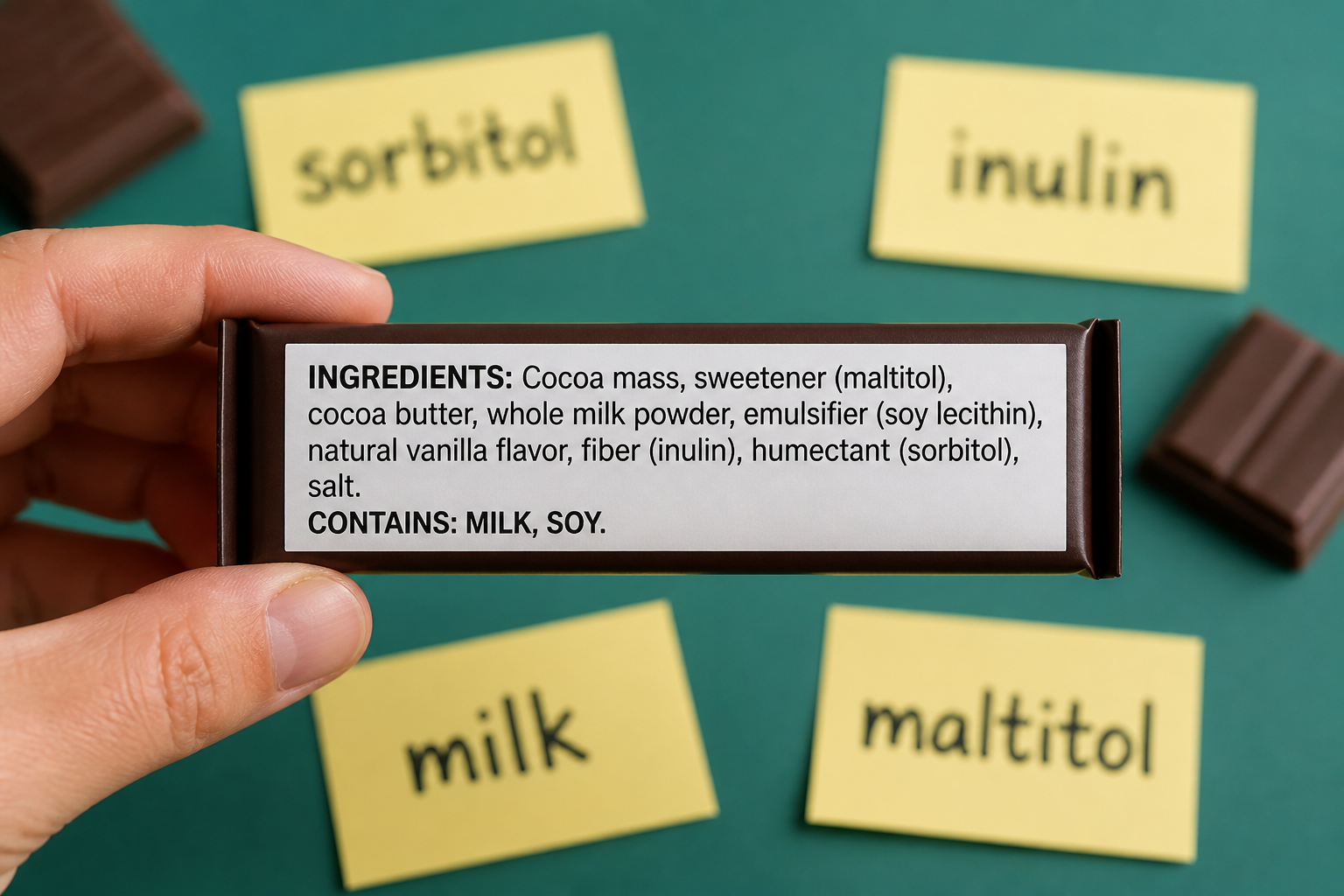
Start with the ingredient list, not the front label. A shorter list usually means fewer hidden triggers, while a long one can bring in extras that raise gas, bloating, or diarrhea risk for people with IBS. That's the core of label reading chocolate ingredients.
Watch for these higher-risk ingredients:
- Sugar alcohols and IBS: Ingredients ending in "-itol," such as sorbitol, xylitol, maltitol, and mannitol, can be hard to tolerate because sugar alcohols are poorly absorbed and may pull water into the bowel like a laxative (source, source).
- Added fibers: Inulin and chicory root can be very gas-producing, especially in bars, fillings, and fiber-added products. Even prebiotic cocoa may still trigger symptoms if your gut is sensitive.
- Sweetener load: High-fructose corn syrup, honey, and agave can add to FODMAP triggers. Artificial sweeteners IBS concerns also matter when a product has several sweeteners at once.
- Dairy ingredients: Milk chocolate and white chocolate can be a problem if lactose or milk solids bother you.
Plain bars are often a sensible place to start because shorter ingredient lists can make it easier to avoid lactose, polyols, inulin, or other add-ins that may trigger IBS symptoms (source, source).
Better first picks | Higher-risk labels |
|---|---|
Cocoa, cocoa butter, sugar | Long ingredient lists with several sweeteners or fillers |
Low-FODMAP certified chocolates | Products with inulin, chicory root, or multiple polyols |
Test one serving at a time so you can tell whether the chocolate itself or the add-ins are the issue.
How Can You Test Your Own Chocolate Tolerance?

A careful trial gives you a clearer answer than guessing from one bad day. A food-and-symptom diary helps you isolate one variable at a time, which is the safest way to judge whether chocolate is part of the problem.
Start with a simple test plan:
- Record the details: Write down the chocolate type, brand, ingredient list, portion size, and the time you ate it. Good label reading chocolate ingredients matters because lactose, sugar alcohols, caffeine, and high fat content may be the real trigger.
- Keep the dose small: A few squares is often easier to evaluate than a full serving, because a smaller portion makes it simpler to tell whether chocolate itself is the trigger (source, source).
- Avoid FODMAP stacking: Leave several hours between chocolate and other high-FODMAP foods, or try it after a balanced meal. That makes it easier to tell whether chocolate itself caused the reaction.
- Track your full context: Note your IBS subtype, whether you have IBS-D, IBS-C, or IBS-M, plus medications, stress, and other foods eaten that day. Those factors can change how your gut responds.
- Repeat the test: Try the same chocolate on separate days before you set a personal limit. Brand, timing, and serving size can all shift your response.
Chocolate type | Trial note |
|---|---|
Dark chocolate | Often a better first test, especially dark chocolate low FODMAP options in small portions |
Milk chocolate | Watch for lactose and portion size |
White chocolate | For some milk and white chocolate products, a very small amount may fit low-FODMAP limits, but the exact serving depends on the brand and ingredient list (source, source) |
Sugar-free chocolate | Check for polyols and sugar alcohols |
A IBS diet plan should also leave room for safety. If symptoms are persistent, severe, or getting worse, pause the trial and talk with a qualified healthcare professional or registered dietitian.
How Do You Trial Chocolate Safely?
A careful trial starts small. Begin with a small amount that matches the bar, such as one or two squares, so you can test tolerance without taking in a large dose of fat or caffeine at once (source, source). That kind of portion control chocolate gives you a clearer read than a full bar, especially when you are checking serving size chocolate IBS tolerance.
Keep the rest of the day steady. A balanced, low-trigger meal can make the trial easier on your gut, and testing chocolate on its own can give a cleaner read on your limit. Avoid pairing it with other likely triggers so you do not create FODMAP stacking that blurs the result. Fat matters here too, since fat causes gut spasms for some people, and high-fat foods gut spasms can show up as cramps, urgency, or bloating.
A simple rhythm helps:
- Test: Use the same small portion on one day.
- Wait: Leave several hours before your next chocolate test and watch symptoms later that day.
- Repeat: Try the same amount again on another day before you increase it.
- Raise slowly: Step up in small amounts and stop at the smallest serving that stays comfortable.
If you want more gentle ideas, snack options for IBS can help keep the rest of your day predictable.
When Should You Get Medical Advice?
Chocolate can be a small trigger for some people with IBS and a major one for others. If your reaction seems stronger than the amount you ate would suggest, it’s worth talking with a clinician or IBS-specialist dietitian instead of guessing.
A review makes sense when chocolate keeps causing symptoms after you’ve checked the basics:
- Portion size: a small serving may be fine, while a larger one can push symptoms over the edge.
- Timing: eating it on an empty stomach or late at night may change how you feel.
- Ingredients: lactose, caffeine, high fat, sugar alcohols, and FODMAP stacking can all matter.
Get prompt medical advice if you notice any alarm features:
- Unintentional weight loss
- Blood in the stool
- Fever
- Nighttime symptoms
- Vomiting
- Severe, worsening, or unusual pain
If careful food-and-symptom tracking still does not show a pattern, personalized guidance can help you test chocolate safely and avoid unnecessary restriction. Monash University can help you compare serving sizes and ingredient lists, and an IBS-focused registered dietitian can help you sort out next steps with less stress.
This section is for educational purposes only and is not a substitute for individualized medical advice. Persistent, severe, or worsening digestive symptoms should be evaluated by a qualified healthcare professional.
IBS and Chocolate FAQs
These FAQs cover the most common concerns about chocolate and IBS, including how different types may affect your symptoms. They're meant to help you sort out the basics before you try a food test or compare your options. Cocoa contains caffeine and theobromine, and those stimulants may contribute to cramping or urgency in some people with IBS (source, source). Chocolate can worsen bloating in some people with IBS, especially when lactose, polyols, or other fermentable ingredients are involved (source, source).
White chocolate has no cocoa solids, so it usually contains less caffeine than dark chocolate, but milk ingredients and sugar can still trigger symptoms for some people with IBS (source, source).
1. Can chocolate trigger IBS diarrhea?
Yes, chocolate can trigger IBS diarrhea in some people, especially if you have IBS-D diarrhea-predominant. Cocoa contains caffeine and theobromine, which can bring on cramping or urgency soon after eating it. Milk chocolate may add lactose, and sugar-free chocolate can be a problem too because polyols sorbitol xylitol are poorly absorbed and can act like laxatives, so checking ingredients and starting with a small portion is the safest way to test your limit.
2. Does chocolate worsen IBS bloating?
Yes, chocolate can worsen IBS bloating, especially when its FODMAPs reach the large intestine, which can leave your belly gassy, swollen, or tight. Pure cocoa can contain fructans, and some bars add inulin, chicory root, or high-fructose sweeteners like high-fructose corn syrup, which may be harder to tolerate. Portion size matters too, because a small serving may be okay while a larger one triggers symptoms. The fat in chocolate can also slow digestion and make you feel heavy or bloated, even when gas is not the main issue, including some prebiotic cocoa products.
3. Is white chocolate easier on IBS?
White chocolate is not automatically easier on IBS. It has no cocoa solids, so it usually contains less caffeine than dark chocolate, but white chocolate lactose can still trigger gas, bloating, pain, or diarrhea if milk is one of your triggers. The IBS and dairy symptoms pattern matters here, and a dairy-free or vegan chocolate may fit better if you follow a low-FODMAP plan. If you want to test white chocolate, start with a small portion and watch your own response.
4. Does caffeine in chocolate affect IBS?
Chocolate can affect IBS because cocoa naturally contains caffeine and theobromine, and those stimulants can trigger the colon. That’s why caffeine and IBS can show up as cramping, urgency, or diarrhea, especially with IBS-D, and why cocoa caffeine matters more than many people expect. Dark chocolate is often easier to tolerate than milk or white chocolate, but very dark bars can still bring on symptoms, so smaller portions, lower-caffeine choices, and timing it away from an empty stomach are smart starting points. Your tolerance can vary, so a small personal trial is more useful than assuming every chocolate will act the same way.