


An IBS fiber guide on choosing the right fiber helps separate symptom-friendly options from the ones that can worsen bloating or urgency. Many people keep trying bran, supplements, or high-fiber foods only to find that the wrong type brings gas, cramps, or looser stools.
In IBS, fiber works best when the type, dose, and fermentability match the bowel pattern, and the aim is a clear way to choose.
The sections compare soluble and insoluble fiber, show why psyllium and PHGG often fit different IBS subtypes, and explain when food is enough versus when a supplement makes sense. It also covers how to start low, add water, and increase slowly so symptoms are easier to track. A symptom-by-symptom table and a simple starter plan make the next choice more concrete.
For adults living with IBS, registered dietitians, primary care clinicians, and caregivers, the practical value is a calmer path to better stool form without adding more discomfort. A person with IBS-C may do better with psyllium and water than a bran-heavy cereal that leaves stools harder and pain higher, while someone with IBS-D often needs a gentler soluble option. What follows offers a more symptom-fit way to choose fiber and adjust it with confidence.
IBS Fiber Key Takeaways
- Fiber in IBS matters more by type than by total amount.
- Soluble, viscous fibers often help more than rough bran.
- Psyllium is a common first choice for IBS-C and mixed symptoms.
- PHGG is often gentler for IBS-D and easier to tolerate.
- Food first works well when tolerated, but supplements help when dose control matters.
- Start low, increase slowly, and drink water with every dose.
- Pause or seek care if pain, bleeding, vomiting, or symptoms worsen.
What Does Fiber Do In IBS?
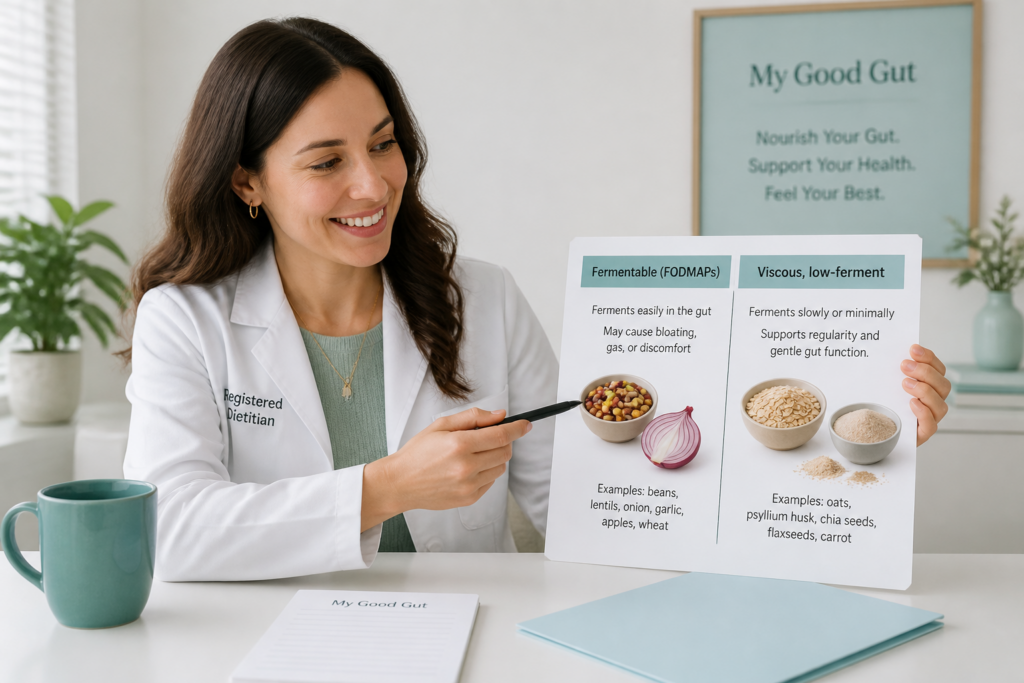
Fiber in irritable bowel syndrome (IBS) is less about more and more about which kind. Dietary fiber IBS guidance makes the most sense when you look at fiber types and functional properties, because long-chain polysaccharides and short-chain oligosaccharides behave differently in your gut.
That split matters because the oligosaccharides ferment quickly. Fructans, fructooligosaccharides, and galactooligosaccharides are part of the FODMAP and fiber conversation, and that is why Inulin FOS GOS often shows up in IBS education. Your gut may handle one fiber well and react to another in a very different way.
A quick comparison helps:
| Fiber feature | What it tends to do | Why it matters in IBS |
|---|---|---|
| Fiber fermentability | Feeds gut bacteria and can make gas | Fast fermentation may increase bloating or discomfort |
| Viscosity | Forms a thicker gel | It can soften hard stools and support more predictable bowel movements |
| Soluble vs insoluble fiber | Soluble fibers mix with water more easily, while insoluble fibers add rough bulk | Some soluble fibers are better tolerated, while rough insoluble fibers may worsen urgency or pain |
Fiber can still help in useful ways. It may improve laxation, support more regular stool movement, increase satiety, and even help with cholesterol, blood glucose, and blood pressure. For many people, the real issue is not whether to eat fiber, but which form fits the gut pattern.
Fiber texture modification matters too. More viscous fibers absorb water, create a softer stool, and slow transit a bit, which can feel steadier if diarrhea is part of your pattern. Less rapidly fermented fibers are often easier to live with because they are less likely to trigger a sudden flare, and a slow increase often feels gentler than a big jump.
Use IBS diet guidance to match the type, amount, and form of fiber to your symptoms. The same fiber can help one person and bother another, so persistent or worsening symptoms deserve a clinician’s review.
How Do You Choose Fiber By IBS Subtype?
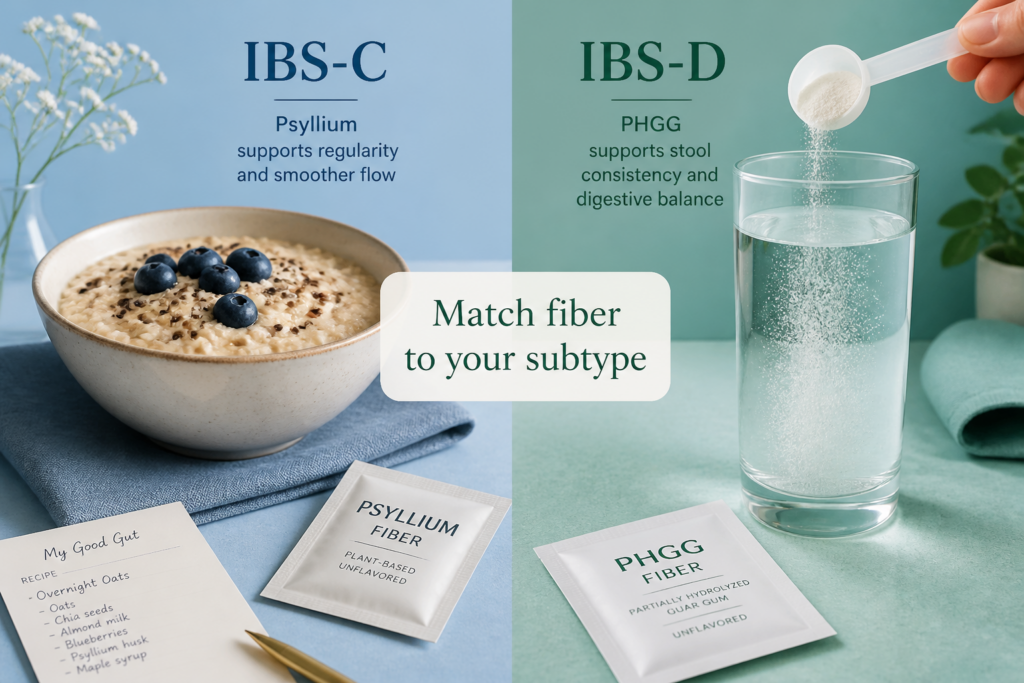
The best fiber for IBS depends on the symptom you want to calm. If stool is hard, slowly fermentable fiber usually helps most because it softens stool without adding a lot of gas. If bloating, pain, or loose stool are the bigger issue, a gentler option is often the better first step. The low FODMAP diet for IBS can also help you spot foods that keep symptoms stirred up.
| IBS subtype | Fiber choice that usually fits best | Examples |
|---|---|---|
| IBS-C | Soluble, viscous, slowly fermenting fiber | Psyllium, oats, chia seeds, peeled fruit |
| IBS-D | Fiber that thickens stool without fast colon fermentation | Partially hydrolyzed guar gum, PHGG Sunfiber, small servings of soluble-fiber foods |
| IBS-M | Match the fiber to the day’s symptoms | Psyllium on constipation days, gentler non-viscous options on diarrhea-prone days |
For constipation-predominant IBS, Psyllium for IBS is usually the clearest first choice. It can soften stool and improve regularity with less gas than many bran-heavy foods. Fiber recommendations IBS-C also include oats, chia seeds, and peeled fruit if you tolerate them well.
For diarrhea-predominant IBS, the goal shifts to stool thickness without rapid fermentation. Partially hydrolyzed guar gum is often a good fit, and PHGG Sunfiber is commonly sold as a low-FODMAP option. Fiber recommendations IBS-D can feel gentler when you want a calmer response.
For mixed IBS, the label matters less than the day you’re having. Use a viscous soluble option on constipation days and a milder, non-viscous fiber on diarrhea-prone days. Start with modest doses so you can see how your body responds.
Some fibers are a poor match when bloating, gas, or pain are front and center. Bran-heavy cereals, inulin-added products, and other fast-fermenting ingredients can backfire even when they look healthy on the package. Low FODMAP fiber is often the safer starting point when a food clearly sets off symptoms.
A simple rule keeps the plan practical:
- Choose psyllium if you want softer stool and better form.
- Choose PHGG Sunfiber if you want a gentler option that is less likely to bloat you.
- Choose lower-FODMAP foods when one food keeps causing symptoms.
At the table, that might mean oatmeal plus psyllium for IBS-C, PHGG in water for IBS-D, or small servings of soluble-fiber foods while you test tolerance. For IBS-M, you may swap between those options across the week, and that flexibility is often more helpful than chasing one perfect fiber.
When Should You Use Food Vs Supplements?
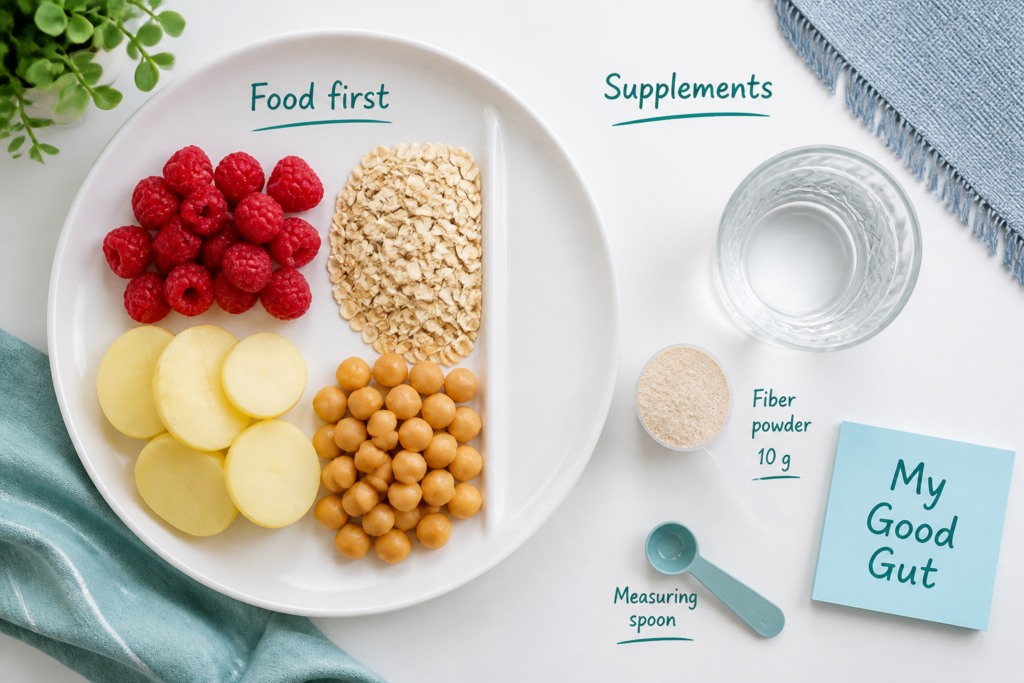
Most adults can use the Academy of Nutrition and Dietetics target of about 25 grams of fiber per day for women and about 38 grams per day for men as a general starting point (source). A food-first approach usually makes that target easier to reach because it gives you fiber, protein, vitamins, and minerals in the same meals. Dietary fiber IBS planning works best when fiber is spread across the day instead of packed into one serving.
High-fiber foods for IBS can fit into small, workable portions:
| Food | Fiber |
|---|---|
| 1 ounce pumpkin seeds | 5.2 grams |
| 1/2 cup canned chickpeas | 8.1 grams |
| Seeds, legumes, fruit, vegetables, and grains across the day | Adds up steadily |
A simple mix of seeds, legumes, fruit, vegetables, and grains can bring a sample day to about 34 grams of fiber without leaning on one giant bowl of food. The right IBS meal planning helps you spread those foods across meals so the total feels more manageable.
Fiber supplements for IBS make more sense when food alone falls short. That can happen if your appetite is low, your schedule is unpredictable, or you need a controlled dose to raise intake slowly and track symptoms. Supplements can also help when high-fiber foods for IBS trigger bloating, gas, or diarrhea, especially if high-FODMAP choices like beans, some fruit, or certain vegetables are part of the problem.
PHGG Sunfiber, the brand name for partially hydrolyzed guar gum, and acacia fiber are common options. Both are often easier to adjust than a big jump in food fiber, but your best choice depends on your IBS subtype and how you tolerate beans, seeds, fruit, and vegetables. Clinical recommendations and safety considerations matter here, because the wrong fiber type can make symptoms louder instead of calmer.
Use food when you can, and use a supplement when you need a steadier dose or a gentler path up. If your digestive symptoms are persistent, severe, or worsening, speak with a qualified healthcare professional before making major fiber changes on your own.
How Do You Start Fiber Safely?
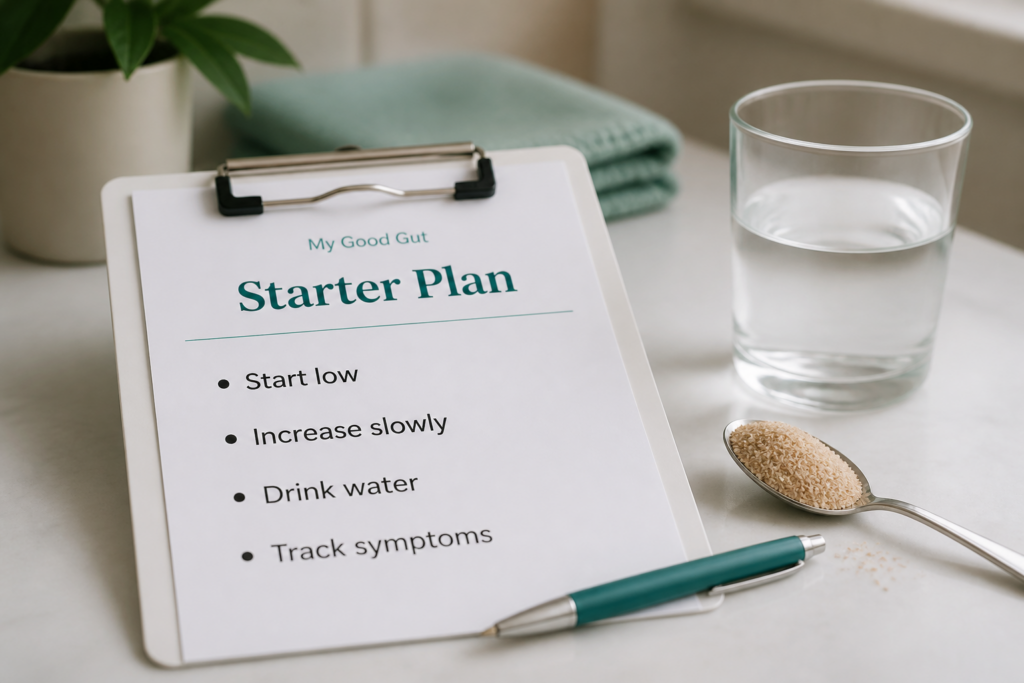
The safest way to start fiber is to make one small change and give your gut time to respond. Increase fiber gradually, because that makes Fiber tolerance IBS easier to judge. The same approach works whether you begin with foods or Fiber supplements for IBS.
A simple starting plan looks like this:
- Start low. If psyllium suits your symptoms, a common starting point is about 2 to 3 grams per day (source).
- Increase slowly. Hold that dose for a few days, then move up over 1 to 2 weeks only if you’re tolerating it well (source).
- Drink enough water. Take each dose with a full glass of water, and keep your fluid intake steady through the day.
- Change one variable. Try one supplement or one food pattern first so it’s easier to see what helps and what makes symptoms worse.
- Choose gentle foods. Start with small portions of oats, carrots, peeled potatoes, pulses, or linseeds, then increase every few days if stool changes and gas stay mild.
The first 1 to 2 weeks are often the main adjustment window (source). Mild fullness, extra gas, or a temporary change in stool pattern can happen while your gut adapts. If discomfort gets worse, pause the increase, go back to the last tolerated dose, or check in with a clinician or registered dietitian.
The goal is better symptom control, not perfect fiber numbers. If fiber helps your constipation or steadies your stools, that’s real progress. If your digestive symptoms are persistent, severe, or getting worse, you need professional evaluation instead of more fiber alone.
A steady pace gives you cleaner answers and fewer setbacks. Start small, hydrate well, and let your symptoms guide the next step.
Some fiber supplement options to look at include:
What Should You Do If Fiber Causes Symptoms?
Symptoms can flare when fiber goes up too fast, especially with highly fermentable choices. Bloating, gas, cramping, looser stools, or even worse constipation do not always mean fiber is a bad fit. More often, the dose, timing, or fiber type needs a reset.
Fiber tolerance IBS is usually better when you [Increase fiber gradually] over time, especially with highly fermentable choices. Slower-fermenting, longer-chain fibers are often easier to handle, while fibers with higher [Fiber fermentability] may need to be reduced or paused. Clinical recommendations and safety considerations matter here because the goal is to support your gut health without pushing through a clear flare.
The stop-or-adjust rule is straightforward:
- Mild symptoms: Cut the current dose by about half and hold that lower amount for several days before trying again.
- Moderate symptoms or a clear link to the new fiber: Stop it for now, then restart later at a lower dose or switch to a better-tolerated option.
- Strong or escalating symptoms: Pause the fiber and focus on symptom relief and medical review if the pattern does not settle.
A few short-term changes can make the next dose easier to tolerate:
- Drink more fluid with the fiber.
- Take smaller divided doses with meals.
- Slow the titration schedule.
- Avoid making several diet changes at once so the trigger is easier to spot.
IBS subtype matters too, because the same fiber can behave differently depending on your main pattern. If constipation gets worse, check whether the dose is too low, the fluid is too low, or the fiber is too fermentable. If stools loosen, reduce the dose or try a more bulking, better-tolerated fiber. When symptoms alternate, adjust to the dominant flare pattern instead of forcing one fixed plan.
| Symptom pattern | What to check first | Next adjustment |
|---|---|---|
| Constipation worsens | Dose may be too low, fluid may be too low, or the fiber may be too fermentable | Increase fluid, raise the dose more slowly, or switch fiber type |
| Stools loosen | The fiber may be too irritating or too fermentable | Reduce the dose or try a more bulking, better-tolerated fiber |
| Symptoms alternate | The flare pattern may be changing day to day | Adjust to the dominant pattern rather than forcing one fixed dose |
Some symptoms deserve medical review instead of another home tweak. Seek help if you have persistent or worsening pain, severe bloating, vomiting, blood in the stool, suspected fecal impaction, or symptoms that do not improve after stopping the fiber.
Use this quick checklist before the next dose:
- Note when symptoms started.
- Record the dose you took.
- Track how much fluid you had.
- Watch for stool changes.
- Decide whether to keep going, cut back, stop, or seek help.
That simple check can make your next choice safer and clearer.
IBS Fiber Guide FAQs
If you’re sorting through an IBS fiber guide, these FAQs cover the most common questions about fiber types, symptom fit, and safe ways to start so you can read with more confidence.
1. Is Psyllium Better Than Other Fibers?
Psyllium for IBS is often a strong first choice because psyllium husk is a viscous, gel-forming fiber that helps normalize stool consistency instead of pushing you only toward looser or harder stools. It also ferments slowly, which may make it easier to tolerate than faster-fermenting fibers that can add gas or bloating, and the clinical evidence is strongest when your goal is more predictable bowel movements in IBS-C and mixed symptoms. “Better” still depends on your symptoms, but psyllium is usually more evidence-backed than many other fibers, including Methylcellulose Citrucel for some people, and it has outperformed some stool softeners in chronic idiopathic constipation.
2. Can Fiber Help IBS With Constipation?
Yes, fiber can help IBS-C, especially soluble, viscous types that absorb water and soften stool without adding much rough bulk. Psyllium, oats, and linseeds are common choices, and foods like oats, pulses, carrots, and peeled potatoes often fit an IBS diet for constipation. Fiber recommendations IBS-C work best when you also drink enough water, because the goal is softer stool, easier passage, and less straining, though your response can still vary.
3. Can Fiber Worsen IBS With Diarrhea?
Some fibers can make IBS-D worse because they ferment quickly and pull more water into the bowel, which can increase loose stools, gas, and bloating. Inulin, FOS, and GOS, along with wheat bran, are more likely to cause trouble because they’re higher in FODMAPs, so they often appear on IBS foods to avoid. For many people, Fiber recommendations IBS-D usually favor psyllium and other slower-fermenting soluble fibers, and the IBS diet for diarrhea approach can help you start low and increase slowly. That gives you a better chance of thickening stools without making cramps, urgency, or bloating worse.
4. Which High-Fiber Foods Are IBS-Friendly?
High-fiber foods for IBS often work best when you start with Low FODMAP fiber choices like raspberries, about 1/2 cup, or 1 medium kiwifruit. Add soluble vegetables such as carrots, green beans, and potatoes with the skin on, then try small servings of rinsed canned lentils or chickpeas instead of larger portions of dried beans. Oats, psyllium-rich foods, flax or linseeds, and higher-fiber breads or cereals can also fit well if you increase slowly and track your symptoms.
5. Should You Take Fiber With Probiotics?
Fiber and probiotics can often be tried together because they may help in different ways. Fiber can support bowel regularity, while probiotics may help some IBS symptoms linked to shifts in gut bacteria, including the connection between prebiotic fiber and gut bacteria. If you add a probiotic, give it about a month and keep the rest of your routine steady so you can judge the effect, and check in with a clinician if symptoms persist or worsen.
For more articles on IBS, check these out:
- Supplements for IBS Symptoms
- Is Oatmeal Good for IBS Diarrhea?
- What to Eat and Avoid During IBS Symptoms
- IBS and Rice – Brown and White