


This IBS and kombucha guide explains the potential benefits, risks, and safe testing steps for people weighing whether to try the drink. For adults managing bloating, gas, diarrhea, constipation, or reflux, one bottle can feel like either a careful experiment or a fast route to a flare. Kombucha is a fermented tea drink with live cultures, carbonation, and trace acids, which means the response can vary a lot from one gut to another. The takeaway is a clear way to judge whether it belongs in your routine without guessing.
The article covers how kombucha may affect IBS-C, IBS-D, and mixed IBS, plus the ingredients most likely to cause trouble, including sugar alcohols, fruit juice, caffeine, and inulin. It also reviews the limited evidence behind kombucha, what the small IBS-C trial actually showed, and how to set a cautious trial with a low-sugar product. Readers will also find a simple dose plan, symptom tracking cues, and red flags that mean it's time to stop and reassess.
This is especially useful for people with IBS, as well as caregivers, busy parents, and professionals who need practical gut guidance they can use right away. A small test dose with food may work for some people with constipation-predominant IBS, while others notice more gas, urgency, or bloating within hours. When the pattern is unclear or symptoms keep returning, a gastroenterologist or registered dietitian can help sort out whether kombucha is a fit or a trigger.
IBS and Kombucha Key Takeaways
- Kombucha may help some people with IBS-C, but evidence is limited.
- IBS-D and mixed IBS are more likely to react badly to kombucha.
- Carbonation, acidity, sugar alcohols, and inulin can trigger bloating or urgency.
- Start with one to two tablespoons and increase slowly only if symptoms stay calm.
- Low-sugar, plain kombucha is usually the safest first test.
- Track stool form, frequency, gas, pain, and timing for several days.
- Stop and seek guidance if symptoms worsen, SIBO is suspected, or MCAS signs appear.
What Is Kombucha And Why Does IBS Matter?
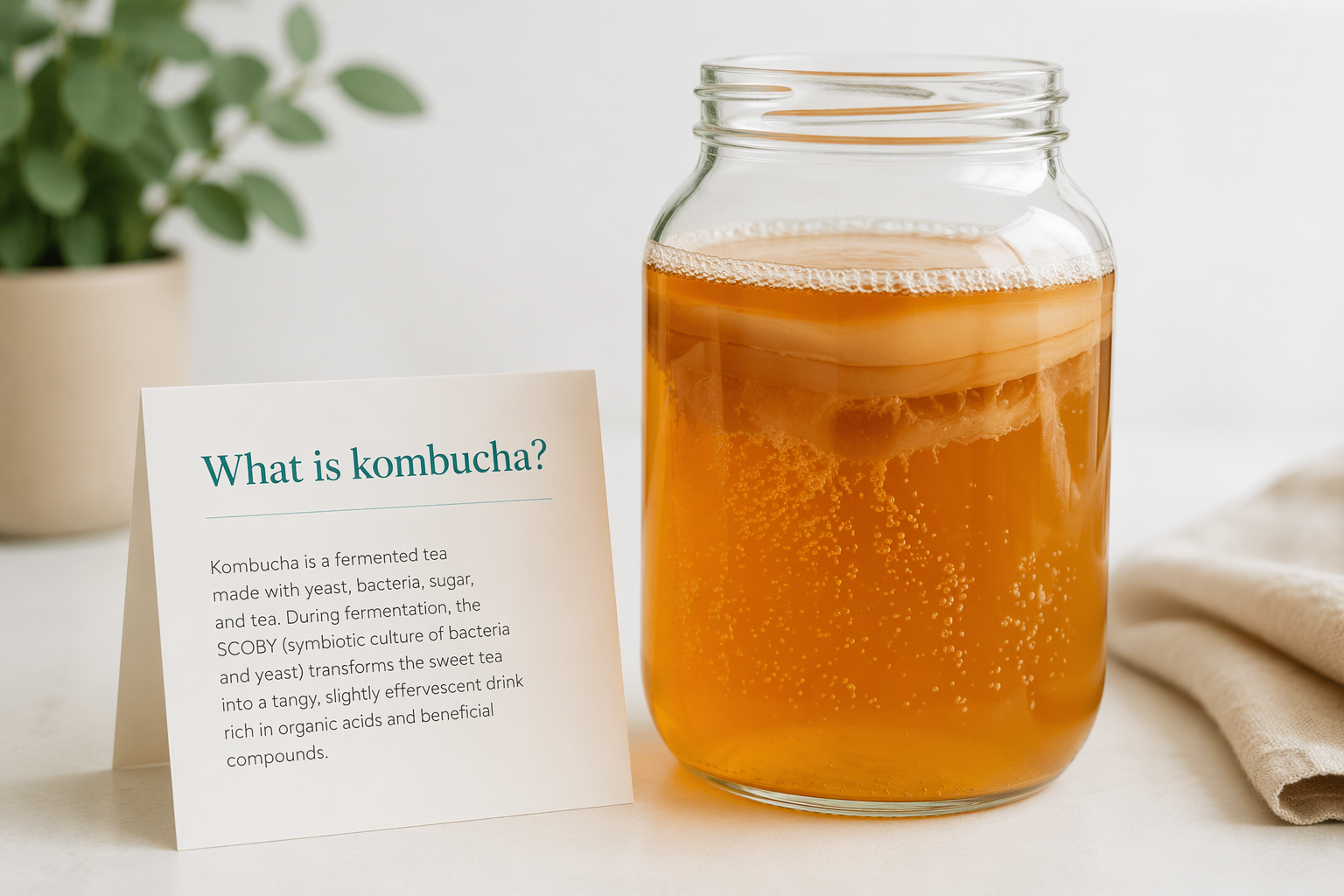
Kombucha is a fermented tea drink made with tea, sugar, and a symbiotic culture of bacteria and yeast called a SCOBY. Fermentation gives it live cultures, carbonation, and trace acids that can change how it feels in your gut. That’s why Kombucha and IBS can be such a mixed story. It also explains why best drinks for IBS often comes up in the same conversation.
IBS, or irritable bowel syndrome, affects the large intestine and looks different from person to person. Cramping, bloating, gas, and diarrhea may show up in very different patterns. With IBS and kombucha, there is no single rule that fits everyone. Your subtype, current symptoms, and personal trigger pattern all matter.
Some people do fine with kombucha because well-brewed versions can contain live bacterial cultures and probiotic microbes. A few readers with constipation-predominant IBS, or IBS-C, also say it feels gentler than other fizzy drinks. For others, the same bottle leads to kombucha side effects they would rather avoid.
Common reasons it can backfire include:
- Residual caffeine: Tea-based kombucha can bother sensitive stomachs or add to discomfort.
- Residual alcohol: Small amounts can remain after fermentation and may matter if you are sensitive.
- Acidity: The tart finish can worsen reflux or irritate a sore gut.
- Carbonation: The bubbles can add pressure, gas, bloating, or cramping.
Kombucha is a cautious trial drink, not a proven fix. If you try it, start small, watch your symptoms closely, and compare your reaction with your IBS pattern before making it a regular habit.
How Can Kombucha Affect IBS By Subtype?
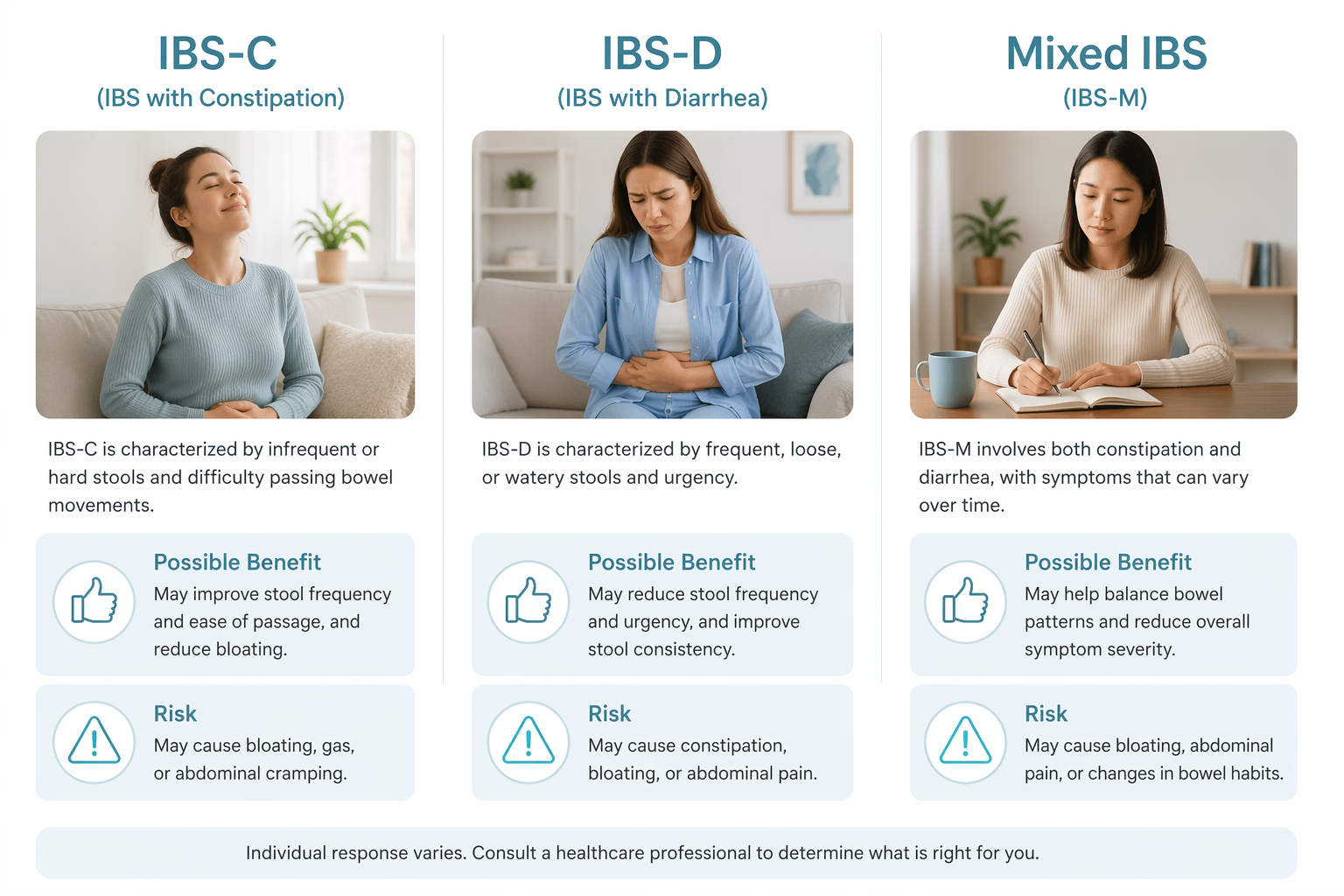
Kombucha does not affect irritable bowel syndrome (IBS) the same way for everyone. Your subtype, trigger pattern, and recent symptom history all shape whether it feels tolerable, mildly helpful, or like a quick route to bloating and urgency.
For IBS-C, the picture is mixed. Some people with constipation-predominant IBS notice that carbonation, acidity, or fermentation seems to nudge bowel movements along a little. That is the appeal behind IBS-C kombucha, but any benefit is usually small and short-lived. Bloating, gas, and sugar sensitivity can wipe out the upside fast.
IBS subtype | Possible upside | Main risk |
|---|---|---|
IBS-C | Mild stool movement support | Bloating, gas, sugar-related discomfort |
IBS-D | Very little benefit for most people | Urgency, loose stools, cramping |
Mixed IBS | Occasional tolerance in small amounts | Unpredictable symptom swings |
IBS-D and mixed IBS usually call for more caution. Kombucha’s fizz, acid, residual sugar, and fermentable compounds can irritate a sensitive gut and make stools looser or more urgent. Real-world reports also describe urgent diarrhea-like reactions after drinking it several times a week, especially when other fermented or sweetened drinks already cause trouble.
Fermentable carbs matter here too. If fermented foods, sugar, or other fermentable carbs already set off symptoms, kombucha is more likely to aggravate bloating or faster transit than to help. That risk can rise when small intestinal bacterial overgrowth is part of the picture, because SIBO and kombucha can be a rough combination for people who react strongly to fermentation.
The practical rule is simple. If you have constipation-predominant IBS, you can weigh a possible small benefit against bloating risk. If you have IBS-D or mixed IBS, even a small serving may be enough to trigger discomfort.
Recent flares matter just as much as subtype. Persistent, severe, or worsening symptoms deserve a conversation with a qualified healthcare professional before kombucha becomes a regular habit.
What Might Help IBS-C?
A cautious trial of kombucha may help some people with IBS-C because it can bring in kombucha probiotics and other fermentation byproducts that may support a steadier bowel pattern. The key word is may. The evidence is still limited, and benefits are not guaranteed for everyone.
A small pilot randomized controlled trial in 40 women with IBS-C tested an inulin-enriched kombucha drink. Participants drank 220 mL a day for 10 days. The drink contained 2.53 g of inulin per 220 mL plus B vitamins. Stool frequency rose from 0.60 ± 0.31 to 0.85 ± 0.19 times per day in the kombucha group, while the control group did not show a meaningful change.
The same study also reported better stool consistency and less incomplete emptying. That matters because many people with IBS-C care as much about feeling fully done as they do about going more often. Incomplete evacuation scores improved from 1.88 ± 0.78 to 1.41 ± 0.56, with P = 0.015.
If IBS-C kombucha helps you, the shift usually feels practical rather than dramatic. You may notice:
- More regular bowel movements
- Softer or easier-to-pass stools on the Bristol Stool Scale
- Less straining
- Less lingering fullness after a bathroom visit
Those changes often show up over several days, not after one glass.
The broader probiotic research points in the same direction. Some people with IBS feel better with probiotics, while others do not. Strain, dose, and product all matter. That is why kombucha should be treated as a careful test, not a proven fix.
If you try it, track these signals for several days:
- Stool frequency
- Stool form
- Gas and bloating
- Incomplete evacuation
If those improve without a flare in fermentation symptoms, kombucha may be a reasonable fit for your gut.
What Might Worsen IBS-D Or Mixed IBS?
Kombucha can push IBS-D or mixed IBS in the wrong direction. It's a fermented drink with live microbes, organic acids, and other fermentation byproducts, and that mix can feel like too much for a sensitive gut when your baseline already leans toward loose stools or urgency.
A few parts of kombucha are the usual troublemakers:
- Fizz and pressure: kombucha carbonation adds gas, which can increase bloating, belching, and that tight, swollen feeling.
- Acid load: kombucha acidity may irritate an already touchy digestive tract. Some people notice more cramping, burning, or general abdominal discomfort after even a small serving.
- Sweetener issues: added sugars in kombucha can be a problem, especially when a bottle uses sugar alcohols like sorbitol or mannitol. Those can act like a laxative and make diarrhea and urgency more likely.
- Fermentation sensitivity: if you're prone to SIBO or react strongly to fermentation, extra bacteria and leftover fermentable substrates may trigger SIBO-like flares, including gas, bloating, and louder bowel activity.
Community reports line up with that pattern. People often mention new or worse diarrhea, a sudden need to rush to the bathroom, more frequent bowel movements, bloating after just a few sips, or the feeling that kombucha "cleans things out" too aggressively after repeated use.
That's especially worth noting if you have constipation-predominant IBS and were hoping kombucha would help move things along. A small amount may seem harmless at first, but a sensitive gut can still react fast. If your symptoms tend to swing toward diarrhea, urgency, or mixed-pattern flares, kombucha is more likely to aggravate than calm.
Which Kombucha Ingredients Trigger Symptoms?
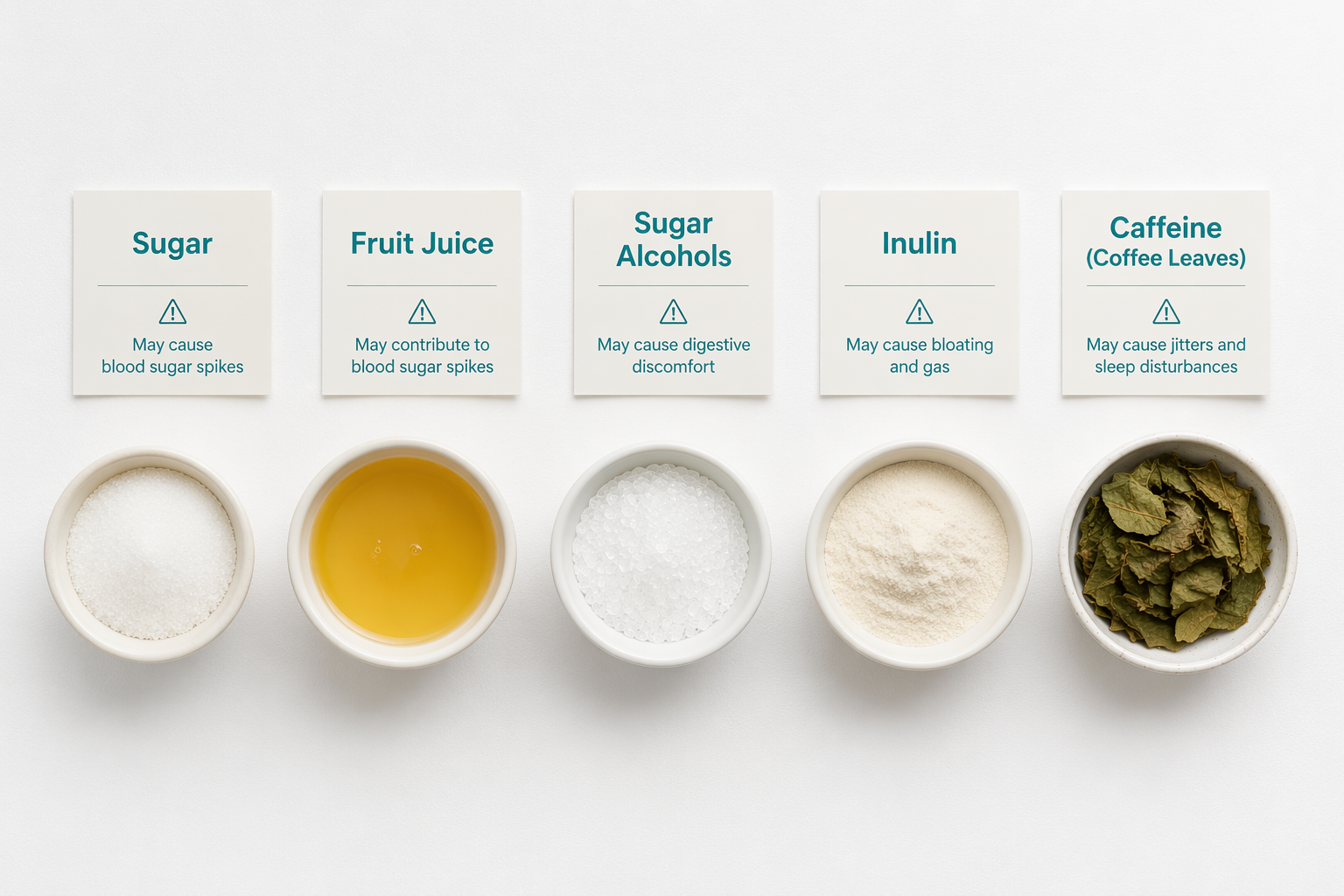
Kombucha ingredients matter more than the wellness vibe on the label. A bottle can look simple and still bother your gut in a few different ways, especially if you're sensitive to fermentable carbs, reflux, or a loose-stool pattern. The Bristol Stool Scale can help you notice whether a drink is pushing your symptoms in the wrong direction.
A few ingredients tend to raise risk faster than others:
- Residual sugar, fruit juice, and juice concentrates: These add more fermentable carbs and can make symptoms more likely. Sugar can be a problem for some people with IBS, but the evidence does not define a single cutoff such as 3 g per 100 mL. A better rule is to start with the lowest-sugar product you can find and watch for bloating, urgency, or loose stools after a small serving (source).
- Sugar alcohols such as sorbitol and mannitol: Sugar alcohols such as sorbitol and mannitol are common IBS triggers because they can draw water into the bowel and worsen diarrhea, bloating, and cramping. Plain sugar may also bother some people, but sugar alcohols are a clearer red flag in low-FODMAP guidance (source, source).
- Carbonation: The carbon dioxide formed during fermentation can increase gas pressure. That often means more bloating, belching, and abdominal distension, even when the ingredient list looks short.
- Inulin and other prebiotic fibers: An inulin-enriched kombucha may sound helpful, but inulin can ferment quickly in people with FODMAP sensitivity and add a lot of gas.
- Caffeine and residual alcohol: These are moderate-to-higher-risk ingredients if coffee, tea, or alcohol already trigger you. The pattern in coffee as an IBS trigger often overlaps with kombucha sensitivity, and alcohol triggers for IBS can show up even at small doses.
- Acidity and other fermentation byproducts: These may bother you if you get stomach burning or nausea.
A simple label-reading shortcut helps. Lower-risk choices are usually unsweetened, lower-sugar, and free of fruit juice concentrates, sugar alcohols, and added inulin. When several triggers stack up in one bottle, the odds of a flare go up.
For a practical test, start with a small pour, sip it with food, and watch for bloating, gas, reflux, urgency, or cramping over the next few hours. Any change in stool form or frequency is worth noting before you try the same product again.
What Does The Evidence Actually Show?
The strongest signal so far comes from a small pilot trial, not a full IBS program. In a randomized, open-label pilot study, 40 women with IBS-C drank 220 mL a day of an inulin-enriched kombucha beverage for 10 days, while the comparison group drank water. The kombucha group showed higher stool frequency and better Bristol Stool Scale scores, along with less incomplete bowel emptying (source). That points to softer, more regular stools and less incomplete evacuation for some people. (source)
The formula matters here. Each serving contained 2.53 g of inulin plus B vitamins, so the response may have come from kombucha plus prebiotic fiber rather than kombucha alone. That also means a homemade version, a store bottle, and a low FODMAP kombucha option may not behave the same way in your gut. Added sugars in kombucha can also change how your body responds from brand to brand.
A practical read of the evidence looks like this:
- Promising for IBS-C: The signal fits people whose main issue is infrequent, hard stools.
- Too small to generalize: The study was short, open-label, and limited to women with IBS-C.
- Not a fit-for-all result: The available trial evidence is limited to a short study in women with IBS-C, so it does not establish benefit for men, mixed IBS, diarrhea-predominant IBS, or long-term daily use (source).
- Probiotic effects vary: The broader probiotic literature is mixed. A large review found that some probiotic products may improve global IBS symptoms and abdominal pain, but effects vary by strain, dose, and product, and not every person responds the same way (source).
Caution matters if you have diarrhea-predominant IBS, suspected SIBO, or strong sensitivity to fermentation. Live microbes, sugar, kombucha carbonation, and kombucha acidity can push symptoms the wrong way and lead to urgency, bloating, gas, or looser stools. Reviews of IBS treatments have not found one simple fix that works for everyone. (source)
For many people with IBS-C, kombucha is best treated as a careful experiment. Start small, track bloating, gas, stool frequency, and stool form, and stop if symptoms flare. This content is for educational purposes only and is not a substitute for personalized medical advice. Digestive symptoms can have many causes, and persistent, severe, or worsening symptoms deserve guidance from a gastroenterologist or registered dietitian. Results vary by person, and any dietary or supplement advice should be individualized.
How Do You Try Kombucha Safely?
A careful kombucha trial starts small, slow, and well tracked. That matters because carbonation and fermentation can make a harmless sip feel like a bigger setback if the dose is too large or the pace is too fast.
A good kombucha tolerance test works in stages:
- Start with 1 to 2 tablespoons, not a full bottle.
- Sip it slowly over 20 to 30 minutes instead of chugging it.
- If that goes well, try a small serving in the 4 to 6 ounce range.
- Avoid jumping straight to 8 to 12 ounces on the first try.
- Give it several days before calling it a success, since some reactions show up later.
Plain or low-sugar kombucha is the safest place to begin. Skip products with fruit juice, high-fructose sweeteners, inulin, sorbitol, or mannitol at first. Homemade batches can be harder to judge because strength and sugar levels vary more than they do in sealed commercial bottles.
Your symptoms tell the real story, so track more than the first hour. Early kombucha bloating can show up fast, but gas, pain, or stool changes may appear later that day or over the next few days. A simple log should capture these details:
- Bloating and gas: note whether the discomfort starts soon after sipping or later in the day.
- Pain and pressure: record any abdominal pain, cramping, or tightness.
- Stool changes: track stool form, stool frequency, and urgency.
- Pattern shifts: note any clear link between the drink and an IBS flare.
The right pace also depends on your IBS pattern. People with IBS-C may tolerate a cautious step up if symptoms stay stable. IBS-D and mixed IBS with diarrhea and urgency usually call for extra caution because kombucha may loosen stools or speed things up.
IBS pattern | Safer first move | When to pause |
|---|---|---|
IBS-C | Start with the smallest dose and increase only if bloating and stools stay steady | Pause if pain, gas, or urgency rises |
IBS-D | Stay at the tiniest test dose and watch closely | Pause if looseness or urgency worsens |
Mixed IBS | Treat the trial as higher risk and move slowly | Stop if the drink changes your usual pattern |
My Good Gut’s downloadable mini-workbook can help you sort your subtype, compare lower-risk and higher-risk ingredients, and pair the test with a low-FODMAP kombucha testing template. It also gives you a simple way to record dose and timing so you can spot patterns without guessing.
If symptoms linger, overlap with SIBO signs, or raise concern for MCAS, a gastroenterologist or registered dietitian can help you sort out what’s driving the reaction. Digestive symptoms can have many causes, and this content is for educational purposes only and is not a substitute for personalized medical advice.
What Is A Safe Starting Dose And How Do You Monitor It?
Start with a true test dose. One to two tablespoons on day 1 is enough to see how your gut reacts, and sipping it slowly over 20 to 30 minutes gives you time to notice gas, cramping, urgency, or reflux before the drink is gone.
If that first dose feels steady, keep it there for 48 to 72 hours before increasing. Move up to 1 to 2 ounces only if symptoms stay calm, then later to 4 to 6 ounces if each step still feels comfortable. The pace should be even slower if you have IBS-D or mixed IBS, a history of gas, or sensitivity to carbonation, acidity, caffeine, or FODMAPs. People with IBS-C may tolerate a careful trial a little better, but the serving still needs to stay small.
Track the trial with numbers, not just a general impression:
- Stool form: Note the Bristol stool type.
- Stool frequency: Record how often you go each day.
- Bloating: Rate it from 0 to 10.
- Pain or cramping: Write down intensity and location.
- Timing: Mark whether symptoms show up the same day or the next day.
Product choice matters too. Homemade and store-bought versions can differ in sweetness, fermentation, and fizz. A lower-risk bottle is a safer test if you are watching for SIBO and kombucha concerns or histamine intolerance kombucha symptoms.
If bloating, loose stools, urgency, or pain clearly worsen, stop the dose increase. That’s a sign that Kombucha and IBS may not be a good fit for your current symptom pattern.
When Should You Avoid Kombucha Or Call A Clinician?
Kombucha is not a good fit for every IBS pattern, and the safest move is to pause it when your symptoms are unstable or your diagnosis is still unclear. One clinical paper on fermented drinks and gut symptoms notes that tolerance can vary a lot from person to person (source).
A few situations call for extra caution or a hard stop:
- Low-FODMAP elimination: Skip kombucha during the low-FODMAP elimination phase. Fermentable oligo-, di-, mono-saccharides and polyols can blur symptom tracking and make it harder to spot the real trigger.
- SIBO or fermentation sensitivity: If you have suspected or diagnosed small intestinal bacterial overgrowth (SIBO), or your clinician thinks fermentation worsens your symptoms, ask a gastroenterologist or registered dietitian before trying it. The live cultures, sugar, and fermentation byproducts can add bloating, gas, and discomfort.
- IBS-D or loose stools: If kombucha brings urgency, loose stools, or a diarrhea-like response, reduce it or stop it. A real-world example described flares after drinking it 4 to 5 times a week, and the advice was to cut back to 1 to 2 times weekly.
- Pregnancy or higher infection risk: Get medical guidance first if you’re pregnant, immunocompromised, or otherwise at higher risk. Unpasteurized or live-culture drinks may not be worth the safety tradeoff.
- Flushing, hives, or headaches after fermented foods: Avoid kombucha and bring this up with a clinician. That pattern can fit histamine sensitivity or mast cell activation syndrome (MCAS).
- Persistent or worsening symptoms: Don’t push through if the picture is severe, ongoing, or confusing. You deserve personalized guidance from a gastroenterologist or registered dietitian.
If you do retest it, keep the trial low-sugar while watching bloating, gas, stool changes, and urgency after each serving.
IBS And Kombucha FAQs
These FAQs focus on the practical questions you’re most likely asking about IBS and kombucha, from low FODMAP kombucha to kombucha sugar content, so you can judge fit without guesswork.
1. Is Low-Sugar Kombucha Better For IBS?
Low-sugar kombucha is usually the better pick for IBS, but carbonation and acidity can still trigger symptoms. Even a plain bottle can still trigger bloating, gas, or loose stools because carbonation, acidity, and leftover fermentable carbs may irritate you. Choose the simplest label you can find, avoid added fruit juice, high-fructose sweeteners, sorbitol, and mannitol, and remember that commercial vs homebrewed kombucha can differ a lot because home batches vary with the SCOBY and fermentation time. A careful first test is about 6 ounces, then track how you feel over the next several hours and the next day.
2. Can Homemade Kombucha Be Harder On IBS?
Yes. Homemade kombucha can be harder on IBS because each batch can vary in sugar, acidity, carbonation, and fermentation strength, so store-bought drinks may be more predictable. A stronger brew can bring more acid and fermentation byproducts that may lead to bloating, gas, cramping, or looser stools, especially if the kombucha sugar content is still high. Home batches also add more uncertainty around SCOBY health and contamination, so anything that looks, smells, or tastes off is best skipped rather than tested on a sensitive gut.
3. Does Decaf Kombucha Help IBS Symptoms?
Decaf kombucha may be a little easier to tolerate if caffeine is one of your triggers, but it doesn’t guarantee IBS relief. It still has residual fermentation alcohol, acidity, carbonation, and other byproducts, so removing caffeine only lowers one possible irritant. In commercial vs homebrewed kombucha, the mix can vary, so if you’re sensitive, start with a small amount and watch closely for bloating, gas, or cramping.
4. Can Kombucha Replace Probiotic Supplements?
For IBS, kombucha can be a helpful fermented food, but it usually should not replace a probiotic supplement. It does contain live cultures and other fermentation products, so kombucha probiotics may support gut health for some people, but the evidence is mixed and the dose isn’t steady. If your symptoms are mild and you want a food-based option, kombucha can fit your routine, while probiotics for IBS are usually the better choice when you want targeted strains, a dependable dose, or support for constipation.