


IBS and acne research can be frustrating because the link looks real even though causation isn’t proven. Digestive bloating, bowel changes, and breakouts can show up together, leaving people unsure whether one condition is driving the other or both are reacting to the same triggers. The gut-skin axis is the two-way communication between the digestive system, immune signals, hormones, and skin, and the sections ahead show what the evidence can and cannot support.
The article walks through the research on prevalence, study quality, dysbiosis, inflammation, stress, and gut barrier changes so the association is easier to read in context. It also covers how clinicians sort IBS from other digestive problems, which red flags matter, and how food, probiotics, and symptom tracking fit into a practical next step. A simple decision framework is included for spotting patterns without jumping to conclusions.
Adults dealing with acne and IBS symptoms, along with caregivers and primary care teams, will find the clearest value here because the focus stays on what to track and what to raise with a clinician. That matters when a flare after stress, antibiotics, or meal changes affects both skin and digestion, as in the common pattern of acne worsening alongside bloating and constipation. The next steps are straightforward, evidence-informed, and built for real appointments and real schedules.
IBS and Acne Key Takeaways
- IBS and acne often appear together, but research does not prove one causes the other.
- The gut-skin axis links microbiome changes, immune signaling, hormones, and stress responses.
- Most evidence comes from observational studies, so causation remains unconfirmed.
- Red flags like blood in stool, weight loss, fever, or anemia need medical review.
- Tracking bowel changes, stress, sleep, and breakouts helps spot shared triggers.
- Low-FODMAP trials and probiotic discussions may help, but results vary by person.
- Coordinated care across primary care, dermatology, and gastroenterology is often the safest path.
What Is The IBS And Acne Connection?
Acne and irritable bowel syndrome (IBS) often show up together more than chance alone would suggest, but that pattern does not mean one causes the other, and acne is best read against the wider list of IBS symptoms and red flags. Some studies report a higher rate of IBS in people with acne compared to healthy controls, though specific prevalence rates vary by study design and population (source). While an association is consistently observed, current evidence does not confirm that one condition causes the other (source). That gap is real enough to notice, but it still points to an association, not a proven cause.
The clinical pattern is usually best read as a shared flare, not a one-way chain. Stress, poor sleep, travel, diet shifts, and other body-wide changes can affect both the skin and the gut. That is where the gut-skin axis comes in.
The gut-skin axis is the two-way link between your digestive system and your skin. It includes:
- Gut microbiome shifts: changes in the mix of bacteria in the intestines
- Immune signaling: inflammation messages that can affect both organs
- Hormones: body signals that can influence oil production and digestion
- Gut-brain connection: stress and nervous system signals that shape symptoms
That helps explain why IBS and acne can flare at the same time without one directly causing the other. Current research suggests a link may exist, but the evidence is still mixed. The same is true for acne vulgaris and IBS.
If you notice digestive symptoms and breakouts together, take both seriously. Digestive symptoms can have many causes, and symptoms can vary a lot from person to person. If the pattern keeps showing up, talk with a clinician so you can sort out what fits IBS, what fits acne, and what may need a different workup.
What Does The Research Actually Show?
The strongest signal is a pattern, not a verdict. Several studies report a higher rate of IBS in people with acne, and research indicates a statistically significant association between acne and IBS, with higher rates of IBS observed in acne patients compared to controls, though exact prevalence figures vary across studies (source). The evidence supports a link but does not prove causation (source). That supports an association, not proof of causation.
Most of the current evidence regarding the link between acne and IBS comes from cross-sectional or observational studies, which can identify associations but cannot confirm causation (source). Reviews continue to call for prospective cohort and mechanistic studies to strengthen these findings (source). These can show that two conditions appear together. They cannot tell whether acne came first, IBS came first, or whether both reflect a shared driver such as chronic inflammation and acne-related immune changes.
Confidence is still limited by the quality of the studies. Small samples, short follow-up, and inconsistent patient definitions weaken the conclusions, which is why reviews keep calling for prospective cohorts and mechanistic studies before stronger claims are made about IBS and acne or acne vulgaris and IBS.
A few confounders can also blur the picture:
- Age and sex: patterns are not the same across groups
- Stress and diet: both can affect gut symptoms and skin flares
- Medications: antibiotics, hormones, and other drugs may shift either condition
- Other inflammatory or hormonal conditions: these can distort the link
Standardized definitions help. Studies that use ROME IV diagnostic criteria are easier to compare because they define IBS more consistently. Results still vary when researchers use different IBS definitions or acne severity tools, including the Global Acne Grading System (GAGS).
For you, the clinical takeaway is simple. Age, sex, IBS subtype, and the pattern or location of acne can help a clinician judge whether the two problems may be connected in your case. That matters in the epidemiology of acne and GI comorbidities, especially when male IBS symptoms seem to overlap with skin flares.
How Does The Gut Skin Axis Fit?
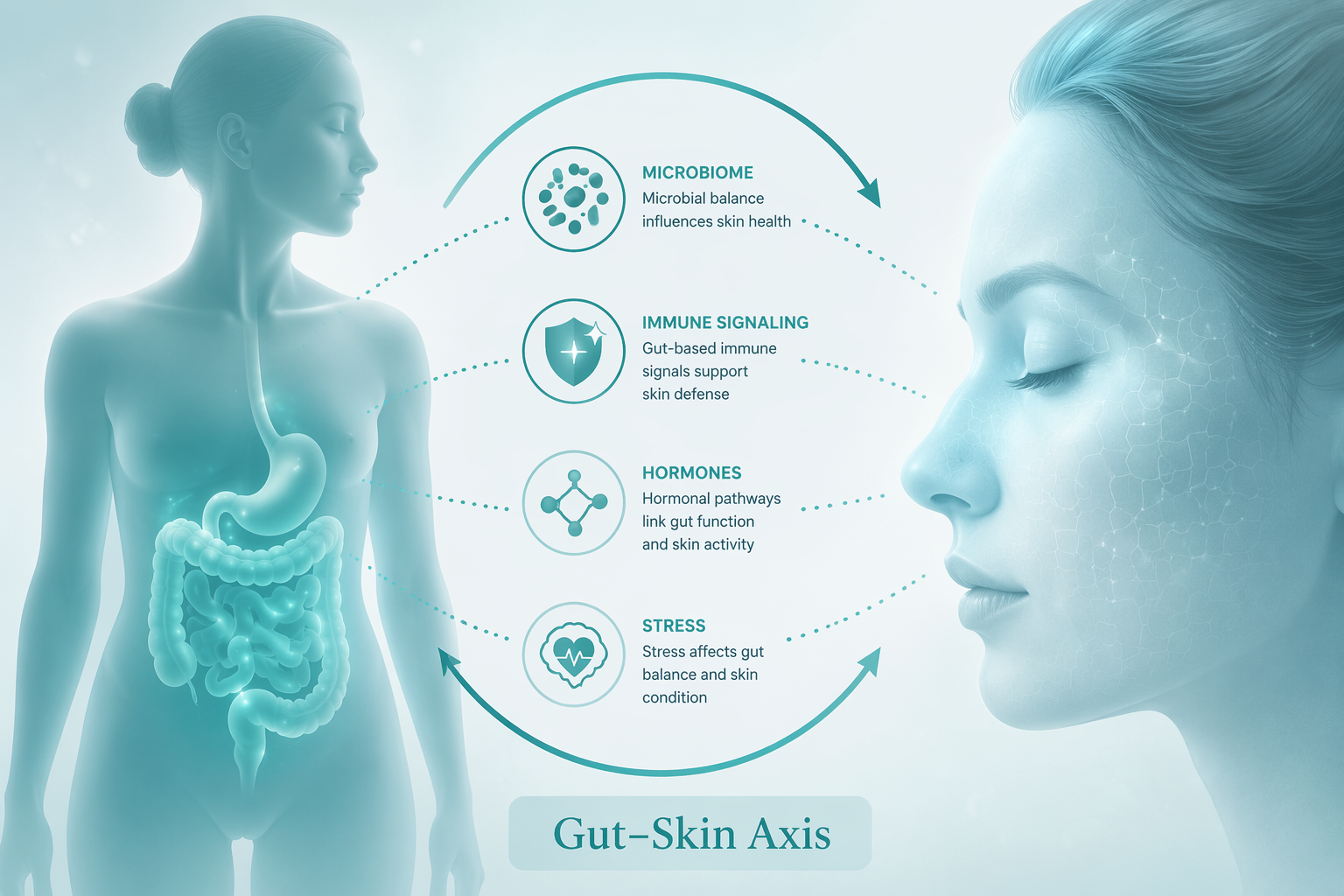
The gut-skin axis is a two-way communication network. Signals move between your gut microbiome, immune system, hormones, skin, and the gut-brain axis. That matters because stress can worsen both IBS symptoms and acne flares, and the two can rise together without one being the only cause of the other.
Several shared pathways may help explain the overlap:
- Microbial dysbiosis: An imbalance in gut bacteria can change immune signaling and increase inflammation. That is one reason the idea of gut microbiota and acne keeps coming up in research.
- Gut barrier changes: If the gut lining becomes more permeable, inflammatory proteins may enter the bloodstream and contribute to low-grade irritation that affects the skin.
- Stress and inflammation: Stress can shift the microbiome, worsen digestive symptoms, and change skin behavior through nervous-system signaling.
These are plausible mechanisms, not proof of a simple cause-and-effect relationship. IBS physiology may overlap with acne through immune overactivation, altered gut permeability, and changes in microbial metabolites. That is why holistic gut health approaches often look at the whole picture instead of blaming one trigger.
The research context also matters. A large nationwide analysis using the Taiwan National Health Insurance Research Database reported higher rates of gastrointestinal issues among patients with acne, supporting the epidemiological link between the two conditions (source). This finding strengthens the evidence for a gut-skin connection (source). It does suggest a real connection worth discussing with a clinician, especially when symptoms keep clustering together.
How Do You Tell What Is Driving Symptoms?
A careful history is usually the fastest way to tell whether gut symptoms may be part of the acne picture. The key clues are timing, pattern, and whether flares rise and fall with bloating, abdominal pain, diarrhea, constipation, or mixed bowel habits. Screening for GI symptoms in acne patients works best when you also note when symptoms started, such as after an infection, a major stress period, a medication change, or a diet shift.
A focused review often looks for these points together:
- ROME IV diagnostic criteria: recurring abdominal pain with bowel changes that fits IBS-D, IBS-C, or mixed IBS
- Acne pattern: whiteheads, inflamed papules, cystic acne, or jawline breakouts, plus age and sex
- Trigger timing: a new pattern after infection, stress, medication, or diet changes
- Symptom clues: post-infectious IBS can develop after a gastrointestinal infection and may account for a significant share of cases (source).
The gut-skin axis may help explain why both problems appear together. Stress, microbial dysbiosis, immune signaling, and the gut-brain axis may all play a role, and some studies have found worse acne severity in people with IBS.
Red flags matter too. Weight loss, blood in the stool, fever, persistent vomiting, anemia, nocturnal symptoms, or a sharp worsening need prompt medical review.
If the pattern does not fit IBS well, other causes should be ruled out first, including celiac disease, inflammatory bowel disease, thyroid disease, infections, lactose intolerance, medication effects, and diverticular disease. A GAGS score can help standardize acne severity, and IBS bloating and weight gain is one more clue that symptom tracking can reveal.
How Do You Screen And Manage IBS Related Acne?

A practical screen starts with the gut, not just the skin. If your acne comes with recurring bloating, belly pain, diarrhea, constipation, or symptoms that shift with meals or stress, IBS is worth considering as a possible contributor. Screening for GI symptoms in acne patients can help, along with a quick check for weight loss, blood in stool, fever, anemia, nighttime symptoms, or a family history of inflammatory bowel disease.
A simple first pass often looks like this:
- Pattern check: Match acne flares with stool changes, pain, sleep, and stress so shared triggers are easier to spot.
- Food trial: For likely IBS patterns without red flags, try a short, structured low-FODMAP phase, then reintroduce one group at a time to see which foods affect both digestion and breakouts.
- Probiotic discussion: Treat probiotics as an optional add-on. Evidence is mixed, but some people notice less bloating or steadier bowel habits.
- Targeted testing: If the pattern stays unclear, ask about SIBO, infection, celiac disease, or another digestive cause.
- Referral: Coordinate primary care, dermatology, and gastroenterology when symptoms persist or worsen.
Tracking acne, stool shifts, pain, sleep, stress, and flare timing together makes dietary changes for IBS and acne more useful and gives you better context for clinician visits. It also helps with medication choices, since oral antibiotics and IBS risk is part of the acne conversation, especially with tetracyclines and IBS concerns and the broader signal around macrolides and gut health. A large TriNetX study also linked new-onset IBS after acne treatment more often with systemic antibiotics than with acne care without them, which is why antibiotic stewardship in dermatology matters.
Treatment choice | Gut stewardship note |
|---|---|
Oral tetracyclines | Use selectively and for the shortest effective course |
Macrolides | Use cautiously when gut symptoms already exist |
Isotretinoin | May have a lower gut-risk profile than some antibiotics, but still needs standard monitoring |
Topical therapy | Often a better maintenance option when appropriate |
If digestive symptoms are frequent, severe, or worsening, or if acne stays stubborn despite these steps, a GI referral is reasonable.
When Should You See A Clinician?
Seek medical evaluation sooner if acne or bowel symptoms come with warning signs that point beyond typical IBS. Red flags include unintentional weight loss, blood in the stool, fever, vomiting, anemia, nighttime diarrhea, a new bowel habit change after age 50, or pain that keeps getting worse.
If your digestive symptoms stay severe despite basic IBS care, start with a primary care clinician. They can decide whether you need gastroenterology referral and a fuller workup. That matters when inflammation or another gut condition may be driving the pattern.
Common tests often include:
- Blood work: to look for anemia or inflammation
- Stool testing: to check for infection or intestinal inflammation
- Celiac screening: when gluten-related disease is possible
- Other age-based studies: guided by your symptoms and bowel changes
If a clinician suspects SIBO, ask whether breath testing fits your case. The clinical implications for dermatology and gastroenterology matter here, because treating an underlying gut problem can sometimes improve skin flares too. That is why SIBO and acne, H. pylori and acne, and even new-onset IBS after acne treatment are worth discussing with the right clinician.
Severe, painful, cystic, or scarring acne deserves a dermatologist visit. Ask about systemic therapy and how oral antibiotics and IBS risk may affect the choice between tetracyclines and macrolides. When both skin and digestive symptoms are active, coordinated care across primary care, gastroenterology, and dermatology is the safest path.
This guidance is educational only and is not a substitute for personalized medical advice. Digestive symptoms can have many causes, and testing and treatment should be individualized.
IBS And Acne FAQs
These FAQs cover the most common questions about IBS and acne, from possible links between gut symptoms and skin flares to what the connection might mean for your next conversation with a clinician. They’re meant to give you a clearer starting point before you decide what matters most for your own symptoms.
1. Can IBS Flare-Ups Trigger Acne Breakouts?
Yes, IBS flare-ups can line up with acne breakouts, but the pattern is not simple or guaranteed for everyone. Stress is a common link because cortisol can worsen gut symptoms and may also increase oil production that clogs pores, while inflammation and gut-skin signaling can add to the overlap. If acne keeps flaring during IBS symptoms, that timing is worth tracking as a possible connection, and persistent or severe symptoms deserve a check-in with a clinician.
2. Which Foods Worsen Both IBS And Acne?
Common overlap triggers include high-sugar and heavily processed foods, dairy, and some artificial sweeteners. High-glycemic foods can also raise insulin and worsen acne, while IBS symptoms often flare with fermentable carbs, or FODMAPs, that can drive gas, bloating, and bowel changes. A short-term low-FODMAP trial, plus a simple food-and-symptom log, can help you spot whether certain foods are affecting your gut, your skin, or both, and it can make dietary changes for IBS and acne feel less like guesswork. After the elimination phase, reintroduce foods one at a time, and ask a qualified healthcare professional to review persistent symptoms.
3. Can IBS Medications Affect Acne Breakouts?
Oral acne antibiotics can matter if you have IBS, because tetracyclines and IBS and macrolides and gut health can disrupt the microbiome and sometimes make bloating, diarrhea, or constipation worse. Isotretinoin and IBS may carry a lower gut-risk profile than long-term antibiotic use, but any new digestive change still deserves a quick check-in with your clinician. That’s why antibiotic stewardship in dermatology matters, especially when acne care often involves systemic antibiotics and one report estimated that about 37% of acne patients receive them, with prolonged use in adolescents around 41%.
4. How Is IBS Acne Different From PCOS Acne?
IBS-related breakouts may show up during stress or symptom flares, but the connection is mixed and not proven to be direct, so acne with digestive symptoms is not the same as PCOS acne. PCOS is more likely when acne sits on the chin or jawline and comes with irregular periods, excess facial or body hair, scalp hair thinning, or deep cystic acne. A basic evaluation usually includes menstrual history, a hirsutism check, and serum androgens, and how IBS affects women can help you think about the gut side of the picture.
5. Can Stress Worsen IBS And Acne Together?
Yes, stress can flare both IBS and acne at the same time. Stress hormones like cortisol may affect gut movement and sensitivity, and they can also increase oil production, so both symptoms may feel worse together. Stress management can help lower one shared trigger, but it does not replace medical care or guarantee relief. Brisk walking, 7 to 9 hours of sleep with a steady bedtime, and a short daily breathing or meditation practice are good places to start, and therapy or counseling can help if stress, anxiety, or low mood are making things harder.