


IBS and weight gain often means the scale is reacting to bloating, constipation, or fluid shifts rather than new body fat. For busy adults managing meals, work, and family routines, that difference is easy to miss when your abdomen changes from morning to evening. In plain terms, IBS can change how your body looks and feels day to day without causing steady fat gain, and the sections ahead show how to tell the difference.
The article breaks down how to separate bloating from true weight change, what constipation and stool buildup do to the scale, and why diet, stress, sleep, activity, and some medications can all shape the pattern. It also covers the warning signs that call for medical evaluation and the most useful things to track, including morning weight, bowel habits, meal timing, and bloating after meals. A simple two week log and a clear checklist make the next steps easier to use in real life.
For adults living with IBS, and for caregivers helping them sort out symptoms, the most useful advice is practical and specific. A teacher who sees a fuller stomach after lunch or an office manager noticing a three pound swing after a constipation flare can use the same pattern based approach to decide what matters. That kind of record gives a clinician or RD a clearer picture, and it sets up the rest of the guidance with confidence and less guesswork.
IBS and Weight Gain Key Takeaways
- IBS often causes bloating, not true fat gain.
- Constipation can raise weight through stool and water retention.
- Daily scale swings are common during IBS flares.
- Diet, stress, sleep, and activity can change weight patterns.
- Some IBS medications may increase appetite or weight.
- Track morning weight, meals, bowel habits, and bloating for two weeks.
- Seek medical evaluation for unexplained or persistent weight change.
What Does IBS And Weight Gain Mean?
IBS and weight gain usually means your belly looks or feels bigger, but the scale is reacting to the range of IBS symptoms rather than a sudden jump in body fat. With Irritable Bowel Syndrome (IBS), abdominal bloating, trapped gas, constipation, and fluid shifts can make you feel heavier for a few days. That can look like bloating vs fat gain, even when your body composition has not changed much.
The scale can move fast because stool and water take up space. In IBS, bloating, constipation, and fluid shifts can cause short-term weight changes that often ease when symptoms improve (source). Research also suggests the condition doesn’t directly cause fat gain on its own (source). When weight stays up for weeks or months, diet, activity, sleep, stress, or treatment changes are more likely to be part of the picture.
Your symptom pattern matters, too. If your [IBS symptoms] lean toward diarrhea, constipation, or a mix of both, appetite and bathroom habits can shift in different ways. That’s why two people with IBS can have very different day-to-day weights, even with the same diagnosis.
A simple way to sort the patterns is this:
- Temporary fluctuation: stool buildup, water shifts, flare-ups, and a distended abdomen
- More lasting change: repeated overeating, less movement, medication effects, or major routine changes
- Indirect drivers: stress, restrictive eating, and changes in sleep or exercise
IBS does not rewrite your DNA or automatically trigger fat storage. Instead, the gut microbiome and metabolism, motility, and symptom cycles can influence digestion and scale changes more than they change body fat. Tracking meals, bowel habits, and symptom timing can help you see what is really moving the number.
Is It Bloating, Constipation, Or True Weight Gain?
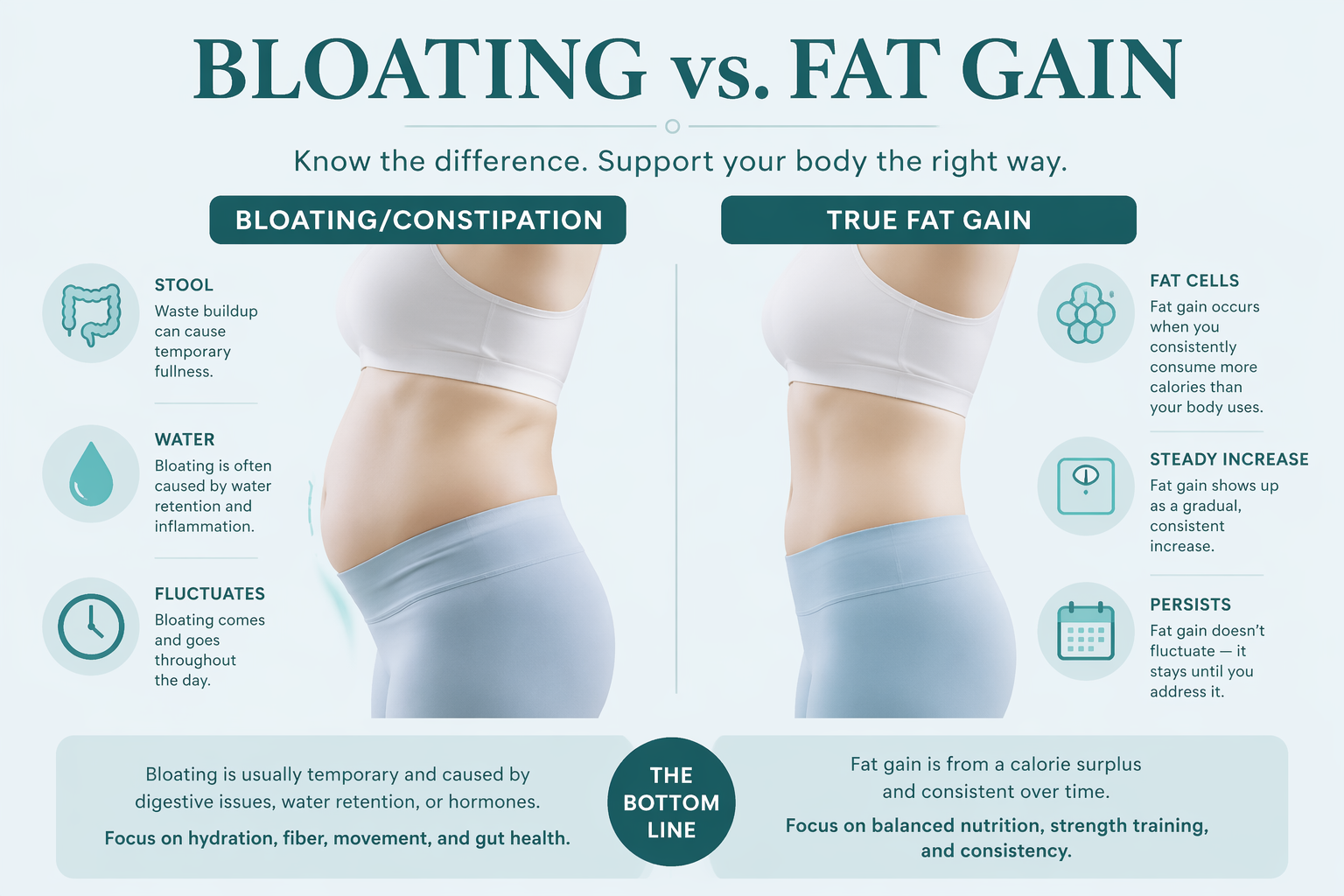
A flatter abdomen in the morning that looks fuller after meals or later in the day usually points to trapped gas, extra fluid, or constipation, not new body fat. That pattern fits abdominal bloating far better than true tissue gain. A short-term jump on the scale, especially with abdominal swelling, can reflect bloating, fluid shifts, or stool buildup rather than true fat gain (source).
Constipation can move the scale fast because stool and water stay in the colon. Your belly may feel firm, heavy, or stretched until bowel movements become more regular. In IBS, this can make bloating vs fat gain even harder to tell apart.
Tracking stool habits alongside weight gives you a clearer picture:
- Fewer bowel movements: Less frequent stools can point to constipation.
- Hard or lumpy stools: Stool may be moving too slowly.
- Straining or incomplete emptying: The colon may still hold stool.
- Day-to-day swings: This pattern fits bloating more than fat gain.
Daily weight alone can be misleading. A few morning readings over several days tell you more than one number after dinner. Persistent, gradual gain without those ups and downs is more consistent with body fat changes and deserves medical evaluation if it keeps going. If gas is part of the picture, excess gas in IBS may help you sort out one common source of discomfort.
Why Can IBS Change Your Weight?
IBS can change your weight because it changes how you eat, move, and feel. The pattern is usually a mix of small shifts, not one big cause. For many people, IBS and weight gain starts when symptom avoidance slowly changes daily habits.
Food changes often come first. If trigger foods feel risky, you may swap high-fiber meals for refined, calorie-dense options, skip meals, or reach for snacks that feel safer in the moment. That can add calories over time even when your appetite does not seem larger. Appetite can also move the other way, and losing your appetite with IBS during a flare can leave you eating far less for a few days and then more once symptoms settle.
Movement can change during flares too. If exercise, errands, or even leaving home feels uncomfortable, your daily activity often drops. Less movement means less energy burned, so weight gain can happen without a major increase in food intake. Long stretches of slumped desk sitting can add bloating pressure on top, as sitting posture and IBS explains.
The gut-brain axis can make the cycle stronger. When IBS keeps your nervous system on alert, stress and cortisol can rise, appetite cues can get mixed up, and comfort foods can feel harder to resist. For some people, emotional eating with IBS becomes part of the pattern. That same stress loop can show up on your skin, a pattern acne and IBS flares covers in detail.
Your gut bacteria matter as well. Gut microbiome and metabolism can shift when IBS-related dysbiosis changes how efficiently food is processed. In IBS-C, slower transit may increase bloating and changes in how food is fermented, which can affect how people feel after meals and may contribute to weight changes indirectly (source).
Weight can bounce around from day to day because several things overlap:
- Slower motility: More fullness and bloating in IBS-C
- Diet shifts: More or fewer calories than usual
- Activity changes: Less movement during flares
- Stress response: Appetite swings and comfort eating
That is why Irritable Bowel Syndrome can lead to weight gain, weight loss, or both. Practical IBS weight management starts with tracking patterns, not blaming yourself, because your weight changes are usually tied to symptoms, habits, and stress working together.
When Should Weight Change Prompt Medical Evaluation?
Unexpected weight change deserves a clinician visit when it doesn’t match your usual IBS pattern. A few pounds can come from constipation, bloating, or a flare. Weight loss or gain that is new, significant, or hard to explain should be checked.
A few details help separate fluid shifts, stool buildup, and true weight change:
- Age and sex: Your baseline risk and hormone patterns can change what matters most.
- IBS subtype: Constipation-predominant IBS often causes short-term scale jumps. Diarrhea-predominant IBS can lead to weight loss. Mixed IBS may swing either way.
- Timeframe: Changes over days often mean something different from changes over weeks or months.
- Pattern and symptoms: Note whether meals, bowel habits, bloating, pain, or appetite changed at the same time.
Some symptoms need faster evaluation because they can point to something other than IBS. Blood in the stool, rectal bleeding, persistent or severe abdominal pain, anemia, nighttime symptoms, or weight loss that keeps progressing all deserve prompt attention. Unexplained weight loss is not typical for IBS, and it can also raise concern for inflammatory bowel disease, celiac disease, SIBO, or bile acid malabsorption (BAM). Unexpected weight gain can sometimes happen with medications such as low-dose tricyclic antidepressants, including amitriptyline, which may increase appetite and slow metabolism.
A two-week log of weight, meals, bowel habits, and bloating can help a clinician see patterns more clearly and decide whether the change looks temporary or needs workup (source).
- Weight: same scale, same time each day
- Meals and snacks: what you ate and roughly how much
- Bowel habits: frequency, stool form, and straining
- Bloating timing: when it starts and how long it lasts
- Flare notes: pain, urgency, diarrhea, constipation, or fatigue
That record helps a clinician tell whether the pattern looks more like constipation, fluid retention, diet changes, or a separate medical problem. If the concern involves IBS signs in men, the same red flags still apply, and evaluation should not be delayed.
What Red Flags Suggest Another Condition?
Unexplained weight loss is the biggest warning sign that something other than IBS may be going on. The concern rises when it comes with diarrhea, blood in the stool, anemia, or symptoms that wake you at night, since those patterns fit IBS poorly and can point toward IBD or celiac disease. Significant weight gain or loss, rectal bleeding, severe pain, and symptoms that keep hanging on also deserve medical follow-up.
A simple way to think about it is this:
- IBS-C: Weight changes are often tied to constipation, bloating, or fluid shifts.
- IBS-D: Weight loss can suggest malabsorption, IBD, or BAM.
- Testing to prioritize: Celiac blood tests, inflammatory markers, stool studies, and BAM evaluation when diarrhea is ongoing.
- Other causes: Medication effects can change appetite, bowel habits, or body weight, and SIBO can overlap with IBS symptoms.
Unexpected weight change should be assessed by a healthcare professional so the real cause is found early.
How Can You Track Symptoms And Manage Weight Safely?
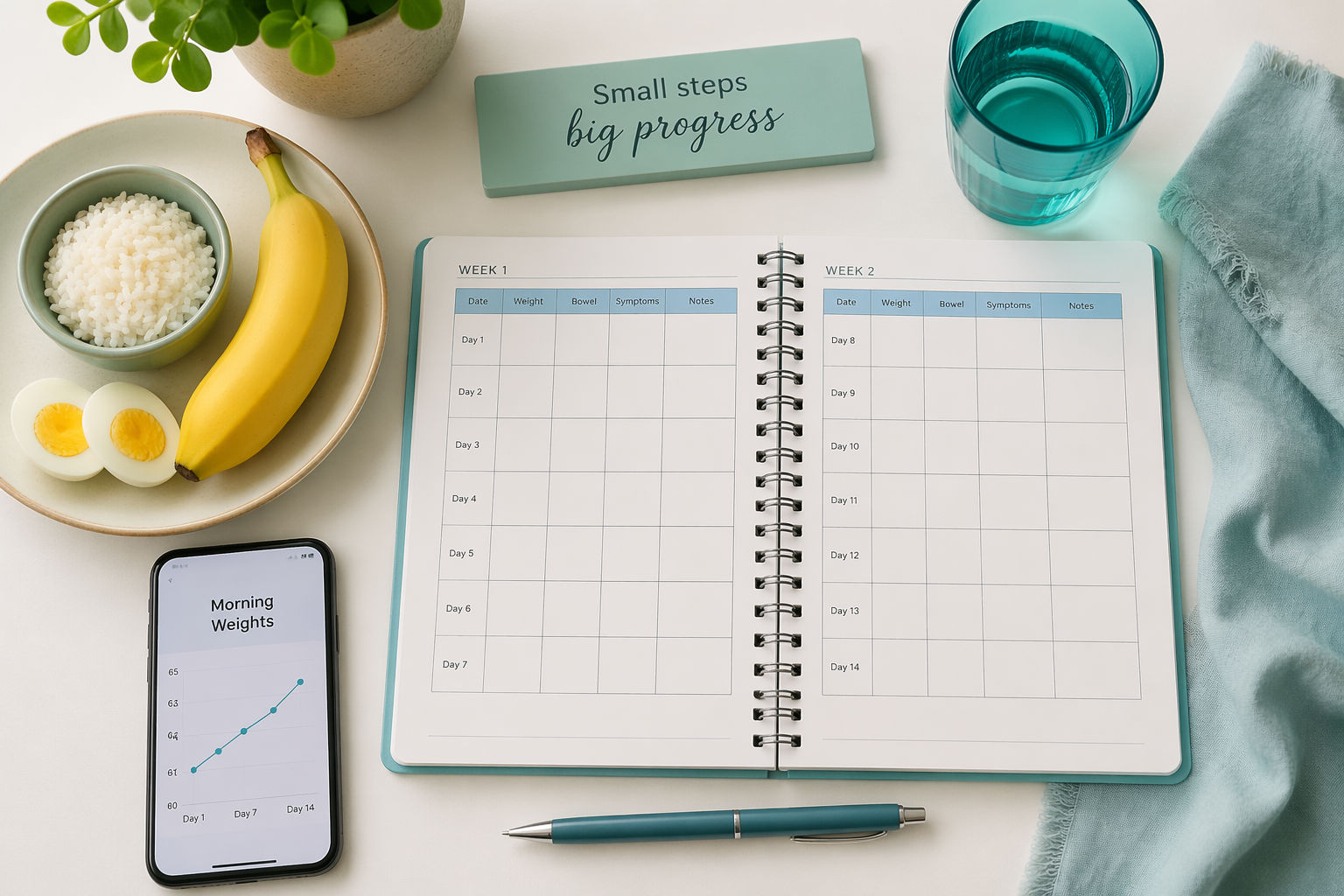
A simple log can help you connect meals, bowel habits, and weight changes so you have more concrete information to review with a clinician (source). Start with two weeks of notes on meal timing, portion size, morning scale weight, bowel pattern, bloating, and pain. That helps separate temporary bloating or constipation from true fat gain, and it can point to patterns tied to larger meals or specific foods.
Keep the log specific so it stays useful. A few details matter most:
- Food details: key ingredients, suspected trigger foods, and portion size
- Symptom timing: when bloating starts, when pain appears, and whether symptoms ease after a bowel movement
- Bowel pattern: stool frequency and stool form, using the Bristol stool chart if you already know it
- Weight trend: morning weight after using the bathroom, recorded under the same conditions each day
- Context clues: stress, sleep, skipped meals, or emotional eating with IBS
That kind of tracking helps you identify trigger foods and sort out food sensitivities IBS from other causes of weight change. It also shows which foods help you feel full, sit well, and fit your routine. From there, you can build meals around what your body handles best instead of guessing.
If several higher-FODMAP foods trigger symptoms, a short-term modified low-FODMAP plan may help ease symptoms while you sort out personal triggers (source). The goal is temporary symptom control, not lifelong restriction. When you consult a dietitian, reintroduction can happen in a structured way that protects nutrient-dense, high-fiber foods and reduces the chance of staying too limited.
Gentle habits matter too. Small frequent meals, steady hydration, walking, light yoga, and stress reduction can support symptoms and appetite. Skipping meals can worsen energy swings, and less activity during a flare can reduce calories burned. A steady routine also gives you a clearer read on whether changes are coming from IBS or from day-to-day habits.
Seek medical evaluation if weight change is rapid or unexpected, or if it comes with persistent diarrhea, blood in stool, vomiting, fever, or worsening pain. This content is for educational purposes only and is not a substitute for personalized medical advice. Digestive symptoms can have many causes, and results vary by person, so any dietary or supplement advice should be individualized.
How Do You Use A Food And Symptom Log?
A two-week log can help you compare meals, symptoms, bowel habits, and daily weight more clearly (source). Write down each meal or snack, portion size, time of day, drinks, stress level, and any symptoms that follow. Record your weight the same way each day, at the same time and under the same conditions, so you can compare trends instead of reacting to one number. Temporary shifts from bloating, stool buildup, or fluid can change the scale without meaning true fat gain.
Track bloating in a steady way. Note when it starts, how long it lasts, and whether it feels mild, moderate, or severe. Pair that with your bowel pattern so you can see whether it happens with constipation, diarrhea, or both. A stool scale such as the Bristol Stool Form Scale helps you describe what you pass, not just whether you went.
Look for repeating patterns across the log:
- Foods that repeatedly lead to bloating
- Larger portions that match higher morning scale readings
- Higher-calorie days that line up with gradual weight gain
- Constipation or incomplete emptying that explains weight changes
This record can help you identify trigger foods, spot food sensitivities IBS may be driving, and give your clinician or RD clearer clues for the next step.
What IBS-Friendly Foods Support Weight Goals?
The best IBS-friendly foods for weight support give you energy without setting off symptoms. A low-FODMAP diet starts with familiar staples like white or basmati rice, oats in a portion you tolerate, quinoa in a controlled serving, bananas, and blueberries. Those foods can help you build meals that feel safer and still support your weight goals.
A practical low-FODMAP foods list works best when you add protein to each meal:
- Eggs: an easy choice for breakfast or dinner
- Firm tofu: a flexible protein for bowls and stir-fries
- Lactose-free Greek yogurt: helpful when you want protein and creaminess
- Fish, chicken, and turkey: steady options for lunch and dinner
- Whey isolate low-FODMAP: a protein powder some people tolerate well
Calorie-dense fats can help when appetite is low. High-calorie safe foods often include extra-virgin olive oil, butter or ghee if dairy works for you, natural nut butters, and small amounts of MCT oil IBS plans sometimes use. One tablespoon of olive oil adds about 120 calories.
Try not to rely on refined carbs alone. Pair carbs with protein and fat so you stay fuller longer and avoid the crash-and-hunger cycle. If bloating, constipation, or diarrhea keeps showing up, trim your personal triggers first so swelling feels less like weight gain. A GI dietitian can help you choose meal replacement shakes, consult a dietitian about a modified plan, and reintroduce foods step by step so your diet stays varied and manageable.
IBS And Weight Gain FAQs
These FAQs look at why IBS and weight gain can show up together, including bloating, food changes, stress, hormones, and daily routines. They also help you sort out what may be expected, what needs a closer look, and what to ask next.
Some IBS medicines may affect appetite or body weight, while IBS itself is more often linked to bloating, constipation, or other symptom-related weight changes (source).
1. Can IBS Medications Cause Weight Gain?
Yes, some IBS medications can lead to weight gain even though IBS itself usually does not cause fat gain. Low-dose tricyclic antidepressants such as amitriptyline are a common example because they can calm gut nerves and slow diarrhea, but they may also increase appetite or slow metabolism in some people. If you notice steady weight gain, more hunger, or a clear change after starting a medicine, talk with your clinician about other options or a dose change.
2. Does IBS Cause Belly Fat Or Bloating?
IBS does not cause belly fat, but it can cause bloating and water retention that make your abdomen look or feel larger. If the swelling shows up after meals or later in the day and looks flatter by morning, it usually points to trapped gas or fluid rather than new visceral fat, which changes slowly. Tenderness, tight clothes, a visibly distended stomach, and a steady scale can all fit bloating even when you feel bigger.
3. Can Constipation Make Weight Fluctuate Daily?
Yes. Constipation can make your weight jump from one day to the next because retained stool, gas, and extra water can add temporary pounds, especially during an IBS-C flare or with IBS symptoms in women. That kind of change is usually short-lived, so weighing yourself at the same time each day, like in the morning after using the bathroom, helps you see the real pattern over several days instead of reacting to one reading. If the swelling or weight change keeps going, get medical advice.
4. Is Weight Gain Common During IBS Flares?
Weight gain isn’t a classic IBS flare symptom, but it can happen when a flare changes how you eat, move, and handle stress. You may lean on low-fiber “safe” foods like white bread, crackers, or plain pasta, move less because pain or urgency makes exercise harder, and see anxiety or chronic stress shift appetite through the gut-brain axis. Some IBS medicines can also affect weight, so persistent or unexplained changes deserve a check-in with a healthcare professional, while balanced portions, gentle movement, and tracking bloating versus true gain can help.