


IBS mucus in stool is usually a normal sign of bowel irritation, not an automatic warning of something serious. For adults and families living with IBS, knowing what mucus looks like and when it changes helps separate a routine flare from a problem that needs care.
My Good Gut covers what clear, white, yellow, red, or black mucus can mean, how IBS-D and IBS-C can affect stool, and when to think about infection or inflammatory bowel disease. It also explains what to track, how low-FODMAP eating, fiber, hydration, probiotics, and stress care fit into symptom management, and which red flags call for testing or a doctor visit.
That matters now because mucus can be alarming even when it fits a familiar IBS pattern, while blood, fever, weight loss, or new pain can point to a different cause. A simple stool log can show whether mucus appears after onions, stress, or constipation, and that detail can make the next appointment more useful. Read on for clear next steps that help turn uncertainty into a plan.
IBS Mucus in Stool Key Takeaways
- Small amounts of clear, white, or off-white mucus can be normal in IBS.
- IBS-D often makes mucus easier to notice in loose stool.
- IBS-C can also cause mucus as the bowel adds lubrication.
- Blood, black stool, fever, or weight loss need prompt medical review.
- Color and texture help, but they cannot diagnose the cause alone.
- Low-FODMAP changes, soluble fiber, hydration, and stress care may reduce flares.
- Persistent or changing mucus may need stool tests or colonoscopy.
What Does IBS Mucus In Stool Usually Look Like?
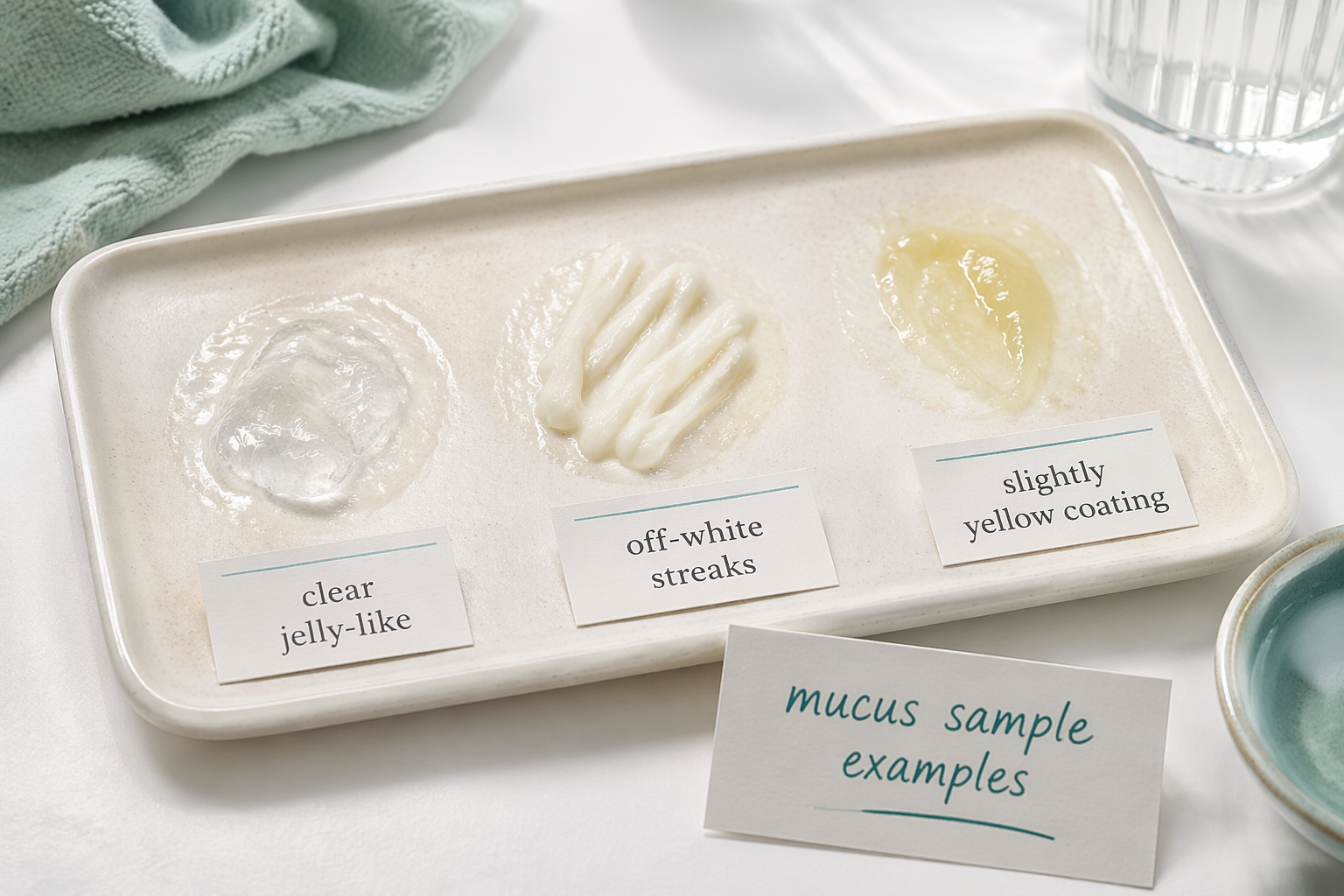
Mucus in stool is a common symptom of Irritable Bowel Syndrome (IBS), one of many IBS symptoms and types, so a small amount does not automatically mean something serious is wrong. In IBS mucus in stool, the mucus is usually clear, white, slightly yellow, or off-white. It often looks like jelly-like mucus, and it may seem slippery or stringy instead of thick, opaque, bloody, or tarry.
The amount is often small. You might notice a light coating on the stool, a few streaks, or mucus on toilet paper. The colon naturally makes mucus to protect the lining, reduce friction, and help stool move through more easily. That is why common IBS symptoms often include mucus in poop along with other bowel changes.
Mucus alone is usually more reassuring when it appears with a typical flare-up and familiar symptoms such as abdominal cramping, bloating, gas, and changes in bowel habits. White mucus in stool can still feel alarming, even when it is not dangerous. Small amounts of mucus in stool are often benign, but mucus with blood, pain, fever, weight loss, or a new pattern needs medical review (source).
Signs that deserve medical evaluation include these:
- Blood: red mucus, black stool, or tarry stool
- Persistence: mucus that keeps happening without your usual IBS pattern
- Pain: worsening abdominal pain or new severe cramping
- Systemic symptoms: fever, weight loss, or feeling unwell
If the pattern changes or red flags show up, get checked to rule out infection, inflammatory bowel disease, or another cause.
Why Does IBS Cause Mucus In Stool?
In IBS, your bowel still makes mucus for a normal reason. Intestinal mucus production can become more visible during a flare. In a sensitive gut, even mild irritation can show up as visible IBS mucus in stool on the surface or mixed through it.
Several IBS changes can make that mucus easier to notice:
- Stronger or uncoordinated contractions: The bowel may squeeze too hard or too quickly during a flare. That effect is most noticeable in diarrhea-predominant IBS and IBS-D, because loose stool moves fast and exposes mucus more clearly.
- Low-grade irritation: Mild inflammation and ongoing gut irritation can stimulate mucus-producing goblet cells. The result can be a jelly-like coating or stringy mucus without pointing to a dangerous condition on its own.
- Subtype differences: IBS-D often comes with more visible mucus, but IBS-C can also cause it. In IBS-C, the rectum may add extra lubrication to help hard, dry stool pass.
- Stress and the brain-gut link: Anxiety, tension, and poor sleep can heighten sensitivity and tighten contractions. That is one reason stress triggers IBS flares even when meals stay the same.
A recent review on gut barrier and immune signaling in IBS supports the link between mild inflammation, motility changes, and mucus shifts (source).
The practical takeaway is simple. Focus on calming the flare, reducing your personal triggers, and improving overall IBS control rather than trying to eliminate mucus itself. Persistent, worsening, or bloody mucus should prompt medical review.
How Can You Tell If It’s An IBS Flare?
A routine IBS flare usually looks like your usual pattern, not a brand-new problem. If mucus shows up with abdominal cramping, bloating and gas, and a shift in stool form or frequency, it is more likely to fit your IBS history than to point to something new.
Timing matters too. Mucus that appears during a flare you have felt before is often part of that pattern. Mucus that starts after a quiet stretch, appears suddenly, or feels very different from past episodes deserves closer attention.
The bowel pattern also helps your clinician sort out what is going on. That includes whether the flare is more constipation-leaning or diarrhea-predominant IBS, since that context changes how the symptoms are interpreted. People with urgency can also find IBS urgency prevention tips helpful when stool changes are part of the picture.
Changes in the mucus itself matter as well. A large increase, a new color, or a different texture can suggest infection or inflammatory bowel disease rather than a typical IBS flare.
Seek medical evaluation if mucus shows up with warning signs like these:
- Blood: bright red blood, black stool, or tarry stool
- Fever or weight loss: fever or unexplained weight loss
- Night symptoms: waking from sleep to pass stool or mucus
- Different pain: pain that feels unlike your usual IBS symptoms
A short symptom log can make the pattern clearer. Track meals, stress, stool changes, and mucus episodes so you and your clinician can compare what is normal for you with what needs testing. That log is especially useful when you are deciding when to see a doctor for mucus in stool.
What Do Mucus Colors And Textures Mean?
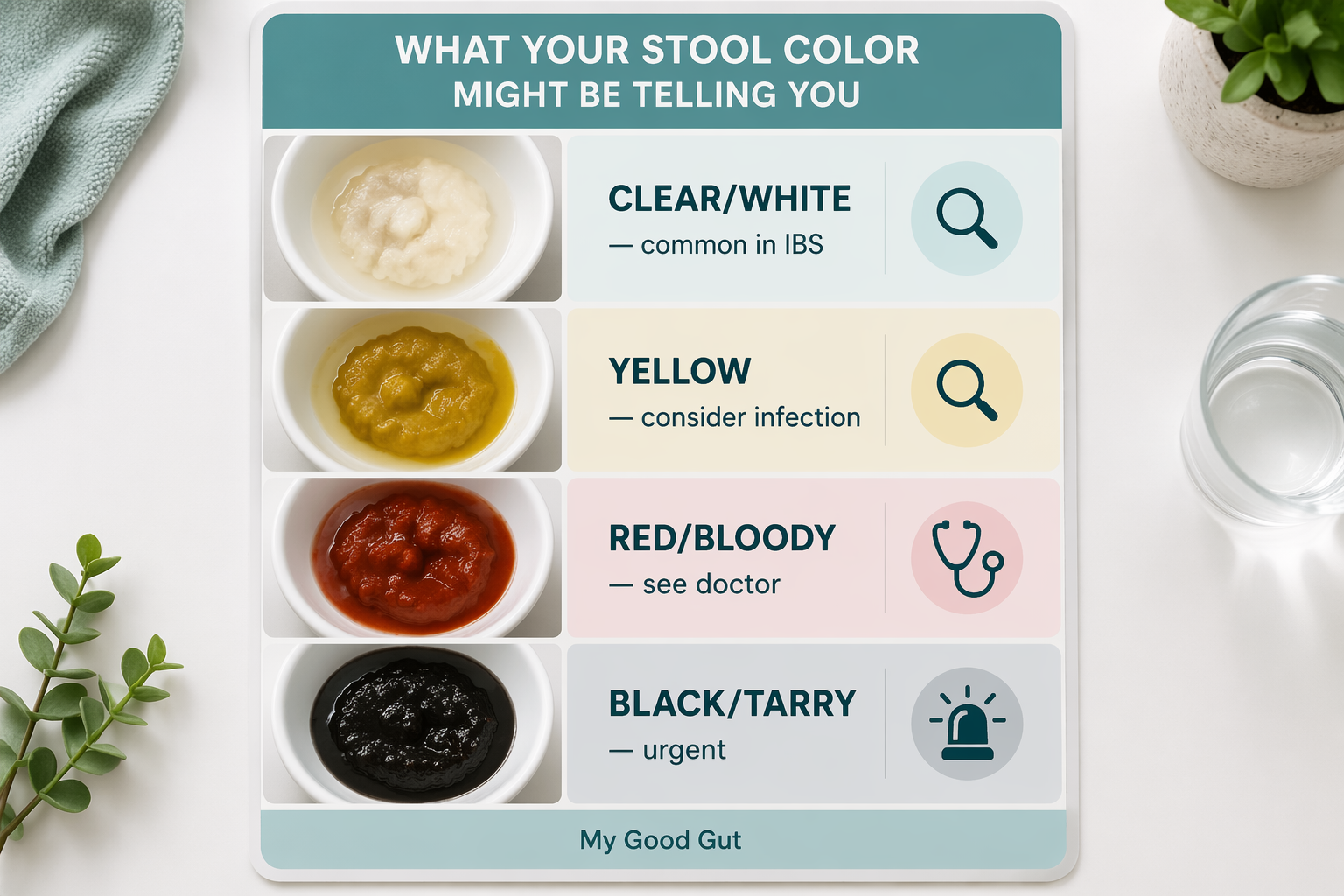
Color and texture can guide you, but they can’t diagnose the cause on their own. Your intestinal mucus production is normal, and a small amount of white mucus in stool or clear mucus can show up with IBS. A small amount of white mucus in stool or clear mucus can show up with IBS. The pattern matters more than one bowel movement, especially when the mucus is new or comes with pain, fever, or diarrhea.
A simple color guide can help you tell what is more likely to fit IBS and what needs medical attention:
Mucus look | More likely cause | Next step |
|---|---|---|
Clear, white, or slightly off-white | Normal mucus or an IBS flare | Watch briefly if it matches your usual symptoms |
Yellow or green | Infection or stronger irritation | Check in with a clinician if it lasts, worsens, or comes with fever |
Pink, red, or blood-streaked | Bleeding, hemorrhoids, fissure, inflammation, or another condition | Contact a healthcare professional promptly |
Black or tarry | Possible bleeding higher in the digestive tract | Seek urgent medical advice right away |
Texture gives another clue. Small amounts of jelly-like mucus can fit an IBS flare, especially when it shows up with cramping, bloating, and relief after a bowel movement. Watery mucus or a sudden flood of mucus is more concerning for infection or inflammation. That pattern should not be treated like a routine IBS change.
Color and texture together help with differentiating IBS vs IBD. If the mucus looks familiar and you do not have red flags, short-term home monitoring is reasonable. If it comes with persistent fever, unexplained weight loss, night pain, nocturnal symptoms, new bowel changes after age 50, or symptoms lasting more than two weeks, testing for inflammatory bowel disease, infection, celiac disease, or another cause may be needed.
Mucus with blood is not something to brush off. Bloody mucus in stool can point to hemorrhoids or a small tear, but it can also signal inflammation or something more serious. Bright red blood that mixes into stool or turns the toilet water red deserves prompt medical attention. Black, tarry mucus is even more urgent, especially if you also feel dizzy, weak, or in pain.
If your clinician wants a workup, fecal calprotectin can help show whether inflammation is more likely. Further testing colonoscopy may be needed when the pattern does not fit IBS alone.
How Do You Manage IBS Mucus At Home?

The management of mucus in stool starts with the bowel pattern behind it, not the mucus itself. In IBS, mucus often eases when you reduce bowel irritation, stool irregularity, and cramping. That can happen with IBS-D, IBS-C, or IBS-M, depending on the bowel pattern driving the flare.
A short-term low FODMAP diet can help you identify food triggers. FODMAP stands for fermentable oligo-, di-, mono-saccharides and polyols. These carbs can ferment in the gut and raise gas, pain, and urgency in some people. A food and symptom diary can help you spot repeat food triggers for IBS, including onions, garlic, wheat-heavy foods, beans, dairy, caffeine, carbonated drinks, fatty foods, spicy foods, and certain fruits or sweeteners.
If gas is part of the picture, get rid of IBS gas by tracking the same patterns.
Soluble fiber is often a better long-term tool than a fast fix. Oats, chia, and psyllium can help firm loose stools or soften hard stools. Fiber should go up slowly. It also needs enough fluid, since too much too fast can worsen bloating or cramps.
Hydration matters more than it seems. Water and warm liquids like herbal tea can help stool move more predictably. That is especially useful when you are adding fiber, dealing with diarrhea, or becoming constipated after travel, stress, or a diet change.
Stress care belongs in IBS care because stress triggers IBS symptoms through the gut-brain connection. Evidence-based options include Cognitive Behavioral Therapy (CBT), relaxation breathing, yoga, meditation, and other calming routines. These approaches do not erase every flare, but they can reduce urgency and symptom swings over time.
Medication choice should match the bowel pattern behind the mucus:
- Loose stools: antidiarrheals may help slow bowel activity
- Constipation: laxatives may help stool pass more easily
- Cramping: antispasmodics may help ease spasms and pain
Some people also try probiotics, but results vary and provider guidance is still important. New or worsening mucus with blood, fever, severe pain, or infection-like symptoms needs prompt medical review. Persistent symptoms deserve follow-up, especially if your management of mucus in stool is not improving despite diet, stress, and bowel-habit changes.
When Should You Get Testing Or See A Doctor?
New mucus should get medical review when it is new, larger than usual, lasts more than a few weeks, or shows up with a shift away from your usual IBS pattern. Ongoing mucus can point to something beyond IBS, especially when it comes with pain, bleeding, fever, or weight loss. The non-IBS causes of mucus in stool cover infection, IBD, hemorrhoids, and proctitis in more detail.
A clinician usually starts with a careful history and physical exam. Questions often cover recent travel, food poisoning, antibiotic use, constipation, diarrhea, stress-related flares, and family history of inflammatory bowel disease, celiac disease, or colorectal cancer. That context helps with differentiating IBS vs IBD and deciding whether the pattern still fits IBS.
Stool testing is often the next step when symptoms do not look typical. Common checks include:
- Stool culture: looks for bacterial infection
- Parasite testing: becomes more useful after travel or known exposure
- Fecal calprotectin: screens for intestinal inflammation
- Stool blood testing: helps check for hidden bleeding
Blood work can add more clues:
- Complete blood count: looks for anemia or infection
- Inflammatory markers: support the search for inflammation
- Celiac testing: makes sense when diarrhea, weight loss, bloating, or nutrient problems raise concern for gluten-related disease
Further testing colonoscopy is usually considered if stool or blood tests suggest inflammation, if bleeding is unexplained, if stool is black and tarry, or if symptoms are severe, worsening, or no longer match your usual IBS pattern. Colonoscopy is especially important when bowel changes persist after age 50.
Urgent evaluation is needed for these red flags:
- Blood in the stool
- Black stool
- Unexplained weight loss
- Persistent fever or chills
- Severe abdominal pain that wakes you from sleep
- Vomiting
- Sudden bowel changes after age 50
- Mucus with marked fatigue or dehydration
- Mucus with blood or bloody mucus in stool
Clear testing can help you separate a flare from something more serious and guide the management of mucus in stool with less guesswork.
IBS Mucus In Stool FAQs
These FAQs cover the most common concerns about mucus in stool, mucus in poop, and whether a low FODMAP diet may fit into IBS care. They can help you sort out what feels normal, what needs attention, and what to ask next.
1. How Common Is Mucus In IBS?
Mucus in stool is a common IBS symptom, and studies report it in about 50% to 60% of people with IBS. IBS affects roughly 10% to 15% of people overall, with some global studies citing about 10% to 20%, so it’s a frequent explanation when mucus shows up without bleeding, fever, or weight loss. IBS often starts in the 20s or 30s and is more common in women, which matches many people who notice this symptom.
2. Is IBS Mucus More Common With Constipation?
Mucus is often easiest to notice with IBS-D, where stronger contractions and irritation can make it show up as visible, jelly-like mucus in loose stool. It can also happen with IBS-C and mixed IBS, because the rectum may add mucus to help hard, dry stool pass more easily. Stress, low-grade inflammation, and bowel spasms can overstimulate mucus-producing cells, which is why the amount you see can change from day to day.
3. Can Stress Trigger IBS Mucus?
Yes, stress can trigger IBS mucus because the brain-gut axis can change how your bowel moves, which may increase mucus and other symptoms. Flare-ups often happen during anxiety, pressure, or poor sleep. Evidence-based options that may help include CBT, relaxation practices, and gut-directed hypnotherapy. Tracking your stress in a symptom log or food diary can help you spot patterns and find what eases symptoms most.
4. What Does Clear Mucus In Stool Mean?
Clear mucus in stool is often a normal lubricant in IBS, especially during a flare with cramping, bloating, gas, or changed bowel habits, and mucus by itself is usually not alarming. Small amounts can happen when the bowel is irritated, but clear or white mucus is more typical of IBS than bloody, tarry, yellow, or otherwise discolored mucus, which deserves closer attention. If the mucus is clear and matches your usual IBS pattern, monitoring is reasonable, but persistent, heavy, or sudden changes with red-flag symptoms mean you should contact your doctor.
Sources
- source: https://my.clevelandclinic.org/health/symptoms/mucus-in-stool
- source: https://www.niddk.nih.gov/health-information/digestive-diseases/irritable-bowel-syndrome/symptoms-causes
- source: https://doctordemaria.com/en/mucus-in-stool/
- source: https://www.niddk.nih.gov/health-information/digestive-diseases/irritable-bowel-syndrome/definition-facts
- doi: https://doi.org/10.1038/s12276-023-00960-y