


IBS gas is usually caused by a mix of gut sensitivity, slower movement, and food fermentation, and adults and families living with IBS need clear steps that match the pattern. Irritable Bowel Syndrome can make normal amounts of gas feel painful, trapped, or constant because the bowel reacts more strongly than expected.
The sections ahead cover how IBS gas happens, which triggers make it worse, and how to sort out gas linked to constipation, diarrhea, or mixed bowel habits. They also cover low-FODMAP food changes, symptom tracking, OTC relief options, and the warning signs that point to medical review.
That matters now because busy people like Emily Rivera and Olivia Martinez need relief that fits real schedules, not broad claims that ignore diet, stress, and bowel pattern. A single lunch with onions and soda can leave one person with hours of pressure, so the right next step is to match the fix to the trigger and know when to get help. Keep reading for a practical path from symptom to action.
IBS Gas Key Takeaways
- IBS gas often comes from sensitivity, slowed motility, and fermentation, not excess gas alone.
- FODMAP foods, carbonated drinks, gum, and rushed meals can worsen gas.
- Constipation can trap gas, while diarrhea and mixed IBS change the pattern.
- Start with slower eating, gentle movement, and smaller meals for low-risk relief.
- A short low-FODMAP trial can help identify personal trigger foods.
- Lactase, alpha-galactosidase, simethicone, and peppermint oil may help specific symptoms.
- Red flags like bleeding, weight loss, fever, or severe pain need prompt medical review.
What Is IBS Gas And Why Does It Happen?
IBS gas often feels less like normal flatulence and more like pressure that builds and stays put. In Irritable Bowel Syndrome (IBS), that discomfort joins other core IBS symptoms such as bloating, cramping, trapped gas, belly pain, and frequent passing of gas. Many people also notice it alongside diarrhea, constipation, or bowel habits that swing between both patterns.
IBS does not always mean your body is making too much gas. Many people produce a normal amount of intestinal gas, but the gut reacts to that gas in a stronger way. That is why IBS symptoms can feel so disruptive even when nothing dramatic seems to be happening inside the bowel.
Visceral hypersensitivity is the term for that extra sensitivity. It means the nerves in your gut send a louder pain signal than expected when the bowel stretches or fills with gas. A small amount of pressure can feel like sharp pain, tightness, or a heavy, pressurized squeeze. This is one of the main reasons painful gas and bloating can feel out of proportion to the trigger. That same nerve signal explains the cramping pain from IBS that often builds before trapped gas finally moves.
Bloating and distension are related, but they are not the same thing. Bloating is the feeling of fullness, swelling, or pressure. Distension is the visible increase in belly size that other people may notice. Both are common in IBS gas and bloating, and both can feel more upsetting than pain alone.
The difference is easier to see side by side:
Symptom | What it feels or looks like | Why it matters in IBS |
|---|---|---|
Bloating | Full, tight, swollen, or pressurized | Often comes from heightened sensitivity |
Distension | Visible belly enlargement | Can happen when gas and pressure build |
Trapped gas | Hard to pass gas or release pressure | Often linked to slower movement through the gut |
Movement matters too. When the intestines do not push gas forward efficiently, gas can seem trapped in one spot. That uneven movement lets pressure build and makes it harder to pass gas comfortably. The mechanisms of bloating in IBS are often tied to slower or irregular motility, not just to what you ate.
The intestinal gas physiology behind IBS is still being studied, but the broad picture is fairly steady. Medical literature has not shown a reliable increase in gas production inside the body as the main driver of symptoms. Instead, the symptom burden usually comes from sensitivity plus movement problems.
That matters because it gives you a more realistic starting point for relief. Focusing on triggers, easing pressure, and using simple self-care often helps more than trying to eliminate every trace of gas. Posture and movement matter too, which is why posture and trapped gas and the bloating and weight gain pattern are worth a look. A calmer approach can help you make sense of your symptoms and choose strategies that fit real life.
Which Triggers Make IBS Gas Worse?

Several things can make IBS gas worse, and food is only part of the picture. In IBS, gas often builds up when dietary triggers meet a sensitive gut, slower movement through the intestines, or a stressful day. That mix can make normal digestion feel loud, tight, and uncomfortable.
One major driver is bacterial fermentation. Some carbohydrates are poorly absorbed in the small intestine, so they reach the large intestine where gut bacteria break them down and produce gas. These fermentable oligosaccharides, disaccharides, monosaccharides, and polyols, or FODMAPs, are common in onions, garlic, beans, wheat, certain fruits, and some dairy foods. Many people also react to broccoli, cabbage, fructose-heavy fruits, and sorbitol, which is a polyol sweetener. A supervised low-FODMAP plan can help you reduce gas-producing carbohydrates without making every trigger off-limits forever.
Some of the most frustrating gas symptoms come from air, not food. Swallowing air can happen when you eat too quickly, talk while chewing, drink carbonated beverages, use straws, or avoid chewing gum. That extra air can worsen burping, pressure, and bloating even if your meal looks harmless on paper.
Trigger type | Common examples | Why it matters |
|---|---|---|
Fermentation | Onions, garlic, beans, wheat, lactose-containing dairy, some fruits, sorbitol | Gut bacteria break these down and make gas |
Air swallowing | Fast eating, straws, gum, soda, talking while chewing | Adds air to the digestive tract |
Motility changes | Delayed bowel movements, irregular stools | Gas can feel trapped and harder to pass |
Stress and anxiety | Busy days, tension, poor sleep | Can raise sensitivity and change gut movement |
Gut motility also plays a role. When movement through the intestines slows down, gas can linger and feel trapped. That is why IBS gas often shows up after a delayed or incomplete bowel movement. Slow gut motility is not the only cause, but it can make pressure and bloating feel much stronger.
The gut microbiome matters too. Shifts in the balance of gut bacteria can change how much gas is produced from the same meal, which helps explain why one lunch feels fine on Monday and heavy on Tuesday. Stress and anxiety can add another layer. They may affect gut movement and make you more aware of normal amounts of gas, so a flare during a tense week often reflects food choices, eating habits, and emotional strain together rather than one single cause.
A practical first step is to look for patterns instead of blaming one food right away:
- Track high-FODMAP meals that match your symptoms.
- Eat more slowly and drink fewer carbonated beverages.
- Notice whether stress, skipped meals, or constipation comes first.
- Keep a short food and symptom log for a few days.
How Should You Triage IBS Gas Step By Step?
Start by screening for red flags before you treat this like routine IBS gas. Unexplained weight loss, rectal bleeding or blood in the stool, fever, unexplained vomiting, severe diarrhea that wakes you at night, and sharp abdominal pain that does not ease after passing gas or having a bowel movement all deserve prompt medical attention.
If no red flags are present, sort out the pattern and try simple at-home relief for a short period, such as one to two days, while watching for changes in stool pattern and symptom triggers (source). Gas that shows up with constipation often points to slow gut motility, which gives bacteria more time to ferment food and can make gas feel trapped. Gas that tracks with diarrhea may fit IBS-D, while symptoms that swing between both bowel habits often suggest mixed IBS.
A simple comparison can help you triage what you’re feeling:
Pattern clue | What it may suggest |
|---|---|
Gas plus infrequent stools, straining, or hard stool | IBS-C or constipation-related trapping |
Gas plus loose stools, urgency, or frequent bowel movements | IBS-D or diarrhea-predominant flares |
Gas that alternates with constipation and diarrhea | Mixed IBS |
Gas that gets worse after meals | Food fermentation, swallowed air, or trigger foods |
Gas that eases after passing stool | Pressure from bowel backup rather than a new problem |
If the pattern looks familiar and there are no warning signs, use short-term at-home triage for a day or two. Pause obvious trigger foods, eat smaller meals, slow down while eating to reduce swallowed air, and use other low-effort relief steps that already fit your routine. Light exercise after a meal can also help move gas through without much strain.
A focused symptom check helps separate a usual flare from something new. Write down your main symptoms, how long they’ve been happening, your age, and which foods or remedies you have already tried. That record makes it easier to judge whether the clinical management of IBS should stay with self-care or move toward a medical review.
Move on to a clinician visit if the gas is persistent, getting worse, or keeps coming back even after simple diet and routine changes. Pelvic floor problems and altered gut motility can trap gas, and exocrine pancreatic insufficiency (PEI) can look similar when malabsorption is part of the picture. A clinician can sort out those atypical cases and decide whether testing or targeted treatment is needed.
When bowel symptoms overlap, trapped gas can arrive alongside sudden bowel urgency, and the two patterns are easy to confuse. The American Gastroenterological Association also offers patient education that supports symptom review and next-step discussions with a healthcare professional (source).
A simple rule works well here:
- Seek urgent care if red flags are present.
- If they are not, identify the bowel-pattern clue and try short-term relief.
- Arrange review if symptoms are severe, changing, or not improving.
Over-the-counter gas treatments may help some people, but they should support, not replace, proper evaluation when the pattern does not fit your usual IBS.
How Do You Start A Low-FODMAP Plan?
A low-FODMAP start works best when you treat it as a short test, not a forever plan. The main goal is to reduce gas-producing carbohydrates long enough to settle symptoms, then use a structured reintroduction plan to identify your personal dietary triggers.
The elimination phase is usually short term, and many clinical guides recommend starting with a brief trial before reintroducing foods in a structured way (source). During that time, you remove the biggest FODMAP sources, including onions, garlic, wheat-based foods, beans, certain fruits, some dairy products, and sugar alcohols. Even a small serving can still trigger symptoms if it contains enough fermentable carbohydrate to drive bacterial fermentation in the gut.
Practical portions make the plan easier to follow, and they matter just as much as food choice. Lower-FODMAP foods are usually better tolerated in smaller servings, while larger portions of common triggers can bring symptoms back:
Usually easier choices | Foods to limit or avoid at first |
|---|---|
firm banana | beans |
berries | cabbage |
rice | broccoli |
oats | cauliflower |
eggs | apples |
lactose-free yogurt | pears |
bell pepper | regular milk |
zucchini |
A simple plate might include eggs with oats and berries at breakfast, rice with zucchini and chicken at lunch, and lactose-free yogurt with a small serving of firm banana as a snack. Soluble fiber can also help some people during this phase, especially if constipation is part of your IBS pattern. Psyllium fiber is a common option because it can support stool consistency without adding as much fermentable load as some other fibers.
After symptoms settle, reintroduce foods one FODMAP group at a time. Keep the rest of your diet steady so you can see whether the reaction is tied to dose, timing, or a specific carbohydrate type. A simple challenge process looks like this:
- Pick one group, such as fructans or lactose.
- Test one food from that group.
- Increase the portion a little each day.
- Pause with a washout period before the next challenge.
- Move on only after your symptoms return to baseline.
After symptoms settle, reintroduce foods one FODMAP group at a time and increase the portion gradually over several days so you can see whether symptoms return (source, source).
Targeted challenge foods help you narrow down the exact source. Onion or garlic can test fructans, milk or soft cheese can test lactose, apples or honey can test excess fructose, and beans or lentils can test galacto-oligosaccharides. Track gas, bloating, pain, stool urgency, and how quickly symptoms show up after eating.
A simple journal makes patterns easier to spot. Write down what you ate, the portion size, when symptoms started, and how strong they felt. Symptoms that begin soon after a meal often point to a specific trigger, while all-day discomfort can suggest a higher overall FODMAP load or a broader IBS pattern.
A registered dietitian can help you do this safely, especially if your diet is already limited, you have weight loss, or you’re worried about nutrients. Dietitian support also helps prevent long-term restriction on the FODMAP diet and keeps your low-FODMAP diet from becoming more restrictive than it needs to be.
The goal is to find your own threshold, not avoid every trigger forever. If symptoms are severe, getting worse, or come with red flags, seek medical review instead of adding more diet changes on your own.
Which Relief Options Work Best First?

The best first step is usually the simplest one. Start with low-risk habits that help gas move through your body before you reach for a product.
A few changes often make a real difference:
- Eat more slowly and chew well.
- Cut back on gulping air from gum, straws, fizzy drinks, or rushed meals.
- Take a short walk after eating.
- Try gentle position changes, such as lying on your left side or bringing your knees up briefly, to help trapped gas pass.
- Use light exercise after a meal when you feel full or bloated.
If food seems to be the main trigger, a short-term low-FODMAP approach can help you spot patterns. FODMAPs are certain carbs that ferment more easily in the gut, which can raise gas for some people. Gradual fiber changes often work better than sudden jumps.
Soluble fiber is often the safer place to start. Psyllium fiber and oats may support stool movement and can also ease gas for some people. Insoluble fiber, such as bran, can make bloating worse if you add it too quickly or skip enough water.
If you can tie symptoms to specific foods, targeted digestive enzymes are a smart next step. Alpha-galactosidase can help break down the complex sugars in beans and some vegetables. Lactase can help when dairy is the problem. These digestive enzymes are best for targeted relief, not a cure.
For pressure, fullness, or gas that feels stuck, simethicone is a reasonable over-the-counter option. It helps small gas bubbles join together so they are easier to pass. It may ease trapped gas, even though it does not treat the root cause. These over-the-counter gas treatments can be a useful bridge while you sort out triggers.
Peppermint oil for IBS can also help if your pattern includes cramping, bloating, or spasms after meals. Enteric-coated capsules are the form most often used because they pass through the stomach first. If a brand like IBGard comes up in your search, the delivery form matters more than the label itself.
If constipation is part of the picture, treat the constipation first. Backed-up stool can trap gas and make pressure feel worse. Soluble fiber may help here too, and some people use polyethylene glycol, such as MiraLAX, or magnesium, depending on their situation and medical history.
A quick guide can help you choose what to try first:
Symptom pattern | Best first option |
|---|---|
Meals feel rushed and air swallowing seems likely | Slow eating, light exercise after a meal, and gentle movement |
Gas follows beans, lentils, or some vegetables | Alpha-galactosidase |
Dairy brings on symptoms | Lactase |
Pressure or visibly trapped gas | Simethicone |
Cramping and post-meal spasms | Enteric-coated peppermint oil |
Constipation plus gas | Soluble fiber, then constipation treatment if needed |
If symptoms are frequent but not severe, a probiotic may be worth a short trial, but results vary and the evidence is mixed (source). It should not replace medical care when symptoms are persistent, severe, or getting worse.
Digestive symptoms can have many causes. If your gas changes suddenly, becomes painful, or keeps disrupting daily life, a qualified healthcare professional can help you sort out the cause and choose the right next step.
How Can You Track Symptoms And Know When To Escalate?
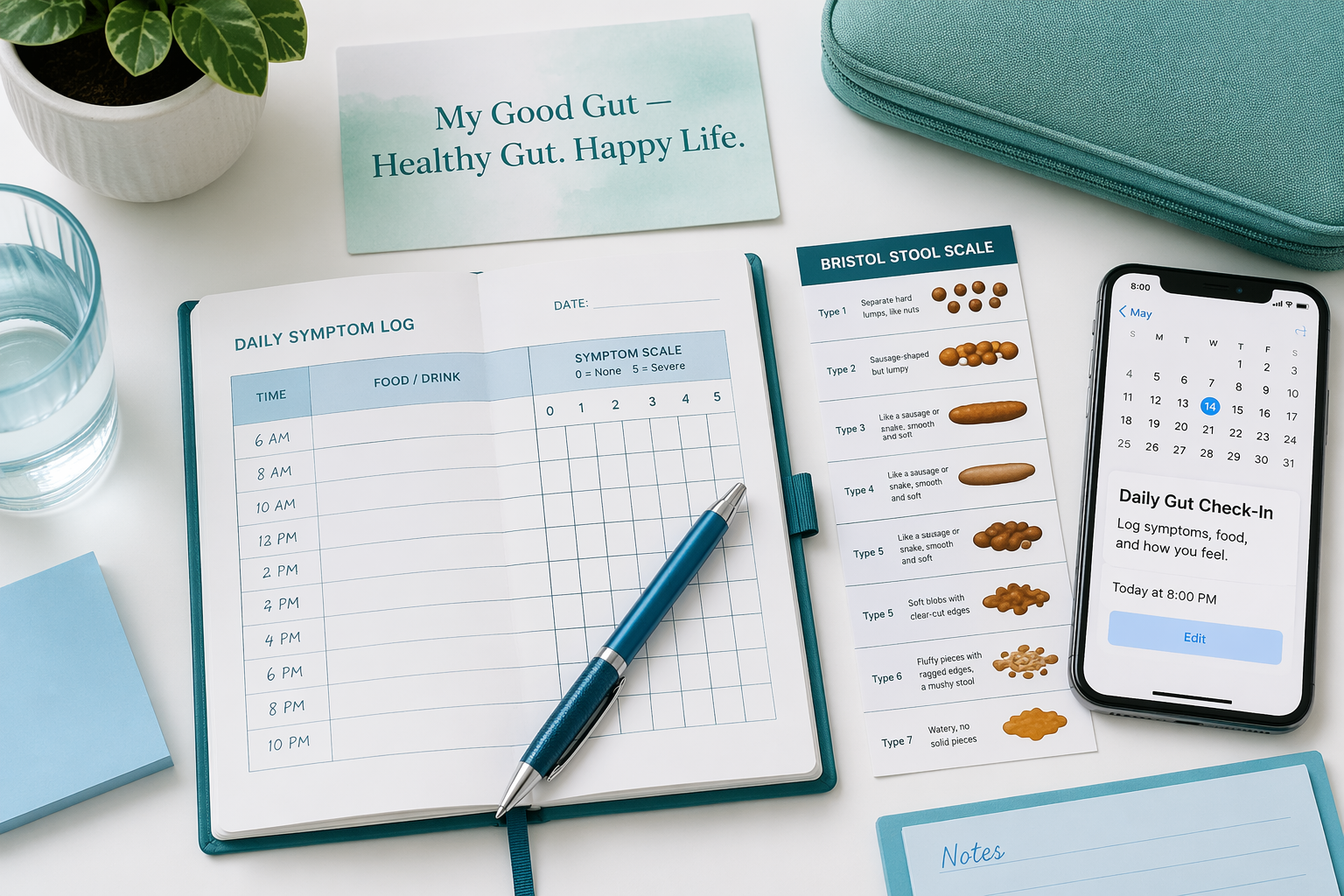
A simple symptom log can make your IBS gas pattern easier to see. It also helps you and your clinician tell whether the pattern looks constipation-predominant, diarrhea-predominant, or mixed.
Track a few details each day:
- Timing: when gas, bloating, or pain starts and how long it lasts
- Food window: food tracking should cover the meals and snacks that came before symptoms, and a short food diary can help identify personal triggers over time (source).
- Stool type: use the Bristol Stool Scale in plain terms, such as hard pellets, formed logs, loose pieces, or watery stool
- Pain details: where the discomfort is, how strong it feels, and whether it moves
- Relief response: whether symptoms ease after passing gas or having a bowel movement
Pattern matters more than perfect record-keeping. A few notes each day are enough if they stay consistent.
Progress is easier to spot when you track a few simple metrics instead of relying on a vague sense of better or worse. Those metrics can also support the clinical management of IBS by showing what is changing and what is not.
What to watch | Signs of progress |
|---|---|
Gas episodes | Fewer episodes or less pressure |
Bloating | Less visible distension or tightness |
Flare length | Shorter episodes that settle faster |
Night symptoms | Fewer wake-ups from gas, pain, or diarrhea |
Bowel pattern | More predictable stools and timing |
Rescue measures | Less need for antacids, laxatives, anti-gas medicine, or urgent bathroom trips |
Your log can also guide next steps. If symptoms cluster after high-FODMAP foods, a low-FODMAP or trigger-food pattern may fit better. If gas shows up with constipation, constipation management deserves more attention. If diarrhea is the main pattern, medication, diet changes, behavior changes, or further testing may be part of the plan.
Escalate care quickly if any red flag appears:
- Unexplained weight loss
- Blood in the stool or rectal bleeding
- Fever
- Vomiting
- Severe diarrhea that wakes you at night
- Sharp abdominal pain that does not improve after passing gas or having a bowel movement
Those symptoms call for prompt medical attention, not more self-management.
Even without an emergency sign, contact primary care or a gastroenterologist if symptoms are persistent, worsening, new after age 50, or not improving after a structured trial of diet changes and basic relief steps. Clinicians usually ask how long symptoms have been present, which symptoms matter most, your age, whether any red flags are present, and what foods or remedies you have already tried.
A visit may lead to stool testing, blood work, celiac screening, or other evaluation if the pattern suggests something beyond IBS. A clear symptom record helps separate IBS-related gas from other digestive problems and points to the right next step.
IBS Gas FAQs
These FAQs cover why you may notice IBS gas and bloating, how Irritable Bowel Syndrome can affect intestinal gas physiology, why visceral hypersensitivity can make symptoms feel stronger, and what the main mechanisms of bloating may be. They also touch on where peppermint oil for IBS may fit.
1. What Does IBS Gas Feel Like?
IBS gas often feels like more than mild pressure. It can bring cramping, a sense of trapped gas, painful gas and bloating, and frequent flatulence. The discomfort may show up under your ribs, around your belly button, or in the upper or lower abdomen, and it often shifts through the day, especially when diarrhea, constipation, or alternating stools flare. Some people feel tight or swollen, while others notice sharp, moving pain that comes and goes.
2. How Is IBS Gas Different From Bloating?
Bloating and distension are separate symptoms, and distension is the visible swelling that makes your abdomen look larger. In IBS, you may not make more gas than other people, but visceral hypersensitivity can make normal gas feel painful or trapped, and slower or irregular bowel movements can add to that stretched, uncomfortable feeling. Bloating and distension are common in IBS, and they can feel more disruptive than pain or bowel changes, but persistent or worsening symptoms still deserve medical review.
3. Why Does IBS Gas Change With Bowel Movements?
IBS gas often feels better after you pass stool or release gas because bowel movement lowers pressure. When transit is slow, backed-up stool can keep gas from moving out, so constipation may make bloating and trapped-gas pain worse until you have a bowel movement. Altered gut motility can make symptoms come and go, and pelvic floor dysfunction can make it harder to relax and empty fully, which can trap gas longer. Constipation can also increase fermentation in the colon, creating more gas and making discomfort more noticeable.
4. What Stool Types Commonly Occur With IBS Gas?
IBS gas often comes with changes in stool pattern, especially IBS-C, IBS-D, or mixed IBS, and it may feel worse when bowel habits shift from day to day. Constipation can trap gas because slower motility and backed-up stool make it harder for gas to move through the intestines, while IBS-D can bring loose, frequent stools with gas, cramping, and urgency when food ferments quickly or the gut moves too fast. Mixed IBS can make symptoms swing from day to day, so stool type helps guide whether the focus is easing constipation, calming diarrhea, or using a balanced plan with meal changes, symptom tracking, and attention to mucus in stool and IBS.
5. Can IBS Gas Happen Without Abdominal Pain?
Yes, IBS gas can happen without abdominal pain, especially when bloating, pressure, or frequent flatulence are the main symptoms. It can still fit IBS, but gas by itself does not confirm the diagnosis because your bowel pattern and other symptoms matter too. If gas is your main issue, focus on meal triggers, eating speed, stress, and simple relief steps that ease pressure, and seek medical review if symptoms are new, worsening, or come with weight loss, bleeding, or persistent pain.