


IBS and posture can affect how bloating, gas, and reflux feel, even though posture does not cause IBS itself. A slumped chair, rounded shoulders, or lying down after meals can crowd the abdomen and make symptoms harder to ignore during a flare. In plain terms, posture changes how much room your gut has to move, and that can shape day-to-day comfort.
My Good Gut covers the mechanics behind that connection, including organ compression, gas transit, constipation, reflux, and the role of breathing, core control, and pelvic floor coordination. It also walks through practical steps such as upright sitting, post-meal movement, toilet posture adjustments, and gentle exercises that support a calmer digestive pattern. Adults with IBS, busy parents, and office workers will find clear, low-risk ways to test what helps, along with signs that symptoms need medical review.
A short walk after lunch, a footstool at the toilet, or a more neutral desk setup can make a real difference when pressure or trapped gas keeps building. One example from the article shows why position matters, since gas moved through the gut faster upright than lying down. When posture changes only partly help, a gastroenterologist, RDN, or physical therapist can help sort out what else is driving the symptoms.
IBS and Posture Key Takeaways
- Poor posture can worsen IBS bloating, gas, and reflux feelings.
- Slouching compresses the abdomen and raises abdominal pressure.
- Upright movement after meals supports better gas clearance than lying down.
- Neutral sitting helps reduce prolonged belly compression during desk work.
- Toilet posture with a footstool can ease straining during constipation.
- Diaphragmatic breathing and core control can improve pressure coordination.
- Persistent or worsening symptoms need evaluation from a clinician.
What Is The Connection Between IBS And Posture?
Poor posture can make IBS symptoms feel louder, even though it does not cause irritable bowel syndrome itself. In posture and IBS, the main issue is simple mechanical crowding. When you slouch or round your shoulders, your belly has less room to expand. That extra squeeze can raise abdominal pressure, crowd internal organs, and make bloating, gas, and discomfort harder to tolerate during a flare.
That’s the basic idea behind the gravity hypothesis of IBS. Dr. Brennan Spiegel discussed it in a 2022 paper in the American Journal of Gastroenterology. The theory suggests that body position may change how gravity affects the gut. In plain language, organ compression can make a full or gassy stomach feel more cramped, especially when you sit collapsed after a meal.
The effect can go both ways. IBS bloating and pain can change how you sit, stand, and breathe. Over time, that can tighten the diaphragm, ribs, and lower back. It may also add to visceral sensitivity and the IBS symptom checklist can help you notice whether posture changes line up with your flares.
A few points matter most:
- Posture is one factor, not the whole story: constipation, stress, and food triggers still matter.
- Support takes time: stretching, strength work, and daily habits usually help more than a quick chiropractic fix alone.
- Get personal guidance: persistent or worsening digestive symptoms deserve individualized medical advice, especially when pain spreads into referred pain back and ribs.
How Does Posture Affect Bloating, Gas, Constipation, And Reflux?
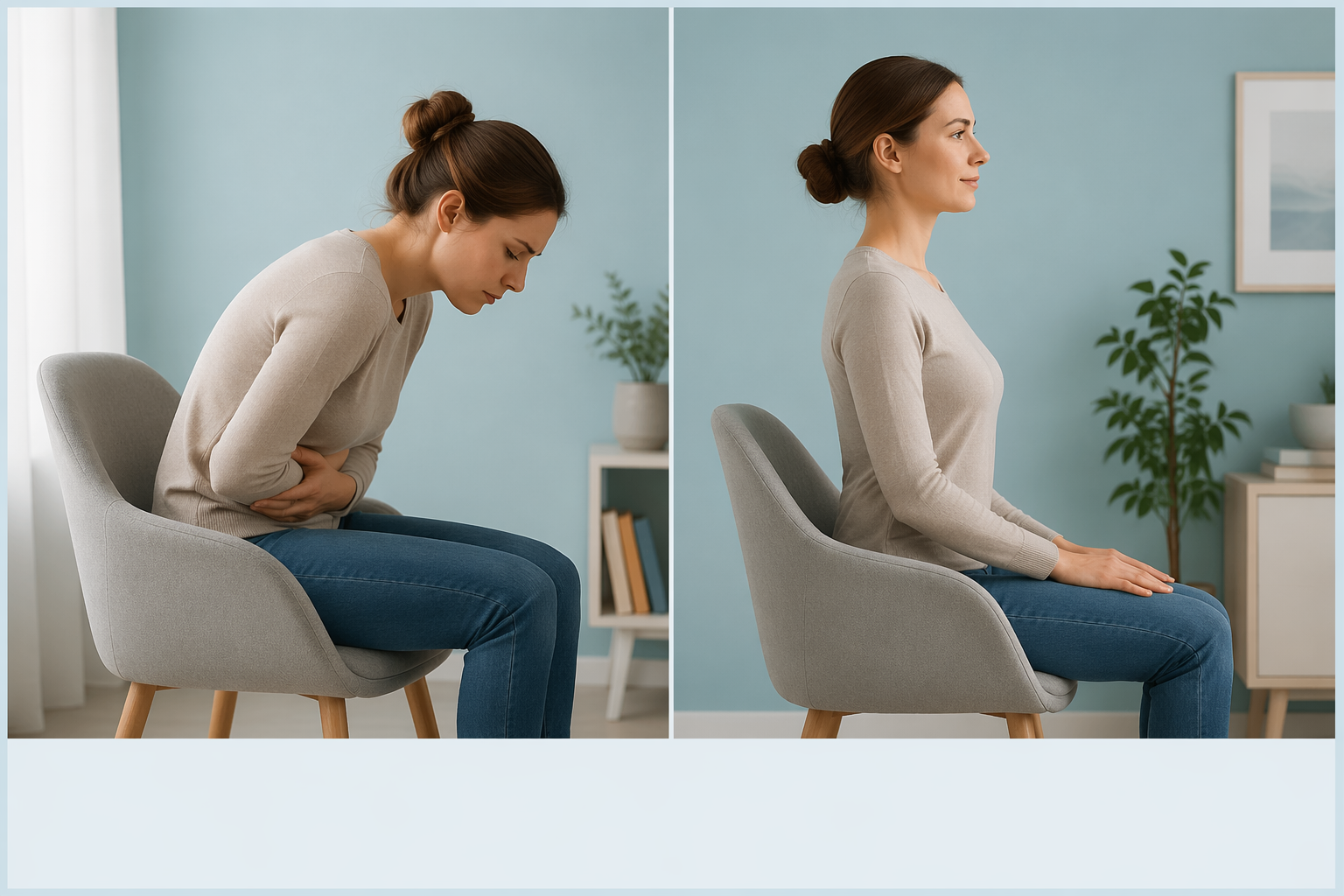
Posture and digestion are closely linked because slouching can change how your abdomen and gut line up. When you hunch forward, the belly gets compressed, which can create organ compression and raise abdominal pressure. That crowding may slow intestinal motility, delay gas movement, and make bloating, cramps, and constipation feel worse.
One gas-transit study makes the difference easier to picture. People who stayed upright had less early gas retention than when they lay down, and intestinal gas evacuation started sooner in the upright position. Mean retention at 60 minutes was 13 milliliters upright versus 146 milliliters supine, and sulfur hexafluoride evacuation began at 34 minutes upright compared with 49 minutes lying down (source).
The time course matters, too. By 180 minutes, both positions showed nearly complete recovery, so posture seems to affect short-term clearance more than total long-term evacuation. That fits what many people with IBS gas and bloating notice after a meal.
Here’s how posture and digestion show up in daily life:
- After meals: Sitting hunched or lying down can increase stomach pressure and make reflux or heartburn more likely.
- During long sitting stretches: A slumped spine can leave less room for the gut to move, so stool and gas may build up and worsen fullness.
- When symptoms flare: Standing or sitting upright with a neutral spine often supports better gas flow than curled or recumbent positions.
For you, the most useful habit is usually simple. Upright sitting, standing breaks, and less prolonged slumping tend to support slouching and intestinal transit in a better direction, especially when bloating and posture issues show up after eating. Position matters on the move as well, and motion sickness with IBS can feel stronger when you sit slumped in a car or plane seat with your belly compressed.
Which Posture Habits Help You Digest More Comfortably?
The highest-yield habit is simple. After a meal, stay upright and take a light walk instead of lying down right away. Public guidance for reflux and digestion commonly recommends remaining upright after eating and using gentle movement to support comfort (source).
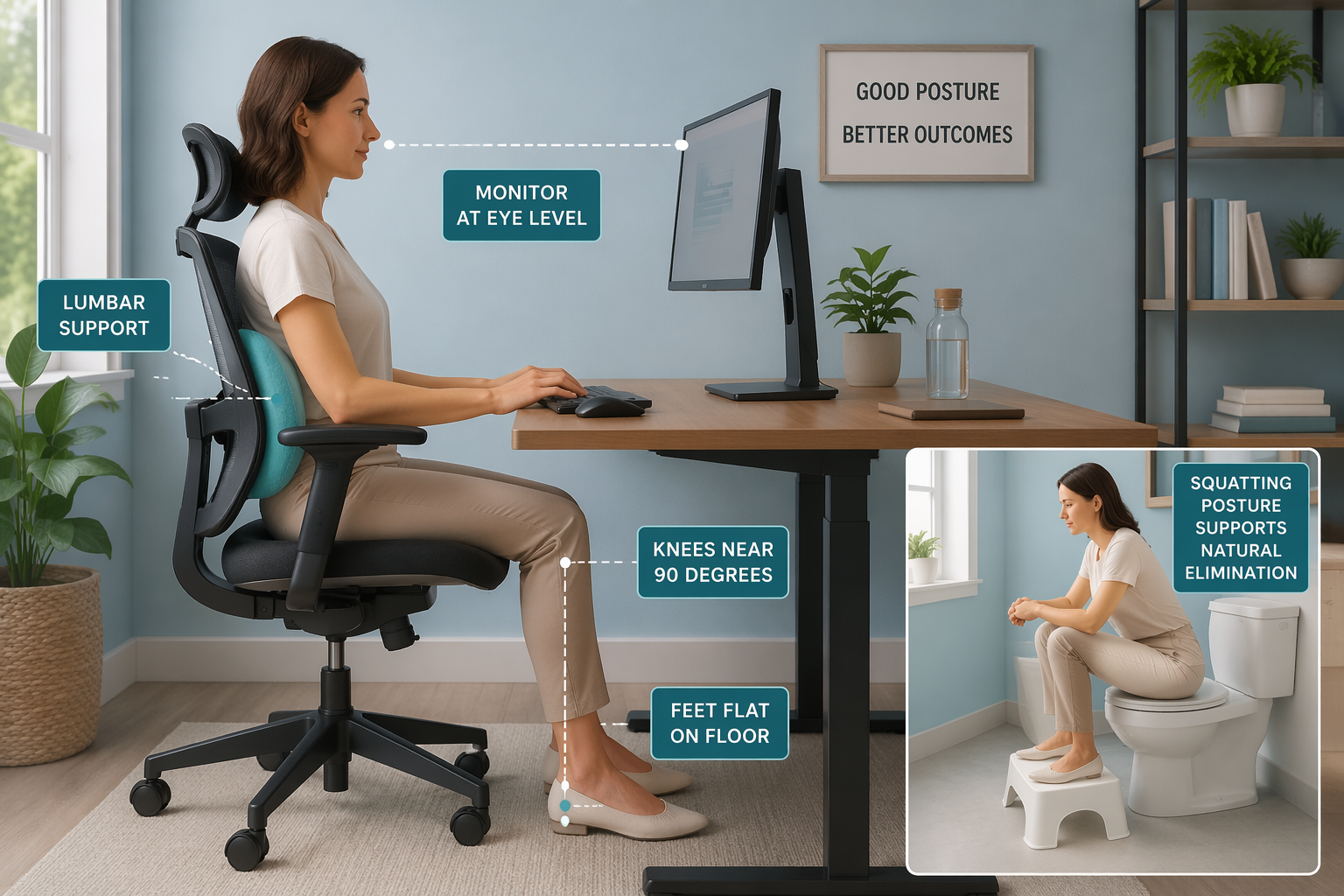
A neutral desk posture can also ease abdominal pressure. A neutral seated position with feet flat and knees near 90 degrees can help reduce slumping during long periods of sitting. Gentle twists and chest-opening stretches may also help some people feel less compressed, but the digestive benefit is not well established in public evidence (source).
- Feet flat: Keep both feet supported on the floor.
- Hips back: Sit fully into the chair instead of perching on the edge.
- Knees near 90 degrees: Aim for a relaxed right-angle bend.
- Shoulders loose: Let them rest instead of hunching upward.
- Weight even: Avoid leaning hard to one side.
Slouching can trap pressure, so a few posture exercises for bloating may help. Lengthen through the crown of your head, open your chest, and keep your rib cage from collapsing after meals. Gentle spinal twists and chest-openers can create more room between the ribs and hips when fullness feels worse in a rounded posture.
Constipation needs a different fix from general sitting posture. The toilet is where posture matters most.
- Lean forward slightly: Keep a straight spine instead of rounding hard.
- Use a squatting-style setup: A footstool can help mimic a squatting position, which may make bowel movements easier and reduce straining (source).
- Relax the belly: Avoid bracing or pushing.
- Breathe slowly: Give your pelvic floor time to soften.
- Take your time: Unhurried bathroom time often works better than forcing a bowel movement.
That toilet posture for bowel movement can be especially helpful if you live with IBS-C. Reflux follows its own rules, though, and it usually dislikes bending, reclining, or lying flat soon after eating. If you need to rest, a propped or semi-upright position usually creates less backflow pressure than a full recline.
If posture changes help only a little, add support work that improves movement over time. Core strength for digestion, gentle back work, pelvic floor relaxation, yoga, soft stretches, and postural corrective exercises can all help. Standing desks and regular posture changes may help reduce prolonged slumping, but they are not proven IBS treatments. A low back support cushion or a reminder to change position every 30 to 60 minutes may be a more evidence-based place to start, while dead hangs and balance boards have limited public evidence for digestive symptoms (source).
Digestive symptoms can have many causes, and persistent, severe, or worsening symptoms deserve a closer look from a gastroenterologist, RDN, or physical therapist.
How Do Breathing, Core, And Pelvic Floor Mechanics Matter?
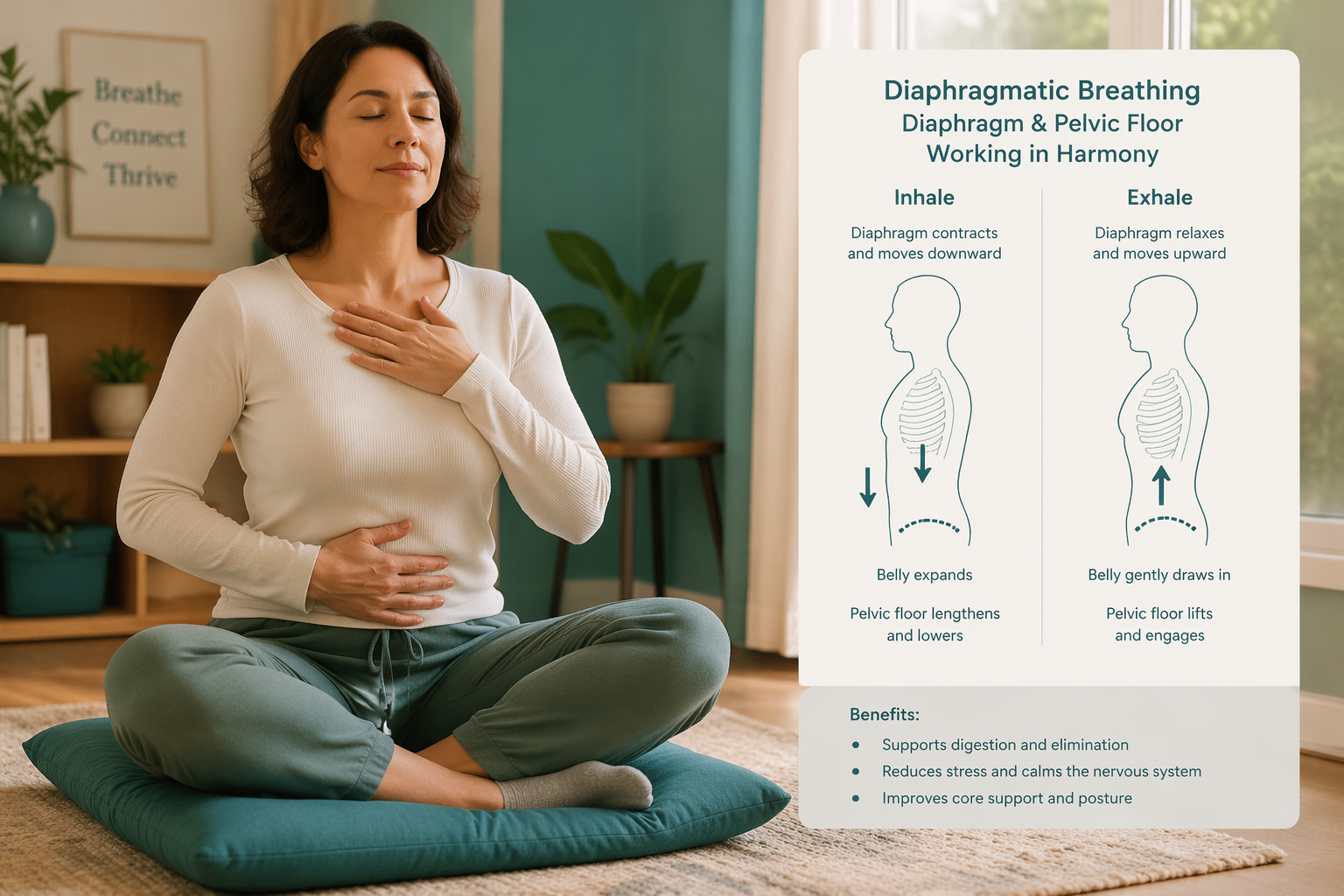
Breathing mechanics matter because your diaphragm, ribs, deep core, and pelvic floor are meant to work as one team. When posture collapses or overextends, that team gets out of sync. Abdominal space can shrink, the gut can feel more crowded, and gas or stool may move less comfortably.
Diaphragmatic breathing is a practical place to start. It shifts you away from shallow chest breathing and helps the ribs move more freely. That can reduce visible rib flare and support core strength for digestion. The evidence is still growing, but many people notice less tightness and less pressure as breathing becomes slower and deeper.
Posture adds another layer. Forward-head posture, rounded shoulders, and long stretches of collapsed sitting can create diaphragm strain and IBS symptoms by fatiguing the core and tightening the chest wall. That pattern can also keep stress-mode breathing going. Over time, that may affect the vagus nerve, the gut-brain axis, and digestion.
A few mechanics matter most for comfort and constipation risk:
- Timing: Weak or poorly timed deep-core muscles may contribute to pressure and coordination problems that make bowel movements feel harder for some people.
- Pressure: Regularly bearing down or bracing too hard can raise strain.
- Position: Long sitting can limit natural movement through the pelvis and bowel.
- Alignment: Rib flare often points to breathing and positioning issues, not a rib injury.
Visible rib flare is usually a breathing and positioning issue. Gentle trunk support, less anterior pelvic tilt, and toilet posture for bowel movement can help you feel steadier. If you also notice referred pain back and ribs, the pattern may be muscular.
Pelvic floor and IBS issues need extra attention when constipation, pelvic pain, trouble relaxing to pass stool, or incomplete emptying keeps happening. A pelvic-floor physical therapist can evaluate muscle coordination and teach retraining exercises when constipation, pelvic pain, or trouble relaxing to pass stool does not improve with basic posture changes. Pelvic-floor therapy is commonly used for coordination problems that affect bowel function (source).
When Should You Get Medical Advice Instead Of Adjusting Posture?
Gentle posture changes can ease mild bloating, gas, or abdominal discomfort, especially if sitting taller or changing positions brings clear relief. But frequent, severe, or recurring IBS symptoms need more than a posture fix. Poor posture can compress the abdomen and add stress signals that slow digestion and increase visceral sensitivity, yet it does not explain every digestive symptom.
When symptoms are not settling, medical advice is the safer step:
- Red flags: unintentional weight loss, blood in the stool, persistent vomiting, fever, new or worsening pain, anemia, trouble swallowing, or symptoms that wake you from sleep
- Pattern changes: constipation, reflux, or abdominal pain that keeps getting worse
- Daily impact: symptoms that interfere with eating, sleep, or normal comfort
If pelvic floor and IBS seem connected, ask about a physical therapist. A physical therapist can review sitting and standing mechanics and suggest targeted exercises when posture seems to affect comfort. For bowel and pelvic-floor problems, clinical references describe therapy as part of coordinated care rather than a stand-alone fix (source). Ongoing bowel urgency, especially IBS urgency symptoms with pain or sleep disruption, also deserves attention.
If symptoms keep changing, you may need diagnostic testing or coordinated support from a clinician, RDN, or gastroenterologist. Clinical trials for IBS show how different symptom patterns can be, which is why personalized care matters.
IBS And Posture FAQs
These FAQs cover the most common questions about posture and IBS, including bloating, reflux, and bathroom positioning. They also touch on the squatting position for easier stool and other simple changes you can try.
Stand and move every 30 to 60 minutes to break up long stretches of slumping. Harvard Health recommends changing position on that schedule as part of better posture habits (source).
Aim to stay upright after eating, especially if reflux is part of your symptoms. Public guidance for digestion and reflux commonly recommends remaining upright after meals and adding light movement when comfortable (source).
1. Can Sitting For Hours Worsen IBS Bloating?
Yes, prolonged sitting and gut health can be connected, especially if you slouch for hours at a desk. Slouching and intestinal transit do not mix well because a compressed abdomen can slow movement, trap gas, and make bloating or cramping feel worse. Small posture swaps can help: sit tall, uncross your legs if your belly feels tight, stand and move every 30 to 60 minutes, and take a short walk after meals when you can.
2. Does Lying Down Help IBS Gas Move?
Lying down usually does not help gas move out faster after a meal. Clinical studies found that upright sitting or standing supports intestinal gas evacuation better than a supine position, and one study reported mean gas retention at 60 minutes of 13 ml upright versus 146 ml supine. After meals, gentle walking, sitting upright, or standing is usually a better choice for bloating or trapped gas, while a footstool can help if constipation is the bigger issue because it eases bowel movements.
3. Can A Lumbar Cushion Ease IBS Discomfort?
A lumbar cushion can ease some IBS discomfort during long sitting, desk work, or travel. Better lower-back support helps you sit more upright, which can reduce slumping, bending, and the belly compression that may trap gas. The evidence is limited, so it works best as a posture aid, not an IBS treatment. Pair it with simple resets like lengthening through the crown of your head, opening your chest, and avoiding long stretches of slouching.
4. Do Posture Changes Help After Eating?
Yes, staying upright after meals can ease pressure on your stomach and may help with that heavy, bloated feeling. Avoid lying down right away, and try not to slouch, since a curled posture can squeeze your abdomen and slow digestive movement. Aim to stay upright for 10 to 15 minutes after eating, and a short, easy walk may help support peristalsis and digestion.