


Rice is often one of the safest grain choices for IBS, but the safest bowl still depends on type, portion, and preparation. Busy parents, working professionals, and clinicians alike run into the same problem when a simple rice dish still leaves room for bloating, urgency, or constipation. Plain rice is a low-FODMAP starch that usually digests more easily than wheat, and the practical payoff is a clearer sense of which rice choices are most likely to fit your symptoms.
The sections below compare white, brown, basmati, jasmine, red, black, and processed rice products, then break down portions, cooled leftovers, and cooking methods that matter for IBS. Readers will also get a simple way to test tolerance, spot trigger add-ins like onion, garlic, and heavy sauces, and use symptom notes to separate rice from the rest of the meal. That makes it easier to build a rice plate that stays gentle without becoming overly restrictive.
My Good Gut's readers who manage IBS, constipation, diarrhea, or family meals need advice that is specific enough to use on a weeknight and careful enough to trust. A small bowl of plain white rice may sit well during a flare, while a large serving of brown rice with garlic oil may do the opposite, which is why the details in this article matter. Keep reading for practical food swaps, portion cues, and a clear way to know when a gastroenterologist or registered dietitian should step in.
IBS and Rice Key Takeaways
- Plain white rice is usually the safest starting point for IBS.
- Brown rice adds fiber but may increase gas or bloating.
- Basmati and jasmine rice are often well tolerated in normal servings.
- Portion size matters as much as the rice type.
- Onion, garlic, creamy sauces, and fried toppings often cause symptoms.
- Cooled or reheated rice may bother people sensitive to resistant starch.
- Track symptoms and consult a gastroenterologist or dietitian if problems persist.
Is Rice Usually Safe For IBS?
Rice is usually one of the safest grains to try when you have irritable bowel syndrome (IBS). It is low in FODMAPs, easy to digest during flare-ups, and often works well as an early grain choice when symptoms are active. The question of grains and IBS often comes down to how much a food ferments and how your gut handles it.
White rice for IBS is the most common starting point. Research on rice digestion and absorption suggests that white rice is nearly fully absorbed in the small intestine, so less reaches the colon for bacteria to break down. That can mean less gas for some people, which is why rice and bloating comes up so often in IBS discussions.
A simple way to think about rice for IBS is this:
- Best first try: plain white rice
- Usually helpful: small to moderate portions
- More likely to trigger symptoms: very large servings, oily sauces, spicy toppings, or high-FODMAP add-ins
- Worth testing carefully: brown rice or mixed rice dishes if your gut is sensitive
Is rice low FODMAP? Plain rice generally is. Even so, tolerance still varies from person to person. Larger portions, certain rice varieties, or a meal built around trigger foods can still bring on cramps, diarrhea, or bloating.
Rice also has relatively low allergenicity compared with wheat, so it can be a useful gluten-free swap when wheat seems to worsen symptoms. Rice is a helpful starting point, not a guarantee. Track portions and symptoms, and seek personalized dietitian guidance if symptoms persist, worsen, or become severe.
Which Rice Types And Products Work Best?
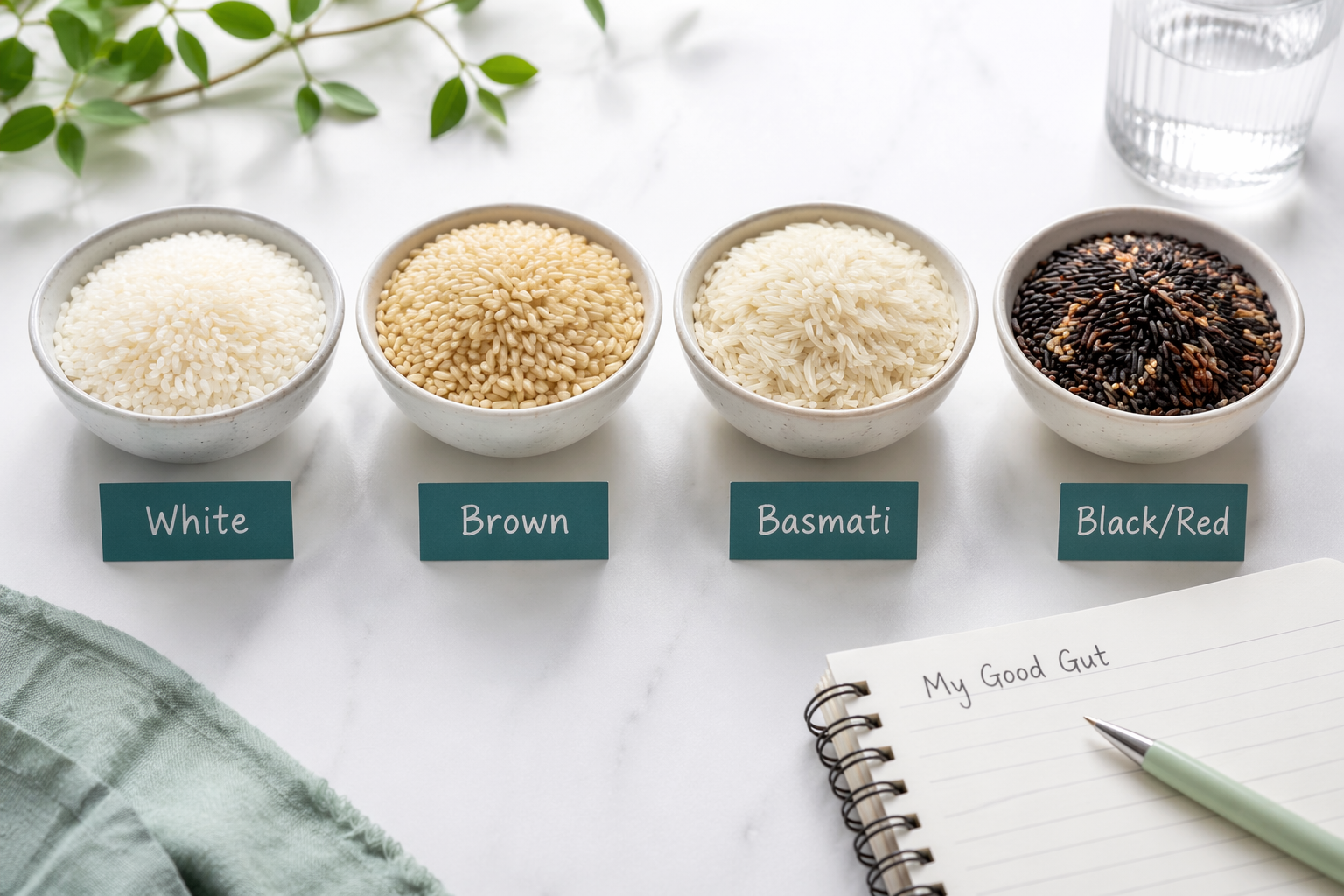
Plain white rice is usually the gentlest starting point for IBS. Milling removes the bran and germ, so it stays low in fiber and low in FODMAPs. That makes it a common choice during flare-ups, and it may help firm loose stools if you have diarrhea-predominant IBS.
Brown rice is the higher-fiber option. Its bran adds insoluble fiber, which can help increase stool bulk and support regularity if constipation is part of your picture. That same fiber can also make gas, bloating, or pain feel worse when your symptoms are already active.
Rice varieties (basmati, jasmine) are also easy picks. These white grains are usually mild, familiar, and easy to digest. They're typically treated as low FODMAP rice at normal servings, so they work well when you want a simple base without much guesswork.
Red and black rice can still fit into a low-FODMAP plan, but portion size matters more. Smaller servings are the safer place to start, and larger bowls may feel heavier for sensitive stomachs. Rice milk, rice flakes, rice crackers, and rice flour can all work in a low-FODMAP approach in small portions, but the exact serving size depends on the product label and the rest of the meal (source).
Rice type or product | IBS fit | What to watch |
|---|---|---|
White rice | Usually safest | Low fiber, helpful during flare-ups |
Brown rice | Better for constipation | May add gas or bloating |
Basmati or jasmine rice | Usually well tolerated | Keep servings normal |
Red or black rice | Often okay in smaller servings | Watch portion size |
Rice milk, flakes, crackers, flour | Depends on the product | Check for flavors, sweeteners, or mixed ingredients |
For most people, the simplest rule is this. Start with white, basmati, or jasmine rice during a flare-up. Try brown rice only when you need more fiber and your gut feels calmer. Treat red, black, and processed rice products as test-and-track foods, and note how you feel after each meal.
How Do White, Brown, And Specialty Rices Compare?
White rice also works well when you need a bland, low-residue meal. It has less bran and less overall fiber, so it is easier to digest during a flare or when you need a bland, low-residue meal. For many people, that makes white rice for IBS the safest starting point.
Rice type | How it behaves | IBS fit |
|---|---|---|
White rice | Soft, low fiber, easy to break down | Best for calmer digestion and IBS-D support |
Brown rice | More bran and more insoluble fiber | May help rice tolerance in IBS-C, but can add gas or cramping |
Specialty rice | Wild rice and mixed-grain blends act more like higher-fiber choices | Better when symptoms are steady than during a flare |
Brown rice IBS patterns can be a mixed bag. The extra fiber may help bowel movements, but it can also bring bloating, pain, or looser stools if your gut is sensitive. That is where soluble vs insoluble fiber matters, since brown rice leans more toward the rougher side.
Specialty grains and rice varieties (basmati, jasmine) often behave more like higher-fiber options too. If rice tolerance in IBS-D is an issue, plain white rice is usually the safer first choice. When symptoms are steady, small amounts of brown rice can fit in.
Which Rice Products Stay Low FODMAP?
Plain rice products usually work better than mixed or flavored ones, but the serving size still matters. For IBS, low FODMAP rice choices depend on the portion first and the label second.
Common options that usually fit better in typical amounts include:
- Rice milk: Plain rice milk is usually low FODMAP at about 200 ml. Around 250 ml or more may raise fructans, so FODMAP portion sizes matter.
- Rice flakes: About 30 g dry is typically low FODMAP. Packaged flakes with psyllium, inulin, or extra fiber can change the load.
- Rice crackers and rice cakes: Plain versions are often safe in common servings, such as about 20 plain crackers or two rice cakes. Larger amounts can add up.
- Rice noodles and rice flour: These are usually suitable in standard cooking amounts.
- The label: Flavored noodles, seasoned mixes, and baking blends may hide onion, garlic, wheat, sweeteners, or added fibers.
Simple ingredient lists are your safest bet. Plain low FODMAP rice is usually a better choice than fortified or mixed products, especially when you need to avoid high-FODMAP add-ins (onion, garlic).
What Rice Portions Stay Low FODMAP?
Most common rice types stay low FODMAP at normal portions, so the bigger issue is how much you eat, not whether you choose white, brown, basmati, or arborio rice. If you've wondered, "Is rice low FODMAP," the practical answer is yes for many people when the serving stays moderate and the rest of the plate is simple.
A good starting point is:
- Start with a small serving of plain cooked rice.
A practical test is to start with a small serving of plain cooked rice and adjust the amount based on symptoms, appetite, and the rest of the plate (source).
Large portions of any carbohydrate can speed up bowel activity, so a heaping mound of rice can still trigger urgency even when the rice fits your low-FODMAP diet plan. Keep the dish plain when symptoms are active. Onion, garlic, creamy sauces, and heavy fried toppings can make the full meal harder to tolerate.
Plain, low-fat rice dishes are usually gentler than rich or spicy ones. That can matter even more with resistant starch rice, since chilled and reheated rice may sit differently for some people. Track your FODMAP portion sizes, and if rice still causes discomfort, review your triggers with a registered dietitian or gastroenterologist before making the diet more restrictive.
How Should You Prepare Rice For Better Tolerance?
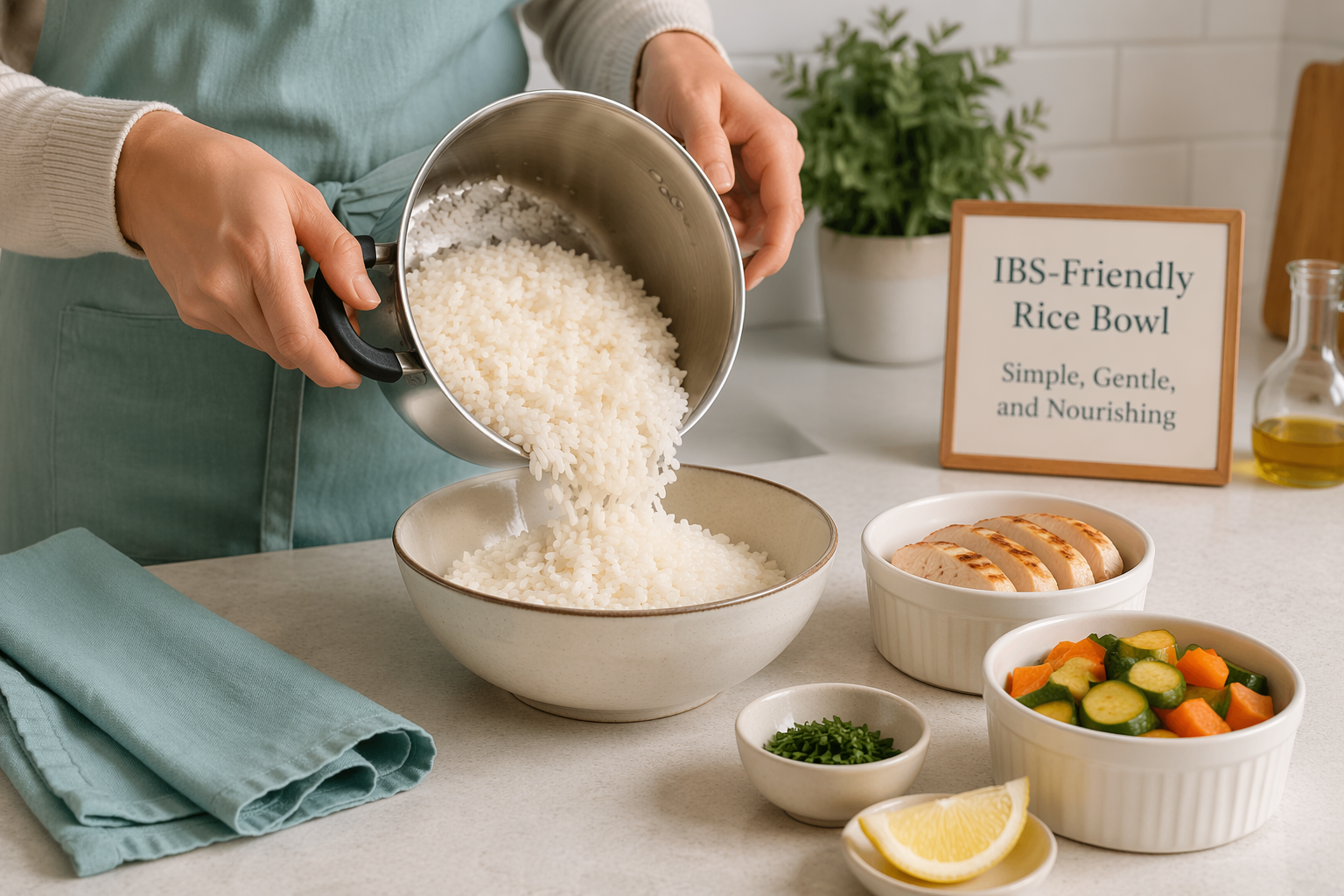
Plain cooking usually works best when you want to learn how to prepare rice for IBS without adding extra triggers. Boiled, steamed, or microwaved rice is often easier to tolerate than rice made with butter, cream, or a lot of oil. Rice itself is rarely the main issue. Added fat is more likely to bring on bloating or urgency.
The easiest meals keep things simple and filling. IBS-friendly pairings can help you stay satisfied without making the plate heavier:
- Lean protein: chicken, eggs, or firm tofu
- Low-FODMAP veg: carrots, spinach, or zucchini
- Gentle flavor: salt, pepper, ginger, chives, lemon juice, parsley, basil, or a small amount of infused oil
It also helps to avoid high-FODMAP add-ins (onion, garlic) in sauces, stock powders, and marinades. Honey-based glazes and creamy dressings can turn a simple rice bowl into a symptom trigger. Fried rice, buttery pilaf, and rich curry-style rice dishes can be rougher choices when fat tends to bother you.
Portion size matters too. Some people find that a smaller serving of plain white rice is easier to tolerate than a larger, higher-fiber rice meal, especially during a flare (source). If rice still feels inconsistent, rice porridge for IBS can be a gentler option on sensitive days. Other simple swaps include oatmeal for IBS relief, quinoa, gluten-free oats, millet, buckwheat, polenta, or cornmeal.
A food-and-symptom diary can help you separate the rice from the toppings, sauces, meal timing, or portion size that may actually be causing trouble. If symptoms keep showing up, review the pattern with a gastroenterologist or registered dietitian.
How Do Cooling And Reheating Affect Symptoms?
Cooling changes the way rice is digested. Cooling can increase resistant starch in cooked rice, and resistant starch is digested less completely than freshly cooked rice (source). Reheating warms it again, but it does not fully reverse the cooling step.
That matters for your symptoms if you are sensitive to fermentation. Resistant starch can be broken down by bacteria in the large intestine, which may raise rice and gas, rice and bloating, or abdominal discomfort in IBS. Freshly cooked rice is often easier to tolerate because it has not gone through that extra cooling stage.
Tolerance still varies from person to person. Some people notice no change with leftovers, while others feel worse after cold or reheated rice. Portion size matters too, because a small serving may be fine even when a larger one is not.
If leftovers seem to worsen bloating, try these steps:
- Choose freshly cooked rice more often.
- Keep leftover portions smaller.
- Track symptom timing after cold and reheated rice.
- Watch your overall IBS pattern while refining how to prepare rice for IBS.
That kind of tracking helps you learn how rice digestion and absorption works for you.
What Rice Meals Work For IBS-D, IBS-C, And Flares?
Plain white rice is usually the best starting point for IBS-D or an acute flare. The bran and germ are removed, so it is lower in fiber and lower in FODMAPs. That makes it the most likely rice to settle your gut when symptoms are active, but it is still only a best bet, not a guarantee.
For IBS-C, brown rice IBS can be worth trying in modest portions between flares. Its extra insoluble fiber may add bulk and help things move, but it can also trigger more gas, bloating, or pain. If it feels too rough, go back to white rice. That is part of learning your rice tolerance in IBS-C.
A simple one-week rotation can make rice meals easier to plan during an IBS flare, as long as portions and toppings stay consistent and symptoms are tracked (source).
- Day 1: White rice with grilled chicken and carrots
- Day 2: White rice with fish and zucchini
- Day 3: Scrambled eggs over rice
- Day 4: Rice porridge for IBS
- Day 5: Rice bowl with spinach and lean turkey
- Day 6: White rice with tofu and cooked zucchini
- Day 7: Small brown rice trial, if your symptoms have been calm
These IBS-friendly pairings (lean protein, low-FODMAP veg) help you build meals without guessing. During a flare, keep the meal bland and lower in fat. Add only one extra ingredient at a time. For IBS-C, you can usually make the plate more filling with tolerated vegetables and lean protein without loading on too much fiber at once.
Freshly cooked rice is often easiest on the gut. Some people notice more gas or bloating after cooled or reheated rice, so start with a small test portion. Simple storage helps, and it makes sense to pause leftovers if symptoms worsen. That fits the old BRAT diet idea, although many people do better with a wider mix of foods now.
Tolerance is personal. Some people do best with white rice only, while others can handle brown rice or more varied rice for IBS meals between flares. Use this as a short-term meal map, track your symptoms, and bring ongoing problems to a gastroenterologist or registered dietitian.
How Can You Test Your Rice Tolerance Safely?
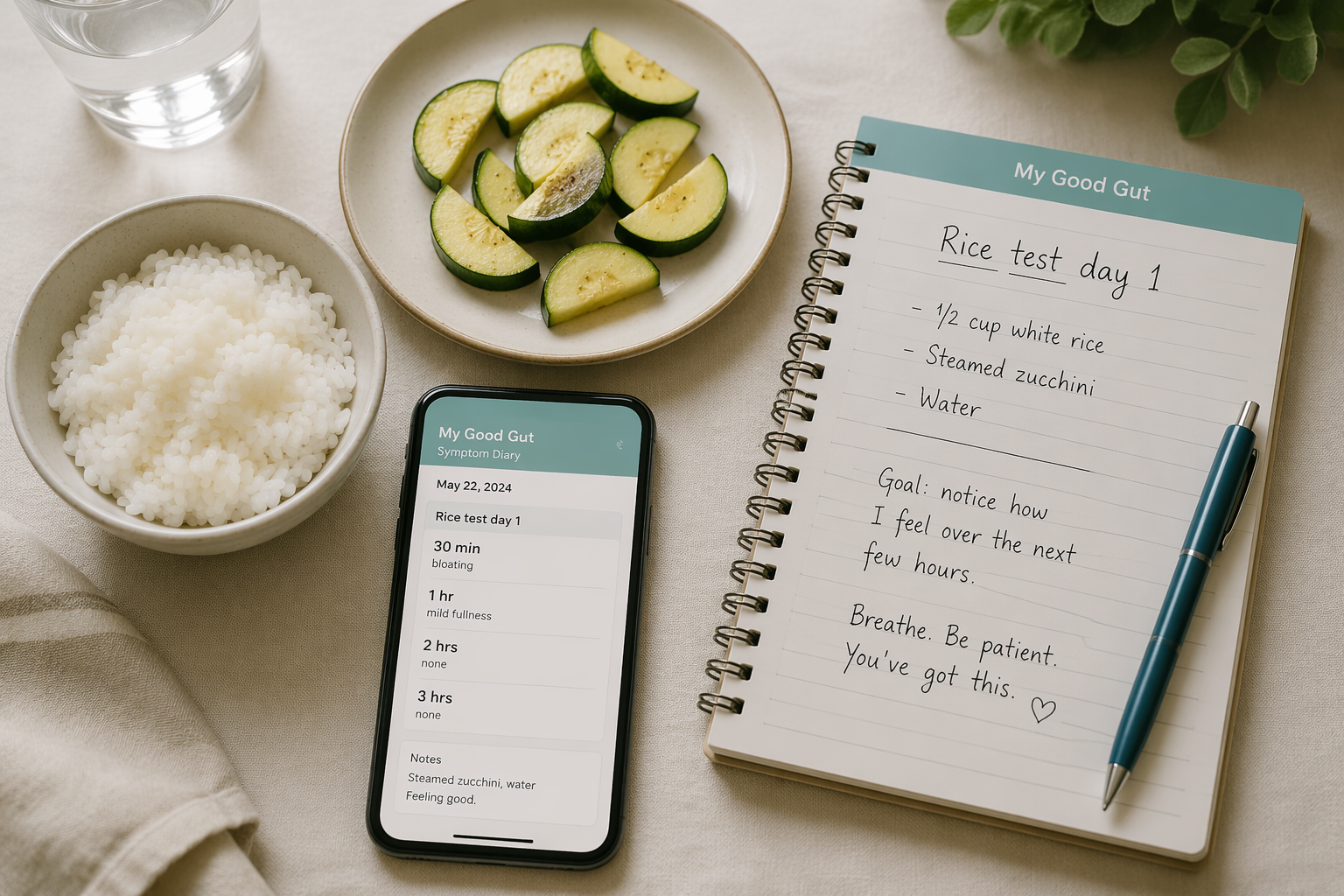
A careful test can help you tell whether rice is part of the problem or just getting blamed during an IBS flare. An elimination-and-reintroduction plan can help identify whether rice is a trigger, but the process should be gradual and individualized (source). That gives you a cleaner read on your own pattern.
Start with one rice type and keep everything else plain. White rice is often the easiest first test when your symptoms are active, while brown rice may fit later if you handle fiber well.
A steady reintroduction plan looks like this:
- Test one rice at a time: Begin with the version you eat most often, such as plain white rice, then try brown rice later if you need to compare tolerance.
- Keep the meal simple: Leave out creamy, fried, or high-fat sauces while you test.
- Start small: Eat a few bites or a very small serving, then repeat the same amount before you increase it.
- Track details: Write down the rice type, portion size, cooking method, meal timing, and any symptoms over the next several hours and into the next day.
That short record can help you spot your personal low-FODMAP tolerance and see whether rice is a temporary hack or a real trigger.
Stop the test and seek medical help if you have severe pain, blood in your stool, vomiting, weight loss, or symptoms that keep getting worse. Persistent or confusing symptoms deserve personalized dietitian guidance from a gastroenterologist or registered dietitian.
What Does The Evidence Actually Show?
Plain white rice is one of the safer starches for many people with IBS, and the studies support that pattern. It's low in fiber and low in FODMAPs, so it often works well as a flare-friendly food and may help firm loose stools in IBS-D. For many people, IBS and rice comes down to one simple pattern. Plain rice is usually easier to tolerate than a mixed meal.
The evidence is encouraging, but it's not huge. Small crossover and controlled studies have reported symptom improvement with rice-based meals, which is a good sign. The research base is still limited. A 2020 review also found that a low-FODMAP diet plan can help many people with IBS by lowering osmotic load and intestinal gas. That helps explain why simple rice meals often digest more easily than plates packed with sauces, toppings, and extras.
The rice itself is often not the main trigger. What the evidence suggests:
Evidence | Practical meaning |
|---|---|
Plain white rice is usually well tolerated | A good choice during flares |
Rice-based meals may calm symptoms | Helpful, but not guaranteed |
Low-FODMAP eating can reduce gas and bloating | Simpler meals are often easier |
Toppings matter as much as the rice | Watch sauces, fats, and seasonings |
Rice and gas complaints are more often tied to what gets added on top. Garlic-heavy sauces, onion, spicy seasonings, and high-fat add-ins can trigger symptoms even when the rice is fine.
Observational reports on the Rice Diet are worth reading carefully. One older report described symptom improvement on a rice-based diet, but the evidence base is limited and does not show that the same result will happen for everyone (source). That finding is interesting, but it's not proof that it works for everyone. The older BRAT diet has a similar story, and it is too limited for most people long term.
Rice is still a reasonable, low-risk carbohydrate choice for many people. Portion size, cooking method, and symptom tracking should guide your changes. If symptoms keep going on or get worse, a gastroenterologist or registered dietitian can help you sort out what is really driving them.
Ibs And Rice FAQs
These FAQs cover the rice questions you're most likely to have with IBS, from white versus brown rice to portions and symptom tracking. They're meant to help you sort out what may fit your meals without guessing.
1. Can rice cakes trigger IBS symptoms?
Plain rice cakes are usually low FODMAP in a recommended portion, so toppings and serving size matter more for IBS symptoms. Around two plain rice cakes is often better tolerated, while larger servings can add more fructans and raise the chance of bloating, pain, or urgency. The bigger issue is often the topping, especially high-FODMAP spreads, sweeteners, or heavy amounts of fat, so start with a small portion and track how you feel before making them a regular snack.
2. Is sushi rice low FODMAP?
Yes. Sushi rice is usually made from white rice, so it’s generally low FODMAP in a normal serving. The rice itself is usually not the issue, but sushi vinegar, sugar, and seasonings can add up, and garlic- or onion-based sauces, marinades, fillings, toppings, and dipping sauces are more likely to trigger symptoms. Plain sushi rice is usually safe, but a large roll or big meal can still bother you if you’re very sensitive.
3. Can leftover rice upset IBS?
Leftover rice usually does not upset IBS, but storage and reheating can affect how it feels. For some people, that extra fermentation can lead to gas, bloating, or abdominal pain, especially if starchy leftovers are a trigger. Cooling rice quickly, storing it in the fridge, and reheating it thoroughly can lower the risk, and comparing small portions of fresh rice with leftovers can help you see what your body handles best.
4. Is rice flour easier on IBS?
Plain rice flour is often easier on IBS than whole-grain rice products because it’s finely milled and lower in fiber, which can make it gentler for some people. On its own, it’s usually a simple low-FODMAP ingredient, but portion size and the rest of the recipe still matter. Blends with gums, inulin, or psyllium can be harder to digest, so you may do better with rice flour in simple foods than in heavily processed baked goods or packaged mixes.