


Choosing the best teas for IBS relief and safe use often comes down to balancing symptom relief with tolerability. For adults living with IBS, the hard part is that a tea that eases cramping can also worsen reflux, urgency, or bloating. Herbal tea means a caffeine-free plant infusion, and the aim here is to help you pick options that fit your symptoms and health history.
Peppermint, ginger, fennel, chamomile, turmeric, curcumin, and peppermint oil each show different levels of support, and the article also covers brewing tips, low-FODMAP choices, and safety checks for GERD, pregnancy, gallbladder concerns, and medicine interactions. It also shows how to test one tea at a time, keep the brew mild, and read your body's response with less guesswork. A simple symptom match can make the decision clearer when pain, gas, nausea, or stress-linked flare-ups are driving the day.
My Good Gut's readers, especially busy parents, office managers, teachers, and other professionals managing IBS around work and family life, need advice that is practical enough to use on a normal weekday. One example is a person who switches from peppermint tea to ginger after noticing heartburn with mint but nausea after meals with ginger. The next steps are straightforward, and they give you a safer way to choose tea without turning daily relief into another source of uncertainty.
Best Teas for IBS Relief Key Takeaways
- Peppermint is often best for cramping, spasms, and bloating.
- Ginger fits nausea, fullness, and heavier post-meal discomfort.
- Fennel may help gas and tight abdominal pressure.
- Chamomile can suit stress-linked flares and bedtime routines.
- Curcumin has stronger evidence than turmeric tea.
- Peppermint oil has stronger evidence than peppermint tea.
- Test one mild, caffeine-free tea at a time and watch for GERD.
Which Teas Rank Best For IBS Relief?
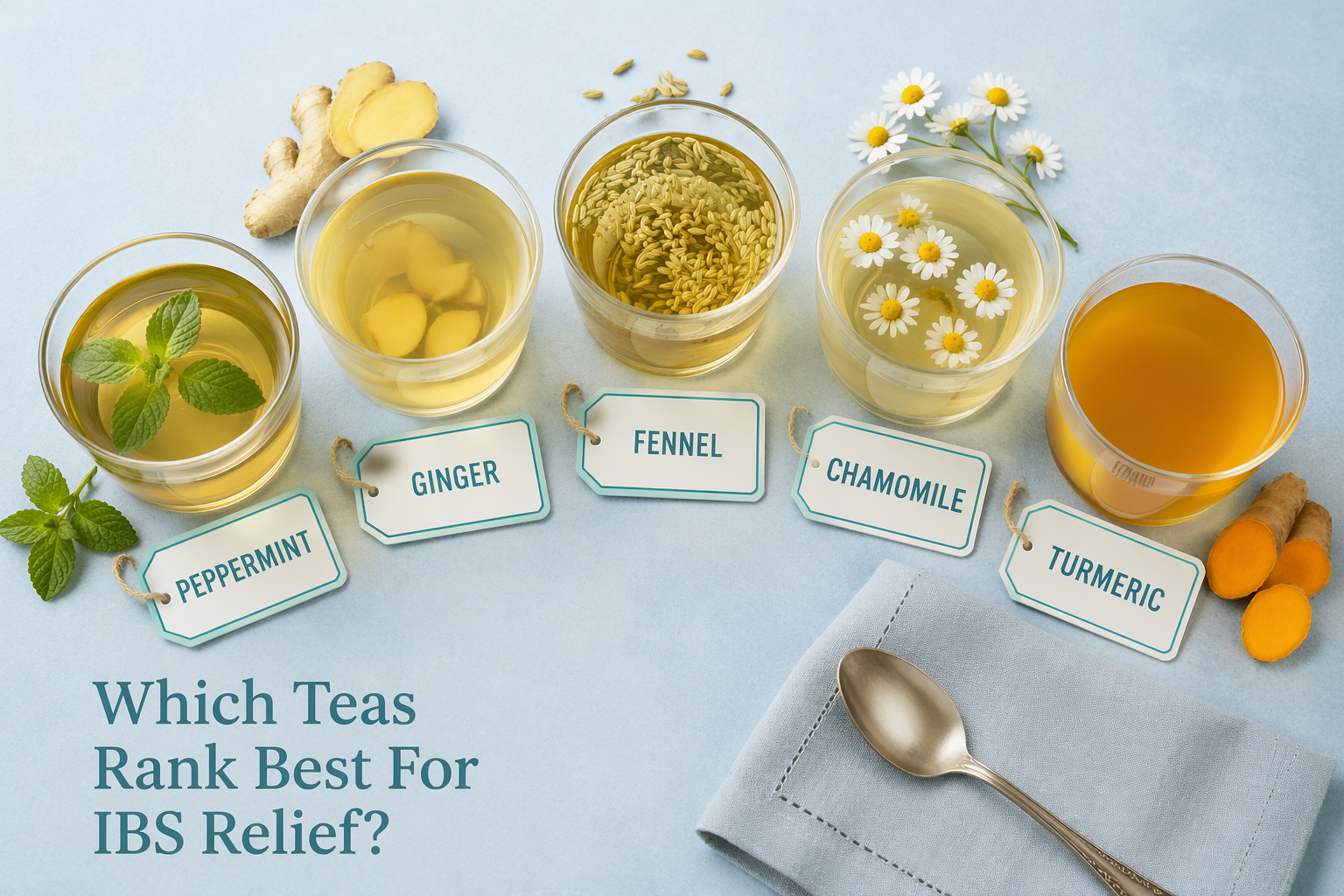
The best teas for IBS are usually herbal, caffeine-free options that are naturally low in FODMAPS. They can calm your gut without adding fermentable carbs that may worsen bloating, gas, or urgency.
A quick comparison can help you match the tea for IBS symptoms you want to manage:
Tea | Best for | Why it may help |
|---|---|---|
Peppermint | Cramping, pain, spasms, trapped gas | l-menthol may relax intestinal smooth muscle by blocking calcium channels |
Ginger | Nausea, early fullness, heavy stomach | Often feels gentler for post-meal discomfort |
Fennel | Gas, intestinal spasm | A soothing option when you want milder support |
Chamomile | Stress-related flare-ups | May fit better when anxiety seems to worsen symptoms |
Turmeric tea | General inflammation support | Mild comfort drink, but not the same as curcumin |
Curcumin | Stronger evidence signal than turmeric tea | More concentrated form, not a standard cup of tea |
Peppermint is often the leading choice for cramping and abdominal pain. Its active compound, l-menthol, has been studied for easing intestinal spasm. Peppermint tea can be a gentle daily option, while peppermint oil has stronger human-study support for relief.
Ginger is a strong pick when nausea or a heavy stomach is your main issue. It may feel easier to tolerate than peppermint if your symptoms are more about post-meal discomfort than sharp pain.
Fennel and chamomile are also useful low FODMAP teas when you want something soothing. Fennel is often a good fit for gas and tight, crampy feelings. Chamomile may be a better match for stress-linked flares.
Turmeric tea and curcumin deserve a separate note. Turmeric tea is more of a general comfort drink. Curcumin is the concentrated compound with the stronger evidence signal, but it is not the same as a regular mug of tea.
No single cup works for everyone. Your best choice depends on your trigger pattern, your tolerance, and your goal. Try one tea at a time, track how you feel, and adjust from there. That approach fits evidence-based dietary recommendations without assuming one answer will work for all IBS symptoms.
Caffeine and IBS can be a rough mix. Black tea, oolong, and coffee may aggravate urgency, cramps, or sensitive digestion. If you are starting out, herbal teas low in FODMAPS are usually the safer place to begin, and what to drink with IBS can help you compare your options. These choices may help soothe the gut, but results vary from person to person.
1. My Good Gut — Best IBS-Friendly Starter Pick
My Good Gut is the easiest starter pick when you’re testing tea for irritable bowel syndrome (IBS) relief. At this stage, the goal is not the strongest blend. It’s the one you can tolerate and judge fairly.
That starter-pick approach fits IBS well because triggers vary from person to person. A mild, single-herb tea or a simple formula gives you a clearer read on how your body responds. Strong blends can blur the picture, especially when several herbs affect digestion in different ways.
Preparation matters just as much as the tea itself. These brewing tips for tea can make the first cup gentler:
- Use a weaker brew: Shorter steeping usually makes the tea easier to sip.
- Start with a small cup: A smaller serving helps you gauge your response.
- Avoid oversteeping: Long infusions can taste harsher and feel more intense for sensitive stomachs.
My Good Gut also stands out because its expert-reviewed guidance uses plain language. That makes your first choice feel manageable instead of confusing. It helps you focus on what matters most, which is a calm, careful trial.
Tea usually has fewer side effects than more concentrated forms like extracts or essential oils. That makes a mild tea a practical place to begin when you want to check your own tolerability. Results vary by person, so try one tea at a time and watch your symptoms closely rather than assuming one option will work for everyone.
2. Peppermint — Best For Cramping And Bloating
Peppermint is often a strong first pick when your IBS feels like tight, painful spasms with a lot of pressure and bloating. Its main active compound, l-menthol, works as one of the better-known antispasmodics. It helps calm intestinal smooth muscle by blocking calcium channels, which can ease spasms, trapped gas, and the kind of pain that makes your stomach feel clenched.
The evidence is stronger for peppermint oil than for tea, but both can play a role. Peppermint oil has the best human-study support for IBS symptom relief, and enteric peppermint capsules are often used when people want a more targeted option. Peppermint tea for IBS is still a useful everyday choice, especially if you want something gentler and easier to test one cup at a time.
Peppermint usually fits best when your main complaints are cramping, pressure, and bloating. It may be a better match for pain-focused IBS or diarrhea-predominant IBS than for constipation-heavy symptoms.
A simple way to try it is:
- Choose caffeine-free tea: This keeps the test cleaner and may be easier on sensitive stomachs.
- Steep as directed: Follow the package instructions so the flavor and strength stay consistent.
- Start with one cup: Give your body a fair test before you increase.
- Pick low-FODMAP options when possible: That can matter if fermentable carbs tend to bother you.
- Watch for reflux: Avoid peppermint if GERD is a problem, since peppermint can relax the lower esophageal sphincter and worsen heartburn.
That trial-and-response approach matters because results vary by person. Test one tea at a time and watch for whether it helps reduce gas and bloating without triggering reflux. Peppermint may alleviate painful cramps, but it is not a cure, and it should not replace medical care if your symptoms are persistent, severe, or worsening.
3. Ginger — Best For Nausea And Fullness
Ginger is a strong first pick when IBS leaves you feeling nauseated, overly full after meals, or slow to digest food. The gingerols and related compounds in ginger can help calm the stomach, support digestion, and encourage gastric emptying. That is why ginger tea for IBS can be especially helpful when heavy, irritated feelings show up after eating.
It also has anti-inflammatory and antioxidant activity, which may matter when your gut feels worn out or inflamed. That does not make ginger a cure or a one-size-fits-all fix. It simply means ginger can be a sensible option when you want something gentle with more than one possible benefit.
Ginger is usually considered low-FODMAP when it is prepared simply, so plain ginger tea or a basic ginger infusion can be a practical starter choice. The safest test is a plain cup first. Add-ins like honey or inulin can change how your gut responds.
A few usage cautions are worth keeping in mind:
- Start small: Try a weak brew or a small cup first.
- Go slowly: Strong tea or multiple cups can be too stimulating.
- Watch IBS-D: Higher amounts may speed bowel movements and worsen diarrhea.
- Keep the goal clear: Ginger can also help with bloating and cramping, but nausea and fullness are its main strengths here.
Compared with black tea, strong green tea, or matcha, ginger is often the calmer choice because it does not add extra caffeine pressure. That can matter when your digestion already feels twitchy. A mild cup can support digestion without pushing your bowels faster than you want.
4. Turmeric — Best For Inflammation Support
Turmeric can be a reasonable add-on when inflammation seems to worsen your IBS symptoms, but it belongs in the support lane. The active compound, curcumin, has anti-inflammatory effects, and reviews and meta-analyses have found lower inflammatory markers and less pain. A 2022 review also reported symptom and quality-of-life improvements in IBS, but the evidence is still limited. That means turmeric tea for IBS may help some people, but it is not a sure thing.
The tea-versus-supplement gap matters. Brewed turmeric tea may feel soothing and can fit into a low-key daily routine. Most study benefits come from concentrated curcumin doses that are much stronger than what you get in a mug. Tea is useful, but it is unlikely to match supplement-level effects.
A gentler start usually works best, especially if your gut reacts fast:
- Start small: Use a light amount of turmeric at first.
- Add flavor carefully: Ginger or a little honey can make the taste easier if you tolerate them.
- Check the blend: Choose only mixes whose extra ingredients fit your IBS pattern and low-FODMAP plan.
That last point matters because blends vary a lot. Some include licorice root, dandelion, nettle, or lavender. Licorice in high amounts can raise blood pressure. Dandelion may act like a mild laxative. Those extras can matter if diarrhea or urgency is already part of your day.
Safety checks come first if you plan to drink it regularly:
- Medication review: Screen for interactions with medication, especially diabetes meds.
- Gallbladder caution: Use extra care if you have gallbladder disease or gallstones.
Turmeric can fit into a broader IBS plan, but it should not carry the whole burden. If your symptoms are chronic, severe, or getting worse, a qualified healthcare professional should help you sort out the cause and the safest next step.
5. Fennel — Best For Gas And Spasm Relief
Fennel is a classic choice when your IBS leans toward gas, bloating, or crampy pressure after meals. People have used it for generations as a post-meal tea, and limited clinical evidence points in the same direction for trapped gas, belly swelling, and spasm relief.
The main reason fennel may help is simple. It can work a bit like one of the natural antispasmodics, which means it may relax intestinal muscle and ease that tight, twisting feeling in the gut. Some sources also note a mild laxative effect, so it can be a better fit if you tend toward IBS-C and feel backed up along with the bloating. The key takeaway is modest, though. A 2016 and 2018 study series looked at fennel with curcumin and reported symptom and quality-of-life gains, but fennel tea is not the same as a concentrated extract or oil.
A low-FODMAP approach keeps the test fair:
- Keep the steep short: Aim for under 5 minutes.
- Avoid strong brews: Overconcentrated fennel tea may be higher in FODMAPS.
- Start small: Try one small cup and watch your response before drinking more.
That caution matters because fennel is not a universal fit. It may help you reduce gas and bloating, but it can also worsen symptoms in people who are sensitive to FODMAPS.
For many readers, fennel tea for IBS makes the most sense when the main problem is post-meal puffiness, gassiness, or cramping. Results vary by person, so any tea plan should stay individualized and adjusted to your own symptom pattern.
6. Chamomile — Best For Stress-Related Flare-Ups
Chamomile can be a good fit when your IBS flares are tied to stress-related gut flare-ups or poor sleep. Its calming effect may help your symptoms feel less intense on tense days, which is why some people reach for chamomile tea for IBS before bed. Early research also points to antispasmodic and anti-inflammatory effects that may help ease cramping when your gut feels tight or irritated. The clearest IBS evidence so far comes from a herbal combination containing chamomile rather than chamomile on its own (source).
It’s still best to treat chamomile as a gentle option, not a sure fix. IBS-specific evidence is limited, even though chamomile is often used for relaxation and indigestion. That makes it a reasonable tea to try when you want to soothe the gut without reaching for something stronger.
Blends can feel even softer for some people, especially chamomile-mint or chamomile-spearmint. A careful trial matters because your triggers are personal:
- Start small: Begin with one weak cup.
- Watch closely: Note bloating, gas, or cramping after you drink it.
- Go slowly with blends: Mint helps some people and bothers others.
- Test for sensitivity: Chamomile can trigger bloating in people sensitive to FODMAPS, including fructans, or to certain plant compounds.
- Keep it useful: Stick with chamomile only if it calms symptoms instead of aggravating them.
Stress and digestive discomfort often travel together, and calm routines can help. Psych Central’s mental health resources also reflect how anxiety can amplify digestive symptoms (source).
7. Curcumin — Best Evidence In Concentrated Form
Curcumin is turmeric’s main active compound, and the strongest anti-inflammatory evidence comes from concentrated supplements. That matters because turmeric tea for IBS usually gives you far less curcumin than the amounts used in studies, so tea is better treated as a gentle food-based option than as the research-backed form.
The clinical signal is encouraging, but it’s not simple. A 2022 review found that curcumin-containing treatments may ease IBS symptoms and improve quality of life. A 2005 trial of turmeric extract tablets reported symptom improvement in about two-thirds of participants after 8 weeks. An animal study also showed changes in inflammatory markers and gut tissue after curcumin exposure (source).
The practical takeaways are simple:
- Research doses: Studies usually use high, concentrated extracts.
- Brewed tea: A casual cup is much milder and unlikely to match study-level exposure.
- Expected benefit: Curcumin may help lower pain and inflammation, but results vary by person.
Curcumin is also different from herbs like dandelion, licorice, nettle, and lavender. Those teas can come with different trade-offs. Licorice root in high amounts can raise blood pressure. Dandelion may act as a mild laxative.
Keep herbal teas and supplements within your overall IBS plan. Seek medical review for persistent, severe, or worsening symptoms. This content is for educational purposes only and is not a substitute for personalized medical advice, and your choices should fit your own symptom pattern and health history.
8. Peppermint Oil — Strongest Evidence For Pain Relief
Peppermint oil has the strongest trial support in this group for IBS pain relief, especially in enteric peppermint capsules and other concentrated products. Its main compound, l-menthol, works as an antispasmodic, which means it helps relax the intestinal muscles. That’s why it may help alleviate painful cramps, reduce spasms, and ease trapped gas and abdominal pain.
The most studied forms are enteric peppermint capsules and other concentrated products. They’re more likely to deliver a steady dose than peppermint tea for IBS, which can still feel soothing but is usually milder and less predictable. If your main goal is calming pain and spasms, the oil version is usually the stronger choice. If you just want a warm drink that may settle your gut a little, tea can still have a place.
The trade-off is safety. Peppermint can relax the lower esophageal sphincter, which may lead to burping, reflux, or worse heartburn. If you have severe gastroesophageal reflux disease (GERD), or if peppermint reliably sets off reflux symptoms, it’s better to avoid it. Very strong blends can also be hard on sensitive stomachs, so a single-herb option is often easier to judge than a mixed formula.
A simple way to think about it:
- Peppermint oil: stronger, more concentrated, and better supported for pain relief
- Peppermint tea: gentler, less predictable, and better for mild soothing
- Best fit: pain, cramping, and spasms
- Use caution: GERD, heartburn, and very sensitive digestion
Results vary from person to person, and peppermint oil is a symptom-relief option, not a replacement for medical care if your pain is severe, persistent, or getting worse.
Which Tea Fits Your IBS Type?
The best teas for IBS depend on which symptom is loudest that day. If diarrhea leads, peppermint is often the first tea to try because it may help with pain, cramping, and urgency. If constipation leads, gentler decaffeinated options that feel soothing without slowing digestion further usually make more sense.
A simple symptom match can narrow your choices:
IBS type | Better first choices | Use more cautiously | Why it fits |
|---|---|---|---|
IBS-D | Peppermint, other caffeine-free herbal teas | Black tea, oolong, coffee-style drinks | Caffeine can stimulate the gut and may make stools looser |
IBS-C | Ginger tea for IBS, chamomile, other low FODMAP teas | Strong caffeinated teas | Gentle teas can support comfort without adding more stimulation |
IBS-M | Chamomile tea for IBS, peppermint, ginger, or other herbal teas low in FODMAPS | The tea that matches your opposite symptom pattern | Your symptoms can shift from constipation to diarrhea, so the best choice changes too |
For many people, caffeine-free, low FODMAP teas are the safest place to start, especially when triggers are still unclear. Herbal teas low in FODMAPS are usually easier to test than black, oolong, or coffee-style drinks, which can bring on cramping or looser stools in sensitive people.
Fennel is a practical option when gas, bloating, or a heavy feeling after meals is the main issue. Fennel tea for IBS has a long tradition of use after meals, but it is high in FODMAPS for some people, so you may need to limit it or skip it if that trigger already bothers you.
Chamomile and ginger each have their own place. Chamomile tea for IBS may be a calming fit for IBS-M or stress-linked flares, though the IBS-specific evidence is thin and comes mainly from small studies of herbal blends rather than chamomile on its own (source). Ginger tea for IBS may help when nausea, fullness, or sluggish digestion show up, but it is usually not the first pick during diarrhea-heavy flares.
Symptom matching matters more than picking one universal tea, because tolerance can change from flare to flare. This content is for educational purposes only and is not a substitute for personalized medical advice. If symptoms are severe, worsening, tied to reflux, or affected by medications, pregnancy, or another condition, pause the experiment and speak with a qualified healthcare professional before continuing.
How Do You Brew IBS Tea Safely?
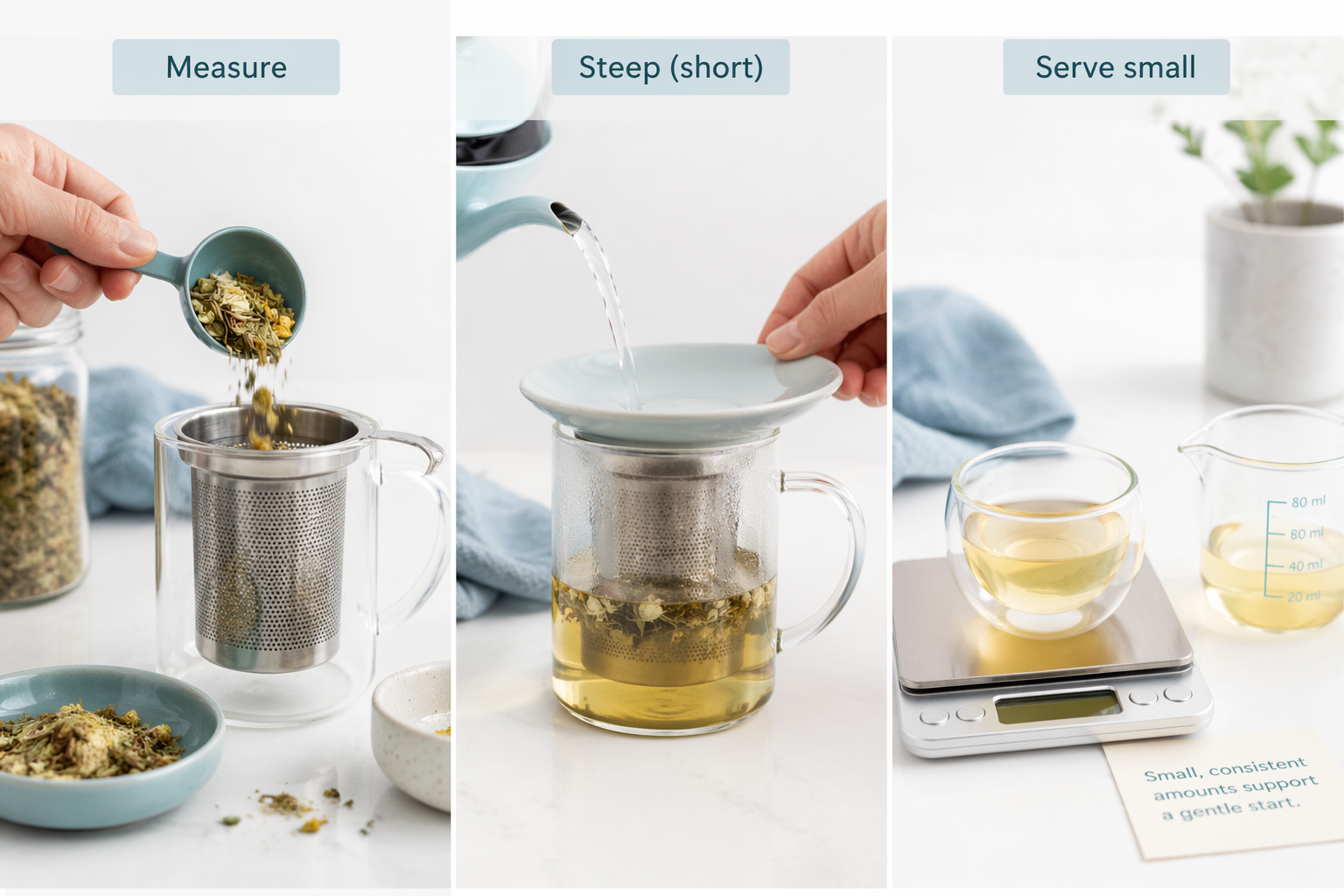
A gentle brew is usually the safest place to start with IBS. Plain tea or an unsweetened herbal infusion lets you test tolerance without extra variables, and a short steep is less likely to bother your gut than a strong cup that sits too long.
For practical brewing tips for tea, a simple routine works well:
- Steep briefly: Use about 5 to 10 minutes for most herbal teas.
- Cover the mug: Keep a lid or small plate on top while it steeps so volatile oils stay in the cup, especially with peppermint-style teas.
- Avoid overcooking: Don’t boil tea bags directly or simmer them for too long.
- Start small: Begin with a small serving, then increase slowly only if it feels comfortable.
Loose-leaf tea can also be a good option. A steep of about 5 minutes often draws out plenty of plant material without making the drink too strong. Loose-leaf tea may also contain more antioxidants than many tea bags, so you can aim for a balance between potency and tolerance.
What you add matters just as much as how you brew it. Skip honey, agave, and sugar alcohols such as sorbitol and xylitol, since they can trigger IBS symptoms for some people. Plain tea is the safest choice, though a small squeeze of lemon is usually easier to tolerate than sweetened syrups or heavy sweetening.
A few extra cautions are worth keeping in mind. Large amounts of some teas can interact with medicines, and even a tea that helps one symptom may worsen reflux or cramps. Extra care is smart during pregnancy, and persistent, severe, or worsening symptoms deserve personalized medical advice.
What Safety Issues Should You Check First?
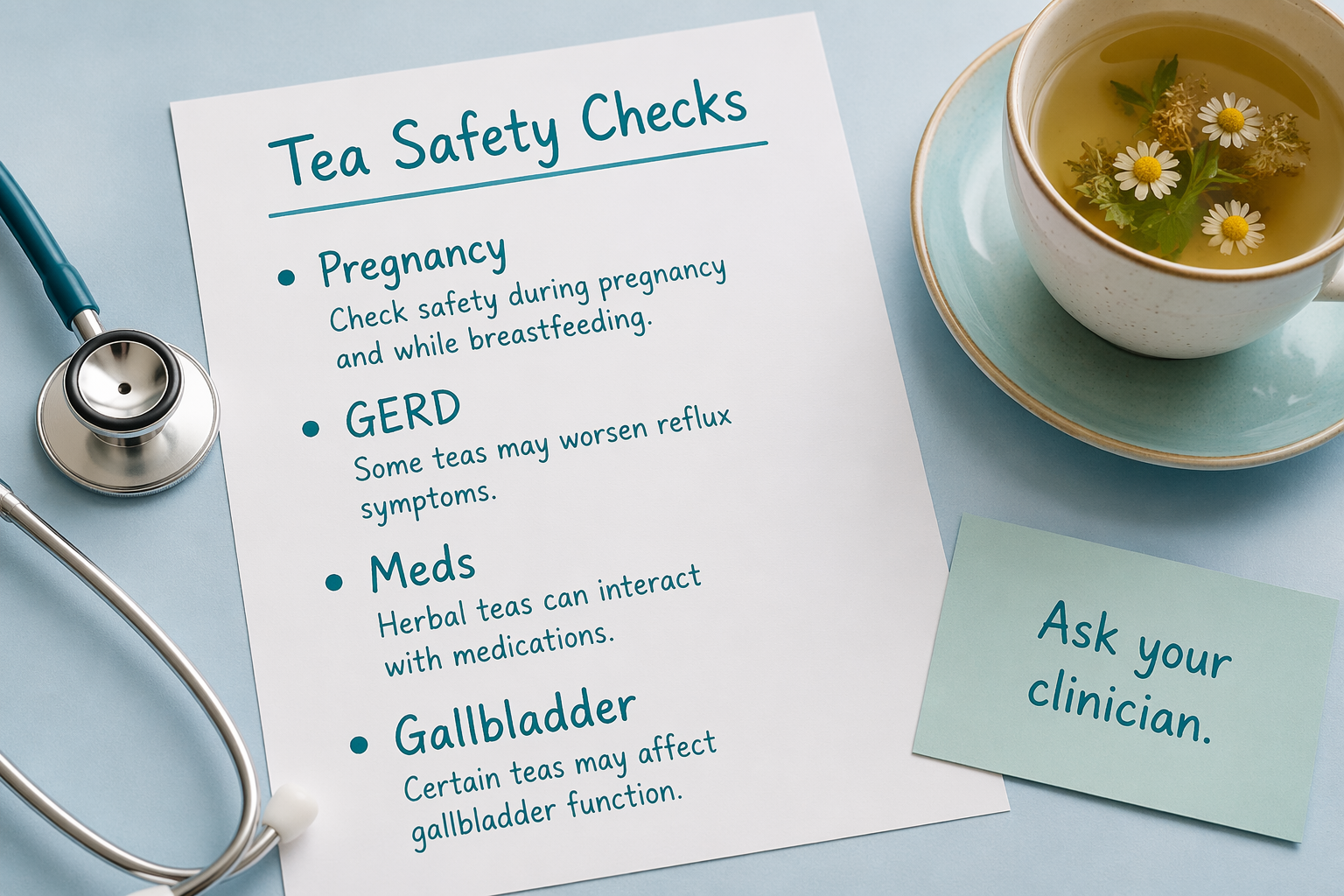
The safest way to test tea for IBS is to screen for a few health issues first. Herbal tea safety matters because “natural” does not mean harmless, and the right choice for one person can be the wrong choice for another.
A quick check can narrow the field fast:
- Pregnancy and breastfeeding: Many herbs have not been studied well in pregnancy. If you are pregnant, nursing, or trying to conceive, skip medicinal amounts and blended teas unless a clinician says they fit your situation.
- Gallbladder disease and diabetes medicines: Turmeric, curcumin, ginger, and other active blends need extra caution. Turmeric and curcumin may be a poor fit if you have gallbladder problems, and teas with anti-inflammatory effects can change blood sugar needs.
- GERD: Peppermint can calm cramping, but it may also relax the lower esophageal sphincter. That can worsen heartburn, regurgitation, or throat irritation. If reflux is part of your IBS picture, avoid peppermint if GERD is an issue and choose a gentler tea instead.
- Prescription drug interactions: Check interactions with medication before making tea a daily habit, especially if you take antidepressants or blood pressure medicines. Licorice root tea can raise blood pressure in large amounts, and green tea compounds may affect drugs such as nadolol, atorvastatin, and raloxifene.
- Ongoing or severe symptoms: Persistent pain, bleeding, fever, weight loss, vomiting, or a clear change in bowel habits needs medical review. Herbal teas can support symptom management, but they should not replace evaluation when symptoms are severe or changing.
For many people, rooibos for digestion or decaffeinated green tea is a gentler place to start. Tolerance still varies, so try one tea at a time, keep the serving modest, and track how you feel.
That approach fits evidence-based dietary recommendations because it gives you a safer test, not a guess. If your health history or medicines make tea choices unclear, ask for clinician guidance before you start.
How Should You Test A Tea One At A Time?
A simple test works better than a big tea haul. For a tea for IBS, the cleanest approach is to start with one mild option, keep the first cup weak, and give your body a short, controlled trial before you add anything else.
Peppermint or ginger are smart first picks because they’re easy to judge and commonly used for IBS symptoms. Blended herbal teas can be harder to read because several ingredients may affect digestion in different ways.
Try one tea at a time like this:
- Pick one tea: Start with peppermint or ginger, then pause on other blends until you know how that one sits with you.
- Brew it weakly: Use a shorter steep time and avoid extra-strong cups. Keep the recipe the same each time.
- Keep it plain: Skip milk, sugar alcohols, honey substitutes, and other high-FODMAP add-ins so you can judge the tea itself.
- Test for 2 to 3 days: Drink the same cup size at about the same time each day.
- Watch the same signals: Notice bloating, pain, nausea, stool form, urgency, reflux, or any new discomfort.
The best match often depends on your main symptom pattern. Peppermint is often the better fit for cramping and bloating. Ginger may help more when nausea or fullness is the bigger issue. Fennel can ease gas and spasms, but it is high-FODMAP for some people, so it may backfire if your gut is sensitive to that.
A simple log makes the pattern easier to spot:
What to record | Example |
|---|---|
Tea | Peppermint |
Brew strength | Light |
Steep time | 3 minutes |
When you drank it | 10 a.m. |
How you felt at 1 to 2 hours | Less cramping, mild reflux |
How you felt by day’s end | More bloating, normal stool |
If a tea clearly makes symptoms worse, stop that trial and go back to your baseline routine. If you have GERD, pregnancy, gallbladder disease, blood pressure or blood sugar concerns, or you take antidepressants, check your tea choice with a qualified healthcare professional before continuing. Digestive symptoms can have many causes, so a careful trial keeps the process safer and easier to trust.
Best Teas For IBS FAQs
These FAQs cover the tea choices people most often consider for IBS, along with the trade-offs that matter when you're dealing with bloating, cramps, or reflux. They're here to help you compare options with more confidence and less guesswork.
1. Is Caffeinated Tea Bad For IBS?
Caffeine and IBS can be a rough mix because caffeine can speed up the gut and make cramps, urgency, or loose stools worse, especially if you have IBS-D. Black tea, strong green tea, and matcha are more likely to trigger symptoms, while weak green or white tea may sit better in small amounts, much like the patterns people notice with IBS and coffee. If tea also worsens reflux or heartburn, decaffeinated options or a caffeine-free herbal tea are usually the gentler bet, and your best choice is the one that fits your own symptom pattern without making things worse.
2. Can Green Tea Help IBS Symptoms?
Green tea may offer mild anti-inflammatory support because it contains EGCG, a polyphenol linked to lower inflammation, but the evidence for IBS relief is limited and not specific to IBS. Brewed green tea is usually much gentler than EGCG supplements, so any effect is likely smaller than the concentrated extracts used in research. Caffeine can also stir up the bowels, so strong green tea or matcha may worsen urgency, cramping, or reflux, while decaf or a small, weak cup is often a safer way to test your response.
3. Which Teas Should You Avoid With IBS?
Sweetened teas are the first ones to skip when your IBS is flaring, because honey, agave, sorbitol, and xylitol can worsen gas, bloating, and diarrhea. Plain tea is usually the safest place to start, and a small squeeze of lemon is often easier to tolerate than added sweeteners. Strong or “potent” herbal blends, especially multi-herb detox-style mixes, also deserve caution, and teas with caffeine or other stimulant ingredients can make urgency and cramping feel worse during a flare, which is why IBS and kombucha is worth a careful look before you try it. Licorice root tea can raise blood pressure if you drink it often or in large amounts, while dandelion, nettle, and lavender are best treated as optional because IBS-specific evidence is weak and your tolerance may be very different from someone else’s.
4. How Many Cups Of IBS Tea Daily?
A practical starting point is 1 to 3 cups a day, and herbal tea can count toward your total hydration goal of about 2 litres daily. That range often suits both IBS-C and IBS-D if your symptoms stay steady, but you should increase slowly and watch for more bloating, cramps, urgency, or reflux. If a tea makes symptoms worse, scale back or stop, and if you have IBS-D, avoid very large amounts of strong tea while IBS-C should treat tea as hydration support, not a replacement for water or treatment. For another gentle drink option, IBS and coconut water can help you compare choices, but persistent pain, blood in stool, fever, vomiting, weight loss, or worsening symptoms need medical advice.