


IBS and coconut water can be a tricky fit for people trying to stay hydrated without triggering symptoms. FODMAPS are fermentable carbs that can draw water into the gut and feed gas-producing fermentation. A clear read on serving size, label risks, and symptom patterns helps separate a useful sip from a flare-up trigger.
The article covers how coconut water affects bloating, gas, diarrhea, and hydration, along with the differences between IBS-D, IBS-C, and IBS-M. It also shows how to read labels for sorbitol, inulin, and added sugar, then test a small portion and track the result. That leaves readers with a practical way to decide whether a plain serving fits a low-FODMAP plan.
Adults with IBS, along with caregivers helping manage food choices at home, stand to gain the most from this kind of guidance. Busy parents and professionals can use a simple test, like trying 100 mL of plain coconut water and noting urgency or bloating later that day, to make a safer call. When the pattern stays clear, coconut water becomes a manageable choice instead of a guessing game.
IBS and Coconut Water Key Takeaways
- Coconut water may help hydration but can worsen IBS symptoms.
- Small servings are more likely to fit a low-FODMAP approach.
- Larger amounts increase the risk of bloating, gas, and diarrhea.
- IBS-D often reacts more strongly than IBS-C.
- Plain coconut water is safer than flavored versions.
- Check labels for sorbitol, inulin, chicory root, and added sugar.
- Stop using it regularly if symptoms keep returning.
Is Coconut Water Good for IBS?
Coconut water is one of the soothing beverages for IBS, and can be a mixed choice for Irritable Bowel Syndrome (IBS). It may support Hydration and provide Electrolytes, but it also contains fermentable carbohydrates such as fructans and sorbitol that can worsen bloating, gas, pain, or diarrhea in sensitive people. Drinks to reduce IBS symptoms are worth comparing against your own symptom pattern.
The main takeaway is simple. Coconut water is not automatically good or bad for IBS. Small servings may fit a low-FODMAP approach for some people, while larger amounts increase the FODMAP load and are more likely to trigger symptoms. It can also help replace lost fluids and Potassium after diarrhea, sweating, or time in the heat. That makes it a hydration choice, not an IBS treatment.
Tolerance often depends on your IBS subtype and symptom history. People with IBS-D may notice urgency or looser stools sooner. Others may handle plain coconut water without much trouble. The gut microbiome can also react differently from person to person, which helps explain why one drink can feel fine one day and rough the next.
A safer way to try it looks like this:
- Choose plain coconut water with no added sugar or high-FODMAP ingredients.
- Start small with a few sips or a short glass.
- Track bloating, stool changes, pain, and urgency for the next day.
- Adjust based on your own results, not a one-size-fits-all rule.
If you have kidney disease or take medicines that affect Potassium, check with a healthcare professional before using it regularly. Persistent flare-ups after Coconut water deserve medical review.
How Can Coconut Water Affect IBS Symptoms?
Coconut water can seem like a gentle swap for soda or juice, but it is not always easy on IBS. In IBS, fermentable carbohydrates can trigger symptoms such as gas, bloating, cramps, and diarrhea, and coconut water may be a problem for some people because it can contain FODMAPs such as fructans and sorbitol (source). These poorly absorbed carbs can pass into the colon and act like a trigger instead of a simple hydration choice. That pattern is similar to other common triggers, including coffee and gut sensitivity.
Once fermentable oligo-, di-, mono-saccharides and polyols (FODMAPS) reach the gut, they can draw water into the intestines and then ferment. Fermentation means gut bacteria break them down and release gas. That helps explain why some people notice Bloating, cramping, abdominal pain, loose stools, or a sudden urge to go after drinking Coconut water. A recent clinical review on low-FODMAP food tolerance discusses how these carb types can drive symptoms in sensitive people (source).
Sorbitol can also have a laxative effect. It may increase urgency and make bowel movements feel less predictable. That is why coconut water can be more likely to worsen Diarrhea in diarrhea-predominant IBS and mixed IBS. The hydration upside is real, though. Coconut water is mostly water, so it can help with fluids if your gut tolerates it. The catch is that its FODMAPS can outweigh that benefit when your system is sensitive.
Here’s a simple way to think about the tradeoff:
What coconut water may offer | What it may trigger |
|---|---|
Fluid intake | Better hydration support |
Fructans and Sorbitol | Gas and Bloating |
Fermentation in the colon | Cramping and looser stools |
Too much Sorbitol | Urgency and sudden bowel movements |
Tolerance varies from person to person. Start with a small serving, track your symptoms, and compare your response with other drinks and meals so you can spot your own pattern.
What Changes With IBS-D, IBS-C, And IBS-M?
IBS subtype matters because coconut water can feel different from one day to the next. The biggest clue is where your symptoms usually land, since the drink is more likely to feel gentle in constipation-prone patterns and more likely to cause trouble when loose stools are part of the picture.
IBS subtype | Typical response | Main caution |
|---|---|---|
IBS-D | Often the worst fit | Natural sugars, including Sorbitol and other poorly absorbed carbs, can pull water into the gut and may worsen Diarrhea, urgency, gas, and cramping |
IBS-C | Sometimes better tolerated in small amounts | Water, Potassium, and Magnesium may support hydration, but larger servings can still be too much |
IBS-M | Hardest to predict | A serving may feel fine on a constipation day and aggravate symptoms on a diarrhea day |
For IBS-D, even a modest serving can trigger Bloating or looser stools if your gut is sensitive. Sorbitol and other fermentable carbs, including Fructans, can ferment in the gut and add gas and pain. That matters even more after larger servings, which can push IBS-D and IBS-M toward a flare.
IBS-C may be easier to manage with small amounts of coconut water than IBS-D for some people, but tolerance varies and should be tested individually (source). The fluid and electrolytes can support hydration, and that may help stool feel softer. Even so, the same Magnesium and Potassium that seem helpful can become too much in a bigger serving.
A quick size check helps:
- 8 ounces: check the Nutrition Facts label for the exact amount.
- 2 cups: check the Nutrition Facts label for the exact amount.
Nutrition values vary by brand, but coconut water can contribute potassium, magnesium, and carbohydrate, so readers should check the Nutrition Facts label for the exact numbers in their product (source).
Tolerance varies a lot. Some people with IBS feel fine, while others notice gas, Bloating, or loose stools after coconut water. The safest approach is to test a small serving, track your symptoms, and avoid assuming one subtype rule fits everyone.
If you have frequent diarrhea, dehydration risk, or symptoms that are persistent, severe, or worsening, coconut water should not replace personalized medical advice. Talk with a qualified healthcare professional.
How Much Coconut Water Is Low FODMAP?
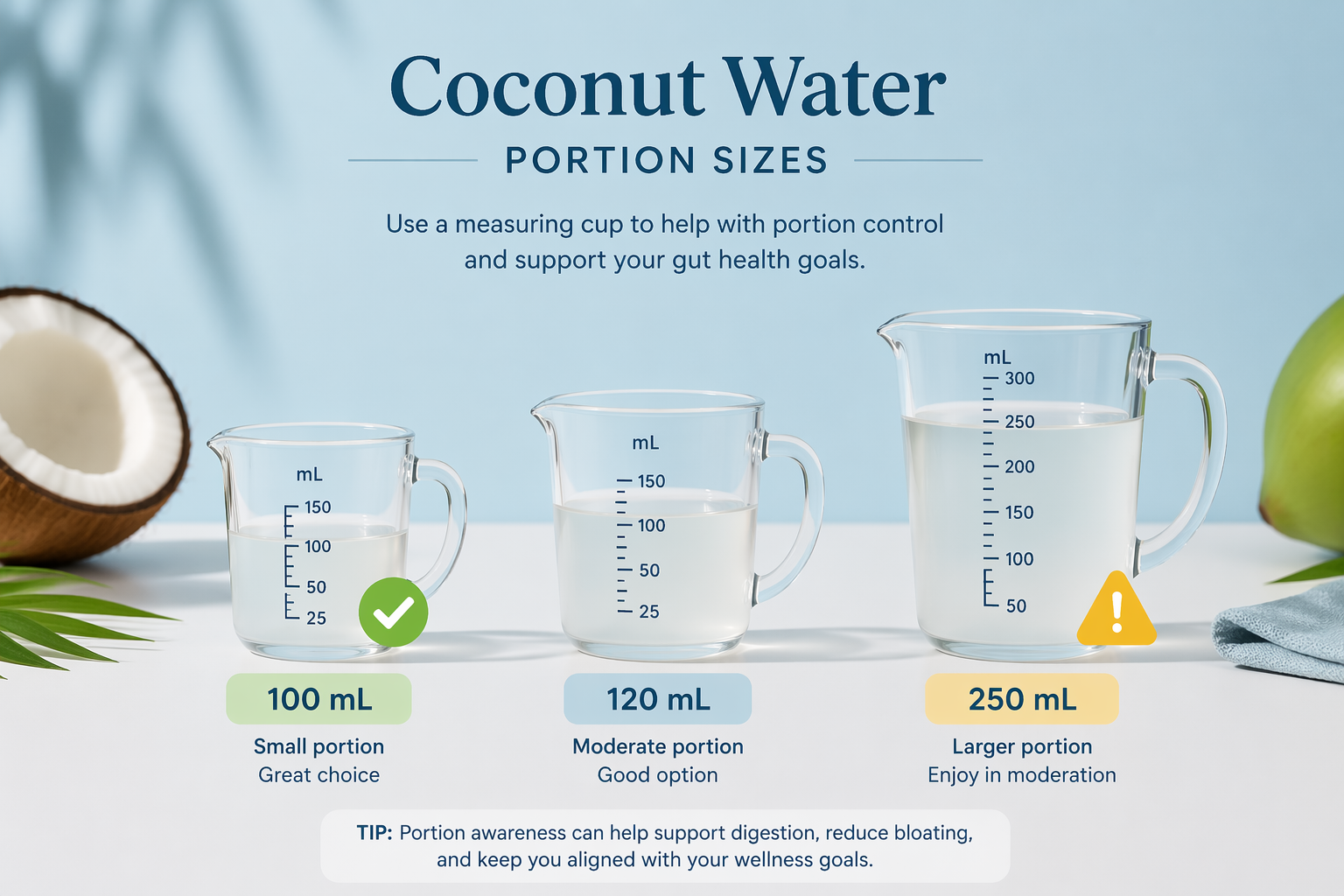
Coconut water is usually high in FODMAPS overall, but dose matters a lot. A small serving may fit a low-FODMAP approach for some people with IBS, but the exact amount should be checked against an authoritative FODMAP reference before you treat it as a standard portion . Larger portions are more likely to push the drink into a higher-FODMAP range and bring on bloating, gas, or a flare-up in sensitive readers.
Amount | Rough size | Likely IBS fit |
|---|---|---|
100 to 120 mL | 1/3 to 1/2 cup | Usually the safest test portion |
About 250 mL | 1 cup | More likely to trigger symptoms |
240 to 350 mL | 8 to 12 oz bottle | Often too much for sensitive guts |
Portion control is the practical move here. Keep intake below 1 cup, especially the first time you try it, then track bloating, gas, stool changes, and comfort over the next several hours. If you want more, spread it across the day rather than drinking it all at once.
Plain coconut water is usually the better choice. Flavored blends can add fruit juice, added sugar, or other high-FODMAP ingredients that make symptoms more likely. If you want to dilute coconut water, mix a small amount with plain water and check the label before you pour.
A simple first try looks like this:
- Start with 100 to 120 mL
- Choose plain coconut water
- Skip higher-FODMAP foods in the same sitting
- Watch your symptoms before increasing the amount
How Do You Read Labels Safely?
Start with the ingredient list, not the front label. A plain coconut water with a short list is usually the safer pick for a Low FODMAP approach, especially when it skips added sugar, syrups, or vague “natural flavors” that can hide extra sweeteners.
Screen for fermentable additives that can bother IBS. Watch for Polyol sweeteners such as sorbitol, xylitol, and mannitol. Inulin and chicory root can also show up in flavored drinks and may lead to bloating or urgency.
Serving size matters just as much as ingredients. A single bottle can contain more than the less-than-one-cup portion, about 250 mL, that is often easier to tolerate. Coconut water can bother you in larger amounts even when the label looks clean.
A quick label check can help you sort the options fast:
Label clue | What it usually means |
|---|---|
Plain coconut water | Better fit for IBS testing |
Fruit blends or juice concentrates | Higher risk of extra FODMAPS |
Honey, agave, or added sugar | Less predictable for symptoms |
Inulin or chicory root | Possible trigger for gas and bloating |
The electrolyte benefit is real. Coconut water naturally contains potassium, which can help hydration. That benefit does not cancel out label risks, so the plainest product is still the safest choice.
If plain coconut water still causes bloating, gas, or urgency, switch to other low-FODMAP fluids. Coconut milk is a different product and should not be treated as a swap with the same gut response. Fewer additives usually means fewer surprises for your gut.
How Should You Test Coconut Water Safely?
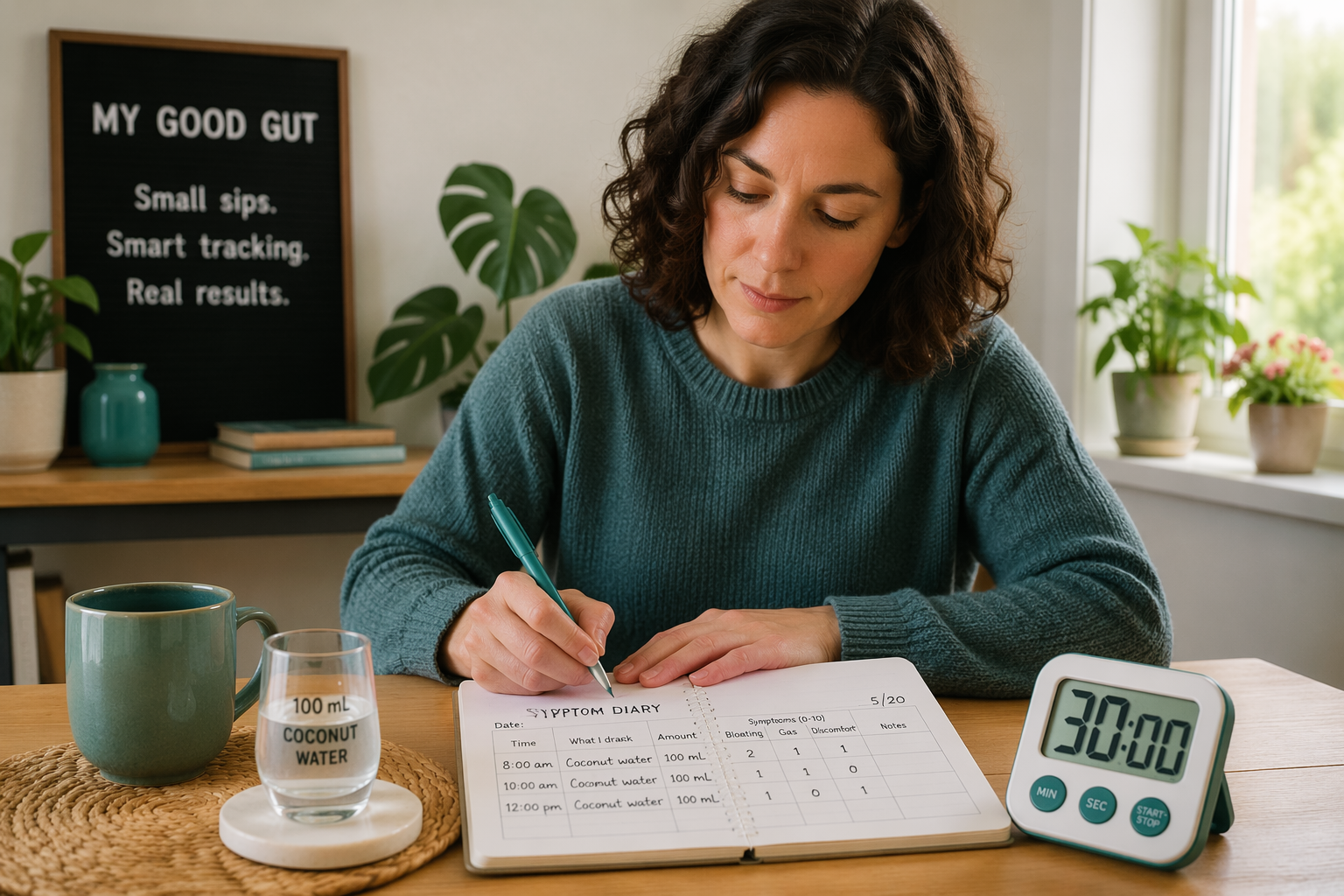
Start small and treat coconut water like a test, not a daily habit. A full glass can be too much for some people with IBS, especially because coconut water can add a larger FODMAP load than many expect. A plain 100 mL serving is a safer first check, and it lets you see how your gut responds without jumping straight to a full cup.
Keep the first try simple. Choose plain coconut water with no added sugar, sweeteners, or other high-FODMAP ingredients. If that amount feels fine, you can test a little more on another day, but keep the Serving size well below 1 cup, or about 250 mL, until your pattern is clear.
A calm, low-stress trial is easier to read:
- Pick a time when your stomach feels settled.
- Drink about 100 mL of plain coconut water.
- Avoid pairing it with a new meal, snack, or supplement.
- Watch for bloating, gas, cramps, urgency, or looser stools over the next several hours.
- If symptoms stay quiet, try a modestly larger amount on another day.
- Stop increasing the dose if the same symptoms keep showing up.
Dilute coconut water if you want to stretch the drink while lowering the load per sip. Plain water works well. Sparkling water can also work if carbonation does not bother your IBS, but bubbles can irritate some people, so let your own symptoms decide.
A Food and symptom diary makes the pattern much easier to spot. Use a short, structured trial period and record symptoms each time you try coconut water so you can compare your response over time (source). Use it to record a few simple details:
- Amount: how much you drank
- Mix: whether you chose to Dilute coconut water
- Timing: when you drank it
- Symptoms: what happened, when it started, and how strong it felt
Your IBS pattern should guide the pace. People with IBS-D may notice urgency or loose stools faster, so they often need a slower trial and a lower ceiling. Anyone with kidney disease, diabetes, or potassium restrictions should check with a clinician before testing coconut water, since it may not fit every health plan.
If the same reaction shows up more than once, stop raising the amount and treat that as your answer. A cautious test gives you cleaner data and a better chance of learning whether coconut water fits your body.
What Should You Track In Your Symptom Diary?
A good symptom log turns a one-off coconut water test into useful evidence. A Food and symptom diary helps you track the drink itself, the timing, and your body’s response so you can spot patterns instead of guessing.
Track these details each time you try it:
- Drink details: brand or product name, plain or flavored, the exact amount, and the time you drank it. For a first trial, about 100 mL gives you a steady starting point.
- Timing after the drink: Record symptoms at several points after you drink coconut water, then compare them with your usual pattern later that day and the next morning (source).
- Stool changes: record stool form, number of bowel movements, urgency, loose stool, constipation, or a feeling of incomplete emptying.
- Other gut symptoms: write down gas, bloating, cramping, nausea, and pain. Note where the discomfort is, how strong it feels, and how long it lasts.
- Other factors: list meals, drinks, medications, fiber supplements, probiotics, and stress that may have affected the result.
- Overall result: mark each trial as better, same, or worse.
That final note matters. If plain coconut water keeps lining up with worse symptoms, it probably is not a good fit for you.
What Are Better Options And When Should You Avoid It?
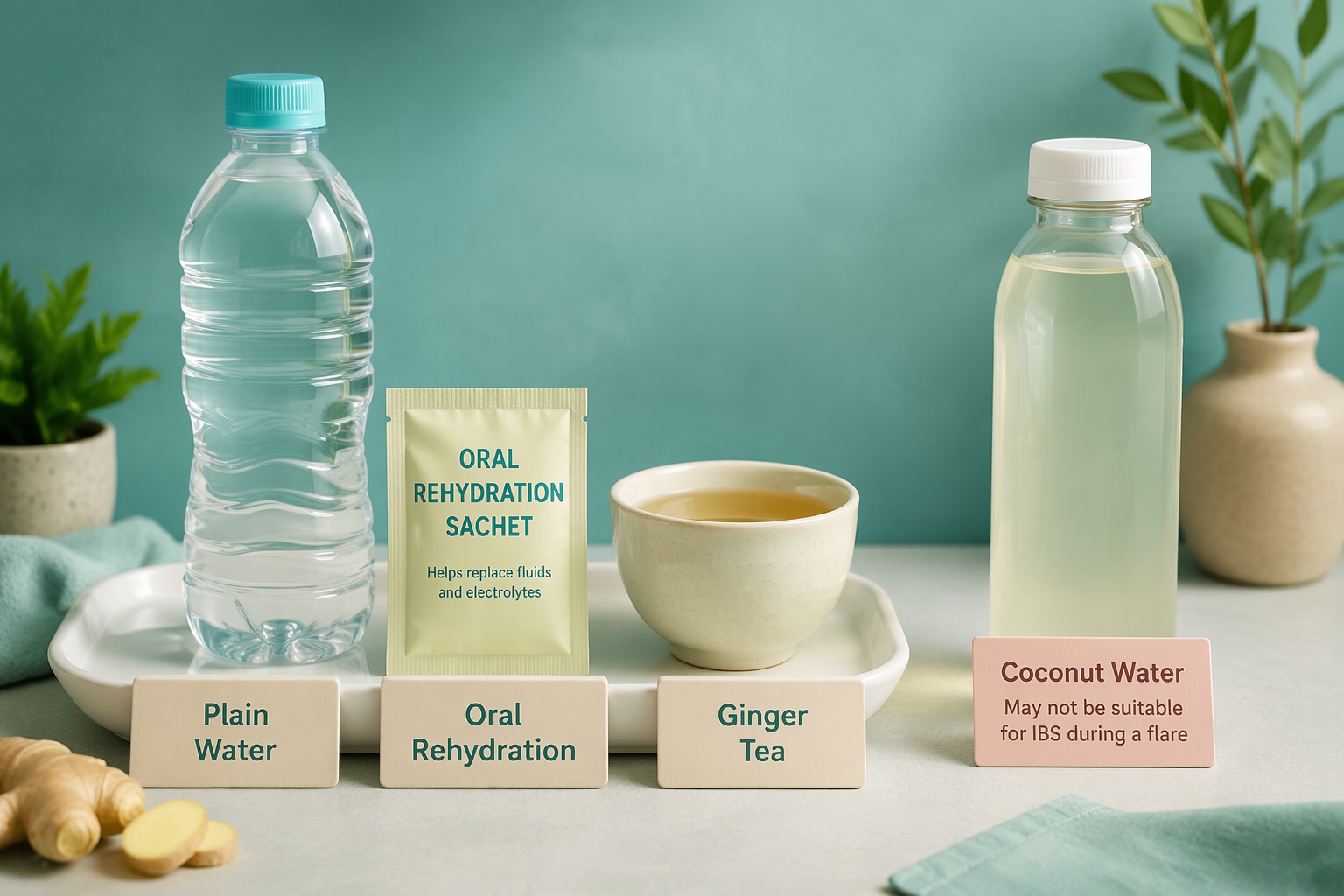
Coconut water can still fit into your day when you want light Hydration after mild diarrhea or a sweaty workout. It provides some Electrolytes, including potassium, Magnesium, and a little sodium, so it may help replace what you lose with Dehydration. Treat it as a hydration aid, not an IBS treatment or a stand-in for medical care.
Switch to a gentler fluid plan if coconut water seems to raise bloating, urgency, or looser stools. Plain water is the safest default. An oral rehydration solution can be a better choice when you need a more balanced fluid option. Low-FODMAP drinks without added sweeteners or other high-FODMAP ingredients can also be easier on your gut.
A few situations call for extra caution:
- Kidney disease or high potassium history: People with kidney disease or potassium-related medication use should be cautious, because coconut water can add potassium and may not be appropriate for everyone (source).
- Potassium-raising medications: some blood pressure medicines, diuretics, and other drugs can increase potassium levels, so medical guidance matters first.
- Severe IBS-D or cramping: during a flare, coconut water may feel too irritating for some people and can make inflammation feel more active.
- Ongoing dehydration symptoms: dizziness, weakness, or persistent diarrhea can point to something beyond diet alone.
Coconut milk is a different product. Small amounts are often lower in FODMAPS, but the higher fat content can still be rough on a sensitive gut. If you want other drink ideas, best digestive teas for IBS may feel gentler, while kombucha for IBS symptoms is worth treating with more caution.
If symptoms persist or worsen, get medical help. Digestive symptoms can have many causes, and persistent diarrhea, dehydration, dizziness, or weakness deserves a closer look.
When Should You Call A Doctor?
Coconut water is a food, not a rescue plan. If your IBS symptoms get worse than usual, last longer than expected, or start soon after coconut water when they normally do not, check in with a clinician. Persistent diarrhea, cramping, or bloating should not be brushed off as a normal reaction.
Call for medical advice right away if you notice signs of Dehydration. Those signs can include dizziness, a dry mouth, very dark urine, weakness, or peeing much less than usual. Coconut water may replace some fluids and electrolytes, but it is not enough when you are losing a lot of fluid.
Seek urgent care if you have any of these symptoms:
- Severe abdominal pain
- Blood in the stool or black stools
- Repeated vomiting
- Vomiting that keeps you from holding down fluids for more than a day
Some people need extra caution with large amounts of coconut water. That includes people with kidney disease and people taking certain medications, because the potassium can raise the risk of Hyperkalemia and lead to muscle weakness or heart rhythm problems. Hives, throat swelling, breathing trouble, or sudden vomiting after coconut water should be treated as an emergency.
IBS and Coconut Water FAQs
These FAQs cover the questions that matter most when you’re deciding whether coconut water fits your Irritable Bowel Syndrome routine. They focus on tolerance, serving size, and the symptoms people often notice first.
1. Can Coconut Water Trigger IBS-D?
Yes, coconut water can trigger IBS-D in some people, especially when servings are large. A small serving may be fine, but larger amounts are more likely to loosen stools or speed up bowel movements. It’s still mostly water and provides electrolytes like potassium, so it may help with hydration after diarrhea, but if you notice more cramping, loose stools, or urgency after drinking it, limiting or avoiding it makes sense.
2. Is Plain Coconut Water Better Than Flavored?
Plain coconut water is usually the better IBS choice because it keeps the ingredient list shorter. Flavored versions can include polyols like sorbitol or xylitol, plus inulin or chicory root, which may ferment in the colon and add to bloating or gas. If plain coconut water still bothers you, switch to another low-FODMAP hydrating drink instead of trying to push through symptoms.
3. Does Coconut Water Help IBS Dehydration?
Coconut water can support rehydration, especially after diarrhea. Keep the portion small, around 100 to 120 mL, or about 4 oz, because larger servings are more likely to be high FODMAP and can trigger bloating, cramps, or loose stools. Treat it as a support option, not a substitute for medical care, if dehydration feels severe or symptoms keep coming back.
4. Can Coconut Water Cause Gas Or Bloating?
Yes, coconut water can cause gas or bloating for some people with IBS, and a larger serving raises that risk. The risk goes up with a larger serving or during a FODMAP flare, when even a small sugar load may feel like too much. If you want to test it, start with a small serving of plain coconut water, skip added juice or sweeteners, and dilute it with water if you tolerate it. If bloating keeps coming back, coconut water may not be a good fit for you right now.