


Bloating that keeps returning after meals, along with gas, constipation, or diarrhea, doesn't automatically mean SIBO. SIBO occurs when excess bacteria are present in the small intestine, where they can ferment carbohydrates and contribute to discomfort. Similar symptoms commonly overlap with IBS, so a symptom pattern alone cannot settle the cause.
Hydrogen and methane breath testing after glucose or lactulose can add useful evidence, but preparation, transit time, and health history affect results. The American College of Gastroenterology guideline lists antibiotics such as rifaximin among treatment options, while methane-predominant patterns may be managed differently. Slow motility, prior abdominal surgery, and certain medicines can help explain SIBO causes and relapse.
Restrictive diets may reduce symptoms for some people, but they do not correct poor intestinal movement or structural problems. Unintentional weight loss, ongoing diarrhea, reduced appetite, or difficulty eating deserve prompt discussion with a gastroenterologist.
SIBO Symptoms and Treatment Key Takeaways
- SIBO can cause bloating, gas, abdominal discomfort, diarrhea, constipation, or shifting bowel habits.
- IBS and SIBO share symptoms, so symptoms alone cannot confirm either condition.
- Glucose or lactulose breath tests measure hydrogen and methane patterns.
- Slow motility, altered anatomy, and acid-suppressing medicines can raise SIBO risk.
- Rifaximin is commonly used, with different antibiotic approaches considered for methane-predominant patterns.
- Short-term dietary changes may ease symptoms but do not treat underlying causes.
- Relapse may reflect persistent motility, structural, medication-related, or digestive contributors.
What Is SIBO and Why Does It Develop?
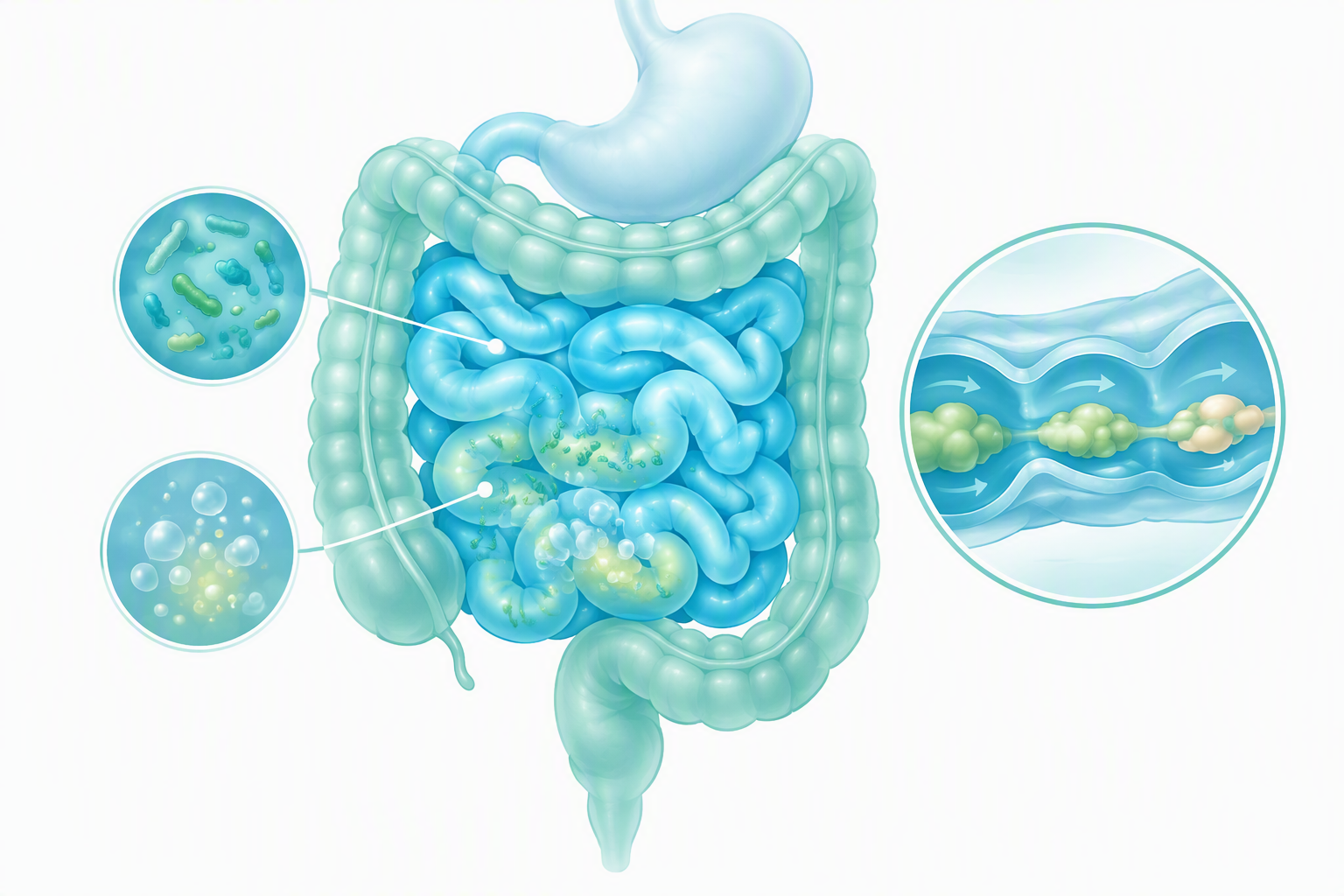
Small intestinal bacterial overgrowth (SIBO) occurs when too many bacteria, including types more common farther along the digestive tract, are present in the small intestine. It is not caused by poor hygiene or “bad” bacteria. Intestinal movement and bile normally limit bacterial growth, so SIBO reflects a disruption in that balance (source).
When bacteria collect where there should be fewer, they ferment carbohydrates before your body can fully absorb them. The resulting gas can stretch the intestine, causing pressure, cramping, and abdominal bloating. Excess bacteria may also interfere with bile salts, which help digest dietary fats.
SIBO symptoms often shift with meals and from day to day. Common patterns include:
- Abdominal bloating: A tight, swollen, or uncomfortable feeling, often after eating.
- Abdominal pain: Cramping, pressure, or general discomfort that may improve after passing gas or having a bowel movement.
- Gas and early fullness: Frequent burping, passing gas, or feeling full sooner than expected.
- Bowel habit changes: Loose stools, diarrhea, constipation, or alternating patterns.
- Possible weight loss: Persistent nutrient malabsorption may contribute to unintentional weight loss for some people, but it is not expected in everyone.
Nutrient malabsorption means your body is not absorbing nutrients as effectively as it should. Over time, bacteria can compete for nutrients and disrupt digestion, which may contribute to diarrhea or early fullness. Ongoing diarrhea, unintentional weight loss, or symptoms that make eating difficult warrant medical discussion.
These symptoms do not confirm SIBO by themselves. The same pattern can overlap with irritable bowel syndrome (IBS) and other digestive conditions, and self-diagnosis can lead to unnecessary food restrictions or missed answers. The the gastrointestinal disorders pillar places recurring symptoms in a broader digestive-health context.
If digestive symptoms repeatedly disrupt meals, work, sleep, or family routines, bring a clear symptom history to a gastroenterologist. Tracking timing, bowel changes, and any unintentional weight loss can help focus the evaluation on likely causes.
Could Your Symptoms Be SIBO or IBS?

Because recurring digestive symptoms can also reflect IBS, SIBO and IBS often overlap, so symptoms alone cannot confirm either condition. Both SIBO and IBS can cause recurring abdominal bloating, excess gas, abdominal pain or cramping, and bowel habits that shift from day to day. An IBS-like pattern is a reason to discuss SIBO with a clinician, not a way to diagnose yourself.
Bowel changes can look different from person to person. Diarrhea may be loose, watery, or urgent, while constipation can involve infrequent stools that are hard to pass or leave you feeling incompletely emptied. Some people alternate between both patterns. SIBO symptoms are not limited to diarrhea, so the duration, repeat pattern, and accompanying symptoms matter more than one difficult day.
Meals may bring on visible abdominal distention, belching, nausea, excess gas, pain, or uncomfortable fullness soon after eating. IBS can cause these symptoms as well, and the National Institute of Diabetes and Digestive and Kidney Diseases includes abdominal pain and bowel-habit changes among common IBS symptoms (source).
Some symptoms need medical assessment rather than increasingly restrictive eating:
- Unintentional weight loss: Losing weight without trying can suggest inadequate intake, poor absorption, or another condition.
- Reduced appetite or early fullness: Feeling unable to finish meals because you become full quickly deserves discussion with a gastroenterologist.
- Persistent fatigue: Ongoing exhaustion can relate to inadequate nutrition, sleep disruption, or another health concern.
- Ongoing diarrhea: Frequent loose stools can affect hydration and nutrition and have causes beyond SIBO or IBS.
- A worsening pattern: New or increasing pain, bloating, or reduced ability to eat provides important clinical information.
A symptom record can make your appointment more useful. Note meals, symptom timing, stool changes, medicines, supplements, and relevant medical conditions, while avoiding assumptions that one food explains the underlying cause.
A gastroenterologist can use this history and appropriate testing to decide what to evaluate. How SIBO differs from IBS can help you prepare for that conversation without treating a checklist as a diagnosis.
What Causes SIBO and Raises Your Risk?
SIBO can develop when the small intestine's usual defenses no longer move bacteria forward or keep their numbers balanced. These SIBO causes may help explain recurring symptoms, but SIBO risk factors do not confirm a diagnosis or mean that food choices alone caused the problem.
Intestinal motility, the movement that carries food through the digestive tract, is a key defense. Between meals, the migrating motor complex creates housekeeping contractions that sweep leftover food and bacteria forward. When this pattern slows, bacteria have more opportunity to multiply in the small intestine. Diabetes and SIBO may be connected when diabetes-related nerve damage disrupts this movement.
Gastroparesis, scleroderma, hypothyroidism, and narcotic pain relievers can also slow transit.
Other changes can make bacterial overgrowth more likely:
- Low stomach acid: Stomach acid helps limit bacteria that enter with food before they reach the small intestine. Long-term use of proton pump inhibitors and other acid-suppressing medicines may raise SIBO risk, so medication history should be part of the evaluation (source). Discuss prescribed medicines with your clinician before making changes.
- Changes in intestinal structure: Intestinal adhesions, small-bowel diverticula, fistulas, radiation-related injury, and surgically altered loops can create areas where food and bacteria stay longer than usual.
- Surgery or reduced bowel length: Prior abdominal procedures, including gastric bypass, stomach-removal surgery, and other small bowel surgery, can alter digestion and normal intestinal flow. Short bowel syndrome may create similar challenges.
- Conditions that affect digestion or movement: Crohn's disease, celiac disease, pancreatitis, cirrhosis, and some cases of irritable bowel syndrome can affect inflammation, digestive secretions, or movement through the intestines.
A clinical review describes how altered anatomy, impaired movement, reduced acid, and certain illnesses may contribute to bacterial overgrowth (source). None of these conditions makes SIBO inevitable, and similar symptoms can have other explanations.
Persistent bloating, bowel changes, or abdominal discomfort can disrupt meals, work, and family routines. When these symptoms occur alongside one of these risk contexts, a gastroenterologist can consider your symptom history, medications, and appropriate testing options.
Probiotics get blamed for SIBO and tried for it in equal measure, and the probiotic evidence for SIBO is thin either way.
Celiac disease and SIBO also overlap, since untreated celiac disease damages the lining that normally keeps bacterial numbers low.
How Do Hydrogen and Methane Differ?
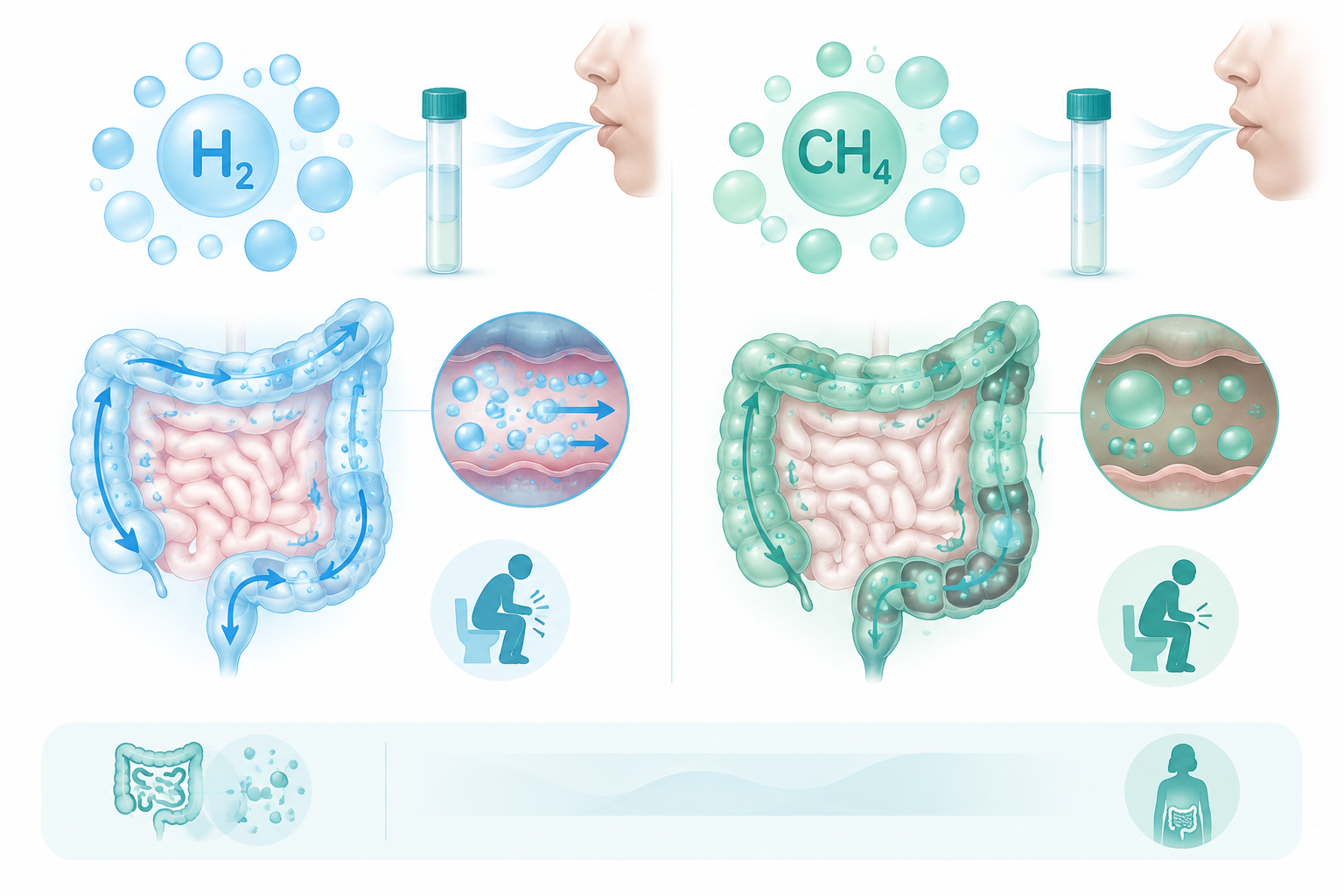
To distinguish symptoms shaped by these risk factors, Hydrogen vs methane SIBO refers to breath-test patterns, not separate diseases or a diagnosis based on symptoms alone. During carbohydrate fermentation, some microbes produce hydrogen, while methane-forming microbes use hydrogen to make methane. The breath test that detects SIBO may show hydrogen-predominant, methane-predominant, or mixed results that need to be considered alongside your health history.
Hydrogen-predominant breath-test patterns are more often linked with diarrhea. Fermentation can increase gas and short-chain fatty acid production, which may contribute to:
- Loose stools and urgency
- Cramping and abdominal discomfort
- Bloating or visible abdominal distension
These symptoms also occur with IBS and other digestive conditions, so hydrogen versus methane SIBO is not a complete explanation on its own.
Methane-predominant patterns are more often linked with constipation and slower transit (source). This pattern is often called intestinal methanogen overgrowth because methane producers are archaea rather than bacteria. Slower transit can involve:
- Hard or infrequent stools
- Straining during bowel movements
- A feeling of incomplete emptying
- Bloating and abdominal discomfort
Constipation driven by methane may be worth discussing with a gastroenterologist, but constipation does not automatically mean methane is involved. A methane-positive result may not account for every symptom.
Either pattern, or neither, can involve excess gas, belching, nausea, fullness after meals, and bloating. Fullness and nausea after meals with a negative breath test more often mean indigestion driven by a sensitive stomach. Meal composition, gut sensitivity, motility, and constipation can all affect how severe bloating feels.
Breath testing is a useful noninvasive tool, but preparation, sampling times, symptom patterns, bowel habits, and other possible causes affect interpretation. Review your results with a gastroenterologist before considering antibiotics for SIBO.
How Is SIBO Diagnosed?

Symptoms can point to SIBO, but they cannot confirm it. Persistent bloating, excess gas, abdominal discomfort, diarrhea, constipation, or shifting bowel habits are good reasons to speak with a gastroenterologist, so bring a symptom timeline that notes stool changes, appetite or weight changes, diet shifts, a recent stomach infection, past abdominal surgery, medicines, and supplements.
A gastroenterologist also considers other causes of IBS-like symptoms and factors that can make symptoms return. Slow intestinal motility, prior surgery, intestinal narrowing, and digestive or absorption conditions can all play a role. This wider assessment helps avoid self-diagnosis and keeps SIBO treatment focused on any underlying contributor, rather than presumed overgrowth alone. It also helps determine whether antibiotics for SIBO, rifaximin for SIBO, or prokinetics are appropriate topics for a later treatment discussion.
Breath testing is a common part of the evaluation. After following preparation instructions, you drink glucose or lactulose and provide timed breath samples that measure hydrogen and methane. A SIBO breath test needs clinical interpretation because preparation, gut transit time, and the testing method can affect the result. The North American consensus reads a hydrogen rise of 20 parts per million or more above baseline within 90 minutes as positive, and a methane level of 10 parts per million or more at any point (source).
Additional testing is not needed for every case of bloating, but concerning symptoms or history may call for a closer look:
- Blood and nutrition tests: A complete blood count, blood chemistry, albumin, or vitamin levels may help identify nutrient malabsorption.
- Stool testing: Stool-fat testing may be considered when poor fat absorption is suspected.
- Procedures or imaging: Endoscopy, biopsy, imaging, or small-bowel sampling can help investigate structural disease or another diagnosis.
Unintentional weight loss or signs of malabsorption make targeted testing more important than assuming SIBO is the cause.
SIBO diagnosis rests on the breath test plus the story around it, and the older name, small bowel bacterial overgrowth, still appears on some lab reports.
How Is SIBO Treated?

After testing and assessment clarify the diagnosis, SIBO treatment is clinician-directed and focused on both reducing overgrowth and addressing why it developed. Your symptoms, breath-test pattern, medical history, medicines, and documented nutrient deficiencies all help shape the plan.
Antibiotics are commonly used to lower bacterial overgrowth, with rifaximin, a rifamycin antibiotic, often the first choice. When methane is the dominant pattern, rifaximin may be paired with neomycin, an aminoglycoside, or metronidazole, a nitroimidazole (source).
The American College of Gastroenterology guideline also names amoxicillin-clavulanate, a beta-lactam antibiotic combination, ciprofloxacin and norfloxacin, which are fluoroquinolones, tetracycline, and trimethoprim-sulfamethoxazole, a folate-antagonist combination, among treatment options.
A treatment plan may include several parts:
- Antibiotics: These target microbes associated with SIBO symptoms.
- Treatment of the underlying driver: Slow intestinal movement, prior abdominal surgery or other structural changes, certain medicines, and low stomach acid can all contribute to recurrence.
- Nutrient correction: Vitamin or mineral deficiencies need attention when testing identifies them.
- Motility support: A prokinetic is a medicine that helps move food through the intestines. It may be used after antibiotics when slow transit or repeat SIBO is a concern.
Food changes can help manage bloating, gas, diarrhea, or constipation, but they cannot fix a structural issue or poor intestinal movement (source).
An elemental diet is a short-term liquid nutrition plan absorbed early in the small intestine. Most people do not need it, and it is generally reserved for clinician-supervised situations when standard treatment is unsuitable or has not helped.
What Should You Eat During and After Treatment?

Alongside clinician-directed treatment, a SIBO diet can support management of SIBO symptoms during treatment and recovery. Meals may affect bloating, gas, diarrhea, and abdominal discomfort, while clinician-guided testing and treatment target the underlying issue. Dietary restriction alone may not prevent SIBO relapse.
A brief meal and symptom record can capture useful details: Track patterns rather than drawing conclusions from one difficult meal:
- Meals and drinks
- Symptoms and bowel changes
- Medications
Repeated patterns can help a gastroenterologist decide what to investigate, but a single reaction does not prove that a food caused your symptoms.
A temporary low-FODMAP diet may reduce gas and diarrhea tied to fermentation. FODMAPs are fermentable carbohydrates that may be poorly absorbed and then used by gut bacteria. Most evidence comes from IBS studies, not SIBO-specific research, so this approach supports symptom management rather than treatment. Foods commonly reduced during the strict phase include:
- Beans and many lentils
- Onions and garlic
- Wheat-based foods
- Lactose-containing milk products
- High-fructose foods, stone fruits, and sugar alcohols
This plan is not automatically gluten-free or dairy-free. Wheat is often limited because of fructans, while lower-lactose dairy foods may still suit your tolerance.
Keep the strict phase short, ideally with a registered dietitian, then test one food group at a time in portions you can tolerate. Long-term restriction can narrow food variety, make meals stressful, and hide your individual triggers. Ongoing symptoms with weight loss, poor intake, or possible vitamin B12 deficiency warrant a conversation with a gastroenterologist rather than further self-restriction.
Probiotics remain an open question and are not a replacement for treatment.
Managing SIBO with diet means easing symptoms while treatment does the work, not starving the bacteria.
What If SIBO Comes Back?
SIBO can return when a contributing issue, such as slow bowel motility or a structural concern, remains. Bloating or changing bowel habits do not automatically mean SIBO is back, so repeatedly cutting out foods may not address the real cause.
While symptoms are being evaluated, aim for regular, balanced meals based on foods you tolerate and drink enough fluids. Clinical or dietitian support can be especially helpful if your food intake has become limited. Long-standing SIBO can interfere with nutrient absorption, contributing to weight loss and low levels of vitamin B12 and vitamins A, D, and E. Increasingly restrictive eating can worsen those risks.
Prompt medical assessment is needed for:
- Significant unintentional weight loss: Losing weight without trying may point to poor absorption or another condition that needs attention.
- Severe or worsening abdominal pain, fever, or dehydration: Ongoing vomiting or diarrhea can cause dehydration and should not be managed through diet changes alone.
- Blood in stool or black stools: These symptoms need prompt evaluation.
- Signs of malnutrition or nerve-related symptoms: New weakness, numbness, balance problems, or confusion warrant medical care.
Fatty, pale, floating, or hard-to-flush stools, especially with weight loss, can suggest malabsorption and are worth discussing with a gastroenterologist.
For persistent but non-urgent symptoms, a gastroenterologist can reassess bowel-motility problems, medications, structural issues, and other digestive conditions. Testing can inform the next step, but it cannot explain every digestive symptom. Bloating alone does not prove a dangerous condition, and a balanced eating plan is usually more useful than tightening your diet with every flare.
Small Intestinal Bacterial Overgrowth FAQs
These FAQs address common SIBO questions, from symptoms and testing to treatment and food choices, so you can better prepare for a conversation with your gastroenterologist.
1. Is SIBO Contagious?
No. SIBO is not considered contagious, so you cannot catch it through close contact, kissing, sharing food, or living with someone who has it. It reflects a buildup of bacteria in the small intestine, not an infection passed from person to person (source).
More often, SIBO is linked to slowed intestinal movement, structural changes, certain medical conditions, or prior abdominal surgery that affects the passage of food and waste. Persistent bloating, pain, or bowel changes warrant an evaluation with a gastroenterologist rather than assuming exposure caused your symptoms (source).
2. Can SIBO Cause Vitamin Deficiencies?
SIBO can reduce absorption of vitamin B12, fat-soluble vitamins A, D, E, and K, along with fats, proteins, carbohydrates, and calcium. Persistent malabsorption may contribute to anemia or bone-related problems. Vitamin B12 deficiency can cause fatigue, weakness, tingling, numbness, and sometimes neurological symptoms, but these signs have many possible causes. Blood tests ordered by a clinician can identify deficiencies and help determine whether treating the underlying cause matters more than self-supplementing alone.
3. Can Children Develop SIBO?
Children can develop SIBO, though bloating, diarrhea, and abdominal pain also have many other causes. Risk increases when an underlying condition, prior intestinal surgery, altered anatomy, or slow intestinal movement makes it harder to clear bacteria from the small intestine.
Talk with a pediatric clinician about persistent symptoms, especially poor growth, unintended weight loss, or concerns about nutrient intake or deficiencies. Sharing your child’s complete symptoms and medical history can help identify the cause without assuming SIBO or starting a restrictive diet on your own.
4. Can SIBO Cause Bad Breath?
Bad breath can occur with SIBO-like digestive symptoms, but odor alone cannot identify SIBO. Dental or gum problems, tongue coating, dry mouth, sinus or throat conditions, reflux, and strongly flavored foods or drinks are more common explanations.
If bad breath persists despite regular oral care, especially alongside bloating, gas, diarrhea, constipation, or abdominal discomfort, discuss the full pattern with a dentist or healthcare professional. They can assess oral, reflux-related, dietary, and gastrointestinal causes and decide whether SIBO testing fits your symptoms.