


You don't need to have a bowel movement every day to be healthy. Constipation is more about hard, painful, or difficult-to-pass stools, straining, or incomplete emptying than a missed day alone. Fewer than three bowel movements a week is a common sign, but a comfortable pattern every other day can be normal.
Routine changes, low fiber or fluids, delaying the urge, less movement, and certain medicines can all slow bowel function. First steps for constipation usually include gradual fiber increases, regular fluids, gentle activity, and unhurried bathroom time. Psyllium can help some people, but each dose needs at least 8 ounces of water.
Recurring abdominal pain that changes around bowel movements may point to IBS-C rather than occasional constipation alone. Rectal bleeding, blood in the stool, black tar-like stools, or severe and worsening abdominal pain need prompt medical care.
Constipation Key Takeaways
- Constipation can involve hard stools, straining, incomplete emptying, or fewer than three weekly bowel movements.
- Stool comfort and ease of passage matter more than having a daily bowel movement.
- Low fiber, dehydration, inactivity, delayed urges, routine changes, and medicines can contribute.
- Increase fiber gradually and pair it with regular fluids to avoid worsening gas or bloating.
- Regular movement and unhurried toilet time can support more comfortable bowel habits.
- IBS-C may involve recurring abdominal pain linked to bowel movements and constipation.
- Blood in stool, black stools, or severe worsening abdominal pain need prompt medical care.
How Does Constipation Fit Digestive Health?

Constipation is a common digestive symptom, not a personal failure or proof that you need a bowel movement every day. It may mean stools are less frequent than usual, hard or dry, painful or difficult to pass, or leave you straining and still feeling full.
There is no single answer to how often should you poop. A healthy pattern can range from three bowel movements a day to three a week. Comfort, stool consistency, ease of passage, and what is normal for you matter more than a daily schedule.
Common constipation symptoms include:
- Hard, dry, or lumpy stools
- Straining or pain during a bowel movement
- A feeling of incomplete emptying
- Bloating or abdominal discomfort
- Stools that are difficult to pass
Fewer than three bowel movements a week commonly suggests constipation, but frequency alone does not tell the whole story. Daily stools may still indicate constipation if they require major effort or hurt to pass, whereas a comfortable bowel movement every other day can be normal.
Travel, stress, disrupted meals, and routine changes can cause a short-lived shift. A lasting or noticeable change, especially with discomfort, deserves attention. The wider set of digestive disorders puts constipation in the broader context of digestive symptoms.
The next steps are to consider likely causes, try practical self-care, review treatment options, and recognize when healthcare support is needed.
What Counts as Constipation?
Constipation is not only about how often you go. Fewer than three bowel movements a week is a common benchmark, but a clear change from your usual routine can matter just as much. If bowel movements become less frequent, less comfortable, or harder to finish, constipation may be the cause. The National Institute of Diabetes and Digestive and Kidney Diseases includes both infrequent bowel movements and trouble passing stool in its definition (source).
Constipation symptoms vary, but common signs include:
- Hard dry stools: Stool may be hard, dry, small, or lumpy instead of soft and easy to pass.
- Difficulty passing stool: Straining, spending a long time in the bathroom, and painful bowel movements can occur even if you go most days.
- An incomplete bowel movement: You may feel that stool remains after you finish or that something is blocking passage through the rectum.
- Related discomfort: Bloating, abdominal discomfort, and sometimes nausea can happen alongside constipation.
Hard stools that hurt to pass can make a regular bathroom routine feel stressful and uncomfortable. Needing to use a finger to help remove stool is another symptom that deserves discussion with a healthcare professional.
A persistent or worsening shift in bowel habits, especially one that disrupts meals, work, sleep, or daily comfort, warrants attention.
What Causes Constipation?
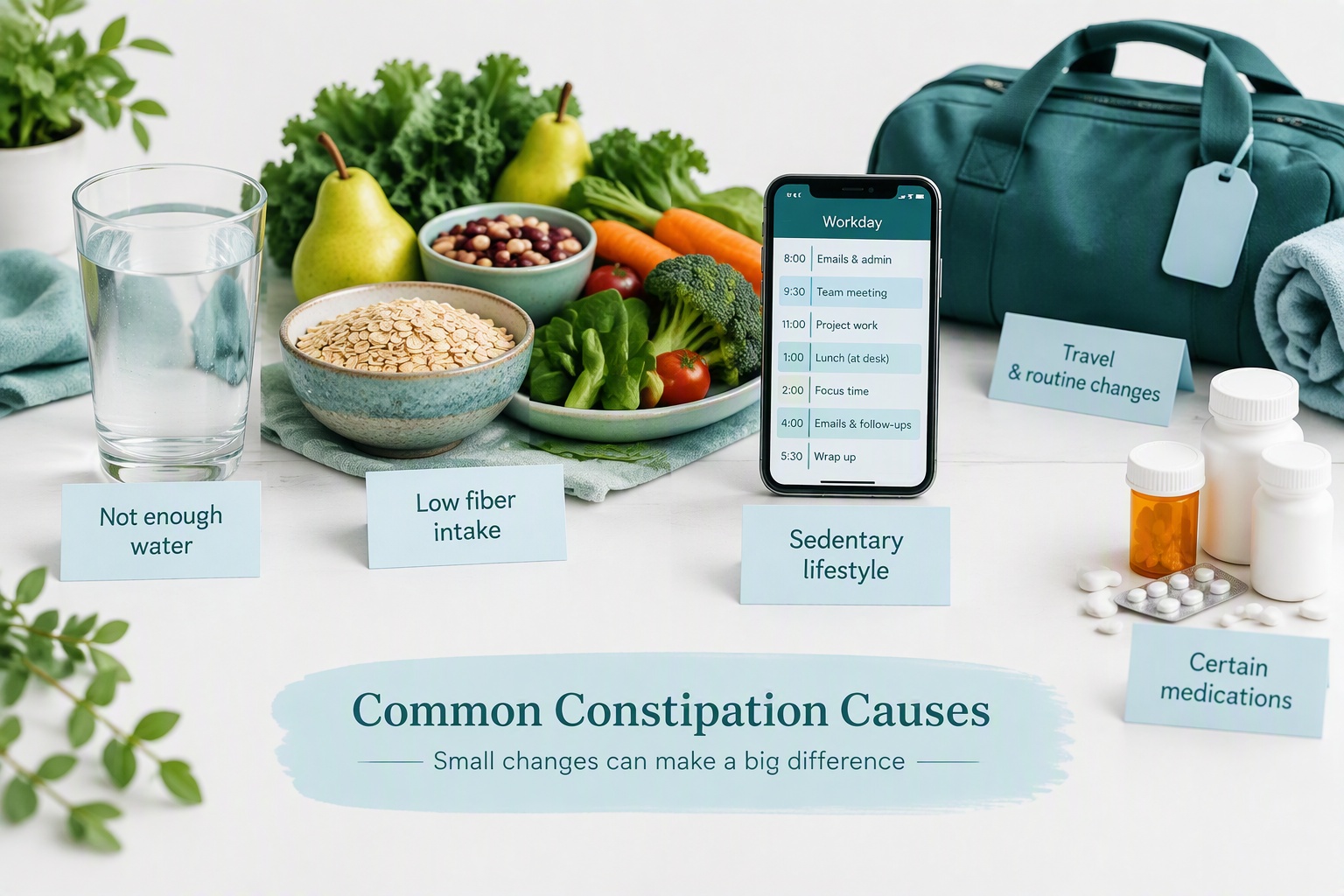
Constipation often happens when stool moves too slowly through the colon, allowing too much water to be absorbed. The stool then becomes dry, hard, and difficult to pass. Methane-producing gut organisms slow transit too, which is why methane SIBO and constipation travel together. Constipation causes often overlap, so consider recent routine changes, medications, and health conditions rather than assuming there is one reason.
Everyday habits can affect bowel movements without meaning you have done anything wrong. Common contributors include:
- Low fiber or fluids: Too little dietary fiber or fluid can make stool harder and less bulky.
- Less movement: Long workdays, illness, injury, or reduced activity can slow bowel function.
- Routine changes: Travel, skipped meals, altered sleep, and schedule disruptions can change your usual pattern.
- Ignoring the urge: Regularly delaying a bowel movement can make stool harder to pass later.
The National Institute of Diabetes and Digestive and Kidney Diseases identifies these routine factors among common reasons bowel habits change (source).
Medications are another frequent, easily missed factor. Opioid-induced constipation is common because opioids slow movement throughout the digestive tract. Medicines for pain, high blood pressure, seizures, depression, nervous-system conditions, and allergies may also contribute, along with iron supplements and antacids containing calcium or aluminum. A pharmacist or clinician can review whether a prescription or supplement is playing a role, but avoid stopping prescribed medication on your own.
Some health conditions can affect the nerves, hormones, muscles, or physical pathway needed to pass stool:
- IBS-C: Irritable bowel syndrome with constipation can cause abdominal discomfort alongside hard or infrequent stools.
- Diabetes, thyroid disorders, multiple sclerosis, and Parkinson’s disease: These conditions can interfere with bowel function in different ways.
- Constipation during pregnancy: Hormonal changes and physical pressure can slow digestion.
- Pelvic-floor dysfunction: The pelvic floor muscles may not relax and coordinate properly, leading to straining or incomplete emptying despite the urge to go.
- A bowel blockage: A structural issue in the colon or rectum can prevent stool from moving normally.
New or persistent changes in bowel habits, especially repeated straining or incomplete emptying, can point to causes a clinician can help assess. Medical references also recognize medication effects, neurologic and metabolic conditions, and pelvic-floor problems as potential contributors (source).
When pain comes with the changed bowel habit, constipation as an IBS pattern may be the better frame.
How Can You Build a Daily Routine?
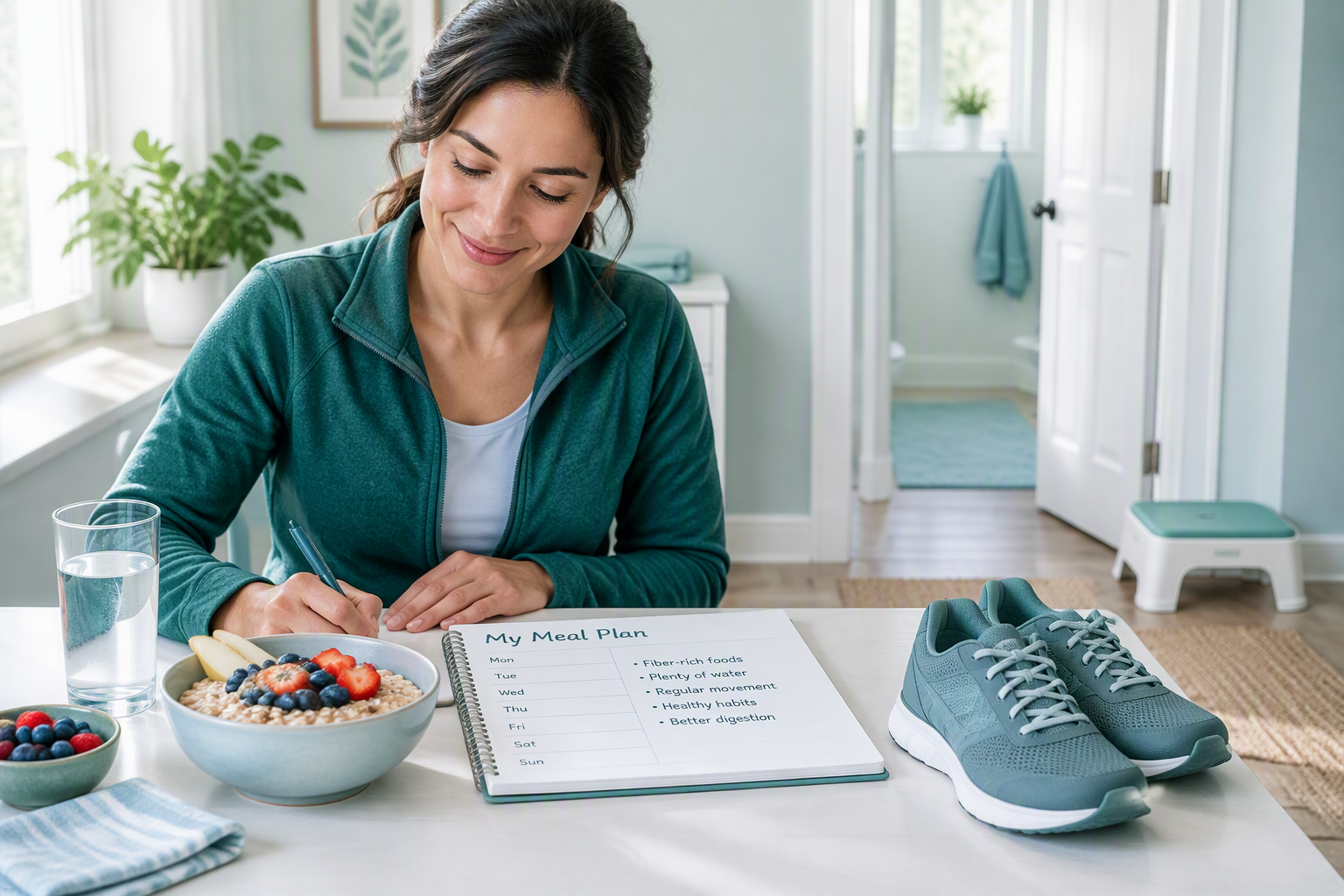
Because many constipation contributors are part of daily life, a daily routine can support constipation prevention by making stool-softening habits easier to repeat during busy workdays and family schedules. Start with one or two changes rather than trying to overhaul every meal and bathroom habit at once.
Build the routine around these practical steps:
- Add dietary fiber slowly. Center meals on high-fiber foods, including vegetables, fruits, beans, and whole grains. Add one new food or serving change at a time, since a sharp increase can worsen gas and bloating. The National Institute of Diabetes and Digestive and Kidney Diseases recommends fiber-rich foods along with enough liquids to help stool pass more easily (source).
- Make fluid intake automatic. Have a drink with meals and snacks, and keep water nearby at your desk or in the car. Dehydration and constipation can reinforce each other because the colon absorbs more water from stool when your body needs fluids.
- Keep tolerated fruit convenient. Prunes, pears, plums, peaches, and apples contain sorbitol, a naturally occurring sugar alcohol that may pull water into the bowel. Start with a small portion if these fruits tend to cause cramping or gas.
- Choose regular, realistic movement. Exercise and constipation are linked in a practical way. Regular movement such as walking, active errands, stretching, or playtime with children can support bowel regularity, and it is more useful to stay active most days than to rely on an occasional intense workout (source). Breaking up long stretches of sitting also helps make movement part of your day.
- Give yourself unhurried bathroom time. Go when the urge appears instead of repeatedly delaying it. Sitting on the toilet at a similar time each day, often after a meal, can help establish a pattern. A low footstool that raises your knees above your hips may reduce straining.
Choose the habit that fits your mornings or meals most easily, then build from there once it feels routine.
How Is Constipation Treated Step by Step?
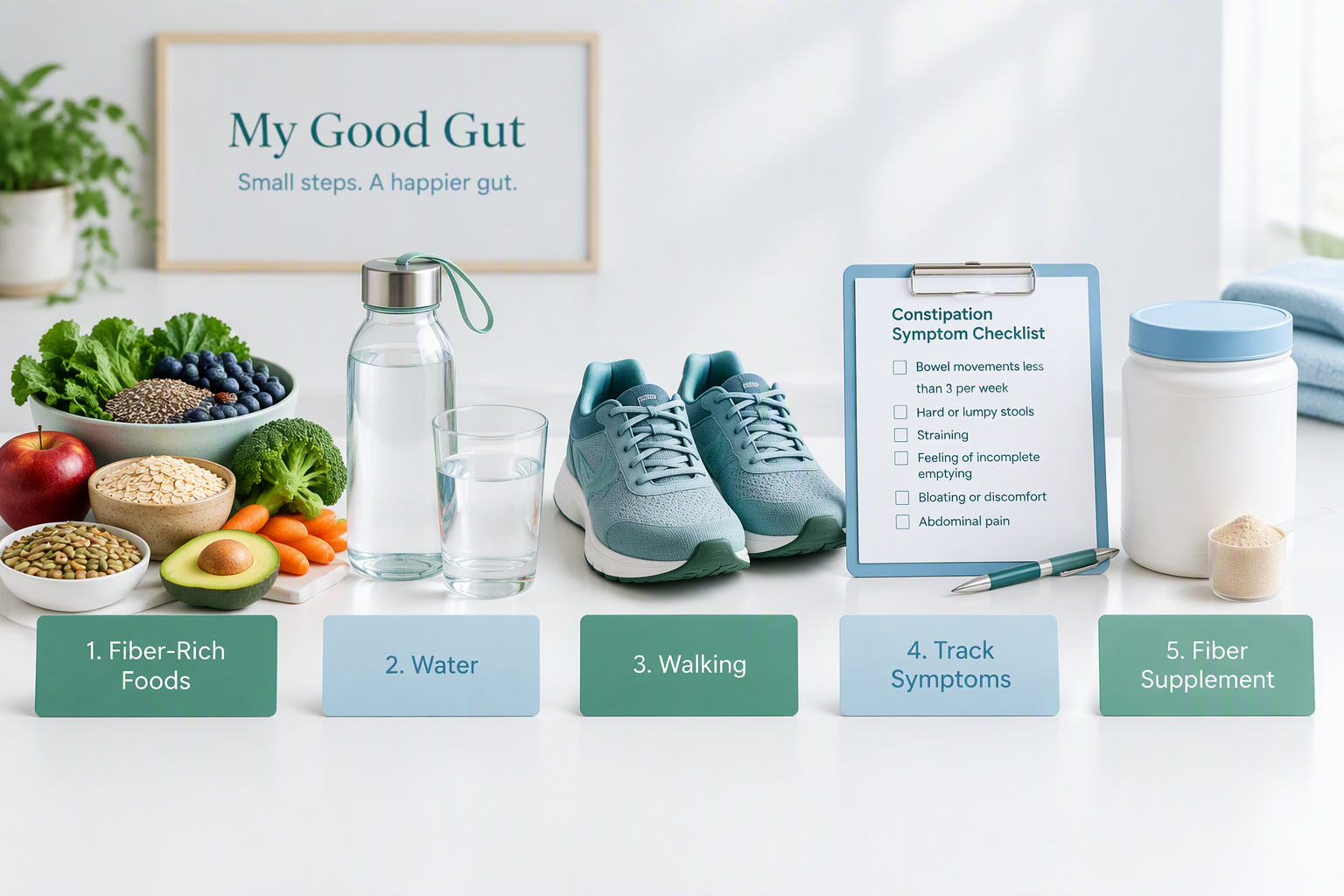
Whether constipation occurs with IBS-C or on its own, constipation treatment usually starts with steady changes to food, fluid, activity, and bathroom habits. If those steps do not bring constipation relief, over-the-counter medicines and clinician-guided care can help.
Small routine changes are often the best place to begin:
- Build meals around fiber-containing foods, such as beans, oats, fruits, vegetables, and whole grains. Increase fiber gradually, since a sudden jump can worsen gas, bloating, and cramping.
- Keep fluid intake appropriate for your health needs, stay physically active, and make time for an unhurried bowel movement. Going when you feel the urge can keep stool from becoming drier and harder to pass.
- Review prescriptions, supplements, and over-the-counter products with a clinician or pharmacist. Some medicines can contribute to constipation.
Psyllium is a bulk-forming fiber that can help, but each dose needs at least 8 ounces of water, and it should be taken a few hours apart from medicines such as digoxin, aspirin, or nitrofurantoin because fiber can affect how they are absorbed (source). If psyllium continues to cause gas, methylcellulose or partially hydrolyzed guar gum may be easier to tolerate.
When food and routine changes are not enough, a pharmacist can help match an option to your symptoms, other medicines, and health conditions. Laxative types and how they work include:
- Bulk-forming agents: Add volume to stool and need enough fluid.
- Osmotic agents: Pull water into the bowel to soften stool.
- Stool softeners and lubricants: May make stool easier to pass.
- Stimulant laxatives: Prompt bowel contractions and are not usually a long-term default without professional guidance.
Probiotics may sound appealing, but the probiotic evidence for constipation is mixed.
Persistent, worsening, or newly changed bowel habits need medical evaluation, especially when they disrupt daily life or suggest fecal impaction. A clinician can review possible causes and consider prescription treatment. Trouble relaxing the pelvic floor muscles may prevent complete emptying, and biofeedback can retrain that coordination. Testing or, rarely, surgery may be needed when an underlying condition or treatment-resistant symptoms are involved.
When Are Rectal Options Considered?
When food, routine, and oral treatment options have not addressed stool that feels stuck low in the rectum and is hard to pass, rectal options can provide targeted constipation treatment, but they are not the usual first step for occasional constipation. Oral measures generally come first for routine constipation relief. How a suppository relieves constipation explains its short-term, local role. A clinician may consider rectal treatment for suspected fecal impaction.
Get professional advice before using a rectal option if you have:
- Inability to pass stool despite a strong urge.
- Painful straining or a hard blockage sensation.
- Liquid stool leaking around retained stool.
- Worsening pain or bloating, which can signal a bowel blockage.
An enema may reach farther into the rectum than a suppository. When an enema is the right tool depends on where retained stool is located. Continued straining can contribute to fecal impaction, hemorrhoids, anal fissures, and pelvic-floor damage rather than solve the problem.
For rectal options, a pharmacist can help determine whether an over-the-counter product is appropriate for your medication or health-condition concerns. Avoid repeated or extended use without guidance. Knowing when to see a doctor for constipation matters if chronic constipation returns, treatment does not help, or bowel habits change substantially (source).
When Could IBS Be Involved?
Irritable bowel syndrome with constipation (IBS-C) may be involved when hard or infrequent stools occur with recurring abdominal pain that changes around bowel movements. Cramping, straining, and a sense that you have not fully emptied your bowels can also occur. No single symptom confirms IBS-C, but a repeated pattern that disrupts work, meals, sleep, or plans is worth discussing with a clinician.
With irritable bowel syndrome and constipation, bloating and gas may accompany the pain. Some people alternate between constipation and diarrhea, which can feel unpredictable and frustrating. Constipation as an IBS pattern puts these changing bowel habits in context. The key clue is the recurring link between symptoms and bowel movements, not one skipped bowel movement or a single bloated evening.
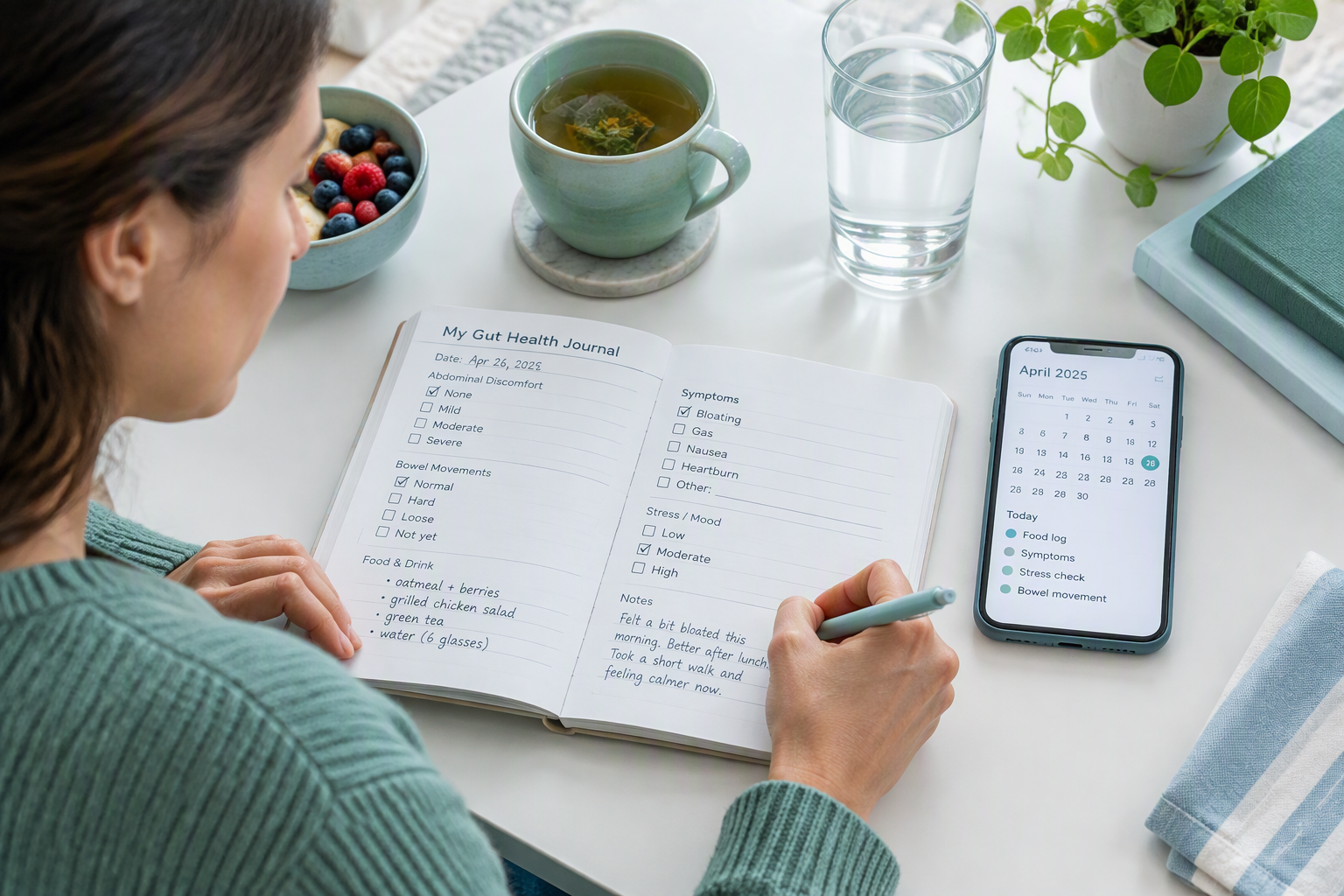
A brief symptom record can make your appointment more productive. Track these details for about one to two weeks so you can bring a clear symptom record to your appointment.
- When abdominal pain or cramping begins and whether a bowel movement eases or worsens it.
- How often you have bowel movements and whether stools are hard, loose, or mixed.
- Straining, urgency, incomplete emptying, or diarrhea episodes.
- Recent changes in meals, fluids, fiber, activity, medications, stress, travel, or routine.
- Foods that seem to worsen symptoms, without removing broad food groups too quickly.
Food triggers differ from person to person, and a highly restrictive diet can add stress without identifying the cause. A clear record helps a clinician distinguish a possible IBS pattern from other digestive concerns and guide realistic next steps.
When Should You Get Medical Care?
Because rectal options are not appropriate for every constipation episode, a short self-care trial can make sense when constipation is mild, familiar, and free of warning signs. Aim for gradual relief with fluids, regular meals, gentle movement, and unhurried toilet time rather than forcing a bowel movement. The American Gastroenterological Association notes that certain symptoms need medical attention (source).
The safest next step depends on what is happening:
- Ask a pharmacist: Get guidance if constipation started after a new prescription medicine, supplement, or over-the-counter product. A pharmacist can help identify a short-term option that fits your health conditions and current medicines, especially if fiber, fluids, movement, and regular toilet time have not helped or have made bloating and cramping worse.
- Schedule a routine clinician visit: Make an appointment if constipation lasts more than three weeks, keeps returning despite self-care, or disrupts work, sleep, meals, exercise, or other daily activities. Unexplained weight loss, anemia, persistent abdominal discomfort, or an unusual ongoing change in stool pattern also deserve evaluation, since medication effects and other health conditions can contribute.
- Seek urgent assessment: Rectal bleeding, blood in the stool, or black, tar-like stools need prompt medical care. Continual, severe, or worsening abdominal pain also needs urgent assessment, particularly when it begins suddenly, gets worse quickly, or leaves you unable to function normally. Urgent care or emergency services may be appropriate for symptoms that are sudden, severe, rapidly worsening, or disabling.
Do not assume bleeding or black stools are caused by hemorrhoids, constipation, or something you ate. That assumption can delay care when the cause needs timely attention.
When symptoms are new, different from your usual pattern, or hard to interpret, avoid repeatedly increasing laxatives or supplements on your own. Pharmacist or clinician guidance can help prevent a cycle of temporary relief followed by more cramping, bloating, or constipation.
Knowing when to see a healthcare provider for constipation is simpler than it sounds: a new pattern that lasts weeks, pain, bleeding, or weight loss. Diagnosis of constipation is usually a conversation and an exam, not a scan. Constipation in older adults deserves an earlier look, since medicines and reduced mobility stack up.
Constipation FAQs
Common constipation questions can help you tell ordinary changes from symptoms that may need more attention. These FAQs address concerns about uncomfortable, unpredictable, or difficult-to-manage bowel habits.
1. Which Foods Help Relieve Constipation?
Fiber-rich fruits, vegetables, and whole grains can make stools easier to pass: apples with the skin on, berries, pears, beans, and whole grains all count. Plain oats, wheat bran, linseed, and sorbitol-containing prunes, pears, or plums may also help. Add fiber gradually, since a sharp increase can cause gas, cramping, or bloating. If you have IBS, choose foods that fit your symptom tolerance.
Fiber for constipation works only with fluids, and fluids and constipation are the pairing most people get wrong. To prevent constipation over time, keep both going.
2. Can Coffee Make Constipation Better?
Coffee may prompt a bowel movement, especially during a familiar morning routine, but it is not a dependable constipation treatment. Don’t add extra cups to force a result, particularly if coffee causes jitters, heartburn, urgency, or loose stools. Drinking enough water, increasing fiber gradually, moving regularly, and allowing unhurried bathroom time are more reliable first steps. Persistent constipation or a noticeable change in bowel habits needs medical evaluation.
3. Does Travel Cause Constipation?
Travel can temporarily cause constipation when changes in sleep, meals, time zones, fluids, movement, and bathroom access disrupt your usual routine. Long flights and car rides mean more sitting, and unfamiliar restrooms may lead you to delay going. For constipation prevention, keep meals as regular as possible, drink water throughout the trip, move or stretch during breaks, and use the restroom when you feel the urge. Bowel habits often return to normal after you’re back in your usual routine.
Constipation self-care on the road is the same routine, kept a little stricter.
4. Can Stress Trigger Constipation?
Yes. Stress, anxiety, and depression can affect the brain-gut connection, slowing bowel movement or dulling the urge to go. They may also make bloating, straining, and abdominal discomfort feel harder to manage, which does not mean the symptoms are imagined.
During stressful periods, delayed bathroom trips, less fluid, changed eating patterns, and lower activity can add to constipation. Persistent, recurring, painful symptoms or a noticeable change in your usual bowel habits warrant individualized clinical assessment.
Stress sits alongside the common causes of constipation covered above. Constipation home remedies such as a warm drink, a walk, and unhurried toilet time help most when the cause is routine, not disease.