


Cutting out coffee, tomatoes, dairy, and bread after a few bad meals can leave you with less to eat and no clear answer. A functional dyspepsia diet usually works better when it starts with smaller, lower-fat meals and targeted testing rather than broad restrictions. Functional dyspepsia causes recurring indigestion symptoms even when routine testing finds no structural problem.
Fatty foods aggravated symptoms for 57 percent of participants in one dyspepsia survey, but population patterns cannot identify your personal triggers. A food diary that records portions, meal timing, eating pace, sleep, and symptoms can separate a rich, rushed lunch from a consistent food response.
Low-FODMAP eating is not a first-line approach unless bloating, gas, or bowel changes suggest IBS overlap. Keeping food trials brief and reintroducing tolerated foods helps protect nutrition while making daily meals more manageable.
Functional Dyspepsia Diet Key Takeaways
- Smaller, more frequent meals may reduce stomach stretching and early fullness.
- Lower-fat meals can help when richer foods repeatedly worsen symptoms.
- Test portion size, meal timing, and eating pace before eliminating food groups.
- Track meals, symptoms, sleep, stress, and bowel changes in a food diary.
- Repeat similar meals before deciding a food is a personal trigger.
- Low-FODMAP eating may help when IBS-type bowel symptoms overlap with dyspepsia.
- Reintroduce tolerated foods to prevent unnecessary restriction and protect nutrition.
Why Does Eating Trigger Functional Dyspepsia?
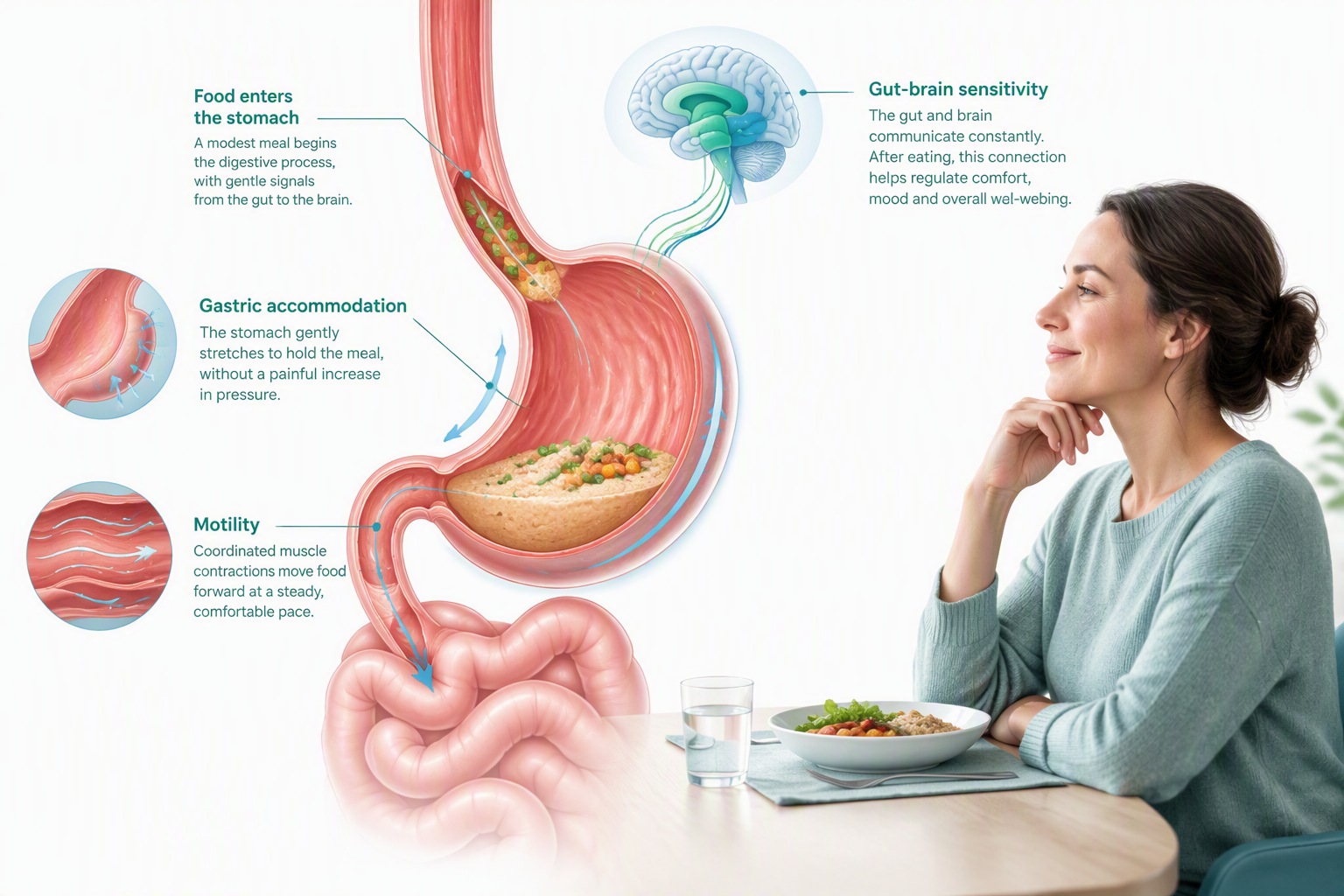
Eating can trigger functional dyspepsia symptoms because each meal requires the stomach to relax, stretch, mix food, and move it toward the small intestine. Those normal actions can cause real indigestion after eating, including bloating, nausea, burning, or upper-abdominal discomfort, even when routine tests find no structural problem.
Postprandial distress syndrome often involves impaired gastric accommodation. Put simply, the upper stomach may not make room easily when food arrives, so even a modest meal can bring pressure, heaviness, or early satiety, meaning you feel full sooner than expected. Upper-abdominal pain or burning can overlap with these symptoms after meals, according to Cleveland Clinic (source).
Gastric motility, or how the stomach moves food onward, may be slower or irregular for some people. At the same time, visceral hypersensitivity can make ordinary stomach stretching and digestion feel painful or uncomfortable. This gut-brain connection is physical, can shift from day to day, and does not mean symptoms are imagined.
A few meal factors are useful to test before removing whole food groups:
- Portion size: Larger meals stretch the stomach more and may worsen fullness.
- Fat content: Higher-fat foods can feel heavier or slow digestion for some people.
- Eating pace: Rushing may increase swallowed air and make it harder to notice fullness.
- Stress and sleep: Anxiety, tension, and poor sleep can heighten sensitivity to the same meal.
Smaller, lower-fat meals eaten at a calmer pace are practical experiments, not permanent rules, and they make more sense once you know what functional dyspepsia is. Tracking meals, symptoms, sleep, and bowel changes can reveal personal patterns before you broadly restrict lactose or carbohydrates.
How Can You Build Easier Meals?
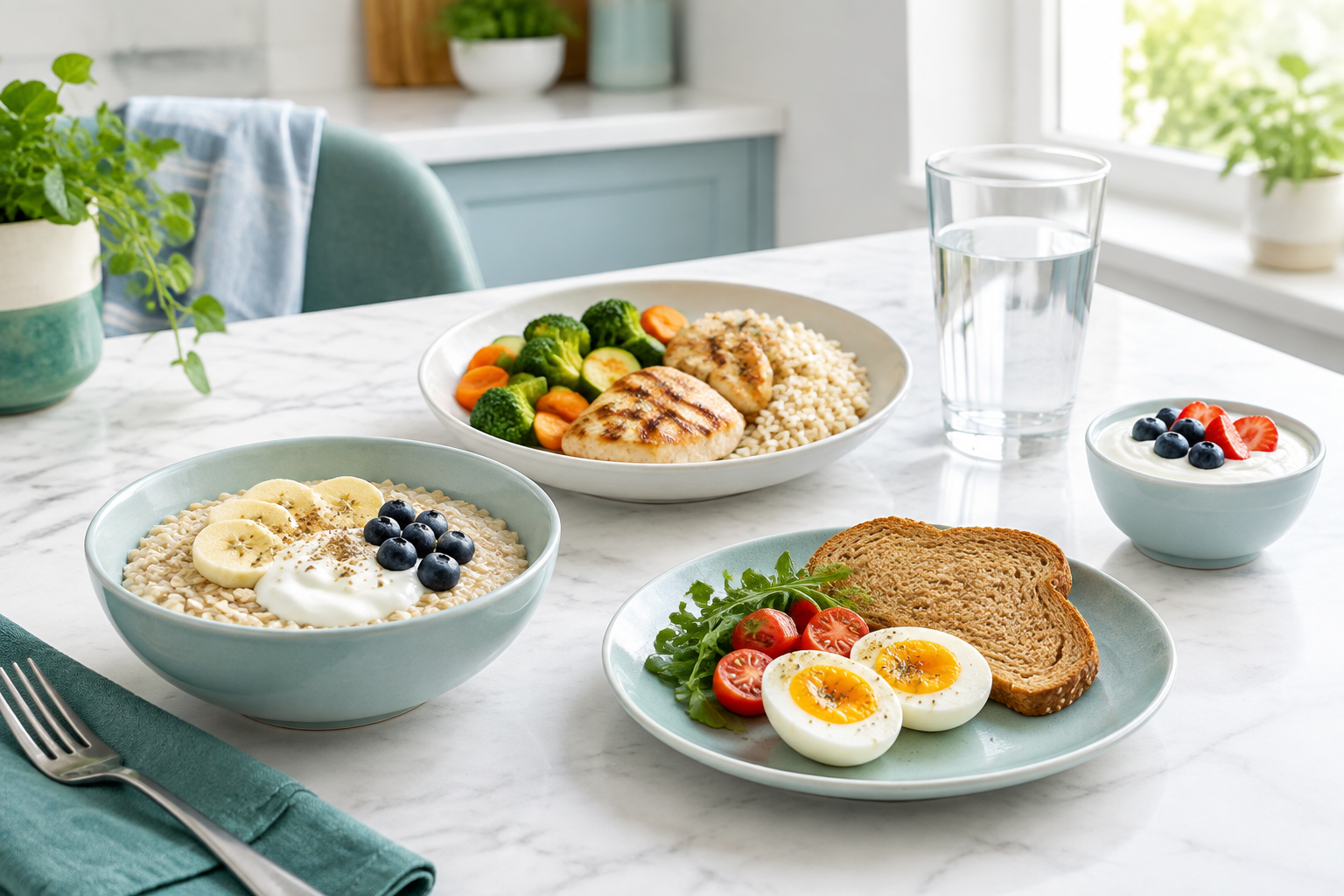
Because stomach stretching can drive these symptoms, smaller, more frequent meals can reduce stomach stretching, which may ease early satiety, bloating after eating, and post-meal discomfort. Instead of forcing two or three large meals, spread enough food, protein, and fluids across several manageable eating occasions. Those smaller meals should still add up to adequate nourishment over the day.
A practical functional dyspepsia diet can follow a simple pattern: a modest carbohydrate, a protein, and tolerated produce or another familiar food. Easy combinations include:
- Breakfast: Eggs with toast and fruit, or oatmeal with yogurt.
- Lunch: Rice with chicken and cooked vegetables.
- Later meal: Half a sandwich, with the remainder saved for later.
- Snack: Yogurt, crackers with turkey, or another familiar option that prevents long gaps without food.
Lower-fat eating may help when richer meals repeatedly worsen symptoms, since fat slows stomach emptying and raises symptom reports in people with dyspepsia (source). Choose baked, grilled, poached, or steamed foods more often, use smaller amounts of oil, butter, cream, cheese, and rich sauces, and favor leaner proteins. You do not need to remove all fat unless a consistent personal pattern appears.
Eating more slowly can also make meals feel easier. Sit down when possible, take smaller bites, chew well, pause between bites, and briefly set down your utensil. This approach may lessen the overfull sensation and reduce swallowed air that contributes to belching.
Let comfort shape your schedule. A small breakfast and midmorning snack may suit difficult mornings, while earlier meals may help when evenings are worse. Notice whether stress, rushing, or long stretches without food make symptoms more likely. Finish your last substantial meal well before sleep, stay upright afterward, and have a small familiar snack while seated if hunger returns rather than skipping dinner.
Which Foods and Drinks Should You Test?
Alongside easier meal patterns, foods that trigger dyspepsia are individual patterns, not permanent bans. Keep meals varied and test only two or three plausible foods at once, especially when repeated early fullness, nausea, bloating, burning, or upper-abdominal discomfort follows eating. A simple diary can reveal food sensitivities without cutting out whole food groups.
Richer meals are often a useful starting point when symptoms follow heavier eating. In one survey of people with non-ulcer dyspepsia, fatty foods aggravated symptoms for 57 percent of participants, carbonated drinks for 86.7 percent, and watermelon for 74.5 percent (source). These are population patterns, not rules for your plate.
The foods people most often blame are better treated as short-term test foods than lasting exclusions:
- High-fat meals: Fried foods, pizza, processed meats, creamy sauces, mayonnaise, and large portions of oily foods. Test the serving and the whole meal, not just one ingredient.
- Drinks: Carbonated drinks may add gas and pressure when you already feel bloated or full. Coffee and alcohol can bother some people through caffeine, acidity, added milk, serving size, or drinking on an empty stomach.
- Burning-related foods: Burning after spicy food may follow red pepper, pickles, vinegar, salty foods, citrus, citrus juice, tomatoes, or tomato-based meals.
- Reflux-like triggers: Chocolate desserts, peppermint tea, and mints can worsen heartburn-like burning. Peppermint is not always soothing when reflux is part of the picture.
- Legumes and produce: Beans, lentils, chickpeas, onions, cabbage, cucumber, watermelon, and other fruits can be tested in modest usual portions.
The National Institute of Diabetes and Digestive and Kidney Diseases notes that food and drink responses differ from person to person (source). Repeat a test meal before adding it to your personal caution list.
Foods to avoid with functional dyspepsia are personal, so treat any list of dyspepsia food triggers as candidates to test rather than rules.
How Do You Find Triggers Without Over-Restricting?

Because the foods and drinks worth testing are personal, one difficult meal rarely means you need to avoid a food forever. A trigger may be less about one ingredient than a larger portion, higher-fat preparation, fast eating, late timing, poor sleep, stress, or concerns about food sensitivities.
A food diary can make a confusing flare easier to test. Use a phone note, printable log, or pre-formatted diary during normal life rather than trying to eat perfectly. Brief notes after meals and at the end of the day are more useful than calorie counting or relying on memory.
Track the details that can influence symptoms:
- Foods and drinks, portion size, relative fat level, meal time, and eating pace.
- Fullness and symptoms, including upper-abdominal pain, burning, nausea, bloating, belching, and early fullness.
- Bowel movements, sleep quality, and stress level.
When a pattern appears, a structured trigger-food trial keeps the test simple:
- Keep your usual meal routine as consistent as possible.
- Change one modest factor, such as serving size, fat level, eating pace, or meal timing.
- Compare several similar meals before deciding that a food is a trigger.
A rushed lunch after poor sleep can cause a flare that might otherwise be blamed on a single ingredient. Repeated symptoms after larger meals, higher-fat foods, rapid eating, or stressful days are clues to retest, not proof that a food is harmful or permanently off-limits.
If reducing a food or meal feature does not bring sustained, noticeable relief, add it back and test another variable. A broad elimination diet has no specific evidence for functional dyspepsia and can raise the risk of malnutrition and fear around eating. If avoidance expands, meals become stressful, or weight is falling, a dietitian referral can support nutrition while confirming functional dyspepsia remains part of the clinical picture.
Foods that trigger functional dyspepsia are dietary factors in functional dyspepsia you can test, and the role of diet in functional dyspepsia management is exactly that testing, not a fixed diet for dyspepsia.
Do Low-FODMAP or Wheat-Free Diets Help?
When structured testing points to bloating after eating, gas, or bowel changes alongside upper-abdominal symptoms, a low-FODMAP approach may help, particularly with IBS symptoms that travel with dyspepsia. It is not a standard first-line functional dyspepsia diet. Smaller meals, lower-fat choices, and individualized trigger testing remain the foundation, and carbonated drinks can worsen fullness or belching on their own.
Functional dyspepsia can cause early fullness, nausea, discomfort after meals, or upper-abdominal burning or pain. IBS causes recurring abdominal pain tied to bowel movements, diarrhea, constipation, or both. When both patterns are present, reducing fermentable carbohydrates may better ease bowel-related bloating.
FODMAPs, short for fermentable oligosaccharides, disaccharides, monosaccharides, and polyols, can draw fluid into the gut and increase gas in susceptible people. A low-FODMAP diet is best used as a short, targeted test for a clear fermentable-food pattern, not as a permanent list of banned foods. The BSG guideline notes that the one low-FODMAP study in functional dyspepsia was small, non-randomized, and mostly in people with overlapping IBS, and it asks clinicians to screen for disordered eating when food restriction comes with weight loss (source).
A wheat-free diet does not automatically mean gluten is the problem. Wheat contains fructans, a FODMAP that may trigger symptoms, but a wheat-free trial belongs after assessment for celiac disease or wheat allergy, or when structured testing shows a consistent response. Lower-fat eating is usually more useful than removing whole food groups.
A focused trial has a clear endpoint:
- Track the symptom, food, and portion you are testing for a short period.
- Reintroduce foods methodically to identify tolerated types and amounts.
- Restore restricted foods when symptoms do not improve.
A registered dietitian can help when IBS overlaps, weight loss occurs, symptoms persist, or restriction becomes extensive.
What Should You Eat During a Flare?

A flare plan is a brief way to ease the burden of eating, not a permanent restrictive diet. What to eat depends on what you tolerate, though small, lower-fat meals and snacks are often easier. Eat slowly, chew thoroughly, pause between bites, and stop before fullness becomes uncomfortable.
Familiar carbohydrate and protein foods can make flexible meals:
- Oatmeal, toast, rice, potatoes, or plain pasta.
- Bananas or other fruit that sits well for you.
- Soup, eggs, yogurt if tolerated, or small portions of lean poultry, fish, tofu, or beans.
Soft, lightly seasoned versions of usual foods may feel better than rich meals. A small breakfast, lunch, dinner, and snack-sized eating opportunity can be easier than fasting all day and eating a large evening meal. Stay seated and unhurried, and avoid lying down soon after eating if reflux occurs.
When nausea makes solids hard to manage, take regular small sips of still water, broth, or another tolerated non-carbonated drink. Large drinks with meals can worsen fullness, while caffeine-free peppermint tea may feel soothing, though you should stop if it aggravates heartburn or reflux.
Pause common irritants briefly while symptoms settle:
- High-fat or fried foods, very spicy meals, and chocolate.
- Alcohol, coffee, and other caffeinated drinks.
- Carbonated beverages and acidic citrus or tomato products.
Retest one item at a time to maintain dietary variety. Medicines for functional dyspepsia may be part of care when food changes are not enough.
Recurring flares, trouble eating enough, weight loss, dehydration, vomiting, trouble swallowing, black stools, blood in vomit or stool, severe or worsening pain, or nighttime symptoms need clinical assessment. A clinician or registered dietitian can help protect nutrition while investigating persistent symptoms.
Foods that relieve dyspepsia for many people are plain and low in fat, which is why rice for functional dyspepsia flares turns up in so many dietary recommendations for dyspepsia, alongside lifestyle factors in functional dyspepsia such as sleep and eating pace.
Functional Dyspepsia Diet FAQs
These FAQs cover common questions about a functional dyspepsia diet, including meal patterns, possible triggers, and thoughtful food testing without making everyday eating unnecessarily restrictive.
1. Is Peanut Butter Safe for Dyspepsia?
Peanut butter is not automatically off-limits with functional dyspepsia or chronic indigestion, but its relatively high fat content can worsen early fullness, nausea, bloating, or upper-abdominal discomfort. Fatty foods often trigger more symptoms, yet your response is personal and does not mean everyone with dyspepsia must avoid peanut butter.
Test a small, measured serving of plain peanut butter with an otherwise familiar meal, and note both the portion and symptoms. Avoid chocolate-flavored or heavily sweetened varieties during the trial, since added ingredients can make the cause of symptoms harder to pinpoint.
2. Can Functional Dyspepsia Go Away?
Functional dyspepsia can improve substantially, and some people have periods of remission, but chronic indigestion often comes and goes. No diet guarantees a permanent cure, though smaller, lower-fat meals and careful personal trigger testing may help manage functional dyspepsia symptoms while allowing you to keep your diet as varied as possible. If symptoms persist despite these changes, become more severe, or feel different from your usual pattern, medical review can help identify the next steps.
3. Which Supplements Help Functional Dyspepsia?
Supplements have a limited, individual role in functional dyspepsia. Peppermint-based or herbal products may be worth discussing, but no supplement, including capsaicin, is a proven solution for everyone. What helps someone else may not help you, and peppermint can worsen heartburn. Review any product with your clinician or pharmacist, especially alongside prescribed medicines such as omeprazole, to consider interactions, side effects, and whether symptoms need further evaluation. A dietitian referral can also help you test food changes without unnecessary restriction.
4. Should You See a Dietitian?
A registered dietitian can be especially helpful when indigestion symptoms persist despite practical meal changes, you’re avoiding many foods, IBS is suspected or diagnosed, or eating feels stressful. Broad, long-term restriction may raise the risk of malnutrition, food fear, and disordered eating patterns without easing functional dyspepsia.
They can help you test one potential trigger at a time, make sense of symptom patterns, and reintroduce foods you tolerate. This keeps lower-fat, low-FODMAP, and other elimination approaches focused and temporary while protecting adequate calories, protein, vitamins, and food variety.