


Persistent indigestion does not automatically mean an ulcer, GERD, or something serious. Functional dyspepsia is diagnosed when a clinician finds a lasting pattern of upper-abdominal symptoms but no structural or systemic cause after appropriate evaluation.
Rome IV criteria look for bothersome early fullness, post-meal fullness, epigastric pain, or epigastric burning that began at least six months earlier. H. pylori testing is often an early step for adults under 60 without alarm features, while an upper endoscopy may be needed sooner for symptoms such as weight loss, bleeding, trouble swallowing, or persistent vomiting.
Normal test results are meaningful because most people investigated for dyspepsia turn out to have functional dyspepsia rather than a disease that explains it. A clear symptom history, medication list, and record of meal-related discomfort help separate functional dyspepsia from IBS, gastroparesis, peptic ulcer disease, and other look-alike conditions.
Functional Dyspepsia Diagnosis Key Takeaways
- Functional dyspepsia requires persistent symptoms without an identified structural, metabolic, inflammatory, or systemic cause.
- Rome IV criteria include early fullness, post-meal fullness, epigastric pain, or epigastric burning.
- Symptoms must be bothersome for three months and begin at least six months before diagnosis.
- H. pylori breath or stool testing often comes before routine endoscopy in lower-risk adults.
- Weight loss, bleeding, trouble swallowing, persistent vomiting, anemia, or jaundice need closer evaluation.
- EGD can check for ulcers, gastritis, cancer, and other visible upper digestive tract conditions.
- Meal timing, symptom patterns, medicines, and bowel changes help distinguish dyspepsia from IBS or gastroparesis.
How Is Functional Dyspepsia Diagnosed?
Functional dyspepsia is a disorder of gut-brain interaction that causes persistent upper-abdominal symptoms after an appropriate evaluation finds no structural, metabolic, inflammatory, systemic, or other organic cause. A functional dyspepsia diagnosis does not mean symptoms are imagined or minor. It means the discomfort is real, even when testing does not show tissue damage or another disease.
A healthcare professional makes a clinical diagnosis of functional dyspepsia by reviewing your symptoms, health history, examination, and plausible alternatives. Symptoms alone cannot confirm a self-diagnosis. The symptoms of functional dyspepsia as a whole may include chronic indigestion, upper-abdominal pain or burning, nausea, bloating, and early fullness.
Several details shape the evaluation:
- Predominant symptom: Whether pain, burning, early fullness, or meal-related discomfort affects you most.
- Pattern: When symptoms started, how often they occur, and their connection to meals.
- Health history: Your age, medicines, prior tests or upper endoscopy results, and Helicobacter pylori (H. pylori) status.
- Warning signs: Weight loss, bleeding, trouble swallowing, or persistent vomiting may prompt earlier endoscopy.
Rome IV criteria help clinicians judge whether symptom type and timing fit functional dyspepsia. The dyspepsia differential diagnosis can include peptic ulcer disease, gastroesophageal reflux disease (GERD), celiac disease, significant gastritis, gallbladder or biliary disease, cancer, and other structural disorders.
About 80% of people investigated for dyspepsia end up with a functional diagnosis, so normal results are clinically meaningful, not dismissive (source). Without warning signs or risk factors, H. pylori testing is often an early step, with blood tests, imaging, or endoscopy guided by the history and examination.
How doctors diagnose functional dyspepsia (FD), then, is a functional dyspepsia workup built on the history, the Rome IV functional dyspepsia criteria, and targeted functional dyspepsia tests, not a single scan.
Do Your Symptoms Meet Rome IV Criteria?
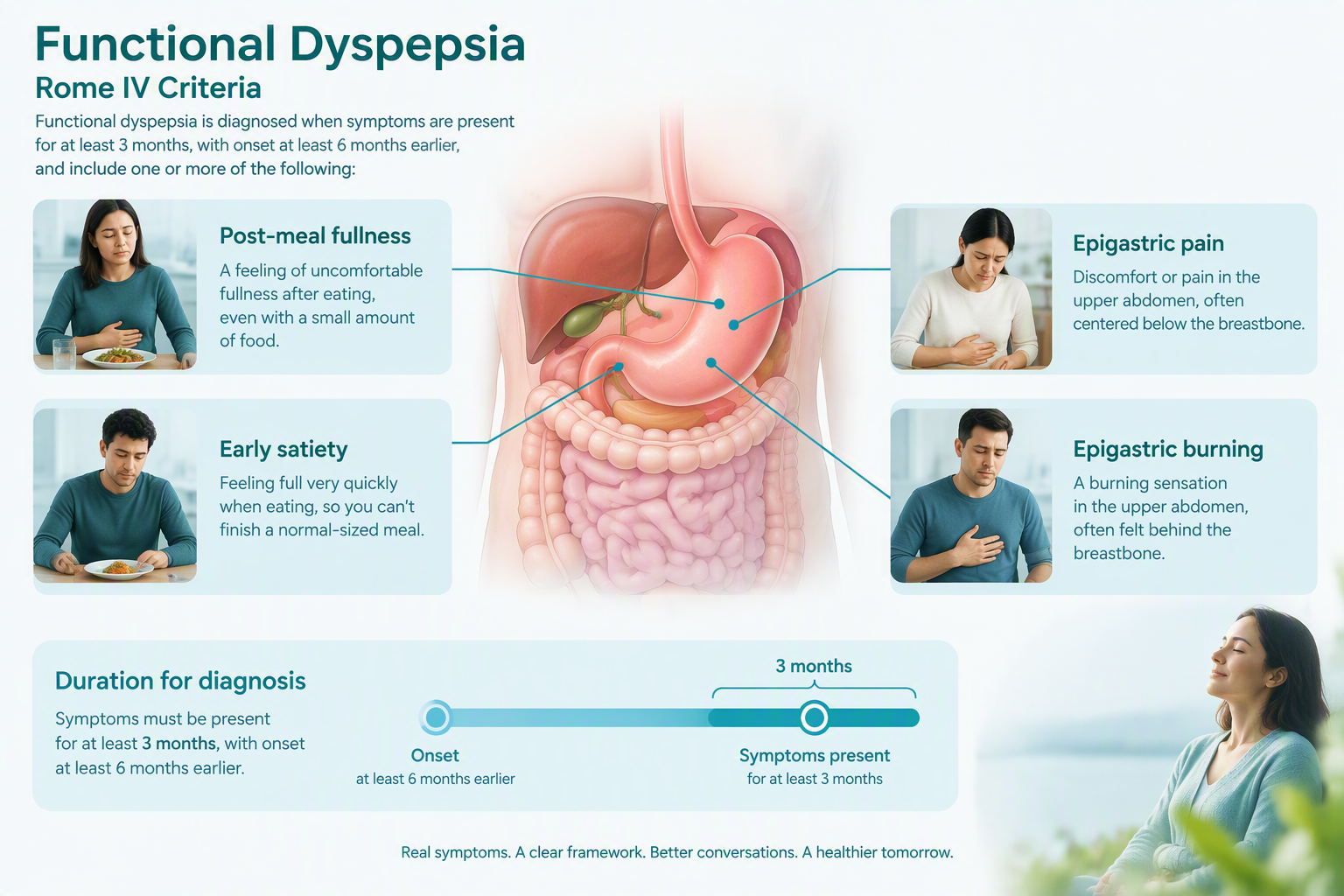
After the initial evaluation, Rome IV criteria for functional dyspepsia help clinicians identify a lasting pattern of indigestion symptoms. They are not a self-diagnosis, and at least one bothersome symptom must affect daily life while evaluation must not identify structural disease that better explains it. Rome IV criteria require bothersome symptoms during the past three months, with symptom onset at least six months before diagnosis (source).
The qualifying symptoms include:
- Postprandial fullness: Uncomfortable or excessive fullness after a normal-sized meal.
- Early satiety: Becoming full unusually quickly and being unable to finish a normal meal.
- Epigastric pain: Pain in the upper middle abdomen, below the breastbone.
- Epigastric burning: A burning sensation in the same upper-middle area.
Symptoms can overlap and vary from day to day. Repeated discomfort after ordinary portions matters more than occasional fullness after a particularly large or rich meal.
Clinicians describe two overlapping symptom patterns. Postprandial Distress Syndrome involves meal-related postprandial fullness and/or early satiety. Epigastric Pain Syndrome involves epigastric pain and/or epigastric burning, which may occur after eating or while fasting. This pain is not mainly triggered or relieved by a bowel movement or passing gas, which helps separate it from bowel-related discomfort.
Some people have both patterns, such as early fullness after lunch and burning at other times.
Bowel changes may point clinicians toward irritable bowel syndrome (IBS), which follows the Rome IV criteria for IBS. Bring a brief record of meal timing, symptoms, and fullness to your appointment.
How to diagnose functional dyspepsia with these functional dyspepsia diagnostic criteria comes down to pattern and duration, which is why functional dyspepsia testing follows the history rather than replacing it.
What Will Your Clinician Ask About?
Your history helps a clinician decide whether functional dyspepsia fits or whether testing should happen sooner. Food questions come up early too, and meal changes that ease dyspepsia are safe to try during the evaluation as long as you avoid a restrictive diet before testing. They will ask your age, when symptoms began, whether they are constant or intermittent, how the pattern has changed, and whether you have dyspepsia alarm features or relevant health conditions.
The discussion also identifies your main symptom and its pattern:
- Upper-abdominal discomfort: Where pain or burning occurs, how it feels, and whether it follows meals or appears at certain times.
- Meal-related fullness: Whether usual portions leave you uncomfortably full or you stop eating sooner than expected.
- Other symptoms: Bloating, nausea, belching, appetite loss, and possible links to foods, stress, or medicines.
Bowel questions help distinguish dyspepsia that comes with IBS from another digestive condition. Stool frequency and consistency, constipation, diarrhea, urgency, and whether bowel movements change discomfort all matter, but bowel changes do not confirm or rule out functional dyspepsia.
A medication review includes NSAIDs such as ibuprofen and naproxen, other medicines, supplements, alcohol, tobacco, and recent changes. These exposures can irritate the stomach or contribute to peptic ulcer disease.
Prior upper endoscopy, biopsy, imaging, and H. pylori test or treatment records help guide whether you need an endoscopy for indigestion. Family history, personal conditions, and surgeries may also prompt a complete blood count for anemia, inflammatory markers, or metabolic and thyroid tests.
Laboratory tests for dyspepsia are chosen from this history, and functional dyspepsia versus IBS is usually settled by where the pain sits and what it follows, meals or bowel movements.
Which Alarm Features Need Endoscopy?

Among the history details clinicians assess, alarm features prompt them to look for ulcers, bleeding, significant inflammation, cancer, or another structural condition before diagnosing functional dyspepsia. They call for closer evaluation, not an assumption that a serious disease is present.
Urgent medical contact is important for symptoms or findings such as:
- Vomiting blood or passing black, tarry stools
- Yellow skin or eyes, dark urine, or pale stools
- Severe or constant abdominal pain, a new abdominal lump, or enlarged lymph nodes
- Persistent vomiting that prevents eating or drinking
- Unintentional weight loss or unexplained iron-deficiency anemia
Prompt upper endoscopy may also be appropriate when symptoms persist, worsen, or occur together:
- Progressive difficulty swallowing or pain with swallowing
- Recurrent vomiting or severe nausea
- Abdominal pain that spreads to the back
- Pain in the upper-right abdomen
Clinicians consider the full pattern, including severity, duration, changes over time, and symptom combinations. Upper endoscopy, also called esophagogastroduodenoscopy (EGD), examines the esophagus, stomach, and duodenum for ulcers, bleeding sources, inflammation, significant gastritis, cancer, and other structural causes.
Expert guidance commonly recommends endoscopy when dyspepsia starts at age 60 or older and lasts at least one month. Earlier testing may be appropriate with multiple concerning features, worsening symptoms, or a strong family history of upper gastrointestinal cancer. In younger adults, a single mild alarm feature has a positive predictive value for malignancy of less than 1 percent, so it does not automatically mean cancer or make EGD the first step.
Testing for H. pylori is usually part of this evaluation, and treating a confirmed H. pylori infection removes one common contributor to indigestion.
The ACG/CAG dyspepsia guideline and the BSG guideline both use these functional dyspepsia red flags to decide when functional dyspepsia upper endoscopy comes first.
How Does H. pylori Test-and-Treat Work?

For adults younger than 60 with indigestion and no alarm features, clinicians often use a noninvasive H. pylori test and treat a detected infection before routine upper endoscopy (source). This can identify a treatable cause of ulcer-like pain or gastritis while reserving endoscopy for higher-risk situations.
The preferred tests look for an active infection:
- Urea breath test: After drinking a test solution, you breathe into a collection device that detects changes linked to H. pylori.
- Stool antigen test: A stool sample is checked for H. pylori material.
Blood antibody tests are less useful because they can stay positive after an earlier infection has cleared. Recent antibiotics and acid-suppressing medicines, including proton pump inhibitors, can cause falsely negative breath or stool results. Confirm with your clinician or testing service whether prescribed medicines need a temporary pause rather than stopping them on your own.
The question of when you need an endoscopy for indigestion depends on age, persistent symptoms, and concerning features. During an upper endoscopy, clinicians can collect small stomach biopsies for H. pylori testing while checking for ulcers or other visible causes. Adults 60 and older may need a testing plan tailored to their risk profile.
A positive result is treated with multiple antibiotics plus an acid-reducing medicine. What functional dyspepsia treatment looks like can help you prepare for that conversation.
When confirmation is appropriate, a urea breath test or stool antigen test can check whether treatment cleared the infection (source). Persistent indigestion after a negative result may need a gastroparesis test for delayed emptying, or reassessment for another cause.
When Are Endoscopy and Other Tests Needed?

Even after H. pylori testing, upper endoscopy (EGD) is not automatic for persistent indigestion. A clinician may recommend it promptly when alarm features are present, symptoms start at an older age, or you have a family history of esophageal, stomach, or pancreatic cancer. This reflects an individualized risk assessment, not an assumption that cancer is causing your symptoms (source).
During an EGD, clinicians can assess areas that need closer evaluation. Small tissue samples, called biopsies, can be taken when needed to identify or rule out peptic ulcer disease, erosive inflammation, significant gastritis, narrowing, cancer, and other structural causes. Biopsies may also find Helicobacter pylori (H. pylori) infection when the lining looks normal.
A dyspepsia differential diagnosis may include targeted testing:
- Blood work: A complete blood count can check for anemia, while inflammatory markers may be used when inflammation is suspected.
- Metabolic or thyroid testing: A comprehensive metabolic panel or thyroid tests may help when symptoms suggest a systemic or metabolic condition.
- Celiac testing: Blood tests may be appropriate with relevant symptoms, family history, or nutritional concerns. Discuss testing before starting a gluten-free diet, since avoiding gluten can reduce test accuracy.
- Imaging: Ultrasound or CT may be used when gallbladder, liver, pancreatic, or other abdominal disease is suspected. Imaging does not replace EGD when an ulcer or upper digestive-tract lining problem is the concern.
Normal blood work, scans, and EGD findings can still support functional dyspepsia by making structural and systemic causes less likely. They can help clinicians focus the next stage of care. When reflux is the central symptom pattern, GERD is the more likely label, and a gastric-emptying study may be added when symptoms suggest gastroparesis (source).
Dyspepsia endoscopy guidelines set the age and red-flag thresholds for upper endoscopy for dyspepsia, and functional dyspepsia treatment guidelines pick up from whatever that functional dyspepsia evaluation shows.
How Is Indigestion Separated From Look-Alikes?
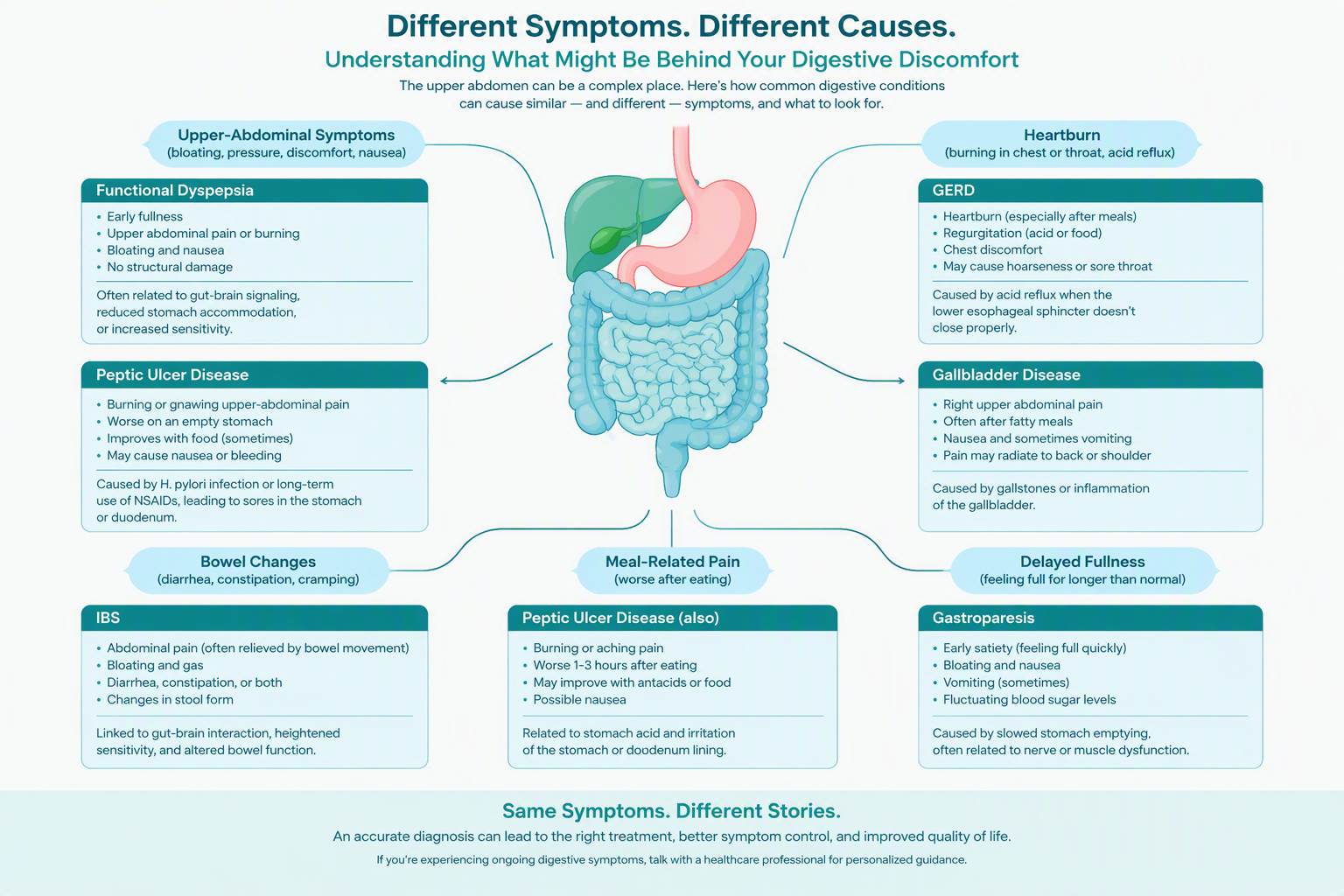
Functional dyspepsia causes upper-middle abdominal pain or burning that is not mainly relieved by passing stool or gas. Bothersome fullness after meals or getting full unusually quickly fits postprandial distress syndrome. Pain or burning after eating or while fasting fits epigastric pain syndrome. These patterns can overlap and cannot rule out other causes of chronic indigestion.
GERD is more likely when heartburn, sour fluid reaching the throat, or symptoms that worsen while lying down predominate. Peptic ulcer disease can cause more localized gnawing pain or bleeding. H. pylori testing and, when needed, endoscopy can identify ulcers, significant gastritis, or another visible cause.
Celiac disease may fit better with bowel changes, fatigue, anemia, weight loss, or family history. Keep eating gluten until celiac antibody blood tests are complete, since avoiding it beforehand can affect results. Steady, severe upper-right or upper-middle abdominal pain after a rich meal, especially pain spreading to the back or right shoulder, points more toward gallbladder or biliary disease. Ultrasound and liver or pancreatic blood tests can help assess it.
IBS pain is tied to changes in stool frequency or form and may improve or worsen after a bowel movement. Dyspepsia alongside IBS is common, so clinicians assess upper-abdominal meal symptoms and lower-abdominal bowel symptoms separately.
Functional dyspepsia is diagnosed after clinicians exclude structural or systemic causes in people with a persistent qualifying symptom pattern, and the alarm features listed earlier are what move endoscopy or imaging to the front of the queue.
This functional dyspepsia differential diagnosis, and the two functional dyspepsia subtypes within it, is what a medical evaluation for functional dyspepsia is really sorting out.
How Can You Prepare for Your Appointment?
To help distinguish the possible causes discussed above, a brief, dated record can focus a functional dyspepsia diagnosis discussion. Note when symptoms started, whether they recur, your main concern, and its timing around meals. Include upper-abdominal pain or burning, early fullness, bloating, nausea, belching, appetite changes, or vomiting.
For several typical days, record meal times, approximate portions, foods and drinks, and each symptom’s onset, severity, and duration. Flag ordinary meals that cause uncomfortable fullness, possible links with fatty or spicy foods, coffee, or alcohol, and symptoms unrelated to eating. Avoid restrictive diets before evaluation, but note which meal changes seemed to help so you can raise them.
Bring a concise list with:
- Constipation, diarrhea, urgency, loose stools, bowel-related changes in discomfort, heartburn, and trouble swallowing.
- Your age, symptom duration, and family history of stomach or esophageal cancer, ulcers, celiac disease, or inflammatory bowel disease.
- Every medicine and supplement, including dose, frequency, start date, recent changes, over-the-counter products, antacids, acid reducers, iron, fiber, herbal remedies, digestive enzymes, probiotics, and occasional NSAIDs such as ibuprofen or naproxen, which can irritate the stomach.
- Prior H. pylori testing and treatment, blood work, scans, and endoscopy reports. Normal results still show what has been assessed.
Ask which next test fits your symptoms, whether medicines contribute, and when endoscopy may be considered. These details support the clinical diagnosis of functional dyspepsia and help clinicians assess overlapping conditions.
Functional Dyspepsia Diagnosis FAQs
These FAQs cover the symptoms, tests, and warning signs clinicians consider when evaluating functional dyspepsia, helping you prepare for a more informed conversation about persistent indigestion.
1. Can Functional Dyspepsia Coexist With IBS?
Yes. Functional dyspepsia can occur alongside IBS. Functional dyspepsia involves upper-abdominal burning or discomfort, early fullness, and nausea or pain related to meals, whereas IBS causes recurrent abdominal pain associated with constipation, diarrhea, or other bowel-habit changes.
These symptom patterns alone do not confirm both conditions. Clinicians consider your age, main symptoms, duration, alarm features, prior endoscopy findings, and H. pylori testing, while checking for peptic ulcer disease, gastroesophageal reflux disease, celiac disease, significant gastritis, malignancy, and other structural illness.
Both are judged against Rome IV diagnostic criteria, the functional dyspepsia Rome IV criteria for the upper symptoms and the IBS criteria for the bowel symptoms.
2. Is Functional Dyspepsia Diagnosed Differently in Children?
A child’s evaluation looks beyond symptom patterns. Clinicians ask about upper-abdominal discomfort, meals, early fullness, nausea, vomiting, bowel changes, appetite, medicines, family history, and effects on eating, school, sleep, and usual activities. Growth and the physical exam are also central.
Before identifying functional dyspepsia, clinicians check for poor growth or weight loss, anemia, bleeding, jaundice, trouble swallowing, persistent vomiting, an abdominal mass, or severe localized pain that could signal structural disease. The adult age-60 endoscopy threshold does not apply. A pediatric gastroenterologist determines whether blood, stool, imaging, or endoscopy testing fits the child’s history and warning signs.
3. Can Family History Affect Functional Dyspepsia Diagnosis?
A close family history of esophageal, stomach, or pancreatic cancer can lower the threshold for testing persistent indigestion, especially when symptoms begin later in life. It does not mean your symptoms are cancer. Clinicians often consider endoscopy from age 60, with earlier assessment when cancer risk factors are present.
Share the affected relative, diagnosis, and age at diagnosis. This history is considered alongside dyspepsia alarm features, including unexplained weight loss, recurrent vomiting, painful or difficult swallowing, black stools, vomiting blood, iron-deficiency anemia, jaundice, constant severe pain, or a new abdominal lump.
The dyspepsia age 60 endoscopy rule and the functional dyspepsia alarm features together decide who is scoped first, since functional dyspepsia itself is a functional gastrointestinal disorder with nothing to find on the scope.
4. Can Anxiety Worsen Functional Dyspepsia Symptoms?
Anxiety and stress can make nausea, burning, early fullness, and upper-abdominal pain feel stronger through gut-brain interaction and visceral hypersensitivity, when digestive nerves react more intensely to normal sensations. That does not make your symptoms imagined. Clinicians still assess the symptom pattern and rule out causes such as peptic ulcer disease, gastroesophageal reflux disease, celiac disease, significant gastritis, and other structural or systemic conditions. Anxiety should not explain away new, persistent, or worsening symptoms, particularly with alarm features.