


When a normal-sized lunch leaves you uncomfortably full or upper-abdominal burning keeps returning, functional dyspepsia may be the reason. It is a disorder of gut-brain interaction that causes recurring indigestion without an ulcer, blockage, or other structural cause.
Rome IV recognizes two common symptom patterns. Postprandial distress syndrome brings early or uncomfortable fullness after meals, and epigastric pain syndrome brings upper-abdominal pain or burning. Symptoms can overlap with GERD, gastritis, ulcers, gastroparesis, and IBS, and routine testing is usually normal.
Recurring flares are not usually dangerous, but they can disrupt meals, work, sleep, and confidence around food. Vomiting blood, black stools, persistent vomiting, unexplained weight loss, trouble swallowing, or severe worsening pain need prompt assessment.
Functional Dyspepsia Key Takeaways
- Functional dyspepsia causes recurring indigestion without a structural cause found on appropriate evaluation.
- Common symptoms include early fullness, post-meal discomfort, nausea, upper-abdominal pain, and burning.
- Rome IV recognizes postprandial distress syndrome and epigastric pain syndrome, which can occur together.
- Stomach accommodation, nerve sensitivity, gut-brain signaling, stress, and H. pylori may contribute.
- GERD, gastritis, ulcers, gastroparesis, and IBS can cause overlapping symptoms.
- Vomiting blood, black stools, weight loss, swallowing trouble, or persistent vomiting need prompt assessment.
- Symptoms often flare and ease over time, so management is tailored to your pattern and response.
What Is Functional Dyspepsia?
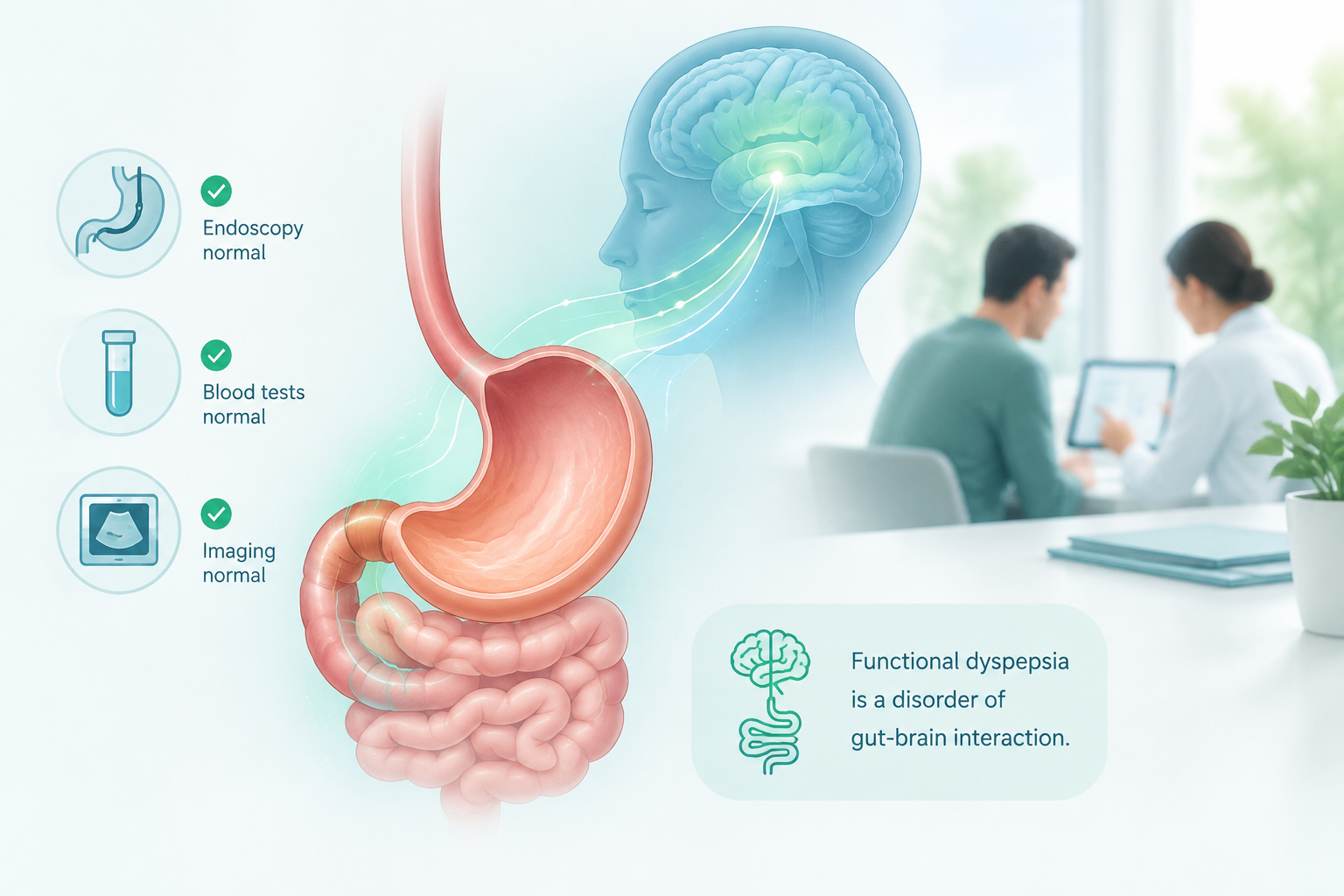
Functional dyspepsia is a common, long-term disorder of gut-brain interaction, also called non-ulcer dyspepsia. It causes chronic indigestion and upper-abdominal discomfort without a structural, ulcerative, or metabolic condition that accounts for the symptoms. Using the Rome IV criteria, about 7% of people worldwide meet the definition, and broader definitions of dyspepsia reach nearly 30% (source).
Diagnosis instead relies on the overall symptom pattern, because routine tests, including endoscopy, are usually normal. That does not mean your symptoms are imagined, minor, or unimportant (source). The diagnosis recognizes that the discomfort is real even when testing shows no ulcer, blockage, or visible damage.
Changes in communication between the stomach and nervous system, or added sensitivity to normal digestive activity, may contribute. For example, the usual stretching of the stomach after a meal can feel painful or uncomfortably full. Symptoms may include:
- Upper-abdominal pain or burning
- Feeling full unusually quickly while eating
- Uncomfortable fullness, bloating, or nausea after meals
Clinicians consider your symptom pattern, medical history, and the Rome IV criteria while determining whether another condition better explains the problem. Assessment looks at symptoms that recur over several months, rather than one isolated episode of indigestion.
Symptoms can overlap with gastroesophageal reflux disease, gastritis, ulcers, and gastroparesis. Other digestive conditions beyond dyspepsia can cause similar discomfort, so the pattern and warning signs help clarify what may be going on.
Symptoms usually ease and flare over time rather than steadily worsening, which is why the two symptom subtypes, the likely drivers, and the warning signs all matter more than any single test result.
Functional dyspepsia (FD) is also called nonulcer dyspepsia, and the functional dyspepsia diagnostic criteria come from the Rome IV framework rather than from any single test.
What Do Symptoms and Flares Feel Like?

A flare usually means a recurring ache, pressure, or burning in the upper middle belly, the area clinicians call the epigastrium. Discomfort may begin during or after eating, or at unrelated times. It can disrupt daily life without automatically meaning there is visible stomach damage. The National Institute of Diabetes and Digestive and Kidney Diseases identifies epigastric pain and burning as common indigestion symptoms (source).
Meal-related symptoms can make an ordinary plate of food feel unpredictable. Common patterns include:
- Post-meal fullness: An unpleasant stuffed feeling after a normal-sized meal, sometimes lasting longer than expected.
- Early satiety: Feeling full too quickly, which may make it hard to finish a meal or reduce your appetite.
- Nausea, bloating, and belching: These symptoms can occur with upper-abdominal discomfort, but they are nonspecific and do not affect everyone with functional dyspepsia.
- Occasional heartburn: Burning behind the breastbone can overlap with indigestion, though it may suggest another condition when it is the main symptom.
A functional dyspepsia flare-up may happen occasionally or nearly every day. Quieter periods can give way to more noticeable pain, burning, nausea, or fullness, and the timing may shift from one day to the next. That variability can interfere with meals, work, sleep, and social plans.
Symptom details help clinicians distinguish functional dyspepsia from gastroesophageal reflux disease (GERD), ulcers, gastritis, gastroparesis, and other causes. The location of discomfort, its link to meals, the speed of fullness, and how long symptoms have persisted all matter. The National Institute of Diabetes and Digestive and Kidney Diseases notes that indigestion can involve overlapping symptoms and causes (source).
Keeping track of meal timing, symptoms, and whether you could finish eating can make recurring patterns easier to describe at an appointment. Small changes in eating with functional dyspepsia often make those meals less unpredictable.
What Are the Two Rome IV Subtypes?
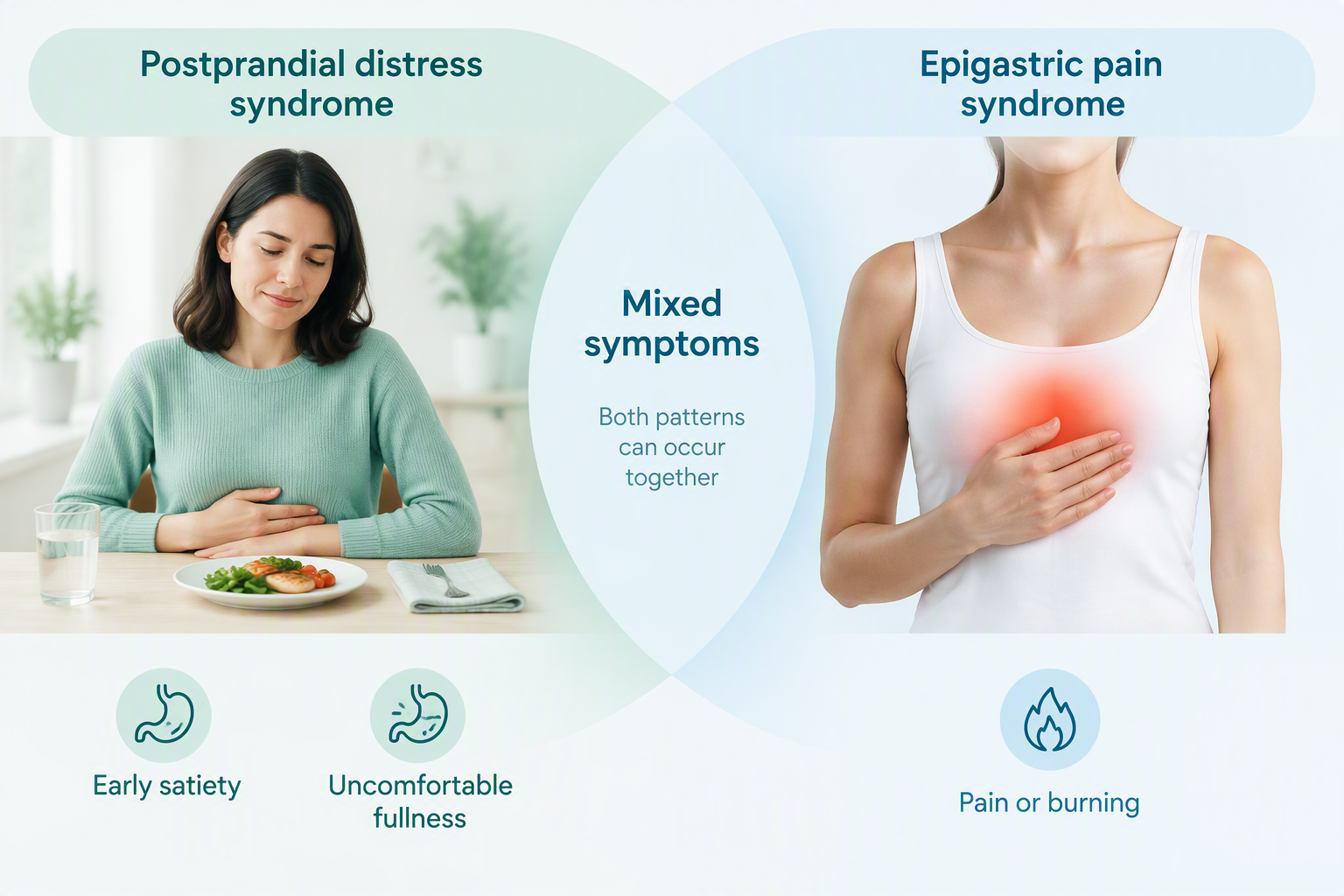
Rome IV groups these functional dyspepsia symptoms into two symptom patterns rather than two separate diseases. The distinction reflects whether your main concern is meal-related fullness or upper-abdominal pain and burning, and neither pattern is more valid than the other. British Society of Gastroenterology guidance uses these patterns to describe symptoms without treating them as separate conditions.
Postprandial distress syndrome is driven by uncomfortable fullness after eating and early satiety, or feeling full too quickly to finish a normal-sized meal. For example, a small lunch may leave you feeling as if you ate a much larger meal, with fullness or pressure that lingers afterward.
Epigastric pain syndrome involves epigastric pain or epigastric burning in the upper middle abdomen, just below the breastbone. It may feel like upper abdominal burning, aching, or gnawing discomfort. Unlike the fullness-led pattern, symptoms can appear between meals. Food may worsen them for some people but ease them for others. A clinical review notes that these patterns can occur together and that meal effects on epigastric pain are not predictable for everyone (source).
Mixed symptoms are common in functional dyspepsia, and some people have both meal-related fullness and upper-abdominal pain or burning. Mixed symptoms give your healthcare professional a more complete picture of what is happening.
Useful details to bring to an appointment include:
- When symptoms started, how long they last, and how often they return.
- Whether fullness, pain, or burning is the main problem.
- Dietary changes and previous treatments you have tried.
- Any warning signs that have appeared alongside your symptoms.
Management is usually adjusted step by step because responses vary, and treatment options for functional dyspepsia follow a set order. A clear symptom history helps guide a more focused conversation about your next steps.
What Can Drive Functional Dyspepsia?
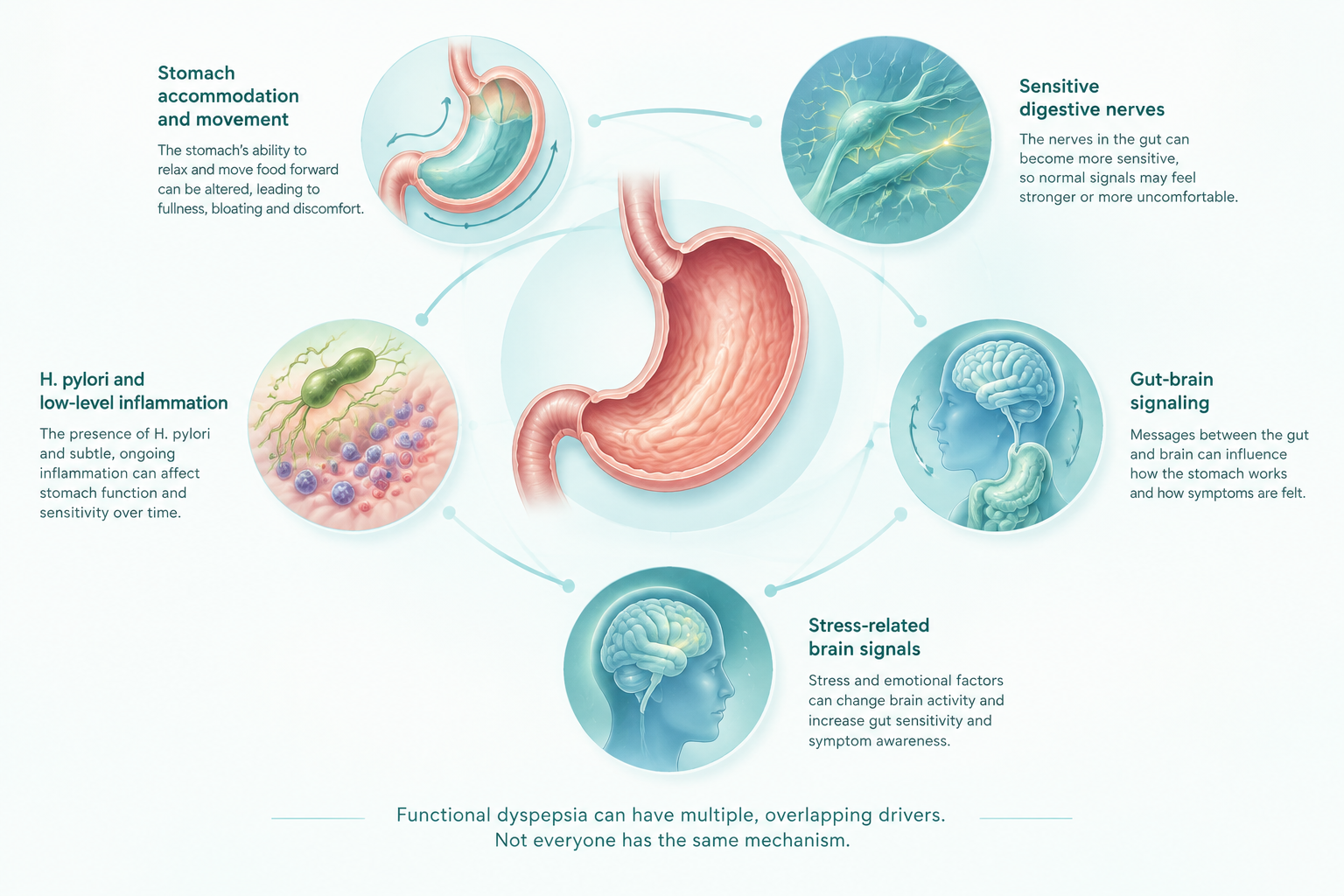
Because symptom patterns and responses vary, there is no single answer to what causes functional dyspepsia. This disorder of gut-brain interaction can involve the stomach, the first part of the small intestine, nearby nerves, and two-way signals between the digestive tract and brain. The mix varies, which is why symptoms may include burning, pain, nausea, early fullness, or bloating that builds after meals.
Several factors may overlap:
- Stomach movement and relaxation: Food may leave the stomach more slowly or quickly than usual. With impaired stomach accommodation, the stomach does not relax enough after eating to make comfortable room for food.
- Visceral hypersensitivity: Nerves in the stomach or duodenum, the first part of the small intestine, may become unusually sensitive. Normal stretching, acid, nutrients, or digestive activity can then feel like pain, burning, pressure, or uncomfortable fullness.
- Gut-brain signaling: Signals between the brain and digestive tract can affect stomach movement and make physical sensations feel stronger. This does not mean symptoms are imagined.
- Inflammation or infection: Low-level immune activity in the duodenum may follow a stomach infection or food poisoning. H. pylori can inflame the stomach lining and affect acid handling, though a positive test does not explain every case of ongoing indigestion.
- Stress and mood: Dyspepsia and anxiety can be connected because stress, anxiety, and depression may affect digestive movement, nerve sensitivity, and symptom intensity. Emotional strain does not make symptoms self-caused.
Not everyone with functional dyspepsia has changes in stomach emptying, post-meal relaxation, nerve sensitivity, or inflammation. That variation helps explain why two people with similar indigestion can have different symptom patterns and respond differently to treatment.
A clear description of when symptoms occur, especially after meals or during stressful periods, can help guide a more useful conversation with a healthcare professional.
How Does It Differ From Other Conditions?
Functional dyspepsia is indigestion with no structural cause found on an appropriate evaluation. Symptoms often center on the upper abdomen and meals, but similar symptoms can come from other digestive conditions.
Condition | Dominant pattern | Evaluation clue |
|---|---|---|
Functional dyspepsia | Upper abdominal pain or burning, early fullness, or uncomfortable fullness after meals | No structural cause explains the symptoms |
GERD | Heartburn or acidic fluid rising into the chest or throat | Reflux symptoms are more prominent |
Gastritis or peptic ulcer | Burning, nausea, and meal-related discomfort | Inflammation or sores may be identified |
Gastroparesis | Marked fullness, nausea, vomiting, and bloating after meals | A gastric-emptying test may show delayed emptying |
IBS | Abdominal pain with diarrhea, constipation, or both | Changes in stool form or frequency are central |
Functional dyspepsia and GERD can occur together, so clinicians consider which symptom pattern is more disruptive. GERD more often causes reflux into the chest or throat, while functional dyspepsia tends to cause upper abdominal pain and lingering fullness after eating.
Gastritis and peptic ulcers need separate consideration because, unlike functional dyspepsia, they involve stomach-lining inflammation or sores that testing may find. NSAIDs, including ibuprofen and aspirin, can irritate the lining and contribute to these problems.
Functional dyspepsia and gastroparesis can both make meals uncomfortable. When functional dyspepsia remains uncertain, a gastric-emptying test can clarify whether delayed stomach emptying is involved.
IBS can be especially relevant when bowel symptoms accompany dyspepsia. When dyspepsia and IBS overlap, both meal-related upper-abdominal symptoms and bowel changes can occur. Roughly 1 in 3 people with functional dyspepsia also have IBS (source).
No single symptom or test confirms functional dyspepsia. Clinicians consider symptom patterns, duration, medicines, prior treatments, Helicobacter pylori testing, endoscopy, and warning signs that need a clinician before tailoring stepwise care.
A functional dyspepsia diagnosis is a dyspepsia diagnosis with the structural causes removed, and EGD for functional dyspepsia is how that removal happens when it is needed.
When Should You Seek Prompt Assessment?
Functional dyspepsia can be disruptive, but new or changing symptoms should not automatically be attributed to indigestion. Is functional dyspepsia serious enough to need urgent care? Usually, the concern is not the condition itself but warning signs that may point to a different cause and need prompt assessment.
Prompt medical care is important for:
- Vomiting blood or material that resembles coffee grounds.
- Black, tar-like stools, which can signal bleeding higher in the digestive tract.
- Unusual fatigue, weakness, breathlessness, or paleness that may suggest iron-deficiency anemia.
- Repeated or persistent vomiting, especially when fluids will not stay down or symptoms are worsening.
- Painful swallowing, food feeling stuck, or other swallowing difficulty.
- Unexplained weight loss or a clear loss of appetite.
- Severe, constant, unfamiliar, or steadily worsening upper-abdominal pain, particularly if it spreads to your back.
- Yellow skin or eyes, dark urine, or pale stools, which can occur with jaundice.
Persistent vomiting and swallowing problems are not typical symptoms to simply manage as functional dyspepsia. Assessment can help distinguish it from gastroesophageal reflux disease, an ulcer, gastritis, delayed stomach emptying, or another cause. How functional dyspepsia is diagnosed describes the history and testing clinicians may use to make that distinction.
Chest symptoms need more urgent attention. New, intense, or spreading chest pain or pressure, especially with pain in the jaw, arm, shoulder, or back, breathlessness, sweating, dizziness, or nausea, should not be assumed to be heartburn or indigestion. Urgent evaluation matters because the cause may be outside the digestive tract.
Make a medical appointment if indigestion or upper-abdominal discomfort is new, changing, or not improving, especially if it lasts more than a short time (source).
Dyspepsia red flags like these are what turn a routine functional dyspepsia evaluation into an urgent one, and endoscopy for functional dyspepsia is reserved for people with them or for new symptoms after 60.
What Is the Outlook for Functional Dyspepsia?
Once warning signs have been assessed, functional dyspepsia becomes a condition you manage rather than cure. A flare does not by itself prove that something dangerous was missed, but new or worsening symptoms still deserve medical review.
Whether functional dyspepsia is serious often comes down to its effect on daily life. It is not usually dangerous, but recurring indigestion can disrupt meals, work, sleep, and comfort. The functional dyspepsia prognosis varies, so the focus is on helping manage symptoms and protecting quality of life rather than promising a cure.
The causes are not fully understood, and several factors can shape your experience:
- Symptom pattern: Early or uncomfortable fullness, nausea, upper-abdominal burning, and pain may respond differently.
- Daily routines: Stress, irregular meals, and eating patterns can affect symptoms for some people.
- Other health factors: Other conditions and medicines may influence which approaches fit your situation.
Care is usually tailored over time, based on your symptoms, their duration, warning signs, past treatments, and dietary changes. Even treating H. pylori, a stomach bacterium, does not reliably resolve functional dyspepsia. The treatment ladder gives you a clear set of next steps to discuss.
Persistent, changing, or non-improving symptoms deserve follow-up. Practical food choices support the plan while it is refined.
Stepwise functional dyspepsia management runs from H. pylori dyspepsia treatment through acid suppression to functional dyspepsia neuromodulators, with diet changes for functional dyspepsia alongside each step, and functional dyspepsia and IBS overlap handled together when both are present.
Functional dyspepsia treatment stays personalized: a diet for functional dyspepsia, stress reduction for dyspepsia, and neuromodulators for functional dyspepsia each earn their place by what your symptoms do.
Functional Dyspepsia FAQs
These FAQs address common questions about functional dyspepsia, including recurring indigestion symptoms and how this condition differs from other digestive problems. They can help you make sense of what you're experiencing and what to consider next.
1. How Is Functional Dyspepsia Diagnosed?
Functional dyspepsia is diagnosed from your symptoms and history, not one test. Rome IV requires bothersome early fullness, post-meal fullness, upper-abdominal pain, or burning in the past 3 months that began at least 6 months earlier and lack another explanation. For people under 60 without alarm signs, noninvasive Helicobacter pylori (H. pylori) testing may be appropriate, with infection treated using antibiotics. Upper endoscopy may be considered at age 60 or older after at least a month of dyspepsia, or for concerning findings.
2. What Treatments Help Functional Dyspepsia?
Treatment usually follows your main symptoms and response, not a one-size-fits-all plan. After assessment, adults under 60 may have noninvasive Helicobacter pylori (H. pylori) testing and treatment if positive. Reassess afterward, since lingering symptoms may have another cause. Proton-pump inhibitors or H2 blockers may ease burning or pain, while prokinetics may help post-meal fullness, bloating after eating, nausea, or impaired stomach accommodation. Low-dose neuromodulators or psychological therapy may support persistent symptoms.
3. Which Foods Trigger Functional Dyspepsia?
No single diet works for everyone with functional dyspepsia. A simple meal-and-symptom record can reveal patterns with portion size, eating pace, high-fat or spicy foods, coffee and other caffeine, alcohol, and carbonated drinks. Adjust only the foods or habits that repeatedly worsen discomfort.
Smaller, lower-fat meals eaten more often, along with slower eating and thorough chewing, may ease early fullness, nausea, bloating, and upper-abdominal discomfort. A reduced FODMAP diet is best used briefly with a dietitian if symptoms persist, then followed by reintroducing foods you tolerate.
4. Can Stress Worsen Functional Dyspepsia?
Yes. Dyspepsia and anxiety can affect each other through the brain-gut connection. Stress, anxiety, and depression may change stomach movement and cause visceral hypersensitivity, so normal stomach sensations feel unusually painful or uncomfortable. That can worsen burning, nausea, early fullness, and discomfort after meals without meaning symptoms are imagined. Stress-management practices and gut-directed therapies, including cognitive behavioral therapy, can support dietary and medical care. Limiting NSAID use, such as ibuprofen or aspirin, may also reduce stomach irritation. Discuss persistent digestive or mood symptoms with a healthcare professional.